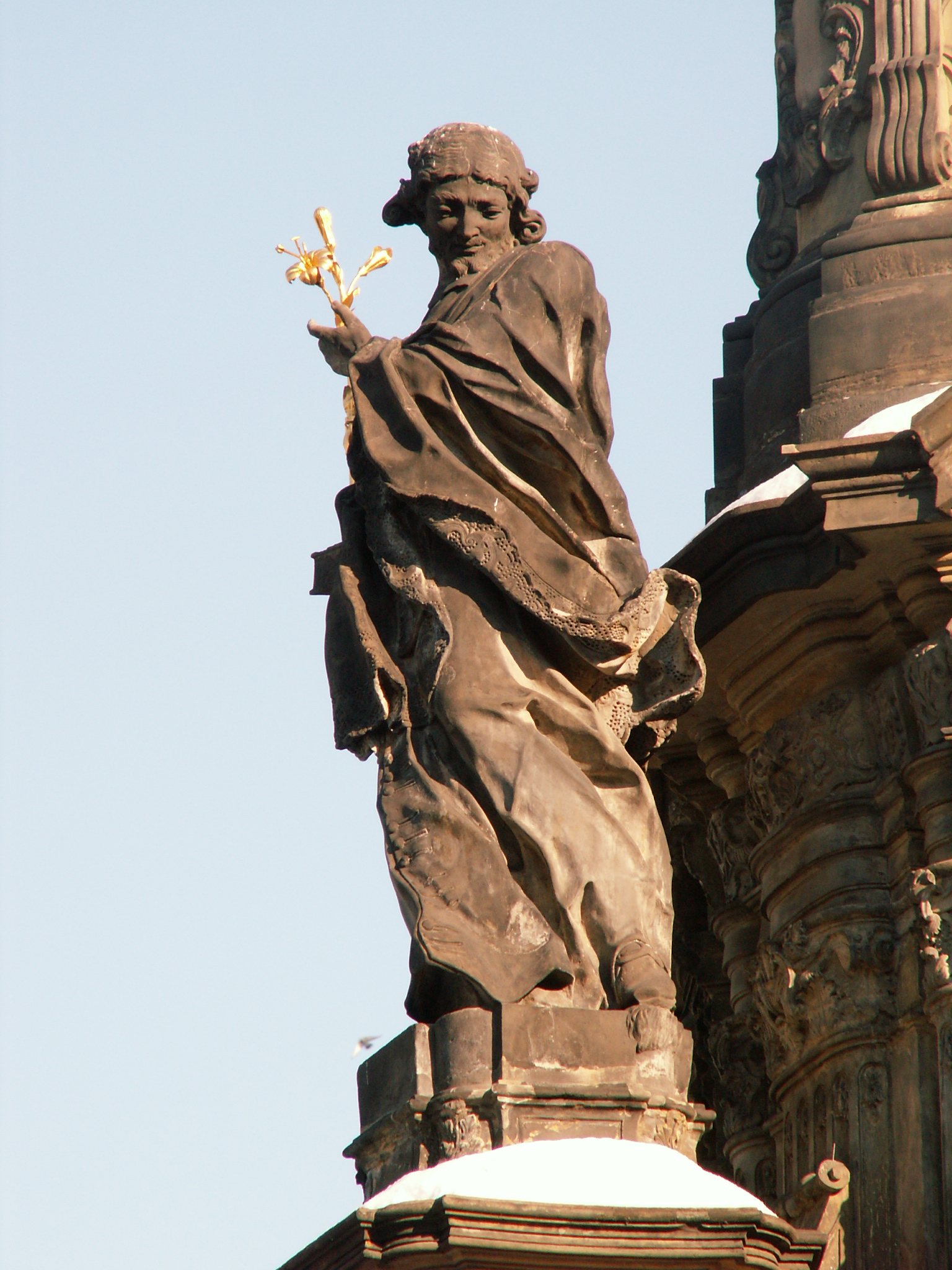
Statue de saint Jean Sarkander sur la Colonne de la Sainte Trinité
d'Olomouc.
Statue
of Saint John Sarkander on the Holy Trinity Column in Olomouc
socha svatého Jana Sarkandra na sloupu Nejsvětější Trojice v Olomouci
Saint Jan Sarkander
Prêtre et martyr (+ 1620)
Martyr à Olomouc en
Moravie. Curé d’Holesov, à l'époque des hérésies hussites, accusé de
conspiration avec l'armée polonaise en vue d'une invasion, il refusa de trahir
le secret de la confession qu'il avait reçue du baron de Moravie. Il fut, pour
cela, soumis au supplice de la roue. Respirant encore, puis jeté en prison et
mourut au bout d’un mois.
Béatifié en 1860 par Pie
IX, canonisé
le 21 mai 1995, à Olomouc (République Czech) par Jean-Paul II lors de
son voyage en République Tchèque.
"Jan Sarkander naît
en 1576 à Skoczow, ville du Royaume de Bohême qui, après la deuxième guerre
mondiale, a été rattachée à la Pologne avec toute la Silésie. Prêtre simple et
généreux, il exerce son ministère en Moravie, fidèle à son devoir. C'est
l'époque où règne le principe 'cujus regio, ejus religio' au nom duquel le
prince prétend imposer sa foi, ce qui entraîne des persécutions tant chez les
catholiques que chez les protestants. Ainsi Jan Sarkander subit de
cruelles tortures dans sa prison d'Olomouc alors qu'on essaie de lui arracher
des secrets de confession pour obtenir des renseignements. C'est donc en martyr
du secret de la confession qu'il meurt le 17 mars 1620."
À Olomuc en Moravie, l’an
1620, saint Jean Sarkander, prêtre et martyr. Curé d’Holesov, il refusa de
trahir le secret de la confession et fut, pour cela, soumis au supplice de la
roue. Respirant encore, il fut jeté en prison et mourut au bout d’un mois.
Martyrologe romain
SOURCE : http://nominis.cef.fr/contenus/saint/10753/Saint-Jan-Sarkander.html

Procession de Jean Sarkander
Freska
znázorňující průvod Jana
Sarkandera v Holešově.
Freska je v Sarkandrově kapli v Olomouci.
Namaloval Jano Köhler.
Fresco
of John Sarkander in Holešov.
Fresco by Jano Köhler is in St. Jan Sarkander chapel (Sarkandrova
kaple) in Olomouc (Czech
Republic).
Saint Jan Sarkander, prêtre
et martyr
Jan Sarkander naît en
1576 à Skoczow, ville du Royaume de Bohême. Prêtre simple et généreux, il
exerce son ministère de curé d’Holesov en Moravie, fidèle à son devoir. A
l'époque de l’hérésie hussite, il fut accusé de conspiration avec l'armée
polonaise et refusa de trahir le secret de la confession qu'il avait reçue du
baron de Moravie. Il fut, pour cela, soumis au supplice de la roue. Respirant
encore, puis jeté en prison, il mourut au bout d’un mois, le 17 mars 1620, à
Olomouc.

Incarcération
de Jean Sarkander
Fresco
of incarceration of John Sarkander. Fresco by Jano
Köhler is in St. Jan Sarkander chapel (Sarkandrova kaple) in Olomouc (Czech
Republic).
Freska
znázorňující věznění Jana Sarkandera. Freska je v Sarkandrově kapli v Olomouci.
Namaloval Jano Köhler.
Saint Jean Sarkander
prêtre et martyr
Saint Jean
Sarkander
C’est le 20 décembre 1576
que naît, à Skoczów, en Silésie, Jean Sarkander. Jeune, il fréquente le collège
des Jésuites à Olomouc, l’Université de Prague et la faculté de théologie de
Graz. Son destin est le mariage, mais la fiancée meurt avant les noces. Après
ce deuil, il complète les études en théologie, et à 32 ans il est ordonné
prêtre. En 1616 il est nommé curé à Holesov. C’est alors le début d’une période
de tensions marquée par la révolte des nobles de Bohème, en majorité
protestantes, contre l’Empire d’Autriche. Les Jésuites laissent Holesov et peu
après, en 1619, Jean Sarkander se rend en pèlerinage à Czestochowa.
Le martyre
Après avoir passé cinq
mois en Pologne, il retourne à Holesov au moment où la Moravie est le théâtre
des invasions et pillages de la part des troupes polonaises. Holesov est
épargnée parce que les fidèles en procession eucharistique, conduite par Jean
Sarkander, vont à la rencontre des soldats polonais. Le prêtre morave est
accusé d’espionnage pour le compte du roi polonais, qui était intervenu avec
ses troupes en soutien à l’empereur d’Autriche. Jean subit des interrogatoires,
accompagnés de tortures cruelles et prolongées. Après un mois de souffrances,
il meurt, à 46 ans, en prison, le 17 mars 1620.
La canonisation
Une autre date
significative est celle du 21 mai 1995, jour de la canonisation de Jean
Sarkander. Dans l’homélie, le pape Jean-Paul II souligne que la figure de saint
Jean Sarkander «allume une lumière exceptionnelle surtout à la fin de sa vie,
lorsqu’il est emprisonné et reçoit du Seigneur la grâce du martyre». «Dans une
période de turbulences, il se pose comme signe de la présence de Dieu, de sa
fidélité au milieu des contradictions de l’histoire». «Sa canonisation, a
conclu le pape Wojtyla à cette occasion, honore avant tout tous ceux qui , non
seulement en Moravie et Bohème, mais dans toute l’Europe de l’Est, ont préféré
la privation des biens, la marginalisation, la mort, plutôt que se plier à
l’oppression et à la violence».
SOURCE : https://www.vaticannews.va/fr/saint-du-jour/03/17/saint-jan-sarkander-pretre-et-martyr.html

Jean
Sarkander torturé
Fresco
of torture of John Sarkander. Fresco by Jano
Köhler is in St. Jan Sarkander chapel (Sarkandrova kaple) in Olomouc (Czech
Republic).
Freska
znázorňující mučení Jana Sarkandera v Holešově. Freska je v Sarkandrově kapli v Olomouci.
Namaloval Jano Köhler.
Saint Jean Sarkander,
martyr
A l’école des jésuites de
Prague
MARS 17, 2014 00:00
ANITA BOURDIN SPIRITUALITÉ
Le martyrologe romain
fait mémoire, le 17 mars, aux côtés du grand saint Patrick, saint patron de
l’Irlande, d’autres saints dont saint Jean Sarkander, veuf, prêtre et martyr
(1576-1620).
La Réforme protestante et
les partisans de Jean Hus luttaient contre l’orthodoxie catholique, plongeant
la Bohème et la Moravie dans le chaos et la guerre.
Jean Sarkander était né
en Silésie autrichienne, aujourd’hui en République Tchèque, il fit ses études
secondaires au collège des Jésuites de Prague. Il obtint son diplôme de
philosophie au séminaire, mais il interrompit ensuite ses études de théologie
pour se marier.
Après la mort de sa
femme, il les reprit et il reçut l’ordination sacerdotale en 1607, à Grozin. Il
fut nommé curé de Boskowitz, en Moravie, puis à Holleschau, dans le diocèse
d’Olomütz, actullement Olomouc, en Slovaquie. Au service des catholiques de la
région, il était en butte au harcèlement d’un grand propriétaire terrein,
Bitowski von Bystritz, qui combattait l’Eglise catholique.
Pourtant le dialogue
pastoral de Jean Sarkander lui permit, avec l’aide des Jésuites et du baron
Labkovitz de Moravie, de ramener plus de deux cents Hussites et de Frères
bohémiens à la foi catholique.
Mais la Guerre de Trente
ans éclata en 1618. Des Protestants levèrent une armée qui occupa Hollenschau.
Pour un temps, le prêtre se réfugia en Pologne, à Cracovie. Mais il revint pour
ne pas abandonner les fidèles.
Lorsque les troupes
polonaises avancèrent vers la ville, en 1620, il sortit en portant le
Saint-Sacrement, et s’interposa pour éviter que le sang soit encore versé. Mais
Bitowski le dénonça comme espion de la Pologne. Il fut arrêté et conduit à
Olomouc, où l’on voulut lui faire violer le secret de la confession, par la
torture: il devait dénoncer le baron Labkovitz.
Comme il restait fidèle,
il fut plongé dans le soufre et des plumes auxquelles on mit le feu, puis on
jeta sur ses brûlures de l’huile et de la poix. Son agonie dura plus d’un mois.
Anita Bourdin View all
articles
Journaliste française
accréditée près le Saint-Siège depuis 1995. Rédactrice en chef de fr.zenit.org.
Elle a lancé le service français Zenit en janvier 1999. Master en journalisme
(Bruxelles). Maîtrise en lettres classiques (Paris). Habilitation au doctorat
en théologie biblique (Rome). Correspondante à Rome de Radio Espérance.
Saint Jean Sarkander, martyr | ZENIT - Français
SOURCE : https://fr.zenit.org/2014/03/17/saint-jean-sarkander-martyr/

Josef
T. Rotter. Votivní obraz sv. Jana Nepomuckého a sv. Jana Sarkandra, 1755, kostel
sv. Tomáše, Brno.
Painting
of John Nepomuk and John Sarkander in Saint Thomas church, Brno
Saint Jean SARKANDER
Nom: SARKANDER
Prénom: Jean (Jan)
Pays: Moravie
Naissance:
1576 à Skoczow (Royaume de Bohême- auj. Pologne)
Mort:
17.03.1620 à Olomouc (Moravie)
Etat: Prêtre - Martyr
Note: Prêtre 1609, il
exerça le ministère paroissial dans plusieurs paroisses de Moravie. Capturé par
les protestants, il mourut martyr du secret de la confession, après de longues
tortures.
Béatification:
1860 à Rome par Pie IX
Canonisation:
21.05.1995 à Olomouc (Tchéquie - Moravie) par Jean Paul
II
Fête: 17 mars
Réf. dans l’Osservatore
Romano: 1995 n.21 p.1 & 3 - n.22 p.4,6 &
12 - n.23 p.11-12
Réf. dans la
Documentation Catholique: 1995 n.13 p.622-626
Notice
Jan Sarkander naît en
1576 à Skoczow, ville du Royaume de Bohême qui, après la deuxième guerre
mondiale, a été rattachée à la Pologne avec toute la Silésie. Prêtre simple et
généreux, il exerce son ministère en Moravie, fidèle à son devoir. C'est
l'époque où règne le principe "cujus regio, ejus religio" au nom
duquel le prince prétend imposer sa foi, ce qui entraîne des persécutions tant
chez les catholiques que chez les protestants. Ainsi Jan Sarkander
subit de cruelles tortures dans sa prison d'Olomouc alors qu'on essaie de lui
arracher des secrets de confession pour obtenir des renseignements. C'est donc
en martyr du secret de la confession qu'il meurt le 17 mars 1620. Jean Paul II
l'a canonisé à Olomouc en 1995 dans son voyage en République Tchèque au cour
duquel il s'est également rendu à Skoczow, en Pologne, lui-même ayant beaucoup
d'attaches avec cette terre de Silésie.

Figur
Johannes Sarkander, Stockerau
Jean Sarkander, martyr de
la confession
Au début du XVIIe siècle,
dans une Europe centrale secouée par les affrontements entre catholiques et
protestants, le prêtre Jean Sarkander continue d’exercer son ministère, malgré
un climat de violence et de suspicion. En Moravie, région travaillée par la
révolte, il reste fidèle à l’Église, se retrouve accusé de collusion avec le
camp catholique, et il est arrêté, dans un contexte où les enjeux politiques et
religieux sont étroitement mêlés. Emprisonné, puis soumis à la torture pour le
contraindre à révéler ce qu’un seigneur lui aurait confié en confession, il
incarne jusqu’au bout la fidélité de l’Église au secret sacramentel, que nul
pouvoir ne peut légitimement violer.
Les raisons d'y croire
L’époque est gravement
troublée par les sanglantes dissensions qui opposent les catholiques fidèles à
l’empereur d’Autriche aux révoltés de Bohême et de Moravie, très largement
gagnés au protestantisme et dont beaucoup continuent à vénérer le souvenir de
Jan Hus, grand hérésiarque. Dans ces régions en ébullition permanente, choisir
le parti de l’Église revient à s’exposer à des ennuis, des spoliations, des
persécutions, voire pire. Les Sarkander le savent, mais ils gardent fièrement
la foi de Rome et inscrivent leur fils au collège des jésuites d’Olomouc. Ils
ont donc fait un choix, politique certes, mais avant tout religieux, en toute
connaissance de cause.
En effet, comme le
rappellera Jean-Paul II dans la bulle de canonisation de Jean Sarkander, en
1995, il y a de grands mérites à s’exposer ainsi, par fidélité à la foi
catholique, à des difficultés et à des persécutions de la part du gouvernement.
Après des études de
philosophie et de théologie à Prague et à Graz, et bien qu’il semble attiré par
le sacerdoce, Jean rentre chez lui pour épouser celle que sa famille lui a
choisie. Celle-ci meurt cependant avant leur mariage. Jean voit dans la perte de
sa promise un signe providentiel et, renonçant à conclure une autre alliance et
à envisager tout autre projet mondain, il décide de reprendre ses études de
théologie afin de devenir prêtre. Il est ordonné en 1608. Là encore, c’est un
choix courageux, celui du renoncement, alors qu’une vie aisée et confortable
semblait l’attendre. Chez lui, l’appel de Dieu l’emporte sur toute autre
considération.
Après avoir été vicaire
dans plusieurs paroisses, l’abbé Sarkander est nommé curé d’Holesow, en
Moravie, en 1616. Cette nomination dans une région en pleine agitation, où les
protestants sont majoritaires, équivaut presque à signer son arrêt de mort.
L’inconfort et les risques de sa mission pastorale ne l’arrêtent pourtant pas.
En dépit des dangers encourus, le sens de son devoir et l’appel des âmes en
détresse l’emportent sur toute prudence humaine.
L’abbé Sarkander ressent
en effet vivement la nécessité d’arracher les âmes de ses paroissiens à
l’influence de la Réforme et de ramener les brebis égarées à Rome par la douceur.
Il se lie alors d’amitié avec un seigneur catholique polonais, le baron de
Lobkowitcz, qui l’aide matériellement dans sa mission et dont il devient le
confesseur. Ce faisant, il prend un risque, car son protecteur demeure fidèle à
l’Empire et représente l’une des têtes d’une opposition politique que l’on
cherche à anéantir.
Indifférent aux menaces
et aux périls, Sarkander poursuit pourtant son œuvre missionnaire, n’hésitant
pas à s’aventurer seul dans les zones aux mains des hussites et des frères bohémiens,
groupes protestants connus pour leur haine des catholiques et leur violence. Il
convertit ainsi, sans violence et sans intimidation, près de deux cents
personnes, ce qui montre la pertinence de ses propos.
En 1618, la situation
devient si tendue que le clergé catholique est contraint de quitter Holesow
pour la Pologne. Au bout de six mois d’exil, profitant d’une contre-offensive
impériale en Moravie, il décide de rentrer afin que son peuple ne soit pas plus
longtemps privé des sacrements ; il se montre alors vraiment le « Bon
Pasteur », imitation du Christ, qui donne sa vie pour ses brebis.
Peu après son retour, les
troupes polonaises au service de l’empereur ravagent la région. Décidé à
protéger les siens à tout prix, Jean prend le saint sacrement et marche
au-devant d’elles. À la vue de ce prêtre brandissant l’ostensoir, les Polonais,
persuadés que toute la population doit être catholique, épargnent Holesow, qui
sera la seule ville dans ce cas. Loin de le remercier, les autorités
protestantes tiennent son geste pour un crime et pour la preuve de sa collusion
avec l’ennemi. Il est arrêté et emprisonné pour haute trahison.
L’abbé Sarkander demeure
de longs mois emprisonné dans des conditions particulièrement pénibles. Il lui
reste pourtant un moyen d’être libéré : révéler les secrets que Lobkowicz,
à la tête de l’opposition, aurait pu lui confier sous le sceau de la
confession. Malgré les menaces, le prêtre s’y refuse, affirmant que, quand bien
même il saurait quelque chose, il ne pourrait en dire mot. Il faut une grande
force d’âme et une grande constance pour s’en tenir à une telle attitude. Seul
son respect des sacrements et de leur nature divine peut l’expliquer.
À la mi-février 1620, les
autorités protestantes, décidées à le faire parler à tout prix, le font mettre
à la torture. Malgré la cruauté de ce traitement, dont la férocité ne cesse de
croître, il ne dit rien et succombe un mois plus tard à ses blessures, le 17
mars, dans l’église Notre-Dame, où il a été transporté agonisant. Pour lui, le
secret de la confession l’a emporté sur toute autre considération : il
meurt martyr pour l’avoir maintenu coûte que coûte.
En savoir plus
S’il est juste, et
nécessaire, de parler encore de la Saint-Barthélemy de 1572 et des atrocités
commises par les catholiques à l’encontre des protestants, l’on omet
généralement d’évoquer celles, nombreuses et non moins horribles, perpétrées
par les réformés contre les catholiques, et d’abord contre le clergé, partout
où ils se trouvaient en position de force. Tel est le cas en Europe centrale au
commencement du XVIIe siècle. Les causes politiques et religieuses de ces
conflits étant étroitement mêlées, l’Église n’a pas toujours souhaité honorer
ces martyrs. Jean Sarkander, né en 1576 dans une famille de la noblesse à
Skoczow, en Silésie (aujourd’hui en Pologne), fait exception pour avoir préféré
la mort à la violation du secret de la confession.
Arrêté par les autorités
protestantes illégitimes de la Bohême-Moravie, en révolte contre les Habsbourg
durant la guerre de Trente Ans, il est accusé de ne s’être rendu en Pologne en
1618 que pour y pactiser avec les catholiques et leur livrer la ville d’Holesow,
dont il est le curé.
En réalité, le véritable
but de son emprisonnement est de lui arracher par la force les renseignements
militaires que son ami, le baron de Lobkowicz, aurait pu lui confier sous le
sceau du secret de la confession. Constatant que le prêtre, malgré des mois de
détention, s’y refuse, on le met à la torture, en lui brûlant tout le torse
avec des torches enflammées. Comme il ne parle pas, il est alors enduit de poix
et de plumes auxquelles ses tortionnaires mettent le feu, puis laissé brûler au
milieu de souffrances atroces. Jean Sarkander agonise durant un mois entier
avant de rendre l’âme le 17 mars 1620. Il avait quarante-neuf ans.
En le canonisant,
Jean-Paul II l’a donné en exemple à tous ceux qui souffrent injustement de la
prison, de la torture et de la mort sous des régimes totalitaires.
Spécialiste de l’histoire
de l’Église, postulateur d’une cause de béatification, journaliste pour de
nombreux médias catholiques, Anne Bernet est l’auteur de plus d’une quarantaine
d’ouvrages, pour la plupart consacrés à la sainteté.

Détail
de la torture de saint John Sarkander sur l’épitaphe de la chapelle
St. Jan Sarkander (Sarkandrova kaple) à Olomouc (Czech Republic).
Detail
of torture of John Sarkander at epitaph in St. Jan
Sarkander chapel (Sarkandrova kaple) in Olomouc (Czech
Republic).
Detail
epitafu Jana Sarkandera v Sarkandrově kapli v Olomouci.
Dettaglio della tortura di Giovanni Sarkander nella cappella a lui dedicata a Olomouc.
Also
known as
John Sarkander
Johannes Sarkander
Martyr of
the Confessional
Profile
Son of Georg Mathias
Sarkander and Helene Kornicz Sarkander. Born in a time and place in the midst
of the turmoil of the Protestant Reformation. His father died when
Jan was still young, and the family moved to Pribor. He married,
but his wife died when
they were young, and they had no children.
Educated by Jesuits at Prague,
receiving a master of philosophy degree
in 1603. Studied theology in Austria. Ordained in 1607 at
Grozin. Curate at
Boskowitz in 1613. Parish priest at
Olmütz in 1616.
There he became the center of a struggle for the hearts and souls of the local
people; he was supported by Baron von Labkowitz of Moravia,
but bitterly opposed by the wealthy anti–Catholic landowner
Bitowsky von Bystritz.
The year 1618 saw
the start of the Thirty Years War between Catholic and
Protestant armies.
When Protestant forces occupied Hollenschau, Jan was briefly exiled to Poland,
but returned to minister to his oppressed parish flock. Polish forces
moved into the area in 1620,
and battle seemed imminent. Jan visited the field commander, carrying the Blessed
Sacrament in a monstrance as
a shield and chastisement. No battles were fought in the area of Hollenshau.
Siezing the opportunity
to brand him a spy, and thus explain the lack of attack by the Polish troops,
his enemy von Bystritz denounced Father Jan
as a traitor. Jan was arrested,
taken to Olmütz, and tortured for
a confession, for revenge, and to get him to break the seal of the confessional and
supply damaging information about his patron and parishioner Baron von
Labkowitz. Sarkander was racked, beaten and murdered,
but he clung to his faith and
gave his tormentors nothing.
Born
20 December 1576 at
Skotschau (Skoczow), Austrian Silesia (in modern Poland)
covered in flammable
material and set on
fire on 17 March 1620 at
Olomouc, Moravia (in
the modern Czech Republic)
remains at the Cathedral of
Jan Sarkander at Olomouc (in modern Czech
Republic)
11
September 1859 by Pope Blessed Pius
IX
6 May 1860 by Pope Blessed Pius
IX at Rome, Italy
Sunday 21 May 1995 by Pope John
Paul II at Olomouc, Czech
Republic
Additional
Information
Catholic
Encyclopedia, by Francis Mershman
Saints
of the Day, by Katherine Rabenstein
books
Our Sunday Visitor’s Encyclopedia of Saints
other
sites in english
images
sitios
en español
Martirologio Romano, 2001 edición
fonti
in italiano
Dicastero delle Cause dei Santi
Martirologio Romano, 2005 edition
websites
in nederlandse
nettsteder
i norsk
MLA
Citation
“Saint Jan
Sarkander“. CatholicSaints.Info. 29 June 2023. Web. 17 March 2026.
<https://catholicsaints.info/saint-jan-sarkander/>
SOURCE : https://catholicsaints.info/saint-jan-sarkander/

Colored
statue of Saint John Sarkander by Jiří Antonín Heinz in
Church kostel sv. Mořice in Olomouc (Czech
Republic).
polychromovaná
socha svatého Sarkandra od Jiřího Antonína Heinze v kostele svatého mořice
v Olomouci.
St. Jan Sarkander
Feastday: March 17
Birth: 1576
Death: 1620
Canonized: Pope John Paul I
Martyred foe of the
Hussites. He was born on December 20 at Skotschau, in Austrian Silesia, and
educated at Prague. He was ordained in 1607 and served in various parishes,
defending the faith against
the Hussites. In 1618, at the start of the Thirty Years’ War, the Protestants
seized the local government. Two years later, Jan was taken prisoner at Olmutz
and was tried by the Hussites. He was racked and tortured and died on March 17.
He was canonized in 1995 by Pope John Paul II.
SOURCE : https://www.catholic.org/saints/saint.php?saint_id=3910

Church
of SS. Peter and Paul in Skoczów, statue of St. John Sarkander sculpted by
Wacław Donay in 1794, originally it was standing on the market square (descr.
by Schweppes)
Kościół
p.w. Świętych Apostołów Piotra i Pawła w Skoczowie, figura przedstawiająca św.
Jana Sarkandra (po prawej stronie od ul. Kościelnej) wykonana przez Wacława
Donaya w 1794 r., pierwotnie znajdowała się na skoczowskim rynku (opis
Schweppesa)
New
Catholic Dictionary – Blessed John Sarkander
Article
Martyr of
the seal of confession, born Skotschau, Austrian Silesia, 1576; died Olmütz,
1620. He received his degree of master of philosophy at Prague, 1603, and was
ordained, 1607. He was at Holleschau, formerly belonging to the Bohemian
Brethren, now a Jesuit College, when Moravia was invaded by the Polish troops,
and induced them to spare the college. The Protestants, therefore, accused him
of bringing the enemy into the country, put him on trial, and tortured him when
he refused to reveal what Lobkowitz, the governor of Moravia, had confessed to
him. He died in
prison. Beatified in 1860. Relics in the Cathedral of Olmütz.
MLA
Citation
“Blessed John
Sarkander”. New Catholic Dictionary. CatholicSaints.Info.
15 August 2018. Web. 18 March 2026.
<https://catholicsaints.info/new-catholic-dictionary-blessed-john-sarkander/>
SOURCE : https://catholicsaints.info/new-catholic-dictionary-blessed-john-sarkander/

Kašna
se sochou bl. Jana Sarkandra (Fulnek), nám. J. A. Komenského, Fulnek
St. Jan Sarkander
Martyred foe of the
Hussites. He was born on December 20 at Skotschau, in Austrian Silesia, and
educated at Prague. He was ordained in 1607 and served in various parishes,
defending the faith against
the Hussites. In 1618, at the start of the Thirty Years'War, the Protestants
seized the local government. Two years later, Jan was taken prisoner at Olmutz
and was tried by the Hussites. He was racked and tortured and died on March 17.
He was canonized in 1995 by Pope John Paul
II.
SOURCE : http://www.catholic.org/saints/saint.php?saint_id=3910

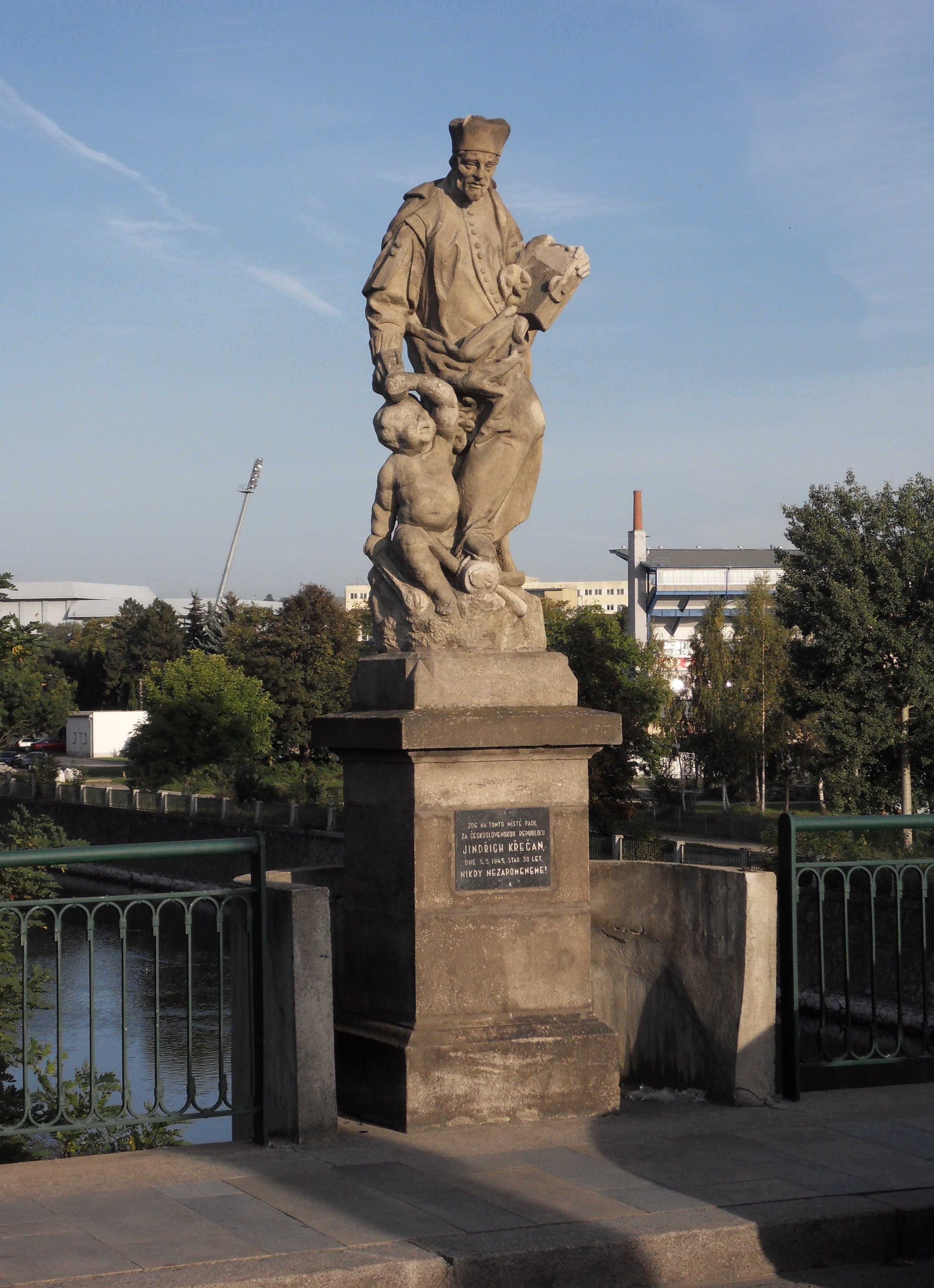
Socha
sv. Jana Sarkandera na Rooseveltově mostě přes Mži, Plzeň. Ve
směru od centra města 4. socha po pravé straně, na území Severního Předměstí
John Sarkander, SJ M (AC)
Born at Skotschau,
Silesia, in 1576; died 1620; beatified by Pius IX in 1860; canonized by Pope
John Paul II with Saint Zdislava Berka in Olomouc, Czech Republic, in 1995. The
canonization of Saint John Sarkander drew sharp criticism from Czech and Slovakian
Protestants, although the Holy Father offered and asked for forgiveness for
past sins committed in the name of religion.
John's father died when
he was still very young, but his mother ensured that he would receive an
excellent education by sending him to the Jesuits schools at Olmutz and Prague,
where he read philosophy in 1602. Four years later he married a Lutheran lady,
Anna Platska, who died the following year. Shocked by this experience, he
resumed his study of theology and was ordained to the priesthood in 1609.
He became a parish priest
of Holleschau in Moravia (diocese of Olmutz), a church whose property was
purchased by the Catholic Baron Lobkovitz from the Bohemian Brethren. John
converted many Hussites and Bohemian Brethren, but as a result, he incurred the
enmity of the Protestants, who came to power in Moravia in 1618 at the
beginning of the Thirty Years War. At that time Saint John made a pilgrimage to
Czestochowa, Poland, and remained for some months in Cracow.
In 1620, King Sigismund
III of Poland sent Cossack troops into Moravia to support Emperor Ferdinand III
against the Protestant Estates. Although the Cossacks spared Holeschau when
they met Sarkander in procession, he was unjustly accused of conspiring with
the Poles, sent to Olmutz, and chained in a dungeon to await questioning.
At his trial, he denied
any complicity in treasonable acts. He refused the order to reveal what he
heard in confession from his penitent, the baron of Moravia. For his continued
refusal to break the seal of the confessional, three times in mid-February, he
was cruelly racked, branded, covered with pitch and tar, and set ablaze. He
survived the ill-treatment, but died within the month (Benedictines, Farmer).
SOURCE : http://www.saintpatrickdc.org/ss/0317.shtml

Celkový
pohled na sochu sv. Jana Sarkandera na nice kostela Narození Panny Marie v
Kostníkách, okr. Třebíč.
Overview
of statue of John Sarkander at church of Saint Mary in Kostníky, Třebíč
District.
Bl. John Sarkander
Martyr of
the seal
of confession, born at Skotschau in Austrian Silesia, 20 Dec., 1576; died
at Olmütz,
17 March, 1620. In 1603 he merited the title of master of philosophy at Prague,
and after four years' study of theology was ordained priest at Graz.
He exercised his sacred functions in several places in the Diocese
of Olmütz, and was made parish priest (1613)
of Boskowitz, and (1616) of Holeschau in Moravia.
Since the fifteenth century the sects of
the Hussites and
of the Bohemian (or
United) Brethren had spread rapidly and taken possession of the churches and
institutions of the Catholics,
but when (1604) Ladislaus Poppel of Lobkowitz bought the estates of Holleschau,
he gave the church to the Catholics,
and made a Jesuit college out
of the house occupied by the Bohemian
Brethren. With the aid of the Jesuits,
John Sarkander converted two hundred and fifty of the strayed sheep, but
thereby drew upon himself the hatred of
the neighbouring landlord, Bitowsky of Bistritz. In 1618 the Protestants took
control of Moravia,
and John left Holleschau, made a pilgrimage to
the shrine of Our Lady of Czentoschau and passed a few weeks of retreat with
the Minims, who had a house there. He spent some months at Krakow and
(1619) returned to Holleschau. In February of the following year the Polish
auxiliary troops sent to the emperor by King Sigismund, passed through Moravia
and committed many depredations on the lands of the Protestants,
but spared Holleschau when John met them with the Blessed sacrament in his
hands. Bitowsky threw suspicions upon John Sarkander as if he, in conspiracy
with Lobkowitz, had brought the enemy into the territory. John was taken prisoner and
brought to Olmütz. The commission appointed for the trial was made up entirely
of Protestants,
but the Catholic city
judge Johann Scintilla was forced to attend. He made a report of the whole
transaction to the bishop,
Franz Cardinal von Dietrichstein (1625). The questions put were: who had called
the troops into the country; what underhand dealings John had practiced
in Poland;
what had been confided to him by Lobkowitz, whose confessor he was, and whose
secret plans he therefore knew.
Because John would not violate the secrets of the holy tribunal the rack was
used on 13, 17 and 18 February. On each of the latter days the torture lasted
for two and three hours, lighted candles and feathers soaked in oil, pitch, and
sulphur were strewn over his body and ignited. He lingered from the effects for
a month and died in prison.
The people immediately began to venerate John Sarkander and to ask for
his beatification.
The process was opened under Benedict
XIV but was interrupted. It was brought to a close by Pius
IX, who pronounced the solemn beatification 6
May, 1860. The relics are
in an altar dedicated to his name in the cathedral of Olmütz.
Sources
Birkowski (Krakow,
1628); Positio super martyrio etc. (Rome, 1825); Liverani, Della
vita e passione del Ven. Servo di Dio, Giov. Sarcander (Rome, 1855);
Luksch in Kirchenlex., s.v. Sarkander, Hist. polit. Blätter,
XXXI, 239.
Mershman, Francis.
"Bl. John Sarkander." The Catholic Encyclopedia. Vol. 8. New York:
Robert Appleton Company, 1910. 16 Mar. 2015
<http://www.newadvent.org/cathen/08484a.htm>.
Transcription. This
article was transcribed for New Advent by Richard E. Cullen.
Ecclesiastical
approbation. Nihil Obstat. October 1, 1910. Remy Lafort, S.T.D.,
Censor. Imprimatur. +John Cardinal Farley, Archbishop of New York.
Copyright © 2023 by Kevin Knight.
Dedicated to the Immaculate Heart of Mary.
SOURCE: http://www.newadvent.org/cathen/08484a.htm

Della
Vita e passione del veneralibile Servio di Dio Givanni Sarcander, Macerata 1855
Fr.
Lawrence Jagdfeld, O.F.M. / Tuesday, March 17, 2026
/ Categories: The
Great Cloud Witnesses
St. Jan Sarkander
March 17
Saint Jan Sarkander, also
known as John Sarkander, was born on 20 December 1576 in Skotschau (Skoczow),
Austrian Silesia (now in modern-day Poland). He lived during a tumultuous time
in history, marked by the chaos and conflict of the Protestant Reformation.
Jan's father, Georg Mathias Sarkander, passed away when he was young, and his
family relocated to Pribor. After receiving education from the Jesuits in
Prague, Jan earned a master's degree in philosophy in 1603. He further pursued
theological studies in Austria and was ordained as a priest in 1607 in Grozin.
Following his ordination, he served as a curate in Boskowitz in 1613 and later
became a parish priest in Olmütz in 1616. During his time in Olmütz, Jan
Sarkander played a central role in a power struggle for the hearts and souls of
the local population. He enjoyed the support of Baron von Labkowitz of Moravia,
while facing fierce opposition from the anti-Catholic landowner Bitowsky von
Bystritz. This conflict intensified with the outbreak of the Thirty Years War
in 1618 between Catholic and Protestant forces. When Protestant troops occupied
Hollenschau, Jan was temporarily exiled to Poland. However, he soon returned to
his parish to minister to the oppressed Catholic community. In 1620, Polish
forces moved into the region, and battle appeared imminent. It was during this
time that Jan Sarkander visited the field commander, carrying the Blessed
Sacrament in a monstrance as both a shield and a symbol of chastisement.
Miraculously, no battles were fought in the area of Hollenschau. Exploiting an
opportunity to slander him as a spy and explain the absence of attack by the
Polish troops, Jan's adversary, von Bystritz, accused him of treason.
Subsequently, Jan was arrested, taken to Olmütz, and subjected to torturous
interrogation in an attempt to extract a confession, seek revenge, and make him
break the seal of the confessional by revealing damaging information about
Baron von Labkowitz and his parishioners. Despite enduring severe racking,
beatings, and cruel murder, Jan Sarkander steadfastly clung to his faith and
refused to provide his tormentors with any information. Jan Sarkander died a
martyr's death on 17 March 1620 in Olomouc, Moravia (now in the modern Czech
Republic). His enemies covered him in flammable material and set him on fire.
His remains were later enshrined at the Cathedral of Jan Sarkander in Olomouc.
Centuries after his death, Jan Sarkander was venerated by the Catholic Church.
On 11 September 1859, Pope Blessed Pius IX recognized his holiness, leading to
his beatification on 6 May 1860. On 21 May 1995, Pope John Paul II canonized
him as a saint in Olomouc, Czech Republic. Saint Jan Sarkander's life and
martyrdom serve as a testament to his unwavering faith and dedication to the
Catholic Church, even in the face of persecution and torture. He is remembered
as a hero of the Confessional and a symbol of strength and fortitude in times
of religious strife.
SOURCE : https://www.fatherlawrence.com/The-Great-Cloud-of-Witnesses/st-jan-sarkander

Town
hall in Skoczow - painting on the tower depicting St. John Sarkander
Ratusz
w Skoczowie - obraz na wieży przedstawiający św. Jana Sarkandra
Saint of the Day – 17 March –
Saint Jan Sarkander (1576-1620) Priest and Martyr of the Seal
of Confession
Posted on March
17, 2020
Saint of the Day – 17
March – Saint Jan Sarkander (1576-1620) Priest and Martyr of the seal of
confession, Confessor – born on 20 December 1576 at Skotschau (Skoczow),
Austrian Silesia (in modern Poland) and died by being covered in flammable
material and set on fire on 17 March 1620 at Olomouc, Moravia (in the modern
Czech Republic). Patronages – the Seal of Confession, Confessors,
Moravia, Persecuted Christians. St Jan Sarkander was married for a
short period of time before he became widowed and pursued a path to the
Priesthood where he became active in the defense of the faith during a period
of anti-Catholic sentiment and conflict. He himself was arrested on
false accusations as a means of silencing him and he refused to give in to his
tormentors who tortured him for around a month before he died. His
body is incorrupt.
Jan Sarkander was born on
20 December 1576 in Poland into a Silesian household as the son of Georg
Mathias Sarkander and Helene Górecka. He had one sister and three
other brothers – Nicholas (a priest himself), Paul and Wenceslas.
His father died in 1589 and so he moved alongside his mother and siblings
to Příbor. His mother remarried and he ended up having a
half-brother Matthew as a result. Sarkander believed he was going
to become a Priest but dropped the idea and instead married and settled in
Brno. The marriage was short lived for his wife died not too long
after (in 1607) the couple married, they were childless. He then
decided to resume his studies for the Priesthood.
He studied at the Olomouc
college from 1597 until 1600, when due to the plague, he was forced to transfer
to the Charles University in Prague where he graduated with a master’s in
philosophical studies. He obtained further education from the Jesuits
in Prague and received his doctorate in philosophical studies in 1603.
He continued theological studies in Austria from 1604. He
later underwent theological studies at the Graz University and passed his
examinations on 21 December 1607. He was made a sub-deacon on 20
December 1608 and elevated into the diaconate on 16 March 1609.
On 22 December 1607 he
received the minor orders from Cardinal Franz von Dietrichstein.
The Bishop of Olomouc, Jan Křtitel Civalli ordained him to the Priesthood
on 22 March 1609 in Grozin and he was assigned to work as a parish priest in
Olmütz (Olomouc) and later he was sent to Holešov. Baron von
Lobkowitz from Moravia supported Sarkander’s efforts to re-Christianise the
region but the rich anti-Catholic landowner, Bitowsky von Bistritz opposed him
to the extent, where he wanted Sarkander killed.
The Thirty Years War
began in 1618 and it saw a bitter conflict between the Protestants and
Christians and this forced him to flee to Poland on 17 May 1619 for a brief
period of time when the Protestants occupied Hollenschau. He
returned that November. Polish forces moved into the area in 1620
and battle seemed imminent. He visited the field commander with the Eucharist
in a monstrance as a shield – the forces saw him come and this prevented battle
from taking place. The Jesuits also helped him to reconcile 200
non-Christians to the faith but the non-Christians were severely angered by
this.
In 1620 – during the
ongoing Bohemian Revolt – Protestant Moravian Estates (under von Bistritz)
accused Sarkander of being a traitor and instigator and so he was tortured in
the Olomouc prison. He was taken to Olmütz where he was tortured
for a confession (as well as for revenge) and to also provide them with
information on Sarkander’s friend Lobkowitz. One reason for him
being tortured was due to his refusal to divulge what was said under the seal
of confession.
Sarkander was covered in
flammable material and was set on fire. He did not die outright but
it took a month until he died of the injuries he sustained. Lighted
candles as well as feathers soaked in oil and sulfur placed on him and
ignited. The rack was used on him on 13 February and again on the
17 and 18th; it would last two to three hours. In 1720 his
remains were exhumed and were deemed to be incorrupt.
The “Saint Jan Sarkander
chapel” stands on the place of his torture at the top of Michael’s Hill.
The original torturing rack and Sarkander’s gravestone are preserved here
as well.
St Jan Sarkander’s Relics
at the Cathedral of Olmütz.Painting of saint John on the city hall tower in
Skoczów
St Jan’s remains reside
at the Cathedral of Jan Sarkander at Olomouc (in modern Czech Republic).
The people immediately began to venerate John Sarkander and to ask for
his Beatification. He was Beatified on 6 May 1860, at Saint Peter’s
Basilica by Pope Pius IX and Canonised on 21 May 1995 at Olomouc, Czech
Republic by St Pope John Paul II.
Author: AnaStpaul
Passionate Catholic.
Being a Catholic is a way of life - a love affair "Religion must be like
the air we breathe..."- St John Bosco Prayer is what the world needs
combined with the example of our lives which testify to the Light of Christ.
This site, which is now using the Traditional Calendar, will mainly concentrate
on Daily Prayers, Novenas and the Memorials and Feast Days of our friends in
Heaven, the Saints who went before us and the great blessings the Church
provides in our Catholic Monthly Devotions. This Site is placed under the
Patronage of my many favourite Saints and especially, St Paul. "For the
Saints are sent to us by God as so many sermons. We do not use them, it is they
who move us and lead us, to where we had not expected to go.” Charles Cardinal
Journet (1891-1975) This site adheres to the pre-Vatican II Catholic Church and
all her teachings. . PLEASE ADVISE ME OF ANY GLARING TYPOS etc - In June 2021 I
lost 100% sight in my left eye and sometimes miss errors. Thank you and I pray
all those who visit here will be abundantly blessed. Pax et bonum! View All Posts

Příbor, okres Nový Jičín. Místecká 41.
John Sarkander ; Příbor,
Nový Jičín District, Czechia. Místecká 41 (Příbor) ; Reliefs in Příbor
Příbor (Freiberg
in Mähren), Kreis Nový Jičín, Tschechien.
Jan
(Giovanni) Sarkander (1576-1620)
Sacerdote e martire
nacque il 20 dicembre 1576 a Skoczów in Slesia (oggi Polonia) da Gregorio
Mattia Sarkander (boemo) e Helena Górecka (polacca), sposata in seconde nozze.
Dopo la morte del padre (1589) la famiglia si trasferì a Pribor in Moravia
presso il figlio sacerdote di Helena, nato dal suo primo matrimonio. Jan
frequentò la scuola parrocchiale, il collegio dei gesuiti a Olomouc,
l'università di Praga e la Facoltà di Teologia di Graz.
Nel 1608 divenne
sacerdote a Brno. Successivamente svolse la sua attività pastorale in diverse
parrocchie e Diocesi di Olomouc.
Nel 1616 venne nominato
parroco di Holešov, sede del luogotenente di Moravia, Ladislav Popel di
Lobkovic, di cui divenne consigliere e confessore. Dopo la rivolta dei nobili
di Boemia, per la maggior parte protestanti, contro l'Impero d'Austria, il suo
programma di ricattolicizzazione della parrocchia divenne molto problematico, e
dopo l'arresto di Lobkovic, in attesa di tempi migliori, Jan si recò in
pellegrinaggio alla Madonna di Częstochowa (1619) e per 5 mesi rimase in
Polonia.
Questo viaggio in Polonia
gli fu fatale. Dopo il suo ritorno fu accusato di spionaggio a favore del Re
polacco, che nel frattempo era intervenuto con le sue truppe in sostegno
dell'Imperatore d'Austria, saccheggiando la Moravia, ma risparmiando proprio
Holešov, i cui fedeli si recarono incontro alle truppe polacche in processione
eucaristica, guidata da Jan Sarkander.
Il nuovo giudice supremo
della Moravia, protestante, fece catturare Sarkander sotto l'accusa di
tradimento. Subì quattro interrogatori accompagnati da crudeli e prolungate
torture (13-18 febbraio 1620). Dopo un mese di sofferenze morì in carcere il 17
marzo 1620, a 46 anni.
Fu beatificato da Pio IX
il 6 maggio 1860. Il processo di beatificazione mostrò che fu torturato in odio
alla fede. il motivo politico servì da pretesto.
SOURCE : http://www.vatican.va/news_services/liturgy/saints/ns_lit_doc_19950521_sarkander_it.html

The
Virgin Mary and Child receive Saint John Sarkander through the intercession of
Saint Anne. Olomouc Museum of Art
Panna
Maria s dítětem přijímá skrze přímluvu svaté Anny svatého Jana Sarkandra.
Muzeum umění v Olomouc, původně na oltáři kaple sv. Jana Sarkadra. Autor: Josef
František Wickart (1721/1724) (1728)
San Giovanni Sarkander Martire
Skoczow, Slesia, 20
dicembre 1576 - Olomouc, Moravia, 17 marzo 1620
Il martire moravo
Giovanni Sarkander studiava teologia, ma era destinato al matrimonio. La
fidanzata, però, morì prima delle nozze. Allora - nel 1608 a 32 anni - venne
ordinato prete nella Compagnia di Gesù. La sua vita sacerdotale trascorse a
Holesov, diocesi di Olomuc. Per questioni legate alla Guerra dei Trent'anni, la
comunità gesuita - malvista dai nobili protestanti - fu dapprima esiliata in
Polonia. Poi, al ritorno, Giovanni salvò Holesov dalle ire del re polacco
Sigismondo III Wasa. L'episodio fu interpretato come connivenza col nemico (in
realtà Giovanni era odiato per motivi di fede). Perciò fu imprigionato a Olomuc
e torturato. Morì un mese dopo per le sofferenze subite. E' santo dal 1995.
Emblema: Palma
Martirologio
Romano: A Olomouc in Moravia, san Giovanni Sarkander, sacerdote e martire,
che, parroco di Holešov, rifiutatosi di violare il segreto della confessione,
fu sottoposto al supplizio della ruota e, gettato in carcere ormai in fin di
vita, morì un mese più tardi.
Giovanni Sarkander, nacque il 20 dicembre 1576 a Skoczów in Slesia, allora nel principato di Tesin, che dal 1291 faceva parte del regno di Boemia, era figlio di una nobildonna del ramo dei cavalieri di Kornice e di Giorgio Mattia d’origine più umile.
Dopo la morte prematura del marito nel 1589, la madre trasferì la famiglia composta da cinque figli, Giovanni, Nicola, Paolo, Venceslao e una figlia, a Príbor in Moravia, città appartenente al vescovo di Olomouc e dove già viveva il suo figlio del primo matrimonio Matteo Vlcnovsky.
Giovanni frequentò la scuola parrocchiale del paese e poi insieme al fratello Nicola si trasferì ad Olomouc per continuare gli studi superiori nel collegio dei Gesuiti. Ma nel 1599 a causa della peste, la scuola fu chiusa e così Giovanni fu costretto a completare gli studi filosofici dai Gesuiti di Praga, dove entrò il 20 ottobre 1600.
Due anni dopo era laureato, nel 1604 si trasferì a Graz in Austria, per gli studi di teologia, ma due anni dopo, il 3 settembre 1606 lasciò gli studi, promettendosi di sposare in Moravia con Anna Platská, appartenente ad una distinta famiglia luterana; comprò anche una casa a Brno e una vigna a Klobouky.
Non si hanno notizie precise, ma la fidanzata morì prima delle nozze e questo mutò le intenzioni di Giovanni Sarkander, che il 21 dicembre 1607 diede gli esami di teologia e il giorno seguente ricevette dal cardinale Dietrichstein gli Ordini minori nel castello di Kromeriz.
Il 22 marzo 1608 venne ordinato sacerdote a Brno; negli anni che vanno dal 1608 al 1616, trascorse la sua vita sacerdotale ricoprendo vari incarichi nelle parrocchie della diocesi di Olomouc; non tutto filò liscio, sia con le autorità ecclesiastiche che con quelle dell’imperatore d’Austria.
A Holesov i Gesuiti intendevano costituire un centro per la ricattolicizzazione della parrocchia, che era stata in balia della setta dei “Fratelli boemi”, (insieme di un movimento protestante molto forte in quel tempo specie in Boemia), inviando quindi i membri più abili, con l’intenzione di aprirvi anche una Casa di formazione dei gesuiti stessi, il suo nome fu consigliato dal cardinale e dal luogotenente di Moravia, come garanzia di sicuro successo.
Nel 1618 i nobili della Boemia, in maggior parte protestanti, si rivoltarono contro l’Impero d’Austria e anche una parte dei nobili della Moravia passò all’opposizione, al protettore di Giovanni Sarkander, il luogotenente Popel de Lobkovic fu tolto l’incarico e incarcerato a Brno e anche i Gesuiti, il 17 maggio 1619 dovettero lasciare Holesov.
Il Sarkander rimase solo come parroco, diventando l’oggetto dell’odio della maggioranza protestante degli abitanti; convinto dal suo decano e dai fedeli cattolici, si allontanò da Holesov andando a Cracovia, girando per un certo tempo a Czestochowa e Ratibor, poi ricevette una lettera del Popel che lo invitava a tornare a Holesov, cosa che fece a fine novembre 1619.
A febbraio 1620 nel corso della Guerra dei Trent’anni, la cavalleria del re polacco Sigismondo III Vasa, passando per la Slesia e la Moravia, diretta ad aiutare l’imperatore d’Austria, devastò e incendiò la regione. Holesov fu salvata perché Giovanni Sarkander con il cappellano Samuele Tucek uscì incontro alle truppe con una processione eucaristica.
Questo episodio però aumentò il sospetto dei nobili di Moravia contro il parroco, che credevano alleato di re Sigismondo; il nuovo giudice supremo della Moravia Venceslao Bitovsky fece allora incarcerare tutti i sacerdoti della regione, ma il Sarkander riuscì ad evitarlo, nascondendosi nel castello di Tovacov e da lì poi scappò nelle vicine foreste, ma qui venne catturato e condotto incatenato ad Olomouc, come traditore della patria.
L’odio degli accusatori, che lo sottoposero a ben quattro interrogatori, era scaturito per motivi religiosi, ma si mascherava con l’intento di farlo confessare di aver procurato l’intervento dei cosacchi. Con questo motivo politico fu sottoposto alla tortura del cavalletto e con le torce, per ben tre ore, solo le proteste dell’unico giudice cattolico del tribunale, fecero smettere la tortura, ma Giovanni Sarkander non sopravvisse al trattamento disumano e dopo un mese di sofferenze in carcere, morì il 17 marzo 1620.
Dopo la sua morte si instaurò subito un culto di venerazione, considerandolo come un martire della fede, essendo chiaro dalle testimonianze, che venne ucciso in odio alla fede cattolica, dai protestanti dell’epoca e non per motivi politici inesistenti. Il suo sepolcro nella chiesa cattedrale di S. Venceslao ad Olomouc, divenne meta di pellegrinaggi, di numerosi fedeli ma anche di sovrani tra i quali il re di Polonia Giovanni Sobieski nel 1683.
Il parroco e martire Giovanni Sarkander venne beatificato da papa Pio IX il 6 maggio 1860 e canonizzato da papa Giovanni Paolo II il 21 maggio 1995, ad Olomouc in Cecoslovacchia.
Autore: Antonio Borrelli
SOURCE : http://www.santiebeati.it/dettaglio/45825

San
Giovanni Sarkander e santa Zdislava in una vetrata della
chiesa dei santi Cirillo e Metodio a Olomouc.
Zdislava of Lemberk (Saint
Zdislava) and Saint John
Sarkander in Sts. Cyril and Methodius's church in Olomouc (Czech
Republic).
Svatá Zdislava a Svatý Jan
Sarkander v kostele svatého Cyrila a
Metoděje v Olomouci.
VIAGGIO APOSTOLICO NELLA
REPUBBLICA CECA E IN POLONIA
CANONIZZAZIONE DI
ZDISLAVA DI LEMBERK E DI JAN SARKANDER
OMELIA DI GIOVANNI PAOLO
II
Aeroporto Nerědìn di Olomouc (Repubblica Ceca)
Domenica, 21 maggio 1995
1. “Vado e torno a voi”
(cf. Gv 14, 28).
Gesù pronuncia queste
parole nel Cenacolo, il giorno prima della sua morte. Esse racchiudono in
estrema sintesi l’evento pasquale: la dipartita mediante la morte di croce e la
nuova venuta nella risurrezione.
Ma il contesto
dell’odierno Vangelo indica anche un’altra dimensione. Dopo la risurrezione, il
quarantesimo giorno, Cristo lascerà gli Apostoli tornando al Padre. Questa
definitiva dipartita, è contemporaneamente la condizione per un’ulteriore
presenza, che si estenderà di generazione in generazione, secondo le parole
stesse di Cristo: “Io sono con voi tutti i giorni, sino alla fine del mondo” (Mt 28,
20).
“Sono con voi” vuol dire:
sono con la Chiesa edificata su di voi, e vengo sempre in virtù dello Spirito
Santo. È questa una multiforme venuta: nella parola del Vangelo, nei
sacramenti, specialmente nell’Eucaristia, nella misteriosa inabitazione del
cuore mediante la grazia. A quest’ultima venuta si riferiscono le parole che
abbiamo ascoltato: “Se uno mi ama, osserverà la mia parola e il Padre mio lo
amerà e noi verremo a lui e prenderemo dimora presso di lui” (Gv 14, 23).
L’amore fa sì che le
persone dimorino spiritualmente l’una nell’altra. È così nella dimensione
umana; ciò avviene in modo ancora più profondo nella dimensione divino-umana.
“Se uno mi ama [...] il Padre mio lo amerà e noi verremo a lui e prenderemo
dimora presso di lui” (Gv 14, 23). L’amore per Cristo dunque attira
l’amore del Padre e fa sì che il Figlio ed il Padre siano presenti nell’anima
dell’uomo, si abbandonino intimamente all’uomo. Tale “dono” è opera dello
Spirito Santo, l’Amore increato. Effuso nel cuore dell’uomo, Egli fa sì che
tutta la Santissima Trinità sia presente in lui e dimori in lui.
Questa inabitazione, che
scaturisce dall’amore e arricchisce l’amore, esige di attuarsi nella verità.
Chi ama Gesù osserva la sua parola, quella parola di cui Egli dice: “Non è mia,
ma del Padre che mi ha mandato” (Gv 14, 24). Chi ama Gesù vive del suo
Vangelo.
Cristo è il Verbo del
Padre. In Lui si realizza la pienezza della verità, che è in Dio e che è Dio
stesso. Egli “si fece carne” (Gv 1, 14) per trasmetterci questa verità con
parole umane, con opere umane e, definitivamente, nell’evento pasquale della
croce e della risurrezione. Ora Cristo dice: “Vado al Padre” (Gv 14, 28).
Ciò è per lui motivo di gioia divina, una gioia che Egli desidera trasmettere
ai suoi discepoli. Con l’umanità che ha assunto, il Verbo torna alla propria
Fonte – a quell’Eterno Alveo da cui, senza un inizio, attinge il suo inizio.
2. “Vado e torno a voi”.
Torno in virtù dello
Spirito Santo. Cristo promette: “Il Consolatore, lo Spirito Santo che il Padre
manderà nel mio nome, egli v’insegnerà ogni cosa e vi ricorderà tutto ciò che
io vi ho detto” (Gv 14, 26). La Liturgia, riproponendo oggi queste parole,
pronunciate da Gesù nel Cenacolo il giorno prima della Passione, orienta i
nostri pensieri verso i misteri ormai vicini dell’Ascensione del Signore e
della Pentecoste. Gli Apostoli hanno già ricevuto lo Spirito Santo la sera del
giorno di Pasqua, quando il Risorto, venuto in mezzo a loro nel Cenacolo,
mostrando le ferite delle mani e del costato, ha detto loro: “Ricevete lo
Spirito Santo” (Gv 20, 22).
Ciò che si è compiuto
nell’intimità, deve ora compiersi in mezzo alla gente riunita a Gerusalemme per
la festa di Pentecoste. Non ci sarà più Gesù con gli Apostoli nel Cenacolo, ma
la venuta dello Spirito Santo farà sì che il Cristo cominci ad operare con
efficacia nuova in loro e mediante loro: ad operare come verità e come amore.
Il Consolatore, lo
Spirito Santo insegnerà agli Apostoli e alla Chiesa sino alla fine del mondo
tutto ciò che Cristo stesso ha detto loro. Egli veglierà affinché
l’insegnamento di Gesù, la sua verità duri incessantemente nella Chiesa;
affinché il Verbo, uno col Padre nella divinità, possa continuare ad unire tra
loro gli uomini di generazione in generazione con quella verità e quell’amore
che Egli ha rivelato con la sua prima venuta nel mondo. Così dunque il Vangelo
dell’odierna domenica ci orienta ormai molto chiaramente verso la nascita della
Chiesa e verso la sua missione.
“Vi lascio la pace, vi do
la mia pace” (Gv 14, 27). Cristo dice questo nel momento in cui i volti
degli Apostoli lasciano intuire un senso di preoccupazione e di ansia. Sono
infatti le ultime ore prima della passione. E perciò Egli dice loro: “Non sia
turbato il vostro cuore e non abbia timore” (Gv 14, 27). Sarete, è vero,
testimoni della mia umiliazione, della mia crocifissione e morte infame sulla croce.
È comprensibile che siate angosciati da una simile prospettiva, che soffriate
all’idea che il vostro Maestro debba lasciarvi in questo modo. Ma non siate
turbati! Dopo la mia dipartita tornerò da voi risorto e godrete la pace che io
vi do. In mezzo alle inquietudini del mondo, questa pace vi permetterà di
essere miei testimoni, vi permetterà di annunziare il Vangelo e di condurre gli
uomini alla santità.
3. “Vado e torno a voi”.
Le parole pronunciate da
Cristo nel Cenacolo si compiono di generazione in generazione. Gli Apostoli, a
partire dal giorno di Pentecoste, sono andati nel mondo intero per annunziare
il Vangelo a tutte le nazioni, come ci ha ricordato la prima lettura, tratta
dagli Atti degli Apostoli. Il Vangelo fu annunziato, per bocca di Paolo e di
Barnaba, tra i popoli pagani. E tale apertura al mondo fu confermata dallo
Spirito per bocca della comunità apostolica, come è attestato nel cosiddetto
Concilio di Gerusalemme.
Questo medesimo Vangelo
della verità e della santità raggiunse a suo tempo le nostre terre slave –
arrivò in Boemia e in Moravia, e qui si stabilì, come pure nelle regioni
limitrofe. Esso ha prodotto frutti sovrabbondanti di grazia e di santità
attraverso i secoli. Li ha prodotti anche in questa vostra Chiesa, antica ed
illustre, che oggi ho la gioia di visitare. Saluto il vostro Arcivescovo, il
caro Mons. Jan Graubner, che ringrazio per il cordiale indirizzo e per i
gentili auguri che a nome di tutti mi ha rivolto. Con lui saluto il Vescovo
Ausiliare e gli altri Presuli presenti. Saluto anche i sacerdoti, i religiosi e
le religiose, i catechisti, i laici impegnati e tutti voi che siete intervenuti
a questa solenne celebrazione.
Oggi, infatti, qui in
Olomouc, ho il privilegio di celebrare insieme con voi la canonizzazione del beato
Jan Sarkander e della beata Zdislava di Lemberk.
4. La vicenda umana di
santa Zdislava, nata in Moravia e vissuta in Boemia settentrionale nel secolo
XIII, si distingue per una straordinaria capacità di donazione agli altri. Lo
testimonia innanzitutto il suo comportamento in famiglia ove, come sposa del
conte Havel di Lemberk, fu – secondo le parole del mio venerato predecessore
Paolo VI – “esempio di fedeltà coniugale, sostegno di spiritualità domestica e
di onestà dei costumi”. Lo conferma poi il suo impegno generoso nel campo
caritativo e assistenziale, specialmente al capezzale dei malati, ai quali
riservò sempre tali sollecitudini e premure da essere ancor oggi ricordata come
“guaritrice”.
Santa Zdislava, vivendo
intensamente la spiritualità di terziaria domenicana, seppe fare di se stessa
un dono, secondo la parola di Gesù: “Vi è più gioia nel dare che nel ricevere”
(At 20, 35). Ecco il segreto della grande simpatia che la sua figura ha
sempre suscitato già in vita, come poi dopo la morte e fino ad oggi. Il suo
esempio appare di notevole attualità, soprattutto in riferimento al valore
della famiglia, che – ella ci insegna – dev’essere aperta a Dio, al dono della
vita e alle necessità dei poveri. La nostra santa è una mirabile testimone del
“Vangelo della famiglia” e del “Vangelo della vita”, che la Chiesa è più che
mai impegnata a diffondere in questo passaggio dal secondo al terzo millennio
cristiano.
Famiglie della Boemia,
famiglie della Moravia, tesoro inestimabile di questa nazione, diventate ciò
che siete nel piano di Dio, specchiandovi nell’esempio dei vostri santi! E tu,
Zdislava di Lemberk, guida le famiglie della tua Patria e del mondo intero alla
conoscenza sempre più profonda della loro missione, rendile aperte al dono, tu,
madre dolce e forte, caritatevole e pia!
5. Quasi quattro secoli
dopo incontriamo Jan Sarkander, sacerdote e martire. Egli è vanto soprattutto
vostro, carissimi Moravi, che da sempre lo amate e venerate come protettore,
specie nelle ore più penose della vostra storia.
La sua figura si accende
di luce eccezionale soprattutto alla fine della vita, quando viene imprigionato
e riceve dal Signore la grazia del martirio. In un’epoca di turbolenze, egli si
pone come segno della presenza di Dio, della sua fedeltà in mezzo alle contraddizioni
della storia.
Ancor oggi ci colpisce
l’adamantina fermezza di questo prete semplice e generoso: la sua fedele
dedizione al dovere, fino alla morte. Nella segreta del carcere di Olomouc – di
cui conservo ancora la forte impressione ricevuta nel visitarla – egli,
sottoposto per settimane ad atroci supplizi, prega, e il Signore gli dona di
offrire un raro esempio di pazienza e di costanza.
Forse oggi più che mai,
all’indomani del Concilio Vaticano II e alle soglie del Terzo Millennio
cristiano, ci è dato di cogliere la misteriosa consegna di Jan Sarkander per la
Chiesa in Europa e nel mondo. La sua canonizzazione va anzitutto ad onore di
tutti coloro che, in questo secolo, non solo in Moravia e Boemia ma in tutta
l’Europa dell’Est, hanno preferito la privazione dei beni, l’emarginazione, la
morte, piuttosto che piegarsi all’oppressione e alla violenza.
segnato in queste terre
il Corpo di Cristo. Anzi, oggi io, Papa della Chiesa di Roma, a nome di tutti i
cattolici, chiedo perdono dei torti inflitti ai non cattolici nel corso della
storia turbolenta di queste genti; e al tempo stesso assicuro il perdono della
Chiesa cattolica per quello che di male hanno patito i suoi figli. Possa questo
giorno segnare un nuovo inizio nello sforzo comune di seguire Cristo, il suo
Vangelo, la sua legge d’amore, il suo anelito supremo all’unità dei credenti in
Lui: “Che tutti siano uno” (Gv 17, 21).
6. “Popoli tutti, lodate
il Signore” (Rit. Salmo resp.).
Così canta la Chiesa
nell’odierna Domenica del tempo pasquale. “Esultino le genti e si rallegrino,
perché giudichi i popoli con giustizia, governi le nazioni sulla terra” (Sal 67,
5). Questo invito alla gioia trae origine dal compimento delle promesse di
Cristo nel Cenacolo durante l’ultima Cena: esso scaturisce dal mistero pasquale
della sua morte e risurrezione.
È la gioia della
Pentecoste. Infatti, in virtù dello Spirito Santo, gli Apostoli di Cristo e i
loro successori hanno evangelizzato i popoli e le nazioni del mondo intero,
affinché si conoscesse sulla terra la via che è Cristo, fra tutte le genti si
accogliesse la sua salvezza (cf. Sal 67, 3).
Oggi questa gioia
coinvolge in modo particolare le nazioni slave di Boemia e Moravia, dove la via
del Vangelo è aperta ormai da oltre dieci secoli. Fonte della nostra esultanza
sono, oggi, in particolare coloro che hanno seguito tale via e ci guidano su di
essa verso l’incontro con Cristo: santa Zdislava e san Jan Sarkander. Per la
loro testimonianza la luce del Regno di Dio si è avvicinata agli uomini ed
illumina il cammino delle generazioni verso la celeste Gerusalemme ov’è la
dimora eterna in Dio.
Copyright © Dicastero per
la Comunicazione

Relics
of Saint John Sarkander. Olomouc, Cathedral.
Reliquiario
che contiene i resti di san Giovanni Sarkander nella cattedrale di Olomouc.
Jan Sarkander
(1576-1620)
Beatificazione:
- 06 maggio 1860
- Papa Pio IX
Canonizzazione:
- 21 maggio 1995
- Papa Giovanni
Paolo II
- Olomouc, Repubblica
Ceca
Memoria Liturgica:
- 17 marzo
Sacerdote, presbitero e
martire: parroco di Holešov, rifiutatosi di violare il segreto della
confessione, fu sottoposto al supplizio della ruota e, gettato in carcere ormai
in fin di vita, morì un mese più tardi
"La sua
canonizzazione va ad onore di chi ha preferito la privazione dei beni,
l’emarginazione, la morte, piuttosto che piegarsi all’oppressione e alla
violenza" (Giovanni Paolo II)
Nacque il 20 dicembre
1576 a Skoczów in Slesia (oggi Polonia) da Gregorio Mattia Sarkander (boemo) e
Helena Górecka (polacca), sposata in seconde nozze. Dopo la morte del padre
(1589) la famiglia si trasferì a Pribor in Moravia presso il figlio sacerdote
di Helena, nato dal suo primo matrimonio. Jan frequentò la scuola parrocchiale,
il collegio dei gesuiti a Olomouc, l'università di Praga e la Facoltà di
Teologia di Graz.
Nel 1608 divenne
sacerdote a Brno. Successivamente svolse la sua attività pastorale in diverse
parrocchie e Diocesi di Olomouc.
Nel 1616 venne nominato
parroco di Holešov, sede del luogotenente di Moravia, Ladislav Popel di
Lobkovic, di cui divenne consigliere e confessore. Dopo la rivolta dei nobili
di Boemia, per la maggior parte protestanti, contro l'Impero d'Austria, il suo
programma di ricattolicizzazione della parrocchia divenne molto problematico, e
dopo l'arresto di Lobkovic, in attesa di tempi migliori, Jan si recò in
pellegrinaggio alla Madonna di Częstochowa (1619) e per 5 mesi rimase in
Polonia.
Questo viaggio in Polonia
gli fu fatale. Dopo il suo ritorno fu accusato di spionaggio a favore del Re
polacco, che nel frattempo era intervenuto con le sue truppe in sostegno
dell'Imperatore d'Austria, saccheggiando la Moravia, ma risparmiando proprio
Holešov, i cui fedeli si recarono incontro alle truppe polacche in processione
eucaristica, guidata da Jan Sarkander.
Il nuovo giudice supremo
della Moravia, protestante, fece catturare Sarkander sotto l'accusa di
tradimento. Subì quattro interrogatori accompagnati da crudeli e prolungate
torture (13-18 febbraio 1620). Dopo un mese di sofferenze morì in carcere il 17
marzo 1620, a 46 anni.
Fu beatificato da Pio IX
il 6 maggio 1860. Il processo di beatificazione mostrò che fu torturato in odio
alla fede; il motivo politico servì da pretesto.
SOURCE : https://www.causesanti.va/it/santi-e-beati/jan-sarkander.html

Den hellige Johannes
Sarkander (1576-1620)
Minnedag:
17. mars
Den hellige Johannes
Sarkander (cz: Jan) ble født den 20. desember 1576 i Skoczów (Skotschau) ved
Ceský Tesin (Teschen) i østerriksk Schlesien, nå i Polen like ved grensen til
Tsjekkia. Hans far Grzegorz Maciej Sarkander (Georg Mattias) var av tsjekkisk opprinnelse,
mens moren Helena Gorecka var polsk. Johannes ble ikke døpt i sognekirken, som
på den tiden var okkupert av protestanter, men i en liten kirke i tilknytning
til hospitalet, som var på katolske hender.
Faren døde i 1589 da
Johannes var bare tretten år, og Helena, som satt igjen med fire sønner og en
datter, bekymret seg over hvordan hun skulle sikre dem en katolsk utdannelse.
Hun bestemte seg da for å slå seg ned i Przybor (Pribor) i det mer katolske
Morava (Mähren), hvor hennes sønn Matteus fra første ekteskap bodde. Johannes
gikk på den katolske sogneskolen i Przybor før han som 17-åring i 1593 ble
sendt til jesuittene i Olomouc (ty: Olmütz) i det nordlige Morava. Fra 1600
studerte han filosofi i Praha, hvor han tok magistergraden i 1602 og doktorgraden
i 1603. Deretter begynte han i 1604 å studere teologi i Graz i Østerrike.
Men han avbrøt studiet i
1606 for å gifte seg med en luthersk kvinne, Anna Platská, som var datter av en
ansett luthersk familie i Valasské Mezirici i Morava, hvor hans bror Nikolas
hadde vært sogneprest siden 1604. Hun døde imidlertid året etter. Dypt sjokkert
og beveget gikk han tilbake til teologistudiene, og han avla sine siste
eksamener den 21. desember 1607. Kardinal Dietrichstein tildelte ham de lavere
vielser, som året etter ble fulgt av de høyere vielser. Den 22. mars 1609 ble
han presteviet i Brno (Brünn).
Deretter forkynte han den
katolske tro i Morava i syv år som hjelpeprest i fem ulike sogn: Opava, Unicov,
Charvaty, Zdounek og Boskovice (1613-16). Han ble i 1616 etter råd fra
jesuittene utnevnt til sogneprest i Holeszov ved Kromeriz (Holleschau ved
Kremsier) i det sørlige Morava, en by som var hovedsakelig protestantisk. Siden
1400-tallet hadde distriktet vært et arnested for husittene, som var tilhengere
av reformatoren og den erklærte kjetteren Jan Hus, og det var også hjemstedet
til De bøhmiske Brødre, en gruppe som opprinnelig var opptatt av at legfolket
skulle få nattverd under begge skikkelser, men som senere knyttet seg til
husittene og deretter til lutheranerne.
Den lokale jordeieren,
baron Ladislas Popel von Lobkovitz, hadde i 1604 kjøpt landområdene i Holeszov
og fravristet disse sektene den sognekirken som Johannes var blitt utnevnt til,
og gitt den til katolikkene. Baronens handling var et klart brudd på charteret Majestát,
som var utstedt i 1609 av kong Rudolf av Bøhmen (1575-1611; keiser 1576-1612)
og garanterte fri gudsdyrkelse for katolikker og husitter samt alle sektene som
hadde undertegnet den såkalte Bøhmiske konfesjon. Men i en ikke-sentralisert administrasjon
hvor lokale adelsmenn hadde frie hender, virket en slik handlig ikke unaturlig.
Men to år etter Johannes' utnevnelse førte et angivelig brudd på charteret til
at de protestantiske stendene stilte to guvernører for retten. De ble kastet ut
av et vindu i Praha, og dette var starten på Trettiårskrigen i 1618.
Det fulgte et omfattende
opprør i Bøhmen, og de kongelige guvernørene ble erstattet av direktører. Disse
nektet å støtte Rudolfs nevø, keiser Ferdinand II (1619-37). På den tiden var
opprøret ikke nådd Morava. Johannes kastet seg ut i pastoral aktivitet som
sogneprest og brakte hundrevis av konvertitter blant bøhmiske brødre og
husitter tilbake til Kirken. Dermed pådro han seg fiendskap fra en mektig
landeier i nærheten, Bitowsky von Bystritz, som var voldsomt antikatolsk og en
rival av baron Lobkovitz. Det ble gjort flere forsøk på å ta Johannes' liv. Nå
brøt det ut opprør i Morava også, og protestantene grep makten. De satte i gang
med å ødelegge katolske institusjoner. Baron von Lobkovitz ble arrestert og
jesuittene utvist. I mellomtiden ble Ferdinand II avsatt, og tronen ble i 1619
gitt til den kalvinistiske pfalzgreven Fredrik V («vinterkongen» 1619-20).
Etter råd fra sognebarn
og venner dro Johannes på pilegrimsreise til Czestochowa i Polen, og han ble i
Kraków i noen måneder da han hørte at lutheranerne hadde okkupert hans sogn. Så
snart han fant det forsvarlig, vendte Johannes tilbake til sin flokk i november
1619, men landet var i praksis i krig. I februar 1620 sendte kong Sigismund III
av Polen (1587-1632) kosakk-tropper inn i Morava for å støtte keiser Ferdinand
IIs kamp mot de protestantiske herskere der. Troppene, som var kjent som
Lissovtschiks, plyndret etter hvert som de dro frem. De var en elitearme av
lett kavaleri, like grusomme som effektive.
I et forsøk på å
identifisere sitt folk som katolsk dro Johannes ut for å møte dem i spissen for
sine sognebarn mens han bar Det hellige sakrament. Polakkene gikk straks
utenom, og Holeszov ble berget. Men det ble ikke sognepresten. Bitowsky
anklaget ham straks for samarbeid med fienden og for å være agent for von
Lobkovitz, og for at han under sitt nylige besøk i Polen hadde forhandlet frem
invasjonen av polske tropper i landet. Han ble arrestert etter ordre fra
Fredrik V den 13. februar 1620.
Han ble stilt for retten
for en kommisjon som bare besto av husitter under ledelse av von Lobkovitz'
protestantiske etterfølger, Hetman Zerocin. Johannes ble beordret til å avsløre
hvem som hadde brakt polske tropper til landet og å røpe hva baron von
Lobkovitz, som var kjent å være hans skriftebarn, hadde sagt til ham i
skriftestolen. Johannes avviste at han hadde noe med polakkenes ankomst å
gjøre, og han nektet å avsløre noe som var betrodd ham i skriftestolen og sa at
han heller ville rives i biter.
Han ble da torturert på
det grusomste på strekkbenken den 14. februar 1620, og tre dager senere ble han
strukket igjen. Deretter ble han brent med fakler. Dagen etter, den 18.
februar, ble han strukket for tredje gang og deretter dekket av fjær som hadde
blitt dyppet i en blanding av bek, svovel og olje, og deretter satt fyr på. Han
overlevde, men torturen hadde tatt så hardt på at han etter en måned i
uutholdelig smerte og kontinuerlig bønn døde den 17. mars 1620 i Olomouc. Hans
grav befinner seg i domkirken der. Johannes Scintilla, en katolsk magistrat i
Olomouc, som ble tvunget i kraft av sitt embete til å være til stede i første
sesjon for kommisjonen som prøvde Johannes, skrev etterpå for kardinal von
Dietrichstein den rapporten som er hovedkilden til vår informasjon.
Johannes' minnedag er
dødsdagen 17. mars. I det østerrikske bispedømmet Graz-Seckau minnes han den 7.
september. Denne dagen feirer bispedømmet det felles minnet om fem hellige som
i likhet med Sarkander hadde vært kostskoleelever ved jesuittkollegiet i Graz
og mellom 1615 og 1620 hadde lidd martyrdøden på ulike steder. Tre av dem er
Kosice-martyrene (de hellige Markus Stefan Krizin, Stefan Pongrácz og Melkior Grodziecki),
som pave Johannes Paul II helligkåret i Kosice i Slovakia i 1995, og den femte
er den hellige skotten John Ogilvie.
Størstedelen av hans
relikvier inkludert hodeskallen befinner seg i katedralen i Olomouc, andre
deler befinner seg i kirken St. Mikael og andre steder. I Sarkanderkapellet
oppbevares torturredskaper og andre gjenstander som knyttes til hans martyrdød,
som strekkbenken og gravplaten av stein. I hans fødeby Skoczów minnes han i tre
kapeller, i hans hjem, på det stedet han ble døpt og på en høyde over byen.
Kilder:
Attwater/Cumming, Butler (III), Benedictines, Bunson, Schauber/Schindler,
Gorys, Dammer/Adam, Holböck (4), Index99, KIR, CE, CSO, Patron Saints SQPN,
Bautz, Heiligenlexikon, vatican.va - Kompilasjon og oversettelse: p. Per Einar Odden -
Sist oppdatert: 2003-06-23 17:30
SOURCE : https://www.katolsk.no/biografier/historisk/jsarkand

Anonymer
Künstler des 18. Jahrhunderts: Johannes Sarkander. Inschrift: Gemordet zu
Olmütz 17 März 1620. Im Dom in Olomouc
Johannes Sarkander
tschechischer Name: Jan
Gedenktag katholisch: 17. März
gebotener Gedenktag im Bistum Bielsko-Żywiec und im Bistum Katowice: 30. Mai
nicht gebotener Gedenktag in Polen: 30. Mai
nicht gebotener Gedenktag im Bistum Graz-Seckau: 7. September
Name bedeutet: Gott
ist gnädig (hebr.)
Priester, Märtyrer
* 20. Dezember 1576 in Skotschau in Schlesien, heute Skoczów in Polen
† 17. März 1620 in Olmütz in Mähren, heute Olomouc in
Tschechien
Johannes besuchte die
katholische Grundschule in Przibor sowie
die Mittelschule der Jesuiten in Olomouc und
studierte dann dort und in Prag Philosophie
bei den Jesuiten; 1603 wurde er in Prag zum Doktor promoviert. 1604 begann er
das Theologiestudium am damaligen Jesuitenkolleg in
Graz, das er 1606 abbrach, nachdem er eine Ehe eingegangen war. Nach dem Tod
seiner Frau schon 1607 nahm er das Studium wieder auf, wurde zum Doktor der
Theologie promoviert und 1609 Priester. Er wirkte dann - wie sein älterer
Bruder Nikolaus - als Prediger für die Gegenreformation in Mähren;
nachdem Nikolaus wegen seiner Teilnahme an einer Verschwörung gegen Kaiser
Rudolf II. verhaftet worden war, kam auch Johannes ins Gefängnis unter dem
Vorwurf, er habe seinem Bruder bei der Flucht aus der Haft geholfen. Nach
seiner Entlassung war er wieder als Seelsorger tätig. Ab 1616 wirkte er als
Pfarrer in Holleschau - dem heutigen Holeov,
wo er die von den Reformierten an die Jesuiten übertragene Kirche übernahm.
In Holleschau arbeitete
Johannes Sarkander mit großem Eifer an der Erneuerung des Katholizismus und der
Sicherung der materiellen Versorgung seiner Pfarrei; zudem pflegte er enge
Beziehungen zum Landeshauptmann Popel von Lobkowitz; der evangelische Adel
stand ihm deshalb kritisch gegenüber, besonders nach dem Beginn des 30-jährigen
Krieges 1618. Als Sarkander 1620 das polnische Militär unter dem Kommando von
A. J. Lisowski mit einer eucharistischen Prozession
begrüßte, wurde er verdächtigt, das katholische Militär während seiner Wallfahrt nach
Tschenstochau/Częstochowa selbst
angefordert zu haben und in Olmütz wegen
Staatsverrates angeklagt, drei Mal verhört und gefoltert. An den Folgen der
Misshandlung starb er.
Sarkanders Märtyrertod
wurde in ganz Europa bekannt, seine Verehrung war v. a. an seinem
Geburtsort Skotschau und
seinem Todesort Olmütz,
wo sich sein Grab im Dom findet, verbreitet.
Kanonisation: Johannes
wurde am 6. Mai 1860 selig- und am 21. Mai 1995 von
Papst Johannes
Paul II. während seiner zweiten Pastoralreise in die Tschechoslowakei
heiliggesprochen.
Patron des Beichtgeheimnisses; des Bistums Bielsko-Żywiec
Seite
zum Ausdruck optimiertUnser Reise-Blog:
Reisen zu den Orten, an denen die
Heiligen lebten und verehrt werden.
Empfehlung an
Freunde senden
Artikel
kommentieren / Fehler melden
Fragen? -
unsere FAQs antworten!
Impressum - Datenschutzerklärung
Schauen Sie sich zufällige Biografien an:
Victor
Bodeca
von Bath
Darerca
Autor: Joachim
Schäfer - zuletzt aktualisiert am 27.06.2018
Quellen:
• Vera Schauber, Hanns Michael Schindler: Heilige und Patrone im Jahreslauf. Pattloch, München 2001
• Lexikon für Theologie und Kirche, begr. von Michael Buchberger. Hrsg. von Walter Kasper, 3., völlig neu bearb. Aufl., Bd. 5. Herder, Freiburg im Breisgau 1996
• Janusz A. Szteinke. In: Friedrich-Wilhelm Bautz †, Traugott Bautz (Hg.):
Biographisch-Bibliographisches Kirchenlexikon, Bd. VIII, Herzberg 1995
korrekt zitieren: Joachim Schäfer: Artikel Johannes Sarkander, aus dem Ökumenischen Heiligenlexikon - https://www.heiligenlexikon.de/BiographienJ/Johannes_Sarkander.htm, abgerufen am 18. 3. 2026
Die Deutsche Nationalbibliothek verzeichnet das Ökumenische
Heiligenlexikon in der Deutschen Nationalbibliografie; detaillierte
bibliografische Daten sind im Internet über https://d-nb.info/1175439177 und https://d-nb.info/969828497 abrufbar.
SOURCE : https://www.heiligenlexikon.de/BiographienJ/Johannes_Sarkander.htm