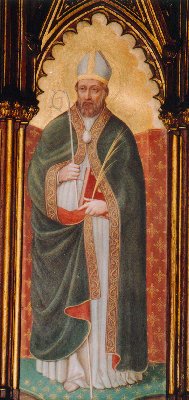
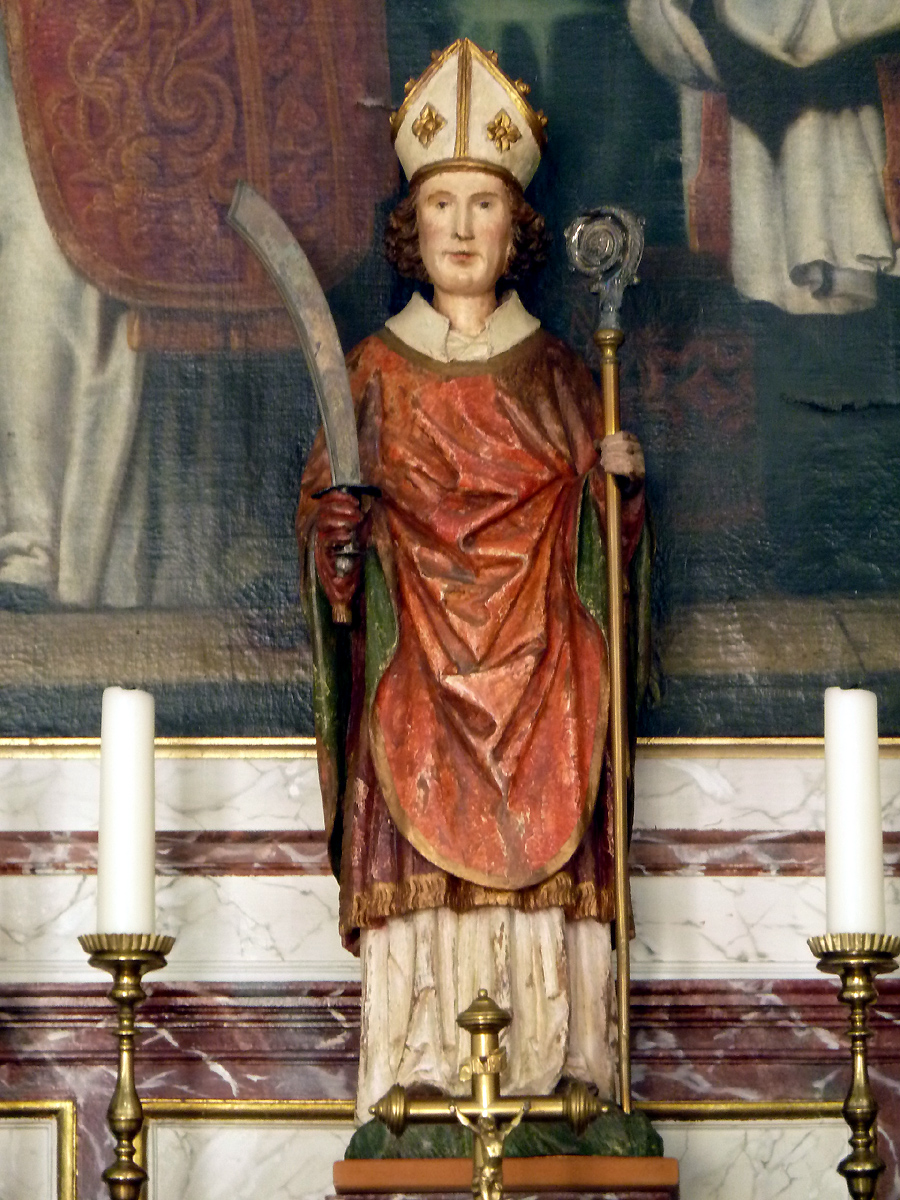
Saint Feuillen de Fosses, église Saint-Nicolas du Rœulx, Belgique.
Bild
des Heiligen Foillan in der Kirche Saint-Nicolas du Roeulx in Fosses
Saint Feuillen
ou Pholien.
Abbé (+ 655)
Frère des saints
Irlandais Fursy et Ultan, Saint Feuillan
(Faelan, Foillan, Faillan ou Pholien) est né vers l'an 600 sur l'île
d'Inchiquin qui se trouve sur Le lac Corrib à l'ouest du Connemara en Irlande.
Lorsqu'il devint adulte,
il quitte l'Irlande avec ses deux frères pour évangéliser l'Angleterre. Deux
ans plus tard, on le retrouve pour les mêmes raisons en France.
En 650, il arrive à
Nivelles (ville de l'actuelle Belgique) où il fait la connaissance de
l'abbesse sainte Gertrude qui
lui fait don d'une terre sise sur l'actuelle commune de
Fosse-la-Ville(*) afin d'y fonder un monastère.
En 651, il doit faire un
voyage en France et en profite pour passer par Nivelles afin rendre visite à
sainte Gertrude. Il continue sa route et quelques km plus loin il se fait
attaquer lui et ses compagnons par des brigands qui les détroussent et les
tuent. Feuillien est décapité et ses restes sont enterrés dans une porcherie.
On ne trouvera son corps que quelques mois plus tard et il sera ramené à
l'abbaye de Nivelles..
Sur le lieu du meurtre,
on érige une croix puis, vu le nombre de pèlerins, on construit une chapelle
appelée "chapelle de Sénophe". Ce lieu deviendra but de pèlerinages
pendant plusieurs siècles.
En 1125, c'est à cet
endroit que fut créée une abbaye par les moines prémontrés, ordre qui venait
d'être créé par Saint
Norbert en France.
A côté de l'abbaye naîtra
une ville de Belgique du nom de "Le Roeulx"
(d'après les
renseignements communiqués par un internaute)
(*) Un internaute nous
précise que Feuillen s'est installé à Fosses la Ville et non à Le Roeulx. Le
Roeulx est l'endroit où il a été assassiné. Ses reliques se trouvent dans la
Collégiale de Fosses la Ville.
Voir aussi:
- l'église Saint-Pholien
(paroisse Notre-Dame
des Ponts aux Rives d'Outremeuse), connue de tous les lecteurs de
Georges Simenon par son récit intitulé "Le pendu de Saint-Pholien"
- diocèse
de Liège en Belgique
- Saint Feuillen, marche
militaire et folklorique septennale à Fosses-la-ville (pays de Namur -
Belgique).
- Tous les 7 ans,
Fosses-la-Ville vit au rythme des fifres et des tambours pour l'extraordinaire
rassemblement de tous les marcheurs de la région. Événement folklorique et
populaire incontestable, la Marche
Saint-Feuillen est sans doute la plus prestigieuse des marches de
l'Entre-Sambre-et-Meuse qui mettent à l'honneur les processions religieuses,
les défilés d'hommes en uniformes napoléoniens, les tirs aux canons, les
kermesses villageoises, la liesse et les fêtes populaires.
- Feuillen est originaire
de cette "terre des saints" que fut l’Irlande au VIIe siècle. Il y
naquit à cette époque ainsi que ses frères, Fursy et Ultain, et tous trois nous
apparaissent comme des fondateurs d’abbaye et des missionnaires passant d’abord
d’Irlande en Angleterre, puis se réfugiant, en compagnie d’autres moines, dans
nos régions.
Près de Fosses dans le
Brabant, vers 655, saint Feuillen, prêtre et abbé. D’origine irlandaise, frère
et compagnon de saint Fursy, et toujours fidèle aux formes de vie monastique de
son pays, il établit à Fosses et à Nivelles, un monastère double, l’un pour les
hommes, l’autre pour les femmes et, en allant de l’un à l’autre, il fut
assassiné par des brigands.
Martyrologe romain
SOURCE : http://nominis.cef.fr/contenus/saint/2109/Saint-Feuillien.html

7-jaarlijkse Marche Saint-Feuillen in Fosses-la-Ville op zondag 25 september 2005. Photographie : Hoebele

7-jaarlijkse Marche Saint-Feuillen in Fosses-la-Ville op zondag 30 september 2012. Photographie : Hoebele
Tropaire de saint Foillan
Lumière de l'Entre-Sambre-et-Meuse,
tu traversas les mers, vénérable Foillan,
Pour répandre le doux message que le Christ est Ressuscité
Et tu versas ton noble sang pour la gloire de Son Saint Nom.
Aussi aujourd'hui nous te prions d'intercéder
auprès du Christ notre Dieu
Pour le Salut de nos âmes.

7-jaarlijkse Marche Saint-Feuillen in Fosses-la-Ville op zondag 29 september 2019. Photographie : Hoebele
SAINT FOILLAN, fondateur
de Fosses, martyr
Né en Irlande, de Fintan
et de Gelgéhèse, fils et fille de rois, saint Foillan a pour frères les saints
Fursy et Ultan. Saint Fursy lui confia l’abbaye qu’il avait fondée en
Est-Anglie. Mais Penda, le roi païen des Merciens, pilla l'abbaye ; les moines
réussirent à prendre le large sur un navire, avec leurs reliques, leur nécessaire
pour célébrer et leurs livres. Saint Foillan et ses compagnons furent
accueillis à Péronne (Picardie) par Erchinoald, maire du palais. Puis il se
rendit à Nivelles (Belgique) où sainte Gertrude, le mit à contribution pour
l’organisation de son monastère, surtout dans le domaine de l’enseignement des
Saintes Écritures et de la célébration de l’office divin.
Vers 650, Sainte Gertrude
de Nivelles mit à la disposition des moines leur domaine de Fosses où ils
construisirent un monastère qui fut placé sous la règle de saint Colomban. Le
monastère eut rapidement un grand rayonnement missionnaire. Mais saint Foillan
ne le connut pas. En 655, avec trois compagnons, il partit de Nivelles à Fosses
(Belgique). En chemin, un bandit, la nuit venue les égara et les mena à une
cabane perdue dans la forêt de Seneffe. Les compaires de la cabane accueillir
les voyageurs avec une feinte cordialité. Les compagnons du saint, inquiets, ne
pouvaient dormir. On récita Matines et Laudes. Saint Foillan parla aimablement
à ses hôtes, puis s'assoupit. Alors nos hommes diaboliques, tombèrent sur le
saint et le tuèrent avec ses compagnons. Foillan mourut en criant : Deo gratias
! On lui coupa la tête. Le crime resta longtemps ignoré. Les moines cherchaient
en vain les disparus. Gertrude priait, jeûnait, lançait des enquêtes. Soixante
dix sept jours après le meurtre, le jour anniversaire de la mort de saint Fursy
(16 janvier), on retrouva les corps que l’on transporta sur des brancards
jusqu’à Nivelles. Le culte du saint abbé se développa rapidement.
Il est invoqué pour
demander le beau temps durant les moissons et la guérison des maux de têtes et
des maladies nerveuses.
Saint Foillan est fêté le
30 octobre
(Compilation de plusieurs sources)
SOURCE : http://www.eoc-coc.org/accueil/saints-du-mois/octobre/saint-foillan/

Saint
Foillan, patron saint in Neerlinter church
Beeld
van Sint Follianus in de rechter zijkapel Follianuskerk Neerlinter
Also
known as
Faelan
Faillan
Faolan
Feuillien
Foalan
Foelan
Foillano
16
January in Fosses
31
October in Namur
5
November in the dioceses of
Mechlin and Tournai
Profile
Brother of Saint Fursey
of Peronne and Saint Ultan
of Péronne. Travelled with
them from Ireland to East
Anglia, England c.630 where
they worked as missionaries,
and established the monastery of
Burgh Castle near Yarmouth. Abbot of
the community at Cnoberesburg, Suffolk, England in
the 640s,
a house founded by his brother Fursey.
During a war between the Mercians and Anglo-Saxons c.650,
the house was destroyed, the brothers killed, captured or
dispersed. Foillan ransomed back his brothers, collected the surviving relics, books and
liturgical equipage from the house, and travelled to France.
He and his brothers were
welcomed and encouraged in their evangelization by King Clovis
II. Foillan founded a monastery at Fosses, diocese of Liege, Belgium,
c.653 on
land donated by Saint Itta
of Nivelles and Saint Gertrude
of Nivelles. He served as its abbot, and
the area around it grew to the modern town of Le Roeulx, Belgium. Chaplain and
spiritual director at the house founded by Saint Gertrude. Evangelized the
Brabants in the region. Popular preacher and
devoted pastor to his people. Murdered with
three companions on the road by bandits; as he was travelling on Church business,
he is often considered a martyr.
His remaining brother, Saint Ultan,
then took over as abbot of Fosses.
Born
murdered 31
October 655 in
the forest near Nivelles, Belgium
bodies found three months
later
buried at
the abbey of Fosses, Belgium
in Belgium
in England
Irish bishop with
a palm of martyrdom
carrying hot coals in his
vestment for incense
kneeling, pierced by
a spear
mitred abbot with
a sword and
pastoral staff,
standing on three men armed with a sword,
a lance,
and a club
one of a group of travellers beaten
with a club
praying before
the church while
the city burns
refusing the cup at
the table of Pepin to show his refusal of worldly things
with a crown at
his feet to indicate his disdain for worldly things
with a sword and palm of martyrdom
Additional
Information
Book
of Saints, by the Monks of
Ramsgate
Lives
of the Saints, by Father Alban
Butler
Saints
of the Day, by Katherine Rabenstein
books
Our Sunday Visitor’s Encyclopedia of Saints
Saints
and Their Attributes, by Helen Roeder
other
sites in english
images
sitios
en español
Martirologio Romano, 2001 edición
sites
en français
sit
in italiano
nettsteder
i norsk
Readings
Pagan robbers
bestowed upon thee the crown of martyrdom, O righteous Foillan, for thy life
was a reproach to the impious and cruel men. Having laboured with thy holy
brother, our Father Fursey, in East
Anglia and later in the Netherlands, pray to God for
us, we beseech thee, that both in word and deed our lives may be a missionary
witness, that we may be found worthy of His great mercy. – Orthdox
dismissal hymn on the feast of Saint Foillan
MLA
Citation
“Saint Foillan of
Fosses“. CatholicSaints.Info. 28 February 2024. Web. 1 May 2026.
<https://catholicsaints.info/saint-foillan-of-fosses/>
SOURCE : https://catholicsaints.info/saint-foillan-of-fosses/

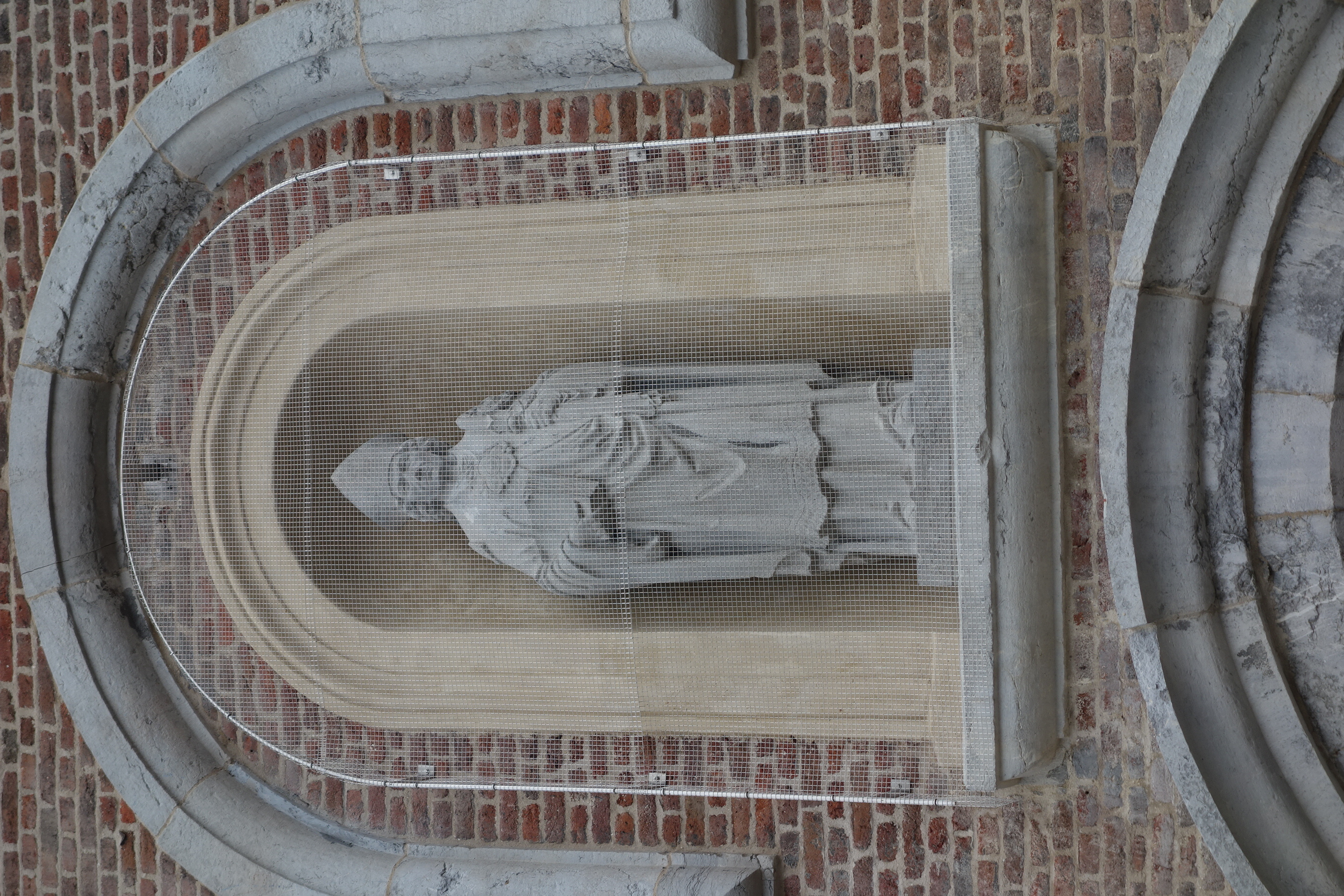
Beeld
boven de ingang van de Kapittelkerk (Collégiale) St. Feuillien in
Fosses-la-Ville, tijdens de zevenjaarlijkse 'Marche' op zondag 29 september
2019.
Foillan of Fosses, OSB
Abbot (RM)
(also known as Faillan)
Born in Ireland; died in
Belgium, c. 655. Among the brothers of Saint Fursey were Foillan and Saint
Ultan, who went to England with Fursey about 630. There they built a monastery
at Burgh Castle in Suffolk near Yarmouth, and were missionary monks under him
among the East Angles. When Fursey departed for Gaul, Foillan succeeded him as
abbot, but the destruction of their monastery and the depredations of the
Mercians under Penda, drove Foillan and Ultan to follow their brother across
the sea.
They were welcomed to
Neustria by King Clovis II. Abbess Blessed Ida of Nivelles gave Foillan land at
Fosses, Belgium, where he set up a monastery and did missionary work among the
Brabanters of the surrounding country, on whom he made a lasting impression.
He kept up close
relations with Saint Gertrude's establishment at Nivelles, and this was the
occasion of his untimely end: It was when returning from saying Mass at
Nivelles that he was set upon by robbers in the forest of Seneffe and murdered
with three companions. Their bodies were not found until nearly three months
later.
Ultan succeeded Foillan
as abbot of Fosses, and he too was revered as a saint.
In September every
seventh year at Fosses, there is a spectacular procession, called the March of
Foillan, to honor the saint. Foillan's relics are honored by an official
mounted guard and salutes are fired seven times along the route of the
procession. (Attwater, Delaney, Encyclopedia, Montague).
Foillan is depicted as a
bishop with two armed men under his feet. Sometimes he is shown (1) refusing
the cup at the table of Pepin; (2) carrying hot coals in his vestment for
incense; (3) praying before the church while the city burns; (4) kneeling,
pierced by a spear; (5) beaten with a club; or (6) with sword and palm (Roeder).
Foillan is the patron of
children's nurses, dentists, surgeons, and truss-makers (Roeder). He is widely
honored in both Ireland and northern France (Montague).
SOURCE : http://www.saintpatrickdc.org/ss/1031.shtml

Translation
des reliques de saint Feuillien de Fosses, circa 1470, huile sur toile, 78 x 58, musée Condé, château de Chantilly, situé à Chantilly (Oise). Peint pour le maître-autel du prieuré
clunisien de Saint-Pierre d’Abbeville. Ancienne collection Frédéric Reiset.
Article
(Saint) Bishop, Martyr
(October 31) (7th century) An Irish Saint, brother of Saints Fursey and Alban,
who after governing in England for some years the Monastery of Burghcastle, was
consecrated Bishop by Pope Saint Martin I and sent as a missionary to the
countries now called Holland and Belgium, where he eventually won a Martyr’s
crown, about A.D. 656.
MLA
Citation
Monks of Ramsgate.
“Foilan”. Book of Saints, 1921. CatholicSaints.Info.
13 August 2018. Web. 2 May 2026.
<https://catholicsaints.info/book-of-saints-foilan/>
SOURCE : https://catholicsaints.info/book-of-saints-foilan/

View
from the west of the Gothic revival parish church of Saint Pholian in the
Outremeuse quarter. Liège, Belgium.
New Catholic
Dictionary – Saint Foillan
Article
(Faelan, Faolan, Foelan,
Foalan) Martyr,
missionary, born Ireland; died Belgium,
c.655.
He was brother of Saint Ultan and Saint Fursey. Leaving Ireland he
became head of the monastery of
Cnobheresburg, Suffolk, England,
founded by Saint Fursey. After the destruction of this convent by the Mercians,
Foillan journeyed to Peronne, France.
A little later he established a monastery,
under Irish discipline, at Fosses, Belgium, near the famous convent of
Nivelles. He was murdered by robbers in the forest of Seneffe. Patron of Fosses.
Represented in art with
a crown at his feet. Relics in monastery at
Fosses. Feast,
Fosses, 16
January; Namur, 31
October; Mechlin and Tournai, 5
November.
MLA
Citation
“Saint Foillan”. New Catholic Dictionary. CatholicSaints.Info.
30 January 2013. Web. 2 May 2026.
<https://catholicsaints.info/new-catholic-dictionary-saint-foillan/>
SOURCE : https://catholicsaints.info/new-catholic-dictionary-saint-foillan/

Plaque
provenant de l’ancien buste-reliquaire de saint Feuillien de Fosses, réalisé
vers 1230 par Hugo d'Oignies. Fait actuellement partie du Trésor d'Oignies mais
classé séparément. Classé comme bien classé de la communauté française depuis
le 30 mars 2010.
St. Foillan
(Irish FAELAN,
FAOLAN, FOELAN, FOALAN.)
Represented in
iconography with a crown at his feet to show that he despised the honours of
the world. He was born in Ireland early
in the seventh century and was the brother of Saints Ultan and Fursey, the
latter a famous missionary who preached the Faith to the Irish,
the Anglo-saxons, and the Franks.
Foillan, probably in company with Ultan, went with his brother Fursey when the
latter, fleeing from his country then devastated by foreign invaders, retired
to a lonely islands. Fursey soon went among the Anglo Saxons and built a monastery at
Burgh Castle (Cnoberesburg) in Suffolk, between 634 and 650.
Seized again with the
desire for solitude, Fursey left the monastery in
the care of Foillan, who remained at the head of the community, and had
the happiness of
once more seeing his brother Fursey, who, having since gone to the kingdom of
the Franks,
came to visit him about 650. Soon a disastrous war broke
out between Penda, the Mercian chief, and Ana, King of the Eastern
Anglo-Saxons. Ana having been put to flight, the monastery of
Cnoberesburg fell into the hand of the enemies. It was pillaged, and its
superior, Foillan, barely escaped death. He hastened to ransom the
captive monks,
recovered the relics,
put the holy books and objects of veneration on board ship, and departed for
the country of the Franks,
where his brother Fursey was buried. He and his companions were well received
at Péronne by Erconwald, Mayor of the Palace. But soon, for some unknown
reason, Foillan and his companions left Péronne and went to Nivelles, a monastery founded
by St.
Ita and St. Gertrude, wife and daughter of Duke Pepin I.
Foillan, like so many
other Irishmen who
went to the Continent in the seventh century, was invested with episcopal
dignity, having doubtless been a monastic bishop at
Cnoberesburg. He was therefore of great assistance in the organization of
worship, and the holy books and relics which
he brought were great; treasures for St.
Ita and St. Gertrude. As the monastery of
Nivelles was under Irish discipline,
the companions of Foillan were well received and lived side by side with
the holy women,
occupying themselves with the details of worship under the general direction of
the abbess.
Through the liberality of Ita, Foillan was enabled to build a monastery at
Fosses, not far from Nivelles, in the province of Namur.
After the death of Ita in 652, Foillan came one day to Nivelles and sang Mass,
on the eve of the feast of St-Quentin. The ceremony being
finished, he resumed his journey, doubtless undertaken in the interests of
his monastery.
In the forest of Senege the saint and
his companions fell into a trap set by bandits who inhabited that solitude.
They were slain, stripped, and their bodies concealed. But they were recovered
by St. Gertrude, and when she had taken some relics of
the saint his
body was borne to the monastery of
Fosses, where it was buried about 655.
Foillan was one of the
numerous Irish travellers
who in the course of the seventh century evangelized Belgium,
bringing thither the liturgy and sacred
vessels, founding prosperous monasteries,
and sharing considerably in the propagation of the Faith in these countries.
Owing to the friendship which united him with Erconwald, Mayor of the Palace,
and with the members of Pepin's family, Foillan played a preponderant part
in Frankish ecclesiastical
history, as shown by his share in the direction of Nivelles and by the
foundation of the monastery of
Fosses. It is not surprising, therefore, that he should be honoured and venerated both
at Nivelles and Fosses and to find at Le Roeulx (Belgium) a monastery bearing
his name. As late as the twelfth century the veneration in which he was held
inspired Philippe Le Harvengt, Abbot of
Bonne-Espérance, to compose a lengthy biography of the saint.
He is the patron of Fosses, near Charieroi. In the Diocese
of Namur his feast is
celebrated on 31 October, in the Dioceses of Mechlin and
Tournai on 5 November.
Van der Essen,
Léon. "St. Foillan." The Catholic Encyclopedia. Vol.
6. New York: Robert Appleton Company, 1909. 31 Oct.
2020 <http://www.newadvent.org/cathen/06123c.htm>.
Transcription. This
article was transcribed for New Advent by Joseph P. Thomas.
Ecclesiastical
approbation. Nihil Obstat. September 1, 1909. Remy Lafort,
Censor. Imprimatur. +John M. Farley, Archbishop of New York.
Copyright © 2020 by Kevin
Knight. Dedicated to the Immaculate Heart of Mary.
SOURCE : https://www.newadvent.org/cathen/06123c.htm

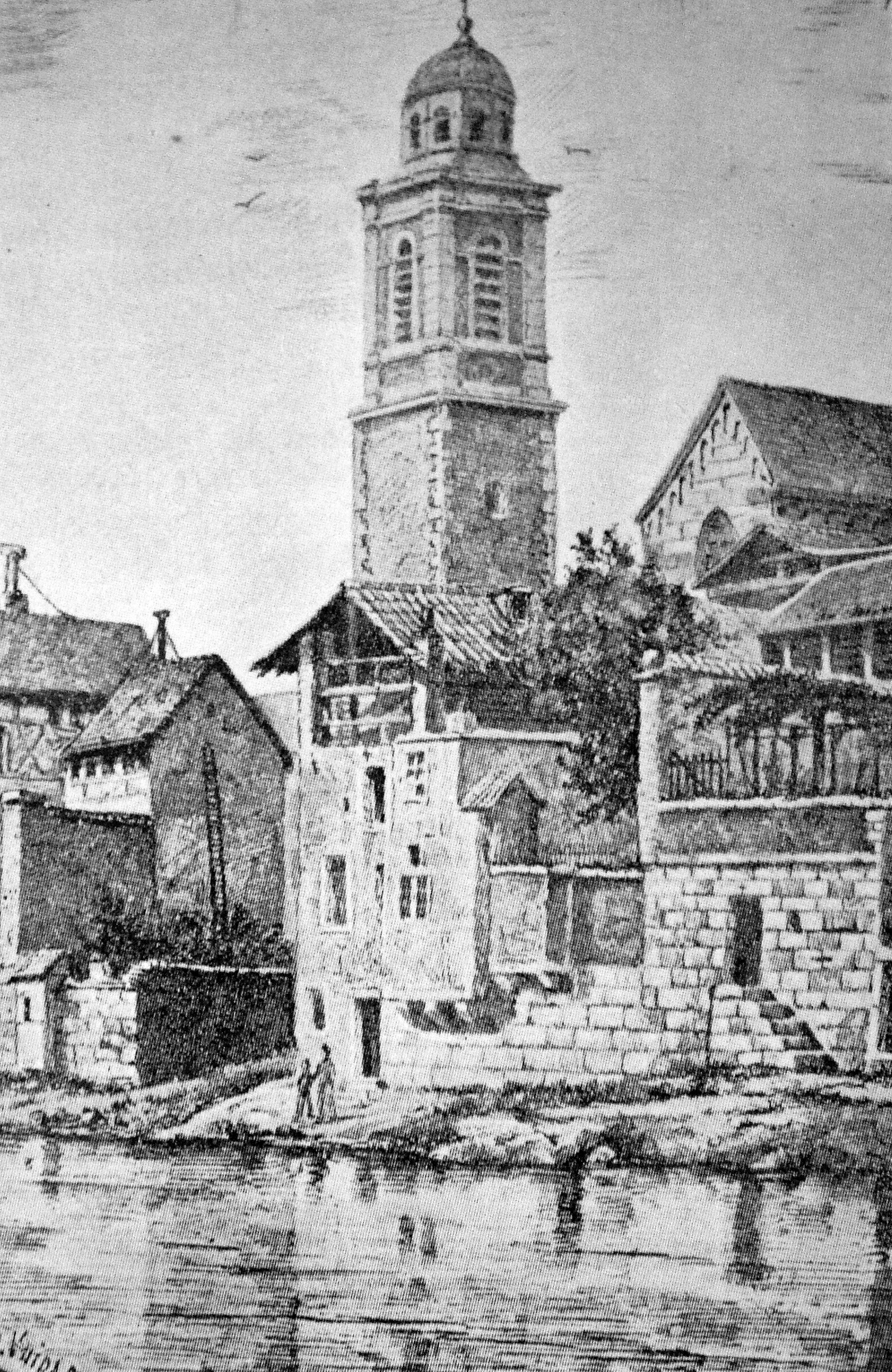
Église Saint-Pholien, Liège, Outremeuse, rivage Grand-Hinri et Saint-Pholien, 1740
St. Foillan, Martyr
ST. ULTAN, St. Fursey,
and St. Foillan, were three brothers, sons of Fyltan, king of Munster in
Ireland. Fursey embraced a monastic life in the islands, and, after some years,
returning home, persuaded Ultan, who was the eldest brother, and Foillon also, to
renounce the world. St. Fursey having travelled into England, and built the
monastery of Knobersburg in the kingdom of the East-Angles, invited Foillan
thither from Ireland, and left him abbot of that house. After the death of St.
Fursey, which happened at Peronne about the year 650, SS. Ultan and Foillan
went into France. Some authors say St. Foillan travelled to Rome, and was made
regionary bishop. If this be true, at least he soon returned to St. Ultan, and
they went both together from Cambray to Nivelle in Brabant, where St. Gertrude
governed a great nunnery, which her parents, B. Pepin of Landen, and B. Ita,
had founded, with a neighbouring monastery of men. They both staid here some
time, till St. Gertrude, after the death of her mother, in 652, gave to St.
Ultan a territory to build an hospital and monastery, which is called Fosse,
situate between the Meuse and the Sambre, in the diocess of Maestricht, now of
Liege. St. Gertrude detained St. Foillan at Nivelle, where he instructed the
nuns, and preached to the people in the country. He was going to pay a visit to
his brother St. Ultan at Fosse in 655, when he and three companions were
assassinated by robbers, or infidels, in the forest of Sonec, now Charbonniere,
in Hainault, on the 31st of October. His relics are kept with veneration in the
church of Fosse, formerly served by monks, now by secular canons. St. Ultan
governed the monasteries of Fosse and Mont-Saint-Quentin many years, and died
on the 1st of May, towards the year 686. See Bede, Hist. l. 3, c. 19, and his
ancient life published by Dom Menard, Addit. ad. Martyr. Benedict. p. 900. Le
Cointe, ad an. 654, 656, et 686. Molanus, Miræus, and Usher, Antiqu. Brit.
Rev. Alban
Butler (1711–73). Volume X: October. The Lives of the
Saints. 1866.
SOURCE : http://www.bartleby.com/210/10/313.html

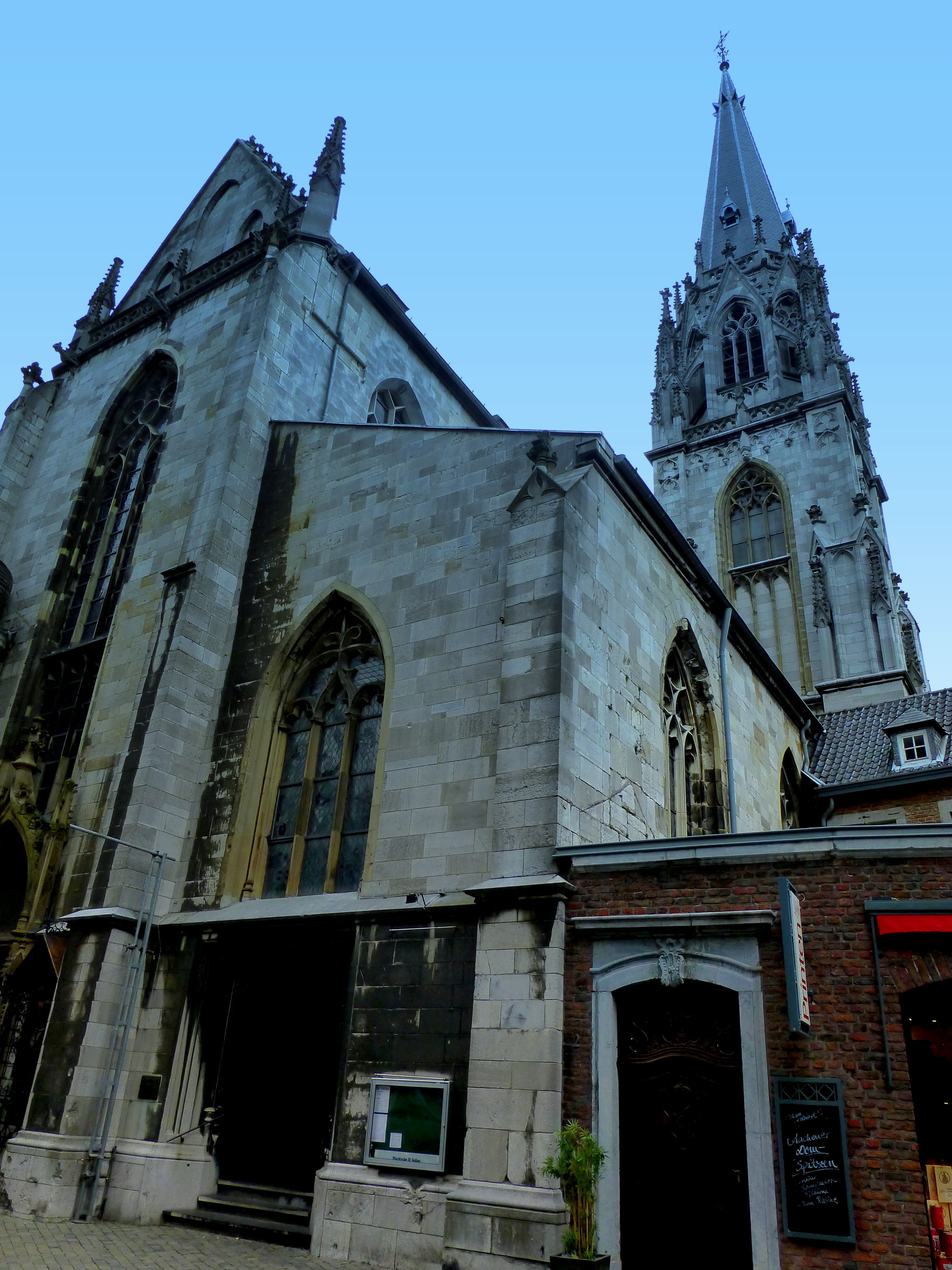
Église
Foillan, Aachen-Mitte, Aix-la-Chapelle, région urbaine d'Aix-la-Chapelle, district de Cologne, Rhénanie-du-Nord-Westphalie, Allemagne
Aachen
– die Stadtpfarrkirche St. Foillan direkt neben dem Dom
.jpg?utm_source=commons.wikimedia.org&utm_campaign=imageinfo&utm_content=original)
Église
Foillan, Aachen-Mitte, Aix-la-Chapelle, région urbaine d'Aix-la-Chapelle, district de Cologne, Rhénanie-du-Nord-Westphalie, Allemagne
Aachen
– die Stadtpfarrkirche St. Foillan direkt neben dem Dom

Église
Foillan, Aachen-Mitte, Aix-la-Chapelle, région urbaine d'Aix-la-Chapelle, district de Cologne, Rhénanie-du-Nord-Westphalie, Allemagne
Aachen
– die Stadtpfarrkirche St. Foillan direkt neben dem Dom

Église
Foillan, Aachen-Mitte, Aix-la-Chapelle, région urbaine d'Aix-la-Chapelle, district de Cologne, Rhénanie-du-Nord-Westphalie, Allemagne
Aachen
– die Stadtpfarrkirche St. Foillan direkt neben dem Dom

Église
Foillan, Aachen-Mitte, Aix-la-Chapelle, région urbaine d'Aix-la-Chapelle, district de Cologne, Rhénanie-du-Nord-Westphalie, Allemagne
Aachen
– die Stadtpfarrkirche St. Foillan direkt neben dem Dom
Blessed Chiara Badano, St
Foillan
Celebrated
on October 29th
Chiara 'Luce' Badano
Chiara Badano was born in
the small town of Sassello in Savona, Italy, on 29th October 1971. Her parents
were Maria Teresa and Ruggero Badano. They were a happy couple with a strong
commitment to their Catholic faith and the sanctity of marriage. As they explain,
from the time of their marriage they prayed constantly for the gift of a child.
'We got married at 26 and
our greatest desire was to have children. Even after eleven years together, we
continued to believe and pray that this would happen. Ruggero could not imagine
a marriage without children so even when he was travelling - he was a lorry
driver - he would continually pray that we could become parents. On one
occasion, he asked God for this gift when he went to a shrine in our diocese.
It happened and when Chiara was born we immediately felt she was not only our
daughter, but first of all, she was God's child, and as such we had to raise
her, respecting her freedom…'
Chiara was a happy child
and grew to become a normal teenager. From childhood, her parents instructed
her in her faith and included stories of Jesus in her bedtime reading. Her
mother often tells the story of how Chiara, when she was young, shared her toys
with other children and gave the best ones to other people! She also saved
money to give to a friend who helped with a mission in Africa.
Her parish priest gave
her a copy of the gospels when she made her first Holy Communion. Later,
through her close friend, Chicca, she learnt about the Focolare Movement whose
founder, Chiara Lubich, spoke about putting God in the first place in one's
life and living out the gospel. Chiara was very attracted by these ideas: she
was particularly struck when Chiara Lubich invited the young people who knew
the Focolare Movement to "become a generation of saints". This became
a clarion call for little Chiara, and she made her decision. Lubich never held
back in speaking even to very young people about Jesus on the cross who she
described as "Jesus Forsaken and Crucified". In 1983, little Chiara
informed Chiara Lubich about her decision to see Jesus Forsaken as her first
love or "Spouse." She had truly begun her spiritual journey.
Chiara Luce's favourite
sport was tennis. One day, when she was playing, she felt "that sharp pain
in my shoulder" and at the age of 17 she was diagnosed with osteosarcoma,
the most aggressive and painful form of bone cancer.
Blessed Chiara Badano
regarded Chiara Lubich as her spiritual guide. The latter suggested that she
add "Luce" meaning "light" to her name - the 'light' of God
that conquers the world. Her mantra became, "If you want it Jesus, I want
it too." She offered up her suffering and refused morphine, 'because it
takes away my clarity', and she said she wanted nothing 'but (her) sufferings
to offer to Jesus.'
People close to her
always experienced a sense joy and peace. A friend said: "I went there to
console her instead she consoled me." She came to consider her approaching
death as the consummation of her "marriage with her spouse" and asked
to be dressed in a white wedding gown which, she said, should be very simple.
At dawn on the day of her
death, she whispered these words in her mum's ear,
'Be happy because I am.'
On 3 July 2008, Pope Benedict
XVI recognized her heroic virtue and declared her venerable. On 19 December
2009, the decree approving a miracle attributed to her intercession opened the
way to her beatification, which was celebrated on 25 September 2010, at the
Marian Shrine of Our Lady of the Divine Love near Rome.
Learn more Chiara on her
website: www.chiarabadano.org/
Today is also the feast
of St Foillan
Irish monk and
missionary. St Foillan was a brother of St Fursey, a 7th century bishop.
Together they travelled to East Anglia and established a monastery at Burgh
Castle - the remains of which can be seen today. When Penda, King of Mercia
invaded they fled to Neustria in France where they were well received by the
local King, Clovis II.
St Foillan later founded a monastery at Fosses and worked as a missionary in
Brabant. He was killed in 650 by bandits at Serette while on a visitation to
the Irish monastic communities in Lagny and Peronne. The story of the two
brothers was recorded by Bede and several other ancient writers.
Foillan was one of the many Irish missionaries who in the course of the seventh
century evangelised France and Belgium, bringing the liturgy, building churches
and founding many monasteries.
He is honoured and venerated both at Nivelles and Fosses. At Le Roeulx in
Belgium, a monastery bears his name. He is the patron of Fosses, near Charleroi.
In the Diocese of Namur his feast is celebrated on 31 October, in the Dioceses
of Mechlin and Tournai on 5 November.
SOURCE : https://www.indcatholicnews.com/saint/311

Chapelle
Saint-Feuillien, Hédenge
St Foillan
Irish monk and
missionary. St Foillan was a brother of St Fursey, a 7th century bishop.
Together they travelled to East Anglia and established a monastery at Burgh
Castle - the remains of which can be seen today. When Penda, King of Mercia
invaded they fled to Neustria in France where they were well received by the
local King, Clovis II.
St Foillan later founded a monastery at Fosses and worked as a missionary in
Brabant. He was killed in 650 by bandits at Serette while on a visitation to
the Irish monastic communities in Lagny and Peronne. The story of the two
brothers was recorded by Bede and several other ancient writers.
Foillan was one of the many Irish missionaries who in the course of the seventh
century evangelised France and Belgium, bringing the liturgy, building churches
and founding many monasteries.
He is honoured and venerated both at Nivelles and Fosses. At Le Roeulx in
Belgium, a monastery bears his name. He is the patron of Fosses, near
Charieroi. In the Diocese of Namur his feast is celebrated on 31 October, in
the Dioceses of Mechlin and Tournai on 5 November.
SOURCE : https://www.indcatholicnews.com/saint/311

Liège,
Belgium. Detail of the Gothic revival altar in the choir of the parish church
of Saint Pholien, painted by Jules Helbig with scenes from the life of Saint
Foillan.

Liège,
Belgium. Detail of the Gothic revival altar in the choir of the parish church
of Saint Pholien, painted by Jules Helbig with scenes from the life of Saint
Foillan.
San Foillano di Fosses Abate
† 31 ottobre 655?
Martirologio
Romano: A Fosses nel Brabante, nel territorio dell’odierno Belgio, san
Foillano, sacerdote e abate, che, di origine irlandese, fu fratello e compagno
di san Furséo e, sempre fedele alle norme monastiche della sua patria, fondò a
Fosses e a Nivelles due monasteri, l’uno maschile e l’altro femminile, e fu
ucciso da alcuni briganti mentre si recava in visita dall’uno all’altro.
San Foillano (lat.
Foilanus; fr. Feuillen, Pholien), martire a Fosses.
Nato in Irlanda, come i
suoi fratelli, Furseo e Ultan, abbracciò la vita monastica, lasciando con essi
la patria (630-34) per recarsi nell’Anglia Orientale, il cui re, Sigeberto, li
aiutò nella fondazione del monastero di Knoberesburg (Burgh Castle, vicino a
Yarmouth). Dopo la partenza dei fratelli, che si erano ritirati dapprima in un
eremitaggio e poi passarono nel regno dei Franchi, Foillano conservò la
direzione del monastero, e quando questo fu distrutto da Penda, re pagano della
Mercia, egli, dopo aver corso seri pericoli, riuscì a fuggire coi monaci che
aveva riscattato a prezzo d’oro, portandosi via le reliquie e i libri che poté.
Passato coi monaci nella
Gallia, giunse a Péronne, luogo di sepoltura di Furseo, ricevuto con
benevolenza da Erchinoaldo, maestro di palazzo. Le monache di Nivelles, le ss.
Itta e Gertrude, lo aiutarono ad erigere (650-52) un monastero a Fosses sulla
Bebrona, affluente della Sambra. La comunità irlandese di Fosses e quella
franca di Nivelles rimasero unite da stretti legami spirituali.
Essendo andato un giorno
a Nivelles per celebrare i divini uffici presso le monache, al ritorno Foillano
fu, coi suoi compagni, catturato dai predoni che uccisero lui e tre altri
monaci (31 ottobre 655?) nel luogo chiamato Le Roeulx, dove più tardi i
Norbertini edificarono la badia a lui dedicata.
Dopo settantasette giorni
i corpi furono ritrovati e trasferiti a Nivelles; la salma di san Foillano fu
riportata a Fosses da due dignitari presenti: Dido, vescovo di Poitiers, e
Grimoaldo, maestro di palazzo. Nel 1125 ebbe luogo una traslazione a Le Roeulx.
Le reliquie si trovavano
di nuovo a Fosses nel 1176, e solo per breve tempo furono messe al sicuro a
Mons, nel 1408, da Guglielmo di Baviera, conte di Hainaut, per poi ritornare a
Fosses. A Mons si conservò tuttavia una tibia e un osso dell’anca. Nel secolo
XVI il capitolo della collegiata di Fosses fece costruire una cassa in argento.
Nel 1792 non si poté salvare dalla furia dei rivoluzionari che la testa e
alcune altre reliquie che nel secolo XIX furono collocate in una nuova cassa e
nel 1907 furono oggetto di una ricognizione. Si conservano ancora reliquie del
santo ad Abbeville e altrove.
Il culto cominciò
immediatamente dopo la scoperta del corpo e il trasferimento a Mons, e la morte
violenta, come in casi analoghi, giustifica il titolo di martire che gli è
accordato. Nello stesso modo la tradizione gli ha attribuito il titolo
episcopale, con ragione, sembra, perché Beda chiamandolo sacerdos, qui, come
altrove, intende parlare della dignità vescovile.
A Fosses si conoscono tre
feste: l’invenzione del corpo (16 gennaio); la traslazione del 1086 (3
settembre) e il natalis (24 ottobre) con la sua ottava il 31. Fino alla
Rivoluzione francese il capitolo recitava ogni settimana l’Ufficio di san
Foillano. Dal 1549, almeno, si celebra ogni sette anni una grande processione
popolare, detta «la marcia di san Foillano».
Il suo nome si trova il
31 ottobre (talvolta il 30) nell’Auctarium Usuardi e nei martirologi irlandesi
del Medio Evo. La sua festa fu molto diffusa nel Belgio, dove si celebra ancora
in parecchie diocesi e monasteri (31 ottobre), e nella diocesi di Cambrai.
A Aix-la-Chapelle si
trova una chiesa parrocchiale in onore del santo, menzionata dal 1166, le cui
pareti erano affrescate con scene della vita del martire.
Mancano prove di culto
verso i suoi tre compagni, di cui si crede a Nivelles di possedere il corpo, ma
che non furono mai oggetto di venerazione.
Autore: Rombaut Van
Doren




_26.jpg?utm_source=commons.wikimedia.org&utm_campaign=imageinfo&utm_content=original)