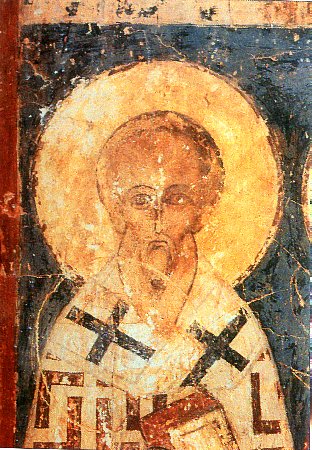
Saint Alexandre de
Jérusalem
Évêque (+ 251)
Evêque de Jérusalem, il y
fonda une précieuse bibliothèque, ouvrit une école de catéchèse puis, dans sa
vieillesse, il confessa le Christ jusqu'au martyre.
Originaire de Cappadoce,
il y accueillit saint Clément
d'Alexandrie qui avait été dépossédé de son siège. Puis il partit
pèleriner en Terre Sainte et n'en revint jamais, car il avait été choisi comme
évêque de Jérusalem. Là il eut bien des difficultés pour que les fidèles
judéo-chrétiens acceptent les fidèles d'origine païenne. Il est à l'origine de
la bibliothèque de Jérusalem où il plaça les ouvrages de valeur de son temps,
ouvrages qui pouvaient servir à l'édification intellectuelle et spirituelle de
sa communauté. Il accueillit Origène, l'ordonna prêtre et lui procura un asile
paisible à Césarée où ce grand homme put continuer l'œuvre immense qu'il devait
léguer à la postérité. Durant la persécution de Dèce, il fut mis en prison et y
mourut. Origène écrivait de son bienfaiteur: "Jamais je n'ai rencontré un
évêque aussi doux et d'une telle bonté."
Commémoraison de saint
Alexandre, évêque de Jérusalem et martyr, vers 250. De Cappadoce où il était
évêque, il vint à Jérusalem et reçut la charge pastorale de la Ville sainte. Il
y fonda une riche bibliothèque et ouvrit une école de théologie. Enfin, à la
suite des édits de persécution de Dèce, il fut jeté en prison à Césarée de
Palestine. Couronné de cheveux blancs, dans une vénérable vieillesse, il rendit
un glorieux témoignage et mourut dans les chaînes.
Martyrologe romain
SOURCE : http://nominis.cef.fr/contenus/saint/826/Saint-Alexandre-de-Jerusalem.html
Saint Alexandre de
Jérusalem, évêque
Originaire de Cappadoce,
il fut étudiant d’Origène à Alexandrie. Rentré en Cappadoce, il y accueillit
saint Clément d'Alexandrie qui avait été dépossédé de son siège. Après avoir
connu la prison entre 204 et 211, il se rend en Terre Sainte où il fut choisi
comme évêque de Jérusalem. Il y travailla à l’unité de sa communauté, y
développa les sciences sacrées, offrit asile à Origène qu’il ordonna prêtre.
Durant la persécution de Dèce, il fut arrêté et mourut en captivité en 251.
SAINT
ALEXANDRE, ÉVEQUE DE JÉRUSALEM
(L'an de Jésus Christ
251, sous l'empire de Décius)
fêté le 12 décembre
Nous n'avons point les
actes de saint Alexandre, évêque de Jérusalem et martyr; mais nous avons cru
pouvoir y suppléer en quelque sorte par ce recueil de diverses particularités
concernant sa vie et sa mort, que nous avons tirées d'Eusèbe, et des autres
anciens auteurs de l'Histoire ecclésiastique.
On ne sait rien de
positif de son pays, ni de la manière qu'il passa les premières années de sa
vie; et les historiens nous le montrent tout d'un coup dans les fers, combattant
pour Jésus Christ, sous le règne et durant la persécution de Sévère, environ, l'an
204. Au reste, nous aurions assez de penchant à croire qu'il était pour lors
évêque dans la province de Cappadoce, si ce sentiment pouvait s'accorder avec
une lettre qu'il écrivit en ce temps-là de sa prison au peuple d'Antioche, au
sujet de l'ordination d'Asclépiade, dans laquelle il ne prend pas la qualité
d'évêque, mais simplement celle de serviteur et de prisonnier de Jésus Christ.
Après la mort de Sévère,
la paix ayant été rendue à l'Église, Alexandre étant déjà évêque en Cappadoce,
mais d'une Église dont on ignore le nom, fit un voyage à Jérusalem pour y
rendre ses voeux au tombeau de notre Seigneur. Il y arriva dans le temps que Narcisse,
évêque de cette ville sainte, et de retour depuis peu dans son Église après une
fort longue absence, la gouvernait à l'âge de près de cent ans. Ce saint
vieillard, croyant n'avoir plus assez de force pour soutenir lui seul le pesant
fardeau de l'épiscopat, jeta les yeux sur Alexandre, pour s'en décharger sur
lui d'une partie. La chose réussit comme il l'avait projeté. Alexandre fut
retenu à Jérusalem, et avec l'applaudissement du clergé et du peuple placé sur
le même trône avec Narcisse par les évêques de la province. A la vérité, il fut
nécessaire que le ciel se déclarât en faveur de cette élection par des
révélations divines, qui portèrent le peuple et le clergé à la faire, et par
divers miracles qui la confirmèrent. Et certainement une chose aussi
extraordinaire que celle-là, et si formellement opposée aux canons et à
l'usage, devait avoir de pareils garants pour n'être pas condamnée par les
autres Églises. Rufin s'étant beaucoup sur ces révélations; car, après avoir
parlé de l'arrivée de saint Alexandre à Jérusalem: il ajoute que le ciel
déclara sa volonté évidemment par des révélations et des signes miraculeux:
non-seulement au bienheureux Narcisse, mais aussi à plusieurs personnes du
peuple; que celui qui parut le plus manifeste et le plus éclatant fut celui-ci.
Le jour qu'Alexandre devait arriver à Jérusalem, plusieurs fidèles étant sortis
hors d'une des portes de la ville pour le recevoir, l'on entendit distinctement
une voix venant du ciel qui proféra ces paroles: "Recevez pour votre évêque
celui que Dieu Lui-même vous a destiné.
Mais ce ne furent pas
seulement ces prodiges et ces révélations qui contribuèrent à élever saint
Alexandre sur le trône épiscopal de Jérusalem; la glorieuse confession qu'il
avait faite du nom de Jésus Christ ne fut pas un motif moins puissant pour y
déterminer les évêques et le peuple. Eusèbe a pris soin de nous marquer ce
motif, en même temps qu'il nous marque l'année de cet événement. Sévère, dit
cet historien, ayant tenu l'empire dix-huit ans, le laissa par sa mort à son
fils Antonin, surnommé Caracalla, par la manière bizarre dont il s'habillait
ordinairement. Ce fut pour lors qu'Alexandre, du nombre de ceux qui avaient
généreusement combattu durant la persécution, et qui par une providence
particulière avaient survécu à la cruauté des bourreaux et à la rigueur des
tourments fut élevé à l'épiscopat en considération de cette généreuse et fidèle
persévérance à confesser Jésus Christ, quoique Narcisse qui en était évêque fût
encore en vie.
A la vérité, Alexandre doit
plutôt être nommé successeur que coadjuteur de Narcisse comme Alexandre semble
l'insinuer lui-même dans sa lettre au peuple d'Antinoé. Narcisse, leur dit-il,
vous salue, cet illustre vieillard âgé de cent seize ans, qui avant moi a
rempli si dignement le siège de Jérusalem; d'où l'on pourrait conclure qu'on
aurait conservé à Narcisse le nom d'évêque et les honneurs de l'épiscopat, mais
qu'Alexandre en aurait eu l'autorité et la juridiction: qu'il aurait exercée
non pas au nom de l'ancien évêque, mais en son propre nom et par le droit de
son élection et de sa consécration. Après tout: il faut avouer de bonne foi que
presque tous les anciens auteurs ont dit qu'Alexandre avait été l'adjoint de
Narcisse et son collègue dans l'évêché de Jérusalem.
Dieu couronna d'un
glorieux martyre les travaux qu'Alexandre avait essuyés durant plusieurs années
dans le gouvernement de ses deux Églises; car Philippe qui fut toujours
favorable aux chrétiens après avoir tenu l'empire sept ans, ayant eu pour
successeur Décius, ce nouvel empereur, en haine de Philippe, excita contre
l'Église une nouvelle persécution. Elle enleva d'abord à Rome le pape saint
Fabien, à la place duquel on élut saint Corneille. S'étant ensuite étendue dans
la Palestine, Alexandre fut cité devant le président de la province. La, ayant
remporté une nouvelle gloire pour avoir confessé Jésus Christ une seconde fois,
il fut jeté en prison, quoique ses cheveux blancs et la pureté de ses moeurs le
rendissent vénérable à tout le monde: il y expira, après avoir persévéré
jusqu'à la fin dans le témoignage authentique qu'il rendit plus d'une fois en
plein tribunal à la vérité de la religion chrétienne.
SOURCE : http://www.clerus.org/bibliaclerusonline/pt/k3n.htm et http://orthodoxievco.net/ecrits/vies/martyrs/decembre/alex.htm
Also known as
Alexander of Cappadocia
18
March (Roman Church)
12
December (Orthodox calendar)
22
December (Greek Church)
Profile
Studied in Alexandria, Egypt.
Fellow student with Origen. Bishop of Cappadocia. Imprisoned from 204 to 211 for
his faith during
the persecutions of Severus. Pilgrim to Jerusalem upon
his release. Coadjutor bishop of Jerusalem with Saint Narcissus in 212.
Censured for encouraging Origen to teach in
churches while still a laymen.
Developed a large theological library. Imprisoned again
during the persecutions of Decius.
When given a chance to save himself by denouncing Christianity,
he made a public pronouncement of his faith.
He was thrown to wild animals,
but they refused to attack him. Re-imprisoned,
Alexander died in chains from
general maltreatment. Martyr.
Additional Information
Book
of Saints, by the Monks of
Ramsgate
Lives
of the Saints, by Father Alban
Butler
books
Our Sunday Visitor’s Encyclopedia of Saints
other sites in english
sitios en español
Martirologio Romano, 2001 edición
fonti in italiano
Martirologio Romano, 2005 edition
MLA Citation
“Saint Alexander of Jerusalem“. CatholicSaints.Info.
17 March 2023. Web. 18 March 2026.
<https://catholicsaints.info/saint-alexander-of-jerusalem/>
SOURCE : https://catholicsaints.info/saint-alexander-of-jerusalem/
Book of
Saints – Alexander of Jerusalem
Article
ALEXANDER OF JERUSALEM
(Saint) Bishop (March 18) (3rd century) A fellow-student with Origen at
Alexandria in Egypt. He became Bishop of a See in Asia Minor, where he suffered
for the Faith in the time of Septimus Severus (A.D. 204). When on a visit to
Jerusalem, he was chosen by the Patriarch, Saint Narcissus, as his coadjutor.
He lived to a very great age and was at length (A.D. 250) arrested in the
persecution under Decius. He died in prison at Caesarea in Palestine a few
months afterwards.
MLA
Citation
Monks of Ramsgate.
“Alexander of Jerusalem”. Book of Saints, 1921. CatholicSaints.Info. 24
May 2012.
Web. 20 March 2026.
<http://catholicsaints.info/book-of-saints-alexander-of-jerusalem/>
SOURCE : https://catholicsaints.info/book-of-saints-alexander-of-jerusalem/
New
Catholic Dictionary – Saint Alexander – 18 March
(251) Martyr, bishop in Cappadocia.
He was later coadjutor Bishop of Jerusalem;
ordained Origen to
the priesthood; and built a library at Jerusalem.
After cruel torments he died in
chains. Feast, 18
March.
MLA
Citation
MLA Citation
“Saint Alexander”. New Catholic Dictionary. CatholicSaints.Info.
13 November 2019. Web. 20 March 2026. <https://catholicsaints.info/new-catholic-dictionary-saint-alexander-18-march/>
SOURCE : https://catholicsaints.info/new-catholic-dictionary-saint-alexander-18-march/
St. Alexander of
Jerusalem
Feastday: March 18
Death: 251
St. Alexander, Bishop and
Martyr. Alexander was a student with Origen at the famous Christian school
of Alexandria in
the late second century. He became bishop of
Cappadocia and during the persecution of
Severus was imprisoned for several years (204-211). Following his release from
prison, he made a pilgrimage to Jerusalem and
was proclaimed coadjutor bishop there
in the year 212. Demetrius, the bishop of
Alexandria, censured Alexander for participating in the ordination of Origen and
for encouraging Origen to teach in churches while still a layman. Despite this,
Alexander received Origen in exile. Meanwhile, in Jerusalem, Alexander
developed a great theological library. During the persecution of
Decius, he was seized and again imprisoned. After making a public confession of
faith, he was condemned and thrown to the wild beasts, but they refused to attack
him. Alexander was then taken to Caesarea where he died in chains in the year
251. The Church recognizes him as a martyr. St. Alexander, despite his great
learning and important ecclesiastical positions, was known as an individual of
great mildness, especially in his sermons. When put to the test during two
persecutions, he remained steadfast in faith and
was willing to suffer death for the Faith.
Today when we are
criticized by friends and society for
the moral tenets of our Faith, St. Alexander is
a prime example
of how we should stand fast in
the face of ridicule and ostracism.
SOURCE : https://www.catholic.org/saints/saint.php?saint_id=165
St. Alexander
St. Alexander, who died
in chains after cruel torments in the persecution of Decius,
was first Bishop of
Cappadocia, and was afterwards associated as coadjutor with the Bishop of Jerusalem,
who was then 116 years old.
This association came
about as follows: Alexander had been imprisoned for
his faith in
the time of Alexander
Severus and on being released came to Jerusalem, where he was
compelled by the aged bishop to
remain, and assist him in the government of that see.
This arrangement, however, was entered into with the consent of
all the bishops of
Palestine. It was Alexander who permitted Origen,
although only a layman,
to speak in the churches. For this concession he was taken to task, but he
defended himself by examples of other permissions of the same kind given even
to Origen himself
elsewhere, although then quite young. Butler says
that they had studied together on the great Christian school of
Alexandria. Alexander ordained him
a priest.
Especial praise is given to Alexander for the library he
built at Jerusalem.
Finally, in spite of his
years, he, with several other bishops,
was carried off a prisoner to Caesarea,
and as the historians say, "the glory of
his white hairs and great sanctity formed
a double crown for him in captivity". He suffered many tortures, but
survived them all. When the wild beasts were brought to devour him, some licked
his feet, and others their impress on the sand of the arena. Worn out by his
sufferings he died in prison.
This was in the year 251. His feast is
kept by the Latins on
18 March, by the Greeks, 22 December.
Campbell, Thomas.
"St. Alexander." The Catholic Encyclopedia. Vol. 1. New York: Robert
Appleton Company, 1907. 18 Mar. 2015
<http://www.newadvent.org/cathen/01295b.htm>.
Transcription. This
article was transcribed for New Advent by Joseph P. Thomas.
Ecclesiastical
approbation. Nihil Obstat. March 1, 1907. Remy Lafort, S.T.D.,
Censor. Imprimatur. +John Cardinal Farley, Archbishop of New York.
SOURCE : http://www.newadvent.org/cathen/01295b.htm
March 18
St. Alexander, Bishop of
Jerusalem, Martyr
From St. Jerom, Catal. c.
62. Euseb. Hist. b. 6. c. 8. 10. 14. 20. See Tillemont, t. 3. p. 415. and Le
Quien, Oriens Christ. t. 3. p. 150.
A.D. 251
ST. ALEXANDER studied
with Origen in the great Christian school of Alexandria, under St. Pantenus and
his successor, St. Clement. He was chosen bishop of a certain city in
Cappadocia. In the persecution of Severus, in 204, he made a glorious
confession of his faith, and though he did not then seal it with his blood, he
suffered several years’ imprisonment, till the beginning of the reign of
Caracalla, in 211, when he wrote to congratulate the church of Antioch upon the
election of St. Asclepias, a glorious confessor of Christ, to that
patriarchate; the news of which, he says, had softened and made light the irons
with which he was loaded. He sent that letter by the priest St. Clement of
Alexandria, a man of great virtue, whom God had sent into Cappadocia to instruct
and govern his people, during his confinement.
St. Alexander being
enlarged soon after, in 212, was commanded by a revelation from God, to go to
Jerusalem to visit the holy places. 1 The
night before his arrival, Saint Narcissus, bishop of Jerusalem, and some other
saints of that church, had a revelation, in which they heard a distinct voice
commanding them to go out of the city, and take for bishop him whom God sent
them. St. Narcissus was then very old and decrepit: he and his flock seized
Alexander, and by the consent of all the bishops of Palestine, assembled in a
council, made him his coadjutor and joint bishop of Jerusalem. SS. Narcissus
and Alexander still governed this church together, when the latter wrote thus to
the Antinoits: “I salute you in the name of Narcissus, who held here the place
of bishop before me, and, being above one hundred and sixteen years old, is now
united with me by prayer. He conjures you with me to live in inviolable peace
and union.” St. Alexander collected at Jerusalem a great library, consisting of
the writings and letters of eminent men, which subsisted when Eusebius wrote.
He excelled all other holy prelates and apostolic men in mildness and in the
sweetness of his discourses, as Origen testifies. Saint Alexander was seized by
the persecutors under Decius, confessed Christ a second time, and died in
chains at Cæsarea, about the end of the year 251, as Eusebius testifies. He is
styled a martyr by St. Epiphanius, St. Jerom, and the Martyrologies, and
honoured in the Roman Martyrology on the 18th of March; by the Greeks on the
16th of May and the 22nd of December.
A pastor must first
acquire a solid degree of interior virtue, before he can safely undertake to
labour in procuring the salvation of others, or employ himself in exterior
functions of the ministry. He must have mortified the deeds of the flesh by
compunction, and the habitual practice of self-denial; and the fruits of the
spirit must daily more and more perfectly subdue his passions. These fruits of
the spirit are charity and humility, which stifle all the motions of anger,
envy, and pride: holy joy, which banishes carnal sadness, sloth, and all
disrelish in spiritual exercises; peace which crushes the seeds of discord, and
the love and relish of heavenly things, which extinguish the love of earthly
goods and sensual pleasures. One whose soul is slothful, sensual, and earthly,
deserves not to bear the name of a Christian, much less of a minister of the
gospel. There never was a saint who did not carry his cross, and walk in the
steps of Christ crucified. St. Alexander would have thought a day lost in which
he did not add something to the sacrifice of his penance in order to continue
and complete it. By this he prepared himself to die a victim of fidelity and
charity. This is the continued martyrdom by which every true Christian
earnestly labours to render himself every day more and more pleasing to God,
making his body a pure holocaust to him by mortification, and his soul by the fervour
of his charity and compunction.
Note
1. Eus. b. 6. c. 14. S. Hieron. in Catal.
Rev. Alban
Butler (1711–73). Volume III: March. The Lives of the
Saints. 1866.
SOURCE : http://www.bartleby.com/210/3/181.html
St Alexander the
Archbishop of Jerusalem
Commemorated on May
16
The Hieromartyr
Alexander, Bishop of Jerusalem, was a disciple of the great teacher and writer
of the Church, Clement of Alexandria. At the beginning of the third century he
was chosen bishop of Flavia, Cappadocia. He was arrested during the reign of
the emperor Septimus Severus (193-211) and spent three years in prison.
After his release from
prison he went to Jerusalem to venerate the holy places, and was told to remain
there through a divine revelation. In 212 he was chosen as coadministrator with
the elderly Patriarch Narcissus, an unusually rare occurrence in the ancient
Church. Following the death of St Narcissus (August 7), St Alexander succeeded
him and governed the Church of Jerusalem for thirty-eight years, working for
the enlightenment of Christians. He also established the first library of
Christian theological works at Jerusalem.
St Alexander was arrested
during the persecution of the Church under the emperor Decius (249-251). The
holy martyr was sent to Cappadocia, where he suffered many tortures. He was
condemned to be eaten by wild beasts, but they did not harm him. St Alexander
was cast into prison, where he surrendered his soul to God in the year 251.
The hieromartyr Alexander
is also commemorated on December 12.
SOURCE : http://oca.org/saints/lives/2015/05/16/101397-st-alexander-the-archbishop-of-jerusalem
Sant' Alessandro di
Gerusalemme (di Cappadocia) Vescovo e martire
m. 250 circa
Etimologia: Alessandro
= protettore di uomini, dal greco
Martirologio
Romano: Commemorazione di sant’Alessandro, vescovo e martire, che, venuto
a Gerusalemme dalla Cappadocia, accettò la cura pastorale della Città Santa,
dove fondò una preziosa biblioteca e istituì una scuola; più tardi, giunto
ormai in avanzata età dopo una vita longeva, condotto a Cesarea durante la
persecuzione dell’imperatore Decio, subì il martirio per la sua fede in
Cristo.
I dati biografici che lo riguardano sono scarsi, ma abbastanza sicuri. Di famiglia pagana, Alessandro ebbe un'accurata formazione culturale. Si convertì al cristianesimo dopo essere passato attraverso l'esperienza dei vari movimenti religiosi e filosofici del tempo. Fu nelle scuole di vari maestri, finché venne ad Alessandria, dove fioriva il Didaskaleion, diretto dal siculo Panteno e poi (dal 200) da Clemente Alessandrino. Scoppiata la persecuzione sotto Settimio Severo, nel 202-203, Alessandro fu imprigionato fino al 211. Immediatamente dopo fu nominato vescovo di una imprecisata città della Cappadocia, dove, sfuggendo la stessa persecuzione, fu suo ospite Clemente, a cui infatti Alessandro consegnò una lettera per la comunità di Antiochia. Nel 212 Alessandro fu coadiutore e successore di Narcisso, vescovo di Gerusalemme. Qui Alessandro, con l'intento di riprendere la tradizione del Didaskaleion, fondò una biblioteca, preziosa per Eusebio, ed una scuola.
Il santo fu un grande ammiratore dell'infaticabile e geniale laboriosità di Origene, e non esitò a sostenerlo durante le continue polemiche con i suoi superiori. Notissime, infatti, sono le iniziative del giovane Origene che, incaricato da Demetrio di Alessandria della direzione di una scuola catechetica, si riservò invece l'insegnamento delle scienze profane, soprattutto della filosofia, alla ricerca d'una più approfondita cultura religiosa. Origene, inoltre, sebbene semplice laico, predicò nelle chiese di Cesarea e di Gerusalemme; fu ordinato presbitero, pur appartenendo alla diocesi di Alessandria, da Alessandro, vescovo di Gerusalemme, e da Teoctisto di Cesarea in Palestina, provocando per sé sentenze sinodali di deposizione e di bando, e per i suoi fautori una serie di complicazioni diplomatiche e religiose.
Della produzione letteraria di Alessandro, che pure dovette essere vasta a causa delle discussioni teologiche che agitavano in quel tempo le diocesi di Oriente, restano solo gli estratti di quattro lettere, tramandati da Eusebio e da san Gerolamo.
Durante la persecuzione di Decio Alessandro soffrì con eroica pazienza carcere
e torture, e morì nel 250 nella prigione di Cesarea in Palestina.
Etimologia: Alessandro
= protettore di uomini, dal greco
Martirologio Romano: Commemorazione di sant’Alessandro, vescovo e martire, che, venuto a Gerusalemme dalla Cappadocia, accettò la cura pastorale della Città Santa, dove fondò una preziosa biblioteca e istituì una scuola; più tardi, giunto ormai in avanzata età dopo una vita longeva, condotto a Cesarea durante la persecuzione dell’imperatore Decio, subì il martirio per la sua fede in Cristo.
Alessandro è commemorato nel Martirologio romano il 30 gennaio e il 18 marzo;
nei sinassari greci il 16 maggio, nel calendario palestino-georgiano il 21
aprile altrove, infine, il 12 dicembre.
Nella ricca storia della
Chiesa primitiva, la figura di Sant'Alessandro di Gerusalemme brilla con
singolare fulgore. Vescovo e martire, egli si distinse non solo per la sua fede
incrollabile e il suo zelo pastorale, ma anche per l'illuminata dedizione alla
cultura e all'educazione. La sua vita, avvolta in un alone di fascino e
mistero, ci offre uno spaccato affascinante della Gerusalemme del III secolo,
crocevia di popoli e culture diverse.
Le origini e il viaggio a Gerusalemme
Le informazioni sulle prime fasi della vita di Alessandro sono frammentarie. La
tradizione lo indica come originario della Cappadocia, regione dell'Anatolia
rinomata per la sua ricca tradizione cristiana. Attratto dalla spiritualità
della Città Santa, egli intraprese un pellegrinaggio a Gerusalemme, evento che
segnò una svolta decisiva nella sua esistenza.
Il ruolo di coadiutore e la fondazione della biblioteca
Nel 212 d.C., Alessandro giunse a Gerusalemme, dove venne accolto dal vescovo Narciso, che ne riconobbe subito le doti e lo nominò suo coadiutore. In questa veste, Alessandro si distinse per la sua abnegazione e il suo impegno pastorale, dedicandosi con fervore alla cura del gregge affidatogli.
Tuttavia, il suo lascito più significativo si lega alla fondazione di una
biblioteca, evento di portata rivoluzionaria per la comunità cristiana di
Gerusalemme. Ispirandosi al modello della celebre biblioteca di Alessandria,
Alessandro raccolse un'ampia collezione di testi sacri e profani, creando un
centro di studio e di cultura di inestimabile valore.
La scuola e l'influenza di Origene
Accanto alla biblioteca, Alessandro promosse la creazione di una scuola, dove
si insegnavano teologia, filosofia e letteratura. Tra i suoi allievi più
illustri spicca il nome di Origene, uno dei più grandi pensatori cristiani di
tutti i tempi. L'influenza di Alessandro su Origene fu determinante,
contribuendo a forgiare il suo pensiero e la sua vastissima erudizione.
Il martirio e la venerazione
Nel 250 d.C., durante la persecuzione di Decio, Alessandro, ormai anziano, venne arrestato e condotto a Cesarea Marittima. Rifiutandosi di abiurare la sua fede, egli subì il martirio, suggellando con il sangue la sua dedizione a Cristo.
La sua memoria è stata venerata fin dai tempi antichi. La Chiesa cattolica lo celebra il 18 marzo, mentre la Chiesa ortodossa lo commemora il 12 febbraio.
Autore: Franco Dieghi
SOURCE : http://www.santiebeati.it/dettaglio/45870
San Alejandro
San Alejandro, que murió
prisionero tras crueles tormentos durante la persecución de Decio, fue el
primer obispo de Capadocia y fue luego asociado como coadjutor del obispo de
Jerusalén, que tenía entonces 116 años. Esta asociación se produjo así:
Alejandro fue hecho prisionero por su fe en el tiempo de Alejandro Severo y
cuando fue liberado vino a Jerusalén, donde fue instado por el viejo obispo a
permanecer y asistirlo en el gobierno de aquella sede. Este arreglo, sin
embargo, fue puesto en práctica con el consentimiento de todos los obispos de
Palestina. Fue Alejandro quien permitió que Orígenes, entonces un laico,
pudiera hablar en las iglesias. Por esta concesión fue cuestionado, pero se
defendió con los ejemplos de otros permisos de la misma naturaleza dados
incluso al mismo Orígenes en otros lugares, incluso a pesar de su juventud.
Butler dice que ellos estudiaron juntos en la gran escuela cristiana de
Alejandría. Alejandro lo ordenó sacerdote. Especial reconocimiento recibe
Alejandro por la biblioteca que construyó en Jerusalén. Finalmente, a pesar de
sus años, él, con otros obispos, fue llevado prisionero a Cesarea, y los
historiadores dicen que, "la gloria de sus blancos cabellos y su gran
santidad formaban una doble corona para él en su cautividad". Sufrió
numerosas torturas, pero sobrevivió a todas. Cuando las bestias salvajes fueron
soltadas para que lo devoraran, algunas lamieron sus pies, y otras se
recostaron la arena del coliseo. Desgastado por los sufrimientos, murió en
prisión. Era el año 251. Su fiesta es celebrada por los latinos el 18 de marzo
y por los griegos el 22 de diciembre.
T.J. CAMPBELL
Transcrito por Joseph P. Thomas
Traducido por O.A.
SOURCE : https://web.archive.org/web/20130517125329/http://ec.aciprensa.com/a/alejandro2.htm