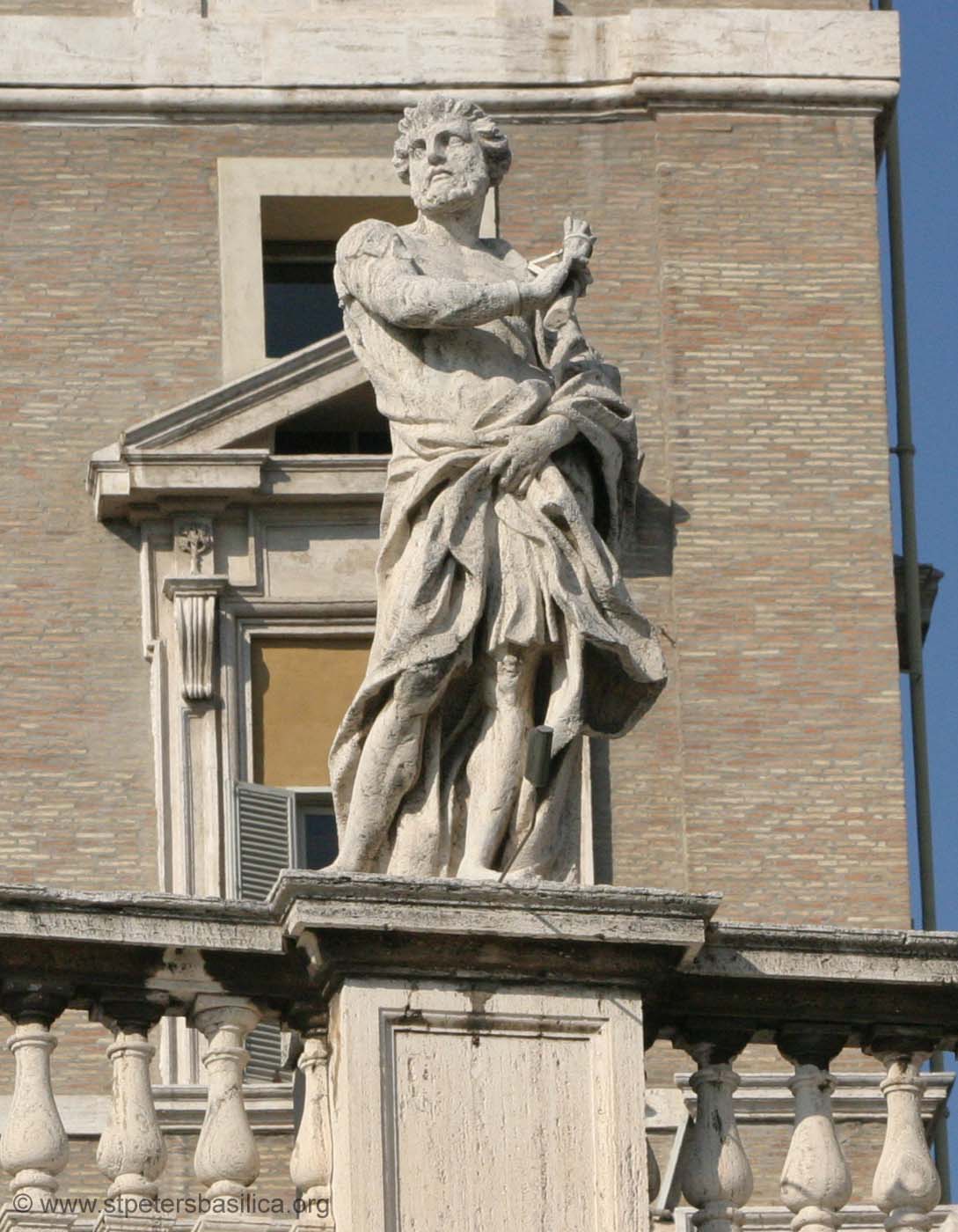
Saints Théodora et Didyme
Martyrs à Alexandrie en
Égypte (+ 304)
Jeune fille chrétienne
d'Alexandrie, arrêtée pendant la persécution de Dioclétien, elle voulait rester
vierge, ce qui n'était pas l'intention du gouverneur. Celui-ci lui donna trois
jours de réflexion avant de la condamner à être enfermée dans une maison de
prostitution. Théodora resta inébranlable. Elle y fut enfermée, livrée à la
débauche. Un soldat qui avait assisté à l'audience, vint et lui dit: "Je
suis le premier." Quand ils furent seuls, il la décida à échanger sa tenue
de soldat et son voile de prostituée. Elle put s'enfuir ainsi, mais Didyme le
soldat passa en jugement et eut la tête tranchée.
Saint
Ambroise, évêque de Milan qui nous rapporte cet épisode affirme que
Théodora revint au tribunal pour faire délivrer Didyme, mais elle en partagea
le martyre.
SOURCE : http://nominis.cef.fr/contenus/saint/1052/Saints-Theodora-et-Didyme.html
LES
ACTES DES SAINTS DIDYME ET THÉODORA, A ALEXANDRIE, L'AN 303.
Ces Actes sont, pour le
commencement et la fin, extraits mot à mot des registres du greffe ; le reste
est tout à fait digne de créance.
Combien le trait le plus
touchant de l’antiquité païenne est loin de la beauté de celui-ci ! Le
généreux dévouement d'Oreste et de Pylade leur était dicté par l’amitié ; la
douleur de se survivre les y entraînait. Ici, ce n'est point le moi humain, ni
sa dualité plus humaine encore, c'est l'ardente et libre charité, fruit de la
régénération et de la grâce. » (Mme Swetchine, Sa vie et ses oeuvres t. I,
p. 181.)
BOLL.., 28/IV, April.,
III, 572. — RUINART, Acta sinc., p. 425 et suiv. — P. ALLARD, Hist.
des persécutions, t. IV, p. 346 et suiv. — Cf. CHEVALIER, POTTHAST, et
CORNEILLE., Theodor., act. III, scène 3.
LES
ACTES DES SAINTS DIDYME ET THÉODORA
A Alexandrie, Procule
ouvrit l'audience par ces mots: « Qu'on amène la vierge Théodora. »
Un huissier : « La voici.
»
Procule : « De quelle
condition es-tu
— Je suis chrétienne.
— Es-tu libre ou esclave
?
— Je te répète que je
suis chrétienne : en venant sur la terre, le Christ m'a rendue libre ; au
reste, mes parents sont nobles. »
Procule : « Faites venir
le curateur de la cité » ; et quand il fut arrivé : « Que sais-tu sur cette
jeune fille ? »
Lucius, le curateur,
répondit : « Elle est libre, noble et de naissance illustre, la famille est
fort honorable. »
Procule reprit: « Si tu
es libre, pourquoi ne veux-tu pas te marier?
Pour l'amour du Christ.
— En s'incarnant, il nous
a délivrés de la corruption et nous a mérité la vie éternelle. J'ai embrassé sa
foi, je crois qu'il est bon de demeurer vierge.
— Les empereurs ont
ordonné que les vierges eussent à choisir, ou un sacrifice, ou le déshonneur.
— Je pense que tu
n'ignores pas ceci : Dieu voit nos coeurs et considère en nous une seule chose,
la volonté de demeurer chastes. Si donc tu me contrains à subir un outrage, je
ne commettrai point de faute volontaire, je souffrirai violence. Je suis prête
à livrer mon corps, sur lequel pouvoir t'a été donné, mais Dieu seul a pouvoir
sur mon âme.
— Je connais la noblesse
de ta naissance, ta beauté me touche, tu me fais pitié. Ainsi donc ne me
méprise pas, car, par tous les dieux, tu n'as rien à y gagner. Je te le répète,
les empereurs prescrivent pour les vierges le sacrifice ou la prostitution.
— Et moi, je te répète
que Dieu ne considère que notre volonté. Il voit toutes nos pensées et les
pénètre d'avance. Si donc je suis violée, je resterai pure. De même, si tu
coupes ma tête, ma main, mon pied, si tu déchires tout mon corps, ce sera
violence subie, mais non consentie. Ma volonté est de rester constamment fidèle
à Dieu, car il a attaché ses promesses à mon voeu. La virginité et le martyre
lui sont agréables. Lui, le Seigneur, sait bien nous donner sa grâce comme il
l'entend. »
Procule l'interrompit : «
Songe à ne pas couvrir ta famille de honte, à lui être un éternel opprobre,
puisque, comme on l'a déposé, tu es de famille noble.
— Avant tout rien ne
m'empêchera de confesser Jésus-Christ, de qui je tiens la vraie liberté et la
vraie noblesse; il sait bien comment il sauvera sa colombe.
— Pourquoi cette folie
d'aller croire à un individu crucifié ? Penses-tu sortir sans tache de la
maison publique? Tu es folle, tout le monde le dit.
— Je crois au Christ qui
a souffert sous Ponce-Pilate; il me délivrera des mains de mes ennemis; si je
persévère dans la foi, il me gardera sans tache, aussi je ne renie pas.
— Je t'ai laissé dire
jusque maintenant et je t'ai épargné la torture ; si tu continues à désobéir,
tu seras traitée en esclave. En faisant sur toi un exemple, les autres femmes
réfléchiront.
— Je suis prête à livrer
mon corps, sur lequel tu peux tout ; quant à mon âme, elle est à Dieu.
— Donnez-lui des
soufflets et dites : Assez de folie, viens et sacrifie.
— Par le saint nom de
Dieu, je ne sacrifie pas ; le Seigneur est mon appui. Je n'adore pas les
démons.
— Folle, va, tu m'as
réduit à te maltraiter malgré ta noblesse, et cela devant toute cette foule qui
n'attend que ta condamnation.
— Est-ce une folie de
confesser le Seigneur? Ce que tu appelles une injure sera ma gloire et mon
bonheur à jamais.
— En voilà assez : je
vais me conformer aux ordres des empereurs. J'ai patienté, espérant te
désabuser, une plus longue indulgence serait infidélité de ma part.
— Bon ; ta crainte et ton
empressement à exécuter les ordres des empereurs te feront comprendre pourquoi
je m'empresse, de mon côté, de rendre à Dieu ce que je lui dois en refusant de
le renier; moi aussi je crains de déplaire au Roi véritable.
— Tu méprises les ordres
impériaux, tu me prends pour un fou. Attends que je ne te l'apprenne à tes
dépens. Je te laisse un délai de trois jours : si tu t'obstines, on te mènera
dans une maison de débauche, cela corrigera les autres femmes.
— Crois-tu qu'après trois
jours, Dieu, qui est éternel, ne sera plus là pour me protéger ? Il ne
permettra pas que je sois séparée de lui ; je te livre mon corps, car ces trois
jours je les tiens déjà comme écoulés. A ton aise. Je réclame seulement d'être
à l'abri de toute violence jusqu'après le prononcé de la sentence. »
Trois jours plus tard,
Procule fit amener Théodora à l'audience :
« Si tu es corrigée, sacrifie
et retire-toi ; sinon, tu seras prostituée.
— Je l'ai dit et je le
répète, le Christ a promis de récompenser et de préserver la chasteté, il m'a
accordé la virginité et lé martyre, il saura sauver la brebis fidèle.
— Par tous les
dieux ! la crainte des empereurs m'oblige à porter la sentence, la
retarder serait désobéir. Tu as cherché la prostitution, tu l'auras, puisque tu
refuses de sacrifier. On verra bien s'il te garde, ton Christ, pour qui tu
t'obstines.
— Dieu, qui connaît les
secrets des coeurs et l'avenir, qui m'a gardée sans tache jusqu'à ce jour,
saura bien me défendre contre les hommes immondes qui voudraient outrager sa
servante. »
On conduisit Théodora
dans une maison de prostitution.
En franchissant le seuil,
elle leva les yeux au ciel : « Père de Notre-Seigneur Jésus-Christ, dit-elle,
aidez-moi et délivrez-moi du péril où je suis. Vous qui avez secouru Pierre
dans sa prison et l'en avez tiré sans qu'il reçût aucun mal, tirez-moi d'ici
sans avoir perdu ma pureté, afin que tous voient que je suis votre servante. »
Une foule nombreuse
assiégeait la porte, pareille à une bande de loups affamés se disputant à qui
outragerait le premier la brebis de Dieu, comme des vautours qui vont se jeter
sur une colombe.
Notre-Seigneur y pourvut.
Ce fut un chrétien, un
soldat, qui, vrai scélérat, entra le premier.
Théodora, voyant un
homme, fit en courant le tour de la chambre et se blottit dans un coin.
L'homme dit : «Je ne suis
pas ce que tu crois. Le loup est un agneau. Ce vêtement qui t'effraye est un
déguisement. Je suis ton frère dans la foi et dans la volonté de servir Dieu.
J'ai pris le costume des serviteurs du démon afin de te sauver. Je suis venu
pour chercher et délivrer le trésor de mon Dieu, car tu es la servante fidèle
et la colombe chérie du Seigneur. Changeons d'habits, et sors d'ici, à la garde
de Dieu. Ne crains rien, je n'ai pas oublié la parole de l'Apôtre : Soyez comme
moi.»
Théodora revêtit le
costume militaire, se coiffa d'un chapeau à larges bords que Didyme avait
apporté, comme pour se mieux cacher en sortant. Il conseilla à la vierge de
sortir les yeux baissés, de ne parler à personne, mais de marcher vers Celui
qui est la véritable porte par laquelle ceux qui entrent sont sauvés. Elle
sortit donc, élevant ses ailes comme un petit oiseau tiré des serres du
vautour.
Son libérateur demeura
seul, couvert du voile de la vierge, ceint de sa ceinture. Il était assis.
Après quelque temps, un
autre débauché entra dans la chambre et trouva un homme au lieu d'une vierge ;
il en fut stupéfait. « Ah ça, Jésus change donc les femmes en hommes? Celui qui
était entré est cependant sorti. » Il éleva la voix : « Qui est assis là ? Où
est passée la fille ? L'on m'avait dit que Jésus change l'eau en vin, je
croyais que c'était une fable : voilà bien plus fort, une femme changée en
homme ; eh ! mais, il va me changer en femme, moi. »
Le libérateur de Théodora
lui dit : « Dieu n'a rien changé, mais il a béni la femme et moi-même. Votre
proie vous a échappé, prenez donc ce qui vous reste. Ma récompense sera double,
sauveur d'une vierge, soldat du Christ. »
L'homme alla faire son
rapport au juge, qui se fit amener le chrétien.
On procéda à l'interrogatoire.
« Ton nom ?
— Didyme. »
Le proconsul : « Qui t'a
envoyé pour faire ce que tu as fait ?
— Dieu m'a inspiré ce
dessein.
— Confesse tout, avant
que j'aie recours aux tortures. Où est Théodora ?
— Par Jésus-Christ Fils
de Dieu, je n'en sais rien. Tout ce que je sais, c'est qu'elle est fidèle à
Dieu, et qu'après avoir confessé le Christ, elle est demeurée pure; car le
Seigneur l'a préservée de toute souillure. Ce n'est pas à moi que j'attribue ce
qui s'est fait, mais à Dieu, qui a récompensé sa foi, comme tu le sais
toi-même, quoique tu ne veuilles pas l'avouer.
— Quelle est ta condition
?
— Je suis chrétien : le
Christ m'a rendu libre.
— On te fera subir un
double supplice : l'un à cause de ta foi, l'autre à cause de ton audace.
— Je te supplie de faire
sans retard ce qui t'est commandé par les empereurs.
— Par les dieux, si tu ne
sacrifies, tu vas subir un double supplice, et pour ton refus d'obéissance, et
pour le coup que tu as osé faire.
— « Je veux te montrer
que je suis vraiment le soldat de Dieu, et que je suis prêt à souffrir pour ma
foi. C'est pour cela que j'ai résolu et de sauver l'honneur de cette vierge, et
de confesser publiquement la foi ; tant que je conserverai cette foi, les
tourments ne pourront me nuire. Fais vite, car je ne sacrifierai pas aux
démons, quand même tu me ferais brûler.
— A cause de ton audace
on te coupera la tête, et parce que tu n'as pas obéi aux ordres de nos maîtres
les empereurs, le reste de ton corps sera brûlé. »
Didyme répondit : « Soyez
béni, ô Dieu, Père de mon Seigneur Jésus-Christ, qui avez daigné bénir et faire
réussir ma résolution. Vous avez sauvé votre servante Théodora, et par cette
double sentence rendue contre moi, vous m'avez assuré une double couronne. »
Le jugement ayant donc
été rendu, on lui trancha la tête et on brûla son corps. Il consomma ainsi son
martyre, par la grâce de Notre-Seigneur Jésus-Christ, à qui est honneur, gloire
et puissance dans tous les siècles des siècles. Amen.
LES MARTYRS. Recueil
de pièces authentiques sur les martyrs depuis les origines du Christianisme
jusqu'au XXe siècle, traduites et publiées Par le R. P. Dom H. LECLERCQ, Moine
bénédictin de Saint-Michel de Farnborough TOME
II.
LE TROISIÈME SIÈCLE,
DIOCLÉTIEN Précédé d'une introduction. Quatrième édition. Imprimi
potest. FR. Ferdinandus Cabrol, Prior Sancti Michaelis
Farnborough. Die 4 Maii 1903. Imprimatur. Turonibus, die 18 Octobris
1920. P. Bataille, vic. gén. ANIMULAE NECTAREAE EORGINAE FRANCISCAE
STUART
SOURCE : http://www.abbaye-saint-benoit.ch/martyrs/martyrs0002.htm#_Toc90634931
Saints Martyrs THEODORA
et DIDYME
Au temps de la
persécution de Dioclétien et Maximien (289-305), on arrêta à Alexandrie la
vierge consacrée à Dieu : Théodora. Après avoir courageusement confessé le
Christ devant le gouverneur, elle fut livrée à une maison de prostitution. Le
premier homme qui se présenta pour abuser d'elle était un noble militaire du
nom de Didyme. Aussitôt converti par la pureté rayonnante de Théodora, il la
revêtit de son costume militaire, lui donna ses armes et elle put ainsi sortir
saine et sauve. Quand la supercherie fut découverte, on mena Didyme avec un
grand tapage auprès du gouverneur. Comme on lui demandait la raison de son
acte, il répondit calmement qu'il en attendait une double couronne : pour avoir
délivrée l'épouse du Christ des hommes débauchés d'une part, et d'autre part
celle du martyre qui l'attendait. Il fut décapité en rendant gloire à Dieu, et
son corps fut livré aux flammes. Sainte Théodora remporta aussi la couronne du
martyre en étant brûlée vive.
SOURCE : http://www.religion-orthodoxe.eu/article-saints-martyrs-theodora-et-didyme-5-avril-47816861.html

32.
St. Didymus. The 140 Saints of the Colonnade. St. Didymus. Died 304 in
Alexandria, Egypt. Statue carved - 1667-1668. Part of a group of 16 statues
made between May 1667 and July 1668. Sculptor - Lazzaro Morelli
Didymus shows similarities with St Marcian (29), and his face denotes an
affinity with St Vitalis (4)., Height - 3.1 m. (10ft 4in) travertine. Didymus
is represented with armour and a long cloak that wraps over his left arm. His
right hand is holding the palm of martyrdom. The story is told of Sts Didymus
and Theodora. She was a young Christian girl of Alexandria in Egypt, during the
time of Diocletian, who was sentenced to be a slave in a brothel. Didymus came
to her rescue while still a pagan soldier. This led to his conversion and the
two were martyred together. Scholars thought this legend might be based on a
genuine event, but because of lack of historical data, they have been removed
from the Roman Martyrology 2001.
Profile
Rescued Saint Theodora
of Alexandria by trading clothes with her at the house of prostitution
where she’d been sentenced. Martyred in
the persecutions of Diocletian.
beheaded in 304 in Alexandria, Egypt
Additional
Information
Acts
of the Early Martyrs, by Father James
A M Fastré, S.J.
Book
of Saints, by the Monks of
Ramsgate
Lives
of the Saints, by Father Alban
Butler
Saints
of the Day, by Katherine Rabenstein
Victories
of the Martyrs, by Saint Alphonsus
de Liguori
books
Our Sunday Visitor’s Encyclopedia of Saints
other
sites in english
video
MLA
Citation
“Saint Didymus of
Alexandria“. CatholicSaints.Info. 16 December 2022. Web. 2 April 2026.
<https://catholicsaints.info/saint-didymus-of-alexandria/>
SOURCE : https://catholicsaints.info/saint-didymus-of-alexandria/
Book of Saints
– Theodora and Didymus
Article
(Saints) Martyrs (April
28) (4th
century) Martyrs at Alexandria in Egypt,
under Diocletian (A.D. 304).
Didymus, then a Pagan,
had succeeded in protecting the virtue of the Virgin Theodora.
He became a Christian like
her. They were condemned and executed together.
MLA
Citation
Monks of Ramsgate.
“Theodora and Didymus”. Book of Saints, 1921. CatholicSaints.Info.
12 November 2017. Web. 8 April 2026.
<https://catholicsaints.info/book-of-saints-theodora-and-didymus/>
SOURCE : https://catholicsaints.info/book-of-saints-theodora-and-didymus/
Profile
Christian woman who,
during the persecutions of Diocletian,
refused to sacrifice to idols and claimed that she remained celibate as she was
wed to God.
She was ordered by anti–Christian governor Eustratius
to be turned over to a house of prostitution. There Saint Didymus changed
clothes with her so she could escape. She was later re-captured and executed. Martyr.
beheaded in 304 in Alexandria, Egypt
Additional
Information
A
Garner of Saints, by Allen Banks Hinds, M.A.
Acts
of the Early Martyrs, by Father James
A M Fastré, S.J.
Book
of Saints, by the Monks of
Ramsgate
Lives
of the Saints, by Father Alban
Butler
Saints
of the Day, by Katherine Rabenstein
Victories
of the Martyrs, by Saint Alphonsus
de Liguori
books
Our Sunday Visitor’s Encyclopedia of Saints
other
sites in english
video
MLA
Citation
‘Saint Theodora of
Alexandria‘. CatholicSaints.Info. 16 December 2022. Web. 8 April 2026.
<https://catholicsaints.info/saint-theodora-of-alexandria/>
SOURCE : https://catholicsaints.info/saint-theodora-of-alexandria/
New Catholic
Dictionary – Saint Didymus
Article
Martyr, died Alexandria,
Egypt, 304.
He was put to death with Saint Theodora whose virtue he had protected. Feast, 28
April.
MLA
Citation
“Saint Didymus”. New Catholic Dictionary. CatholicSaints.Info. 21
October 2012.
Web. 8 April 2026.
<http://catholicsaints.info/new-catholic-dictionary-saint-didymus/>
SOURCE : https://catholicsaints.info/new-catholic-dictionary-saint-didymus/
St. Theodora &
Didymus
Feastday: April 28
Death: 304
Martyrs in Alexandria,
Egypt.Theodora was a virgin who was sentenced to a brothel as punishment for
being a Christian during
the persecutions of Emperor Diocletian. She was rescued from the infamous house
by Didymus, who was still a pagan but
who was converted by her beautiful example of fidelity to Christ. They were
martyred together.
SOURCE : https://www.catholic.org/saints/saint.php?saint_id=2205
A
Garner of Saints – Saint Theodora of Alexandria
Article
Brought before the
prefect Eustratius Proculus she was interrogated as to her belief and why she
was not married. After this the prefect ordered her to be exposed in a place of
ill repute, but she raised her eyes to heaven and prayed for succour. Now there
lived at Alexandria a young man named Didymus. Dressing as a soldier he went to
the place where the saint was, and when she saw him she was overcome by terror,
but he comforted her, and they changed their clothes, Theodora going out as a
soldier. When a libertine arrived some time after he was surprised to find a
man instead of a woman. For his offence Didymus was summoned before the prefect
and beheaded, Theodora came to the spot and desired to suffer in his stead, but
in the end both were beheaded. 28th
April.
Attribute
Represented veiled.
MLA
Citation
Allen Banks Hinds, M.A.
“Saint Theodora of Alexandria”. A Garner of Saints, 1900. CatholicSaints.Info.
26 April 2017. Web. 8 April 2026.
<https://catholicsaints.info/a-garner-of-saints-saint-theodora-of-alexandria/>
SOURCE : https://catholicsaints.info/a-garner-of-saints-saint-theodora-of-alexandria/
St. Theodora
Feastday: April 28
There is a pious fiction
according to which Theodora, a beautiful Christian girl
of Alexandria, was sentenced to a brothel during the persecution of
Christians under Emperor Diocletian when
she refused to sacrifice to
the gods. She fell dead when she was rescued by Didymus; when Didymus' act was
discovered, he was beheaded. Her feast day is April 28th.
SOURCE : https://www.catholic.org/saints/saint.php?saint_id=244
Victories
of the Martyrs – Saint Theodora, Virgin, and Saint Didymus
Article
Saint Theodora, a native
of Alexandria, was descended from noble and opulent Christian parents; she was
born towards the close of the third century, and at the early age of sixteen
years was distinguished for her beauty. Desirous of having Jesus Christ alone
for her spouse, she made a vow of perpetual virginity, and her many admirable
virtues made her a model of perfection to the other Christian virgins of her
acquaintance. No sooner were the edicts of Diocletian against the Christians
published in Egypt, than our saint was inflamed with the holy desire of
sacrificing her life for Jesus Christ, and by prayer commenced to prepare
herself for the great struggle, and to make frequent offerings of herself to
God.
She was amongst the first
of those who were arrested, and being presented to the judge Proculus, who was
much struck with her beauty, was asked whether she was a slave or a free woman;
the saint replied that she was a Christian, having been freed by Christ from
the slavery of the devil, and that she was also born of what the world called
free parents. The tyrant, having discovered that she was of noble birth,
inquired why she had not married. Saint Theodora replied that she had abstained
from marriage that she might live alone to Jesus Christ her Saviour. “But dost
thou not know,” continued the judge, “that it hath been commanded by the
emperor that each one shall sacrifice to the gods, or else be condemned to the
most infamous punishments?” “And thou also knowest very well,” rejoined the
saint, “that God is careful of those who serve him, and defends them from
contamination.” Proculus continued to persuade her to sacrifice to the gods,
threatening that otherwise the imperial edicts should be enforced. The saint
answered as before, adding that she was consecrated to Jesus Christ, and would
not abandon him though she were torn to pieces. “I am no longer my own,” said
she, “but His: He will defend me.”
“Thou shalt pay dearly
for thy obstinacy,” said the judge; “what madness to place thy trust in a man
who could not free himself from the death of the cross!” “Yes,” replied the
saint, “my confidence is placed in Jesus Christ, who hath suffered death to
grant life unto us; he will preserve me from all evil. I fear neither torments
nor death, but, on the contrary, I long to die for love of my God who died for
me.”
“But thou art of noble
birth,” said the judge, “and shouldst not dishonor thy family with eternal
infamy.” Theodora answered: “My glory is to confess the name of Jesus Christ my
Saviour; he hath given me both honor and nobility; he knoweth how to preserve
his dove from the hawk.”
“Thou dost but trifle,”
said Proculus; “instantly sacrifice to our gods – be not insane.” “I would
indeed be insane,” said Theodora, “if I were to sacrifice to devils and gods of
brass or marble.” Exasperated by this answer, the judge caused her to be
buffeted, and said: “Thou wilt charge us with this dishonor; but thou shouldst
not have dishonored our gods.” “I do not complain,” said the saint, “but rather
rejoice at this opportunity of bearing insult for my Saviour.”
“I shall give thee,” said
the tyrant, “three days to deliberate; after which, if thou wilt remain
obdurate, punishment awaits thee.” Theodora replied, “Thou mayest look on these
three days as already expired; thou shalt find me the same then as now.” The three
days having expired, and the saint being still constant in her faith, Proculus
said that he was bound to obey the edict, and commanded her to be conducted
whither he had threatened.
Upon entering the
infamous place the saint fervently recommended herself to Jesus Christ, and was
heard; for Didymus, habited like a soldier, mingled in the crowd, and obtained
admission to the room where she was. Upon seeing him, Theodora fled from him
into several corners of the room; but Didymus said to her: “Fear me not,
Theodora; I am not such a one as thou supposest; I have come to save thy honor
and to set thee free. Let us change habits; take thou my clothes and depart; I
will remain here in thine.” Theodora did as she was desired, and in her
disguise joyfully departed from that place of infamy; holding down her head,
she passed undiscovered through the midst of the crowd.
After some time, another
young man, on entering the apartment, was astonished to find a man there
instead of the virgin, and in his astonishment exclaimed: “Perhaps Christ
changeth women into men!” But Saint Didymus explained, and said to the
idolater: “Christ hath not changed me from a woman to a man, but hath given me
an opportunity of acquiring the crown of martyrdom. The virgin is out of your reach;
I have remained in her place; do unto me as it pleaseth you.”
The prefect being
informed of this, sent for Didymus, and asked him why he had so acted. He
replied that it was in consequence of an inspiration from God. He was then
commanded to sacrifice to the gods, and to make known where Theodora was. He
replied, that as to Theodora he knew not, and as to sacrificing to the gods,
the judge had better put in force the imperial edict, since he would never
sacrifice to devils, though he should be cast into a furnace. The prefect,
incensed at this declaration, commanded that he should be beheaded, and that
his body should afterwards be burned.
Didymus accordingly went
to the place of execution, but at the same moment Theodora arrived, and with
holy emulation contended for the crown. Didymus said: “It is mine, because on
me hath sentence been pronounced.” Theodora replied: “I was willing thou
shouldst save my honor, but not my life. I abominated infamy, but did not
shrink from death. If thou hast intended to deprive me of martyrdom, thou hast
deceived me.” Finally, the judge ordered them both to be decapitated, and thus
both received the crown of martyrdom.
The original Acts of this
glorious martyrdom are transcribed by Ruinart.
MLA
Citation
Saint
Alphonsus de Liguori. “Saint Theodora, Virgin, and Saint Didymus”. Victories
of the Martyrs. CatholicSaints.Info. 16 December 2022.
Web. 8 April 2026. <https://catholicsaints.info/victories-of-the-martyrs-saint-theodora-virgin-and-saint-didymus/>
SOURCE : https://catholicsaints.info/victories-of-the-martyrs-saint-theodora-virgin-and-saint-didymus/
Theodora and Didymus MM
(RM)
Died 304. A pious fiction
tells of Theodora, a beautiful young girl in Alexandria, who was arrested and
sentenced to live in a house of prostitution for refusing to sacrifice to pagan
gods during the persecution of Emperor Diocletian. Didymus, a fellow Christian,
helped her escape by exchanging clothes with her. It was a brilliant idea,
properly executed, but when the trickery was discovered, Didymus was arrested
and sentenced to death. Theodora returned to the city from hiding, hoping to
secure the release of Didymus by surrendering her own life. But so great was
the fury of the prefect that he ordered both of them to be killed.
Another version says that
Theodora fell dead when she was rescued by Didymus; when Didymus's act was
discovered, he was beheaded. Sometimes Didymus is portrayed as a pagan
converted by her purity in the brothel (Attwater2, Benedictines, Delaney,
Encyclopedia).
SOURCE : http://www.saintpatrickdc.org/ss/0428.shtml
SS. Didymus and Theodora,
Martyrs
From their beautiful
acts, copied in part from the presidial registers, the rest being added by an
eye-witness, extant in Ruinart and the Bollandists, t. 3, Apr. in Append. p.
lxiii. See also St. Ambrose de Virgin. l. 2, c. 4.
A.D. 304.
EUSTRATIUS PROCULUS,
imperial prefect of Alexandria, being seated on his tribunal, said:—“Call
hither the virgin Theodora.” A sergeant of the court answered:—“She is here.”
The prefect said to her:—“Of what condition are you?” Theodora replied:—“I am a
Christian.” Prefect.—“Are you a slave or a free woman?” Theodora.—“I am a
Christian, and made free by Christ; I am also born of what the world calls free
parents.” Prefect.—“Call hither the bailiff 1 of
the city.” When he was come, the prefect asked him what he knew of the virgin
Theodora. Lucias, the bailiff, answered:—“I know her to be a free woman, and of
a very good family in the city.” “What is the reason, then,” said the judge to
Theodora, “that you are not married?” Theodora.—“That I may render myself the
more pleasing and acceptable to Jesus Christ, who, being become man, hath
withdrawn us from corruption; and as long as I continue faithful to him, will,
I hope, preserve me from all defilement.” Prefect.—“The emperors have ordered
that you virgins shall either sacrifice to the gods, or be exposed in infamous
places.” Theodora.—“I believe you are not ignorant that it is the will which
God regards in every action; and that if my soul continue chaste and pure, it
can receive no prejudice from outward violence.” Prefect.—“Your birth and
beauty make me pity you: but this compassion shall not save you unless you
obey. I swear by the gods, you shall either sacrifice or be made the disgrace
of your family, and the scorn of all virtuous and honourable persons.” He then
repeated the ordinance of the emperors, to which Theodora made the same reply
as before, and added:—“If you cut off unjustly my arm or head, will the guilt
be charged to me or to him that commits the outrage? I am united to God by the
vow I have made to him of my virginity; he is the master of my body and my soul,
and into his hands I commit the protection of both my faith and chastity.”
Prefect.—“Remember your birth: will you dishonour your family by an eternal
infamy?” Theodora.—“The source of true honour is Jesus Christ: my soul draws
all its lustre from him. He will preserve his dove from falling into the power
of the hawk.” Prefect.—“Alas, silly woman! do you place your confidence in a
crucified man? do you imagine it will be in his power to protect your virtue if
you expose it to the trial?” Theodora.—“Yes; I most firmly believe that Jesus,
who suffered under Pilate, will deliver me from all who have conspired my ruin,
and will preserve me pure and spotless. Judge, then, if I can renounce him.”
Prefect.—“I bear with you a long time, and do not yet put you to the torture.
But if you continue thus obstinate, I will have no more regard for you than for
the most despicable slave.” Theodora.—“You are master of my body: the law has
left that at your disposal; but my soul you cannot touch, it is in the power of
God alone.” Prefect.—“Give her two great buffets to cure her of her folly, and
teach her to sacrifice.” Theodora.—“Through the assistance of Jesus Christ, I
will never sacrifice to, nor adore devils. He is my protector.” Prefect.—“You
compel me, notwithstanding your quality, to affront you before all the people.
This is a degree of madness.” Theodora.—“This holy madness is true wisdom; and
what you call an affront will be my eternal glory.” Prefect.—“I am out of
patience; I will execute the edict. I should myself be guilty of disobeying the
emperors, were I to dally any longer.” Theodora.—“You are afraid of displeasing
a man, and can you reproach me because I refuse to offend God, because I stand
in awe of the emperor of heaven and earth, and seek to obey his will?”
Prefect.—“In the mean time you make no scruple of slighting the commands of the
emperors, and abusing my patience. I will, notwithstanding, allow you three
days to consider what to do; if within that term you do not comply with what I
require, by the gods, you shall be exposed, that all other women may take
warning from your example.” Theodora.—“Look on these three days as already
expired. You will find me the same then as now. There is a God who will not
forsake me. Do what you please. My only request is, that I may be screened in
the mean time from insults on my chastity.” Prefect.—“That is but just. I
therefore ordain that Theodora be under guard for three days, and that no
violence be offered her during that time, nor rudeness shown her, out of regard
to her birth and quality.” The three days being elapsed, Proculus ordered
Theodora to be brought before him: and seeing she persisted in her resolution
said: “The just fear of incurring the indignation of the emperors obliges me to
execute their commands: wherefore sacrifice to the gods, or I pronounce the
threatened sentence. We shall see if your Christ, for whose sake you continue
thus obstinate, will deliver you from the infamy to which the edict of the
emperors condemns you.” Theodora.—“Be in no pain about that.” Sentence hereupon
being pronounced, the saint was conducted to the infamous place. On entering it
she lifted up her eyes to God and said: “Father of our Lord Jesus Christ,
assist me and take me hence: Thou who deliveredst St. Peter from prison without
his sustaining any hurt, guard and protect my chastity here, that all may know
I am thy servant.” A troop of debauchees quickly surrounded the house, and
looked on this innocent beauty as their prey. But Jesus Christ watched over his
spouse, and sent one of his servants to deliver her. Among the Christians of
Alexandria, there was a zealous young man, named Didymus, who desiring
earnestly to rescue the virgin of Christ out of her danger, habited himself
like a soldier, and went boldly into the room where she was. Theodora, seeing
him approach her, was at first much troubled, and fled from him into the
several corners of the room. He, overtaking her, said to her: “Sister, fear
nothing from me. I am not such a one as you take me to be. I am your brother in
Christ, and have thus disguised myself on purpose to deliver you. Come, let us
change habits: take you my clothes and go out, and I will remain here in yours:
thus disguised, save yourself.” Theodora did as she was desired: she also put
on his armour, and he pulled down the hat over her eyes, and charged her in
going out to cast them on the ground, and not stop to speak to any one, but
walk fast, in imitation of a person seeming ashamed, and fearing to be known
after the perpetration of an infamous action. When Theodora was by this
stratagem out of danger, her soul took its flight towards heaven, in ardent
ejaculations to God her deliverer.
A short time after, came
in one of the lewd crew on a wicked intent, but was extremely surprised to find
a man there instead of the virgin: and hearing from him the history of what had
passed, went out and published it abroad. The judge, being informed of the
affair, sent for the voluntary prisoner, and asked him his name. He
answered:—“I am called Didymus.” The prefect then asked him, who put him upon
this extraordinary adventure? Didymus told him it was God who had inspired him
with this method to rescue his handmaid. The prefect then said:—“Before I put
you to the torture, declare where Theodora is.” Didymus.—“By Christ, the Son of
God, I know not. All that I certainly know of her is, that she is a servant of
God, and that he has preserved her spotless: God hath done to her according to
her faith in him.” Prefect.—“Of what condition are you?” Didymus.—“I am a Christian,
and delivered by Jesus Christ.” Prefect.—“Put him to the torture doubly to what
is usual, as the excess of his insolence deserves.” Didymus.—“I beg you to
execute speedily on me the orders of your masters, whatever they may be.”
Prefect.—“By the gods, the torture doubled is your immediate lot, unless you
sacrifice: if you do this your first crime shall be forgiven you.” Didymus.—“I
have already given proof that I am a champion of Christ, and fear not to suffer
in his cause. My intention in this matter was twofold, to prevent the virgin’s
being deflowered, and to give an instance of my steady faith and hope in
Christ; being assured I shall survive all the torments you can inflict upon me.
The dread of the cruellest death you can devise will not prevail on me to
sacrifice to devils.” Prefect.—“For your bold rashness, and because you have
contemned the commands of our lords the emperors, you shall be beheaded and
your corpse shall be burnt.” Didymus.—“Blessed be God, the Father of our Lord
Jesus Christ, who hath not despised my offering, and hath preserved spotless
his handmaid Theodora. He crowns me doubly.” Didymus was, according to this
sentence, beheaded, and his body burnt. Thus far the acts.
St. Ambrose, 2 who
relates this history of Theodora, (whom he calls by mistake a virgin of
Antioch,) adds, that she ran to the place of execution to Didymus, and would
needs die in his place, and that she was also beheaded; which the Greeks say
happened shortly after his martyrdom. St. Ambrose most beautifully paints the
strife of these holy martyrs, at the place of execution, which of the two
should bear away the palm of martyrdom. The virgin urged, that she owed indeed
to him the preservation of her corporal integrity; but would not yield to him
the privilege of carrying away her crown. “You were bail,” said she, “for my
modesty, not for my life. If my virginity be in danger, your bond holds good:
if my life be required, this debt I myself can discharge. The sentence of
condemnation was passed upon me: I am further obnoxious, not only by my flight,
but by giving occasion to the death of another. I fled, not from death, but
from an injury to my virtue. This body, which is not to be exposed to an insult
against its integrity, is capable of suffering for Christ. If you rob me of my
crown, you have not saved but deceived me.” The two saints, thus contending for
the palm, both conquered: the crown was not divided, but given to each. St.
Didymus is looked upon to have suffered under Dioclesian, in 304, and at
Alexandria. The Roman Martyrology commemorates these two saints on this day.
Note 1. Curatorem
civitatis. Curateur, Fleury; Bailiff, Ainsworth. [back]
Note 2. De Virgin,
b. 2, c. 4. [back]
Rev. Alban
Butler (1711–73). Volume IV: April. The Lives of the Saints. 1866.
SOURCE : http://www.bartleby.com/210/4/282.html
The
Acts of the Early Martyrs – Saints Theodora and Didymus
Article
In the reign of the
Emperors Diocletian and Maximian, a decree was published, whereby all
Christians within the limits of the Roman Empire were commanded to sacrifice to
the idols, under threat of various punishments if they refused to yield
compliance. In consequence, many of the most distinguished among the faithful
saw themselves deprived of liberty, and thrown into loathsome dungeons; for
they chose to obey the voice of conscience and the commands of God, rather than
the unjust enactments of wicked men. At that time, Eustratius was Governor of
Alexandria, in Egypt. By his orders, the prisons of that great city were soon
filled with Christians of every rank and condition. These he summoned
separately before him, finding it a special delight to annoy or torture those
among them who were possessed of wealth, until by bribes or confiscation he was
enabled to gratify his avarice. It was with this expectation that he sent a
band of soldiers to bring before his tribunal the Virgin Theodora, who already
during several days had been detained in prison.
The Governor began the
interrogatory in the usual form, by asking her what rank she held in society.
To this Theodora replied:
“I am a Christian.”
“Art thou free-born, or a
bond-woman?” asked Eustratius.
“I said just now that I
am a Christian,” answered the young lady; “Christ by His coming among us hath
set me free. Moreover, in the language of this world, I am born of noble
parents.”
The Governor thereupon
sent for the bailiff of the city, and said to him: “Tell us what thou knowest
about the lady Theodora.”
Lucius, the bailiff,
replied: “By your own nobility, my lord, I can testify that she is free-born,
respectable, and of one of the best families in the city.”
This answer satisfied the
Governor, and he said to Theodora: “Since thou art of noble birth, how comes it
that thou art not yet married?”
“On account of my love
for Jesus Christ,” answered Theodora. “For when He came into this world, being
Himself born of a Mother, who is ever a Virgin, He withdrew us from corruption
and promised unto us life everlasting. Wherefore, I trust that, so long as I
continue faithful to Him, He will keep me from every defilement.”
“Nevertheless,” said
Eustratius, “it is the will and command of our Emperors, that those among the
Christians, who are Virgins, should be forced to offer sacrifice to the gods,
or else be exposed in places of infamy.”
“I suppose,” replied the
maiden, “that you know well enough that God sees our hearts; if, then, He beholds
my desire and will to remain pure and undefiled in His sight, no violence,
whatsoever, which may be done to me, can deprive me of that which I have
consecrated to Him.”
“Knowing the nobility of
thy birth, and seeing the beauty of thy person, I cannot but feel pity for
thee. Yet, all this shall not save thee; for, I swear by all the gods, the
Emperors have issued their commands, and they must be obeyed.”
“I have said already,
that God sees our will: He reads our very thoughts. If you cut off my head, or
my hands and feet, will you deny that it is the work of violence rather than of
my will? In like manner, whatsoever else I am made to suffer, I cannot thereby
become guilty. By vow I have consecrated my chastity to God. He has accepted
the gift; I am firmly resolved to continue faithful to Him. He is the Lord and
Master: He can and will preserve the gift offered unto Him, but He will do it
in the manner which he Himself chooses.”
“Do not bring upon thy
name and kindred an everlasting disgrace. Thou hast heard how the city officer
spoke of thy family, they are among the first and noblest in Alexandria.”
“I confess, before all,
the Lord Jesus Christ. He has bestowed true honor and nobility upon me. He too
knows how to guard His dove against the attacks of rapacious vultures.”
“What foolishness to
believe in a God who was crucified!” exclaimed the Governor. “Thinkest thou
that He will be able to protect thee, especially when thou fallest into the
hands of men who will look upon thee as a crazy woman?”
“I believe in Jesus
Christ, who suffered under Pontius Pilate,” answered Theodora; “He will free me
from the hands of lawless men, and keep me pure and sinless, if I continue
faithful to Him; and this I am firmly resolved to do.”
“I do not know,” said
Eustratius, “what keeps me from putting thee to the torture, as if thou wert
but the vilest of slaves, instead of listening patiently to thy impudent
nonsense. The orders of our Emperors are positive; so prepare thyself to comply
with them, or I will soon make an example of thee as a warning for all other
silly women.”
“I am ready to suffer
whatsoever you may choose to inflict upon my body,” replied the Virgin, “for
you have it in your power. My soul, however, you cannot touch, for it is in the
power of God alone.”
“Blindfold her,” said the
Governor to his men; “give her a few blows on the face, saying at the same
time, do not be foolish, but come and offer sacrifice to the gods.” Whilst they
were executing the Governor’s orders, Theodora said:
“God is my witness, that
I am determined never to sacrifice to your devils. O Lord, be Thou my helper.”
“Thou seest now,” said
Eustratius, “how thou hast forced me to treat thee with indignity, although
thou art a lady of high rank. Listen to me: give up thy foolishness, lest thou
oblige me also to give thee up to the crowd of ruffians who are awaiting thy
sentence.”
“I am not foolish when I
confess the Lord, who is my Protector. As to the indignity which you offer me,
it secures for me honor and glory forever.”
“I can endure this no
longer,” said the Governor. “I had patience with thee, so long as I thought
there was a chance of bringing thee over to better sentiments. Now, however,
seeing thy obstinacy, I should deem myself guilty of negligence in executing
the orders of our august princes, were I still to trifle away time in this
foolish manner.”
“You are afraid of
displeasing your Emperors,” replied Theodora, “and you hasten to obey their
commands. How can you blame me for refusing to disobey my Lord and Master, who
is the supreme Ruler of the universe?”
“Darest thou despise the
commands of our immortal Emperors, and treat me as a man unfit for my position?
Beware lest I begin to make thee feel the effect of my power. Meanwhile, I give
thee three days to consider this matter; but if, after that, thou do not obey
and offer sacrifice, I swear by all the gods of Olympus, I will have thee taken
to a place of debauchery, that all women, seeing or hearing it, may learn a
lesson from thy example.”
“He who is God, is the
same now and forever,” said Theodora. “He will not permit me to deny Him. You
have power over my body: my spirit you cannot subdue. After three days I will
speak and think as I do now; there is no need, therefore, for this delay. If,
however, you think it proper to grant me these days of respite, I ask it as a
right, that, during this time, I be not exposed to the insults of lawless
persons.”
“This request is but
fair,” replied Eustratius. Wherefore he said to his officers: “Take the lady
Theodora to a place of safety, keep her under guard for three days, and let no
one say or do anything to molest her, but treat her as befits a person of her
rank.”
After three days she was
again summoned before the Governor, who said to her: “If thou art now resolved
to obey, offer sacrifice to the gods, and go thy way. If not, take it for
granted, thou shalt not remain unharmed.”
“I have already said it
before,” replied Theodora, “and am willing to repeat it, that I have
consecrated my chastity to Christ, our Lord. To preserve me unsullied belongs
to Him; I place myself in His holy keeping: He knows best in what manner He
will save His handmaid from being defiled.”
“By all the immortal
gods,” said Eustratius, “I will not incur the anger of the Emperors by refusing
to condemn thee. If thou art unwilling to worship our gods, the blame of being
sentenced rests upon thyself. Therefore, I give sentence, as I promised to do.
Thou shalt be taken to a place of infamy, then we shall see whether Christ, for
whose sake thou perseverest in thy obstinacy, can save thee from ruin and
disgrace.”
When the Martyr heard her
condemnation, she exclaimed: “O Lord, who knowest the secrets of all hearts,
who also until now hast preserved me unsullied, suffer not that Thy servant be
this day made unclean in Thy sight. In Thee, O Lord, have I trusted, let me
never be put to shame.”
Thereupon the servant of
God was immediately hurried off to a house of lewdness. As she was pushed into
it, she raised her eyes to heaven, and said: “Father of our Lord Jesus Christ,
help me and take me hence: O Thou, who didst free the Blessed Peter from his
prison and from the malice of the Jews, deliver me from this abode of sin; that
all may know that I am Thy handmaid.”
Meanwhile a crowd of
infamous wretches had gathered about the house, and, like hungry wolves, were
watching for a chance to devour the innocent lamb. But the good Shepherd of
souls was not forgetful of his own. A young Christian, hearing how the noble
and virtuous Theodora had been condemned, felt within him a sudden inspiration
to rescue her from the danger to which she was exposed. He dressed himself in
the garb of a soldier, and commending his charitable undertaking to God, he
went forth boldly. The shadows of evening favored his generous design. Passing
hurriedly through the crowd of the unmannerly loungers that were loitering
about the place, he entered the apartment of the servant of God – which no one
had as yet ventured to do. At sight of him, the chaste Theodora was filled with
alarm; she endeavored to hide herself in a corner of the room. But the youth,
respectfully standing at a distance from her, said in a tone of voice
expressive of the greatest kindness:
“Fear not, sister, I am
thy brother; the God who hears the prayer of the innocent is our Father. If I
come to thee in the clothing of the wolf, it is not to cause thee any harm, but
to bring safety. Make haste, therefore; put on these garments, and leave this
place without delay. I will remain here in thy stead, and gladly will I
receive, as coming from God’s hand, whatsoever may befall me.”
Theodora at first
hesitated, but, after a moment’s reflection, she felt convinced that her
heavenly Bridegroom, who of old had stopped the mouths of lions when Daniel was
cast into their den, had sent a friend and brother to free her from the
imminent danger which threatened her virtue. Wherefore, taking the military
cloak, she wrapped it care~ fully around her, and putting the hat upon her
head, according to the suggestion of her deliverer she drew it down over her
eyes, that she might appear like a person ashamed of being seen or recognized
by any one, after visiting a house of bad repute. The stratagem met with
complete success. No one seemed to have the least suspicion that the handsome
young soldier, who was hurrying so swiftly through the midst of them, was not
the same that had entered the dwelling some time before. Soon she reached a
place of safety, and kneeling down, she returned most fervent thanks to God,
who had protected her in so wonderful a manner.
Meanwhile, the devoted
youth, whom charity had prompted to sacrifice himself for the preservation of
the chastity ofa sister in Christ, was beginning to receive the reward of his
noble generosity. About an hour had elapsed since the escape of the Virgin
Theodora, when one of the crowd ventured to enter the house. Great was his
astonishment when, instead of the timid and bashful maiden whom he expected to
find, he saw standing before him a comely and able-bodied young man. “How is
this?” he said, rubbing his eyes, “am I awake, or is it all a dream? Does the
God of the Christians so suddenly change women into men?”
“It is as thou seest,”
replied the youth, “What dost thou desire of me?”
The man, however, did not
give any answer, but immediately left the apartment, for he was greatly
frightened. When they who were on the outside saw him return so soon, and in so
great a hurry, they began to laugh at him and make sport of his terrified looks.
But he said to them: “It is easy enough for you to treat me with derision; yet,
did you know what I have seen, you would confess that your merriment is
altogether out of place. I had heard, as well as yourselves, no doubt, that the
God of the Christians had changed water into wine, and I thought it all a
fable; but, on this very day, I really believe, a young maiden has been changed
into a stalwart young man. Judge now, whether I had no reason to fear that I
myself might suddenly be transformed into a woman, had I continued somewhat
longer in that awful place.”
The crowd, thereupon,
began to discuss among themselves the possibility of such an event, and whether
they should give credit to what had been said. But their discussion soon came
to an end, for the noble-hearted deliverer of Theodora, thinking that, perhaps,
false rumors might be spread through the city, to the detriment of the
Christian Religion, came boldly forward and said to the multitude:
“The God whom I serve has
not transformed me. If fear, and may be, the voice of conscience had not
bewildered the poor wretch, who was intent upon a very grievous wrong, he might
have learnt something to his advantage, which, perchance, might have induced
him to become a better man. That which has happened is simply this: The one
whom you thought to have, you have not; and you have instead one whom you did
not think to have, and him you may keep. A two-fold crown has this day been
secured: a Virgin has remained a Virgin, and a soldier has become a champion of
Christ.”
The people admired the
generous action of the young man, who, for the sake of protecting the virtue of
an innocent maiden, had not hesitated to expose himself to the greatest danger.
But the spies and informers, employed by the Governor, hearing what had
happened, reported the matter to him, and he immediately gave orders to arrest
the generous Christian. When brought before his tribunal, Eustratius said to
the youth:
“What is thy name?”
“My name is Didymus,” he
answered.
“Who induced thee to
interfere in this affair, to prevent the ends of justice, and to draw contempt
upon me?”
“God inspired me to do
what I have done,” replied Didymus.
“Before I put thee to the
torture,” said the Governor, “confess what thou knowest; where is the lady
Theodora?”
“Where she is I do not
know,” said the youth, “but this I know with certainty, that she is a true
servant of God; that she boldly confessed our Lord Jesus Christ, and that God,
in His goodness, has preserved her undefiled. Wherefore, I claim no credit whatsoever
for what has been done by me: I thank my God, however, for choosing me to be
His instrument in bestowing a favor upon one of His Elect. He hath rewarded her
according to her faith and trust in Him: this you will yourself acknowledge, if
you are willing to give testimony to the truth.”
“Tell me, Didymus,” said
Eustratius, “of what condition art thou?”
“I am a Christian,”
answered Didymus, “ransomed by the blood of Christ.”
“Stretch him upon the
rack,” said the Governor to the executioners, “and apply the torture with
twofold severity for the insolence which he shows.”
“I beg you to inflict
upon me, without delay, whatsoever your emperors have commanded you to do.”
“Do not press me to make
haste, for, I swear by the immortal gods, the double torture will come upon
thee soon enough, unless, this very moment, thou offer sacrifice; on this
condition thy first offence shall be forgiven.”
“By what I have done,”
said Didymus, “I have sufficiently shown that I am a champion of Christ, and
that in Him alone I put my trust. I had a twofold object in view: to save a
Virgin from dishonor, and to give a proof of my Faith. If God gives me strength
to continue steadfast in this Faith, your torments cannot deprive me of life.
Know, then, that I do not sacrifice to devils, and I fear not your greatest
cruelties.”
“On account of thy
impudence,” said the Governor, “thy head shall be struck off; and because thou
disregardest the orders of our mighty and glorious Emperors, thy body shall be
cast into the flames.”
“Thanks be to God, the
Father of our Lord Jesus Christ,” replied the Martyr, “He hath not rejected the
longing desire of my heart. He grants me a double crown: He preserves the
chastity of Theodora, His handmaid, and he permits me to lay down my life for
the confession of His holy Name.”
Thereupon sentence was
pronounced, and the executioners hurried him away.
When the blessed Martyr
arrived at the place of execution, he was not a little surprised on beholding
before him the Virgin Theodora, who was awaiting his coming.
“Begone, Theodora,” he
exclaimed, “and save thyself; the sentence which condemns me to die, pronounces
thy acquittal.”
“Not so,” replied
Theodora; “I was willing that thou shouldst save me from dishonor; but how can
I permit thee to take from me a Martyr’s crown? If I suffer thee to die in my
stead, how can I think myself guiltless? I was arrested, and was condemned; thy
generosity gives thee no right to take upon thyself the punishment which was
decreed against me. At thy request, so noble and magnanimous, I fled from the
danger which threatened my virtue, but I did not flee from death. When death
alone is to be feared I cannot allow a substitute to take my place; I am
willing to suffer tortures, I am ready to die for Christ.”
In this manner they vied
for some time with one another, both anxious to secure the crown that lay
well-nigh within their grasp. After a while an order came from the Governor
condemning both to be beheaded, unless they were willing to sacrifice to the
idols. Thus they were not divided in death; and both received the twofold crown
of charity and of steadfastness in the confession of the Faith.
They suffered in A. D.
304.
MLA
Citation
Father James A M Fastré,
S.J. “Saints Theodora and Didymus”. The Acts of
the Early Martyrs, 1871. CatholicSaints.Info.
18 July 2022. Web. 8 April 2026.
<https://catholicsaints.info/the-acts-of-the-early-martyrs-saints-theodora-and-didymus/>
SOURCE : https://catholicsaints.info/the-acts-of-the-early-martyrs-saints-theodora-and-didymus/
Virginmartyr Theodora of
Alexandria
Commemorated on May
27
The Holy Martyrs Theodora
the Virgin and Didymus the Soldier suffered for Christ during the persecution
against Christians under the emperor Diocletian (284-305), in the city of
Alexandria in either the year 303 or 304.
The Virgin Martyr Theodora,
standing trial before the prefect Eustratius of Alexandria, bravely confessed
herself a Christian. When the prefect asked why she had not married, the saint
replied that she had dedicated herself to God, and had resolved to remain a
virgin for the name of Christ.
Eustratius ordered the
holy virgin to be taken to prison, giving her three days to make up her mind,
and he threatened to have her taken to a brothel if she persisted in her
disobedience. Brought again to trial three days later, St Theodora remained as
resolute in her faith as before.
The saint was taken to
the brothel, where dissolute youths began to argue which of them should be the
first to have her. At this moment the Christian Didymus, dressed in soldier’s
garb, entered the brothel without hindrance. He chased the frightened
profligates out and saved the holy virgin, giving her his clothes so she could
escape.
Upon learning what had
happened, Eustratius interrogated St Didymus. Brought before the angry judge,
St Didymus told how he had set the holy virgin free, and for this he was
sentenced to death. St Theodora appeared at the place of execution, and said
that she wanted to die with St Didymus. The prefect gave orders to execute both
of them . The first to bend the neck beneath the sword was the holy martyr
Theodora, and then the holy Martyr Didymus. The bodies of the martyrs were then
burned.
SOURCE : http://oca.org/saints/lives/2014/05/27/101551-virginmartyr-theodora-of-alexandria
Sainte THÉODORA et saint
DIDYME, martyrs : http://orthodoxievco.net/ecrits/vies/synaxair/avril/theodora.pdf