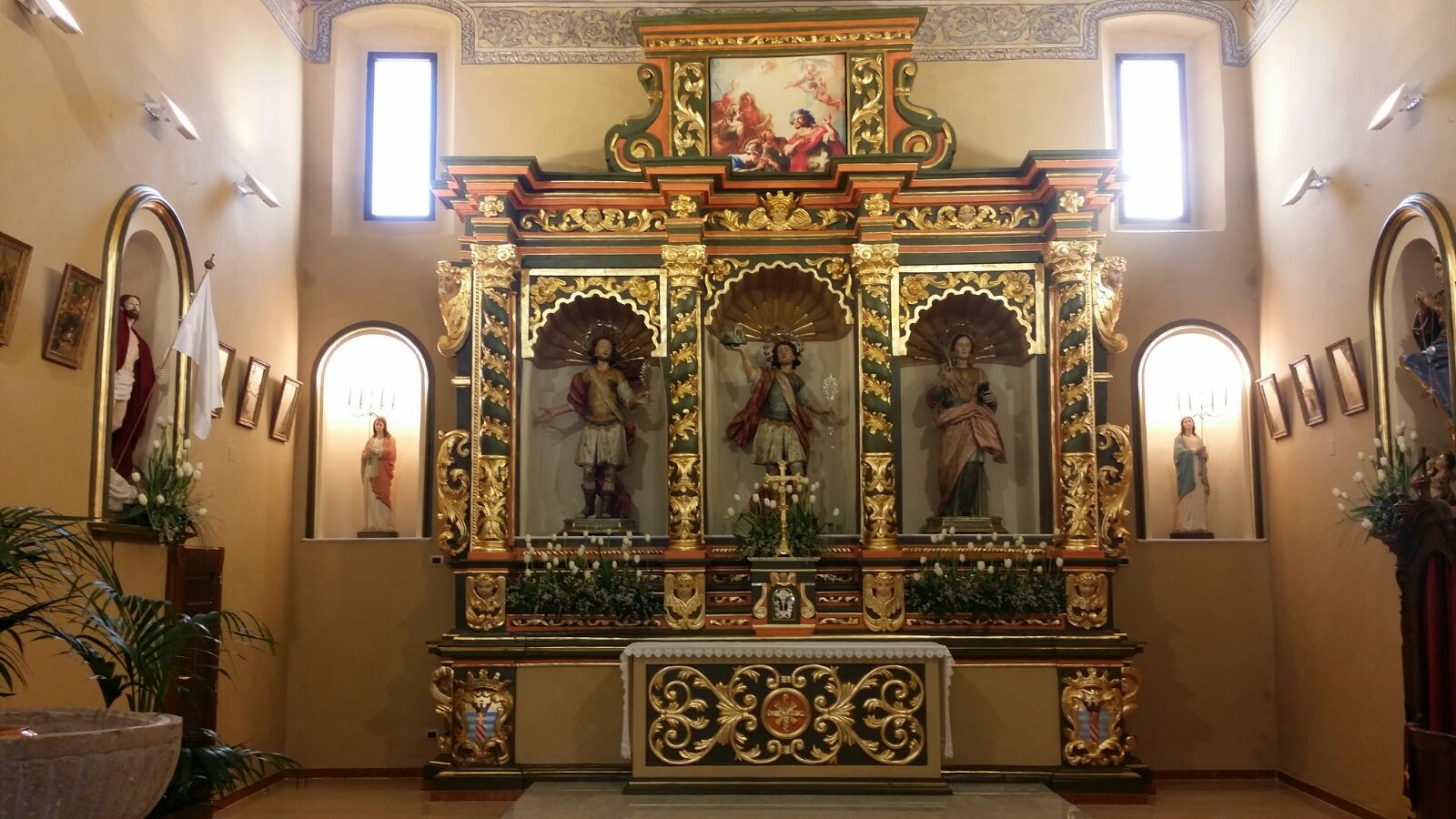
Saints Nicandre et
Marcien
Martyrs (+ v. 297)
À Dorostore en Mésie,
vers 297, les saints martyrs Nicandre et Marcien, tous deux soldats, qui
refusèrent fermement de recevoir leur solde en sacrifiant aux dieux, et furent
condamnés à mort par le gouverneur Maxime, pendant la persécution de
Dioclétien.
Martyrologe romain
SOURCE : http://nominis.cef.fr/contenus/saint/10965/Saints-Nicandre-et-Marcien.html
LE
MARTYRE DES SAINTS MARCIEN ET NICANDRE, SOLDATS EN MÉSIE, L'AN 302.
RUINART, Act. sinc., p.
618. — P. ALLARD, Hist. des perséc., IV, p. 122.
J'ai hâte de raconter les
glorieux combats que les saints martyrs Nicandre et Marcien soutinrent contre
le diable. Ces grands hommes, après avoir combattu dans les armées du siècle,
avaient revêtu les armes de la vraie justice, et renonçant à toute la gloire de
ce monde, forts de la grâce du Christ, s'étaient enrôlés dans la milice
céleste. Aussitôt ils furent mis en jugement, sous l'inculpation de sacrilège.
Le gouverneur Maxime, qui avait mission pour juger ces sortes de causes, leur
dit : « Nicandre et Marcien, vous connaissez l'ordre que les empereurs vous ont
donné de sacrifier aux dieux, approchez et obéissez. »
Nicandre répondit : «
C'est à ceux qui veulent sacrifier que l'édit s'adresse; mais nous, nous sommes
chrétiens, et un paieil ordre ne saurait nous atteindre.
— Pourquoi du moins ne
voulez-vous pas recevoir la solde due à votre dignité?
— L'argent des impies
souille et tue les hommes qui veulent honorer Dieu.
— Quelques grains
d'encens seulement à l'honneur des dieux, Nicandre ! Comment un homme un
chrétien, pourrait-il, afin d'adorer des pierres et du bois, abandonner le Dieu
immortel, qui a tout tiré du néant, à qui nous avons donné notre foi, et qui
seul peut me sauver, moi et tous ceux qui espèrent en lui? »
Cependant la femme du
bienheureux Nicandre, nommée Daria, était présente à cet interrogatoire, et
animait le courage de son mari. « Crains le Seigneur, lui disait elle,
garde-toi de consentir à cette impiété ; garde-toi de renoncer au Seigneur
Jésus-Christ. Lève les yeux au ciel : tu y verras Celui pour qui tu as conservé
jusqu'à ce jour une conscience pure, une inviolable fidélité, Celui qui est ton
soutien. » Maxime lui dit « Méchante tête de femme ! Pourquoi veux-tu que ton
mari meure? » Elle répondit : « Pour qu'il vive aux pieds de Dieu, et qu'il ne
meure plus. — Non, il y a un autre motif, tu veux un mari d'un sang plus
vigoureux ; c'est pour cela que tu désires hâter la mort de Nicandre.
— Si tu me soupçonnes
d'avoir de sembables pensées, si tu me crois capable d'un pareil crime,
fais-moi périr la première, en l'honneur du Christ, si toutefois tu as reçu
l'ordre de frapper aussi les femmes. — Je n'ai pas reçu d'ordre contre les
femmes ; je n'exaucerai donc point ta prière ; cependant tu seras gardée en
prison. »
On l'emmena. Maxime,
reprenant l'interrogatoire de Nicandre, lui dit : « Garde-toi de t'arrêter aux
paroles de ta femme, ou d'écouter ces sortes de conseils par lesquels on veut
te perdre : autrement la mort ne se fera pas attendre. Mais si tu le désires,
je t'offre le temps de la réflexion ; vois donc lequel tu préfères, de vivre ou
de mourir.
—Le délai que tu
m'offres, considère-le dès ce moment comme passé, j'ai délibéré. Je suis résolu
à conquérir le salut à tout prix. „
A ces mots le président
éleva la voix et s'écria : « Grâce à Dieu !
— Oui, dit Nicandre :
Grâce à Dieu ! » Le président pensait que le martyr du Christ parlait de
la vie présente, et qu il exprimait le désir de la sauver; il en concluait que
Nicandre allait sacrifier, ce qui lui causait une grande joie. Dans le
transport qui l'animait, il se leva, et fit quelques pas avec son conseiller
Leucon. Cependant Nicandre, ravi dans l'extase par l'Esprit-Saint, avait de son
côté commencé à rendre grâces à Dieu; il priait à haute voix le Seigneur de le
délivrer des tentations et des souillures de ce monde. Aussitôt que Maxime
l'eut appris : « Comment! lui dit-il, toi, qui tout à l'heure voulais vivre,
voilà que maintenant tu voudrais mourir ! » Nicandre répondit : « C'est de
la vie éternelle que je veux vivre, et non de la vie éphémère du siècle ; c'est
pour cela que je t'ai abandonné mon corps. Fais donc ce que tu désires : je
suis chrétien. » Le président alors, s'adressant à Marcien :
« Et toi, Marcien, lui
dit-il, que vas-tu faire?
— Moi aussi je professe
la foi qu'a professée mon frère d'armes.
— Vous serez donc tous
deux jetés en prison, pour recevoir bientôt sans doute le châtiment. »
On les mit en prison. Au
bout de vingt jours, ils furent de nouveau amenés devant le président,qui leur
dit : «Nicandre et Marcien, je vous ai laissé le temps de vous décider à obéir
aux édits impériaux.
— Tu prolongeras tes
discours inutilement, ils ne nous feront point abandonner la foi ni renier
notre Dieu. Il est là, nous le voyons, nous entendons sa voix qui nous appelle.
Ne nous retiens pas plus longtemps. C'est aujourd'hui que notre foi va trouver
dans le Christ son accomplissement ; congédie-nous au plus tôt, afin que nous
puissions voir ce Crucifié que ta bouche criminelle ne craint pas de maudire;
il est l'objet de notre adoration et de notre amour.
— Eh bien, selon vos
désirs, vous allez mourir. »
Marcien : « Par le salut
des empereurs, nous t'en conjurons, ne tarde pas plus longtemps. Ce n'est pas
la crainte des supplices qui nous inspire cette prière, mais le désir de
posséder Celui que nos coeurs aiment. » Maxime dit : « Ce n'est pas moi que vos
discours attaquent ; aussi n'est-ce pas moi qui vous persécute; ce sont les
édits des empereurs. Pour moi, mes mains sont pures de votre sang qui va
couler. Si vous savez que votre mort vous conduit au bonheur, je vous en
félicite; que vos désirs soient accomplis. » En même temps il prononça contre
eux la sentence. Les martyrs s'écrièrent : « Que tes désirs
s'accomplissent ! La paix soit avec toi, humain gouverneur! » Et ils marchaient
au supplice pleins d'une sainte allégresse, en bénissant le Seigneur.
Nicandre était suivi de
sa femme et de Papien, le frère du martyr Pasicrate, qui portait entre ses bras
le fils de Nicandre et félicitait son ami d'obtenir ainsi l'éternel bonheur.
Quant à Marcien, des parents le suivaient, et avec eux son épouse qui déchirait
ses vêtements, et s'écriait dans sa douleur : « Voilà donc, Marcien, ce que je t'annonçais
en prison, par mes frayeurs et par mes larmes. Oh ! malheureuse que je
suis ! il ne me répond pas. Seigneur, aie pitié de moi, regarde ton enfant
chéri, regarde-nous, ne nous méprise pas. Pourquoi cette hâte? Où vas-tu?
Comment peux-tu nous haïr? On me l'enlève comme une brebis pour le sacrifice. »
Alors Marcien, se détournant, la regarda sévèrement : « Combien de temps
encore Satan tiendra-t-il ton âme et ton corps dans les ténèbres? Éloigne-toi
de nous, et laisse-moi achever mon martyre pour Dieu. » En même temps un
chrétien nommé Zotique lui prenait la main comme pour le soutenir et lui disait
: « Mon maître et mon frère, aie bon courage ; tu as combattu le bon combat.
Faibles mortels que nous sommes, d'où nous vient à nous une foi si vive ? Rappelle-toi
les promesses que le Seigneur a daigné nous faire et qu'il va tout à l'heure
accomplir pour vous. Oui, vous êtes vraiment les chrétiens parfaits, vous êtes
bienheureux. » Mais sa femme se glissait en pleurant aux milieu d'eux, et
cherchait à l'entraîner en arrière. Alors Marcien dit à Zotique : « Retiens-la.
» Et Zotique abandonna le martyr pour arrêter Daria.
Lorsqu'on fut arrivé au
lieu du supplice, Marcien jeta les yeux autour de lui ; il appela Zotique du
milieu de la multitude, et le pria de lui amener son épouse. Elle vint ; le
martyr lui donna un baiser et lui dit : « Retire-toi au nom du Seigneur. Tu ne
peux pas me voir consommer la joyeuse fête de mon martyre ; car le malin est
encore dans ton âme. » Puis il embrassa son fils, et levant les yeux au
ciel : « Seigneur Dieu tout-puissant, s'écria-t-il, je te l'abandonne. » Après
cela les deux martyrs s'embrassèrent, et se séparèrent ensuite de quelques pas
pour accomplir leur sacrifice. Mais à ce moment Marcien, promenant ses regards
autour de lui, aperçut la femme de Nicandre, qui ne pouvait approcher à cause
de la foule; il lui tendit la. main et la conduisit à Nicandre, qui lui dit :
«Dieu soit avec toi. » Elle ne le quitta plus; debout à ses côtés, elle lui
disait : « Bon maître, aie courage; montre que tu sais combattre. Dix
années entières je suis restée sans toi seule dans notre patrie; à tous les
instants je demandais à Dieu le bonheur de te revoir; aujourd'hui je te revois,
et j'accompagne des transports de ma joie ton entrée dans la vie.
Aujourd'hui, je vais être
glorifiée, je suis la femme d'un martyr. Courage, offre à Dieu ton martyre pour
qu'il me délivre à mon tour de l'éternelle mort. » Quand elle eut achevé, le
soldat banda les yeux des martyrs, et d'un coup d'épée acheva leur sacrifice.
Ainsi s'endormirent dans
la paix les martyrs du Christ Nicandre et Marcien, le quinze des calendes de
juillet, sous le règne de Jésus-Christ Notre-Seigneur, à qui est l'honneur et
la gloire dans les siècles des siècles. Amen.
Des chrétiens enlevèrent
leurs corps et les ensevelirent près du lieu de leur supplice. On y éleva une
basilique qui porte leur nom ; sous l'autel distille goutte à goutte une eau
pure qui souvent, de nos jours encore, a rendu la santé aux malades gai en ont
bu, et par laquelle en tous lieux le Christ aime à multiplier ses miracles.
LES
MARTYRS. TOME II. LE TROISIÈME SIÈCLE, DIOCLÉTIEN. Recueil de pièces
authentiques sur les martre depuis les origines du christianisme jusqu'au XXe
siècle. Traduites et publiées par le B. P. DOM H. LECLERCQ, Moine
bénédictin de Saint-Michel de Farnborough. Imprimi potest FR. FERDINANDUS
CABROL, Abbas Sancti Michaelis Farnborough. Die 15 Martii 1903. Imprimatur.
Pictavii, die 24 Martii 1903. + HENRICUS, Ep. Pictaviensis.
SOURCE : http://www.abbaye-saint-benoit.ch/martyrs/martyrs0002.htm#_Toc90634981

San Nicandro Garganico - Chiesa Matrice
di Santa Maria del Borgo, cappella dei SS. Patroni Nicandro, Marciano e Daria
LES ACTES DES SAINTS
NICANDRE, MARCIEN, DARIA ET PASICRATE
(L'an de Jésus Christ 178)
fêtés le 8 juin
Les saints martyrs Nicandre et Marcien entrèrent à leur tour dans la lice contre le diable, et, revêtus de la cuirasse de la foi, ils conservèrent intacte leur fidélité au Christ, qui les avait enrôlés. Ils avaient suivi dans le monde la carrière des armes; mais ils renoncèrent aux honneurs et aux avantages du siècle, pour se donner tout entiers à la grâce divine, qui les appelait à la perfection. Aussitôt après cette démarche, ils furent accusés comme coupables d'impiété. Le président Maxime, chargé de poursuivre cette sorte de crime, les fit comparaître devant lui, et leur dit : «Nicandre et Marcien, vous n'ignorez pas les ordres des empereurs, qui vous ordonnent de sacrifier aux dieux; approchez donc, et sacrifiez.» Nicandre dit : «C'est à ceux qui veulent honorer vos dieux, que ces ordres s'adressent; pour nous, nous sommes chrétiens, et nous ne reconnaissons point de semblables lois.» Le président Maxime dit : «Mais l'argent accordé à vos charges, pourquoi refusez-vous de le recevoir ?» Nicandre répondit : «L'argent des impies est une souillure pour des hommes qui font profession d'honorer le vrai Dieu.» Maxime dit : «Nicandre, offre de l'encens aux dieux.» Et Nicandre répondit: «Comment un chrétien pourrait-il honorer des pierres et du bois, quand il y a un Dieu immortel, créateur de toutes choses ? C'est Lui que je sers, c'est Lui qui me sauvera, ainsi que tous ceux qui croient en Lui.»
Cependant l'épouse de Nicandre fortifiait et encourageait le saint martyr : «Seigneur, lui disait-elle, n'offre pas de l'encens, et ne renie pas le Christ. Lève les yeux au ciel, et tu y verras Celui à qui tu gardes ta foi; car il est ton protecteur.»
Le président Maxime dit à cette femme : «Méchante créature, pourquoi désires-tu la mort de ton mari ?» Elle répondit : «Pour qu'il vive avec Dieu, et ne connaisse pas la mort.» — «Ce n'est point là le vrai motif, reprit Maxime; tu voudrais un autre mari, et c'est pour cela que tu cherches à te débarrasser de celui-ci.» Elle dit : «Puisque tu me soupçonnes d'un pareil désir, fais-moi mourir pour le Christ, avant mon mari, si toutefois tu as l’ordre de contraindre aussi les femmes à sacrifier.» Le président répondît : «Mes ordres ne vont point jusque-là, et je ne ferai point ce que tu me demandes; cependant tu iras en prison.»
On l'emmena donc; puis le président dit à Nicandre : «Ne te laisse pas séduire par les paroles de ta femme ni de tout autre; il y va pour toi de la vie; mais si tu le veux, prends trois jours d'examen et vois ce que tu préfères, ou la vie ou la mort.» Nicandre répondit : «Ces jours d'examen, je les ai pris, et j'ai conclu que mieux fallait choisir la vie.» — «Grâces à Dieu ! dit aussitôt le président,» en élevant la voix. — «Oui, grâces à Dieu !» dit en même temps Nicandre. Mais le président croyait que le saint martyr parlait de la vie présente, et il faisait part de son idée à Leucon, son conseiller. Nicandre, au contraire, saisi de l'Esprit saint, glorifiait le Seigneur; il demandait à Dieu à haute voix de le délivrer de cette épreuve et de le sauver par sa grâce. Le président, qui l'entendit, lui demanda alors : «Pourquoi ce changement ? Tout à l'heure tu voulais vivre, et maintenant tu veux mourir ?» Nicandre répondit : «Oui, j'ai préféré vivre, mais de l'éternelle vie, et non de la vie éphémère de ce siècle; et c'est pour cela que j'ai abandonné mon corps à ta puissance; fais-en ce que tu voudras; car, pour moi, je suis chrétien.» Mors le président s’adressa à Marcien : «Et toi, Marcien, que dis-tu ?» Marcien reprit : «Ma réponse est la même que celle de Nicandre, mon frère d'armes.» Et le président dit: «Vous serez donc tous deux jetés en prison pour y subir l'expiation de votre impiété.»
Cependant, au bout de vingt jours passés dans les cachots, ils furent de nouveau amenés devant le président, qui leur dit : «Nicandre et Marcien, je vous ai laissés un temps assez long pour vous décider à obéir enfin aux ordres de l'empereur.» Marcien répondit : «Tes longs discours ne nous feront point abandonner notre foi ni renier notre Dieu; car Il se tient à côté de nous; nous Le voyons et nous savons où Il nous appelle. Ne nous retiens donc pas plus longtemps; c'est aujourd'hui que notre foi dans le Christ va recevoir sa dernière perfection. Hâte-toi de nous laisser partir, afin que nous voyions le Crucifié que vous blasphémez, et que nous adorons.» Nicandre, à son tour, dit à Maxime : «Nous t'en prions par ton salut, par le salut des empereurs, ne tarte pas plus longtemps à nous laisser partir, et ne pense pas que ce soit la crainte des tourments qui nous dicte cette prière; nous avons hâte de posséder enfin les biens que nous promet notre foi.» Le président Maxime reprit : «Ce n'est point à moi que vous refusez d'obéir; car ce n'est pas moi qui vous poursuis, c'est l'ordre de l'empereur; mes mains seront donc pures de votre sang. Si vous savez qu'il est avantageux pour vous de quitter cette terre, je m'en réjouis avec vous, et que vos désirs soient remplis.» Aussitôt il ordonna qu'on les fit mourir. Les saints martyrs de Dieu répondirent d'une commune voix «Ô généreux Maxime, que la paix soit avec toi !» En même temps ils partirent pour le supplice, pleins de joie et bénissant le Seigneur.
La femme de Nicandre, la bienheureuse Daria, accompagnait son mari, et avec elle le frère du saint martyr Pasicrate, Papion, qui portait dans ses bras le fils de Nicandre, et félicitait le père de son bonheur. Marcien, au contraire, avait à lutter contre les sollicitations de ses parents, de sa femme surtout qui, le tenant étroitement embrassé, accablait le martyr de tendres reproches, et lui disait : «Était-ce donc là, ô Marcien, ce que tu me disais dans la prison ? Ne crains point, me répétais-tu; ne pleure point sur moi. Ah ! seigneur, laisse-toi attendrir sur mes malheurs; regarde ce jeune enfant, ton fils chéri. Arrête tes pas et détourne-toi; cesse de nous dédaigner. Pourquoi cet empressement ? Où cours-tu ? Qui excite contre nous ta haine. On t'entraîne comme la brebis pour le sacrifice.»
À ces mots Marcien se détourne, et arrêtant sur elle ses regards : «Malheureuse que l'esprit méchant a saisi, jusqu'à quand Satan obsèdera-t-il ton âme ? Éloigne-toi de moi; laisse-moi offrir à Dieu le sacrifice de mon martyre.» Alors un chrétien nommé Zotique saisissant la main de Marcien, lui dit : «Prends courage, mon seigneur et mon frère, tu as soutenu un glorieux combat. D'où nous vient, à nous faibles mortels, une foi si généreuse ? Rappelle-toi les promesses que Dieu nous a faites et qu'Il accomplit en ce moment. Oui, chrétiens, avec la perfection que vous donne votre sacrifice, vous êtes vraiment bienheureux.» Et comme la femme du martyr se lamentait et pleurait, et qu'elle cherchait à l'entraîner à elle, en le tirant par derrière, Marcien dit à Zotique : «Retiens ma femme,» et Zotique, alors, quittant le martyr, arrêta les élans de cette épouse désolée.
Quand les martyrs fuirent arrivés au lieu du supplice, Marcien, jetant un regard sur la foule, et apercevant Zotique, l'appela et lui demanda de lui ramener sa femme. Elle vint aussitôt. Marcien, après l'avoir embrassée, lui dit : «Au nom du Seigneur, éloigne-toi; tu ne pourrais supporter la vue du martyre de ton mari ; car un esprit méchant domine tes pensées.» Puis il prit son enfant dans ses bras, lui donne un baiser, et levant les yeux au ciel, il dit : «Seigneur, Dieu tout-puissant, prenez soin de ce tendre enfant.» Aussitôt les martyrs, après s'être embrassés et donné mutuellement le baiser fraternel, se séparèrent l'un de l'autre pour recevoir le coup qui allait consommer leur sacrifice. À ce moment Marcien, promenant les yeux autour de lui, et voyant la femme de Nicandre qui ne pouvait, à cause de la foule, approcher de son mari, lui tendit la main et la fit avancer. Nicandre, en la voyant, lui dit : «Dieu soit avec toi.» Elle, de son côté, se tenant auprès de lui, lui disait : «Seigneur, prends courage; montre au monde un glorieux combat. Pendant dix ans j'ai vécu loin de toi, et jour et nuit je demandais à Dieu de te revoir encore et de mourir. Aujourd'hui je te vois, et je suis heureuse; je te vois aller à la vie éternelle. Oui, maintenant je parlerai avec un légitime orgueil, et je me glorifierai; je suis l'épouse d'un martyr. Courage donc, seigneur; offre à Dieu ton sacrifice pour qu'Il daigne m'arracher à la mort éternelle.» Cependant un soldat, après avoir mis le voile sur les yeux des bienheureux, termina par un coup d'épée leur glorieux martyre.
Ces saints martyrs de Dieu, Nicandre et Marcien, ont souffert le huit du mois
de juin, sous le règne de notre Seigneur Jésus Christ, à qui soit la gloire
dans les siècles des siècles. Amen.
SOURCE : http://orthodoxievco.net/ecrits/vies/martyrs/juin/nicandre.htm
LES ACTES DES SAINTS
MARCIEN ET NICANDRE
(L'an de Jésus Christ 303)
fêtés le 8 juin
J'ai hâte de raconter les glorieux combats que les martyrs Nicandre et Marcien soutinrent contre le diable. Ces grands hommes, après avoir combattu dans les armées du siècle, avaient revêtu les armes de la vraie justice; et renonçant à toute la gloire de ce monde, forts de la grâce du Christ, ils s'étaient enrôlés dans la milice céleste. Aussitôt ils furent appelés en jugement, comme coupables d'un odieux sacrilège. Le président Maxime, qui avait mission pour juger ces sortes de causes, leur dit : «Nicandre et Marcien, vous connaissez l'ordre que les empereurs vous ont donné de sacrifier aux dieux, approchez et obéissez.» Nicandre répondit : «C'est à ceux qui veulent sacrifier que l'édit s'adresse; mais nous, nous sommes chrétiens et un pareil ordre ne saurait à nous enchaîner.» Maxime dit : «Pourquoi du moins ne voulez-vous pas recevoir la solde due à votre dignité ?» Nicandre répondit : «L'argent des impies souille et tue les hommes qui veulent honorer Dieu.» Maxime dit : «Quelques grains d'encens seulement à l'honneur des dieux, ô Nicandre !» Nicandre répondit : «Comment un homme, un chrétien, pourrait-il, afin d'adorer des pierres et du bois, abandonner le Dieu immortel, qui a tout tiré du néant, à qui nous avons donné notre foi, et qui seul peut me sauver moi et tous ceux qui espèrent en lui.»
Cependant la femme du bienheureux Nicandre, nommée Daria, était présente à cet interrogatoire, et animait le courage de son mari. «Crains le Seigneur, lui disait-elle, garde-toi de consentir à cette impiété; garde-toi de renoncer au Seigneur Jésus Christ. Lève les yeux au ciel; tu y verras celui pour qui tu as conservé jusqu'à ce jour une conscience pure, une inviolable fidélité, celui qui est ton soutien.» Maxime lui dit : «Quelle scélératesse dans la tête d'une femme! Pourquoi veux-tu que ton mari meure ?» Elle répondit : «Pour qu'il vive aux pieds de Dieu, et qu'il ne meure plus.» Maxime lui dit : «Non, il y a un autre motif; tu veux un mari d'un sang plus vigoureux; c'est pour cela que tu désires hâter la mort de Nicandre.» Elle répondit : «Si tu me soupçonnes d'avoir de semblables pensées, si tu me crois capable d'un pareil crime, fais-moi périr la première, en l'honneur du Christ; si toutefois tu as reçu l'ordre de frapper aussi les femmes.» Maxime reprit : «Je n'ai pas reçu d'ordre contre les femmes; je n'exaucerai donc point ta prière; cependant tu seras gardée en prison.»
On l'emmena en effet, et Maxime reprenant l'interrogatoire de Nicandre, lui dit : «Garde-toi de t'arrêter aux paroles de ta femme, ou d'écouter ces sortes de conseils par lesquels on veut te séduire: autrement la mort ne se fera pas attendre. Mais si tu le désires, je t'offre le temps de la réflexion; vois donc lequel tu préfères, de vivre ou de mourir.» Nicandre répondit : «Le temps que tu me promets, considère-le dès ce moment comme accompli; sache que j'ai délibéré à loisir, et que ma résolution ferme est de conquérir le salut à tout prix.» À ces mots le président éleva la voix et s'écria : «Grâces soient rendues à Dieu !» — «Oui, disait de son côté Nicandre : «Grâces soient rendues à Dieu !» Le président pensait que le martyr du Christ parlait de la vie présente, et qu'il exprimait le désir de la sauver; il en concluait que Nicandre allait sacrifier : ce qui lui causait une grande joie. Dans le transport qui l'animait, il se leva et fit quelques pas avec son conseiller Leucon. Cependant Nicandre, ravi dans l'extase par l'Esprit saint, avait de son côté commencé à rendre grâces à Dieu; il priait à haute voix le Seigneur de le délivrer des tentations et des souillures de ce monde. Aussitôt que Maxime l'eut appris : «Comment, lui dit-il, toi, qui tout à l'heure voulais vivre, voilà que maintenant tu voudrais mourir !» Nicandre répondit : «C'est de la vie éternelle que je veux vivre, et non de la vie éphémère du siècle; c'est pour cela que je t'ai abandonné mon corps. Fais donc ce que tu désires : je suis chrétien.» Le président alors s'adressant à Marcien : «Et toi, Marcien, lui dit-il, que vas-tu faire ?» Marcien répondit : «Moi aussi je professe la même foi qu'a professée mon frère d'armes.» Maxime dit : «Vous serez donc tous deux jetés en prison, pour recevoir bientôt sans doute le châtiment de votre crime.»
On les mit en prison. Au bout de vingt jours, ils furent de nouveau amenés devant le président qui leur dit : «Nicandre et Marcien, je vous ai laissé le temps suffisant pour délibérer si vous consentiriez à obéir aux édits impériaux.» Marcien répondit : «Inutilement tu prolongeras tes discours; ils ne nous feront point abandonner la foi ni renier notre Dieu. Il est la, nous le voyons, nous entendons sa voix qui nous appelle. Ne nous retiens pas plus longtemps. C'est aujourd'hui que notre foi va trouver dans le Christ son accomplissement; congédie-nous au plutôt; afin que nous puissions voir ce crucifié que ta bouche criminelle ne craint pas de maudire; il est l'objet de notre adoration et de notre amour.» — «Eh bien donc, dit le président, vos désirs vont être comblés, vous allez être livrés à la mort.» Marcien répondit : «Par le salut des empereurs, nous t'en conjurons, ne tarde pas plus longtemps. «Ce n'est pas la crainte des supplices qui nous inspire cette prière; mais le désir de posséder celui que nos cÏurs aiment.» Maxime dit : «Ce n'est pas moi que vos discours attaquent; aussi n'est-ce pas moi qui vous persécute; ce sont les édits des empereurs. Pour moi, mes mains sont pures de votre sang qui va couler. Si vous savez que votre mort vous conduit au bonheur, je vous en félicite; que vos désirs soient accomplis.» En même temps il prononça contre eux la sentence de mort. Les saints martyrs du Christ s'écrièrent tout d'une voix : «Que tes désirs s'accomplissent. La paix soit avec toi, ô le plus humain des gouverneurs !» Et ils marchaient au supplice pleins d'une sainte allégresse, en bénissant le Seigneur.
Nicandre était suivi de sa femme et de Papien, le frère du martyr Pasicrate, qui portait entre ses bras le fils de Nicandre et félicitait son ami d'obtenir ainsi l'éternel bonheur. Quant à Marcien, des parents le suivaient, et avec eux son épouse qui déchirait ses vêtements, et s'écriait dans sa douleur : «Voilà donc, ô Marcien, ce que je t'annonçais en prison, par mes frayeurs et par mes larmes. Oh ! malheureuse que je suis ! il ne me répond pas. Seigneur, aie pitié de moi, regarde ton fils bien-aimé, jette un regard sur nous, ne nous méprise pas. Pourquoi cet empressement ? Où vas-tu ? Comment peux-tu nous haïr ? On me l'enlève comme une tendre brebis pour le sacrifier.» Alors Marcien se détournant, arrêta sur elle un regard sévère : «Combien de temps encore, lui dit-il, Satan tiendra-t-il ton âme et ton corps dans les ténèbres ? Éloigne-toi de nous, et laisse-moi consommer notre martyre en l'honneur de notre Dieu.» En même temps un chrétien nommé Zoticus lui prenait la main comme pour le soutenir, et lui disait : «Mon maître et mon frère, aie bon courage; tu as combattu le bon combat. Faibles mortels que nous sommes, d'où nous vient à nous une foi si vive ? Rappelle-toi les promesses que le Seigneur a daigné nous faire, et qu'il va tout à l'heure accomplir pour vous. Oui vous êtes vraiment les chrétiens parfaits, vous êtes bienheureux.» Mais sa femme se glissait en pleurant au milieu d'eux, et cherchait à l'entraîner en arrière. Alors Marcien dit à Zoticus : «Retiens-la.» Et Zoticus abandonna le martyr, pour arrêter Daria. Lorsqu'on fut arrivé au lieu du supplice, Marcien jeta les yeux autour de lui; il appela Zoticus du milieu de la multitude, et le pria de lui amener son épouse. Elle vint; le martyr lui donna un baiser et lui dit : «Retire-toi au nom du Seigneur. Tu ne peux pas me voir consommer la joyeuse fête de mon martyre; car l'esprit méchant s'est glissé dans ton âme.» Puis il embrassa son fils, et levant les yeux au ciel : «Seigneur Dieu tout-puissant, s'écria-t-il, c'est à vos soins que je l'abandonne.» Après cette touchante scène, les deux martyrs s'embrassèrent, et se séparèrent ensuite de quelques pas pour accomplir leur sacrifice. Mais à ce moment Marcien, promenant ses regards autour de lui, aperçut la femme de Nicandre qui ne pouvait approcher, à cause de la foule; il lui tendit la main et la conduisit à son époux. Nicandre en la voyant lui dit : «Dieu soit avec toi.» Elle ne le quitta plus; debout à ses côtés, elle lui disait : «Bon maître, aie courage; montre que tu sais combattre. Dix années entières je suis restée sans toi, seule dans notre patrie; à tous les instants je demandais à Dieu le bonheur de te revoir; aujourd'hui je te vois, et j'accompagne des transports de ma joie ton entrée dans la vie. Aujourd'hui, avec un légitime orgueil, je puis me glorifier d'être l'épouse d'un martyr. Seigneur, aie bon courage, offre à Dieu ton martyre, pour qu'il me délivre à mon tour de l'éternelle mort.» Quand elle eut achevé, le soldat chargé de l'exécution attacha le bandeau sur les yeux des martyrs, et d'un coup de son glaive consomma leur sacrifice.
Ainsi s'endormirent dans la paix les martyrs du Christ Nicandre et Marcien, le quinze des calendes de juillet, sous le règne de Jésus Christ notre Seigneur, à qui est l'honneur et la gloire dans les siècles des siècles. Amen.
Des chrétiens enlevèrent leurs corps, et les ensevelirent près du lieu de leur supplice. On y éleva une basilique qui porte leur nom; sous l'autel distille goutte à goutte une eau pure qui souvent, de nos jours encore, a rendu la santé aux malades qui en ont bu, et par laquelle en tous lieux le Christ aime à multiplier ses miracles.
SOURCE : http://orthodoxievco.net/ecrits/vies/martyrs/juin/marcien.htm

Santuario dei Santi Nicandro, Marciano e Daria a Venafro/La basilica dei Santi Martiri Nicandro, Marciano e Daria


Festa dei Santi
Nicandro, Marciano e Daria (Venafro)
Profile
Soldier in
the imperial Romany army. Married to Saint Daria
of Venafro. Convert to Christianity. Martyred in
the persecutions of Maximian.
beheaded c.303 in Venafro, Italy
by 313 a basilica had
been built over his grave
grave and relics re-discovered
in 1930
in Italy
Additional
Information
Acts
of the Early Martyrs, by Father James
A M Fastré, S.J.
Book
of Saints, by the Monks of
Ramsgate
Lives
of the Saints, by Father Alban
Butler
Roman
Martyrology, 1914 edition
Short
Lives of the Saints, by Eleanor Cecilia Donnelly
books
Our Sunday Visitor’s Encyclopedia of Saints
other
sites in english
images
video
fonti
in italiano
Martirologio Romano, 2005 edition
MLA
Citation
‘Saint Nicander of
Venafro‘. CatholicSaints.Info. 5 February 2024. Web. 20 April 2026.
<https://catholicsaints.info/saint-nicander-of-venafro/>
SOURCE : https://catholicsaints.info/saint-nicander-of-venafro/
Profile
Soldier in
the imperial Roman army. Martyred in
the persecutions of Maximian.
Acts
of the Early Martyrs, by Father James
A M Fastré, S.J.
beheaded c.303 in Venafro, Italy
by 313 a basilica had
been built over his grave
grave and relics re-discovered
in 1930
Additional
Information
Book
of Saints, by the Monks of
Ramsgate
Lives
of the Saints, by Father Alban
Butler
Roman
Martyrology, 1914 edition
Short
Lives of the Saints, by Eleanor Cecilia Donnelly
books
Our Sunday Visitor’s Encyclopedia of Saints
other
sites in english
images
video
fonti
in italiano
Martirologio Romano, 2005 edition
MLA
Citation
‘Saint Marcian of
Venafro‘. CatholicSaints.Info. 30 September 2022. Web. 20 April 2026.
<https://catholicsaints.info/saint-marcian-of-venafro/>
SOURCE : https://catholicsaints.info/saint-marcian-of-venafro/
Profile
Married to Saint Nicander
of Venafro. Convert to Christianity. Martyred in
the persecutions of Maximian.
beheaded c.303 in Venafro, Italy
by 313 a basilica had
been built over his grave
grave and relics re-discovered
in 1930
Additional
Information
Acts
of the Early Martyrs, by Father James
A M Fastré, S.J.
Lives
of the Saints, by Father Alban
Butler
Roman
Martyrology, 1914 edition
books
Our Sunday Visitor’s Encyclopedia of Saints
other
sites in english
video
fonti
in italiano
Martirologio Romano, 2005 edition
MLA
Citation
‘Saint Daria of
Venafro‘. CatholicSaints.Info. 30 September 2022. Web. 21 April 2026.
<https://catholicsaints.info/saint-daria-of-venafro/>
SOURCE : https://catholicsaints.info/saint-daria-of-venafro/

Santuario
dei Santi Nicandro, Marciano e Daria a Venafro/La basilica dei Santi Martiri Nicandro,
Marciano e Daria. Cripta dei Ss. Martiri
Book of Saints
– Nicander and Marcian
Article
(Saints) Martyrs (June
17) (2nd
century) Martyrs in
the South of Italy.
They appear to have been officers in
the Imperial army,
or, as others say, high civil functionaries. The date of their death is
also much disputed. Some put it as late as the reign of Diocletian (A.D. 300 or
thereabouts). With the Bollandists we give A.D. 173 as
the more likely year of their execution.
MLA
Citation
Monks of Ramsgate.
“Nicander and Marcian”. Book of Saints, 1921. CatholicSaints.Info.
3 March 2016. Web. 21 April 2026. <https://catholicsaints.info/book-of-saints-nicander-and-marcian/>
SOURCE : https://catholicsaints.info/book-of-saints-nicander-and-marcian/
St. Nicander and Marcian
Feastday: June 17
Martyrs, possibly of
Durostorum, Bulgaria. They were members of the imperial army in the region of
the Balkans and were martyred in the region that eventually became Romania,
perhaps in the late second century. Tradition reports that they were slain in
front of their wives and families.
SOURCE : https://www.catholic.org/saints/saint.php?saint_id=4831
Nicander and Marcian MM
(RM)
Died 173 or 303? Two
martyrs in the imperial army who were probably martyred at Moesia in Illyricum,
the area of contemporary Roumania and Bulgaria, although some modern scholars
place their death at Venafro, Naples. They left the army when edicts were
universally published against the Christians. Desertion added to their crime.
They were impeached by Governor Maximus and commanded to sacrifice to the gods.
Then the judge spied
Nicander's wife, Daria, who was encouraging her husband to remain steadfast.
Maximus asked her, "Wicked woman, why would you have your husband
die?"
Daria responded: "I
do not wish for his death, but that he live in God, so as to never die."
Maximus goaded her that
she desired his death, so that she could marry another.
"If you suspect
that," said she, "put me to death first."
The judge said his orders
did not extend to women; the first edict apply only to those in the armed
services. Nevertheless, he commanded that she be taken into custody. Later she
was released and returned to see the judgment of the trial.
Maximus asked Nicander to
decide whether he would choose life or death. To which Nicander answered:
"I have already deliberated upon the matter, and have decided to save
myself."
The judge, understanding
that he intended to save his life by sacrificing to the idols, began to
congratulate and rejoice with Suetonius, one of his assessors, for their
imagined victory. But Nicander soon cleared the matter by praying aloud for God
to deliver him from the dangers and temptations of the world.
"How now," said
the governor, "you but just now desired to live, and at present you ask to
die."
Nicander replied: "I
desire that life which is immortal, not the fleeting life of this world. To you
I willingly yield up my body; do with it what you please, I am a Christian."
"And what are your
sentiments, Marcian?" said the judge, addressing himself to the other. He
declared that they were the same as those of his fellow-prisoner. Maximus then
ordered that they should be both confined in the dungeon for twenty days.
Thereafter they were
again brought before the governor, who asked them if they would obey the edicts
of the emperors. Marcian answered: "All you can say will never make us
abandon our religion or deny God. We behold Him present by faith, and know where
He calls us. Do not, we beseech you, detain us; but send us quickly to Him, so
that we may behold the One Who was crucified, the One we honor and
worship."
The governor, saying that
he was only doing his job, granted their request, and ordered their decapitation.
The martyrs thanked him then said, "May peace be with you, O most clement
judge."
They joyfully walked to
the place of execution, praising God as they went. Nicander was followed by his
wife Daria and his child who was carried in the arms of Papinian, the brother
of Saint Pasicrates. Marcian's wife, unlike Daria, continued to persuade him to
apostatize and save himself. When she persisted, he ask Zoticus, a zealous
Christian, to keep her behind. At the place of execution he called for her,
embraced his son, and, looking up to heaven, said, " Lord, all-powerful
God, take this child into thy special protection." Then he bade his wife
to go away in peace, because she would not have the courage to see him die.
Daria continued to exhort
her husband to constancy and joy. "Be of good heart, my Lord," she
said. "For ten years I have lived at home away from you, never ceasing to
pray that I might see you again. Now am I favored with that comfort, and I
behold you going to glory, and myself made the wife of a martyr. Give to God
that testimony you owe to his holy truth: that you may also deliver me from
eternal death." By this she was asking that by his sufferings and prayers
he might obtain mercy for her. Once the executioner bound their eyes with their
handkerchiefs, he struck off their heads (Benedictines, Husenbeth).
SOURCE : http://www.saintpatrickdc.org/ss/0617.shtml
June 17
SS. Nicander and Marcian,
Martyrs
From their genuine acts
in Mabillon, Mus. Italic. t. 1, and Ruinart, p. 551.
About the Year 303
THESE saints, as appears
from the circumstances of their acts, suffered under Dioclesian, and probably
in Mœsia, a province of Illyricum, under the same governor who condemned St.
Julius; though some moderns place their martyrdom at Venafro, at present in the
kingdom of Naples. They had served some time in the Roman troops, but when the
edicts were everywhere published against the Christians, foregoing all
expectations from the world, they forsook the army. This was made a crime in
them, and they were impeached before Maximus the governor of the province. The
judge informed them of the imperial order that all were commanded to sacrifice
to the gods. Nicander replied, that order could not regard Christians, who
looked upon it as unlawful to abandon the immortal God, to adore wood and
stones. Daria the wife of Nicander was present, and encouraged her husband.
Maximus interrupting her said: “Wicked woman, why would you have your husband
die?” “I wish not for his death,” said she, “but that he live in God, so as
never to die.” Maximus reproached her that she desired his death, because she
wanted another husband. “If you suspect that,” said she, “put me to death
first.” The judge said his orders did not extend to women; for this happened
upon the first edict which regarded only the army. However, he commanded her to
be taken into custody; but she was released soon after, and returned to see the
issue of the trial Maximus, turning again to Nicander, said: “Take a little
time, and deliberate with yourself whether you choose to die or to live.”
Nicander answered: “I have already deliberated upon the matter, and have taken
the resolution to save myself.” The judge took it that he meant he would save
his life by sacrificing to the idols, and giving thanks to his gods, began to
congratulate and rejoice with Suetonius one of his assessors, for their
imaginary victory. But Nicander soon undeceived him, by crying out: “God be
thanked,” and by praying aloud that God would deliver him from the dangers and
temptations of the world. “How now,” said the governor, “you but just now
desired to live, and at present you ask to die.” Nicander replied: “I desire
that life which is immortal, not the fleeting life of this world. To you I
willingly yield up my body; do with it what you please, I am a Christian.” “And
what are your sentiments, Marcian?” said the judge, addressing himself to the
other. He declared that they were the same with those of his fellow-prisoner.
Maximus then gave orders that they should be both confined in the dungeon,
where they lay twenty days.
After which they were
again brought before the governor, who asked them if they would at length obey
the edicts of the emperors. Marcian answered: “All you can say will never make
us abandon our religion or deny God. We behold him present by faith, and know
whither he calls us. Do not, we beseech you, detain or retard us; but send us
quickly to him, that we may behold him who was crucified, whom you stick not to
blaspheme, but whom we honour and worship.” The governor granted their request,
and excusing himself by the necessity he lay under of complying with his
orders, condemned them both to lose their heads. The martyrs expressed their gratitude,
and said: “May peace be with you, O most clement judge.” They walked to the
place of execution joyful, and praising God as they went. Nicander was followed
by his wife Daria, with his child, whom Papinian, brother to the martyr, St.
Pasicrates, carried in his arms. Mercian’s wife, differing much from the
former, and his other relations, followed him, weeping and howling in excess of
grief. She in particular did all that in her lay to overcome his resolution,
and for that purpose often showed him his little child, the fruit of their
marriage; and continually pulled and held him back, till he having rebuked her,
desired Zoticus, a zealous Christian to keep her behind. At the place of
execution he called for her, and embracing his son and looking up to heaven,
said: “Lord, all-powerful God, take this child into thy special protection.”
Then with a check to his wife for her base cowardice, he bade her go away in
peace, because she could not have the courage to see him die. The wife of
Nicander continued by his side, exhorting him to constancy and joy. “Be of good
heart, my lord,” said she, “ten years have I lived at home from you, never
ceasing to pray that I might see you again. Now am I favoured with that
comfort, and I behold you going to glory, and myself made the wife of a martyr.
Give to God that testimony you owe to his holy truth, that you may also deliver
me from eternal death;” meaning, that by his sufferings and prayers he might
obtain mercy for her. The executioner having bound their eyes with their
handkerchiefs, struck off their heads on the 17th of June.
Faith and grace made
these martyrs triumph over all considerations of flesh and blood. They did not
abandon their orphan babes, to whom they left the example of their heroic
virtue, and whom they committed to the special protection of their heavenly
Father. We never lose what we leave to obey the voice of God. When we have
taken all prudent precautions, and all the care in our power, we ought to
commend all things with confidence to the divine mercy. This ought to banish
all anxiety out of our breasts. God’s blessing and protection are all we can
hope or desire; we are assured he will never fail on his side; and what can we
do more than to conjure him never to suffer us by our malice to put any obstacle
to his mercy? On it is all our reliance for the salvation of our own souls. How
much more ought we to trust to his goodness in all other concerns?
Rev. Alban
Butler (1711–73). Volume VI: June. The Lives of the
Saints. 1866.
SOURCE : http://www.bartleby.com/210/6/171.html

Festa dei Santi
Nicandro, Marciano e Daria (Venafro)
Processione dei Santi Martiri a Venafro su Corso Molise

Festa dei Santi Nicandro, Marciano e Daria (Venafro)
The
Acts of the Early Martyrs – Saints Nicander and Marcian
Article
Nicander and Marcian had
during several years served with great distinction in the Roman armies. When,
however, they had the happiness of becoming Christians, and understood the
dangers to which their Faith was constantly exposed, on account of the
idolatrous practices kept up among the soldiers, they resolved to bid farewell
to the service of earthly rulers, that they might devote themselves to the
nobler work of extending the empire of the Prince of peace. While thus engaged
in winning many souls to Christ – more by the example of their blameless lives
than by their words of exhortation – the jealousy of the priests of the idols
was aroused against them. The influence which the two servants of God possessed
with the people had become so great that their enemies found themselves
powerless against it, and consequently saw that the only effective means to
regain their lost authority would be the enforcement of the imperial edicts
against the Christians. For this purpose they went to Maximus, the Governor of
the Campania, and accused Nicander and Marcian of violating the laws of the
Empire, by publicly proclaiming the doctrines of the Crucified.
The Governor was by no
means pleased with the officiousness of the accusers, and would have gladly
overlooked the charge, but, afraid of incurring the displeasure of his imperial
masters should he take the responsibility upon himself, he summoned the two Christians
before him, and said to them:
“Are you ignorant of the
edicts of our sovereign, whereby you are commanded to offer sacrifice to the
gods?”
“We are not unacquainted
with such edicts,” answered Nicander, “but they do not concern us, since we are
Christians, and cannot obey orders which are neither lawful or just.”
“Tell me,” said Maximus,
“why did you abandon the military service?”
“We were free to do so,”
replied Nicander, “and did it, because we knew by experience that a soldier’s
life was dangerous to the morals of men who were resolved to serve the true
God.”
“If now you resolve
also,” said the Governor, “to offer incense to the gods, we will forget the
past, and reward you with wealth and honorable employments.”
“If, when we possessed
wealth and dignities, we gladly renounced them, because we had found a heavenly
treasure, how can you suppose that we would be so foolish as to worship stocks
and stones to regain what lately we despised and forsook? We serve the One
eternal God, who made all things out of nothing; we adore Him who alone is
omnipotent, who is able and willing to grant us everlasting happiness, as well
as to all others who believe and trust in Him.”
When Daria, the wife of
Nicander, who had followed her husband to the tribunal, heard him speak in that
fearless manner, she exclaimed:
“Thanks be to God for the
brave words you have spoken, Oh my noble husband! Give glory to our Lord Jesus
Christ, that He may enable you to triumph over His enemies. Look up to heaven;
there behold the immortal King who waits for you, ready to reward you with the
crown of victory, if you continue faithful to Him, and keep your soul free from
the defilement of idol-worship.”
The Governor, nettled at
the boldness with which she cheered on her husband, suddenly turning towards
her, said with considerable bitterness in his tone:
“Oh wicked and senseless
blockhead of a woman, dost thou desire the death of thy husband?”
“Far from it,” she
replied. “I desire on the contrary, that he may live forever, and rejoice with
Christ our Lord in the company of the Elect.”
“I understand all that
well enough,” said Maximus; “thou art not sorry to get rid of Nicander, that,
being free once more, thou mayest marry a more youthful husband.”
“If you suspect me
capable of so base a design,” said Daria, “I beg of you, as a favor, to put me
to death first, for the sake of Christ; if indeed your orders permit you also
to execute women.”
“That is just what I
thought,” said the Governor, “Thou knowest full well that my orders do not
extend to the punishment of women. However, as I cannot gratify thy wishes, nor
put thy courage to the test, I will shut thee up in a place of safety, where
thou shalt give no evil counsel to thy husband.”
Thereupon, he ordered his
lictors to take her to prison.
After this, Maximus,
again addressing the Martyr, said to him:
“Nicander, give no heed
to the words of thy wife nor to the advice of thy friends, lest they be the
cause of thy death. I grant thee a respite of three days. During that time,
reflect seriously whether it is not better for thee to live than to die.”
“Your Excellency may
consider that time as already past,” replied Nicander. “This matter has long
since been settled in my mind. My deliberate choice has always been – to live.”
“Thanks be to the gods!”
said the Governor, in a loud voice, when he heard the answer of the Martyr.
“What reason have you to
thank your idols?” asked Nicander. “Is it because I choose life rather than
death? Could I, as a Christian, make a different choice, and deny Him by whose
grace I hope to be saved?”
“What!” exclaimed
Maximus, “didst thou not just now say that thou wast ready to worship the gods,
and thus secure both life and happiness?”
“Not at all; the life I
have chosen is that endless and blissful life promised by our Lord to His
faithful servants. You may torture and kill my body, for it is in your power;
you cannot subdue my spirit. I repeat what I said before: I am a Christian.”
The Governor, turning to
Marcian, said:
“And what sayest thou,
Marcian?”
“My answers and my
sentiments are the same as those of my companion,” replied Marcian.
“Then you shall both go
to prison,” said Maximus, “and await there the day which will be fixed for the
punishment deserved by your obstinacy.”
Whereupon, the lictors
immediately took the two friends in charge and put them in a dungeon, where no
one was allowed to visit or comfort them. Here they were kept during thirty
days, after which they were again summoned before the Governor, who said to
them:
“The time which I have
allowed you ought to have keen sufficient to make you decide whether or not you
are willing to obey the commands of our sovereigns.”
“There is no occasion for
using many words,” replied Marcian; “no arguments could move us to deny our
God, or to swerve from the Faith whereby we behold Him here present with us,
and know whither He invites us. Do not detain us any longer, but suffer us
speedily to go to Him, who was crucified for us; whom indeed you revile,
because you know Him not, but whom we worship and adore.”
“Since you refuse to
worship the gods, you shall be put to death, according to your desires,” said
Maximus.
“It is not through fear
of torments,” added Marcian, “that we desire a speedy death; we are ready to
suffer cheerfully whatever punishment you may choose to inflict upon us; but we
are more anxious to attain as quickly as possible the everlasting happiness
which is prepared for us.”
“You should remember,”
said the Governor, “that I do not punish you because you have offended me, and
that, as far as I am concerned, I wish to remain guiltless of your blood; but I
am obliged to execute the orders of our Emperor. This then is your sentence:
“Let Nicander and Marcian, formerly soldiers of the imperial armies, who refuse
to worship the gods, be beheaded by the sword. And,” he added, “if you know
that it is going to be well with you hereafter, I wish you joy, and hope that
your desires may be fulfilled.”
“Peace be with you, Oh
Governor, for your kindness,” replied the Martyrs, and, blessing God for
deeming them worthy to suffer for His Name, they joyfully proceeded to the
place of execution.
They were followed by a
great multitude of people of every rank, many of the friends and relatives of
the Martyrs among them. Some of these encouraged the servants of God with cheerful
words, because the moment of their triumph was so near at hand; others,
unmindful of a Christian’s faith and hope, wept and lamented because they saw
them cut down by death, while yet in the full strength of their manhood. Among
the latter, the wife of the blessed Marcian was especially conspicuous, With
hair disheveled and in the garb of mourning, she presented herself before him,
and cried out:
“Is this the promise
which you made me, Oh my husband, that I need have no fear?”
“Go away from me, woman,”
said the Martyr, “and trouble me not with your foolish lamentations.”
But she, raising her
voice, cried out the more: Woe is me! why do you suffer yourself to be led in
this manner as a lamb to the slaughter? Have pity on me, Oh Marcian, my lord.
How can you forget our darling child, whom you leave an orphan? Forsake us not;
spurn not them that have a claim on your guardian care and protection. Alas!
did I not foresee all this? Whither are you hastening without so much as a word
of kind farewell to the loved ones you leave behind?”
Marcian hearing this,
suddenly stopped, and sternly looking at his wife, said:
“How long will you allow
Satan to blind your understanding and corrupt your heart? Go away from me;
suffer me to lay down my life for the sake of Him from whom I received it – as
well as every other blessing.”
Then one of the Martyr’s
friends, Zoticus by name, drew near, and taking him by the hand, said:
“Be of good cheer, my
lord, and bear up against this new trial. You have fought the wicked enemy and
conquered. Your heavenly King is ready to bestow upon you the crown of justice,
as a reward for your unwavering fidelity.”
Meanwhile, his wife, who
had withdrawn for a moment, returned again, holding her little son in her arms,
Placing the child before her husband, she said:
“Can a father behold
unmoved the tears of his child? Oh Marcian, my lord, how can you disregard so
great a misery as ours? How can you bid farewell to sweet life, and wish for
death?”
“Get thee behind me,
Satan,” said the Martyr, rebuking her; “thou understandest not the things which
are of God.” And, addressing Zoticus, he added: “Take up the little boy and
restore him to his mother; request my wife to go home, for she hath neither
strength nor courage to see her husband die for the Faith. Comfort her with the
hope of a happier future, and the protection of one who, when in heaven, will
not cease to watch over them that were dear to him upon earth.”
When he came to the place
of execution and saw that his companion had not yet arrived, he prayed for a
little while; then, casting his eyes on the vast multitude of people that
surrounded him, he perceived that his friend Zoticus had remained standing at a
distance. Making a sign with his hand, he invited him to approach, and said:
“Zoticus, servant of our
Lord Jesus Christ, without loss of time, bring hither my wife again.”
His friend immediately
hastened to comply with the request, and led the weeping lady through the
crowd. The blessed Martyr affectionately embraced her, and said:
“My beloved wife, this
ill-timed grief is unworthy of a Martyr’s wife. The fatherly care of Him, for
whose holy Name I rejoice to lay down the present life, will not be wanting to
thee when I am gone. By patient resignation, strive to gain that blissful abode
where we shall meet again to part no more forever. My going hence, I know, thou
art not strong enough to witness; wherefore, go in peace, with His blessing to
whose guardianship I entrust thee.”
Then he took up his
little son, and pressing him to his bosom, he kissed him again and again, and
raising his eyes to heaven, he said:
“Lord God Omnipotent, to
Thy loving care I commit my darling child; grant that, ever faithful to Thee,
he may not forget the example of one, who, although unworthy, has the happiness
of bearing witness to the truth of Thy sacred doctrines.” After which, putting
the child into the arms of its mother, and bidding her again farewell, he
dismissed her, greatly comforted and resigned.
Far different was the
courageous conduct of Daria, the wife of Nicander. For fear of disturbing her
husband at this solemn moment, she followed at a short distance with her little
son, whom Papinian, brother of the Martyr Pasicrates, carried in his arms. At
the place of execution she would have remained unnoticed, had not the blessed
Marcian, seeing her in the crowd, requested the spectators to make way for her
and allow her to come to her husband. Nicander, embracing her, said:
“God be with thee, my
sister.”
“Rejoice and be thankful,
Oh my beloved Nicander,” she replied. “Long and fervently have I prayed that it
might be granted to me to pass my days in your happy company, but God wishes to
take you to Himself. His holy will be done. I shall have at least the
consolation of being called the widow of a Martyr. When you are with our Lord
in bliss, ask of Him that, through the merit of the sacrifice which you offer
to Him this day, I too may be freed from everlasting death.”
The Martyr promised to
comply with the request she made, and then asked:
“But where is our little
son?”
“Yonder he is, in the
arms of our friend Papinian,” she answered.
“Bring him to me that I
may bless him,” he said. The child being brought to him, he kissed it
repeatedly, and, after calling God’s blessing upon him, he handed him again to
the mother.
After this, the Martyrs
saluted each other with the kiss of peace, and kneeling down, they prayed for a
while. The executioners then bandaged their eyes with handkerchiefs, and
instantly struck off their heads.
The Bishop of Atina,
accompanied by the relatives of the Martyrs and many of the Christians, took
away the bodies of the servants of God and buried them near the tomb of the
blessed Marcus, the Martyr.
They suffered on the
seventeenth of June, in the reign of Marcus Aurelius and Lucius Verus.
MLA
Citation
Father James A M Fastré,
S.J. “Saints Nicander and Marcian”. The Acts of
the Early Martyrs, 1871. CatholicSaints.Info.
25 July 2022. Web. 21 April 2026.
<https://catholicsaints.info/the-acts-of-the-early-martyrs-saints-nicander-and-marcian/>
SOURCE : https://catholicsaints.info/the-acts-of-the-early-martyrs-saints-nicander-and-marcian/

Festa dei Santi
Nicandro, Marciano e Daria (Venafro)
Reliquiari
a busto di san Nicandro e
le Statue dei santi
patroni in processione
San Nicandro Martire
La persecuzione ordinata
dell'imperatore Diocleziano arrivò nel 304 anche a Venafro, cittadina
dell'attuale Molise. Tra l'anfiteatro romano e il tempio pagano della dea Bona
" sulle cui fondamenta sorge oggi la Cattedrale di Santa Maria Assunta in
cielo " vivevano due ufficiali dell'esercito romano: Nicandro e Marciano.
Le antiche fonti storiche non si pronunciano sulla loro provenienza (forse
nativi della Grecia), ma riferiscono come i due aderirono alla fede cristiana e
rifiutarono di compiere rituali alle divinità pagane. Nel consumarsi del loro
martirio si intreccia una significativa vicenda familiare: Daria, moglie di
Nicandro, convertita anch'essa al cristianesimo, spronò lo sposo a non abiurare
la fede. Questo costò anche a lei il martirio. I loro corpi furono seppelliti
nei pressi di Venafro, dove già nel 313 fu eretta la Basilica cimiteriale a
loro dedicata. Nel 1930 furono rinvenuti i loro sepolcri. La tradizione
plurisecolare li acclama patroni delle città e delle diocesi (ora unificate) di
Isernia-Venafro. (Avv.)
Martirologio
Romano: A Silistra in Mesia, nell’odierna Bulgaria, santi martiri Nicandro
e Marciano, che, soldati, durante la persecuzione di Diocleziano, respinsero
l’elargizione fatta dall’imperatore all’esercito e, rifiutatisi fermamente di
sacrificare agli dèi, furono condannati a morte dal governatore Massimo.
La celebre persecuzione
ordinata dell’imperatore Diocleziano arrivò nel 304 anche a Venafro, ridente
cittadina dell’attuale Molise, dapprima insediamento preistorico e poi
Prefettura e Colonia romana. Tra l’anfiteatro romano - conservato fin ai giorni
nostri - e il tempio pagano della dea Bona - sulle cui fondamenta sorge oggi la
Cattedrale di Santa Maria Assunta in cielo - vivevano due ufficiali
dell’esercito romano: Nicandro e Marciano.
Le antiche fonti storiche
non si pronunciano sulla loro provenienza (forse nativi della Grecia) ne tanto
meno sulla loro parentela (fratelli?), ma riferiscono per certo come i due
aderirono alla Fede cristiana e rifiutarono di compiere atto di culto alle divinità
pagane. Nel consumarsi del loro martirio si intreccia una meravigliosa vicenda
familiare: Daria, moglie di Nicandro, convertita anch’essa al cristianesimo,
interverrà a spronare lo sposo incitandolo a non abiurare la Fede. Questo
costerà anche a lei il martirio, che avrà luogo in un secondo momento rispetto
a Nicandro e Marciano. I loro corpi furono seppelliti nei pressi di Venafro,
ove già nel 313 sorgerà la Basilica cimiteriale a loro dedicata. Nel 1930
furono rinvenuti i loro sepolcri, da dove miracolosamente si rinnova il
prodigio della “santa manna”, un liquido misterioso che scaturisce in
circostanze liturgiche particolari.
La tradizione
plurisecolare li acclama “ad immemorabili” patroni delle città e delle Diocesi
(ora unificate) di Isernia-Venafro e il loro culto è attestato anche oggi dalla
fede viva che accompagna le antichissime tradizioni manifestate in modo del
tutto singolare nei loro festeggiamenti. Questi costituiscono un unico nel loro
genere, per le tante sfumature antropologiche e religiose espresse con fare di
altri tempi… Il 16 giugno, a mezzanotte, la popolazione venafrana bussa
insistente alla porta della basilica, affidata dal 1573 ai padri Cappuccini.
All’ apertura della porta del convento e al proclama dell’apertura dei festeggiamenti,
si sonda una banda musicale fatta di strumenti semplicissimi (“bandarella”) che
suonerà per tutta la notte nelle vie della città. Ma è la sera del 16 che i
festeggiamenti entrano nel vivo: all’imbrunire il busto argenteo di San
Nicandro (l’originale fu rubato nel 1986) e le altre Reliquie dei Ss. Martiri
vengono portate processionalmente dalla monumentale chiesa della SS.Annunziata
- ove sono conservate tutto l’anno - alla Basilica. Il giorno successivo, festa
liturgica, accorrono in pellegrinaggio dal circondario numerosi fedeli e intere
parrocchie; si rinnova il dono da parte del sindaco di ceri votivi, e la
consegna al Vescovo delle chiavi della città, a simboleggiare il patrocinio di
san Nicandro su Venafro. L’evento più atteso però è quello del 18 giugno sera,
quando uno stuolo immenso di popolazione, accorsa anche da lontano ad ammirare
il suggestivo spettacolo, riaccompagna i Santi alla Chiesa dell’Annunziata
percorrendo un tragitto processionale di circa cinque ore. È qui che si dà
sfogo a tutta la propria devozione, cantando ripetutamente l’antico Inno
Popolare, sacro a generazioni e generazioni di venafrani. Un tripudio di suoni
e di colori commuoventi… Periodicamente si svolge anche “l’Opera di San
Nicandro”, una rappresentazione teatrale che narra gli eventi e il martirio dei
santi Venafrani.
Nel 2003 la Diocesi di
Isernia-Venafro ha celebrato solennemente i 1700 anni dal martirio di questi
Patroni.
Frutto di questo
avvenimento è stata la pubblicazione di un pregevole volume (AA.VV., NICANDRO,
MARCIANO E DARIA, Conoscere e venerare i Patroni di Venafro a 1700 anni dal
loro martirio, ed.VITMAR, Venafro 2003) che tratta scientificamente la
storiografia e le tradizioni sui santi Martiri venafrani.
Oltre l’anica e nota
testimonianza del Martirologio romano, che al 17 giugno recita: «Presso
Venafro, in Campania, i Ss. Martiri Nicandro e Marciano, sono decapitati
durante la persecuzione di Massimiano», si possono così avere numerose
ratifiche da documenti come il “Museo Italico” del Mabillon, il “Breviarium
Syrriacum”, e dagli studi dei Padri bollandisti. Oltre al luogo del loro
martirio il loro culto è affermato a Sannicandro Garganico (FG) e a Tremensuoli
frazione di Minturno (LT) ove si venerano come patroni e a Ravenna e L’Aquila
ove sorgono chiese a loro dedicate.
Autore: Don
Francesco Ferro, Venafro
SOURCE : http://www.santiebeati.it/dettaglio/57800
San Marciano Martire
La persecuzione ordinata
dell'imperatore Diocleziano arrivò nel 304 anche a Venafro, cittadina
dell'attuale Molise. Tra l'anfiteatro romano e il tempio pagano della dea Bona
" sulle cui fondamenta sorge oggi la Cattedrale di Santa Maria Assunta in
cielo " vivevano due ufficiali dell'esercito romano: Nicandro e Marciano.
Le antiche fonti storiche non si pronunciano sulla loro provenienza (forse
nativi della Grecia), ma riferiscono come i due aderirono alla fede cristiana e
rifiutarono di compiere rituali alle divinità pagane. Nel consumarsi del loro
martirio si intreccia una significativa vicenda familiare: Daria, moglie di
Nicandro, convertita anch'essa al cristianesimo, spronò lo sposo a non abiurare
la fede. Questo costò anche a lei il martirio. I loro corpi furono seppelliti
nei pressi di Venafro, dove già nel 313 fu eretta la Basilica cimiteriale a
loro dedicata. Nel 1930 furono rinvenuti i loro sepolcri. La tradizione
plurisecolare li acclama patroni delle città e delle diocesi (ora unificate) di
Isernia-Venafro. (Avv.)
Martirologio
Romano: A Silistra in Mesia, nell’odierna Bulgaria, santi martiri Nicandro
e Marciano, che, soldati, durante la persecuzione di Diocleziano, respinsero
l’elargizione fatta dall’imperatore all’esercito e, rifiutatisi fermamente di
sacrificare agli dèi, furono condannati a morte dal governatore Massimo.
Santi Nicandro, Daria e
Marciano, martiri
Il martirologio romano (calendario ufficiale della chiesa latina) al giorno 17
giugno recita: "Apud Venafrum, in Campania, sanctorum martyrum Nicandri et
Marciani, qui in persecutione Maximiani capite caesi sunt ". La notizia
del martirologio è ratificata anche da diversi studiosi, fra i quali Mabillon
nel suo "Museo italico".
Ufficiale d’origine egiziana dell’esercito romano convertitosi al
cristianesimo, Nicandro, subì il martirio sotto l'imperatore Massimiliano, pur
di non abiurare la sua nuova fede. Venne decapitato e sepolto nell'antico
cimitero militare romano presso l’attuale città di Venafro. Secondo altre fonti
invece il martirio avvenne sotto Diocleziano, nel 303. Stessa sorte subirono la
moglie Daria e il fratello Marciano. Dopo secoli, per l'ostinazione di un frate
cappuccino, di un convento molisano, convinto che lì si trovasse il sarcofago
dell'ex ufficiale dell'esercito romano, il sepolcro venne rinvenuto e su di
esso si edifico in un secondo tempo una basilica. Nel 1650, il Vescovo di
Venafro, Ludovico Ciogni, romano, fece trarre a parola da alcuni codici
esistenti in Roma il racconto del martirio dei Santi, che fu inserito nelle
seconde Lezioni dell'Ufficio Divino, recitato dai canonici e dai sacerdoti
delle diocesi di Isernia e Venafro fino alla riforma liturgica operata dal
Concilio Ecumenico Vaticano II. Le spoglie di san Marciano invece per
tradizione sono custodite nella chiesa di san Falco a Palena, in provincia di
Chieti, dove furono traslate da Venafro, secondo un'attendibile ricostruzione,
per preservarle dall'invasione dei Saraceni che colpì la cittadina di Venafro
nel X secolo.
Il culto di san Nicandro in tempi antichi è stato fervente in tutta l’Italia
meridionale, tanto da apparire in più casi nella toponomastica del Mezzogiorno.
Autore: Vincenzo
Moretti