
Richard
de Montbaston et collaborateurs, Saint Amand et le serpent (Saint Amandus and
the Serpent), XIVe s.
Der heilige Amand und die Schlange, 14. Jahrhundert
Saint Amand d'Elnone
Évêque de
Maastricht (+ v. 676)
Un des grands
missionnaires de l'époque mérovingienne.
Né en Aquitaine, il s'en
vint d'abord mener quelques années de vie solitaire en Flandre puis partit sur
les routes évangéliser la Flandre et le Brabant. Cet évêque
"régionnaire", c'est-à-dire itinérant, exerça son zèle surtout dans
le nord de la France et en Belgique. Il lui advint même d'être battu jusqu'au
sang et jeté dans la rivière par ceux qu'il voulait convertir. Il attendit 90
ans pour se reposer dans l'une des abbayes qu'il avait fondées et dont la
localité prendra son nom: Saint-Amand-les-Eaux-59230.
Du latin “digne d’être
aimé”, né en Aquitaine, Amand reçut une formation littéraire et monastique dans
l'île d'Yeu, puis à Tours et à Bourges, où il vécut pendant quinze ans en
reclus. Sa vie missionnaire commença à la suite d'un pèlerinage à Rome. Il lui
arriva d’être battu jusqu’au sang et jeté dans la rivière par ceux qu’il
voulait convertir. Sacré évêque vers 630, il parcourut les régions de la
Flandre et du Brabant. II s'installa à l'abbaye d'Elnone, aujourd'hui
Saint-Amand-les-Eaux, qui lui servait de base pour ses pérégrinations
apostoliques. II y mourut nonagénaire, le 6 février 675 ou 676. Patron des
brasseurs. (source: Saints
du Pas de Calais - diocèse d'Arras)
Saint Amand, novice dans
un monastère de l’île d’Yeu, mort évêque missionnaire en 679... (liste
des Saints et Bienheureux du Diocèse de Luçon)
Saint
Amand d'Elnone, texte de sœur Pascale du diocèse de Bayonne, Lescar et
Oloron, extrait de son ouvrage 'Témoins
du Christ en Béarn et au Pays Basque' (1.6Mo)
A lire aussi: Saint Amand
(Amandus) (vers 585 – 676) Évêque de Tongres (Belgique) - Fondateur du
monastère d’Elnone (639) Participe aux fondations de Marchiennes et Nivelles.
(site internet des amis
de saint Colomban)
À Elnone sur la Scarpe,
qui prit ensuite son nom (Saint-Amand-les-Eaux), en 675 ou 676, la mise au
tombeau de saint Amand, évêque. De l’île d’Yeu où il fut moine, il partit
annoncer la parole de Dieu en Gaule Belgique. Il fut attaché au siège de
Maestricht, mais, après trois ans, préféra rester évêque missionnaire, fondant
des communautés et des monastères pour être des centres de rayonnement
chrétien. Il acheva sa vie dans l’abbaye qu’il avait fondée et où il s’était
retiré.
Martyrologe romain
SOURCE : http://nominis.cef.fr/contenus/saint/577/Saint-Amand-d-Elnone.html
Saint Amand
Saint Amand (Amandus)
(vers 585 – 676) Évêque de Tongres (Belgique). Fondateur du monastère d’Elnone.
(639) Participe aux fondations de Marchiennes et Nivelles Fêté le 6 février
Saint apparenté n’ayant pas été moine à Luxeuil mais a contribué au
développement de la mouvance colombanienne. Ce n'est pas un moine de Luxeuil et
nous n'avons aucun témoignage qu'il y soit jamais venu. Malgré tout, il eut des
relations si étroites et tant de liens avec la cohorte de moines partis à la
demande d'Eustaise, puis de Walbert, pour évangéliser les régions du nord, que
nous pouvons le considérer comme l'un des nôtres. Nous connaissons ses liens
par Jonas qui les rappelle dans le prologue de la Vita Colombani. Sa Vie a été
écrite par un moine d'Elnone nommé Baudemond. Sa vocation s'était affirmée
lorsqu'il était venu à Tours (Indre-et-Loire) avec ses parents pour vénérer le
tombeau de saint Martin. Il y demeura même quelque temps et y devint clerc.
Vers 612 il partit pour Bourges (Cher) afin de parfaire son instruction auprès
de l'évêque Austrégésile (ou saint Oustrille mort en 634) qui accepta de le
voir vivre comme reclus dans une cellule proche de la cathédrale. Vers 627
Amand réalisa le désir qu'il avait formulé depuis longtemps : visiter les
tombeaux des saints Pierre et Paul à Rome. Une nuit où il était en prières,
saint Pierre lui serait apparu et l'aurait exhorté à retourner en Gaule afin
d'y prêcher la foi chrétienne. Peu après son retour, il fut admis à l'école du
Palais en même temps que Didier, futur évêque de Cahors (Lot), et devint même
l'aumônier de la Cour. En décembre 616, il célébra à Clichy (Haut-de-Seine) le
mariage du jeune Dagobert et de Gomatrude, âgée de 16 ans. Au Concile de Clichy
de 628, il fut contraint par le roi Clotaire II d'accepter d'être nommé évêque
et fut sacré à Noyon (Oise) par Achaire. On ne lui attribua aucun diocèse
spécial, mais il avait les pouvoirs d'un évêque « régionnaire » sur toutes les
régions dont on lui avait confié l'évangélisation, en particulier la région
septentrionale des Flandres et le nord de la Belgique actuelle. Dagobert Ier
étant devenu seul roi des Francs à la mort de son père Clotaire II en 629,
continua à favoriser ses entreprises et en fit même l'un de ses conseillers et
confidents. Lorsque Amand lui fit des reproches sur sa vie dissolue, sur la
répudiation de la reine Gomatrude et sa liaison avec Ragnetrude, le roi se mit
en colère et l'exila en Gascogne où il fut assigné à résidence à Toulouse (il
serait à l’origine de plusieurs fondations en Aquitaine, Nant de Rouergue, prés
de Saint-Affrique et de Saint Amand de Coly en Périgord). Un peu plus tard,
lorsque dans sa villa de Clichy Dagobert tomba gravement malade, il se souvint
d'Amand et le rappela pour le guérir, ce qui en effet arriva. En 631,
Ragnetrude lui donna un fils qui fut déclaré enfant royal et Amand, sur les
conseils d'Éloi, accepta d'en être le parrain lorsqu’on le baptisa à Orléans
(Loiret). Il devint Sigebert III, roi d'Austrasie en 639 à 656. Revenu dans les
Flandres, il y établit des monastères, en particulier celui qui eut toujours sa
préférence : Elnone. Edifié vers 639, à douze kilomètres au sud de Tournai
(Hainaut-Belgique), sur la rive gauche de la Scarpe, au confluent de la petite
rivière qui lui donna son nom, Elnon, il y établit sa sépulture. Aussitôt après
sa mort vers 675, ce monastère prit le nom de Saint-Amand, aujourd'hui
Saint-Amand-les-Eaux dans le Nord. Il fut également à l'origine de plusieurs
monastères : Nivelles (Brabant wallon – Belgique) - vers 640 -, monastère
double fondé par sainte Itta, épouse de Pépin de Landen, dont la fille Gertrude
consacrée par Amand, fut la première abbesse. On y suivait la Règle de Walbert.
Son biographe, vers 670, dit qu'elle était fort instruite dans les sciences
religieuses et avait fait venir des livres d'Irlande et de Rome : sa réputation
s'était étendue dans toute l'Europe. Morte à 33 ans le 27 mars 659, elle fut
remplacée par la fille de Grimoald, Vulfrétude. Citons également les monastères
de Leuze (Lutoza) dans le Hainaut, de Renaix (Rotnace) dans la Flandre
orientale, Barisy (Barisiacum) près de Coucy, Condé-sur-l'Escaut et
Moustier-sur-Sambre occupés par des moniales. En 646 il avait fondé également
le monastère de Marchiennes, monastère double dont Jonas de Bobbio, le
biographe de saint Colomban, fut l'abbé et où il fut enterré. Au confluent de
la Lys et de l'Escaut, il fonda un coenobium à Gand, qui prit le nom de
SaintBavon lorsque le corps du saint ermite y fut inhumé en 653, en même temps
que le monastère du Mont-Blandin à l'extérieur de la ville. En 647, à la mort
de saint Jean l'Agneau, il devint l'évêque de Tongres, dont le siège se
trouvait à Maastricht, et le resta pendant trois ans avant d'être remplacé par
Remacle. Écœuré par la corruption de son entourage et les difficultés énormes
de sa tâche, il abandonna son siège épiscopal à son disciple Remacle et se
retira à Elnone où il mourut assez âgé, un 6 février vers 676, (la date est
imprécise). Sources bibliographiques : Gilles Cugnier, Histoire du monastère de
Luxeuil à travers ses abbés, 2004-2006, tome 1, pages 2-3, 142, 145, 172-174,
179, 191, 204, 210, 216-217, 219-222, 300, édition Guéniot, Langres, en vente
auprès de notre association, page Publications. Voir E. de Moro, Saint Amand,
principal évangélisateur de la Belgique, Bruxelles 1942. Association Les Amis
de Saint Colomban de Luxeuil
SOURCE : http://www.amisaintcolomban.org/attachments/File/Patrimoine_colombanien/saints/9_Amand.pdf

2e Vie
de saint Amand, circa 1153, Saint Amand dicte son testament à Baudémont et
saint Mummole et saint Réole témoins du testament de saint Amand, Scriptorium
de l'abbaye de Saint-Amand, Municipal Library of Valenciennes
AMAND DE MAASTRICHT
Évêque, Saint
† 675
Ce Saint naquit aux
environs de Nantes, de parents recommandables par leur piété, et qui étaient
Seigneurs du pays. Il quitta le monde à l'âge de vingt ans, et choisit pour sa
demeure un monastère de la petite île d’Oye, voisine de celle de Rhé. Il y
avait à peine un an qu'il y goûtait les douceurs de la retraite, lorsqu'il se
vit exposé à une tentation fort délicate. Son père l'ayant découvert, l'alla
voir, et employa les raisons les plus pressantes pour le porter à sortir du
monastère ; il le menaça même de le déshériter, s'il ne reprenait
l'habit séculier : mais le Saint lui répondit respectueusement qu'il n'avait
d'autre prétention que celle de vivre pour Jésus-Christ, qu'il avait choisi
pour son unique partage. Il alla quelque temps après visiter le tombeau de
saint Martin à Tours. L'année suivante, il se retira à Bourges, où il vécut
près de quinze ans dans une petite cellule voisine de la cathédrale, sous la
direction du saint évêque Austrégisile. Il y pratiqua tout ce que la pénitence
a de plus austère, portant continuellement le cilice, et ne prenant pour toute
nourriture que du pain d'orge et de l'eau. Il fit ensuite un pèlerinage à Rome,
puis revint en France, où il fut sacré évêque en 628. On ne l'attacha à aucun
siège particulier, et sa fonction devait être de prêcher la foi aux infidèles.
Le nouvel évêque ne
s'occupa plus que des moyens de correspondre à la grâce de sa vocation. Il alla
porter la lumière de l'évangile dans la Flandre, et chez les Slaves dans la
Carinthie et dans les provinces voisines du Danube. Ayant été ensuite banni par
le Roi Dagobert, qu'il avait généreusement averti de ses désordres, il employa
le temps de son exil à instruire les Gascons et les Navarrais des mystères de
notre sainte Religion. Sa disgrâce ne fut pas de longue durée ; Dagobert le
rappela peu de temps après. Ce prince se jeta même aux pieds du Saint pour lui
demander pardon, et le pria de baptiser le fils que Dieu venait de lui donner.
Ce fils était saint Sigebert, qui mourut Roi d'Austrasie. Amand, toujours
dévoré de zèle pour le salut des âmes, se chargea d'une mission dans le
territoire de Gand. Les peuples qui l'habitaient étaient si barbares, qu'on ne
trouvait point d'ouvriers évangéliques qui osassent aller chez eux : ce fut un
motif de plus pour engager notre Saint à travailler à leur instruction. Il ne
rencontra d'abord que des cœurs endurcis, et des esprits livrés à la plus
grossière superstition ; on en vint même jusqu'à le battre et à le jeter dans
l'eau : mais rien ne fut capable de déconcerter son zèle ; il continua ses
prédications, quoiqu'elles ne produisissent aucun fruit, espérant toujours que
le moment des miséricordes arriverait. Il ne se trompa point ; et Dieu, pour
accélérer ce moment si attendu par le Saint, le favorisa du don des miracles.
Le bruit s'étant répandu qu'il avait ressuscité un mort, les barbares
renoncèrent à leurs superstitions, abattirent les temples de leurs idoles, et
accoururent en foule pour recevoir le baptême. Notre Saint bâtit plusieurs
églises en 633, et fonda deux grands monastères à Gand, l'un et l'autre sous l'invocation
de saint Pierre[1].
Quelques années après, il en bâtit encore un autre à trois lieues de Tournai,
sur la petite rivière d'Elnon, dont il prit le nom, et que l'on appelle
aujourd'hui Saint-Amand, avec la ville qui s'y est formée.
Notre Saint fut élu
évêque de Maastricht en 649 ; mais il ne resta pas longtemps sur un siège où il
avait été élevé malgré lui. La vue de sa première vocation, jointe à
l'espérance de faire plus de fruit hors de son diocèse, le détermina à donner
sa démission de l'évêché de Maastricht, après l'avoir gouverné trois ans. Il
désigna lui- même son successeur, qui fut saint Remacle, abbé de Cougnon. Libre
désormais, il reprit ses travaux apostoliques, et consacra le reste de ses
jours à la conversion des païens. Enfin, cassé de vieillesse et de fatigues, il
se retira à l'abbaye d'Elnon, qu'il gouverna en qualité d'abbé, un peu plus de
quatre ans, et mourut en 675, âge de quatre-vingt-dix ans. Il fut enterré dans
l'abbaye de saint Pierre d'Elnon. Son culte était autrefois fort célèbre en
Angleterre, puisqu'il a un office à neuf leçons dans le bréviaire de Sarum. Ses
reliques étaient dans J'église de l'abbaye de son nom. Il est nommé en ce jour
dans le martyrologe romain.
SOURCE : Alban
Butler : Vie des Pères, Martyrs et autres principaux Saints… – Traduction :
Jean-François Godescard.
[1] L'un
fut appelé Blandinberg, du mont Blandin sur lequel il était situé (ce fut
depuis l'abbaye de saint Pierre) ; l'autre prit le nom de S. Bavon, de celui
qui avait donné des fonds pour le bâtir. La ville <le Gand ayant été érigée
en évêché, l'église de ce dernier monastère en devint la cathédrale en 1558.
SOURCE : http://nouvl.evangelisation.free.fr/amand_de_maastricht.htm

Legendari
di sancti istoriado uulgar, Legenda aurea, 1497 – Amando di Maastricht, Biblioteca Europea di
Informazione e Cultura
SAINT AMAND *
Saint Amand est appelé ainsi,
parce qu'il fut aimable. Il posséda en effet les trois qualités qui rendent
l’homme aimable: 1° Sa société fut agréable (Proverbes, c. XVIII). « L'homme
dont la société est agréable sera plus aimé que le frère. » 2° Sa manière de
vivre le rendait honorable : c'est ainsi qu'il est dit d'Esther (c. II) qu'elle
était agréable à tous ceux qui la voyaient. 3° Il était plein de coeur (II,
Rois, c. I). : « Paul et Jonathan étaient aimables et beaux. »
Amand, qui avait de
nobles parents, entra dans un monastère. Un jour qu'il s'y promenait, il trouva
un énorme serpent ; par la vertu du signe de la croix et par sa prière il le
força à rentrer dans son antre avec ordre de n'en plus sortir jamais **. Il
vint au tombeau de saint Martin où il resta quinze ans couvert d’un cilice et
ne se soutenant qu'avec de l’eau et du pain d'orge ***. Ensuite, il alla à Rome
où il voulut passer la nuit en prières dans l’église de saint Pierre, mais le
gardien de l’église le mit à la porte avec irrévérence.
Par l’ordre de saint
Pierre qui lui apparut devant la porte de l’église où il dormait, il alla dans
les Gaules pour réprimander Dagobert de ses crimes. Mais le roi irrité le
chassa de son royaume. Enfin, comme le prince n'avait point de fils, et
qu'après s'être adressé à Dieu, il en eut obtenu un, il se demanda par qui il
ferait baptiser son enfant et il lui vint à l’esprit de lui faire donner le
baptême par Amand. On chercha donc le saint et on l’amena au roi qui se jeta à
ses pieds, le pria de lui pardonner et de baptiser le fils que le Seigneur lui
avait accordé. D'abord Amand consentit une première fois, mais redoutant les
embarras des affaires du siècle, il refusa après une seconde demande et partit.
Vaincu enfin par les sollicitations, il céda au voeu du roi. Pendant le baptême,
comme personne ne répondait, l’enfant, dit : Amen ****. Après quoi, le roi fit
élever Amand sur le siège de Maestricht. Quand il vit que la plupart des
habitants méprisaient ses prédications, il alla en Gascogne, où un bouffon, qui
se moquait de ses paroles, fut saisi par le démon : il se déchirait lui-même
avec ses dents. Après avoir confessé qu'il avait fait injure à l’homme de Dieu,
il mourut de suite misérablement *****.
Un jour que saint Amand
se lavait les mains, un évêque fit conserver l’eau dont il s'était servi, et
elle procura la guérison d'un aveugle, quelque temps après ******. Comme il
voulait, avec l’agrément du roi, bâtir un monastère, l’évêque de la ville
voisine, qui voyait cela de mauvais oeil, envoya ses gens pour le tuer ou pour
le chasser. Arrivés auprès du saint, ils employèrent la ruse en lui disant de
venir avec eux et qu'ils lui montreraient un endroit convenable pour bâtir un
monastère. Amand, qui connaissait d'avance leur malice, alla avec eux jusqu'au
sommet de la montagne ait ils voulaient le tuer, tant il aspirait au martyre !
Mais voici qu'une pluie tellement abondante et une si grande tempête
enveloppèrent la montagne, qu'ils ne pouvaient se voir les uns les autres.
Comme ils se croyaient près de mourir, ils se prosternèrent en demandant pardon
au saint, en le priant de les laisser aller en vie. Alors il adressa une prière
fervente et obtint une très grande sérénité. Ils revinrent donc chez eux, et
saint Amand échappa ainsi à la mort*. Il opéra encore beaucoup d'autres miracles
et mourut en paix, Il vécut vers l’an du Seigneur 653, au temps d'Héraclius.
* Philippe
de Harvenq, au XIIe siècle, écrivit la vie de saint Amand sur
une autre écrite par Baudemond, disciple du saint. La légende en reproduit
exactement les principaux faits. — Hélinand, en sa Chronique; raconte,
comme la légende, la vie de saint Amand.
** Philippe
de Harvenq, c. III.
*** Idem., c. V.
**** Philippe
de Harvenq., ch. XXVI-XXVIII ; — Hélinand, Chron., an 660.
***** Idem, c. XXIX,
XXXVIII.
****** Idem, c. XXXIX.
La Légende dorée de
Jacques de Voragine nouvellement traduite en français avec introduction,
notices, notes et recherches sur les sources par l'abbé J.-B. M. Roze, chanoine
honoraire de la Cathédrale d'Amiens, Édouard Rouveyre, éditeur, 76, rue
de Seine, 76, Paris mdcccci
SOURCE : http://www.abbaye-saint-benoit.ch/voragine/tome01/043.htm

3e Vie
de saint Amand, circa 1175, Saint Amand reçoit les insignes de l'épiscopat et
délivre un serviteur entrainé par un démon, Scriptorium de l'abbaye de
Saint-Amand, Municipal Library of Valenciennes
Also
known as
Apostle of Belgium
Apostle of Flanders
Amand of Belgium
Amand of Elnone
Amand of France
Amando…
Amandus…
Amantius…
Amatius…
formerly 1
February
Profile
Lived some time as
a hermit,
then became a monk at
age 20 at the Abbey of Saint Martin at Tours, France.
When he took the cowl,
his family tried to kidnap him
to bring him home for “deprogramming”, but failed. Given a commission to wander
and preach,
he evangelized in France, Flanders, Carinthia,
Gascony, and Germany,
sometimes getting beaten by the locals for his trouble. Bishop of Maastricht, Netherlands in 649.
Founded several monasteries and convents. Abbot of
the monastery at
Elnone-en-Pevele, France.
Friend and spiritual director of Saint Humbert
of Pelagius, and was assisted in his work by Saint Acharius.
In his declining years he retired to Elnon
Abbey, where he was the spiritual teacher of Saint Chrodobald
of Marchiennes, and ended his days as a prayerful monk.
His association with brewers and vintners and
related fields comes from spending so much time preaching and teaching in
beer-making and wine-making regions.
Born
c.679 in
the monastery at
Elnone-en-Pevele (modern Saint-Amand-les-Eaux), France
holding a church
with a dragon (the
sin and evil he drove out by his work)
Additional
Information
Book
of Saints, by the Monks of
Ramsgate
Catholic
Encyclopedia, by T J Campbell
Lives
of the Saints, by Father Alban
Butler
Saints
of the Day, by Katherine Rabenstein
Saints
of the Order of Saint Benedict, by Father Aegedius
Ranbeck, O.S.B.
books
Dictionary of Saints, by John Delaney
Our Sunday Visitor’s Encyclopedia of Saints
Oxford Dictionary of Saints, by David Hugh Farmer
Saints
and Their Attributes, by Helen Roeder
other
sites in english
1001 Patron Saints and Their Feast Days, Australian
Catholic Truth Society
Saint Charles
Borromeo Church, Picayune, Mississippi
images
sitios
en español
Martirologio Romano, 2001 edición
fonti
in italiano
nettsteder
i norsk
spletne
strani v slovenšcini
MLA
Citation
“Saint Amand of
Maastricht“. CatholicSaints.Info. 15 November 2023. Web. 23 May 2026.
<https://catholicsaints.info/saint-amand-of-maastricht/>
SOURCE : https://catholicsaints.info/saint-amand-of-maastricht/

Amand
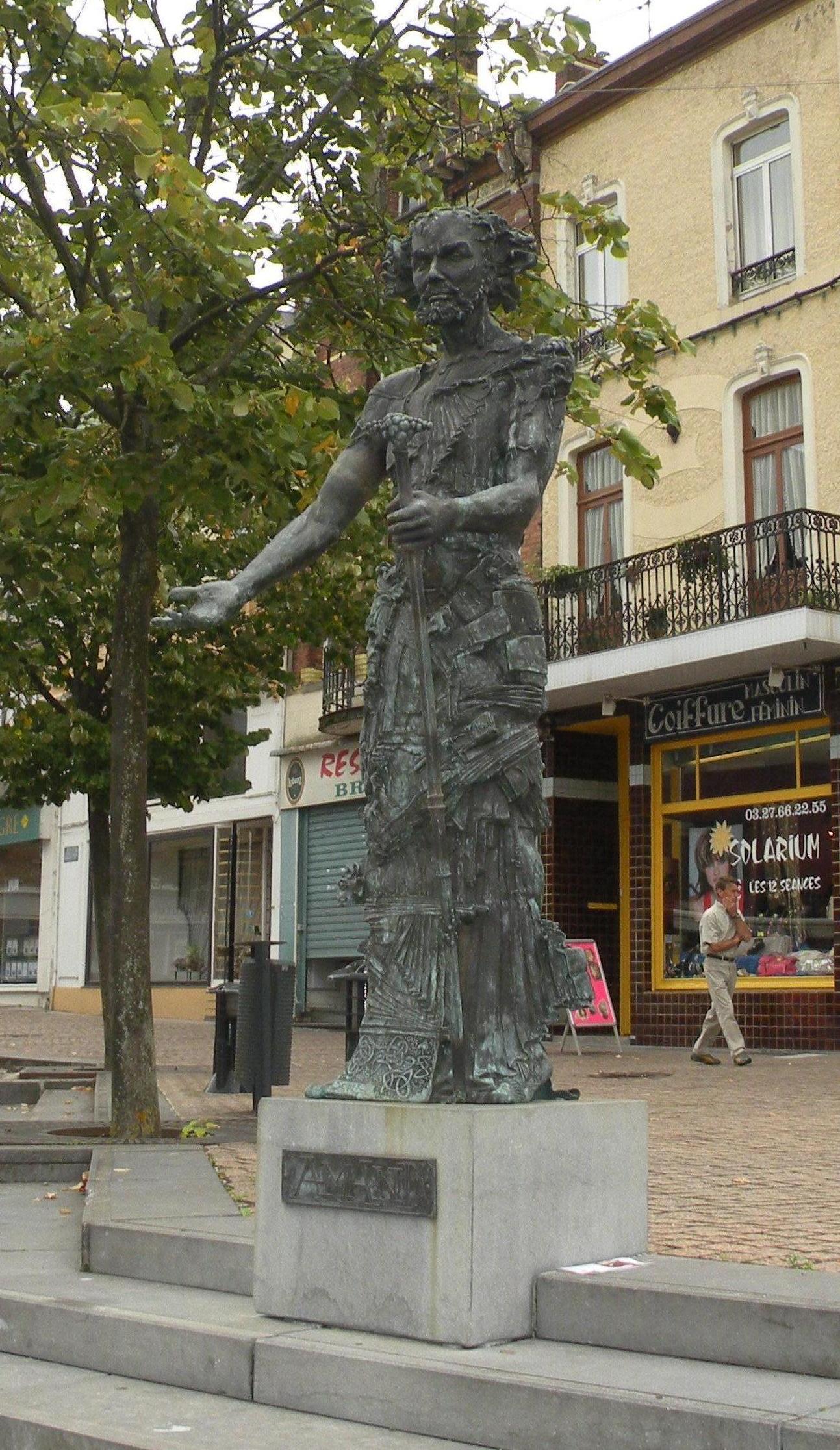
de Maastricht, statue à Hautmont, nord
Book of Saints
– Amandus – 6 February
Article
AMANDUS (Saint) Bishop
(February 6) (7th century) Born near Nantes in the West of France, he embraced
the monastic life in the Abbey of Saint Martin at Tours and, at the request of
King Clothaire II, undertook missionary work in Flanders, Brabant and Holland.
For this purpose he was consecrated a Missionary Bishop, and in the year 649
was called to govern the See of Maestricht. He founded a great number of
churches and monasteries, besides effecting innumerable conversions to
Christianity. In his declining years he retired to the Abbey of Elnon, where he
passed away in his ninetieth year (A.D. 684). He is the Patron Saint of
Flanders and is represented in art carrying a church in his hand.
MLA
Citation
Monks of Ramsgate.
“Amandus”. Book of Saints, 1921. CatholicSaints.Info. 29
May 2012.
Web. 23 May 2026.
<http://catholicsaints.info/book-of-saints-amandus-6-february/>
SOURCE : https://catholicsaints.info/book-of-saints-amandus-6-february/
New Catholic
Dictionary – Saint Amand
Article
Confessor,
apostle of Flanders, born Nantes, France, 594; died monastery of
Elnon (now Saint Amand), 684.
Clotaire II sent him to Flanders; his monasteries at
Ghent and Mount Blandin were the first in Belgium.
For a while bishop of
Maastricht, he later labored in the Basque country (Navarre), returned to Belgium,
and founded several other monasteries.
Patron of inn-keepers, wine-merchants, brewers, and Boy Scouts. Emblems:
church, chair, flag. Relics at
Saint Amand. Feast, 6
February.
MLA
Citation
“Saint Amand”. New Catholic Dictionary. CatholicSaints.Info. 29
July 2012.
Web. 23 May 2026.
<http://catholicsaints.info/new-catholic-dictionary-saint-amand/>
SOURCE : https://catholicsaints.info/new-catholic-dictionary-saint-amand/
St. Amand
Feastday: February 6
Patron: Wine makers, Beer brewers, merchants, innkeepers, bartenders, Boy Scouts
Birth: 584
Death: 675
This great missionary was
born in lower Poitou about the year 584. At the age of twenty, he retired to a
small monastery in the island of Yeu, near that of Re. He had not been there
more than a year when his father discovered him and tried to persuade him to
return home. When he threatened to disinherit him, the saint cheerfully
replied, "Christ is my only inheritance." Amand afterward went to
Tours, where he was ordained, and then to Bourges, where he lived fifteen years
under the direction of St. Austregisilus, the bishop, in a cell near the
cathedral. After a pilgrimage to Rome, he returned to France and
was consecrated bishop in
629 without any fixed See, receiving a general commission to teach the Faith to
the heathens. He preached the gospel in Flanders and
northern France, with a brief excursion to the Slavs in Carinthia and perhaps,
to Gascony. He reproved King Dagobert I for his crimes and accordingly, was
banished. But Dagobert soon recalled him, and asked him to baptize his newborn
son Sigebert, afterwards to become a king and a saint. The people about Ghent were
so ferociously hostile that no preacher dared venture among them. This moved
Amand to attempt that mission, in the course of which he was sometimes beaten
and thrown into the river. He persevered, however, and in the end people came
in crowds droves to be baptized.
As well as being a great
missionary, St. Amand was
a father of monasticism in
ancient Belgium, and a score of monasteries claimed him as founder. He found
houses at Elnone (Saint-Amand-les-Eaux), near Tournai, which became his
headquarters, St. Peters on Mont-Blendin at Ghent, but probably not St. Bavo's
there as well; Nivells, for nuns, with Blessed Ida and St. Gertrude,
Barisis-au-Bois, and probably three more. It is said, though possibly apocryphal,
that in 646 he was chosen bishop of
Maestricht, but that three years later, he resigned that See to St. Remaclus and
returned to the missions which he had always had most at heart. He continued
his labors among the heathens until a great age, when, broken with infirmities,
he retired to Elnone. There he governed as Abbot for
four years, spending his time in
preparing for the death which came to him at last soon after 676. That St. Amand was
one of the most imposing figures of the Merovingian epoch, is disputed by no
serious historian; he was not unknown in England, and the pre-Reformation chapel of
the Eyston family at
east Hendred in Birkshire is dedicated in his honor.
SOURCE : https://www.catholic.org/saints/saint.php?saint_id=333

Saint
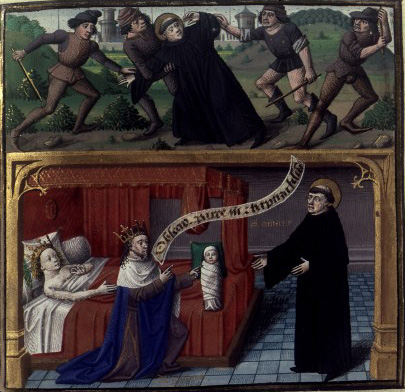
Amand et Dagobert Ier. Vincentius Bellovacensis, speculum historiale (traduite
par Jean De Vignay), 1463. Paris.
Amand of Maastricht, OSB
Abbot B (RM)
(also known as Amandus)
Born at Nantes, Lower
Poitou, France, c. 584; died at Elnon in Belgium, c. 679; feast day formerly
February 1.
Amand's pious parents are
said to have been lords of the region where he was born. By vocation, Amand
became a monk about 604 at a monastery on the island of Yeu (Oye). He had been
there less than one year, when his father found him out, and desperately tried
to persuade him to quit that state of life. To his threats of disinheritance,
the saint cheerfully answered: "Christ is my only inheritance." Amand
moved to Tours where he was ordained, and then was a hermit near the cathedral
at Bourges, France, for 15 years under the direction of Bishop Saint
Austregisilius before setting out to convert unbelievers. At Bourges he lived
an austere life. His clothing was a single sackcloth, and his sustenance
barley-bread and water.
On his return from a
pilgrimage to Rome at about age 45, he was consecrated a missionary bishop in
629, with no see. Amand was a tireless preacher, a wandering saint who worked
as far afield as Flanders, among the Slavs of Carinthia along the River Danube,
among the Basques in Navarre, and possibly in Gascony. Although the saint was
exiled for censuring King Dagobert I, Amand continued his work elsewhere. He
was soon recalled by Dagobert, who threw himself at Amand's feet to beg his
pardon and had him baptize his new-born son, Saint Sigebert III, afterwards
king.
Despite initial
difficulties, Amand was highly successful in evangelizing the area around
Ghent. The idolatrous people about Ghent were so savage, that no preacher
wanted to venture among them. This moved the saint to choose that mission.
While he had the support of the Frankish kings, he often met with so much
opposition from the peoples he tried to convert that Dagobert strongly
suggested that Amand use force. During the course of his evangelizing Amand was
often beaten, and sometimes thrown into the river. Undaunted, he continued
preaching, though for a long time he saw no fruit, and supported himself by his
labor. The miracle of his raising a dead man to life, at last opened the eyes
of the barbarians, and the country came in crowds to receive baptism, destroying
the temples of their idols with their own hands.
He founded numerous
monasteries in Belgium, including Mont-Blandin (and perhaps Mount Bavon) at
Ghent and the Abbey of Elnon (later called Saint-Amand), as well as a convent
at Nivelles. Some incorrectly say that he was chosen bishop of Maastricht, and
that after three years he resigned to return to missionary work, although Pope
Saint Martin had encouraged him to persevere. He spent the last four years of
his life as abbot of Elnon Monastery near Tournai and died there, aged almost
90, after dictating his testament which has survived. His relics are kept at
the monastery where he died.
Amand's cultus was
widespread in Flanders and Picardy, and reached England through visits of
churchmen such as Saint Dunstan to his monasteries in Ghent or Elnon. His name occurs
in several medieval English calendars, and a chapel is dedicated to him at East
Hendred. The Sarum Breviary honored Saint Amandus and Saint Vedast with an
office of nine lessons (Attwater, Benedictines, Bentley, Delaney, Duckett,
Encyclopedia, Farmer, Husenbeth). In art he is represented as carrying a church
in his hand (Benedictines).
SOURCE : http://www.saintpatrickdc.org/ss/0206.shtml

Réception
de Saint Amand dans l’abbaye de Saint Bavon, gravure d’après P. P. Rubens
St. Amandus
One of the
great apostles of Flanders;
born near Nantes,
in France,
about the end of the sixth century. He was, apparently, of noble extraction.
When a youth of twenty, he fled from his home and became a monk near Tours,
resisting all the efforts of his family to
withdraw him from his mode of life. Following what he regarded as
divineinspiration, he betook himself to Bourges,
where under the direction of St. Austregisile, the bishop of
the city, he remained in solitude for fifteen years, living in a cell and
subsisting on bread and water. After a pilgrimage toRome,
he was consecrated in France as
a missionary bishop at
the age of thirty-three. At the request of Clotaire II, he began first to
evangelize the inhabitants of Ghent,
who were then degraded idolaters,
and afterwards extended his work throughout all Flanders,
suffering persecution,
and undergoing great hardship but achieving nothing, until the miracle of
restoring the life of a criminal who had been hanged, changed the
feelings of the people to reverence and affection and brought
many converts to the faith. Monasteries at Ghent and
Mt. Blandinwere erected. They were the first monuments to
the Faith in Belgium.
Returning to France,
in 630, he incurred the enmity of King Dagobert, who he had endeavoured to
recall from a sinful life,
and was expelled from thekingdom. Dagobert afterwards entreated him to return,
asked pardon for the wrong done, and requested him to be tutor of the heir of
the throne. The danger of living at court prompted the Saint to
refuse the honour.
His next apostolate was among of the Slavs of
the Danube, but it met with no success, and we find him then in Rome,
reporting to the pope what
results had been achieved.
While returning to France he
is said to have calmed a storm at sea. He was made Bishop of
Maastricht about the year 649, but unable the repress the disorders of the
place, he appealed to the Pope, Martin
I, for instructions. The reply traced his plan of action with
regard to fractious clerics,
and also contained information about theMonothelite
heresy, which was then desolating the East. Amandus was also
commissioned to convoke councils in Neustria and Austrasia in
order to have the decrees which had been passed at Rome read
to the bishops of Gaul,
who in turn commissioned him to bear the acts of
their councils to the Sovereign Pontiff. He availed himself of
this occasion to obtain his release from the bishopric of
Maastricht, and to resume his work as a missionary. It was at this time that he
entered into relations with the family of Pepin of Landen,
and helped St.
Gertrude and St. Itta to establish their famous monastery of Nivelles.
Thirty years before he had gone into the Basque country to preach, but had met
with little success. He was now requested by the inhabitants to return, and
although seventy years old, he undertook the work
of evangelizing them and appears to have banished idolatry from
the land. Returning again to his country, he founded several monasteries,
on one occasion at the risk of his life. Belgiumespecially
boasts many of his foundations. Dagobert made great concessions to him for his
various establishments. He died in his monastery of Elnon,
at the age of ninety. His feast is
kept 6 February.
Campbell,
Thomas. "St. Amandus." The Catholic Encyclopedia. Vol.
1. New York: Robert Appleton Company, 1907. 6 Feb.
2016 <http://www.newadvent.org/cathen/01380b.htm>.
Transcription. This
article was transcribed for New Advent by Christine J. Murray. Dedicated
to Amanda Knox.
Ecclesiastical
approbation. Nihil Obstat. March 1, 1907. Remy Lafort, S.T.D.,
Censor. Imprimatur. +John Cardinal Farley, Archbishop of New York.
Copyright © 2020 by Kevin
Knight. Dedicated to the Immaculate Heart of Mary.
SOURCE : http://www.newadvent.org/cathen/01380b.htm

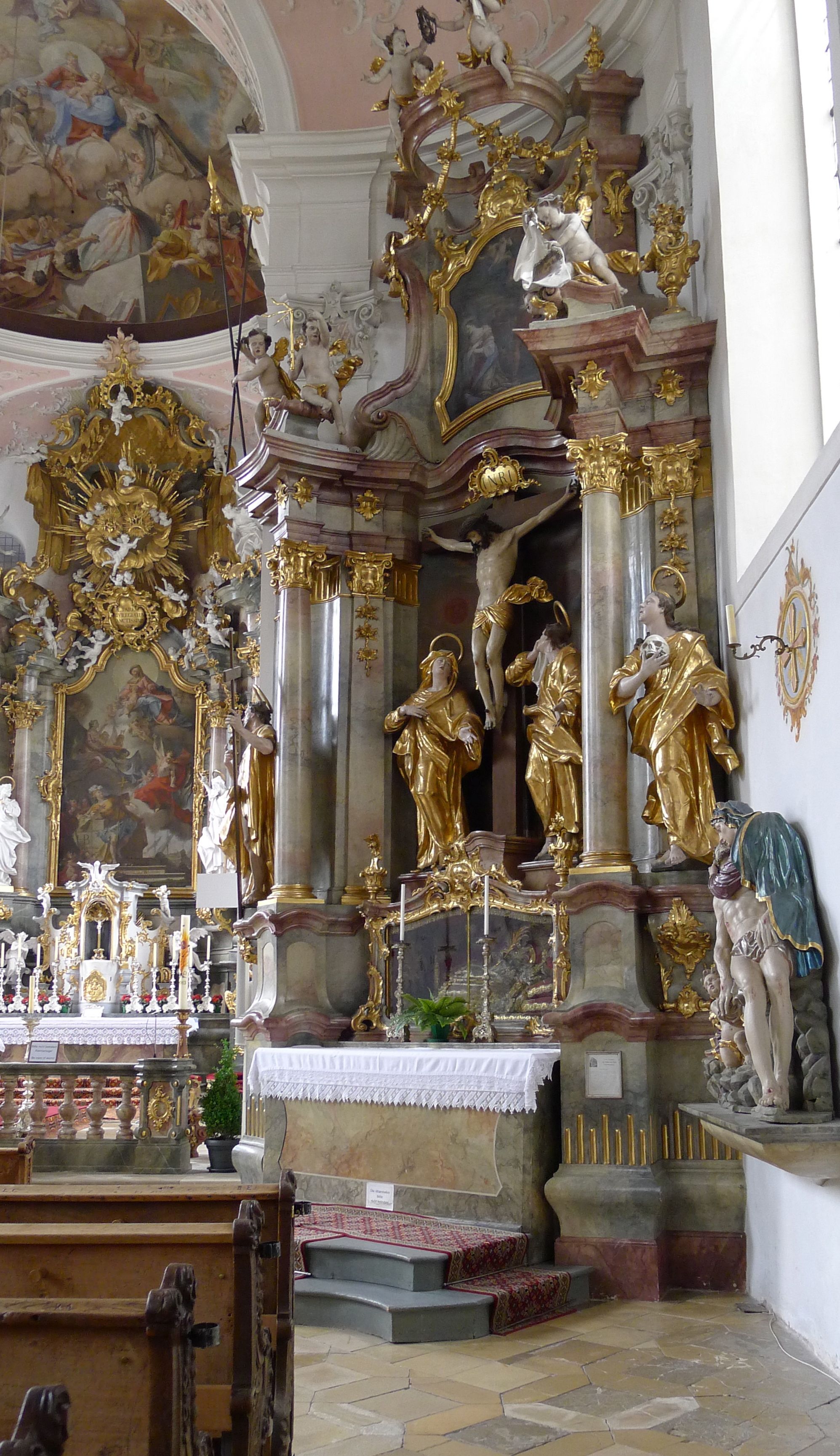
Reliquienschrein
des Amand von Maastricht in St. Peter und Paul in Oberammergau, rechter
Seitenaltar
St. Amandus, Bishop and
Confessor
HE was born near
Nantes, of pious parents, lords of that territory. At twenty years of age, he
retired into a small monastery in the little isle of Oye, near that of Rhé. He
had not been there above a year, when his father found him out, and made use of
every persuasive argument in his power to prevail with him to quit that state
of life. To his threats of disinheriting him, the saint cheerfully answered:
“Christ is my only inheritance.” The saint went to Tours, and a year after to
Bourges, where he lived near fifteen years under the direction of St.
Austregisilus, the bishop, in a cell near the cathedral. His clothing was a
single sack-cloth, and his sustenance barley-bread and water. After a
pilgrimage to Rome, he was ordained in France a missionary bishop, without any
fixed see, in 628, and commissioned to preach the faith to infidels. He
preached the gospel in Flanders, and among the Sclavi in Carinthia and other
provinces near the Danube: 1 but
being banished by King Dagobert, whom he had boldly reproved for his scandalous
crimes, he preached to the pagans of Gascony and Navarre. Dagobert soon
recalled him, threw himself at his feet to beg his pardon, and caused him to
baptize his new-born son, Saint Sigebert, afterwards king. The idolatrous
people about Ghent were so savage, that no preacher durst venture himself
amongst them. This moved the saint to choose that mission; during the course of
which he was often beaten, and sometimes thrown into the river: he continued
preaching, though for a long time he saw no fruit, and supported himself by his
labour. The miracle of his raising a dead man to life, at last opened the eyes
of the barbarians, and the country came in crowds to receive baptism,
destroying the temples of their idols with their own hands. In 633, the saint
having built them several churches, founded two great monasteries in Ghent,
both under the patronage St. Peter; one was named Blandinberg, from the hill of
Blandin on which it stands, now the rich abbey of St. Peter’s; the other took
the name of St. Bavo, from him who gave his estate for its foundation; this became
the cathedral in 1559, when the city was created a bishop’s see. Besides many
pious foundations, both in France and Flanders, in 639, he built the great
abbey three leagues from Tournay, called Elnon, from the river on which it
stands; but it has long since taken the name of St. Amand, with its town and
warm mineral baths. In 649 he was chosen bishop of Maestricht; but three years
after he resigned that see to St. Remaclus, and returned to his missions, to
which his compassion for the blindness of infidels always inclined his heart.
He continued his labours amongst them till the age of eighty-six, when, broken
with infirmities, he retired to Elnon, which house he governed as abbot four
years more, spending that time in preparing his soul for his passage to
eternity, which happened in 675. His body is honourably kept in that abbey. The
Sarum Breviary honoured St. Amandus and St. Vedast with an office of nine
lessons. See Buzelin, Gallo-Flandria, and Henschenius, 6 Feb. p. 815, who has
published five different lives of this saint.
Note 1. See
Henschenius, p. 828. [back]
Rev. Alban
Butler (1711–73). Volume II: February. The Lives of the
Saints. 1866.
SOURCE : http://www.bartleby.com/210/2/063.html
Saints
of the Order of Saint Benedict – Saint Amandus
The fleeting joys of this
world are as naught to those who are filled with the love of God. So it was
with Saint Amandus. Though of the princely house of the Dukes of Aquitaine, he
left the palace of his father, Serenus, and his mother, Amantia, to betake
himself to the Island of Oye, where he buried himself in a Monastery. Obedience
is a touchstone by which the other virtues may be tested. This virtue Amandus
conscientiously practised, and so, when ordered by his Superiors to make the
rounds of the island, he obeyed. On his way he was met by a serpent of huge
size. The hissing monster frightened the youth, who, throwing himself on the
ground, for he was quite unarmed, prayed fervently for help. Help soon came
When, by a divine inspiration, he made the sign of the Cross, the serpent
immediately took to flight. This was the first campaign of the young soldier of
Christ. Soon after he joined Austregisilus, the Bishop of Bourges, who was well
skilled in spirituality. With him he spent fifteen years, and, shut up in a
cell, he mortified himself by constant watching, by fasting, and by wearing a
hair-shirt. The fame of his holiness caused him to be appointed Bishop of
Ghent. The people who dwelt about that city were steeped in idolatry, and
received the teaching of the Saint with mockery and revilings, till the miracle
he performed of raising a gibbeted man to life opened their eyes. Regardless of
life, Saint Amandus longed for an opportunity of sacrificing himself for
Christ. Accordingly, he proceeded to the country of the Sclavs, a nation at
that time most barbarous, and most hostile to Christianity. When, after long
toiling among them, he gained nothing but insults and blows, he returned to
Gaul. Dagobert then was King, a monarch notorious for his licentious life. Not
one of the Bishops had the courage to rebuke the vices of the sovereign.
Flattery or fear kept their mouths shut. Amandus, a fearless hater of
wickedness, visited the King, and reminded him of the punishment that would
await his sins. The ears of kings are ever tender; so our Saint had to pay for
his outspokenness with exile. Some years after a son was born to Dagobert. The
King’s anger had meanwhile cooled down, and he ordered Amandus to be sought
out, in order that he should baptize the royal babe. When the Saint returned,
the King welcomed him most graciously, and prostrating himself before him, with
tears, begged forgiveness. He wished his son to be named Sigebert, and the
entire charge of the young Prince’s education was to be entrusted to Amandus.
They say that, at the conclusion of the prayers of Holy Baptism, when none of
the bystanders had given the usual response, the infant, just cleansed from
original sin by the holy water, opened his mouth, and in a clear voice, to the
amazement of all, added, “Amen.”
The Bishopric of
Maestricht was then vacant, and, in spite of his reluctance, Saint Amandus was
appointed to it by the command of the King. For three years he held that post,
and then, because his exertions were wasted on a hardened people, he went to
King Childeric to ask him for a site for a new Monastery, several of which he
had already built. While the foundations were being laid, one of the Bishops
was taken ill of a dangerous disease. This Bishop desired that the Saint and
all his Monks should be driven from the entire province; but he was afraid of
Childeric, therefore he hired assassins to make away with Amandus. The crafty
villains approached the Saint in the most respectful and friendly manner, and
asked him to accompany them to mark out the site for another Monastery. Amandus,
through the help of Divine Providence, was aware of the whole plot, yet, eager
for martyrdom, he readily proceeded with the assassins. A mountain was intended
to be the scene of the slaughter. However, when they reached it, so terrible a
storm arose that the murderers were deprived of the use of their eyes. Deafened
by thunder and lashed by hail, in their panic they fell at the knees of the
Saint and begged for their lives. Amandus’ prayers brought back fine weather,
and pardoning the wretches their crime, he allowed them to depart.
Subsequently Saint
Amandus waged war on idols, preached to the inhabitants of Gascony, and founded
the Monastery of Strasburg, from which the Apostle sent forth the soldiers of
Christ throughout all Alsace, to the great blessing of the inhabitants, who
were reclaimed from vice and idolatry and enrolled under the standard of the
Church. An extraordinary miracle was performed by our Saint not far from the
river Aronde. In visiting the villages and towns, while sowing the good seed,
he met a woman who had lost her sight. Inquiring the cause, he bade the woman
make full confession of any sin that lay heavy on her conscience, telling her
it was easy for God to heal her eyes. With many a groan she admitted that she
deserved the anger of Heaven, for she had practised magic, and worshipped as an
idol a tree, from which she sent forth her prophecies to the ignorant. The
Bishop, after reproving her wickedness, commanded her to seize an axe and cut
down the tree. Leading her by the hand, the Saint placed her so that she was
able to hew down the tree, and then, making the sign of the Cross over her, he
cleansed her eyes and restored her sight.
Wearied with many toils
and broken down by years, Amandus resigned the See of Liege, and, withdrawing to
the Monastery of Elnon, he there prepared to meet his end. This great Apostle
of the inhabitants of Tongres, Limburg, and Brabant, of the Gascons, the
Alsatians, and many other peoples, being now over eighty years of age, departed
this life most peacefully on the 6th of February, A.D. 675.
– text and illustration
taken from Saints
of the Order of Saint Benedict by Father Aegedius
Ranbeck, O.S.B.
SOURCE : https://catholicsaints.info/saints-of-the-order-of-saint-benedict-saint-amandus/

Fragment
uit het manuscript van de Vita St. Amandi. Vervaardigd in Gent, ca. 10de eeuw.
Excerpt
from the Vita St. Amandi manuscript. Manufactured in Ghent, ca. 10th century.
Preserved in the Ghent University Library.
Saint Amandus
Amandus (ca. 584–675)
bishop of Maastricht. Amandus was a monk in Flanders and in Northern France who
preached throughout the region and founded several monasteries and nunneries,
including ones in Ghent and Elnon. He served as abbot of Elnon for four years
and was made a bishop in 628. The cult of Amandus was celebrated in Flanders,
Picardy, and England.
Excerpt from The
Golden Legend
It happed that ... by the
will of the king, [St. Amandus] would edify a monastery of monks; then a bishop
that was of the next city took it grievously and was much angry therewith, and
commanded his servants to cast him out or else they [w]ould slay him. And anon
they came to him and said to him, in guile and treason, that he should go with
them and they would show to him a place apt and good, and water enough, for to
edify upon a monastery for monks.
And he that knew their
malice and their evil purpose went with them unto the top of an high mountain
whereas they would have slain him, and he desired much the martyrdom for the
love of our Lord, and for to come in his company; but anon suddenly descended
from heaven such a tempest of rain and of orage, that it covered all the
mountain so much that that one could not see that other, and supposed to have
died suddenly. And they fell down to the earth upon their knees, praying him to
pardon them, and that they might depart thence alive. For whom he put himself to
prayer, and anon the storm was appeased and the weather fair. They went to
their place, and [St. Amandus] thus escaped from this peril.
SOURCE : http://www.learn.columbia.edu/treasuresofheaven/saints/Amandus.php

Mont Sainte-Odile, Alsace, France
Saint Amandus ; Mosaics in Mont Sainte-Odile
; Chapelle des Larmes
(Mont Sainte-Odile)
Bilder
vom Le Mont ste. Odile (Odilienberg im Elsaß) Bilder aus dem Inneren der
Tränenkapellelle

Mont Sainte-Odile, Alsace, France
Saint Amandus ; Mosaics in Mont Sainte-Odile
; Chapelle des Larmes
(Mont Sainte-Odile)
Bilder
vom Le Mont ste. Odile (Odilienberg im Elsaß) Bilder aus dem Inneren der
Tränenkapellelle
Sant' Amando di
Maastricht Vescovo
Poitou, ca. 584 - Elnon,
679
La cittadina olandese di
Maastricht, nota oggi per il trattato europeo, ha avuto nei primi secoli
cristiani un santo vescovo, Amando. Nato intorno al 584 nel Poitou, fu monaco
sull'ìsola di Yeu ed eremita a Bourges prima di iniziare, a 45 anni, una lunga
missione itinerante. Ordinato vescovo, ma senza una sede fissa, predicò il
Vangelo nelle Fiandre, tra gli slavi lungo il Danubio e nella regione di
Anversa. Qui ebbe difficoltà a convertire quei popoli, nonostante l'appoggio
dei re franchi. Attento alla "genuinità" delle conversioni,
rimproverò re Dagoberto per averne estorte con la forza. Per un breve periodo
risiedette a Maastricht, ma le difficoltà nell'esercitare il ministero erano
tali che, nonostante il conforto di Papa Martino, se ne andò, ricominciando a
viaggiare. Fondò case religiose a Mont-Blandin e a Gand, nonché l'abbazia di
Elnon, dove morì ultranovantenne nel 679. Il culto è diffuso anche in
Inghilterra. (Avvenire)
Martirologio
Romano: A Elnon sempre in Francia, deposizione di sant’Amando, vescovo di
Maastricht, che annunciò la parola di Dio a molte province e popoli fino agli
Slavi, chiudendo poi la sua vita mortale in un monastero da lui stesso
costruito.
Visse come eremita a Bourges per quindici anni prima di iniziare una lunga e fruttuosa carriera missionaria all'età di quarantacinque anni. Essendo stato ordinato vescovo senza sede fissa, predicò il Vangelo nelle Fiandre, fra gli Slavi danubiani, forse in Guascogna e intorno ad Anversa, dove non ebbe molto successo. Poi, per un breve periodo, fu vescovo residente a Maastricht; ma le difficoltà che vi incontrò erano troppo grandi per lui e, benché il papa - san Martino lo avesse incoraggiato a perseverare, egli tornò alla sua vita itinerante di missionario. Sant'Amando ebbe l'appoggio dei re franchi, ma spesso incontrò una forte opposizione da parte dei popoli che tentava di convertire; rimproverò aspramente re Dagoberto I per aver incoraggiato l'uso della forza per ottenere le conversioni, e così pure per altri crimini. Per consolidare la sua opera missionaria fondò diverse case religiose, in particolare Mont-Blandín (e forse Saint-Bavon) a Gand e l'abbazia di Elnon. In quest'ultima si ritirò quando fu vicino ai novant'anni, e là morì, dopo aver dettato il suo testamento di cui sopravvive il testo.
Il suo culto si diffuse nelle Fiandre e in Piccardia e raggiunse anche l'Inghilterra tramite ecclesiastici, come Dunstan, in visita ai monasteri di Gand o Elnon.
Vi sono diversi altri santi di nome Amando, venerati in Francia.
Autore: Donald Attwater
SOURCE : http://www.santiebeati.it/dettaglio/91760

Saint
Amand, 1655, 13.2 x 9.2
Amandus
van Maastricht, 1655, 13.2 x 9.2, Thijs
Collection (University of Antwerp)
Den hellige Amandus av
Belgia (~584-~676)
Minnedag:
6. februar
Den hellige Amandus
(Amantius; fr: Amand) ble født rundt 584 nær Nantes i nedre Poitou, en av
Frankrikes 33 historiske provinser, som i middelalderen var en del av
Aquitania. Området ligger nå i departementet Loire-Atlantique i regionen
Pays-de-la-Loire i det vestlige Frankrike. Han kom åpenbart fra en fornem
familie, og hans fromme foreldre skal ha vært herskere i regionen. Legenden gir
dem navnene Serenus og Amantia. Legenden forteller at Amandus fra barndommen av
levde som en munk, og allerede i en alder av syv år forlot han sine foreldre
for å gå i kloster. I virkeligheten var han nok rundt tyve år gammel da han
rømte hjemmefra for å bli munk på klosterøya Yeu (Île d'Yeu) (Oye,
Ogia) ved La Rochelle sørvest for Nantes. Dette skjedde mot familiens vilje, og
da faren fant ham der etter å ha lett etter ham i nesten ett år, forsøkte han
forgjeves å bringe ham hjem med makt. Til truslene om å bli gjort arveløs
svarte Amandus: «Kristus er min eneste arv».
Det må ha vært på denne
øya at Amandus plutselig så en enorm slange på sin vei. Han rettet en bønn til
Gud, gjorde korsets tegn og sørget på den måten for at monsteret krøp tilbake
til sitt rede, og det har ikke vært sett siden. Senere dro han som pilegrim til
den hellige Martins
grav i Tours, hvor han ble presteviet. Senere flyttet han østover, til en celle
nær katedralen St. Martin i Bourges, hvor han levde som eremitt i femten år
under veiledning av biskopen der, den hellige Austregisilus (Outril)
(551-624). Der levde han et asketisk liv, kledd i sekkestrie og med byggbrød og
vann som eneste kost.
Kong Dagobert hadde lenge
ikke noen sønn, men etter en lang periode med uopphørlig bønn fikk han endelig
den gutten han hadde ønsket seg. Da fikk han det for seg at gutten skulle døpes
av den helligste mannen i landet Derfor kalte han rundt 631 Amandus tilbake og
inviterte ham til sitt hoff i Paris. Da helgenen viste seg for ham, kastet han
seg ned foran ham, ba ham om å tilgi hans synder og å døpe barnet, som Herren
hadde skjenket ham. Den hellige biskopen imøtekom med glede den første
forespørselen, og de ble forsonet. Men den andre nektet han, redd for at han
ville bli involvert i kongens praksis. Men til slutt ga han etter for kongens
uopphørlige insistering.
Amandus døpte barnet med
stor pomp og prakt i Orléans. I det øyeblikk da han døpte gutten i Faderens og
Sønnens og Den Hellige Ånds navn, skal han ha svart med høy røst: «Amen!» Han
ble kalt Sigebert, den fremtidige hellige kong Sigebert III av Austrasia (d.
656). Kongen lovte at gutten snart ville bli overlatt til biskopens hus i
Maastricht.
Han var en utrettelig
predikant og forkynte evangeliet i Flandern og Brabant, det nåværende Belgia,
og rundt Antwerpen, hvor han ikke hadde noen særlig suksess. Senere misjonerte
han også blant slaverne i Kärnten ved Donau og blant baskerne i Navarra i det
nordlige Spania.
Ifølge den tradisjonelle
listen over biskoper av Maastricht, etterfulgte Amandus i 646 den hellige Johannes Agnus som
biskop av Maastricht. Ifølge en katalog fra 900-tallet skal han ha vært den 26.
biskop av Tongeren og den syttende av Maastricht. Ric. Helvader skildrer hans
menighet i Maastricht slik:
«Han havde i sit stift en
hob grove, uforstandige, tylperske, beuriske plumprianer at drages med, hvilke
levede uden al tugt og ærlighed; disse Brobianer lærte han ikke alene
civilitate, morum, men førte dem og til Kristus».
Amandus synes å ha gått
aktivt inn for sitt arbeid, og overalt gikk han rundt for å forkynne
evangeliet. Men presteskapet i hans bispedømme ble ikke spesielt sjarmert av
ham. Dette kommer tydelig frem i et brev han mottok i løpet av høsten 649 eller
kort tid etter fra den hellige pave Martin I (649-53).
Brevet oppmuntret ham til å holde ut og å behandle det slappe presteskapet i
bispedømmet Maastricht hardt, men til ingen nytte. For vanskelighetene i
Maastricht ble for store for Amandus, så etter tre år overlot han setet i
Maastricht til den hellige Remaclus og
vendte tilbake til sitt omflakkende liv med evangelisering som vandrebiskop.
Men opplysningen om hans episkopat i Maastricht er høyst usikker, og kan være
resultat av tendensen i middelalderske biografier til å assosiere abbedvalg med
bispevalg.
Amandus gjenopptok sitt
omvendelsesarbeid blant flamlenderne, og begynte med å evangelisere området
rundt Gent i det nåværende Belgia. Det avgudsdyrkende folket der var så ville
at ingen forkynner ønsket å prøve seg blant dem, men det oppmuntret Amandus til
å gå løs på nettopp den oppgaven. Først fant han at hans forkynnelse falt for
døve ører. Folk ville ikke høre på ham, spyttet ham i ansiktet, kastet ham i
sølen, jagde ham og slo ham til blods. Han ble til og med kledd naken foran
kvinner og kastet i elven Scheldt. Men han fortsatte urokkelig å forkynne, selv
om han lenge ikke så noen frukter av arbeidet, og han levde av det han selv
tjente.
For å styrke sitt
misjonsarbeid grunnla Amandus flere klostre, det viktigste var St. Peter
(Sint-Pieters) på Mont-Blandin i Gent, det første i Belgia, og kanskje
Saint-Bavon i samme by, men det er lite trolig. Klosteret i Gent grunnla han på
en eiendom han fikk av den hellige Bavo av Gent (ca
590-ca 655), som var inspirert av Amandus’ forkynnelse og som senere trådte inn
i klosteret. Amandus grunnla et stort antall klostre, og en av hans
klostergrunnleggelser befant seg i Maastricht. Han grunnla også Barisis-au-Bois
og trolig tre til, blant dem Marchiennes. Klosteret i Drongen/Tronchiennes, nå
en bydel i Gent, går også tilbake til ham.
Det mest kjente av Amandus’
klostre var Elnon (Elnone, Elno) ved Tournai/Doornik i Flandern, nå kjent som
Saint-Amand-les-Eaux, som han grunnla i 639. Klosteret ligger på den franske
siden av den belgiske grensen ved Tournai, på land gitt av kong Dagobert. Dette
gjorde han til sitt hovedkvarter. Der bygde han to kirker innenfor klausuren,
en viet til St. Peter og den andre til St. Andreas. Amandus oppkalte mange av
sine grunnleggelser etter St. Peter, som han hadde en spesiell hengivenhet for.
I legendene rundt hans liv har hans besøk til Peters grav i Roma en
fremtredende plass.
Rundt den tiden da
Amandus forlot Maastricht, etablerte han kontakt med familien til den
salige Pipin
av Landen (580-640). Etter hennes manns død i 640 grunnla den
hellige Itta av
Nivelles, etter konsultasjoner med Amandus, det berømte nonneklosteret i
Nivelles/Nijvel sør for Brussel. Hun ble selv nonne der og ba Amandus om å gi
sløret til sin datter, den hellige Gjertrud av Nivelles (Geertruida)
(d. 659).
Det fortelles en rekke
legender om Amandus:
Nær Gent ble han angrepet
av en snikmorder. Men Amandus fikk mannen på andre tanker. Han angret, ble
student hos Amandus og levde siden livet til en munk. Senere ble han eremitt i
tilbaketrukket ensomhet. Mannen het Bavo og er nå kjent som helgen. Slike ting
skjedde flere ganger. For å gi håndfaste bevis på Guds nåde, ga han fanger
deres frihet. Disse var ofte så takknemlige at de sluttet seg til ham og lot
seg forvandle til gode kristne, og ikke sjelden gikk de i kloster.
På en av sine turer til
Roma satt Amandus en gang sammen med sine ledsagere og spiste i kanten av en
skog. Plutselig dukket en bjørn opp. Alle ble forskrekket, men ikke Amandus.
Han befalte dyret å tjene dem som lastedyr til de nådde sitt mål. Mange som så
det, trodde på Kristus og omvendte seg. Like før Roma ga han dyret friheten
tilbake. I en av kirkene kastet man seg ned for å takke Gud for de tegnene han
utførte for dem. En gang fikk en blind sitt syn tilbake av det vannet som
helgen hadde vasket hendene med.
Ved en annen anledning
hadde Amandus med kongens tillatelse begynt å bygge et nytt kloster. Men biskopen
i området var imot det, og han sendte sine tjenere dit med beskjed om at de
måtte jage den hellige og om nødvendig eliminere ham helt! Da den hellige
mannen kom, ville de få ham til å tro at de visste om et mye bedre sted å bygge
et kloster. Amandus kjente deres intensjon, men han gjorde ikke noe, ettersom
han alltid hadde drømt om en gang å dø som en martyr for Gud. Han ble da tatt
med opp på toppen av et høyt fjell, hvor de tenkte å drepe ham. Men plutselig
begynte det å pøse ned, og regnet gjorde at det falt en tåke på fjellet slik at
ingen kunne se en hånd foran seg. Da ble tjenere livredde, og de falt ned for
Amandus’ føtter og bønnfalt ham om at han ville la dem komme levende fra dette.
Da sa den hellige en bønn, og det fine været tilbake som om ingenting hadde
skjedd. Tjenerne forlot ham urørt og vendte hjem.
En annen historie
forteller om hvordan han på en av sine turer skulle krysse en enorm elv under
en skremmende storm. Han snakket bydende til elementene slik at de falt til ro,
og han kunne uskadd nå den andre siden.
I klosteret hadde han
diktert sitt testamente, og teksten til det er bevart. Han ble gravlagt i
kirken St. Peter, men i Milos biografi hevdes det at tolv år senere var denne
kirken blitt for liten for kulten, så hans legeme ble flyttet til en ny kirke
som var viet til ham. Milo hevder også at denne seremonien ble utført av den
hellige Eligius
av Noyon (ca 588-660), den store gullsmeden, men han døde i
virkeligheten flere år før Amandus. På 1100-tallet ble det hevdet at Amandus
døde foran Maria-alteret i kirken St. Andreas og ble gravlagt i St. Peter. Han
ble etterfulgt som abbed av sin disippel, den salige Andreas av Elnon, som
døde rundt 690. Deres relikvier ble skrinlagt sammen i 694. De har begge
minnedag den 6. februar.
Angivelig førte den
hellige biskop Rupert
av Salzburg (ca 650-ca 718) rundt år 700 Amandus’ relikvier til sin
egen katedralby. Men man mistenker at Rupert blandet sammen vår Amandus med
hans navnebror Amandus av
Strasbourg (ca 290-ca 355) eller Amandus av Worms (600-t),
som hadde samme minnedager som Amandus av Maastricht og Amandus av Strasbourg!
Den hellige biskop Arno av Salzburg (ca
740-821) hadde vært munk og abbed i klosteret Elnon og hadde der fått en stor
andakt for Amandus. Han grunnla derfor en kirke til ære for ham i Admonttal
(sognekirke frem til 1789, brant i 1865). Videre fremmet han kulten i sin
bispeby Salzburg (etter forbilde fra en av sine forgjengere, Rupert?) På
slutten av 1000-tallet kom også relikvier av Amandus til høyalteret i det
sørtyske klosteret Hirsau.
Vi har få samtidige
opplysninger om Amandus’ liv, bortsett fra hans eget testamente. Hans
biografi, Vita Sancti Amandi, som er tilskrevet hans disippel
Baudemundus (Baudemond) av Elnon, ble skrevet allerede i år 750. Fra en kopi
fra 1000-tallet stammer den eldste kjente avbildningen av Amandus, hvor vi ser
ham diktere sin biografi til Baudemundus. Biografien ble utvidet og tillagt
detaljer midt på 800-tallet av munkepoeten Milo, lederen for scriptoriet i
Elnon og en av en gruppe karolingiske forfattere som engasjerte seg i å utvide
biografier og autentisere kulten til store skikkelser i den frankiske fortiden.
Imidlertid var det Baudemonds versjon som lå til grunn for de illustrerte
biografiene fra 1000- og 1100-tallet, som førte til en utbredt kult i
middelalderen.
Da en kvinne som i årevis
hadde vært lam, hørte salmer og bønner i det fjerne, lot hun seg bringe dit. Da
hun kom frem, ba hun St. Amandus om å helbrede hennes sykdom. Hennes bønn ble
besvart, og hun hoppet opp og løp bort til skrinet. Deretter viklet hun løs et
bånd hun hadde rundt halsen og bandt det på relikvieskrinet. Slik uttrykte hun
uttrykkelig at hun alltid ønsket å tilhøre St. Amandus.
Amandus er det belgiske
klostervesenets far og landets viktigste misjonær. Han er kjent som frankernes
og Belgias apostel. Han var og er spesielt æret i det sørlige Nederland og
nordlige Frankrike. Alle steder hvor han utførte sitt arbeid, er det flere
landsbyer som bærer hans navn, for eksempel i Rheinkassel like nord for Köln
(det hadde klosteret Elnon land), og Sint-Amandsberg nær Gent. Det er
bemerkelsesverdig at det i Nederland ikke finnes en eneste sognekirke som er
viet til St Amandus. Det er ukjent om det også var slik før reformasjonen. I
Flandern har han hovedsakelig en kult i Antwerpen, i det nærliggende
Erembodegem, hvor vannet fra Sint-Amandsputje hadde en gunstig effekt mot
øyesykdommer, Erps-Kwerps, Geel, Hoeleden-Kortenaken, Kortenberg og
Sint-Amands. Kulten nådde England ved at geistlige som den hellige Dunstan besøkte
hans klostre i Gent og Elnon. Hans navn opptrer i mange engelske kalendere i
middelalderen, og det prereformatoriske private kapellet for Eyston-familien i
East Hendred i Oxfordshire er viet til ham.
Amandus avbildes
vanligvis som biskop med stav, mitra, våpenkappe og noen ganger selvfølgelig
med evangeliebok, ofte med en drage, på grunn av hans legende. Vi ser at mange
misjonærer beseirer hedenskapen, avbildet som et monster. I Beissel avbildes
Amandus sammen med en drage, fordi han renset området rundt Gent for
avgudsdyrkelse. Han bærer ofte en kirkemodell i hendene, fordi han i sitt liv
grunnla mange kirker og klostre. Av og til ses han med brutte lenker, en
påminnelse om at han slapp fanger fri.
Hans minnedag i
Martyrologium Romanum er 6. februar. Han æres på ulike steder, men med ulike
datoer, som 13. februar, 25., 26. og 27. oktober og 24. juni. I bispedømmet
Roermond i Nederland, som Maastricht nå tilhører, feires alle hellige biskoper
av Maastricht den 15. mai (tidligere 6. februar). Den nederlandske byen
Maastricht er kanskje i dag mest kjent for den europeiske unionstraktaten.
Kilder: Attwater/John,
Attwater/Cumming, Farmer, Jones, Bentley, Butler (II), Benedictines, Delaney,
Bunson, Kaas, Eilertsen, Schauber/Schindler, Gorys, Dammer/Adam, KIR, CE, CSO,
Patron Saints SQPN, Infocatho, Bautz, santiebeati.it, Heiligenlexikon,
en.wikipedia.org, zeno.org, heiligen-3s.nl - Kompilasjon og oversettelse: p.
Per Einar Odden
Opprettet: 15. juli 2005
SOURCE : https://www.katolsk.no/biografier/historisk/amandus
Sant Amand d’Elnone : https://nominis.cef.fr/contenus/SaintAmandElnone.pdf


_-_BEIC_IE4411197.jpg)


.jpg)
_jm3232.jpg)

.jpg)