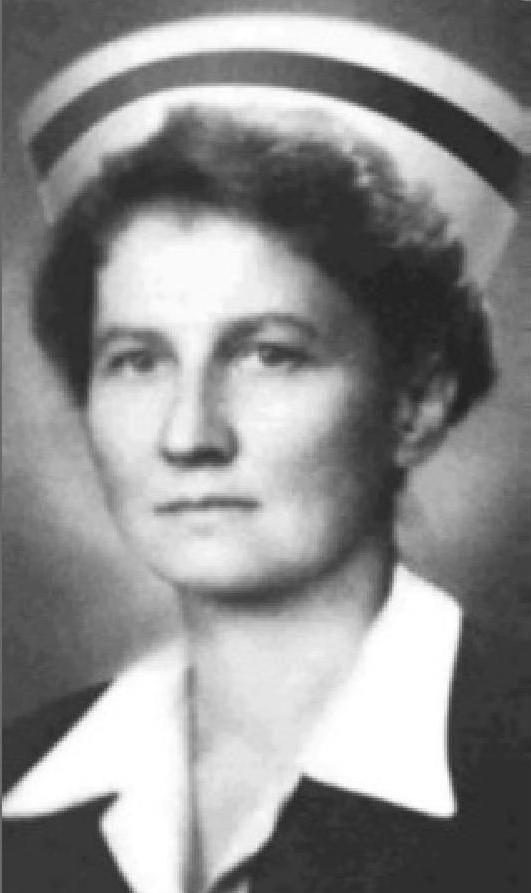
Bienheureuse Hanna
Chrzanowska
Infirmière
polonaise (+ 1973)
Anna Chrzanowska (1902 - 1973), oblate ursuline polonaise.
Promulgation du décret relatif aux vertus héroïques, décret du 1er octobre 2015 (en italien).
Fille d'un professeur d'université née le 7 octobre 1902 dans une famille industrielle charitable et religieuse (catholique et protestante), elle fait ses études dans une école des Ursulines et aide à prendre soin des blessés lors de la révolution bolchévique. Elle fait ensuite des études d'infirmière à Varsovie et en France.
Instructrice à l'Université des infirmières puis éditrice de la revue Infirmière de Pologne, elle aide à la création de l'Association des infirmières polonaises. Elle devient membre des oblates bénédictines.
Pendant la deuxième guerre mondiale, son père meurt en camp de concentration et elle organise les infirmières de Varsovie pour les soins à domicile et pour accueillir les réfugiés.
Directrice de l'Ecole pour les soins infirmiers psychiatriques à Kobierzyn jusqu'à sa fermeture par les communistes, elle se tourne alors vers les soins aux pauvres et nécessiteux de sa paroisse.
Elle a lutté contre le cancer durant les sept dernières années de sa vie et est morte le 29 avril 1973 à Cracovie.
En polonais:
- béatifiée le 28 avril 2018 à Cracovie
- Hanna Chrzanowska, Święci i błogosławieni, (Saints et bienheureux de l'archidiocèse de Cracovie)
- Hanna Chrzanowska - (précurseur des soins infirmiers de famille), Alexander Jędrysik, thèse écrite sous la direction de Grazyna Franek, (document pdf)
- Pastorale de la santé, archidiocèse de Katowice
- Hanna Chrzanowska - sumienie pielęgniarek, (Hanna Chrzanowska - infirmière de conscience), Niedziela, tygodnik katolicki, (Dimanche, hebdomadaire catholique)
- Hanna Helena Chrzanowska 1902 - 1973, Musée
virtuel de l'histoire de l'Association des infirmières polonaises.
"je ne suis pas venu
pour être servi mais pour servir"
SOURCE : https://nominis.cef.fr/contenus/saint/13027/Venerable-Hanna-Chrzanowska.html

Pologne: le cardinal Amato préside la béatification d’Hanna Chrzanowska, infirmière
La béatitude des
miséricordieux
AVRIL 28, 2018 18:00 ANITA BOURDIN JEAN-PAUL
II, SAINTS,
BIENHEUREUX
Les infirmières, les
infirmiers, les malades aussi ont une nouvelle amie « au ciel »: le
cardinal Amato a en effet présidé la béatification de l’infirmière polonaise,
amie de Karol Wojtyla, Hanna Helena Chrzanowska(1902-1973), laïque, oblate
bénédictine, ce samedi 28 avril 2018, à Carcovie (Pologne). Il a salué en elle
un modèle du rapport avec le malade.
Le cardinal Angelo Amato,
préfet de la Congrégation pour les causes des saints a en effet présidé la
messe, au cours de laquelle il a souligné comment la nouvelle bienheureuse se
« penchait sur les malades », et combien on apprend d’elle « à
se pencher sur les pauvres, à prendre soin de ceux qui ont besoin de
réconfort, de soutien, d’encouragement, car ils sont nombreux, sont petits, abandonnés,
exilés , faibles, marginalisés », rapporte L’Osservatore Romano du 29
avril.
La charité envers tous
On en voit certains
« tous les jours sur nos routes, mais beaucoup sont cachés dans leurs
misérables maisons, malades, pauvres, seuls, sans soutien », a fait
remarquer le cardinal italien dans son homélie.
« Par le travail de
ses enfants, l’Eglise, a-t-il dit, va à la rencontre » des personnes dans
le besoin, « donnant aide et protection avec sacrifice et
générosité ». Il a exhorté les Polonais à « continuer à manifester de
la charité envers tous, spécialement envers nos malades » afin que
« chaque jour, ils reçoivent un signe d’attention, un signe
d’encouragement et un geste de soutien ».
A travers la bienheureuse
Hanna, « l’Eglise célèbre la créativité de la charité chrétienne qui
ouvre ses bras, comme Jésus le Bon Samaritain, pour accueillir, protéger, et
les soigner les malades, les souffrants, les faibles », a insisté le
cardinal Amato.
La béatitude des
miséricordieux
Il a rappelé qu’à
l’occasion des obsèques de la bienheureuse, en 1973, le cardinal Karol Wojtyla
a prononcé son éloge funèbre en disant, ému: « Je te remercie, Hanna, toi
qui as vécu parmi nous, et qui as été pour nous tous l’incarnation des
Béatitudes du Christ, en particulier de celle qui dit « heureux les
miséricordieux ». »
Elle était devenue
infirmière par motivation « philanthropique, à partir de sa conversion, en
1932 ». Elle a vécu cette profession « comme un véritable apostolat
chrétien, de présence salvifique de la croix du Christ auprès des malades ».
Elle nourrissait sa vie
de foi « par la prière, la communion et l’adoration eucharistique, des
retraites, la prière du chapelet ». Et, entant qu’oblate
bénédictine, elle a « vécu avec enthousiasme et joie le charisme de
la prière liturgique et du travail professionnel auprès des malades ».
« Son service était
à côté des malades, en qui elle reconnaissait la présence du Christ », a
fait observer le cardinal Amato: « Et même aux infirmières elle a proposé
une formation à la fois professionnelle et spirituelle ».
Elle rappelait à tous
« l’espérance du bonheur éternel au paradis et sa foi dans la providence
divine réveillait à la vie et à l’enthousiasme », si bien que, même
« dans une atmosphère de douleur et de souffrance, elle réussissait
toujours à apporter un rayon de lumière et de joie ».
Même pas peur
Pour elle, le patient
était « le bien suprême » à approcher « comme un frère et une
sœur » et sa profession d’infirmière « était une véritable vocation,
un appel d’en haut pour le bien des pauvres » et elle
donnait « généreusement aux autres son temps, son intelligence, sa
culture, collaborant activement avec ceux qui étaient soucieux de soulager et
d’améliorer les conditions des malades ».
Elle en est même arrivée
à « vendre ses bijoux pour acheter des médicaments pour les
pauvres ». Et elle « ne voulait ni remerciements ni
reconnaissance ».
Elle montrait une
attention et une compréhensions spéciale pour les familles de malades
chroniques, avec le souci aussi de leur vie spirituelle et
sacramentelle », leur procurant aussi l’aide d’un prêtre.
Même sous l’occupation
communiste, elle « n’a pas caché sa foi » et « elle ne s’est pas
plainte des moqueries et des injustices » subies, et aucune menace n’a
réussi à l’empêcher de s’approcher des sacrement régulièrement.
Mais c’est en raison de
ses convictions religieuses qu’elle « a été privée du poste de directrice
de l’école d’infirmières ». Mais elle n’avait pas peur « des
pressions du parti » et elle « défendait courageusement sa foi,
organisant régulièrement des séminaires pour les malades », en dépit des
interdictions.
Et surtout, a conclu le
cardinal, « elle n’avait honte d’aucun service rendu aux malades: elle se
retroussait les manches et travaillait avec humilité ».
Reconnaissance du miracle
Un miracle obtenu par son
intercession a été reconnu par le pape François le 7 juillet 2017, ce qui
ouvrait la voie à sa béatification.
Les funérailles d’Hanna
Chrzanowska ont été célébrées à Cracovie par le cardinal Karol Wojtyła, futur
pape Jean-Paul II, qui a dit notamment : « Nous remercions Dieu pour cette
vie qui avait un tel sens, qui nous a laissé un témoignage si clair, si clair …
Que ta récompense soit le Seigneur Lui-même, que ton service rayonne parmi nous
et nous apprenne à tous, sans cesse, comment servir le Christ et le
prochain. »
Hanna
Chrzanowska, la fille du professeur Ignacy Chrzanowski, était née le 7
octobre 1902, à Varsovie. Ses grands-parents maternels étaient des protestants
évangéliques, tandis que les grands-parents paternels étaient catholiques. La
famille était connue pour sa charité et une grande implication religieuse.
Ecole universitaire
Hanna obtint son diplôme
d’études secondaires chez les Sœurs ursulines de Cracovie. En 1922, elle
entreprit des études à l’École des sciences infirmières nouvellement ouverte à
Varsovie et elle utilisa sa bourse pour compléter ses études en France.
De 1926 à 1929, elle
travailla comme instructrice à l’École universitaire des infirmières de
Cracovie. De 1929 à 1939, elle publia le mensuel « L’Infirmière polonaise » et
elle participa aux travaux de l’organisation de l’Union catholique polonaise
des infirmières et infirmiers en 1937.
Après le déclenchement de
la guerre en 1939, Hanna arriva à Cracovie. Son père fut déporté avec les
autres professeurs dans un camp de concentration où il mourut. Son frère,
Bogdan Chrzanowski, mobilisé en 1939, fut assassiné à Kozelsk.
Hanna se dévoua à des
activités de bienfaisance au sein du Comité d’assistance civique, présidée par
l’archevêque Adam Stefan Sapieha (qui ordonna prêtre Karol Wojtyla), puis elle
travailla en soignant des réfugiés et des personnes déplacées. Elle organisa
pour eux l’hébergement, les repas, s’occupa particulièrement des enfants et des
juifs. Hanna essayait de placer les orphelins dans les familles.
Après la guerre
Pendant ce temps, sa vie
spirituelle s’approfondissait. Elle était principalement centrée sur l’Eucharistie
et l’aide du prochain dans l’esprit de l’Évangile.
Avec la fin de la
guerre et l’ouverture de l’École universitaire des sciences infirmières à
Cracovie, elle travailla comme directrice des soins infirmiers et sociaux en
mettant l’accent sur les cours de préparation des étudiants pour soigner les
malades chez eux.
Pendant une courte
période, elle travailla comme directrice de l’école des soins infirmiers
psychiatriques à Kobierzyn. Après la fermeture de cette école par les autorités
communistes, Hanna, dont l’attitude religieuse était un obstacle pour eux, fut
forcée de prendre sa retraite anticipée.
Encore pleine de force et
connaissant bien la situation des patients qui restaient chez eux, Hanna
organisa les soins pour les malades chroniques et dans les zones abandonnées de
la paroisse de Cracovie, avec la pleine approbation des autorités de l’Église.
Les infirmières, les amis, les étudiants et les religieuses l’aidaient dans son
activité.
On la voyait souvent
plongée dans la prière dans l’église des Carmes, située à proximité de son
appartement. Avec beaucoup de tact, elle essayait d’aider les patients
souffrant de maladies spirituelles : elle appelait des prêtres pour
célébrer la messe dans la maison du patient qui le désirait.
Depuis 1966, Hanna
souffrait d’un cancer, et elle s’est éteinte le 29 avril 1973: ce sera demain,
dimanche 29 avril l’anniversaire de sa « naissance au Ciel ».
Le pape polonais pour ami
Les funérailles d’Hanna
ont donc été célébrées par le cardinal Karol Wojtyła, futur saint pape
Jean-Paul II. Il est revenu à Cracovie spécialement pour cela, alors qu’il
participait à une réunion de la Conférence des évêques polonais. Un grand
nombre de patients en fauteuil roulant ont voulu accompagner leur protectrice
jusqu’au cimetière. Le cardinal Wojtyła l’a remerciée en disant: « Nous te
remercions, Hanna, d’avoir été parmi nous, d’avoir été comme tu as été, avec ta
grande simplicité, cette chaleur intérieure ».
Un premier décret,
concernant les vertus héroïques d’Hanna, avait été promulgué par le pape
François le 1er octobre 2015.
Avec Marina Droujinina

Exposition
sur l'histoire de Cracovie ; photo d'Hanna Chrzanowska en bas à droite.
Kraków
History 1794-1990, “Always Faithful the Catholic Church in the Service of
Poland’s Independence”.
Visitors to Kraków in the summer of 2018 were given ‘snapshots’ of
some of the remarkable history of the city through poster displays scattered
around the outskirts of the ‘Old Town’. From the establisment of the Bar Confederation in 1768 and the Kościuszko Uprising in 1794 through the Kraków Uprising in 1746 and the events of the ’Spring of Nations’ in 1748 to the
calamities of war and oppressive occupations by powerful neighbours Kraków
today is a captivating city proudly reflecting on its past in a now independent
and free Poland.
The Scotch Mist Gallery contains many
photographs of historic buildings, monuments and memorials of Poland.
Historia
Krakowa
1794-1990, “Zawsze Wierny. Kościół dla Niepodległej”.
Galeria Mist Scotch zawiera wiele zdjęć
zabytkowych budowli, pomników i miejsc pamięci w Polsce.
Hanna Chrzanowska, de l’écoute à la sainteté dans le monde hospitalier
Cette infirmière récemment déclarée bienheureuse a changé le monde de la santé en Pologne. A l’occasion de la journée Mondiale des Pauvres, qui a lieu ce dimanche 18 novembre, le Pape François écrivait : « Pour reconnaître leur voix, nous avons besoin du silence de l’écoute 1) ». A n’en pas douter, la vie d’Hanna Chrzanowska illustre ce propos de manière magistrale : l’écoute de la souffrance et un regard constant sur les personnes soignées ont dilaté sa vie pour lui donner une grande fécondité. Entretien avec Kamila Róg, infirmière et future volontaire de Points-Cœur au Brésil.
Qui était la
bienheureuse Hanna Chrzanowska ?
La réponse à cette
question n'est pas facile du tout. Le contexte historique et culturel de la
Pologne du XX° siècles dans lequel elle a grandi et vécu peuvent nous aider à
découvrir les multiples visages de la bienheureuse Hanna Chrzanowska
(1902-1973), première infirmière laïque béatifiée en avril par le pape
François.
Hanna Chrzanowska est née
le 7 octobre 1902 à Varsovie. Elle vient d'une famille riche, son père Ignace
Chrzanowski, est un célèbre professeur de littérature. Quand Hanna a 8 ans, la
famille déménage à Cracovie, où le professeur Chrzanowski reprend la chair de
l'Université Jagellon. Elevée dans une maison où l'on attachait beaucoup
d'importance à la charité, elle suit, après l'obtention de son baccalauréat, un
bref cours d'infirmière pour aider les victimes de la guerre. Mais c’est sans
toute sa tante Zofia qui lui transmit son amour pour ce métier. Fondatrice d’un
hôpital pour enfants à Varsovie, elle l’emmène tôt sur le chantier de
construction, où, plus tard, à l'âge de 12 ans, elle est traitée pour
dysenterie. Comme nous l'apprennent ses notes personnelles, cet événement aura
un fort impact sur l'enfant, en particulier les soins prodigués par une
infirmière Madame Aniela.
En 1920, elle commence
ses études de philologie polonaise, qu'elle interrompt lorsqu'elle apprend
l'ouverture de l'école d'infirmières à Varsovie, première du pays. A partir de
ce moment, Hanna Chrzanowska se consacre aux soins infirmiers. A la fin de ses
études, elle obtient des bourses en France et en Belgique, où elle approfondit
ses connaissances, notamment dans le domaine des soins sociaux. En tant
qu'infirmière, elle travaille comme institutrice à l'École universitaire des
infirmières et hygiénistes de Cracovie. Elle édite le premier magazine
professionnel infirmier en Pologne "Pielęgniarka Polska". Elle
publiera par la suite de nombreux ouvrages dans le domaine des soins
infirmiers. Elle participe activement à la préparation de la "Loi sur les
soins infirmiers" adoptée par le parlement. Elle prend part à la création
de l'Union catholique des infirmières polonaises. Lorsque la Seconde Guerre
mondiale éclate, elle se porte volontaire au sein du Comité de tutelle polonais
à Cracovie où elle s'implique fortement dans les soins aux réfugiés, aux
prisonniers et aux personnes déplacées. Elle accorde une attention toute
spéciale aux enfants orphelins, dont beaucoup de juifs, pour qui elle trouve
des familles d'accueil. Cette expérience de la guerre et de la souffrance sont
un moment privilégié qui rapproche Chrzanowska de Dieu, auprès de qui elle
cherche soutien, découvrant la puissance de la prière et de l'Eucharistie.
Après la guerre, Hanna enseigne les soins infirmiers sociaux à l'École
universitaire de sciences infirmières et d'obstétrique. Elle obtient une bourse
d'études aux États-Unis, où elle a approfondi ses connaissances.
En 1957, elle devient
directrice de l'école des soins infirmiers psychiatriques de Kobierzyn. Devant
les problèmes de nombreuses personnes malades – seules, abandonnées et
handicapées, privées de tout type de soins, elle décide d'organiser une
assistance infirmière professionnelle, basée sur les structures de l'Eglise et
indépendante du service de santé de l'Etat, alors inefficace. Elle publie un
article dans le Tygodnik Powszechny intitulé « Le monde n'est
pas vide », présentant le sort des patients anonymes couchés à la maison
sans soins élémentaires. La réponse est immédiate. Les bénévoles se portent
volontaires pour travailler et l'argent afflue, ce qui permet d'acheter les
ressources médicales de première nécessité.
C'est ainsi que
s’organisent les premiers soins infirmiers paroissiaux, avec l’aide, notamment,
du Père Karol Wojtyła et du recteur de la Basilique sainte Marie, le Père
Ferdinand Machay. Avec le soutien des autorités ecclésiastiques, ainsi que de
nombreux collaborateurs et bénévoles (infirmières, religieuses, religieux,
prêtres, médecins, professeurs et étudiants), elle fonde des centres de soins
infirmiers paroissiaux à Cracovie et dans tout l'archidiocèse. Elle organise
ainsi des retraites pour ses patients, qui leur redonnent la joie de vivre et
la force dont ils ont besoin pour porter la croix quotidienne.
Grâce à ses efforts, la
coutume de célébrer la messe au domicile du malade et les visites des malades
lors des visites pastorales se répandent peu à peu. A la demande du Cardinal
Karol Wojtyła, Paul VI lui rend hommage avec la médaille Pro Ecclesia et
Pontifice. Oblate de l'abbaye de Tyniec depuis 1956, sa vie spirituelle est
imprégnée de l’esprit bénédictin. En servant les malades et les souffrants tout
au long de sa vie, elle réalise de plus en plus clairement que c’est le Christ
lui-même qu’elle sert en eux. Elle meurt à Cracovie le 29 avril 1973 et
sera béatifiée 45 ans plus tard à Cracovie.
Quel est son enseignement
pour les hommes d’aujourd’hui ?
L'église a élevé Hanna
Chrzanowska au rang de Bienheureuse. Par sa vie, elle montre de façon très
concrète que la sainteté commence ici et maintenant, pour tout le monde, quel
que soit son l’âge et l’état de vie. Elle n’est pas née avec un don spécial lui
permettant de reconnaître le Christ dans la personne souffrante. Elle a
commencé à comprendre ce mystère au fil du temps, cherchant des réponses au
sens de la souffrance, qui ne manquait pas dans sa vie et dans son entourage. Elle
ne s'est pas arrêtée à la surface, elle a cherché un sens toujours plus
profond. "Cherchez et vous trouverez" (Mt7,7).
Sa conversion a eu lieu
vers 30 ans. A partir de là, Dieu est vraiment devenu la source de ses
activités quotidiennes. En Pologne, Hanna Chrzanowska est considérée comme la
deuxième « Mère Teresa de Calcutta ». On pourrait même penser qu’il était
plus facile à Mère Teresa d’être sainte, tant étant grande la misère à
Calcutta. Quelques décennies plus tard, la Bienheureuse Hanna montre que
l’essentiel est d’épouser les circonstances. La souffrance est vraiment partout
si nous y sommes sensibles et si nous voulons la voir.
Lors de ses funérailles,
le Cardinal Karol Wojtyła a dit : « Nous te remercions, Madame
Hanna, d'avoir été parmi nous… d'avoir été parmi nous une incarnation des
Béatitudes du Sermon sur la montagne, surtout de celle-ci: « Heureux les
miséricordieux ».
« C'est un
chemin exigeant, mais à la portée de tous, disait le pape François. Pour
accomplir les œuvres de miséricorde, il n'est pas nécessaire d'aller à
l'université et d'obtenir un diplôme. Nous pouvons tous faire des œuvres de
miséricorde. Il suffit que chacun d'entre nous commence à se poser la question
: que puis-je faire aujourd'hui pour aider mon voisin dans le besoin ? »
Pendant la guerre, elle
aide les victimes. Après la guerre, il n'y a plus de victimes, mais des
réfugiés, des personnes déplacées, des orphelins et des veuves. Lorsqu'elle
enseigne à l'université, elle n'est pas seulement une professeure pour les
étudiants, mais aussi une éducatrice et une mère. Puis elle constate la
solitude des personnes âgées. Elle voit les besoins immédiats et ne passe pas
son chemin (Lc 10,31-32). La souffrance, en soi une épreuve pour l'être humain,
on ne peut pas l’affronter seul. Mais dans la découverte que la souffrance est
un mystère et que le visage de Jésus du Calvaire est en chaque personne
souffrante, nous pouvons persévérer avec amour et joie dans le service et la
présence auprès des personnes souffrantes. Compatir, et non se lamenter.
Comment son exemple
illumine-t-il votre expérience d’infirmière ?
Souvent quand je dis que
je suis infirmière, la réaction est la suivante: « Ça doit être un dur
labeur ». Ce à quoi je réponds sans hésiter: « Oui, c'est vrai, mais
en ce qui me concerne, je ne peux pas imaginer ce travail sans la foi en Dieu
et la possibilité de le rejoindre dans mon prochain. Hanna Chrzanowska est la
première infirmière laïque béatifiée. C'est un modèle dans la vocation
d’infirmière. C'est pourquoi je suis personnellement reconnaissante à Dieu pour
le don de sa vie, elle est pour moi une confirmation, très concrète que dans
mon travail, j'aide Celui qui souffre par excellence, qu'il y a quelque chose
de plus qu’aller et revenir du travail. C'est comme si elle montrait vers quoi
s’orienter dans les soins infirmiers, ce qui est le plus important. On
l’appelait « sœur de notre Dieu », à l'exemple de saint Frère Albert
– « frère de notre Dieu ». Hanna est pour nous un modèle, mais aussi,
comme le disait le cardinal Marcharski, « la conscience du corps
infirmier ». Il existe un grand risque, et c'est malheureusement plus
qu’un risque, de s’habituer à la souffrance. Avec le roulement des
infirmières, les gardes de 12 heures, le stress, la confrontation difficile
avec les familles, les problèmes de tempérament, la tentation est grande de
devenir insensible.
La Bienheureuse posait
souvent cette question: « Le malade est-il le premier ? ». « Sommes-nous
satisfaits du niveau de service offert aux malades par les infirmières ?
Pourquoi (…) les malades ont-ils peur des hôpitaux ? Pourquoi les malades
quittent l'hôpital négligés ? Pourquoi (…) la vieille dame malade n'a-t-elle
pas été lavée une seule fois à l'hôpital et s’est elle-même frottée pour ne pas
attraper d’escarres? Pourquoi est-ce que ça arrive ? Est-ce simplement parce
qu'il y a peu d'infirmières ? N'y a-t-il pas d'infirmières assises en service
qui pensent à autre chose qu’aux malades ? (….) Je suis bien consciente du fait
que les circonstances sont parfois difficiles à ce moment-là. Nous savons tous
très bien qu'il existe une sorte d’anesthésie sociale ».
Les gens qui ont connu
personnellement la Bienheureuse parlent souvent d'elle en utilisant le terme à
la fois affectueux et respectueux en polonais de "tante". D'où
vient-il ?
Hanna Chrzanowska a
consacré son temps non seulement aux malades et à la souffrance, mais aussi
comme formatrice et éducatrice et a passé beaucoup de temps avec des jeunes
auxquels elle n’est pas restée indifférente. Elle a compris que l'enseignement
d’une matière seule ne suffit pas, mais qu'il est tout aussi important de
parler du « sujet » des soins, qu’il s’agit du service authentique à
un autre être humain ; que doivent être pris en compte non seulement les
besoins de santé, mais aussi les besoins spirituels ; que le souci doit être
constant du respect de la dignité humaine.
Sans jugement, elle
enseigna pas à pas aux étudiants à faire face aux situations les plus
difficiles, celles qui humainement nous dépassent, surtout lorsque l’on est
jeune et inexpérimenté. C'est précisément pour cette raison – une façon
d’entrer en relation chaleureuse et pleine d’humour- qu'elle a pu les
rassembler autour d'elle dans différentes activités. Comme le père Karol
Wojtyla se faisait appeler « oncle », Hanna Chrzanowska est devenue
la « tante » de ces jeunes.
Peu à peu, elle est
devenue une autorité pour eux. Elle savait que pour servir pleinement son
prochain, il fallait susciter une nouvelle attitude, former le cœur. Voilà une
chose qui fait probablement défaut dans le monde d'aujourd'hui, y compris dans
le domaine des soins infirmiers, tant au niveau de la formation qu'après, sur
le lieu de travail. Il nous manque de véritables »autorités ». Hanna
fut la première à organiser des retraites pour ses élèves et les personnes
impliquées dans le travail avec les malades. Elle faisait aussi des
conférences. Non seulement elle enseignait, mais surtout elle éduquait. Sans
cesse, elle redonnait le sens.
Pour illustrer cette
implication, voici un extrait des Mémoires d'Helena Matoga, l'une de ses élèves
: « La veille de Noël (…), pour une jeune fille de seize ans, qui pour la
première fois était loin de chez elle, cela devait être l'un des moments les
plus difficiles. La maison et la famille lui manquaient terriblement. La discipline
stricte de l'école d'infirmières de Cracovie renforçait encore le sentiment de
manque de chaleur familiale (…). Helena descendit. Elle ouvrit la porte de la
salle à manger et resta stupéfaite. Dans le coin était dressé un sapin de Noël
étincelant de lumières. Sur le seuil Mme Chrzanowska, en tenue de fête, lui
prit la main (…). Mme Chrzanowska s'est approchée de chacune de nous, s'est
assise et a parlé avec chacune d'entre nous. Il n'y avait pas d'autre
enseignant présents, juste elle (…) ».
Propos recueillis et
traduits par Clément Imbert

Blessed Hanna Helena
Chrzanowska
Profile
Lay
woman
in the diocese
of Kraków,
Poland.
She was the daughter of Ignacy Chrzanowski, a university
professor,
and Wanda Szlenkier, and while their industrialist and land-owning families had
a tradition of charity, religious involvement at home was low since one side of
the family was Catholic, the other Protestant. She attended an Ursuline high school.
Helped care for soldiers
wounded and injured in the Bolshevik revolution, then began studies
at the School of Nursing in Warsaw,
Poland
in 1920;
studied
in France
on a scholarship, and worked with members of the American Red Cross.
She became a nurse
in a time when the profession was not as respected as today, and became a
leading light in the field in her region. Instructor
of the University School of Nurses and Hygienists in Kraków
from 1926
to 1929.
Editor
of the monthly publication Nurse Poland from 1929
to 1939.
Worked to help form the Catholic Association of Polish Nurses in 1937.
Member of the Oblates of the Order of Saint Benedict. During World War II,
where she lost
her father
to the concentration camps, Hanna organized nurses
for home care in Warsaw,
and helped feed and resettle war refugees. Following the war she became head of
a nursing home where, in addition to the administrative duties, she cared for
the residents and worked with nursing
students.
Director of the School of Psychiatric Nursing in Kobierzyn, Poland
until the Communists closed it. She then moved into nursing
the poor
and neglected
in her own parish.
Fought with cancer
the final seven years of her life.
Born
7
October 1902
in Warsaw,
Poland
29
April 1973
in Kraków,
Poland
of cancer
30
September 2015
by Pope
Francis (decree of heroic
virtues)
beatification
recognition celebrated in the Sanktuarium Bożego Miłosierdzia,
Kraków-Łagiewniki, Poland,
presided by Cardinal
Angelo
Amato
Additional
Information
other
sites in english
video
fonti
in italiano
Dicastero delle Cause dei Santi
strony
w jezyku polskim
Niedziela: sumienie pielegniarekOpoka
Wirtualne Muzeum Pielegniarstwa Polskiego
MLA
Citation
“Blessed Hanna Helena
Chrzanowska“. CatholicSaints.Info. 29 April 2024. Web. 5 October 2026.
<http://catholicsaints.info/blessed-hanna-helena-chrzanowska/>
SOURCE : http://catholicsaints.info/blessed-hanna-helena-chrzanowska/
Venerable Hanna Chrzanowska – 1902-1973
Hanna Chrzanowska was
born October 7th 1902 in Warsaw, into a family who had rendered great services
to the academic, cultural and nursing life of Poland. Her father Ignacy
Chrzanowski, a renowned professor of Polish literature, came from a family of
landowners. Her mother Wanda, neé Szlenker, came from a wealthy Lutheran family
of Warsaw industrialists. Her mother’s sister, Zofia Szlenkier founded a
children’s hospital in Warsaw and became a director of the Warsaw School of
Nursing. Both families were renowned for their extensive charity and
philanthropic work.
In 1910, Hanna
Chrzanowska’s parents moved to Kraków where Professor Chrzanowski took the
chair of Polish Literature at the Jagiellonian University. In Kraków Hanna
attended a high school run by Ursuline sisters where she graduated with
distinction. Having left school she enrolled onto a Red Cross course in order
to help nurse victims of the Polish-Bolshevik war. In December 1920 she
commenced studies at the Jagiellonian University. Upon hearing about the
establishment of a new school of nursing in Warsaw, she abandoned her
university course and immediately enrolled in the school of nursing, in order
to fulfil her dream of becoming a nurse.
Having graduated from the
school in 1924, she was awarded scholarships to France and Belgium, where she
became acquainted with community nursing. During the years 1926-1929, she
worked as an instructor at the University School of Nursing in Kraków. From
1929 to 1939 she also edited a nursing monthly – Polish Nurse – the first such
professional nursing journal in Poland. At this time she was living in Warsaw. She
published numerous professional articles and also made successful attempts at
literary works, some of which were semi-autobiographical. She took keen
interest in the activities of the Polish Association of Professional Nurses and
was its Vice-chair for many years. She also actively participated in preparing
the first Nursing Act of 1935. She also contributed to the formation of the
Catholic Union of Polish Nurses, in 1937.
The outbreak of the
Second World War brought numerous painful experiences for Hanna. On October 2nd
1939, her aunt Zofia Szlenkier died in the battle for Warsaw. On November 6th
her father was arrested as part of Sonderaktion Krakau, and along with other
professors, he was deported to Sachsenhausen concentration camp, where he died
shortly afterwards in January 1940. In the spring of 1940 Hanna’s only brother
Bohdan, a Soviet POW, was murdered in the Katyń woods by Soviet troops. In
spite of these tragic experiences, she did not lose hope. Already at the
beginning of the war she went back to Kraków and volunteered to work with the
Polish Welfare Committee, dedicating all of her skills and powers to taking
care of refugees, prisoners and displaced persons. She took special care of
orphans, including Jewish children, trying to find them foster families and
safe shelters. She even organised summer-camps outside of Kraków for youngsters
and established food and milk banks for starving children. She worked
tirelessly, frequently risking her health and life. The experiences of the
atrocities of the war had a significant influence on the development of her
spiritual life. It became a time of seeking God’s support; a time of
discovering the need for deep personal prayer and appreciating the meaning of
the Eucharist. This time of intense spiritual growth was accompanied by the
formation of a truly gospel inspired heroic love of her neighbour.
After the war, Hanna
Chrzanowska resumed work in the Kraków School of Nursing as the head of the
department of community nursing. Meanwhile she was offered a scholarship to the
USA to broaden her knowledge and understanding of community and home nursing.
For several years she lectured on community nursing and gave lectures on
community health to nursing teachers in Warsaw. As an instructor and tutor she
always put a strong emphasis on educating young nurses in a spirit of authentic
service to the sick, treating patients with dignity and paying attention not
only to their physical health, but also to their spiritual needs. In 1957, she
was fired from her post and given the position of director of the Psychiatric
School of Nursing in Kobierzyn, outside of Kraków. One year later the school
was closed down and she took early retirement.
During all of her
professional life Hanna did not conceal her religious beliefs or her attachment
to Christian values, even during the darkest days of Stalinist communism. On
the contrary, she manifested clear and credible testimony to her vibrant faith.
Such an attitude prompted respect and recognition, especially among her
students and colleagues but provoked aversion and repressive measures on the
part of communist authorities.
Retirement did not mean
rest for Hanna. She knew from personal experience the numerous healthcare needs
of the people in Kraków – some of whom were friends and relations – but many
more who were lonely, abandoned, elderly, or disabled and chronically sick, who
were deprived of any kind of care. Following God’s inspiration, she decided to
organise for them professional nursing care, based on church structures and
independent of the inefficient socialist health care system. Having developed
the idea, she turned to Father Karol Wojtyła, later bishop of Kraków (now St
Pope John Paul II), for advice. He in turn pointed her in the direction of
Father Machay from the Basilica of the BVM, in the old town square, who gave
his full approval of her plan to be implemented in his parish. Parish nursing
in Kraków was established. Having received the moral support of the church
authorities, Hanna proceeded to organise parish nursing not only in Kraków but
within the whole archdiocese.
Endowed with a
charismatic personality, she gathered around her a wide group of associates and
volunteers including nurses, religious sisters, priests, seminarians,
physicians, professors and students. With the help of her volunteers she
organised holidays and retreats for her house-bound patients, which helped them
rediscover the joys of life and gave them strength to bear their daily cross.
Thanks to her efforts, the custom of celebrating the Holy Mass in the home of
the sick became popularised, as well as the custom of pastoral visits to the
homes of the sick and housebound. For her nurses and volunteers she also
organised retreats and delivered regular conferences at which she would explain
her nursing philosophy of spiritual care. She worked closely with Cardinal
Karol Wojtyła, in all areas of work concerning the sick. As a result of his
recommendation she was awarded the medal ‘Pro Ecclesia et Pontifice’ by Pope
Paul VI.
Hanna’s interior prayer
life and practical nursing spirituality was profoundly influenced by
Benedictine spirituality – and in 1956 she became an oblate of Tyniec Abbey.
While caring for the sick and those who suffered, she gradually came to realise
that she was serving Jesus Christ himself.
After suffering from a
recurrance of cancer, Hanna died in Kraków on Sunday morning the 29th April
1973. The funeral Mass and ceremony in Rakowiecki Cemetery was conducted by
Cardinal Karol Wojtyła. In the homily he said: We thank you Miss Hanna that you
were among us… an embodiment of Christ’s beatitudes from the sermon on the
Mount, especially the one saying – ‘Blessed are the merciful’. Those who knew
Hanna well all testify that she heroically obeyed the Greatest Commandment of
all – to love God with all her heart and her neighbour.
In 1995 nurses from the
Catholic Association of Nurses and Midwives submitted a request to Cardinal
Franciszek Macharski to open Hanna’s canonisation cause. The Cardinal who once
said of Hanna that she was the conscience of the nursing profession, responded
positively to their request and Hanna’s cause was formally opened November 3rd
1998. It was the first time that a professional group had petitioned the Church
to canonise one of its members! On 7th July 2017, Pope Francis I declared that
a miracle attributed to the Venerable Servant of God had prepared the way for
her beatification.
Prayer
God, who in a special way
called your servant Hanna Chrzanowska to the service of the sick, poor and
abandoned, grant that she who answered your call with all her heart, should be
counted among the saints while encouraging us with her example to bring help to
our neighbours. Through her intercession grant us the grace… for which we pray
in faith and hope. Through Jesus Christ our Lord. Amen. Our Father… Hail Mary…
Glory be…
Please keep us informed
about graces obtained through the intercession of Blessed Hanna Chrzanowska at
the Postulator’s Office: Parafia Sw Mikolaja, 31-034 Krakow, Kopernica 9
SOURCE : https://hannachrzanowska.pl/en/sample-page/
Colours of Fire: The Life
of Hanna Chrzanowska
Geraldine Bereziuk Lowrey
Who was Hanna
Chrzanowska? She was a nurse. But this statement is to miss the point. She was
a nurse who lived her life to the fullest, becoming Director of Nursing at the
Warsaw School of Nursing in 1929. Hanna is also the first registered nurse to
be considered for sainthood in the Roman Catholic Church.
“Colours of Fire, The
Life of Hanna Chrzanowska” by Gosia Brykczynska (Wparkspublishing @aol.com) is
the biography of a Polish woman who was born into privilege, yet used those
privileges to help the sick, infirm, and needy often at considerable risk to
herself and her livelihood.
Hanna’s parents, Ignacy
Chrzanowski and Wanda Szlenkier, had ties to Poland’s upper crust. On her
father’s side she was related to Henryk Sienkiewicz, the Polish writer famously
known for winning the Nobel literary prize for Quo Vadis, the fictional
portrayal of early Christendom.
Her mother’s family was
Lutheran and known as wealthy Warsaw entrepreneurs and philanthropists. Hanna,
an exuberant, inquisitive child learned about charity work and service to one’s
neighbor through the examples set by her relatives. Her maternal grandfather
established a technical school for young artisans. Her maternal grandmother
helped set up a health center for the poor children of Warsaw; her maternal
aunt, Zofia Szlenkier, was known for her philanthropy. In 1913 she founded and
endowed a children’s hospital in Warsaw named after Hanna’s grandparents,
Szpital Imienia Marii i Karola (The Mary and Charles Hospital).
Although Hanna’s
childhood was spent sheltered from the more troublesome aspects of life she was
quick to notice the wants and needs of others. Hanna suffered from poor health
most of her life, mainly respiratory and immune system deficiencies. For these
reasons she spent a lot of time in and out of hospitals and sanatoria
throughout Europe. As a child, she noticed a boy in the hospital with her. His clothes
were so shabby they were thrown away. The boy had no clothes to wear home.
Hanna arranged to present the boy with a new set of clothes. She did not do
this anonymously, but rather chose to take part in this work from start to
finish. This would characterize Hanna’s approach to nursing.
Brykczynska, the author,
serves up tidbits of Hanna’s experiences before, during, and after World War
II. Hanna enjoyed almost everything associated with nursing. Before admittance
to nursing school, she volunteered at a clinic for six months. She was assigned
bookkeeping duties, which did not appeal to her. She preferred working directly
with people. As such, Hanna was instrumental in creating community nursing.
Rather than just serving the needs of hospital patients, nursing would be
extended to meet the needs of the homebound, elderly, and infirm.
During the years prior to
WWII, Hanna became more spiritual and committed to her Christian faith. The war
saw many avenues to educational pursuit closed. Hanna merely threw herself into
work with the Polish Welfare Committee as a liaison between the Krakow branch
and the German authorities.
Hanna had to be careful
of her every step which was monitored by the occupying Germans. All Polish
religious and cultural observances were prohibited. Christmas, with its
beautiful traditions of the oplatek and the Nativity display were not allowed.
Nursing students, saddened, made their way into the lifeless, hospital dining
room – only to find Hanna smiling and greeting everyone warmly, dressed in
traditional Polish garb.
The tables were set and a
lighted tree and Nativity scene were placed in an alcove. Hanna encouraged her
students to quickly change out of uniform and begin celebrating the traditional
Wigilia feast. Had her actions been discovered, she, her students, and even the
school might have suffered greatly. But these were the risks Hanna took.
Hanna was also on
friendly terms with Cardinal Karol Wojtyla, now St. John Paul II. He was the
main celebrant at Hanna’s funeral in 1973.
The biography’s title is
taken from Hanna’s own words: “Let us not just think about fighting evil…can’t
we also shout about goodness?…what I have observed are not just shades of a
phantom. I see it all so clearly in the vivid colours of fire!”
Hanna described herself
as a nurse, an ordinary person. Perhaps this better describes Hanna
Chrzanowska; “A saint is an ordinary person who does extraordinary things.”
SOURCE : http://ampoleagle.com/colours-of-fire-the-life-of-hanna-chrzanowska-p7977-222.htm

Hanna
Chrzanowska con Karol Wojtyła in visita ai malati | Arcidiocesi di Cracovia
Blessed Hanna Chrzanowska
– a Lay Nurse Raised to the Altars
The First Person from the
Circle of Karol Wojtyła Was Beatified
APRIL 30, 2018 12:08 ZENIT STAFFWOMEN
AND MEN OF FAITH
For the first time in
history, a lay nurse was beatified. A Polish woman, Hanna Chrzanowska, who died
in 1973, was announced blessed this Saturday, April 28, at the World Sanctuary
of Divine Mercy in Krakow.
Hanna Chrzanowska
organized a unique system of parish home care over chronically ill, which
covered hundreds of people living in a communist country in conditions
extremely degrading human dignity. The care system was based on professional
nurses supported by nuns, students, the family and neighbors of the sick. In
this way, Chrzanowska also became a pioneer of hospices in Poland. Clerics and
priests were also involved in the help, which allowed them to have a close
contact with poor, sick and needy people.
Hanna Chrzanowska, in her
youth distant from the Catholic faith, experienced a deep conversion before the
Second World War. A home-based care over chronically ill began in 1957.
Organizing this system of care, she worked closely with the priest, and later
Bishop, Archbishop and Cardinal, Karol Wojtyła, a future Pope, Saint John Paul
II. She was under his strong spiritual influence, as evidenced by the preserved
correspondence between them. During the funeral of Chrzanowska, Cardinal
Wojtyła emphasized that she was the incarnation of Christ’s blessings,
“especially the one which says Blessed are the merciful.” As a pope, he already
told the postulator of the process of beatification of Chrzanowska: “This is a
very important matter. Watch it.”
Sister of our God
The first person from the
circle of Karol Wojtyła was beatified.
“She was always very
close to my heart”, said St. John Paul II during the meeting with the Szlenkier
family – relatives of Hanna Chrzanowska, a lay nurse who was beatified this
Saturday, April 28, in Cracow.
She worked closely with
Karol Wojtyła in the years 1957-1973, and with their unique personalities, they
had positive impacts each upon the other.
For Wojtyła, Chrzanowska
was a living incarnation of the content of the Second Vatican Council: a lay
person, a high-class professional, who draws from the depths of Christian
spirituality, living in close relationship with Christ and practically
realizing this relationship through her service to the sick. Thanks to
Chrzanowska, the Archdiocese of Cracow had a well-developed system of the
service of active love through parish care over the sick. It included hundreds
of people confined to beds, abandoned, poor and neglected. Hanna Chrzanowska
introduced Wojtyła into this world by contacting him with the whole depth of
human misery, while at the same time teaching a practical approach to the sick
people so that they felt real care and help.
In turn, Wojtyła became a
spiritual authority for Hanna Chrzanowska, before whom she discovered the
greatest secrets of her soul, as evidenced by the preserved correspondence
between them.
There are several ongoing
processes of beatification of people related to the Pope, who made the
proclamation of a universal vocation to holiness one of the priorities of his
pontificate. Two candidates for altars come from Poland: Jan Tyranowski, a
tailor, who introduced young Wojtyła into the secrets of interior life, and
Jerzy Ciesielski, husband and father of the family, one of the members of the
youth milieu around Wojtyła, so-called Uncle Karol’s Family. In France, the
trial of prof. Jérôme Lejeune, genetics and defenders of life, who worked
closely with John Paul II in 1978-1994. Hanna Chrzanowska is the first
beatified from the circle of the people close to St. John Paul II.
Courtesy of BP KEP
***
Pope Francis on April 29,
2018, recognized Hanna Chrzanowski, declared blessed on April 28, 2018, in
Krakow.
“Yesterday Hanna
Chrzanowska, lay faithful who dedicated her life to the care of the sick, in
whom she saw the face of suffering Jesus, was proclaimed Blessed in Krakow,”
the Pope said after praying the Regina Coeli with the crowds in St. Peter’s
Square. “We thank God for the witness of this apostle of the sick and let us
make an effort to imitate her example.”
APRIL 30, 2018 12:08WOMEN
AND MEN OF FAITH
SOURCE : https://zenit.org/articles/blessed-hanna-chrzanowska-a-lay-nurse-raised-to-the-altars/
Hanna Chrzanowska’s
‘Blessed’ Witness to Charity - A look at the holy life of an upcoming beata.
Filip Mazurczak
Hanna Chrzanowska, a
Polish nurse who will be beatified April 28, was devoted to her vocation
attending to the sick and suffering.
Like St. Francis of
Assisi, Chrzanowska came from a privileged aristocratic family but decided to
devote her life to the suffering souls in her midst. Her father, Ignacy, was a
professor of Polish literature at the Jagiellonian University in Krakow, while
her mother founded a children’s hospital and was the director of the Warsaw
School of Nursing.
Her parents were known
for their charitable work, as Pawel Zuchniewicz’s Polish-language
biography Siostra
naszego Boga (“Our God’s Sister”) relates. The prominent Catholic
journalist’s memoir details a life of Christian charity.
Chrzanowska decided to
become a nurse in 1920 during the Polish-Bolshevik War, when she helped war
invalids and attended a nursing course offered by the American Red Cross. In
1939, Poland was invaded by Nazi Germany and the Soviet Union. Along with other
professors from the Jagiellonian University, Ignacy Chrzanowski was deported to
the Sachsenhausen Nazi concentration camp. Meanwhile, Hanna’s brother Bogdan
was among the Polish reserve officers shot by the Soviets in Katyn.
After the invasion of
Poland, Archbishop Adam Stefan Sapieha of Krakow formed the Civic Committee for
Social Aid. Undeterred by her family’s losses, Hanna
became an active member, according to the World Federation of the Catholic
Medical Associations, helping to organize hiding places for Jewish orphans
fleeing the Krakow Ghetto and secure new homes for Polish refugees coming from
Warsaw after the city’s nearly complete destruction in 1944. After the war,
Chrzanowska went to New York on a one-year stipend to study nursing. Upon
returning, she published books and articles on family nursing and taught in
nursing schools. She also started to organize annual retreats for health care
professionals to the Marian Shrine of Jasna Gora in Czestochowa, much to the
chagrin of Poland’s postwar communist government.
By the 1950s, Chrzanowska
had settled in Krakow. Although before the war the Catholic Church in Poland
played a leading role in charitable work (as it does today), under communism
the atheistic regime sought to curb that role. Yet she defied the authorities
and established a system of “parish nursing” in Krakow. Later, her friend
Teresa Strzembosz would develop a similar system in Warsaw. By the 1970s, most
parishes in Krakow participated in this system.
Parish nursing was a
response to the fact that there were many sick, suffering people within a
parish’s borders requiring medical attention, but their plight was invisible to
most. Chrzanowska’s collaborators would come to the homes of these people and
not only attend to their medical needs, but also clean their homes (many such
patients were greatly neglected) and offer them company and friendship.
Initially, Chrzanowska
worked alone. Eventually, nuns would help her, and, later, she succeeded in
encouraging a growing army of university students from the student ministry at
St. Anne’s Collegiate Church to volunteer and come to sick parishioners’ homes.
Chrzanowska stressed that
volunteers would be obliged to form a close bond with those under their care
and see them regularly. Her work and Christian charity has been detailed
in Tygodnik Powszechny, a Polish Roman Catholic weekly magazine, by Father
Adam Boniecki, who cooperated with her when he
was in charge of the student ministry at St. Anne’s Collegiate Church.
Chrzanowska responded
to all with love, even in the most difficult cases, according to the Polish
version of the Aleteia website. Once, for example, she was called to attend to
a paralyzed 93-year-old woman with a hole in her forehead, which was the result
of cancer.
In developing parish
nursing in Krakow, Chrzanowska was motivated, above all, by her faith. She was
particularly drawn to the Benedictine charism of work and prayer, becoming a
Benedictine oblate.
Reading the Vatican II
document Lumen
Gentium, which speaks of the role of the laity in the Church, greatly
inspired Chrzanowska in engaging laypeople to actively seek out the sick and
suffering.
She found a kindred
spirit in Cardinal Karol Wojtyła, the future Pope John Paul II, who was then
the archbishop of Krakow, who asked her to give a speech on the role of the
laity in the Church during the synod he held to implement the Council’s
teaching in his archdiocese.
With Chrzanowska’s help,
Cardinal Wojtyła would visit dozens of sick Cracovians, preferably those in the
most desperate conditions, in their homes each year.
Chrzanowska reached out
to all the sick, Catholic and non-Catholic alike, exhibiting charity to all
while not proselytizing. However, the loving Christian witness of Chrzanowska
and her helpers led to many conversions.
For example, Sister
Serafina, a nun who closely worked with her, attended to an atheist mathematics
professor suffering from rheumatism, according to Zuchniewicz’s book.
“When will you start
converting me?” he would ask sarcastically.
Over time, however, he
became so impressed with her love and kindness that he had a conversion and
asked to confess to a priest before his death. “There’s Kant’s philosophy, and
there’s the philosophy of the Gospel,” he proclaimed.
Eventually, the nurse’s
helpers and the sick they attended to formed a community. An annual retreat was
held for the sick in Trzebinia; its participants looked forward to it all year.
When Hanna Chrzanowska
died in 1973, the Carmelite basilica was crowded with mourners for her funeral
Mass. The church was filled with wheelchairs with the many sick people to whom
Chrzanowska gave hope, as well as the students and nuns who cared for them.
The funeral Mass was
celebrated by Cardinal Wojtyła, who also gave the homily.
In it, the future pope said: “Thank you, Hanna, for being with us. You are the
embodiment of the Sermon on the Mount, especially the blessing that says:
‘Blessed are the merciful.’”
Although when most
Catholics hear the word “vocation” they think of priests and members of
religious orders, Hanna Chrzanowska shows that laypeople also have a vocation
and that it can be no less heroic or saintly.
Filip
Mazurczak writes from New York
SOURCE : http://www.ncregister.com/daily-news/hanna-chrzanowskas-blessed-witness-to-charity

Hanna
Chrzanowska | Arcidiocesi di Cracovia
A Nurses Examination of
Conscience by Bl. Hanna Chrzanowska
Part I
1. I am a nurse. I’m
a Catholic. Can I say with a clear conscience: “I am a Catholic nurse”?
2. My job is not only my
profession but also my vocation. I will comprehend this vocation if I enter
into and make my own Christ’s words, “I did not come to be served, but to
serve.”
3. I must fulfill my
vocation to the best of my ability, mindful of any family responsibilities
which I may also have; performing my nursing work in a spirit of service and
love.
4. God has put talents in
my hands and I must not waste them. Christ Himself through His activities among
the sick shows me how to behave.
Part II
1. Every act of
Christ’s mercy was a manifestation of holiness. In spite of this Christ would
still retire from people in order to pray. Do I follow his example? Do I delude
myself thinking that my work is my prayer’? And yet I have time for so many
other activities outside of work! Can I really not find some time just for God?
Do I pray for strength, or thank God for my vocation?
2. Do I neglect Holy Mass
on Sundays and feast days, convincing myself that I am too tired.
3. Do I try to get to
know my religion more deeply through reading, discussions, attending religious
conferences? If not – why? Because of arrogance or laziness? Maybe I do not
want to hear the truth about myself?
4. Do I remember that God
looks at me and sees everything? Am I only working to make an impression, to
gain praise, or to dazzle those working with me?
5. The good that I
achieve is only a reflection of the goodness of God. Have I boasted about my
work? Do I admire myself?
6. Do I work on
developing in myself the qualities of a good nurse and not become discouraged
in this undertaking?
Part III
1. Do I appreciate
the dignity of my profession and do I try to express it in words and deeds? Do
I understand that going beyond my nursing duties and reaching for the
physician’s role is a departure from the path of my calling?
2. As a Catholic nurse,
do I feel co-responsibility for my profession? What am I doing to raise its
status profile? Do I evade professional involvement in this area?
3. If I am married, and I
have children, and yet work professionally, how do I combine both
responsibilities? As a nurse, am I sufficiently committed that my personal
concerns do not jeopardize those patients entrusted to my care, be they in the
hospital or the clinic or in the community? Or – alternatively – do I neglect
my family responsibilities in preference for my work? Perhaps I am taking on
too much work, immersing myself in it unnecessarily? Am I cheerful and polite
only at work, but then unwind at home in a foul irritable mood? Or maybe it’s
the other way round?
4. How do I fulfill my
professional duties; am I punctual, conscientious in carrying out orders? Do I
work according to the principles of the art of nursing in the hospital, clinic,
and in the patient’s home?
5. Maybe I work with
modern equipment, among the most advanced achievements of medicine. Do I
remember that these inventions and scientific achievements reflect the glory of
God, the Creator of human thought? Do I try to continually improve myself
professionally?
6. Am I truthful? Do I
have the courage to admit my errors and mistakes, or maybe not, concealing or
falsifying facts to protect my actions or my convictions? Was I conscientious
in my verbal and written reports, documentation, and statistics?
7. Do I respect common
property? Have I destroyed it or misappropriated it? Have I returned everything
I have borrowed?
8. What is my attitude
towards my own welfare and the welfare of my colleagues? Do I have the courage
to intervene with legitimate demands for improvement? Do I take part in strikes
or have I encouraged others to participate? Have I received money or other
remuneration dishonestly? This could have been ‘compensation’ or a bonus upon
leaving a hospital, or for complaining about harsh conditions. Did I take money
in advance “to better care for a hospital patient”, or did I negotiate a fee
with a family for compensation later, while on a salary; do I understand that
this is simply a bribe? Do I suggest the use of medications which I want to
promote, although they are not needed? Perhaps I ask too high a price for
medicines which I received for sale? Maybe I demanded too high a fee for
private practice, not taking into account the financial resources of the sick?
Despite a low salary do I work without reproach?
9. How do I respond to
the request to work extra hours – in the case of standing in for someone, or an
epidemic, or the need for additional home visits, or staying on with a
seriously ill patient?
10. Do I have anything to
admit in regards to my behavior towards staff and patients of the opposite sex?
If everything is fine at work, what about in my private life? Do I understand
that the Lord God does not divide morality into “private” and “work-related”
spheres and that His commandments are immutable?
11. Do I look after for
my own health? Do I exhaust myself unnecessarily, claiming recklessly that
“Nothing will happen to me”? Is my life style undermining my strength to work?
Part IV
1. What is my attitude
towards a person who is ill? Do I make a conscious effort not to fall into
apathy and routine?
2. Do I pray for the sick
and all those entrusted to my care?
3. Do I shy away from
essential nursing care of the sick, resorting to more advanced and ‘effective’
treatments, unnecessarily replacing doctors?
And yet our patients sense our love the most, when we wash them, feed them,
make them more comfortable! Do I do everything within my power to provide the
sick with just such care, either personally or by skillfully organizing my own
tasks or the work of others? Maybe I excuse myself from these genuine nursing
tasks convincing myself that I need to do something else, while I all the time
I especially search them out, for example, tidying up the first aid kit – one
more time, or writing out medical histories for the benefit of doctors? Perhaps
I go to watch interesting procedures at the cost of neglecting the sick?
In community nursing – maybe I have convinced myself that I do not have the
time to make another home visit, but still manage to create for myself the task
of unnecessarily tidying up nursing reports?
4. Do I treat the sick
simply as numbers, as sickness “cases” forgetting about the unique personality
of each one of them? Do I remember that the hundredth surgery for me is the
first one for the patient? That every newborn baby – from among many – which I
am carrying out [of the nursery] to its mother, is her greatest love?
5. Do I nurse with
increased gentleness unconscious patients, children and the elderly? Do I
encompass with special care the distressed and anxious?
6. What is my attitude
towards the dying? When there is no one present from their family with them do
I do everything I can to substitute for them? Were there occasions when I sat
idly in the nurses’ station, leaving dying patients to themselves?
7. How do I approach the
religious concerns of the sick? Do I care for them? Was I maybe too insistent,
following some set ideology? Did I do everything in my power to enable a
seriously ill patient to receive the Holy Sacraments( e.g. Reconciliation,
Anointing of the Sick, Viaticum, and an Apostolic Pardon)? Am I concerned about
baptism for Christian infants threatened with death? What is my collaboration
with the hospital chaplain like? Do I facilitate the chaplain’s work by
providing, whenever possible, peace in the patients’ room, providing
explanations, and sharing insights?
8. What is my attitude
towards the family of my patient? Do I try to understand them? Was I patient
with them even when they seemed boring and intrusive to me? What if it was my
own child who was sick, or my father?
9. What is my attitude
towards those I visit at home? Do I carry out my visits conscientiously and
with kindness? Do I get discouraged by my lack of success? When I come across a
chronically sick patient during home visits, do I try and care for them?
10. Do I maintain
professional confidentiality not only in regards to the diagnosis of the
disease, but also concerning the worries and problems entrusted to me by
patients and their families while visiting in their homes?
11. Do I try to make
procedures as painless as possible for the patients? Do I expose the sick
unnecessarily, not respecting their modesty or that of other adults and
children who may be present?
12. Do I understand that
my duties include caring for the psychological nature of the sick? Do I try to
find time to talk to them, am I patient enough? Do I try to entertain an ill
child? Do I try and create a peaceful and pleasant atmosphere for the sick?
13. Do I let them feel my
fatigue and haste? Have I given my patients promises without being fully aware
that I may be unable to keep them? Do I keep my promises?
14. Did I anticipate
their wishes, and show them genuine care and concern? Do I remember that Christ
acted immediately among his sick people, without delay, going out to meet them
– and that the Mother of God went about her tasks “in haste”?
15. Do I display less of
a caring attitude towards those sick people, whom I do not have much sympathy
for, than for those with whom I can empathize? Do I try and control my disgust?
Do I complain about ingratitude, and point this out to the sick and their
families? And yet only one person cured of leprosy thanked Christ!
16. How do I approach
concerns about the life of the unborn? Do I know the exact position of the
Church, and do I act in accordance with it, and offer instructions, advice and
support to women, in the light of it? Do I have the courage of my convictions
to refuse help in lethal procedures? Do I back down in this respect, fearing
for my job and position? Do I make fun of large families? In the case of a
threat to the life of the unborn child, have I done everything in my power
mindful of the law and prevailing local rulings, to protect and support the
unborn child and the welfare of the mother?
17. Do I embrace with
special care unmarried mothers, attempting to rekindle their suppressed
maternal love and assure them proper support and living conditions?
18. Do I foster contempt
for “social outcasts”, such as alcoholics, young offenders, prostitutes? Do I
dismiss them saying, “It’s not worth bothering about them?”
Part V
1. What is my
relationship with my colleagues: doctors, nurses, allied health professionals
and other people in the team in which I work?
2. If I work in an
atmosphere of intrigue, envy, laziness, gossip, irresponsibility, and
corruption – do I succumb, or on the contrary – do I tried to clean it up? Do I
exacerbate heated disputes or just the opposite – do I try and mitigate them
and create harmony? Do I easily take offense, becoming irritable, petty; and am
I unforgiving of slights?
3. Do I realize that as a
Catholic my duty is to evangelize, above all by example? On the other hand do I
flaunt my zeal and devotion?
4. Maybe among my
colleagues are decent people who are however non-religious, while other
so-called practicing colleagues are less concerned about the sick and are less
conscientious? Am I therefore led astray with temptations against the value
of professing my faith?
5. Am I afraid to expose
my superiors and colleagues where there is a need to oppose something which
interferes with the good of the patient? Do I cowardly hide the mistakes of
others, and tolerate evil? Do I tolerate someone else’s dishonesty through
a mistaken belief in collegiality?
6. Do I maintain the
dignity of my profession in regard to doctors? Do I try and encourage patients
to respect medical authority?
7. Do I willingly
stand-in for my colleagues when necessary, without mentioning favors; have I
visited sick colleagues, and shown them compassion for their misfortune? Am I
trustworthy and mindful of other people’s time? Do they wait for me in vain?
8. What is my attitude
towards novice colleagues who are just beginners? Do I dampen their enthusiasm
or lower the standard of work? Do I help them, sharing with them my
experiences; am I understanding of their needs? What is my attitude towards
nurses and personnel with lower qualifications than me? Do I show them
disrespect, discouraging them from their assigned work, forgetting that all
work is equally important, because it all serves the sick? Do I care about my
colleagues’ continuing education?
9. What is my attitude
towards the non-professional staff? Am I sufficiently demanding but at the same
time polite and kind; am I a good role model for them by my conscientiousness
and diligence?
10. If I am in a
responsible position – do I set a good example by working with the sick, when
time permits me? Am I quite demanding, or am I too lax, worried about my
popularity? Have I given up trying to raise the professional and moral
standards of nurses? Do I shut myself in my office not wanting to know and
think about what’s going on – in which case why am I there? Do I care
enough about the welfare of my staff?
SOURCE : https://catholicnurses.ca/project/a-nurses-examination-of-conscience-by-hanna-chrzanowska/

Saint
Nicholas Church, pentaptych, confession of blessed Hanna Chrzanowska, 9
Kopernika street, Kraków, Poland
Kościół
św. Mikołaja, pentaptyk, konfesja bł. Hanny Chrzanowskiej, ul. Kopernika 9,
Wesoła, Kraków
Beata Anna Chrzanowska Oblata
benedettina
Varsavia, Polonia, 7
ottobre 1902 – Cracovia, Polonia, 29 aprile 1973
Hanna Helena Chrzanowska,
nata a Varsavia in Polonia il 7 ottobre 1902, era di famiglia in parte
cattolica, in parte protestante. Durante la guerra tra Polonia e Russia, si
prese cura dei soldati feriti e comprese che quella doveva essere la sua
missione: nel 1929 iniziò gli studi da infermiera, approfonditi in Francia e
Belgio. Nel 1937 contribuì a fondare l'Associazione delle Infermiere Cattoliche
Polacche, consolidata vent’anni più tardi. Nel corso della seconda guerra
mondiale aiutò in vario modo i rifugiati e gli sfollati, con particolare
attenzione ai bambini orfani. Terminato il conflitto, studiò negli Stati Uniti.
In seguito, anche con la collaborazione di don Karol Wojtyla, poi papa Giovanni
Paolo II, istituì un servizio parrocchiale infermieristico a domicilio. Nel
1957 divenne Oblata benedettina del monastero di Tymiec, impegnandosi ancora di
più a cercare il volto di Gesù nei malati. Colpita a sua volta da un tumore,
morì il 29 aprile 1973 a Cracovia. È stata beatificata il 28 aprile 2018 a
Cracovia, sotto il pontificato di papa Francesco. I suoi resti mortali sono
venerati nella chiesa di San Nicola a Cracovia, mentre la sua memoria liturgica
cade il 28 aprile, giorno anniversario della beatificazione e vigilia di quello
della sua nascita al Cielo.
I primi anni
Hanna Helena Chrzanowska
nacque il 7 ottobre 1902 a Varsavia, in Polonia. Suo padre, Ignacy Chrzanowski,
professore di Letteratura polacca, proveniva da una famiglia di proprietari
terrieri. Sua madre, Wanda Szlenker, era invece figlia di industriali e di
confessione protestante. Una sorella della madre, Zofia Szlenker, aveva fondato
un ospedale pediatrico a Varsavia ed era stata direttrice della Scuola
Infermieristica di Varsavia.
Hanna fu battezzata nella
chiesa parrocchiale di Sant’Adalberto a Wązownia, residenza estiva dei suoi
nonni materni. Prima di lei, i genitori avevano avuto un altro figlio, Bohdan.
Nel 1910 la famiglia si
trasferì a Cracovia perché il padre aveva ottenuto la cattedra di Storia della
letteratura presso l’Università Jagellonica. Hanna cominciò a studiare in una
piccola scuola privata, tenuta dalla signorina Stanisława Okołowiczowa, in via
Pańska. Dal 1917 al 1920 fu allieva del liceo delle Orsoline: si diplomò col
massimo dei voti.
Il sogno di diventare
infermiera
Appena terminati gli
studi, s’iscrisse a un corso della Croce Rossa, per curare le vittime della
guerra tra Polonia e Russia. Lì incontrò per la prima volta Stella Tylska,
un’infermiera americana. Contribuì allo sforzo bellico anche raccogliendo
vestiti e cibo dai cittadini di Cracovia. L’impegno infermieristico divenne più
concreto quando venne destinata a un’unità di chirurgia.
Nel dicembre 1920
s’iscrisse alla facoltà di Filosofia dell’Università Jagellonica. Tuttavia,
lasciò l’università non appena seppe che, a Varsavia, era stata fondata una
nuova scuola per infermiere, guidata dall’americana Helen Bridge. Conseguì il
diploma nel giugno 1924: subito dopo, ottenne delle borse di studio che la portarono
in Francia e in Belgio.
Impegno sul campo e sulla
stampa
Dal 1926 al 1929 fu
istruttrice nell’Istituto Universitario d’Infermieristica a Cracovia. Dal 1929
al 1939, tornata a Varsavia, collaborò al mensile «Pielȩgniarka Polska»
(«L’Infermiera Polacca»), la prima rivista professionale per infermiere in
Polonia. Traduceva articoli dalla stampa straniera, ma ne produceva anche di
propri, da sola o in collaborazione.
Dal 1931 al 1933 fu vicedirettrice
della Scuola Infermieristica di Varsavia. Nel 1935 collaborò a preparare la
legge che regolava l’attività delle infermiere in Polonia. Tre anni più tardi,
insieme a Teresa Kulczyńska, scrisse il manuale «Zabiegi Pielȩgniarskie»
(«Tecniche Infermieristiche»), che fu ristampato più volte.
Oltre a quest’attività,
portava avanti anche quella più propriamente letteraria. Sotto lo pseudonimo di
Agnieszka Osiecka, nel 1934 diede alle stampe il romanzo «Niebieski Klucz» («La
Chiave del Paradiso»), mentre nel 1938 pubblicò un altro romanzo, «Krzyż na
piasku» («Una croce nella sabbia»). Sempre nel 1938, vide pubblicate alcune sue
poesie sulla rivista letteraria «Myśl Narodowa».
Durante la seconda guerra
mondiale
Lo scoppio della seconda
guerra mondiale causò ad Hanna numerose sofferenze. Il 2 ottobre 1939, durante
la battaglia di Varsavia, sua zia Zofia morì. Il 6 novembre, suo padre fu
arrestato nell’ambito della Sonderaktion Krakau, ovvero un’operazione con cui
l’esercito tedesco intendeva sterminare gli intellettuali polacchi. Insieme ad
altri professori della Jagellonica e di altre università, fu deportato nel
campo di concentramento di Sachsenhausen, dove morì poco dopo, nel gennaio
1940. Nella primavera del 1940, infine, suo fratello Bohdan, fatto prigioniero
di guerra dalle truppe sovietiche, fu ucciso nei boschi di Katyń.
Pur in mezzo a quelle
prove, Hanna non perse la speranza e non si chiuse in sé. All’inizio della
guerra era già tornata a Cracovia e si era offerta volontaria per dedicare tutte
le sue competenze all’assistenza di rifugiati, prigionieri e persone senza
casa.
Si prese particolarmente
cura dei bambini orfani, anche di quelli ebrei: cercò di trovare loro delle
famiglie che li accogliessero e dei rifugi sicuri. Per risollevare i giovanissimi,
organizzò dei campi estivi fuori Cracovia e promosse banche alimentari per i
bambini che morivano di fame. Il suo impegno era instancabile, a rischio della
propria vita e della propria salute.
Per Hanna il tempo della
guerra fu necessario per scoprire nella sua vita la presenza di Dio.
Intensificò la preghiera personale e riconobbe il significato dell’Eucaristia.
In quel modo, la sua attività filantropica divenne ancora più pervasa da una
genuina carità cristiana.
Insegnante per le giovani
infermiere
Terminato il conflitto,
riprese a lavorare presso la Scuola Infermieristica di Cracovia, come
responsabile del dipartimento d’infermieristica di comunità. Nel 1946 fu
inviata negli Stati Uniti: grazie a una borsa di studio promossa dall’UNRRA (Amministrazione
delle Nazioni Unite per l’assistenza e la riabilitazione), si dedicò
all’approfondimento dell’infermieristica a domicilio.
Tramite il Ministero
della Salute, dal 1947 al 1949 tenne lezioni sull’infermieristica di comunità,
nell’ambito della formazione permanente per le infermiere qualificate. Di pari
passo e fino al 1950, insegnava tecniche per l’infermieristica comunitaria a Varsavia.
Nelle sue lezioni,
metteva sempre un forte accento sull’educare le giovani infermiere in spirito
di autentico servizio ai malati. Le invitava a trattare i pazienti con dignità
e le avvertiva di stare attente non solo alla loro salute fisica, ma anche ai
loro bisogni spirituali.
Un esame di coscienza per
le infermiere
Tra gli scritti di Hanna
è stato trovato uno schema per l’esame di coscienza, destinato alle infermiere.
Diviso in cinque sezioni, presenta una serie di domande che spaziano dal
rapporto con le colleghe e con i medici a quello con i cappellani ospedalieri,
dal modo con cui considerare una vita nascente a rischio, a quello con cui
trattare gli scarti della società. Tutto questo senza trascurare la preghiera,
la frequenza ai Sacramenti e l’unione con Dio anche sul posto di lavoro.
L’articolo 2 della
sezione I costituisce il programma di vita che Hanna si era sempre data: «Il
mio lavoro non è solo la mia professione, ma anche la mia vocazione.
Comprenderò questa vocazione se penetrerò e assimilerò le parole di Cristo:
“Non sono venuto per essere servito, ma per servire”».
Oblata bendedettina e
conferenziera
A partire dal 1951, Hanna
cominciò a frequentare l’abbazia benedettina di Tyniec, fuori dalla città di
Cracovia. Diventata vicedirettrice della Scuola Infermieristica di Cracovia nel
1951, quattro anni più tardi cominciò una serie di conferenze religiose e di
ritiri spirituali dedicati alle infermiere.
Nel 1957, dopo vent’anni
di lavoro, diede vita all’Associazione delle Infermiere Polacche. Prese
attivamente parte all’associazione in quanto direttrice della sezione di Storia
dell’Infermieristica a Cracovia. Nello stesso anno, divenne Oblata benedettina
dell’abbazia di Tyniec.
Sempre nel 1957, Hanna fu
licenziata dalla Scuola Infermieristica. Le fu offerto il posto di direttrice
della Scuola Psichiatrica d’Infermieristica di Kobierzyn, ma un anno dopo
l’istituto fu chiuso. Dovette quindi andare in pensione anticipata, con la paga
di un’insegnante.
Un aiuto da don Wojtyła
Incapace di restare a
riposo, cercò un nuovo modo per spendere le sue doti a servizio dei malati. La
sua esperienza l’aveva portata, anche con l’apporto della spiritualità
benedettina, a cercare in ciascuno di essi il volto di Gesù sofferente.
Inoltre, era consapevole che molte persone, a Cracovia, fossero sole,
abbandonate, anziane, disabili o affette da malattie croniche. Il sistema
sanitario del regime socialista le sembrava inefficiente per tutti quei malati.
Di conseguenza, decise di
organizzare un sistema di assistenza domiciliare professionale, appoggiandosi
alle strutture della Chiesa. Si rivolse quindi a don Karol Wojtyła, viceparroco
della parrocchia di San Floriano, per un consiglio.
Il servizio
infermieristico parrocchiale
Il futuro arcivescovo di
Cracovia, poi cardinale, Papa col nome di Giovanni Paolo II e Santo, la
indirizzò a sua volta a don Ferdynand Machay, arciprete della basilica
dell’Assunzione della Beata Vergine Maria, nella città vecchia. Lui le diede
piena approvazione affinché nella sua parrocchia venisse impiantato quel
servizio. Ottenuto il sostegno delle autorità ecclesiastiche, Hanna organizzò
il servizio infermieristico parrocchiale non solo nella città di Cracovia, ma
in tutta la diocesi.
I volontari appartenevano
a ogni ceto sociale e stato di vita: infermiere, suore, sacerdoti, seminaristi,
medici, professori e studenti. Col loro aiuto, Hanna organizzò vacanze e ritiri
per i pazienti, in modo da aiutarli a riscoprire le gioie della vita e dare loro
la forza di portare ogni giorno la propria croce.
Andava a Messa tutti i
giorni, perciò riteneva che anche le persone costrette a letto dovessero
ricevere quel beneficio. Grazie a lei, divenne usuale la celebrazione della
Messa nelle case dei malati, insieme alla visita da parte dei parroci. Continuò
poi a formare i volontari con le sue conferenze, nelle quali spiegava i
principi della cura anche dal punto di vista spirituale.
Riconoscimenti pubblici
Fu anche insignita di
molte onorificenze. Nel 1957 le fu conferito un premio dal governo polacco per
il suo lavoro nel Servizio Sanitario. Il 21 dicembre 1965, poi, ottenne la
croce «Pro Ecclesia et Pontifice», che le fu assegnata dal Beato papa Paolo VI
grazie alla mediazione di monsignor Wojtyła. Il 17 dicembre 1971, infine,
ricevette dal governo la Croce degli Ufficiali dell’Ordine della Polonia
Restituta.
La malattia e la morte
Nel 1963, però, ad Hanna
era stato diagnosticato un tumore. Tre anni più tardi, si sottopose a
un’operazione chirurgica e al trattamento coi raggi X, presso il dipartimento
di Ginecologia nell’Ospedale dell’Università di Cracovia. Morì a Cracovia, il
29 aprile 1973: quell’anno era la seconda domenica dopo Pasqua.
Il cardinal Wojtyła
celebrò i suoi funerali. Nell’omelia affermò: «Hanna, ti ringraziamo perché tra
noi sei stata,con la tua grande semplicità, con questa pace interiore, e con
questo calore interiore, un’incarnazione delle beatitudini di Cristo dal
discorso della Montagna, specialmente di quella che dice: “Beati i
misericordiosi”».
I suoi resti mortali
furono sepolti nel cimitero di Rakowiecki. Il 6 aprile 2016 sono stati
riesumati e, dopo la ricognizione canonica, traslati nella cripta della chiesa
di San Nicola a Cracovia. Il 4 aprile 2018 sono stati prelevati dalla cripta:
la cassetta di rame che li conteneva è stata sistemata in un sarcofago di
alabastro, dono dell’Associazione Cattolica delle Infermiere e delle Ostetriche
polacche. Il sarcofago è stato quindi collocato nella chiesa di San Nicola,
sotto l’altare su cui è esposto un quadro dell’incoronazione della Vergine.
La causa di
beatificazione fino al decreto sulle virtù eroiche
Nel 1995 le socie
dell’Associazione Cattolica delle Infermiere e delle Ostetriche polacche
trasmisero una richiesta all’arcivescovo di Cracovia, il cardinal Franciszek
Macharski, per aprire la causa di beatificazione di Hanna. Il cardinale, che
aveva dichiarato che Hanna era la coscienza della professione dell’infermiera,
rispose positivamente alla richiesta. Era la prima volta che un gruppo
professionale si rendeva attore di un procedimento canonico.
Il 28 aprile 1997 la
Santa Sede rilasciò il nulla osta per l’avvio della causa per l’accertamento
dell’eroicità delle virtù cristiane da parte di Hanna. L’inchiesta diocesana,
aperta il 3 novembre 1998, si concluse nel 2003 e fu convalidata l’11 gennaio
2008.
La “Positio super
virtutibus”, consegnata nel 2011, è stata esaminata dai Consultori teologi
della Congregazione delle Cause dei Santi il 27 novembre 2012. Anche i
cardinali e i vescovi della stessa Congregazione hanno emesso a loro volta
parere positivo.
Il 30 settembre 2015,
ricevendo in udienza il cardinal Angelo Amato, Prefetto della Congregazione
delle Cause dei Santi, papa Francesco ha autorizzato la promulgazione del
decreto con cui Hanna Chrzanowska poteva essere dichiarata Venerabile.
Il miracolo per la
beatificazione
Come possibile miracolo
per ottenere la sua beatificazione è stato preso in esame un caso avvenuto nel
2001 a Cracovia. Una donna sessantaseienne, Zofia Szlędy-Cholewińska, aveva
avuto un’emorragia cerebrale unita a un lieve infarto del miocardio, che
produssero una paralisi a entrambe le gambe e a una mano. Le sue condizioni
erano così compromesse da impedire un intervento chirurgico, quindi la donna fu
portata in terapia intensiva.
A quel punto, perse
conoscenza, mentre i medici mantenevano le sue attività vegetative sotto
controllo. Se anche si fosse ripresa, il suo corpo avrebbe mantenuto i segni
della paralisi e lei sarebbe andata incontro a continui ricoveri.
All’improvviso, la
paziente riaprì gli occhi: non solo parlava normalmente, ma riusciva anche a
muovere gli arti che erano stati paralizzati. Fu tenuta sotto osservazione
ancora per qualche tempo, ma alla fine fu dimessa completamente guarita.
Il giorno in cui la donna
aveva avuto l’attacco cardiaco, una sua amica infermiera, membro
dell’Associazione Cattolica delle Infermiere e delle Ostetriche, aveva
partecipato alla Messa mensile nella quale si pregava per chiedere la
beatificazione di Hanna Chrzanowska. L’infermiera chiese alle sue consocie e
colleghe d’iniziare una novena di preghiera per la guarigione della sua amica.
Zofia raccontò in seguito che, durante il coma, aveva visto proprio Hanna
sorriderle e dirle che sarebbe andato tutto bene.
L’inchiesta sul miracolo
e la beatificazione
Gli atti dell’inchiesta
diocesana sull’asserito miracolo sono stati convalidati il 21 maggio 2010. In
seguito ai pareri positivi della Consulta medica, dei Consultori teologi e dei
cardinali e dei vescovi della Congregazione delle Cause dei Santi, papa
Francesco ha autorizzato la promulgazione del decreto con cui la guarigione di
Zofia Szlędy-Cholewińska era da considerare inspiegabile, completa, duratura e
ottenuta per intercessione della Venerabile Hanna Chrzanowska.
Il rito della
beatificazione è stato celebrato il 28 aprile 2018 presso il Santuario della
Divina Misericordia a Cracovia-Łagiewniki. A presiederlo, in qualità d’inviato
del Santo Padre, il cardinal Angelo Amato. La sua memoria liturgica, per la
diocesi di Cracovia, è stata fissata al 28 aprile, giorno anniversario della
beatificazione e vigilia di quello della sua nascita al Cielo.
Autore: Emilia
Flocchini
SOURCE : http://www.santiebeati.it/dettaglio/97372

Hanna Chrzanowska
(1902-1973)
Venerabilità:
- 30 settembre 2015
- Papa Francesco
Beatificazione:
- 28 aprile 2018
- Papa Francesco
Memoria Liturgica:
- 29 aprile
Laica, Oblata delle
Orsoline di San Benedetto; infermiera, considerava il proprio lavoro
“un’ambulanza costante per gli sfollati”, un mestiere affatto inferiore a
quello del medico, le cui arti erano esclusivamente rivolte all’aspetto
sanitario: lei non si occupava solo del fisico, ma dello spirito e dell’umore
dei suoi pazienti, quelli ricoverati in ospedale ma anche i malati terminali
che non potevano più muoversi dalle loro case, o i poveri in condizioni
disperate che affollavano le parrocchie
“Grazie a te, Hanna, che
hai vissuto in mezzo a noi, che sei stata proprio così, com’eri, l’incarnazione
delle Beatitudini di Cristo, specialmente quella che dice: beati i
misericordiosi!” (card. Wojtyła)
La Beata Hanna
Chrzanowska nacque a Varsavia (Polonia) il 7 ottobre 1902. Suo padre, un nobile
proprietario terriero e professore di letteratura polacca, era cattolico mentre
la madre apparteneva alla Chiesa evangelica. Pur non essendo particolarmente
praticanti, entrambi i genitori si dedicavano ad attività filantropiche. Nel
1910 la famiglia si trasferì a Cracovia dove il padre ottenne la Cattedra di
Storia e Letteratura all’Università Jagellonica. Nel frattempo, frequentò la
scuola superiore delle Suore Orsoline e, superato l’esame di maturità nel 1920,
prestò soccorso ai soldati nel volontariato del Comitato della Difesa della
Polonia, durante la guerra polacco-bolscevica.
Nello stesso anno,
acconsentendo alla volontà del padre, s’iscrisse alla Facoltà di Filologia
Polacca dell’Università Jagellonica ma, due anni dopo, venuta a sapere che era
stata aperta una Scuola per Infermiere a Varsavia, si trasferì nella capitale
polacca per iniziarvi gli studi. Dopo aver conseguito il diploma d’infermiera
nel 1924, ricevette la borsa di studio a Parigi, dove per un anno frequentò il
corso di Infermieristica sociale. Tornata a Cracovia, cominciò a lavorare nella
Scuola per Infermiere ed Igieniste, come istruttrice di Infermieristica.
Inoltre era istruttrice di Assistenza Sociale per Madri e Figli.
Nel 1929 si trasferì
nuovamente a Varsavia dove lavorò nella Scuola per Infermiere e fondò la
rivista “L’Infermiera Polacca”. Nel 1937, insieme a un gruppo di colleghe,
fondò l’Associazione Cattolica delle Infermiere Polacche.
Dopo l’invasione della
Polonia da parte dei tedeschi, il 1° settembre del 1939, tornò a Cracovia ed
iniziò a lavorare presso il Comitato Polacco di Assistenza. Qui dovette
affrontare l’arresto di suo padre, insieme ad un gruppo di professori
dell’Università Jagellonica, morto poi nel campo di concentramento di
Oranienburg (Germania), nonché la perdita del suo unico fratello, soldato
dell’esercito polacco, fatto prigioniero dai russi e assassinato a Katyń.
Nonostante questi avvenimenti tragici, per tutto il periodo della guerra, si
dedicò alla cura di bambini orfani, di sfollati, deportati e profughi. Con il
supporto della Curia Metropolitana di Cracovia, organizzava per i bambini
mense, asili, orfanotrofi e colonie.
Nel 1945, finita la
guerra, riprese l’insegnamento nella Scuola delle Infermiere a Cracovia. Grazie
ad una borsa di studio, nel 1946 trascorse alcuni mesi negli Stati Uniti, per
conoscere l’organizzazione infermieristica a domicilio, che attuò al suo
rientro in Polonia. Nel 1957 assunse la direzione della Scuola
d’Infermieristica Pratica di Kobierzyn, presso Cracovia, che tuttavia fu chiusa
già l’anno seguente, costringendola ad andare in pensione anticipata.
In quel periodo, con
l’aiuto di alcuni sacerdoti, fra cui Karol Wojtyła, cominciò ad organizzare il
servizio d’infermieristica parrocchiale nella diocesi di Cracovia per
l’assistenza a domicilio dei malati gravi. Curò anche la vita spirituale dei
malati e delle infermiere, organizzando per loro gli esercizi spirituali e i
giorni di raccoglimento, che con il passar del tempo diventarono un avvenimento
importante.
S’impegnò pure nel campo
letterario, pubblicando numerosi articoli di carattere specialistico e
religioso ed alcune poesie. Per i suoi meriti nel 1965 le venne conferita la
medaglia “Pro Ecclesia et Pontefice”.
Nel 1966 fu sottoposta ad
un intervento chirurgico per asportare un cancro. Le sue condizioni di salute
tuttavia peggioravano gradualmente al punto che dall’inizio del 1973 dovette
restare a letto. Munita del sacramento dell’Unzione degli Infermi, morì a
Cracovia (Polonia) il 29 aprile 1973. I funerali, ai quali partecipò un’enorme
folla, furono presieduti dall’Arcivescovo di Cracovia Cardinal Karol Wojtyła.
ITER DELLA CAUSA
L’Inchiesta Diocesana si
svolse presso la Curia ecclesiastica di Cracovia (Polonia), dal 3 novembre 1998
al 20 dicembre 2002, in ottantasei Sessioni, con la raccolta delle prove
documentali e l’escussione di settantadue testi, dei quali quattro ex officio.
La validità giuridica
dell’Inchiesta Diocesana fu riconosciuta con il Decreto dell’11 gennaio 2008.
CONGRESSO DEI CONSULTORI
TEOLOGI
Si svolse il 27 novembre
2012. I Consultori sottolinearono che la Beata, nata in una famiglia
aristocratica, sin da piccola manifestò una particolare dedizione per i poveri,
figli dei loro braccianti agricoli, dai quali apprese i disagi della povertà.
Da qui sorse la sua particolare sensibilità verso i bisognosi. Fornì loro
sostegno materiale e spirituale, curando particolarmente la formazione
culturale e religiosa dei bambini. Distaccata dagli agi del suo rango, seppe
utilizzare le proprietà di famiglia in favore delle opere di carità. Sentì
l’esigenza di arricchire la propria educazione intellettuale e religiosa
attraverso lo studio della Liturgia, della Sacra Scrittura e della Teologia.
Formatasi alla scuola dei Gesuiti, di cui divenne figlia spirituale, seppe fare
del dialogo un valido strumento di evangelizzazione, prodigandosi nell’aiuto
alle donne che vivevano in condizioni disagiate.
Al termine del dibattito,
tutti i Consultori si espressero unanimemente con voto affermativo a favore del
grado eroico delle virtù, della fama di santità e di segni.
SESSIONE ORDINARIA DEI
CARDINALI E VESCOVI
Si riunì il 29 settembre
2015. L’Ecc.mo Ponente, dopo aver ripercorso l’iter della Causa e tratteggiato
il profilo biografico della Beata, mise in rilievo che la sua vita cristiana si
innestò sul sostrato di una buona educazione umana, particolarmente attenta
alle esigenze degli ultimi. Da questa solida base umana, attraverso l’opera
della grazia divina, crebbe progressivamente verso una visione propriamente
cristiana di impegno verso gli ultimi, motivato dall’amore di Cristo. Divenuta
Oblata Benedettina, scoprì la bellezza della preghiera liturgica e
particolarmente della partecipazione quotidiana alla S. Messa e
dell’Adorazione. Grazie ad una maturazione spirituale che la portò ad
identificarsi sempre più con l’insegnamento evangelico del Buon Samaritano, ella
fu anche un’eccellente infermiera, capace di consacrare tutta la sua vita al
servizio dei malati e dei sofferenti, fino ad essere chiamata dai suoi
concittadini “Angelo di bontà e di speranza”. Con l’esercizio delle virtù,
trasmise un messaggio d’amore, di fratellanza e di lieta accettazione della
divina volontà. Il principio ispiratore fu quello di mettere insieme l’aiuto
agli altri con una profonda unione con Dio, che dà forza e senso al mistero
della sofferenza umana. Realizzò nella sua vita professionale quello che San
Giovanni Paolo II scrisse nella Lettera Apostolica Salvificis doloris: “far del
bene con la sofferenza e far del bene a chi soffre”.
Al termine della
Relazione dell’Ecc.mo Ponente, che concluse constare de heroicitate virtutum,
gli Em.mi ed Ecc.mi Padri risposero unanimemente al dubbio con sentenza
affermativa.
PER LA BEATIFICAZIONE
In vista della sua
beatificazione, la Postulazione della Causa ha sottoposto al giudizio la
presunta guarigione miracolosa di una donna, avvenuta a Cracovia nel 2001. A
partire dal 1965 la signora, all’epoca poco più che trentenne, iniziò a
risentire di una serie di disturbi: depressione, ipertensione arteriosa,
emicranie e vomito, perdita di coscienza. Questi fenomeni, nel corso degli
anni, erano andati sommandosi, fino a determinare uno stato di salute precario,
che raggiunse il culmine nella primavera del 2000, quando ebbe ad evidenziarsi
un angioma cerebrale nel lodo destro. L’anno seguente, poi, la donna rimase
paralizzata agli arti sinistri, tanto il superiore quanto l’inferiore, in
seguito a un colpo apoplettico. Venne ricoverata nella clinica neurologica di
Cracovia, dove fu sottoposta a cure e a costante osservazione, ma non si
potette procedere a interventi chirurgici perché ritenuti troppo rischiosi. In
breve tempo le sue condizioni peggiorarono, al punto che si temette il peggio.
Nel corso di queste
drammatiche vicende, l’inferma, che aveva conosciuto la Beata al corso di
infermieristica, rivolse a lei la sua invocazione, benché da alcuni anni avesse
abbandonato la pratica religiosa. Altre amiche e confidenti si unirono in una
catena di preghiera, in modo particolare l’Associazione Cattolica delle
Infermiere di Cracovia, gruppo fondato dalla Beata. L’invocazione corale venne
ascoltata dal cielo. Il 5 maggio 2001 la signora confidò ad un’amica di essersi
riconciliata con il Signore Gesù e mostrò segni evidenti di un inspiegabile
miglioramento, il quale subì un improvviso sviluppo un mese dopo, al punto che
il 3 luglio la paziente fu dimessa in buone condizioni generali. Successivi
accertamenti risultarono tutti negativi e confermarono la sua completa
guarigione.
Appare evidente la
concomitanza cronologica e il nesso tra l’invocazione alla Beata e la
guarigione della donna, che in seguito ha goduto di buona salute ed è stata in
grado di gestire una normale vita relazionale.
Sulla guarigione,
ritenuta miracolosa, presso la Curia ecclesiastica di Cracovia dal 18 ottobre
2002 al 3 aprile 2003 fu istruita l’Inchiesta diocesana, la cui validità
giuridica è stata riconosciuta da questa Congregazione con decreto del 21
maggio 2010. La Consulta Medica del Dicastero nella seduta del 24 novembre 2016
ha riconosciuto che la guarigione fu rapida, completa e duratura, inspiegabile
alla luce delle attuali conoscenze mediche. Il 21 febbraio 2017 si è tenuto il
Congresso Peculiare dei Consultori Teologi. Il 7 luglio 2017 ha avuto luogo la
Sessione Ordinaria dei Padri Cardinali e Vescovi.
SOURCE : https://www.causesanti.va/it/santi-e-beati/hanna-chrzanowska.html
L’incontro con Wojtyla
“Grazie a te, Hanna, che
hai vissuto in mezzo a noi, che sei stata proprio così, com’eri, l’incarnazione
delle Beatitudini di Cristo, specialmente quella che dice: beati i
misericordiosi!”, parlò così nell’omelia per i suoi funerali l’allora
arcivescovo di Cracovia, Karol Wojtyla.
I due si erano conosciuti
nel 1957, quando Hanna gli chiese aiuto per organizzare l’assistenza ai malati
nelle parrocchie. Ricorderà sempre quel primo incontro nei suoi diari, quando
lui la guardò in silenzio e con un sorriso ironico che inizialmente la fece
quasi arrabbiare.
Nel 1960 l’ormai
arcivescovo la accompagnava a trovare i malati, prassi che divenne poi abituale
anche nelle visite pastorali di Giovanni Paolo II. “La Chiesa, mediante l’opera
dei suoi figli, viene incontro agli ammalati – conclude il card. Amato –
donando con sacrificio e generosità, su ispirazione della nostra Beata, aiuto e
protezione”.
SOURCE : https://www.causesanti.va/it/santi-e-beati/hanna-chrzanowska.html

Hanna
Chrzanowska con Karol Wojtyła in visita ai malati | Arcidiocesi di Cracovia
Hanna Chrzanowska, la
beata che con Wojtyła assisteva gli ammalati a domicilio
Di Angela Ambrogetti
Cracovia , giovedì, 26.
aprile, 2018 18:00 (ACI Stampa).
“ Grazie a te signora
Hanna che hai vissuto in mezzo a noi; che sei stata proprio così come eri, con
la tua grande semplicità, con il tuo fuoco interiore, che sei stata per noi
tutti l’incarnazione delle Beatitudini di Cristo, specialmente di quella che dice:
beati i misericordiosi”.
La Hanna di cui si parla
è Hanna - Helena Chrzanowska che il 28 aprile a Cracovia sarà dichiarata
beata. A parlare di lei è il cardinale Karol Wojtyła. Siamo nel 1973, ad aprile
nel giorno del suo funerale. Hanna ha speso tutta la vita come infermiera, e
dalla fine degli anni ’50 insieme all’ arcivescovo di Cracovia ha organizzato
una rete di assistenza domiciliare per i malati terminali grazie alle
parrocchie.
La sua è una storia
intensa. Hanna Helena Chrzanowska, nasce a Varsavia il 7 ottobre 1902. Il
padre di Hanna cattolico poco praticante, sua madre di fede evangelica.
Entrambe le famiglie, dalle grandi tradizioni patriottiche, erano note per la
loro attività caritativa. Verso la fine della scuola superiore Hanna frequenta
un corso di due mesi per l’assistenza degli infermi e presta soccorso ai
soldati durante la guerra bolscevica. Studia lingue e letteratura a Cracovia
dove la famiglie si è trasferita, ma poi decide di andare a Varsavia per
intraprendere gli studi presso la scuola per infermieri.
Dopo un soggiorno a
Parigi inizia ad insegnare una materia decisamente all’avanguardia: Salute
pubblica. Scrive per la Rivista Polacca dell’Associazione delle
Infermiere Professionali “Pielęgniarka Polska”. Nel 1937, fonda l’Associazione
Cattolica delle Infermiere Polacche. Durante la guerra e l’occupazione si
occupa delle persone sfollate, dei profughi, dei bambini piccoli a Cracovia e
nei dintorni. Con il supporto attivo della Curia Metropolitana di Cracovia
organizza mense, asili, orfanotrofi e colonie per i bambini. Se ne occupava
personalmente e controllava la questione dell’adozione dei bambini abbandonati.
A Cracovia, inizia ad insegnare presso la Scuola per Infermiere ed Ostetriche
di Cracovia la materia “assistenza degli infermi al loro domicilio”.
Nel 1957 divenne
direttrice della scuola d’infermeria psichiatrica a Cracovia, ma la scuola
viene fatta chiudere. Hanna organizzava per gli studenti pellegrinaggi a
Jasna Góra e il regime comunista non può accettarlo. Nel 1957 arriva un
incontro speciale per la sua vita e per il suo impegno caritativo. La sua
collega Sofia Szlendak la porta da don Karol Wojtyła che chiama “ lo Zio” per
trovare un modo di sensibilizzare le parrocchie allo sviluppo della assistenza
domiciliare. Così Hanna descrive il primo incontro con il futuro Papa nel suo
diario: “ L’incontro fu molto breve. Io bruciavo dentro. Lui doveva
aiutarci!Ascoltava con il suo tipico sorriso un po’ ironico. Non sapevo ancoro
cha avevo davanti a me il più meraviglioso uditore di tutte le cause.”
Wojtyła la mette in
contatto con il reverendo Ferdynand Machay, che durante la occupazione tedesca
aveva lavorato con gli sfollati e gli orfani. E’ lui ad indicare le persone
adatte per questo nuovo servizio domiciliare ad Hanna.
Nel 1958 Wojtyła
diventa vescovo ausiliare di Cracovia e da quel momento il lavoro diventa più
facile per Hanna. Nella Quaresima del 1960 il vescovo Wojtyła visita insieme ad
Hanna 35 malati terminali che lei assiste. Un gesto che diventa prassi abituale
in ogni visita pastorale fino al pontificato di Giovanni Paolo II.
La sua attività
pionieristica era l’unica nel suo genere in Polonia. Da essa presero
esempio per l’organizzazione in altre città più grandi. Oltre al campo
professionale Hanna si preoccupava anche della formazione etica e spirituale
delle infermiere. Organizzava per loro Giornate di Raccoglimento, come pure
esercizi spirituali.
Pochi anni dopo lei
stessa di ammala di cancro, un intervento chirurgico e le cure nulla
possono, ma lei continua a lavorare anche al telefono. Accompagnata
spiritualmente dal suo amico ormai cardinale Karol Wojtyła muore il 29 aprile
del 1973, domenica in albis. 32 anni dopo anche Giovanni Paolo II morirà
singolarmente nella domenica che egli ha voluto dedicare alla Divina
Misericordia.
Nel 1973 e’ il cardinale
a celebrare le esequie. “ Ringraziamo Dio per questa tua esistenza, che aveva
una tale eloquenza che ci ha lasciato una grande testimonianza....Ti
ringraziano le accompagnatrici degli ammalati, le religiose, le infermiere, gli
studenti, tutta la Chiesa di Cracovia.
Ti ringrazio anche io -
dice Wojtyła nella omelia- in quanto vescovo di Cracovia. Sei stata per me un
grande aiuto e conforto”.
Il
cinema di san Francesco d'Assisi
Il processo di
beatificazione è stato aperto il 3 Novembre 1998, il 30 settembre 2015 ne sono
state dichiarate le Virtù. Il 7 luglio 2017 Papa Francesco ha approvato il
decreto su un miracolo attribuito alla sua intercessione, autorizzando quindi
la sua beatificazione.

Hanna Chrzanowska
Ordensname: Agnieszka -
deutsch: Agnes
Gedenktag katholisch: 28.
April
Name bedeutet: die Begnadete (hebr.)
A: die Reine (griech.)
Krankenschwester, Oblatin
* 7. Oktober 1902 in Warschau in Polen
† 29. April 1973 in Krakau / Kraków
in Polen
Hanna Chrzanowska
Hanna, Tochter des
reichen katholischen Professors für Philologie und Literaturgeschichte Bolesław
Ludwik Chrzanowski und der evangelischen Industriellentochter Helena geb. Dmochowska,
wurde in der Pfarrkirche
in Wiązowna bei Warschau katholisch getauft. Als kränkliches Kind mit
Atemwegsbeschwerden und Immunschwächen war sie oft in Behandlungen im
Sanatorium in Zakopane.
1910 zog die Familie nach Kraków,
wo Hanna bis 1920 ihre Ausbildung am Gymnasium der Ursulinen erhielt
und mit Auszeichnung abschloss. Anschließend besuchte sie eine
Krankenpflegeschule und ab 1922 die Krankenpflegeschule in Warschau.
1925 kam sie mit einem Stipendium der US-amerikanischen Rockefeller-Stiftung
zum Studium der Sozialkrankenpflege an der Schule
de Puériculture, für Kinderbetreuung, einer Pioniereinrichtung für für
Säuglingspflege und Pädiatrie, nach Paris, ab 1926 wirkte sie als Ausbilderin
an der Universitätsschule für Krankenschwestern und Hygieniker in Krakau und
wurde Herausgeberin der Zeitschrift Piel Pielarka Polska , Polnische
Krankenschwester. Sie wurde Mitglied der Oblaten im Benediktinerorden,
weil sie ihren Glauben mit ihrer wohltätigen Arbeit verbinden wollte. 1937
wirkte sie mit bei der Gründung der Katholischen Vereinigung polnischer
Krankenschwestern.
Nach der deutschen
Besetzung Polens verlor Hanna Chrzanowska 1940 ihren Vater, der im Rahmen der
Sonderaktion Krakau
gegen die Intellektuellen im Konzentrationslager Sachsenhausen
- dem heutigen Stadtteil von Oranienburg - starb; ihr Bruder Bogden starb als
Soldat beim sowjetischen Massaker von Katyn.
Im weiteren Verlauf des Krieges organisierte Hanna Krankenschwestern für die
häusliche Pflege in Warschau
und half, Flüchtlinge zu ernähren und umzusiedeln. Am Ende des Krieges wurde
sie Leiterin eines Pflegeheims, hielt Weiterbildungskurse für Krankenschwestern
in verschiedenen polnischen Städten ab und Vorlesungen über Unterrichtsmethoden
in Warschau. Mit einem Stipendium konnte sie 1946/1947 ein Jahr die häuslichen
Krankenpflege in New
York kennen lernen. Nach Gründung der Polnischen Pflegegesellschaft 1957
arbeitete sie in deren Hauptvorstand und in der Historischen Kommission mit.
1966 wurde bei ihr Krebs diagnostiziert, trotz mehrerer Operationen breitete
sich die Krankheit aus.
Der Erzbischof von
Krakau, Kardinal Karol Józef Wojtyła, der spätere Papst Johannes
Paul II., bestattete Hanna Chrzanowska auf dem Rakowicki-Friedhof in Krakau.
2016 wurden ihre Gebeine
erhoben und in die Nikolaus-Kirche in Kraków übertragen.
Kanonisation: Hanna
Chrzanowska wurde am 28. April 2018 durch Kardinal Angelo Amato im Auftrag von
Papst Franziskus im Sanktuarium der Barmherzigkeit Gottes in Kraków
seliggesprochen .
Seite
zum Ausdruck optimiertUnser Reise-Blog:
Reisen zu den Orten, an denen die
Heiligen lebten und verehrt werden.
Empfehlung an
Freunde senden
Artikel
kommentieren / Fehler melden
Fragen? - unsere
FAQs antworten!
Impressum -
Datenschutzerklärung
Schauen Sie sich zufällige Biografien an:
Petrus
Gambacorta
Seraphin
Morazzone
Ultan
Magonighe
Autor: Joachim Schäfer - zuletzt
aktualisiert am 15.02.2026
Quellen:
• Vollständiges Heiligen-Lexikon …, 1. Band: A-D. Herausgegeben von Johann Evangelist Stadler und Franz Joseph Heim, B. Schmid'sche Verlagsbuchhandlung, Augsburg, 1858
• https://pl.wikipedia.org/wiki/Hanna_Chrzanowska - abgerufen am 14.07.2023
korrekt zitieren: Joachim Schäfer: Artikel Hanna Chrzanowska, aus dem Ökumenischen Heiligenlexikon - https://www.heiligenlexikon.de/BiographienH/Hanna_Chrzanowska.html, abgerufen am 5. 10. 2026
Die Deutsche Nationalbibliothek verzeichnet das Ökumenische Heiligenlexikon in
der Deutschen Nationalbibliografie; detaillierte bibliografische Daten sind im
Internet über https://d-nb.info/1175439177
und https://d-nb.info/969828497
abrufbar.
SOURCE : https://www.heiligenlexikon.de/BiographienH/Hanna_Chrzanowska.html

La nueva beata Hanna
Chrzanowska, visitando enfermos entre nazis y comunistas... con Karol Wojtyla
Este sábado 28 de abril
la Iglesia ha beatificado en el Santuario de la Divina Misericordia de Cracovia
(www.milosierdzie.pl)
a la enfermera y oblata benedictina Hanna Chrzanowska, modelo de fe y de
servicio a los enfermos, que durante la Segunda Guerra Mundial, bajo la
ocupación nazi, se arriesgaba atendiendo enfermos perseguidos y judíos
aprovechando la protección -limitada- que le daba ser de ascendencia alemana
por parte materna.
El Prefecto de la
Congregación para la Causas de los Santos, el cardenal Angelo Amato, afirmó en
su homilía que "Hanna fue una linterna de luz en la oscuridad del dolor
humano". También el Papa Francisco la mencionó en el Ángelus del domingo:
“dedicó su vida a cuidar a los enfermos, en los cuales veía el rostro de Jesús
sufriente; demos gracias a Dios por el testimonio de esta apóstol de los enfermos
y esforcémonos a imitar su ejemplo”.
Nació en 1902 en
Varsovia. La madre de Hannah pertenecía a los Szlenkier, una familia de
industriales germano-polacos, protestantes. Su padre era un terrateniente
polaco católico. Ambas ramas de la familia eran conocidas por su tradición de
obras caritativas. Por parte de padre era, además, pariente de Henryk
Sienkiewicz, el autor de la novela "Quo Vadis".
De niña Hannah pasó
temporadas enferma y apreció la delicadeza de las enfermeras. Su tía Sofía,
enfermera y fundadora del hospital pediátrico de Varsovia donde ella se
recuperó, también fue un modelo para la niña.
Profesora de enfermeras y
editora de su revista
Hizo sus estudios de
secundaria con las ursulinas. Durante la guerra de Polonia contra los
bolcheviques atendió como voluntaria a los heridos. Luego, con 18 años, en
1920, empezó sus estudios de enfermería. También estudió enfermería en Francia
y en Bélgica. Fue profesora de enfermeras e higienistas en Cracovia de 1926 a
1929 y editora de la revista mensual "Polonia Enfermera" desde 1929 a
1939. Ayudó a crear la Asociación Católica de Enfermeras Polacas en 1937.
Un avivamiento en su fe
En 1932, "a los 30
años, su vida tuvo un giro decisivo hacia la santidad, cultivada con la
oración, con la comunión y la adoración eucarística, con ejercicios
espirituales, con la recitación del Santo Rosario", afirmó el cardenal
Amato. Para Hanna no bastaba cuidar a los pacientes en el hospital e inició un
sistema de visitas domiciliarias, lo que llamó “enfermería abierta”.
Los nazis matan a su
padre; los comunistas, a su hermano
Después llegó la Segunda
Guerra Mundial. El 6 de noviembre de 1939, los nazis detuvieron y deportaron a
184 académicos de Cracovia, incluyendo a su padre, que murió en el campo de
concentración de Sachsenhausen. Bogden, el hermano de Hannah, murió asesinado
en la matanza de Katyn, con otros 22.000 oficiales polacos desarmados y ejecutados
en secreto por los soviéticos.
Ella en Varsovia organizó
a las enfermeras para que atendieran a los enfermos en casas y ayudó a
alimentar y emplazar a los refugiados de la guerra, incluyendo judíos. También
se presentó como enlace entre el comité polaco de Cracovia para aliviar a las
víctimas y las autoridades alemanas, al ser ella de ascendencia alemana por
parte de madre.
Celebrando la Navidad
prohibida
En esos años de guerra,
los nazis prohibían a los polacos celebrar actividades festivas y culturales,
incluyendo las de Navidad, sus adornos, trajes tradicionales o comidas. Las
estudiantes de enfermería recuerdan, sin embargo, que cuando llegaron al
comedor del hospital en Navidad, Hanna les esperaba con traje tradicional
polaco, les sonreía, les felicitaba la navidad y las animó a cambiarse y
celebrar la fiesta. Así lo hicieron. Era un riesgo, pero ella pensó que la
Navidad valía la pena: ese día, el Niño Jesús, en su pequeñez, fue más fuerte
que la prohibición del poder ocupante.
Visitando enfermos
pobres... con un futuro papa
Después de la guerra
llegaron los comunistas. Ella fue un tiempo directora de una escuela de
enfermeras psiquiátricas en Kobierzyn hasta que los comunistas la cerraron.
Entonces se dedicó a atender como enfermera a los pobres de su zona parroquial.
Le diagnosticaron cáncer en 1966 y murió por esa enfermedad en 1973. Su paisano, el cardenal de Cracovia, Karol Wojtyla, luego Juan Pablo II, celebró su funeral. Él la había ayudado a organizar redes de enfermeras parroquiales desde 1957 y la había acompañado varias veces a visitar enfermos.
En su funeral, Karol
Wojtyla dijo: “Gracias a ti, Hanna, que has vivido en medio de nosotros, que
fuiste así, como eras, la encarnación de las bienaventuranzas de Cristo,
especialmente la que dice: bienaventurados los misericordiosos”.
Ahora es ya beata de la
Iglesia Católica y un modelo público para todos los que cuidan de los débiles y
enfermos.
PAPA FRANCESCO, REGINA COELI, Piazza San Pietro, Domenica, 29 aprile 2018 : https://www.causesanti.va/it/santi-e-beati/hanna-chrzanowska.html
Blessed Hanna Chrzanowska :
https://hannachrzanowska.pl/en/homepage/
BLESSED HANNA CHRZANOWSKA :
https://www.catholicnurses.org.uk/hannachrzanowska.html
Blessed Hanna Chrzanowska, Nurse of Mercy : https://thedivinemercy.org/articles/blessed-hanna-chrzanowska-nurse-mercy