
Saint Gaspard del Bufalo
Prêtre qui refusa de
prêter le serment de fidélité à Napoléon (+ 1837)
Ce jeune chanoine de Rome
refusa de prêter serment de fidélité à Napoléon Ier qui l'exigeait des prêtres
des États Pontificaux. Il dut se cacher pour ne pas être emprisonné. La
tourmente napoléonienne passée, il revint et fut un prédicateur extraordinaire,
prêchant dans toute l'Italie Centrale. Pour être aidé dans ce labeur apostolique,
il fonda l'Institut des Prêtres du Précieux Sang, ce qui permit de faire
reconnaître canoniquement la sainteté de sa vie.
- en italien:
parroisse San
Gaspare del Bufalo à Rome
amici
del Missionari del Preziosissimo Sangue
Né le 6 janvier 1786 à
Rome, ordonné prêtre en 1808, mort le 28 décembre 1837, il a été canonisé le 12
juin 1954.
- un internaute nous
signale: Entre 1809 et 1810, après l’occupation de Rome par Napoléon Bonaparte,
del Bufalo - fidèle au pape Pie VII et à l’Église romaine - refusa de prêter
serment de loyauté à l’empereur (je ne dois pas, je ne peux pas, je ne veux
pas, dit-il laconiquement). Il fut contraint de s'exiler d'abord à Piacenza,
puis emprisonné à Bologne, Imola et Lugo. Il n'est rentré à Rome qu'après
quatre ans.
À Rome, en 1837, saint
Gaspare del Bufalo, prêtre, qui combattit avec vigueur pour la liberté de
l'Église et fut mis cinq fois en prison, et même là il ne cessa de ramener les
pécheurs sur le droit chemin, surtout par la dévotion au précieux Sang du
Christ, en l'honneur duquel il institua deux Congrégations de Missionnaires et
de Sœurs.
Martyrologe romain
SOURCE : https://nominis.cef.fr/contenus/saint/324/Saint-Gaspard-del-Bufalo.html
Prière de St Gaspard del
Bufalo
Voici la Prière « Par
les Mérites de Votre Très-Précieux Sang, sauvez-moi, mon Jésus » de Saint
Gaspard del Bufalo (1786-1837), Prêtre italien, prédicateur, fondateur de la
Congrégation de Prêtres séculiers des Missionnaires du Précieux Sang et
inspirateur de la Fondation des Sœurs Adoratrices du Sang du Christ par Sainte
Maria de Mattias.
La Prière de Saint
Gaspard Del Bufalo « Par les Mérites de Votre Très-Précieux Sang,
sauvez-moi, mon Jésus » :
« Mon Jésus, qui
avez été prodigue de votre Sang Précieux, au point de Le verser tout entier
pour le rachat de cette âme qui m’appartient, je puis dire avec raison qu'il
n'y a pas une Goutte qui n'ait été versée pour moi. Arrosée de ce Sang Précieux,
cette pauvre âme se présente vers Vous, et a recours à Vous. Ô mon Dieu, faites
qu'elle ne tombe pas en perdition cette âme qui Vous a tant coûté, et qu'elle
n'ait pas un jour à entendre de Votre bouche l'amer reproche d'avoir
inutilement versé votre Sang pour moi : Quae utilitas in sanguine
meo ? Ah ! Excitez aujourd'hui dans mon pauvre cœur un désir efficace
de me sauver, dût-il m'en coûter et mon sang et ma vie. Par les Entrailles de
votre Miséricorde, et par les Mérites de Votre Très-Précieux Sang, sauvez-moi,
mon Jésus, secourez-moi dans les tentations, soutenez-moi dans les périls,
délivrez-moi de la mort éternelle, moi qui Vous coûte votre Sang : Te ergo
quaesimus tuis famulis subveni, quos pretiosa sanguine redemisti ti ».
Ainsi soit-il.
Saint Gaspard del
Bufalo (1786-1837) – « Le mois du Précieux Sang », deuxième
jour : Le prix de notre âmc démontré par le Sang Précieux de
Jésus-Christ, pages 52-53
Voir également de Saint
Gaspard del Bufalo :
La Prière de St Gaspard
Del Bufalo « Ô
Jésus Tout-Puissant qui avez complètement triomphé du dragon mauvais »
La Prière de Saint
Gaspard Del Bufalo « Par
les Mérites de Votre Très-Précieux Sang, sauvez-moi, mon Jésus »
La Prière de Gaspard Del
Bufalo « Ô
mon Jésus, quand je réfléchis à mon ingratitude passée, je voudrais mourir de
douleur à Vos pieds »
SOURCE : http://site-catholique.fr/index.php?post/Priere-de-St-Gaspard-del-Bufalo
Prière de Saint Gaspard
del Bufalo
Voici la Prière « Ô
Jésus Tout-Puissant qui avez complètement triomphé du dragon mauvais » de
Saint Gaspard del Bufalo (1786-1837), Fondateur des Missionnaires du Précieux
Sang qui comptent en 2007 selon l'Annuaire pontifical 673 membres (dont 456
Prêtres) répartis dans 155 Maisons qui se consacrent à propager la dévotion au
Précieux-Sang, à la prédication des missions et des retraites spirituelles, à
l'œuvre d'évangélisation, au ministère paroissiale et à l'instruction de la
jeunesse.
La Prière de St Gaspard
Del Bufalo « Ô Jésus Tout-Puissant qui avez complètement triomphé du
dragon mauvais » :
« Ô Jésus
Tout-Puissant, qui avez complètement triomphé du dragon mauvais, qui l'avez
enchaîné par l'effusion de Votre Très-Précieux Sang, et qui avez encore préparé
pour nous de puissantes armes pour les combats continuels de cette misérable
vie ; quelle confiance Vous réveillez aujourd'hui dans nos cœurs assurés
du triomphe et à l'épreuve de la crainte ! Vous êtes le Bras tout-puissant
de Votre divin Père, qui nous donne la victoire en vertu des mérites de Votre
Sang répandu pour nous ; c'est là que nous devons prendre de la force et
du courage pour vaincre le dragon infernal dont on triomphe par Vous :
« Et ipsi vicerunt eum (draconem) per sanguinem Agni » (Ap 13, 11).
Oh ! Qu’on est bien tout auprès de votre Croix ! Quel bonheur
d'arroser son âme de votre Sang divin, de l'y plonger tout entière ! C'est
Lui qui nous fortifie dans les tentations, et nous fait acquérir cette couronne
de gloire immortelle que votre Amour nous tient prête dans le ciel ».
Ainsi soit-il.
Saint Gaspard del
Bufalo (1786-1837) – « Le mois du Précieux Sang », premier
jour : Victoires que Jésus-Christ a remportées par l'effusion de Son
précieux Sang, pages 47-48
SOURCE : http://site-catholique.fr/index.php?post/Priere-de-Saint-Gaspard-del-Bufalo
Prière de St Gaspard del
Bufalo
Voici la Prière « Ô
mon Jésus, quand je réfléchis à mon ingratitude passée, je voudrais mourir de
douleur à Vos pieds » de Saint Gaspard del Bufalo (1786-1837), Prêtre
italien, prédicateur, fondateur de la Congrégation de Prêtres séculiers des
Missionnaires du Précieux Sang et inspirateur de la Fondation des Sœurs
Adoratrices du Sang du Christ par Sainte Maria de Mattias.
La Prière de Saint
Gaspard Del Bufalo « Ô mon Jésus, quand je réfléchis à mon
ingratitude passée, je voudrais mourir de douleur à Vos pieds » :
« Quelle
reconnaissance, mon Jésus, Vous doit mon âme pour avoir été guérie par Vous,
Médecin plein de tendresse, avec le baume inestimable de votre Sang ! Que
serais-je, et dans quel gouffre de misères serait plongée cette âme, si elle
n'avait pas été rachetée par Vous, et tant de fois guérie des profondes plaies
produites en elle par tant de fautes dont je suis coupable ? Vous Seul
étiez capable de remédier à tant de maux. Faites donc que je ne retombe plus
dans cet état de mort dont votre Sang m'a délivré. Qu’Il soit mon Salut, qu’Il soit
mon unique Remède, qu’Il soit mon Soutien pendant la vie et à la mort. Quand je
réfléchis à mon ingratitude passée, je voudrais mourir de douleur à Vos pieds.
Mon Jésus, transpercez mon cœur de douleur et d'amour pour toutes les blessures
dont je Vous ai transpercé, pour tout le sang que mes péchés ont fait couler de
Vos veines ; et faites que je ne Vous offense plus, mais que je Vous aime
toujours, et toujours ».
Ainsi soit-il.
Saint Gaspard del
Bufalo (1786-1837) – « Le mois du Précieux Sang », deuxième
jour : Le prix de notre âme démontré par le Sang Précieux de
Jésus-Christ, pages 58
SOURCE : http://site-catholique.fr/index.php?post/Priere-de-St-Gaspard-del-Bufalo-a-Jesus
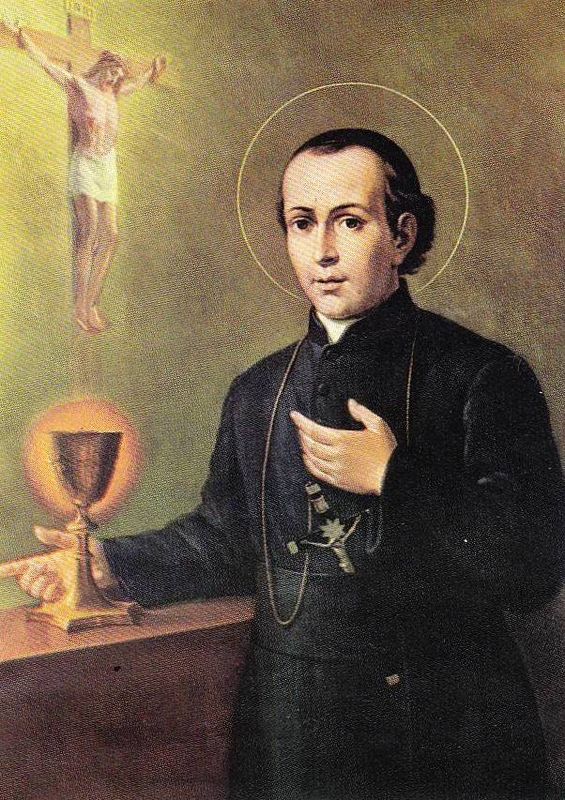
Saint Gaspard del
BUFALO
Nom: BUFALO
Prénom: Gaspard del
Pays: Italie
Naissance:
06.01.1786 à Rome
Mort: 28.12.1837
Etat: Prêtre - Fondateur
Note:Prêtre le
31.07.1807. Prédicateur de missions populaires (sur désir de Pie VII) pour
lesquelles il fonde l'Institut des Prêtres du Précieux Sang (1814) et inspire
la fondation des Sœurs de l'Adoration du Précieux Sang par Sainte Marie
de Mattias 2 pour
l'éducation des jeunes filles.
Béatification:
18.12.1904 à Rome par Pie X
Canonisation:
12.06.1954 à Rome par Pie XII
Fête: 28 décembre
Réf. dans l’Osservatore
Romano:
Réf. dans la Documentation
Catholique: 1954 col.847-855
SOURCE : http://www.abbaye-saint-benoit.ch/hagiographie/fiches/f0077.htm
Saint Gaspard Del
Bufalo
Saint Gaspard Del
Bufalo est le fondateur des Missionnaires du Précieux Sang, il fut toute
sa vie un ardent apôtre de cette dévotion. C'est cette congrégation qui a
propagé le Chapelet du Précieux Sang.
Né à Rome le 6 Janvier
1786, Ses parents se nomment Antonio et Annunziata Quartieroni. Dès les
premières années de sa vie, il est attiré par la prière et la pénitence, il
tente de fuir de la maison familiale pour aller évangéliser les païens, rêvant
de mourir martyr. Il est particulièrement intéressé par saint François Xavier
et il se sent pendant un certain temps appelé par les jésuites, il fréquente
l'église du Gésu qui se situe près de chez lui. Ayant terminé ses études au
Collège romain, en 1798 il prit l'habitude donner aux œuvres pour organiser
l'aide spirituelle et assistance matérielle pour les nécessiteux. Il fut à
l'origine de la renaissance de l'opéra de Saint Galla et en fut élu directeur
en 1806.Ordonné prêtre le 31 Juillet 1808, il intensifia l'apostolat parmi les
classes populaires et fonda le premier oratoire de S. Maria in Pincis, pour
l'évangélisation des charretiers et les paysans de la province romaine, qui ont
leurs dépôts de foin dans le Forum Romain. L'Eglise, à cette époque, vit des
moments difficiles : dans la nuit du 5 au 6 Juillet 1809, Pie VII est fait
prisonnier et déporté. Le 13 Juin 1810, Gaspard refuse le serment de fidélité à
Napoléon et est condamnée à l'exil, puis à la prison. De retour à Rome en 1814,
après la chute de Napoléon, il met sa force et sa vie à servir le pape. Pie VII
lui donne l'ordre de se consacrer aux missions populaires pour la restauration
de la religion et la morale. Comme moyen de promouvoir l'efficacité de la
conversion des pécheurs, pour éliminer l'esprit d'impiété et irréligion, il
choisi la dévotion au Très Précieux Sang de Jésus et en devient un ardent
apôtre. Le 15 août 1815, il fonde la Congrégation des Missionnaires du Précieux
Sang, qui auront des hommes de grande sainteté comme le Serviteur de Dieu Jean
Merlini, Jean Mastai Ferretti, le futur Pie IX. En 1834, il aide à la fondation
des Sœurs Adoratrices du Sang du Christ, avec sainte Maria De Mattias, Il
combattit les sociétés secrètes, en particulier la maçonnerie, en dépit des
menaces et des attaques sur sa propre vie, il ne cessa de prêcher ouvertement
contre ces sectes, terrain fertile pour la laïcité athée. Mais un autre fléau
se propageait sur les états pontificaux, comme d'ailleurs aussi d'autres
régions: le brigandage. Léon XII, sur les conseils du Cardinal Belisario
Cristaldi, leur envoya Gaspard, avec pour seules armes le crucifix et la
miséricorde évangélique, il réussi à réduire le terrible fléau sur la
périphérie de Rome et à rétablir la paix et la sécurité parmi la population. Il
mourut à Rome le 28 Décembre 1837. Saint Vincent Pallotti vit son âme monté au
ciel sous la forme d'une étoile et Jésus venir le chercher.
CANONISATION ET FÊTE
Béatifié par Saint Pie X
18 décembre 1904.
Canonisé par le pape Pie
XII le 12 juin 1954.
Son corps repose à Rome
en l'église de Santa Maria in Trivio, qui se trouve près de la fontaine de
Trévi.
Sa fête est fixée le 28
décembre.
http://fr.wikikto.eu/index.php/Gaspard_del_Bufalo
SOURCE : http://alexandrina.balasar.free.fr/gaspare_del_bufalo.htm

Saint Gaspard (Gaspare) del Bufalo
Prêtre et Fondateur des « Missionnaires du Précieux Sang »
Gaspare del Bufalo naît à
Rome le 6 Janvier 1786 de Antonio et Annunziata Quartieroni.
Dès les premières années
de sa vie, il est attiré par la prière et la pénitence, il tente de fuir de la
maison familiale pour aller évangéliser les païens, rêvant de mourir martyr. Il
est particulièrement intéressé par saint François Xavier et il se sent, pendant
un certain temps, appelé par les jésuites ; il fréquente l'église du Gesù
qui se situe près de chez lui.
Ayant terminé ses études
au Collège romain, en 1798 il prit l'habitude de donner aux œuvres pour
organiser l'aide spirituelle et assistance matérielle pour les nécessiteux. Il
fut à l'origine de la renaissance de l'opéra de sainte Galla et en fut élu
directeur en 1806.
Ordonné Prêtre le 31
Juillet 1808, il intensifia l'apostolat parmi les classes populaires et fonda
le premier oratoire de S. Maria in Pincis, pour l'évangélisation des
charretiers et les paysans de la province romaine, qui ont leurs dépôts de foin
dans le Forum Romain.
L'Église, à cette époque,
vit des moments difficiles : dans la nuit du 5 au 6 juillet 1809, le pape Pie
VII (Barnaba Chiaramonti, 1800-1823) est fait prisonnier et déporté.
Le 13 Juin 1810, Gaspard
refuse le serment de fidélité à Napoléon et est condamnée à l'exil, puis à la
prison.
De retour à Rome en 1814,
après la chute de Napoléon, il met sa force et sa vie à servir le pape. Pie VII
lui donne l'ordre de se consacrer aux missions populaires pour la restauration
de la religion et la morale.
Comme moyen de promouvoir
l'efficacité de la conversion des pécheurs, pour éliminer l'esprit d'impiété et
irréligion, il choisi la dévotion au Très Précieux Sang de Jésus et
en devient un ardent apôtre.
Le 15 Août 1815, il fonde
la Congrégation des « Missionnaires du Précieux Sang », qui auront
des hommes de grande sainteté comme le serviteur de Dieu Jean Merlini, Jean
Mastai Ferretti, le futur Pie IX.
En 1834, il aide à la
Fondation des « Sœurs Adoratrices du Sang du Christ », avec sainte
Maria De Mattias.
Il combattit les sociétés
secrètes, en particulier la maçonnerie, en dépit des menaces et des attaques
sur sa propre vie, il ne cessa de prêcher ouvertement contre ces sectes,
terrain fertile pour la laïcité athée.
Mais un autre fléau se
propageait sur les états pontificaux, comme aussi dans d'autres régions: le
brigandage.
Léon XII (Annibale
Sermattei Della Genga, 1823-1829), sur les conseils du Card. Belisario
Cristaldi, leur envoya Gaspard, avec pour seules armes le Crucifix et la
Miséricorde évangélique, qui réussi à réduire le terrible fléau sur la
périphérie de Rome et à rétablir la paix et la sécurité parmi la population.
Il meurt à Rome le 28
Décembre 1837. St Vincent Pallotti vit son âme monter au Ciel sous la forme
d'une étoile et Jésus venir le chercher.
Son corps repose à Rome
en l'église de Santa Maria in Trivio, qui se trouve près de la fontaine de
Trévi.
Gaspare del Bufalo a été
Béatifié, le 18 Décembre 1904, par Saint Pie X (Giuseppe Melchiorre Sarto,
1903-1914) et Canonisé, le 12 Juin 1954, par le vénérable Pie XII (Eugenio
Pacelli, 1939-1958).
©Evangelizo.org
©Evangelizo.org 2001-2016

Saint
Henry Catholic Church , Ohio
_-_stained_glass%2C_nave%2C_Saint_Gaspar_del_Bufalo_preaching_a_mission.jpg)
Saint
Henry Catholic Church , Ohio
Also
known as
Apostle of Rome
Caspar Bufalo
Caspar del Bufalo
Gaspare del Bufalo
Hammer of Italian
Freemasonry
Kasper del Bufalo
Martello dei Carbonari
formerly 21 October
28 December on
some calendars, and all of them before 1962
Profile
Son of Antonio del
Bufalo, a chef to Prince Altieri,
and Annunziata Quartieroni. As an infant he
suffered from an eye condition
that threatened to blind him;
he was cured in 1788 following prayers for
the intervention of Saint Francis
Xavier. Studied at
the Collegium Romanum from age twelve, and considered becoming
a Jesuit.
President of the newly instituted catechetical school of Santa
Maria del Pianto at age 19. Ordained on 31 July 1808.
On 23
October 1808 he,
with his friends Father Bonanni, Father Santelli
and Father Gonnelli,
founded the nocturnal Oratory of Saint Mary in Vinci, Italy.
On 8
December 1808 he
helped Father Albertini
found the Confraternity of the Precious Blood in San Nicola
Arcella, Italy.
Following Rome‘s
fall to the French in 1809,
the Papal
States were suppressed on 17 May, Pope Pius VII was
deported on 6 July,
and priests were
ordered to take an oath of loyalty to Napoleon. Gaspare refused, and on 13 June 1810 was exiled for
five years with many other priests first
to Piacenza, Italy,
and then Bologna, Italy.
On 13
September 1811 he
refused a second time to take the oath; he was lodged in
San Giovanni prison,
then the prison of Imola, Italy and
then the fortress in Imola.
A third refusal led to his transfer to the fortress in Lugo, Italy on 16 May 1813.
Following a fourth refusal, on 10 December 1813,
he was sentenced to exile in Corsica.
While waiting for transport in Florence, Italy he
received an invitation to join the Evangelical Workers, a group of priests who preach home
missions. Though it was questionable at the time that he could help them,
Gaspare enthusiastically joined. Less than a month later, Murat restored
liberty to all priests who
had been arrested or exiled for
refusing to take the oath. In February 1814,
Gaspare returned to Rome, Italy after
four years of captivity,
and in December he began preaching missions.
In July of 1815,
Gaspare renounced his position as canon of
Saint Mark’s in order to concentrate on missions.
He helped formally start the Missioners
of the Precious Blood (C.P.P.S.) in 1815 at
Giano dell’Umbria, Italy,
a congregation devoted to preaching and
to bring the sacraments back to war-torn Italy;
it was under the patronage of Francis
Xavier. Many houses were established in the next few years, and on 27 December 1817 Gaspare
was elected First Promotor and Missionary of the Missioners.
Many opposed his good work, and spoke against him to Pope Leo XII and Pope Pius
VIII, but after they spoke to him personally, both approved of his work.
In 1821 Pope Pius VII assigned
Gaspare to clean up provinces overrun with highway bandits, and to open six
mission houses in the area; Gaspare spent the next five years in the pulpit,
call for reform. In February 1826 he
was chosen papal nuncio
to Brazil.
Gaspare begged to be released from the assignment so he could continue to preach,
but was forced to spend eight months in the position. He then returned to his
Congregation’s motherhouse of San Felice in October 1826,
and resumed preaching and
tending to the Missionaries‘s houses for his last ten years.
Born
buried at
Santa Maria in Trivio, Italy
19 March 1891 by Pope Leo XIII (decree
of heroic
virtues)
18 December 1904 by Pope Saint Pius
X
Additional
Information
Catholic
Encyclopedia, by Ulrich F Mueller
Saints
of the Day, by Katherine Rabenstein
The
Holiness of the Church in the 19th Century
books
John Paul II’s Book of
Saints, by Matthew Bunson and Margaret Bunson
Our Sunday Visitor’s Encyclopedia of Saints
other
sites in english
Father
Jeffrey Keyes, C.PP.S.Hagiography
Circle
images
video
webseiten
auf deutsch
sitios
en español
Martirologio Romano, 2001 edición
sites
en français
fonti
in italiano
Dicastero delle Cause dei Santi
websites
in nederlandse
nettsteder
i norsk
MLA
Citation
“Saint Gaspare
Bufalo“. CatholicSaints.Info. 27 June 2023. Web. 29 December 2025.
<https://catholicsaints.info/saint-gaspare-bufalo/>
SOURCE : https://catholicsaints.info/saint-gaspare-bufalo/
St. Caspar del Bufalo
Feastday: January 2
Birth: 1786
Death: 1837
St. Caspar del Bufalo was
the Founder of the Missioners of the Precious Blood. His feast day is January
2nd. Caspar, who was born in Rome, the son of a chef, in 1786, was ordained
a priest in
1808. Shortly after this, Rome was
taken by Napoleon's army, and he, with most of the clergy was exiled for
refusing to abjure his allegiance to the Holy See. He returned after the fall
of Napoleon to find a wide scope for work, as Rome had
for nearly five years been almost entirely without priests and sacraments.
In 1814 he founded the
Congregation of the Most Precious Blood and
in 1815, it was formally approved. The second foundation was
made in 1819 and the third shortly afterwards at Albano. His wish was to have a
house in every diocese, the most neglected and wicked town or district being
chosen. The Kingdom of Naples in
those days was a nest of crime of every kind; no one's life or property was
safe, and in 1821 the pope asked del Bufalo to found six houses there. He
joyfully responded but met with endless difficulties before subjects and funds
were collected.
Grave difficulties arose
under Pope Leo XII; but these were cleared up, and in 1824, the houses of the
congregation were opened to young clergy who wished to be trained specially as
missioners. In his lifetime, their work covered the whole of Italy.
Del Bufalo's biographer
gives us a graphic account of a mission, describing its successive stages. Some
of his methods were distinctly dramatic, e.g. the missioners took the
discipline in the public piazza, which always resulted in many conversions. On
the last day, forbidden irearms, obscene books, and anything else that might
offend Almighty God, were publicly burnt. A cross was erected in memoriam, a
solemn Te Deum sung, and the missioners went away quietly.
His last mission was
preached in Rome at
the Chiesa Nuova during the cholera outbreak of 1836. Feeling his strength failing,
he returned at once to Albano, and made every preparation for death. He
suffered terribly from cold, and at night from parching thirst, but he would
not take anything to drink, so that he might be able to celebrate Mass. After
the feast of St. Francis
Xavier he went to Rome to
die. On December 19, the doctor forbade
him to say Mass; he received the last sacraments on
December 28, and he died the same day.
Various miracles had been
worked by Don Caspar during his lifetime, and after his death many graces were
obtained by his intercession. He was canonized in 1954.
SOURCE : https://www.catholic.org/saints/saint.php?saint_id=340
New
Catholic Dictionary – Blessed Caspar del Bufalo
Article
(1786-1837) Confessor,
founder of the Congregation of the Most Precious Blood, born Rome; died there.
He studied at the Roman College and after ordination, 1808,
obtained a canonry at Saint Mark’s. Banished and imprisoned, 1810–1814,
for refusing to swear allegiance to Napoleon, he returned to Rome and
established, 1815,
a congregation of secular-priests to give missions and spread devotion to the
Most Precious Blood. He devoted himself to suppressing brigandage in the
mountains of Albano, and his labors throughout central Italy merited
for him the titles of “Hammer of Freemasonry,” and “Apostle of Rome.”
Beatified, 1904.
Buried in San Maria in Trivio. Feast,
C.PP.S., 29
December.
MLA
Citation
“Blessed Caspar del
Bufalo”. New Catholic Dictionary. CatholicSaints.Info. 9
September 2012.
Web. 29 December 2025.
<http://catholicsaints.info/new-catholic-dictionary-blessed-caspar-del-bufalo/>
SOURCE : https://catholicsaints.info/new-catholic-dictionary-blessed-caspar-del-bufalo/
Saints of the
Day – Caspar del Bufalo
Article
(also known as Gaspare)
Born in Rome, 1786; died
in Rome on December 28, 1837; beatified in 1904; canonized in 1954 by Pope Pius
XII; feast day formerly December 28. Saint Caspar was the son of a cook. He was
educated at the Collegio Romano and ordained in 1808. After Napoleon Bonaparte
captured Rome, Caspar was banished to Corsica for five years with the other
clergy who refused to swear allegiance to Napoleon and renounce allegiance to
Pope Pius VIII. On his return in 1814, he became a general missioner engaged in
pastoral work because of the decline in religion due to the absence of priests
and the sacraments for five years.
While conducting a
mission at Giano (near Spoleto), he conceived the idea of founding a
congregation for mission work. He began immediately to realize this concept
even in the face of considerable difficulties. Starting with a house at Giano
and the help of Cardinal Cristaldi, in 1815, he received formal approval for
the Missionaries of the Most Precious Blood from Pope Pius VII. The pope gave
him the house in Giano and the adjoining church of San Felice. In addition to
the house at Giano, Caspar founded houses at Albano in 1819, and, despite
tremendous problems, six in the Kingdom of Naples. Caspar’s dream was to have a
house in every diocese and to evangelize the world. In time, the congregation
did spread all over Italy.
Caspar encountered
difficulties under Pope Leo XII; but these were cleared up and, in 1824, the
houses of the congregation were opened to young clergy who wished to be trained
specially as missioners. Their training included the encouragement of devotion
to Jesus and Mary. “A missioner,” Caspar said, “must be ready for anything:
like soldiers and sailors, they must never surrender.” Therefore, he required
not only devotion in his recruits, but also intense study of foreign languages,
theology, and scripture.
He was also active in
charitable works for the needy of all backgrounds, including the establishment
of institutions. Saint Caspar’s missionary methods were dramatic in a high
degree: the contemporary Saint Vincent Strambi said of his preaching that it
was ‘like a spiritual earthquake.’ Indeed, some of the methods his missioners
used were dramatic: they flagellated themselves in the public square, which
always resulted in many conversions. On the last day forbidden firearms,
obscene books, and anything else offensive would be burned publicly. A cross
would be raised in memoriam, a solemn Te Deum sung, and then the missioners
would leave quietly.
He died in the cholera
epidemic of 1836, during which he had given his last mission in Rome at the
Chiesa Nuova. Feeling his strength failing, he returned to Albano and prepared
for death. He asked to be left alone as much as possible, so that he might pray
uninterruptedly. After the feast of Saint Francis Xavier, he went to Rome to
die. On December 19, the doctor forbade him to say Mass; he received the last
sacraments on December 28 and died that same day. He is buried at Santa Maria
in Trivio. Miracles were recorded during his life and after his death
(Attwater, Benedictines, Delaney, Farmer, Walsh).
MLA
Citation
Katherine I
Rabenstein. Saints of the Day, 1998. CatholicSaints.Info.
13 May 2020. Web. 29 December 2025.
<https://catholicsaints.info/saints-of-the-day-caspar-del-bufalo/>
SOURCE : https://catholicsaints.info/saints-of-the-day-caspar-del-bufalo/
St. Gaspare del Bufalo
Founder of the Missionaries
of the Most Precious Blood (C.P.P.S.); b. at Rome on
the feast of
the Epiphany,
1786; d. 28 December, 1837.
His parents were
Antonio del Bufalo, chief cook of the princely family of
Altieri, and his wife Annunziata Quartieroni. Because of his delicate health,
his pious mother
had him confirmed at the tender age of one and a half years (1787). As he was
suffering from an incurable malady of the eyes, which threatened to leave him
blind, prayers were
offered to St.
Francis Xavier for his recovery. In 1787, he was miraculously cured,
wherefore he cherished in later life a special devotion to the great Apostle
of India,
and selected him as the special patron of
the congregation which he founded. From his earliest years he had a great
horror of even venial sins and
showed deep piety,
a spirit of mortification,
remarkable control over his evil inclinations
(especially his innate irascibility and strong self-will), and also
heroic love for
the poor and
the miserable. Having entered the Collegium Romanum at the age of twelve he
received in 1800 first tonsure,
and one year later the four minor
orders. As catechetical instructor
at St. Mark's, his zeal won
for him the name "The Little Apostle of Rome", and when but nineteen
years old, he was appointed president of the newly instituted catechetical school of
Santa Maria del Pianto.
After his ordination (31
July, 1808), he obtained a canonry at
St. Mark's, and soon instituted with Gaetano Bonani a nocturnal oratory.
He assisted Francesco Albertini in founding the Archconfraternity
of the Most Precious Blood, and worked with great zeal in
the poorer districts of Rome,
preaching frequently in the market-places. In 1810 he was summoned before
General Miollis to swear allegiance to Napoleon.
But neither threats nor promises could induce him to do so, because Pius
VII had forbidden it. The words with which he announced his final
decision have become famous: "Non posso, non debbo, non voglio" (I
cannot, I ought not; I will not). In consequence he suffered banishment, and
later on imprisonment in
the foul dungeons of Imola and
Rocca (1810-1814). After Napoleon's fall
he returned to Rome,
intending to enter the re-established Jesuit
Order. But obeying his spiritual
adviser, Albertini, he founded a congregation of secular
priests to give missions and spread devotion to
the Most
Precious Blood. Through Cardinal Cristaldi he obtained the pope's sanction and,
as a mother-house, the former convent of
San Felice in Giano. Of this he took solemn possession,
11 August, 1815. The Bull of beatification says,
"Through Umbria, Aemilia, Picenum, Tuscany,
Campania, Samnium, in short all the provinces ot Middle Italy he
wandered, giving missions". The very titles accorded to him by his contemporaries
speak volumes: "II Santo", "Apostle of Rome", "Il
martello dei Carbonari" (Hammer of Italian
Freemasonry).
How arduous some of his
missions were may be gleaned from the fact that he frequently preached five
times daily, sometimes even oftener. At Sanseverino fifty priests were
not sufficient to hear confessions after
his sermons.
Though idolized by the people, he was not without enemies. His activity in
converting the "briganti", who came in crowds and laid their guns at
his feet after he had preached to them in their mountain hiding-places, excited
the ire of the officials who profited from brigandage through bribes and
in other ways. These enemies almost induced Leo
XII to suspend del
Bufalo. But after a personal conference, the pope dismissed
him, remarking to his courtiers, "Del Bufalo is an angel".
His enemies next tried to remove him from his post by procuring his promotion
as "internuncio to Brazil".
In vain, however, for his humility triumphed.
A last attempt under Pius
VIII (1830) met with temporary success. Del Bufalo was deprived of
faculties for a short time,
and his congregation threatened with extinction. But his wonderful humility again
manifested itself, and, though himself misjudged and his life-work menaced by
the very authority that should have supported him, he showed no signs of resentment,
forgave his enenies, and excused his unmerited condemnation. The storm soon
passed, Gaspare was restored to honour,
and resumed his work with renewed zeal.
In 1836 his strength
began to fail. Although fatally ill, he hastened to Rome,
where the cholera was raging, to administer to the spiritual wants of the
plague-stricken. It proved too much for him, and he succumbed in the midst of
his labours on 28 Dec., 1837. He was beatified by Pius
X on 29 Aug., 1904.
He was canonized by
Pope Pius XII in 1954.
Müller,
Ulrich. "St. Gaspare del Bufalo." The Catholic
Encyclopedia. Vol. 6. New York: Robert Appleton
Company, 1909. 28 Dec.
2019 <http://www.newadvent.org/cathen/06390b.htm>.
Transcription. This
article was transcribed for New Advent by Joseph P. Thomas.
Ecclesiastical
approbation. Nihil Obstat. September 1, 1909. Remy Lafort,
Censor. Imprimatur. +John M. Farley, Archbishop of New York.
Copyright © 2021 by Kevin
Knight. Dedicated to the Immaculate Heart of Mary.
SOURCE : http://www.newadvent.org/cathen/06390b.htm
The
Holiness of the Church in the Nineteenth Century – Blessed Caspar del Bufalo
The capital of
Christendom has the happiness of seeing raised to its altars one of her sons of
the nineteenth century, the Blessed Caspar del Bufalo, canon of Saint Mark and
founder of the Congregation of the Missionaries of the Precious Blood. He was
born on 6 January 1786, the son of the head cook of the Altieri Palace in Rome.
The child being threatened with total blindness, his mother, strong in faith,
brought her affliction to Saint Francis Xavier and obtained an almost instant
cure. This was the reason that Caspar preserved during his whole life a tender
and trustful devotion to the Apostle of the Indies and Japan, and always kept
before his eyes the apostolic zeal of Xavier as an ideal which he strove with
all his might to reach. He was one of those chosen souls who at the very dawn
of reason consider all things in the light of faith and arrive early at
maturity of virtue. His pious mother narrated to her beloved child the life of
Saint Aloysius in all its detail. It spurred the little boy to imitation. Where
other children are fond of play, he sought enjoyment in prayer either at home
or in the Gesu nearby. Though but a child, he scourged himself thrice in the
week, wore a chain, observed certain days of fasting, and slept on the floor
during the night between Thursday and Friday. Enlightened by grace, he was already
aware of the necessity and the high reward of penance. After making his first
communion at the age of eleven he received the Holy Eucharist three or four
times each week and always at the altar of Saint Francis Xavier in the Gesu,
where he daily served Mass. He preached at home, repeating what he had heard at
the church. It was his most heart-felt desire to go among the Turks with the
hope of dying for the Faith.
Caspar del Bufalo studied
at the Roman College, then conducted by secular priests. At fourteen he
received the tonsure and soon obtained permission to instruct children in
catechism, and occasionally to preach. All was going on well with him, he had
become deacon when suddenly an indescribable anxiety came upon him concerning
the dignity of the priesthood and he could not make up his mind what to do. But
the Venerable Vincent Strambi banished the uneasiness of his delicate
conscience and on 31 July 1808, he was ordained. He became canon at Saint
Mark’s and entered at once into the labors of an apostle.
Meanwhile, Napoleon
ordered Pius VII to be led away a captive and demanded from priests the oath on
the Constitution which annexed the Papal States to France. Del Bufalo, of
course, remained faithful to the head of the Church and was therefore exiled to
Piacenza and thence to Bologna.
Two years after, in 1812,
he was imprisoned in San Giovanni in Monte for having persevered in refusing
the oath. Twice his prison was changed and at last he was listed for
transportation to Corsica, when Heaven’s chastisement overtook Napoleon. In
spite of the many and severe sufferings of those years it always remained a
sweet memory to Blessed Caspar that he had endured banishment and prisons for
Christ.
On 7 August 1814, Pius
VII restored the Society of Jesus. The former members of the Order yet living
gathered gladly under the banner of Saint Ignatius, overjoyed to have lived
until this happy day. Caspar del Bufalo had grown up in the shadow of the Gesu
and was most intimate with the old Jesuit fathers. Francis Xavier was his
ideal. No wonder then that he soon formed the resolution to enter the Order. He
had already been received along with Prince Charles Odescalchi when Pius VII
sent for the two good priests and ordered Odescalchi to take up the career of a
prelate, while Del Bufalo, who had high repute as a successful preacher, was to
devote himself at once to missions among the people. To preach Christ to the
world was exactly what the canon of Saint Mark’s most desired, and now that the
Vicar of Christ had chosen him for this office it was to him the will of God.
Nor did Pius VII fail in choosing the right man. Del Bufalo’ s preaching had
mighty results. He was a man of no extraordinary oratorical gifts, his language
and thought being as plain as possible, and at school he did not rise above
mediocrity. But it was the tremendous earnestness, the profound conviction with
which he spoke and, at the same time his gentleness, his unction, that laid
hold of his hearers. The Venerable Strambi called his preaching “a spiritual
earthquake.” A gray old sinner avowed after confession that of the whole sermon
he had understood only one word: “Paradise,” but that the ardor, gesture, and
voice of Del Bufalo thrilled his heart.
His repute for sanctity
contributed much to this success. His untiring zeal, his love of prayer, and
his ardent devotion during the Holy Mass could not be hidden – much less could
he hide the gift of miracles that God had given him. He made extraordinary
conversions and foretold future events. His biographer cites witnesses who saw
him in different places at the same time.
From the first, Del
Bufalo had several priests working with him. There occurred to them
spontaneously the idea of forming a Congregation. They took the name of
“Missionaries of the Most Precious Blood.” They desired by promoting devotion
to the Most Precious Blood to excite a greater appreciation of the grace of
redemption. The Church owes the Feast of the Precious Blood to the suggestion
of Del Bufalo. Pius VII was very favorable to the young society. They soon
opened many houses and the great missionary activity of their founder brought
them a high reputation. But everything good must have its trials. Leo XII had
been misinformed and was little inclined toward the Society. When Del Bufalo
had his first audience, however, the condition of affairs changed. “I found him
an angel,” declared the Pope afterward. Nor did Pius VIII show himself
agreeable to the plan of the new Congregation. These were hard days for the
Servant of God. It also hindered his external activities. He employed this
leisure in perfecting his subjects and in consolidating the spirit of the young
society. Only under Gregory XVI did things change permanently for the better.
With the co-operation of
Del Bufalo, the Venerable Maria de Mattias founded a branch of the Congrega-
tion for women – “Sisters of the Adoration of the Precious Blood.” Both
Congregations have proved vigorous and have spread beyond Italy into the United
States.
The health of Blessed
Caspar had always been feeble. No one was surprised, therefore, when, on
December 28, 1837, he succumbed to the hardships of his apostolic life when
only fifty-seven years of age. Heaven immediately began to manifest the
sanctity of the deceased by miracles. In 1904, Pius X declared him Blessed.
– this text is taken
from The Holiness of the Church in the Nineteenth
Century: Saintly Men and Women of Our Own Times, by Father
Constantine Kempf, SJ; translated from the German by Father Francis Breymann,
SJ; Impimatur by + Cardinal John Farley, Archbishop of New York, 25 September
1916
ST. GASPAR: Founder of the Society of the Precious Blood
St. Gaspar founded the
Society of the Precious Blood in Giano, Italy, on August 15, 1815. Here, in the
10th century abbey of San Felice, our founder opened the gates of an ardent
devotion to the Precious Blood of Christ.
The preamble of the
C.P.P.S. constitution captures this new beginning:
Impelled by the love of
Christ, manifested especially in the shedding of his Blood, and sensitive to
the needs of the Church, St. Gaspar del Bufalo founded a priestly institute. He
attracted from the diocesan clergy a group of like-minded priests and unity
them by a bond of charity only, instead of vows. Living together in mission
houses, they were a source of continual renewal for the priests and the people,
mainly by preaching missions and retreats.
In this nucleus the
Society of the Precious Blood had its origin and from it derives its spirit.
Gaspar was born in Rome
on January 6, 1786. His father, Antonio, was a servant in the family of a
prince. He was a pious man of firm faith who was a staunch defender of the Holy
Father. Gaspar's mother, Annunziata, was one of those quiet and saintly women
who seem to model her life and faith after the holy women of the Scriptures.
She realized early in Gaspar's life that God had great things in store for him.
She raised her son in virtue and holiness, readying the soil for God to plant
within Gaspar a deep and abiding devotion to the Blood of Christ.
Early in his life, Gaspar
showed a great concern for the poor and sick. Perhaps because he came from
family of meager means and because he himself had been a sickly child (almost
dying at the age of two, only to be cured through the intercession of St.
Francis Xavier), Gaspar's compassion for the poor and outcasts consumed him. He
spent his summer vacations as a youth visiting hospitals and bringing meals to
the hungry.
When he was eighteen,
Gaspar exhibited one of his greatest gifts: organizing for action on behalf of
the `people on the fringe'. Together with some of his classmates, Gaspar
ministered to the marginalized: offering religious instruction to the peasants
from rural areas who came to Rome to sell their hay; providing catechism for
orphans and children of the poor; and setting up a night shelter for the
homeless.
Gaspar was ordained July
31, 1808. Less than a year later, on May 17, 1809, Napoleon suppressed the
papal states. Pope Pius VII was arrested and transported to Savona. On June 13,
1810, Gaspar was brought before the magistrate to take the oath of allegiance
to the emperor. In words that echo the Gospel of John when Jesus said "the
truth will set you free", Gaspar told the magistrate: "I would rather
die or suffer evil than to take such an oath. I cannot. I must not. I will
not."
For the courage of his
conviction, Gaspar was sentenced to prison. But even though his body was
incarcerated, the truth had set his spirit free. Although the conditions of the
prison caused his health to deteriorate, his mind and heart continued to
expand. A dream was about to be born.
During his exile,
Gaspar's compassion deepened. Though he had been about works of mercy for most
of his life, in the silence of his cell this work was clearly defined by the
Precious Blood of Christ. In the solitude of exile, the vision became clear: to
continue the works of mercy and the evangelization in the context of community.
He would join forces with other men and women united in the bond of charity to
touch others with the redeeming grace of the blood of Jesus.
Napoleon was defeated in
January 1814 and Gaspar was free to return to Rome to begin his mission as
apostle of the Precious Blood. He had spent four years in exile and
imprisonment, but his enthusiasm had not waned. He came back to a city,
however, that was in chaos. In the aftermath of Napoleons occupation, the
Church in Rome was experiencing great trial. So the pope appointed Gaspar to
preach missions throughout the city and the surrounding countryside for the
spiritual renewal of the people. In response to the Holy Father's request,
Gaspar drew upon the rich resources of two of his mentors, Frs. Albertini and
Bonnani, to begin the society of apostolic life.
It was Gaspar's vision to
wed the spirituality of the Precious Blood with the concept of a community for
the apostolic works of mercy. This sacred union gave birth to the Society of
the Precious Blood that would "proclaim peace through the blood of the
cross."
St. Gaspar brought
devotion to the Blood of Christ out of the sanctuary and into the streets. His
preaching was rooted in the saving act of Christ on the cross and so he carried
the crucifix close to his heart. Indeed, the mission cross became the symbol of
the newly formed community.
Gaspar's words and
witness became the wings to lift the burden of sin from the hearts of his
listeners. He called people to reconciliation; to restore the right
relationship with God and others. The power of Gaspar's presence and preaching
was found most dramatically in his work with the bandits.
The year was 1821 and at
that time there was a severe problem in the papal states. The bandits had
control over many of the towns in the coastal provinces. It was a time of great
lawlessness and many towns were out of the control of the civil authorities.
One town, Sonnino, was so bad that the government had given up completely and
had become so desperate that they decided to destroy the whole town. The people
were suppose to move out, although they were to be compensated for their loss
of property, and the plan was to level the town. A number of houses were
demolished before the people's outcry forced the authorities to stop. Sonnino
was just one of many problem places.
At that time there was a
Cardinal Cristaldi who was a great admirer of St. Gaspar. He was also the papal
treasurer and advisor to Pope Pius VII. He had a plan which he presented to the
pope to deal with the bandits. His plan was to fight the immorality and
savagery of the bandits, not with weapons, because that had been tried and
failed, but with spiritual forces. He suggested that St. Gaspar and his new
band of missionaries go into the towns and provinces where the bandits lived
and establish mission houses. There they were to preach the Word, establish
churches and chapels, and see to the continued instruction of the people.
And that is what the
young missionary society did. Between 1821 and 1823 six new mission houses were
opened. Each house was to have five missionaries and each team was to conduct
12 missions a year. In that way every town would hear the message of redemption
and reconciliation during a two year cycle. From these houses St. Gaspar and
his companions went out and preach the merits of the Precious Blood. They
called the people to repentance and to return to faithfulness. They would preach
on the street corners at night. They instructed the children. Armed with only
the crucifix, they went into the hills to seek out the bandits to win them
over. Crazy—but it worked. In two years the bandit problem was under control.
Gaspar was well loved by
those who had encountered his ministry and was very popular in his native city.
To this day he remains a popular hero in Rome and devotions to the saint are
very popular. However, Gaspar and his young society encountered substantial
opposition within the political workings of the Church. One major objection to
the new society was that its name, The Society of the Precious Blood, was
considered unecclesiastical. Gaspar was accused of disregarding Canon Law and
the mission cross and chain that the members wore was completely untraditional.
This opposition began under the reign of Pope Pius VII (around 1820) who had
been a strong support of the society at its founding in 1815.
This opposition became so
strong that the successor to Pius VII, Leo XII was positively adverse to the
community. It is noted that this was at a time when Gaspar was being more and
more open in his criticism of abuses in the Church and the government of the
Papal States. St. Gaspar felt that this opposition was more of a personal attack
on himself and so he offered to step down as moderator of the community so that
things could be smoothed over. Fortunately, this was not needed as the
situation with Leo XII was resolved after a meeting between the two of them.
This was not the end of
Gaspar's difficulties. The enemies of Gaspar merely changed their tactics to
trying to have him removed from Rome. First they tried to have him made a
bishop. This Gaspar begged to be excused from. Then they tried to have him
removed from Rome by having him named Inter Nuntius to Brazil. It was a very
difficult time for Gaspar until his refusal was accepted. Finally Leo XII
appointed Gaspar to the Congregation for the Propagation of the Faith, which
required his residence in Rome.
After Leo XII died in
1828 the enemies of the community went to work on his successor, Pius VIII.
Pius VIII believed all the old accusations and treated Gaspar very severely in
a private audience. He removed all the privileges for the community from him,
including all the financial help that had been assigned for mission work. It is
a testament to Gaspar's conviction that the community was inspired by divine
will, that this was not the end of the community. Instead, Gaspar withdrew to
one of the houses and drew up a document giving legal proof of the legitimate
existence granted to the community by Pius VII. The opposition continued
throughout the life of Gaspar and the Rule was not approved until after his
death.
Gaspar died on December
28, 1837. The medical report called him a "victim of charity" because
even though he was in ill health himself, he ministered to the victims of the
cholera epidemic that broke out in Rome. Gaspar was beatified in 1904 and
canonized a saint on June 12, 1954.
Sources:
"St. Gaspar—the Man,
the Mission, the Dream". Joe Nassal, CPPS; Pathfinder, Vol. 2, No. 2,
November, 1989.
"Society Celebrates
175 Years of Service". Tom Conway, CPPS; CPPS Tomorrow, Vol. 6, No. 1,
September, 1990.
History of the Society of
the Precious Blood. Isidore Oberhauser, CPPS; 1929.
Blessed Gaspar del
Bufalo. Anonymous; Messenger Press, Carthegena, OH, 1933.
Scriptures for
Reflection—
Matthew 5:3-16
Matthew 25: 31-46
Luke 10: 1-20
Questions for Reflection—
Gaspar was a man with a
heart that brimmed with love for the poor and sick. He saw Christ in those with
needs. How does my life of discipleship respond to those in need? Who are the
needy in my parish or community and what is my response to them?
Gaspar was a Missionary
and formed a missionary society that wed the devotion to the Precious Blood to
the apostolic life. How am I called to be missionary? What mission has God
given to me?
Gaspar was a man of firm
convictions who suffered imprisonment and exile for his loyalty to the papacy.
He was attacked personally because of his persistence in believing in his
mission to found a religious community dedicated to the Precious Blood. What
would I be willing to sacrifice for my faith and beliefs?
Provided Courtesy of:
Eternal Word Television
Network
5817 Old Leeds Road
Irondale, AL 35210
SOURCE : http://www.ewtn.com/library/MARY/GASPAR.htm
St. Gaspar del Bufalo,
Apostle of the Precious Blood. Volume I.
By: Beniamino Conti,
C.PP.S.
Volume One focuses on
devotion to the Blood of Christ in the Life and Apostolate of Saint Gaspar.
This book traces the spiritual journey of St Gaspar as he allowed the fire of
Christ’s love, expressed so profoundly in the mystery of the Precious Blood, to
transform him into a living fire of love, the preeminent apostle of the Blood
of Christ.
Translator's Introduction
This book traces the
spiritual journey of St. Gaspar as he allowed the fire of Christ’s love,
expressed so profoundly in the mystery of the Precious Blood, to transform him
into a living fire of love, the preeminent apostle of the Blood of Christ.
In his letters St. Gaspar
sometimes uses the metaphor of to describe the divine love and in several
places he quotes the words of Jesus: ‘I have come to cast fire on the earth’
(Lk 12: 49). The fire Jesus has come to cast on the earth is, in Gaspar’s understanding,
the fire of his love for us. Gaspar came to see the spirituality of the Blood
of Christ as being a particularly suitable means for describing this burning
love of Jesus. The Precious Blood was the great symbol that he used to draw
people to a greater awareness of that love. Gaspar himself was aflame with that
love throughout his ministry. In the words of Don Beniamino, St. Gaspar . . .
appeared as a fire of love for the Most Precious Blood of Jesus, completely
intent on kindling a great blaze of that love in the Church for the benefit of
souls and for the praise, honor, glory, and power of Him who sits on the throne
and of the Lamb that was slain (Rv 5: 13). (Cf. page 79 of this volume.)
This volume contains the
first and larger of the two parts of Fr. Conti’s original, published in 1970
and reissued in 1978 and 2002. (The second part, dealing with Gaspar’s
preaching on the Precious Blood, will be published as a future volume of this
series.) As Don Beniamino notes in his own introduction, in the first section
of the book we follow the development of the devotion to the Precious Blood in
Gaspar’s life as well as the ways in which he sought to spread the devotion in
his apostolic life.
Throughout the book Don Beniamino provides us with a rich selection of citations from the writings of Gaspar as well as the first-person witness of those who knew him well, like his protégé John Merlini, his spiritual director Biagio Valentini, and his friends Saints Vincenzo Strambi and Vincenzo Pallotti. (Unfortunately we have little written witness to the spiritual friendship between Gaspar and his mentor Don Francesco Albertini, who introduced the devotion to the Precious Blood to the young Canon del Bufalo.) All of these and other references are amply documented in the endnotes and provide us with primary sources for understanding Gaspar’s spiritual development and apostolic zeal.
Fr. Conti, a member of the Italian Province, has had a lifelong dedication to
research on the life of St. Gaspar and has been prolific in his publications.
Among the many works to his credit, is the editing of the latest edition of the
letters of St. Gaspar as well as four volumes of the early regulations of the
Congregation and four volumes of the miscellaneous spiritual writings of Gaspar.
It would be appropriate
to make a few remarks on the translation. First, where necessary I have
inserted English translations of Italian and Latin words and phrases, using the
model of the Modern Language Association and enclosing the English translation
within single quotes following the foreign language. In translating the
quotations from the Scriptures I have generally followed the Douay-Rheims
version, since most quotations are from the Latin Vulgate and the Douay is a
translation of the Vulgate. I have also supplied chapter and verse references
for the quotations; these are generally not found in the original texts.
For translations of the
letters of Gaspar as well as several other Italian sources I have relied on the
invaluable work of the late Fr. Raymond Cera, C.PP.S., who translated nearly
all of the close to four thousand extant letters into English. English
translations of the letters as well as of the depositions of Merlini,
Valentini, and Pallotti (also the work of Fr. Cera) are currently available
only in digital form and and have only been published in a looseleaf,
photocopied edition.
Where English
translations of source material exist I have given those references in addition
to the references to the original Italian or Latin documents. Many of the
citations come from sources that have not been translated. I have not provided
English translations for these citations, believing that anyone wishing to
pursue such a reference in an endnote would have some knowledge of the language
in question.
In matters of
capitalization and punctuation of quoted documents, I have adhered to the
original text even if this does not conform to current form and style in
English. For example, in many original texts we find words capitalized that
would not be capitalized in modern English. Speaking of capitalization, modern
Italian would usually capitalize the “Del” in Del Bufalo, although Gaspar
himself used the lowercase form, “del.” This is the reason why both forms are
found in contemporary Italian texts.
I would like to
acknowledge the invaluable assistance of Pauline Vokits, who formatted the text
for printing, proofread the text with great diligence, and offered many helpful
suggestions. Jean Giesige also read the translation and offered useful comments
and is responsible for the new cover design for C.PP.S. Resources which debuts
with this volume. The image of St. Gaspar on the cover is used with permission
of Fr. Jeffrey Finley, C.PP.S., who commissioned the painting of the icon.
Translating this book has
been a rewarding task and has given me the opportunity to become much better
acquainted with Gaspar through the words of Fr. Conti who knows him so well. I
hope that this work will be read by many, especially by members and Companions
of the Missionaries of the Precious Blood, so that all of us might come to know
better this great Apostle of the Precious Blood. May we, too, be transformed by
the fire of that divine love that Jesus came to bring to our world.
Jerome Stack, C.PP.S.
July 1, 2008
Feast of the Most
Precious Blood
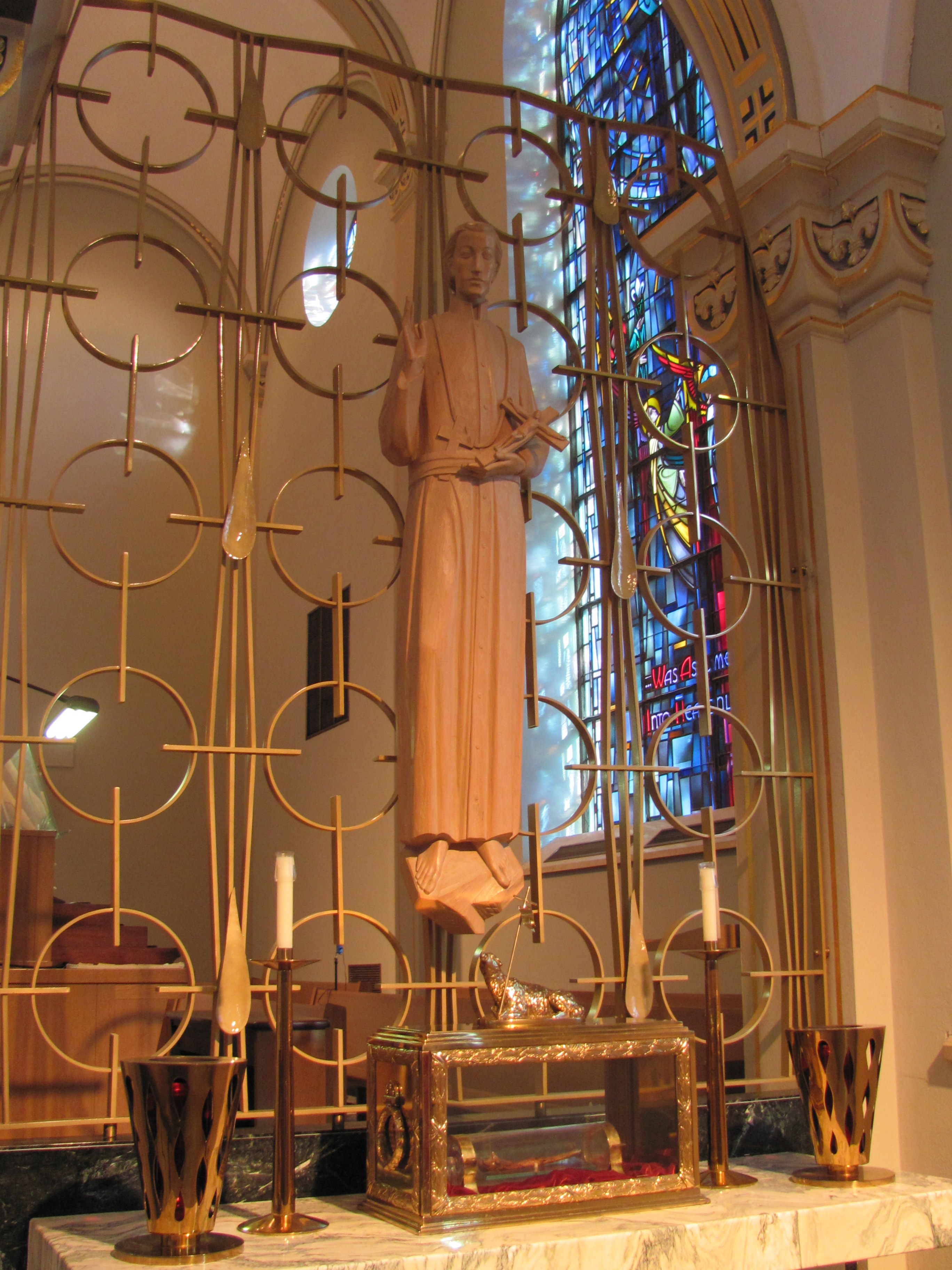
Sanctuaire
de Saint Gaspar del Bufalo, chapelle de l'Assomption,St. Charles Seminary (St. Charles
Senior Living Community) Carthagena, Ohio
Saint Gaspar del Bufalo
Today, October 21, we
celebrate the feast day of Saint Gaspar del Bufalo (1786-1837),
apostle of the devotion to the Precious Blood, and founder of the Congregation
of the Missionaries of the Precious Blood.
Saint Gaspar was born in
Rome on January 6, 1786. His father and mother, who served royalty, were both
firmly rooted in the faith, pious, and instructed their son with diligence. His
mother, for her part, recognized Gaspar’s call to the Lord, and prepared him
through instruction and witness for his service to the world, raising him with
virtue and faith.
Early in his life, Gaspar
showed a great concern for the poor and sick. He had been quite ill as a child,
nearly dying at the age of two and only cured through the intercession of Saint
Francis Xavier. Because of this, and the deep respect he had for all human
live, Gaspar spent his summers and breaks from education serving the poor,
finding and bringing them food, and ministering to those in the hospital. At
age 18, together with some of his classmates, Gaspar organized a program to
minister to the marginalized of society, offering religious instruction to the
peasants from rural areas who came to Rome to sell their hay. Through this
program, he provided catechism for orphans and the children of the poor, and
established night shelters for those with no place to call home.
Gaspar was ordained a
priest at age 22. Shortly thereafter, he was exiled and imprisoned for refusing
to take an oath of allegiance to Napoleon. The emperor had taken control of the
Papal States and was forcing all the clergy of Rome to take the oath. Gaspar
famously responded: "I would rather die or suffer evil than to take
such an oath. I cannot, I must not, I will not."
His adamant proclamation
led to imprisonment, and during his five years in jail, he began to envision a
new religious community that would be dedicated to the precious blood of
Christ. Despite his failing health, his spirit expanded and upon release, he
founded the Congregation of Missionaries of the Most Precious Blood in Giano.
He wanted his missionaries to be people who were dedicated to preaching God's
word through missions and retreats. Further, his community would rely on and
emphasize devotion to the Precious Blood, in order to be a source of on-going
renewal for the people of God and for the world.
Prior to Gaspar's time,
devotion to the Precious Blood had been restricted to a select few. Many Church
leaders took offense to his preaching of this devotion, preferring it should
receive the extreme reverence reserved for the name of God in the Old
Testament. Gaspar, however, longed to make the devotion "one that was
broad and social enough to challenge all mankind."
He wrote: "In
every era the Lord has inspired certain devotions to stem the tide of iniquity.
We also see that in times past the Church was attacked in this or that
doctrine. Today the war is being waged against religion as such and against
Christ Crucified. We need, therefore, to reemphasize the glories of the Cross
and of our Crucified Redeemer, to reopen the fountains of mercy just when the
devil would make us the victim of wrath. Now, more than ever, it is opportune
to tell people at what price our souls were redeemed. We must let it be known
how the Blood of Christ cleanses the souls and sanctifies them, particularly by
means of the sacraments. We must arouse them from their insensibility by
reminding them that His Blood is offered up every morning upon the altars and
that instead of blasphemy and insult, we should give it adoration and
praise."
For the remainder of his
life—a life beset by controversy in that he was accused of heresy many times
for spreading devotion to the Precious Blood, each time successfully defending
himself—Saint Gaspar worked diligently to serve the poor by expanding his
congregation. he died on December 28, 1837. The medical report referred to him
a "victim of charity" because even though he was in ill health
himself, he ministered to the victims of the cholera epidemic that broke out in
Rome. His body lies in the Church of Santa Maria, where it remains enshrined
for the veneration of the faithful.
Loving God, you made St.
Gaspar del Bufalo a priest and outstanding apostle of the Precious Blood of
your Son. Through his intercession grant that we may experience the abundant
fruits of the price of our redemption. We ask this through our Lord Jesus
Christ, your Son, who lives and reigns with you and the Holy Spirit, God, for
ever and ever. Amen.
SOURCE : http://365rosaries.blogspot.ca/2011/10/october-21-saint-gaspar-del-bufalo.html

Statua
di San Gaspare del Bufalo, Collegio dei missionari del Preziosissimo
Sangue, Roma
San Gaspare Del
Bufalo Sacerdote, Fondatore
Roma, 6 gennaio 1786 - 28
dicembre 1837
Nato a Roma il 6 gennaio
1786 fin da piccolissimo fu dedito alla preghiera e alla penitenza. Suo padre
era cuoco del principe Altieri, sua madre si occupava della famiglia e gli
assicurò una buona educazione cristiana. Ordinato sacerdote il 31 luglio 1808
si specializzò nell'evangelizzazione dei «barozzari», carrettieri e contadini
della campagna romana. Condannato all'esilio per aver rifiutato il
giuramento di fedeltà a Napoleone, passò quattro anni in carcere tra Bologna,
Imola e la Corsica. Tornato a Roma, dopo la caduta dell'imperatore
francese Papa Pio VII gli affidò l'incarico di girare l'Italia predicando e
dedicandosi soprattutto alle missioni popolari. Devotissimo al Prezioso sangue
di Gesù, il 15 agosto 1815 fondò la Congregazione dei missionari del
preziosissimo sangue. Gli appartenenti a quest'ordine si dedicano alla
predicazione e all'insegnamento. Nel 1834, insieme a Maria de Mattia diede vita
al ramo femminile della Congregazione: «Le suore dell'adorazione del
preziosissimo sangue». Morì a Roma il 28 dicembre 1837. È stato canonizzato da
Pio XII il 12 giugno 1954. (Avvenire)
Etimologia: Gaspare
= amabile maestro, dal persiano
Martirologio
Romano: A Roma, san Gaspare del Bufalo, sacerdote, che lottò strenuamente
per la libertà della chiesa e, anche in carcere, non smise mai la sua opera di
conversione dei peccatori alla retta via, in particolare attraverso la
devozione al Preziosissimo Sangue di Cristo, in cui onore intitolò le
Congregazioni dei Missionari e delle Suore da lui fondate.
Nato a Roma il giorno
dell’Epifania del 1786, sua madre volle per lui i nomi dei Re Magi: Gaspare,
Baldassarre, Melchiorre. La sua famiglia era stata un tempo benestante, ma poi
era decaduta. Suo padre Antonio era cuoco dei Principi Altieri, mentre sua
madre, Annunziata Quartieroni, si prendeva cura della famiglia. Votato alla
vita religiosa fin dalla fanciullezza, tentando persino di fuggire di casa per
evangelizzare i pagani, Gaspare del Bufalo frequentò il Collegio Romano, che a
quel tempo, essendo stata soppressa la Compagnia di Gesù, era diretta dal clero
secolare. Vestì la talare nel 1798 e prese a dedicarsi all’assistenza
spirituale e materiale dei bisognosi, contribuendo in maniera decisiva alla
rinascita dell’Opera di San Galla, della quale venne eletto direttore nel 1806.
Ricevette l’ordinazione sacerdotale il 31 luglio 1808 e decise di intensificare
l’apostolato fra le classi popolari fondando il primo oratorio in Santa Maria
in Pincis, specializzandosi nell’evangelizzazione dei «barozzari», ovvero
carrettieri e contadini della campagna romana.
Niente fedeltà
all’Imperatore
Nella notte fra il 5 e il
6 luglio 1809, Pio VII (1742-1823) venne arrestato e deportato per volontà di
Napoleone Bonaparte. Il 13 giugno del 1810 Don Gaspare rifiutò il
giuramento di fedeltà all’Imperatore francese. «Non debbo, non posso, non
voglio» disse; per tale ragione fu condannato all’esilio a Piacenza e in
seguito venne incarcerato per quattro anni, peregrinando nelle prigioni di
Bologna, Imola, Lugo (Ravenna). Tornato a Roma nei primi mesi del 1814,
dopo la caduta di Napoleone, mise tutta la sua vita al servizio del Papa, il
quale lo esortò a dedicarsi alle missioni popolari per la restaurazione
religiosa e morale d’Italia; fu così che il santo lasciò Roma e si gettò con
ardente zelo sulla strada che lo impegnò fino alla fine della sua vita. Dirà
Giovanni Paolo II ai partecipanti al capitolo generale della Congregazione dei
Missionari del Preziosissimo Sangue il 14 settembre 2001:
«Quando san Gaspare del
Bufalo fondò la vostra Congregazione nel 1815, il mio predecessore, Papa Pio
VII, gli chiese di andare laddove nessun altro sarebbe andato e di
intraprendere missioni che sembravano poco promettenti. Per esempio gli chiese
di inviare missionari a evangelizzare i banditi che a quel tempo imperversavano
così tanto nella zona fra Roma e Napoli. Fiducioso nel fatto che la
richiesta del Papa fosse un ordine di Cristo, il vostro Fondatore non esitò a
obbedire […] Gettando le sue reti nelle acque profonde e pericolose fece una
pesca sorprendente».
La devozione al Sangue di
Cristo
Come mezzo efficace per
promuovere la conversione dei peccatori, per debellare lo spirito di empietà e
di irreligione, scelse la devozione al Sangue Preziosissimo di Gesú e ne
divenne ardente apostolo. Si attuò così la predizione del 1810 fatta dalla
religiosa Suor Agnese del Verbo Incarnato, morta in concetto di santità,
predizione che confidò al suo Direttore spirituale, Don Francesco Albertini
(1770-1819), poi Direttore di Don Gaspare, nonché suo compagno di prigionia:
durante il drammatico tempo persecutorio nei confronti della Chiesa sarebbe
sorto uno sacerdote molto zelante, il quale avrebbe scosso migliaia di persone
dall’indifferenza mediante la devozione al Prezioso Sangue di Cristo, tale
presbitero sarebbe divenuto «La tromba del divin Sangue».
I Missionari del
Preziosissimo Sangue
Il 15 agosto 1815 Don
Gaspare fondò la Congregazione dei Missionari del Preziosissimo Sangue, alla
quale aderirono uomini di grande spiritualità e santità, come il Venerabile Don
Giovanni Merlini (1795-1873), il futuro Beato Pio IX (1792-1878), Don Biagio
Valentini (1792-1847). Il 4 marzo 1834 venne fondato l’Istituto delle Suore
Adoratrici del Preziosissimo Sangue, grazie alla collaborazione di Santa Maria
De Mattias (1805-1866). Figlia di una famiglia benestante, nel 1822, all’età di
17 anni, incontrò San Gaspare mentre questi predicava a Vallecorsa (Frosinone).
Il ramo femminile si dedicò all’istruzione e alla catechesi della gioventù e
delle madri. Le due famiglie religiose trovarono bacino fecondo nella Pia
Unione del Preziosissimo Sangue, oggi Unio Sanguis Christi, che, insieme a Don
Francesco Albertini, Don Gaspare aveva già istituito nel 1808 a vantaggio dei
fedeli sia in Italia che all’estero.
Manifestazioni
soprannaturali
Segnato da fatiche e
sofferenze non comuni, San Gaspare venne benedetto da Dio con frequenti
manifestazioni soprannaturali. Un giorno, per esempio, per confortarlo dalle
tribolazioni, mentre celebrava la Santa Messa, subito dopo la consacrazione,
gli apparve il Cielo dal quale scendeva una catena d’oro, che passando nel
calice, legava la sua anima per condurla alla gloria di Dio. Da quel giorno il
sacerdote soffrì ancor più, ma, contemporaneamente, si intensificò la sua
abnegazione per condurre alle anime i benefici del Sangue di Gesù, e i frutti
furono copiosi. Al suo passaggio si accendeva la Fede, si intensificava la
pietà cristiana, si convertivano le anime, gli odi si raffreddavano, il
malcostume si mutava in moralità cristiana. San Vincenzo Strambi (1745-1824),
che lo affiancò in alcune missioni di apostolato, lo definí «terremoto
spirituale», mentre le folle lo acclamavano «angelo di pace».
Lotta alla massoneria
Con straordinario
coraggio affrontò la lotta accanita che gli mossero le società segrete, in
particolare la Massoneria. Ma nonostante le minacce e gli attentati alla sua
vita, non cessò mai di predicare a viso aperto contro tali sette anticlericali,
fucine di rabbioso laicismo ateo. San Gaspare fu in grado di convertire intere
logge massoniche e fu implacabile nel mettere in guardia il popolo dalla
propaganda satanica di questi gruppi liberali e proprio per questo era noto
come «martello dei settari». Ma l’Italia non era infestata soltanto dalla
Massoneria, c’era anche la piaga del brigantaggio, vera e propria criminalità
organizzata e presente anche nello Stato Pontificio. Pio VII, Pio VIII
(1761-1830), Pio IX avevano tentato di estirpare la malapianta, ma senza
successo. Leone XII (1760-1829), allora, dietro consiglio del Cardinale
Belisario Cristaldi (1764-1831), affidò la rischiosa impresa a Don Gaspare,
che, con le sole armi del crocifisso, della preghiera e della misericordia
evangelica, riuscí a ridurre la malavita nei dintorni di Roma, portando pace e
sicurezza fra gli abitanti.
Un Santo per tutti
Quando morí a Roma, il 28
dicembre 1837 in una stanza del Palazzo Orsini, San Vincenzo Pallotti
(1795-1850) vide la sua anima salire in alto, in forma di stella luminosa,
mentre Gesú le andava incontro. La fama della sua santità si diffuse
immediatamente, anche fuori dai confini italiani e in particolare in Francia,
grazie sia alla guarigione di Françoise de Maistre, figlia del governatore di
Nizza e nipote di Joseph de Maistre (1753-1821), sia all’opera di Louis-Gaston
de Ségur (1820-1881), che fu suo grande estimatore, sia a quella di San
Pierre-Julien Eymard (1811-1868), fondatore dei Sacerdoti e delle Ancelle del
Santissimo Sacramento. Beatificato da San Pio X il 18 dicembre 1904,
sarà canonizzato da Pio XII il 12 giugno 1954 in piazza San Pietro. Il suo
corpo riposa a Roma nella chiesa di Santa Maria in Trivio, affidata nel 1854
dal Beato Pio IX ai Missionari del Preziosissimo Sangue.
Autore: Cristina Siccardi
Nato a Roma il 6 gennaio
1786 da Antonio ed Annunziata Quartieroni, fin dai primi anni si fece notare
per una vita dedita alla preghiera e alla penitenza.
Completati gli studi
presso il Collegio Romano, nel 1798 indossò l'abito talare e si diede ad
organizzare opere di assistenza spirituale e materiale a favore dei bisognosi.
Si deve a lui la rinascita dell'Opera di S. Galla, della quale fu eletto
direttore nel 1806. Ordinato sacerdote il 31 luglio 1808, intensificò
l'apostolato fra le classi popolari fondando il primo oratorio in S. Maria in
Pincis e specializzandosi nella evangelizzazione dei " barozzari ",
carrettieri e contadini della campagna romana, che avevano i loro depositi di
fieno nel Foro Romano, chiamato allora Campo Vaccino.
Per la Chiesa, intanto,
correvano tempi duri: nella notte dal 5 al 6 luglio 1809 Pio VII fu fatto
prigioniero e deportato. Il 13 giugno 1810 Gaspare rifiutò il giuramento di
fedeltà a Napoleone e venne condannato all'esilio e poi al carcere, che
sostenne con animo sereno per quattro anni. Tornato a Roma nei primi mesi del
1814, dopo la caduta di Napoleone, mise le sue forze e la sua vita al servizio
del papa. Pio VII gli diede l'ordine di dedicarsi alle missioni popolari per la
restaurazione religiosa e morale.
Quale mezzo efficacissimo
per promuovere la conversione dei peccatori, per debellare lo spirito di
empietà e di irreligione, scelse la devozione al Sangue Preziosissimo di Gesú e
ne divenne ardentissimo apostolo.
il 15 agosto 1815 fondò
la Congregazione dei Missionari del Preziosissimo Sangue, a cui si iscrissero
uomini di grande santità, come il ven. servo di Dio d. Giovanni Merlini,
Giovanni Mastai Ferretti, il futuro Pio IX .
Nel 1834, inoltre diede
inizio all'Istituto delle Suore Adoratrici del Preziosissimo Sangue, coadiuvato
dalla beata Maria De Mattias, che egli stesso aveva chiamato a tale missione.
Sostenne con
straordinario coraggio la lotta accanita che gli mossero le società segrete, in
particolare la massoneria. Ma nonostante le loro minacce e gli attentati alla
sua stessa vita, non cessò mai di predicare apertamente contro tali sette,
fucine di rabbioso laicismo ateo; convertí intere logge massoniche e non si
stancò di mettere in guardia il popolo contro la loro propaganda satanica.
Ma un'altra piaga vessava
lo Stato Pontificio, come, del resto, anche altre regioni: il brigantaggio.
Leone XII, dietro consiglio del card. Belisario Cristaldi, inviò in mezzo a
loro Gaspare, che con le sole armi del crocifisso e della misericordia
evangelica, riuscí a ridurre la terribile piaga nei dintorni di Roma ed a
riportare pace e sicurezza tra le popolazioni.
Morí a Roma il 28
dicembre 1837.
Fu beatificato da s. Pio
X il 18 dicembre 1904 e canonizzato da Pio XII il 12 giugno 1954 in piazza S.
Pietro. Il suo corpo riposa a Roma nella chiesa di S. Maria in Trivio.
Patrono della città di
Sonnino (LT), patria del Brigantaggio, che Gaspare salvò dalla completa
distruzione.
La sua data di culto per
la Chiesa Universale è il 28 dicembre, mentre la sua Congregazione lo ricorda
in data 21 ottobre.
Per saperne di più:
www.sangasparedelbufalo.pcn.net
Autore: Candido
Paglia
SOURCE : http://www.santiebeati.it/dettaglio/35900
Piazza San Pietro -
Domenica, 12 giugno 1954
Se le forze del male non
cessano, nel volger dei secoli, i loro attacchi contro l'opera del Divin
Redentore, Iddio non manca di rispondere alle angosciose suppliche dei suoi
figli in pericolo, suscitando anime ricche di doni della natura e della grazia,
che siano per i loro fratelli di conforto e di aiuto. Quando si affievolisce
nella coscienza degli uomini la cognizione delle verità salutari, oscurate
dagli allettamenti dei beni terreni, quando lo spirito di rivolta e di orgoglio
suscita contro la Chiesa persecuzioni subdole o violente, in mezzo alle
miserie, sempre presenti, delle anime e dei corpi, la Divina Provvidenza chiama
sotto il vessillo della Croce di Cristo eroi di santità, irradianti splendori di
purezza verginale e di carità fraterna, per sovvenire a tutte le necessità
delle anime e mantenere nella sua integrità il fervore delle virtù cristiane.
1. - La vita di coloro
che oggi la Chiesa glorifica è tutta compresa nelle parole del Salmista:
« Angustia et tribulatio venerunt super me, mandata tua deliciae meae
sunt » (Ps. 118, 143). A Pietro-Luigi-Maria Chanel toccò l'onore
di essere il primo a versare il sangue per la fede in Oceania. Aveva appena
compiuto il sacrificio della sua vita nell'isola di Futuna, fino allora
indocile alla grazia, che immantinente si levò una messe ricca al di là di ogni
previsione. Il suo viaggio terrestre egli lo trascorse nella umiltà, nella
dolcezza, la pazienza, la carità, attingendo il meglio delle sue energie spirituali
nell'amore ardente e delicato per la Vergine Maria. « Aimer Marie et la faire
aimer »: fu il voto più fervido e il programma degli anni della sua
preparazione al sacerdozio. Ordinato prete, egli cominciò col prodigare senza
risparmio le forze fisiche, che la natura assai parcamente gli concedeva, per
ricondurre alle pratiche religiose il piccolo gregge affidato alle sue cure. Ma
la sua anima aspirava alla perfezione totale e alle fatiche delle missioni
presso gl'infedeli. Così risolse di unirsi al gruppo da poco costituito della
Società di Maria, che, riconoscendo nella Regina del cielo la loro Madre e
superiora perpetua, si adoperava a meglio attuare l'ideale della perfezione
sacerdotale e apostolica. Per quattro anni egli si consacrò con una insigne dedizione,
una grande pazienza, una vigilanza umile e premurosa, alla educazione della
gioventù. Ma ben presto il suo sogno diviene una realtà. Vincendo eroicamente
le affezioni più care al suo cuore, s'imbarca per le isole dell'Oceania, ove
non era ancora penetrato il Vangelo. Chi dirà le dure prove spirituali e
fisiche, che lo attendevano in quel campo dei suoi travagli apostolici? I suoi
sforzi di adattamento alla lingua, ai costumi di quel popolo, la sterilità
apparente delle sue fatiche, l'incomprensione e la ostilità sorda o aperta, non
scuotono la costanza mirabile di lui. Forte della vigile protezione della Madre
di Dio, Pietro Chanel rivela agli indigeni stupefatti l'inesauribile carità e
la dolcezza del suo animo. L'esempio della sua vita pura e mortificata, la sua
preghiera incessante, le sue fervorose esortazioni, preparano il cammino alla
grazia divina, topo che il martire ebbe reso il suo spirito a Dio, le forze
del, male, che avevano avversato l'opera sua, prontamente cedettero, e la
Chiesa potè contare con gioia anche in quella lontana regione figli numerosi e
ferventi.
2. - Se però è necessario
di annunciare agl'infedeli il messaggio di Cristo, non è meno essenziale di
mantenere vivo l'ardore della fede nel popolo cristiano. Nella falange gloriosa
dei Santi, che questa terra romana ha dato alla Chiesa, rifulge di luce
speciale Gaspare del Bufalo. Fin dai suoi più giovani anni, la protezione
di S. Francesco Saverio sembrò ottenergli da Dio una straordinaria profusione
di doni soprannaturali. Ancora studente, esercitava assiduamente le opere di
carità e di assistenza, specialmente nell'insegnamento della dottrina cristiana
ai fanciulli e ai poveri. Sulle orme di S. Giovanni Battista De Rossi, ridonò
vigore all'Opera pia di S. Galla e fondò poco dopo l'Oratorio di S. Maria in
Vincis. Ma il suo apostolato in Roma fu interrotto dalla invasione delle truppe
napoleoniche; egli stesso, avendo rifiutato di prestare il giuramento di
fedeltà a un potere ostile ai diritti della Chiesa, soffrì l'esilio ed il carcere.
Finalmente liberato, e con tornato nella sua Roma, ricevette dal Sommo
Pontefice Pio VII l'incarico di dedicarsi alle sante missioni, destinate a
rinnovare il fervore dei fedeli nei suoi Stati dopo i disordini e i danni
prodotti dai pubblici rivolgimenti. Allora egli riprese l'idea della
istituzione di una Congregazione di Missionari sotto il titolo del Sangue
Preziosissimo di Gesù, e nonostante le contrarietà e gli ostacoli, inaugurò il
15 Agosto 1815 la prima casa dell'Opera, che confidò amorosamente alla tutela
della Santissima Vergine. In tal guisa comincia per lui una vita di lavori
incessanti; egli percorre quasi tutte le regioni dell'Italia centrale,
apportando da per tutto, con l'esempio della sua pietà, della sua umiltà, della
sua carità, la riconciliazione e la pace, il sollievo delle miserie corporali e
soprattutto spirituali. Al tempo stesso egli dava sagge Regole all'Istituto, ed
esclamando: Paradiso, paradiso! si sottraeva ad ogni offerta di dignità
ecclesiastiche, desiderando di rimanere sino alla morte « sul palco », vale a
dire nel campo della sacra predicazione, fiducioso com'era di ricevere in tal
guisa più facilmente e senza indugio il premio eterno. Ed il Signore accolse la
sua preghiera che la morte lo colpisse in mezzo alle fatiche dell'apostolato;
ond'egli lasciò ai suoi figli un mirabile modello di uno zelo eroico che
generosamente s'immola per il più gran bene delle anime.
3. - Ma se Iddio domanda
sovente ai suoi eletti d'intraprendere grandi opere per la sua gloria, vuole
altresì che essi sappiano soffrire nella ubbidienza e nel silenzio. Ed invero
non si richiede minor generosità per resistere saldamente in mezzo al naufragio
e preparare con tenacia l'ora in cui tornerà a regnare la pace. Quando la
Compagnia di Gesù fu espulsa dal Regno di Spagna, Giuseppe Pignatelli si
era già guadagnato la stima dei suoi Superiori con la elevatezza del suo
spirito, l'ingegnosa sua carità verso i poveri e i condannati a morte,
l'autorità della sua persona che gli permetteva di calmare le sedizioni
popolari. La nobiltà del sangue avrebbe potuto ispirargli l'amore delle umane
grandezze; ma Iddio aveva posto in lui i germi di una gloria più nobile e
santa. Incaricato già della cura spirituale e temporale dei proscritti,
sopportò egli stesso con mirabile serenità e pazienza, e aiutò i suoi miseri
compagni a tollerare i peggiori disagi, e giri alla ricerca di un rifugio,
senza trovare un tranquillo ricovero e sollievo, ma sforzandosi di mantenere da
per tutto il fervore dello spirito religioso negli sventurati confratelli a lui
affidati. Allorchè finalmente fu ottenuto un soggiorno più stabile, egli si
diede a una vita di preghiera, di lavoro e di carità, e appena spuntò l'alba
della risurrezione della Compagnia di Gesù, si adoperò a raccoglierne i membri
dispersi, a formare nuove reclute, a ristabilire nella sua integrità il genere
di vita e lo spirito tradizionale dell'Ordine. In tal guisa Giuseppe Pignatelli
preparava il rinnovamento della inclita Società, a cui sempre rimase
indefettibilmente unito; egli restauratore in Italia e nello spirito secondo
padre della Compagnia di Gesù, egli il più insigne legame che al di là della
soppressione la ricollega alle sue origini.
4. - Mentre i tre eroi
che abbiamo teste commemorati avevano profuso tutte le loro virili energie nel
duro combattimento contro le forze del male, ecco apparire al nostro sguardo
l'immagine di Domenico Savio, gracile adolescente, dal corpo debole, ma
dall'anima tesa in una pura oblazione di sè all'amore sovranamente delicato ed
esigente di Cristo. In una età così tenera si attenderebbe di trovare piuttosto
buone e amabili disposizioni di spirito, e invece si scoprono in lui con
stupore le vie maravigliose delle ispirazioni della grazia, una adesione
costante e senza riserva alle cose del cielo, che la sua fede percepiva con una
rara intensità. Alla scuola del suo Maestro spirituale, il grande Santo Don
Bosco, egli apprese come la gioia di servire Dio e di farlo amare dagli altri
può divenire un potente mezzo di apostolato. L'8 dicembre 1854 lo vide elevato
in una estasi di amore verso la Vergine Maria, e poco dopo egli riuniva alcuni
suoi amici nella « Compagnia dell'Immacolata Concezione », affine di avanzare a
gran passi nel cammino della santità e di evitare anche il minimo peccato. Egli
incitava i suoi compagni alla pietà, alla buona condotta, alla frequenza dei
Sacramenti, alla recita del Santo Rosario, alla fuga del male e delle
tentazioni. Senza lasciarsi intimorire da cattive accoglienze e da risposte
insolenti, interveniva con fermezza, ma caritatevolmente, per richiamare al
dovere gli sventati e i perversi. Colmato già in questa vita della familiarità
e dei doni del dolce Ospite dell'anima, ben presto lasciò la terra per
ricevere, con la intercessione della celeste Regina, il premio del suo filiale
amore.
5. - Associata alla
gloria di cosi illustri Confessori, una Vergine insigne per il suo amore alla
Croce, Maria Crocifissa Di Rosa, di famiglia patrizia bresciana, canta
anch'ella gli splendori dello Sposo divino. Era appena piamente spirata la sua
madre terrena, che, ad imitazione di S. Teresa di Gesù, ella si rifugia nelle
braccia della Madre celeste. Alla scuola delle Religiose della Visitazione,
approfondisce sempre più la sua solida pietà, animata da un desiderio intenso
di soffrire per Gesù Cristo e di esercitarsi in una incessante pratica della
mortificazione e della carità. Ella rinunzia ad ogni vanità, ad ogni esigenza
della moda, ad ogni spettacolo mondano, ad ogni indulgenza verso la natura, ad
ogni offerta di nozze terrene; si occupa delle ragazze e delle donne del
popolo, sopporta pazientemente le critiche, specialmente dei libertini delusi, e
si compiace di distribuire ai bisognosi i beni di cui dispone. Quando nel 1836
il colera imperversò su Brescia, ella diede libero corso alla sua eroica
abnegazione nel servizio dei colerosi e attrasse anche altre sue coetanee al
medesimo arduo e pericoloso ufficio. Sostenuta dalla sollecitudine del suo
direttore spirituale, la nostra Santa, cessato il flagello, continuò
nell'Ospedale femminile di Brescia a dedicarsi all'assistenza delle malate ed
abbandonate, e ben presto la pia collaborazione di queste anime generose si
trasformò in opera stabile: le « Ancelle della Carità » prenderanno ormai a
loro intiero carico il servizio di sanità dell'Ospedale di Brescia e ben presto
anche altre benefiche attività. Superati gli ostacoli che avevano attraversato
l'opera nascente, la soavissima ed instancabile apostola vide nelle
disposizioni della Provvidenza la conferma del cielo ai suoi sforzi; ma
supplicava che le croci non cessassero e le persecuzioni e le prove non le
fossero risparmiate. Ed infatti, pur manifestando nella sua azione di
fondatrice le più belle qualità d'intelligenza e di volere, ella soffrirà con
grande coraggio i dolori fisici, e soprattutto le angosce dell'anima, le
tenebre indicibili che lo scatenato spirito del male si sforza, ma invano, di
far pesare su di lei. Un'ardente preghiera sgorgava allora dalle sue labbra: «
Gesù mio! Tu solo mi basti. La mia vita sia crocifissa con Te ». In tal guisa
dalla profondità di una vita spirituale tutta conforme alla Croce scaturì
un'Opera originale e completa, che abbraccia tutte le forme di ospitalità e di
assistenza, e prospera in eminenti frutti di carità e di virtù.
Tali sono, Venerabili
Fratelli e diletti figli, appena adombrate, l'eroiche azioni di questi apostoli
e di questi fondatori, che lo Spirito Santo ha plasmati per la continuazione
dell'opera di Cristo. Essi intessono insieme una maravigliosa corona alla
Vergine Maria, che li ha adornati coi suoi eletti favori e si è compiaciuta di
accogliere i loro fedeli servigi. Si degnino questi nuovi principi del cielo
ottenere a tutti coloro che esultano oggi per la loro gloria, la grazia di
seguire le loro orme e di bruciare come essi di amore per Gesù, che li ha
redenti col proprio sangue, e per la sua purissima e santissima Madre.
*Discorsi e Radiomessaggi di Sua Santità Pio XII, XVI,
Sedicesimo anno di Pontificato, 2 marzo 1954 - 1° marzo 1955, pp. 55 - 60
Tipografia Poliglotta Vaticana
Copyright © Dicastero per
la Comunicazione

Questa la preghiera al
Sangue di Gesù di S. Gaspare del Bufalo:
O sangue prezioso del mio
Signore, che io ti benedica in eterno.
O amore del mio Signore divenuto piagato!
Quanto siamo lontani dalla conformità alla tua vita.
O sangue di Gesù Cristo, balsamo delle nostre anime, sorgente di misericordia,
fa’ che la mia lingua, imporporata di sangue nella quotidiana celebrazione
della Messa, ti benedica adesso e sempre.
O Signore, chi non ti amerà?
Chi non arderà di affetto verso di te?
Le tue piaghe, il tuo sangue, le spine, la croce, il divin sangue in
particolare, versato fino all’ultima stilla, con quale voce eloquente grida al
mio povero cuore!
Poiché tu agonizzasti e moristi per me per salvarmi, io darò, se occorre, anche
la vita, perché giunga al possesso beato del cielo.
O Gesù, sei stato fatto per noi redenzione.
Dal tuo costato aperto, arca di salvezza, fornace di carità, uscì sangue ed
acqua, segno dei sacramenti e della tenerezza del tuo amore, o Cristo, che ci
hai amati e lavati nel tuo sangue!
SOURCE : https://www.causesanti.va/it/santi-e-beati/gaspare-del-bufalo.html
Gaspare Del Bufalo
(1786-1837)
Beatificazione:
- 18 dicembre 1904
- Papa Pio X
Canonizzazione:
- 12 giugno 1954
- Papa Pio XII
- Piazza San Pietro
Memoria Liturgica:
- 28 dicembre
Sacerdote, lottò
strenuamente per la libertà della chiesa e, anche in carcere, non smise mai la
sua opera di conversione dei peccatori alla retta via, in particolare
attraverso la devozione al Preziosissimo Sangue di Cristo, in cui onore
intitolò le Congregazioni dei Missionari e delle Suore da lui fondate
"Vorrei avere mille
lingue per intenerire ogni cuore verso il Sangue Preziosissimo di Gesù"
Gaspare Melchiorre
Baldassarre del Bufalo nacque a Roma il 6 gennaio 1786. Fin da
piccolo dedito alla preghiera e alla penitenza, Gaspare frequenta il Collegio
Romano allora affidato al clero secolare, in seguito alla soppressione della
Compagnia di Gesù. Dal momento, però, che suo padre fa il cuoco presso Palazzo
Altieri, davanti alla Chiesa del Gesù, Gaspare impara a conoscere e venerare
San Francesco di Sales, al quale attribuisce una miracolosa guarigione ottenuta
in gioventù.
Nel 1798 Gaspare veste la
talare e inizia a occuparsi dell’assistenza spirituale e materiale dei
bisognosi di Roma. Si distingue, in particolare, per l’impegno nell’opera del
catechismo, che organizza nell’oratorio della chiesa di Santa Maria del Pianto,
dove si dedica in particolare a spiegare la dottrina ai “barozzari”, i
carrettieri che dalla campagna arrivano a portare il fieno nel cosiddetto Campo
Vaccino, come veniva chiamato all’epoca il Foro Romano. Si preoccupa anche di
preparare un gruppo di giovani scelti per l’insegnamento della catechesi e li
invia a occuparsi dei poveri, facendo di fatto rinascere l’Opera di Santa
Galla. Nel 1808, finalmente, viene ordinato sacerdote e intensifica
l’apostolato tra le classi popolari trasformando, tra l’altro, la chiesina di
Santa Maria in Pincis, presso la Rupe Tarpea, in un fiorente centro di pietà.
All’epoca di Gaspare,
Roma e lo Stato Pontificio sono occupati dalle truppe napoleoniche. La notte
tra il 5 e il 6 luglio 1809 la situazione precipita e Papa Pio VII viene
imprigionato e deportato. Contemporaneamente Napoleone impone a vescovi e
parroci della città di firmare un giuramento di fedeltà al nuovo regime. Il 13
giugno 1810 il giuramento viene imposto anche a don Gaspare, che però rifiuta
pronunciando le famose parole: “Non debbo, non posso, non voglio”. A questo
punto viene imprigionato e condotto in esilio. Sconterà la sua pena nelle
carceri di Piacenza, poi Bologna, Imola e infine Lugo, vicino Ravenna, in tutto
quattro anni. Tornerà a Roma solo nel 1814.
Nel 1815 Gaspare fonda
una nuova congregazione chiamata dei Missionari del Preziosissimo Sangue. È
questa la devozione che sente più vicina, strettamente collegata a quella del
Sacro Cuore di Gesù, e ne diventa l’apostolo più ardente. Solo il sangue
versato da Cristo per la redenzione degli uomini, infatti, è strumento per la
conversione dei peccatori. Pio VII si accorge del suo zelo e affida alla sua
congregazione il compito di rievangelizzare e restaurare la fede nei territori
dello Stato Pontificio. In pratica gli chiede di andare lì dove nessuno vuole
andare e di confrontarsi con persone con cui nessuno vuole avere nulla a che
fare.
Sono principalmente due
le piaghe che affliggono Roma e che Gaspare con i suoi missionari deve
affrontare: la massoneria e il brigantaggio. Contro le società segrete,
considerate fucine di un pericoloso laicismo ateo, le sue doti di predicatore
toccano picchi impensati e raggiungono risultati insperati: riesce a riportare
sulla retta via intere logge e a far venire alla luce un problema nascosto,
tanto da guadagnarsi il soprannome di “martello dei settari”. Non meno efficace
il suo operato con i briganti: in missione sulla via tra Roma e Napoli, armato
solo di un crocifisso e della misericordia evangelica, Gaspare parla con loro,
spiega il sacrificio di sangue che Gesù ha fatto per la salvezza di tutta
l’umanità. E così, pian piano, riesce in quello in cui non era riuscito
nessuno: rendere la città più sicura.
Nel 1834, grazie alla
collaborazione con Maria De Mattias, che aveva incontrato a 17 anni facendo
venire alla luce la sua vocazione, Gaspare fonda il ramo femminile della
congregazione: le Suore adoratrici del Preziosissimo Sangue di Cristo, che oggi
hanno missioni in tutto il mondo, soprattutto in India e in Tanzania. Tre anni
dopo muore.
Verrà canonizzato da Pio
XII nel 1954. Di lui, parlando al capitolo generale della Congregazione, il 14
settembre 2001, Giovanni Paolo II disse: “Fiducioso nel fatto che la richiesta
del Papa fosse un ordine di Cristo, il vostro Fondatore non esitò a obbedire
anche se il risultato fu che molti lo accusarono di essere troppo innovatore.
Gettando le sue reti nelle acque profonde e pericolose fece una pesca
sorprendente”.
SOURCE : https://www.causesanti.va/it/santi-e-beati/gaspare-del-bufalo.html
GASPARE Del
Bufalo, santo. - Nacque a Roma il 6 genn. 1786 da Antonio e da Annunziata
Quartieroni nel popolare rione Monti, dove il padre, discendente di un ramo
cadetto dei marchesi Del Bufalo, svolse i più disparati mestieri fino al 1787
quando passò al servizio dei principi Altieri come cuoco e si trasferì con la
famiglia nel palazzo nobiliare.
La nuova residenza nel
rione Pigna consentì a G. di seguire la madre, donna molto pia, nelle pratiche
devote presso la chiesa del Gesù, sede storica dei gesuiti ormai soppressi, e
di entrare in contatto con un ambiente religioso fedele alla tradizione
cattolica.
Dopo un breve periodo
presso la scuola rionale di via del Piè di marmo, frequentò i padri scolopi e
si iscrisse al Collegio romano. Nell'aprile 1800, ripristinato il potere
pontificio dopo la Repubblica giacobina, G. prese gli ordini minori.
Frequentava le conferenze o le conversazioni morali e scientifiche tenute dai
lazzaristi (che avevano sostituito la soppressa Compagnia di Gesù nella
formazione del clero romano) e degli ex gesuiti riuniti nella casa del Gesù
(guadagnandosi la familiarità del rettore Giovanni Marchetti, dal quale ottenne
di far parte dell'Accademia ecclesiastica da lui fondata).
Seguendo con profitto i
corsi del Collegio romano e la scuola di "validi oratori" di mons.
Giovanni Baccolo, G. affinò, come indicano le opere giovanili, cultura e
tecniche della predicazione. Perseguiva al contempo una rigida autodisciplina e
un instancabile impegno nelle opere di devozione e di carità: insegnava
catechismo ai bambini e animava la liturgia nella basilica di S. Marco sotto la
direzione del curato Antonio Aquari, esaminatore del clero presso il vicariato
di Roma; recitava panegirici e discorsi sacri nella chiesa di S. Orsola a Tor
de' Specchi dove era attiva una congregazione di preti secolari finalizzata sia
al soccorso e alla formazione culturale dei chierici poveri, sia alla
diffusione di forme liturgiche popolari.
Nominato dal vicariato
segretario dell'Opera del catechismo di S. Maria del Pianto alle porte del
ghetto ebraico e, dal 1801, esorcista e accolito della basilica lateranense, G.
contribuì in modo determinante alla fondazione di nuovi sodalizi, destinati ad
avere un ruolo fondamentale nella restaurazione religiosa della Roma
ottocentesca: l'Associazione giovanile clerico-laicale di S. Pudenziana,
ispirata all'Opera di s. Filippo Neri; l'Opera dei barrozzari, per il soccorso
morale e materiale dei carrettieri che, provenienti dai Castelli romani,
vendevano il fieno in piazza Montanara, luogo di lavoro e incontro dei
lavoratori stagionali e immigrati più miseri.
Nel 1806, dopo un lungo
impegno presso gli ospedali della Consolazione e dei "cento preti"
(per i sacerdoti vecchi e ammalati), l'ospizio di S. Galla e il rifugio di S.
Balbina (per i ragazzi "difficili"), G. venne chiamato a dirigere
l'Opera di S. Galla; si trattava di un ospizio romano di antica fondazione che,
rilanciato nel XVIII secolo e di nuovo caduto in rovina, veniva allora
sviluppato per iniziativa del cardinale Carlo Odescalchi quale polo di
assistenza caritativa e di aggregazione del laicato giovanile.
Nel marzo 1808, poche
settimane dopo la seconda occupazione di Roma da parte delle truppe francesi
del generale S.-A.-F. Miollis (2 febbraio), G. venne ordinato sacerdote. Prima
del precipitare delle vicende politiche e dell'annessione di parte dello Stato
della Chiesa all'Impero napoleonico (17 maggio 1809), G., coadiutore del
parroco di S. Marco, istituì un oratorio notturno a S. Maria in Vincis alle
pendici del Campidoglio, dedicato ancora ai lavoratori stagionali immigrati.
Soprattutto, collaborò alla fondazione dell'Arciconfraternita del Preziosissimo
Sangue di S. Nicola in Carcere con il canonico Francesco Albertini, poi vescovo
della diocesi di Terracina, Sezze e Piperno, che influenzò in modo determinante
la sua spiritualità, centrata sul "mistero del sangue di Cristo".
Rifiutato il giuramento
di fedeltà all'imperatore, dal giugno 1810 al febbraio 1814 G. venne deportato
a Piacenza, poi a Bologna e, successivamente, a Imola e Lugo. Molte tracce
dell'epistolario indicano che gli anni dell'esilio e la frequentazione, nel
periodo bolognese, dell'Albertini, anch'egli refrattario al giuramento,
orientarono la vocazione di G. nel senso dell'apostolato missionario.
Rientrato a Roma nel
febbraio 1814, infatti, oltre a riprendere il suo ufficio come canonico di S.
Marco e l'impegno di catechizzazione urbana, prese anche a collaborare
all'attività missionaria rurale della Santa Lega, detta anche Opera degli
operai evangelici, fondata nel 1813 dal secolare Gaetano
Bonanni. Abbandonata l'idea di entrare nella ripristinata Compagnia di
Gesù (a cui lo spingeva l'esempio del suo antico protettore, il cardinale
Odescalchi, che aveva deciso di abbandonare la porpora per farsi gesuita), G.
fu chiamato a svolgere le missioni per la restaurazione morale e civile dello
Stato della Chiesa. Iniziò così l'apostolato che lo avrebbe portato in 22 anni
a svolgere oltre 150 missioni popolari nei centri urbani e nelle campagne dello
Stato e centinaia di esercizi spirituali presso conventi, monasteri e
confraternite. Al contempo egli affinava il progetto organizzativo e gli
obiettivi spirituali di un nuovo istituto missionario, progettato insieme con
l'Albertini negli anni dell'esilio. La Congregazione dei missionari del
Preziosissimo Sangue nacque il 15 ag. 1815, inserendosi in quel vasto movimento
di nuove fondazioni religiose tese alla riscossa del cattolicesimo contro la
Rivoluzione, le sette e l'ateismo.
Nata sotto il segno della
devozione del Preziosissimo Sangue di Cristo - inteso quale forza primaria di
conversione, "mistica arma dei tempi" - la congregazione si adattava
perfettamente alla strategia della Chiesa romana per la restaurazione sociale,
politica e della pietà. Composta alla fondazione da soli quattro sacerdoti essa
poteva contare tuttavia sul nucleo di predicatori raccolti intorno al Bonanni,
su potenti protettori, come monsignor Belisario Cristaldi (allora uditore
concistoriale e poi tesoriere generale) e sulla straordinaria abilità oratoria
del fondatore. Nel novembre 1814 Pio VII concesse ai missionari una somma annua
di 300 scudi e una sede, la chiesa e convento di S. Felice, un antico complesso
monastico tra i monti di Giano, presso Spoleto.
L'attività di G. e dei
suoi compagni - sempre più organica alla strategia di rievangelizzazione
perseguita dalla Chiesa romana - si orientò negli anni successivi sia in
direzione delle missioni popolari nelle aree, specie della Romagna e delle
Marche, a rischio di diffusione massonica e carbonara, sia nel rilancio
dell'Arciconfraternita romana del Preziosissimo Sangue.
Ispirato al vasto
patrimonio, specie gesuitico, delle missioni controriformistiche, il metodo di
G. attingeva anche - sia per la centralità cristologica, sia per le pratiche
ausiliarie della missione - ai tre grandi predicatori del Settecento italiano:
Leonardo da Porto Maurizio, Alfonso Maria de' Liguori e Paolo della Croce
(Metodo delle sante missioni…, Roma 1819; 2ª ed. riveduta ibid. 1835). Le
missioni di G. erano soprattutto improntate alla penitenza e alla dura
correzione dei peccati e dei "pericoli dei tempi"; l'apparato scenico
e la forza oratoria vi rivestivano parte essenziale, con il ricorso al teschio,
al bacio delle piaghe del Crocifisso, al suono delle campane a morto durante la
predica centrale, con il rogo pubblico dei libri proibiti, la consegna e la
distruzione delle armi.
Sebbene tali metodi
segnati dagli eccessi procurassero spesso a G. feroci critiche - come quelle
espresse dal Giornale ragionato sulla missione di Camerino del giugno
1819 - essi si rivelavano comunque adatti alla strategia della Curia romana.
Egli perciò venne indicato come il protagonista ideale del progetto per la
restaurazione morale e materiale della provincia pontificia di Marittima e
Campagna stilato da mons. Cristaldi e approvato da Pio VII nell'ottobre 1821.
Gli fu affidata quindi la "missione tra i lupi del monte" a Sonnino,
a Vallecorsa e negli altri centri di un brigantaggio dalle forti radici sociali
e dalla grande pericolosità eversiva; fondate tre case dell'Istituto in quella
depressa provincia pontificia, G. - che frattanto, con Maria de Mattias, stava
progettando l'Istituto delle suore adoratrici del Preziosissimo Sangue - continuò
il suo apostolato pressoché esclusivo in quell'area fino a tutto il 1825.
Frattanto, con l'elezione
del nuovo pontefice Leone XII, la posizione di G. nella Curia romana si era
indebolita; pesanti critiche al suo operato trovavano ora spazio e credibilità:
fu privato di alcune facoltà per il ministero e soprattutto del diritto di
dedicare il proprio istituto al Preziosissimo Sangue. Anche Pio VIII e Gregorio
XVI mostrarono una certa diffidenza verso il nuovo istituto, tagliando e talora
bloccando le risorse finanziarie e contrastando ancora il titolo della
congregazione e il varo delle Regole, che furono approvate soltanto nel
1841, dopo la morte del fondatore.
Tuttavia l'indefesso
apostolato, i metodi di grande effetto, la varietà di pratiche devote offerte a
tutti i ceti sociali (come la Congregazione del ceto primario e quella per i
contadini, il ristretto di S. Francesco Saverio per i coadiutori dei
missionari, quello dell'Immacolata Concezione e di S. Luigi Gonzaga per i
giovanetti, i ristretti delle figlie di Maria per le giovani e quello delle
sorelle della Carità per vedove e maritate), l'eco di conversioni e guarigioni
prodigiose avevano ormai costruito intorno alla figura di G. un'immensa
devozione popolare, ancora oggi viva specie tra gli strati rurali dell'Italia
centrale.
G. morì a Roma il 28 dic.
1837.
I funerali furono
celebrati nella chiesa di S. Angelo in Pescheria e, successivamente, con grande
partecipazione popolare ad Albano nella sede dell'Istituto dove venne sepolto;
dal 1861 le spoglie vennero traslate nell'oratorio romano di S. Maria in
Trivio. La beatificazione, decretata il 24 giugno 1904 da Pio X, venne
celebrata solennemente nella basilica di S. Pietro il 18 dicembre; la
canonizzazione fu proclamata da Pio XII il 24 giugno 1954.
Gli scritti originali di
G. sono conservati a Roma nell'Archivio generale della Congregazione dei
missionari del Preziosissimo Sangue in 23 volumi manoscritti, così divisi:
I-XI, XV-XIX, Lettere varie del fondatore; XII, Regolamenti; XIII, Scritti
spirituali; XIV, Autografi vari del fondatore; XX-XXIII, Scritti
scolastici. Sono stati recentemente editi gli Scritti spirituali, a
cura di B. Conti, I-II, Roma 1995-96.
Fonti e
Bibl.: Archivio segreto Vaticano, Congr. riti, Processus, vv.
151-164, 3765, 5374-5378; Epistolario di S. G. D.B., a cura di B. Conti,
I-X, Roma 1986-93; D.A. Rey, Il Divin Sangue negli scritti del b. G. D.B.,
Roma 1942 (manoscritta e dattiloscritta); B. Conti, S. G. apostolo del
Sangue di Cristo, Roma 1978; G. D. Bufalo. Il venerabile mio
zio. Deposizioni di Paolina e Luigia Del Bufalo al processo ordinario di
Albano per la beatificazione e canonizzazione…, a cura di B. Conti, Roma
1991; Il metodo delle missioni al popolo secondo S. G. D.B.…, a cura di B.
Conti, Roma 1991; G. D.B. conosciuto da vicino. Deposizioni di
Vincenzo Severini, Giovanni Menicucci, Bartolomeo Panzini ai processi per la
beatificazione e canonizzazione…, a cura di B. Conti, Roma 1992; G. D.
Bufalo. Un santo scruta un santo. Deposizione del ven. Giovanni Merlini…, Roma-Albano
1994; N. Spezzati, G. D.B. nella Restaurazione post-napoleonica, Roma
1974; G. Papasogli, Vita e tempi di s. G. D.B., Roma 1977; S. G. in
Campagna e Marittima…, Atti del Convegno (… 1985), Roma 1986; S.
G. e Piacenza nell'età napoleonica. Atti del Convegno di
studi (… 1986), Piacenza 1987; A. Santelli, Vita del servo di
Dio G. D.B. missionario apostolico, Roma 1992; M. Spinelli, Vita di G. D.
Bufalo. Senza voltarsi indietro, Roma 1996.
SOURCE : http://www.treccani.it/enciclopedia/santo-gasparedel-bufalo_(Dizionario-Biografico)
SAN GASPARE DEL BUFALO
Nato a Roma il 6 gennaio
1786 da Antonio ed Annunziata Quartieroni, fin dai primi anni si fece notare
per una vita dedita alla preghiera e alla penitenza e per segni non dubbi della
chiamata alla vita religiosa.
Tentò anche di fuggire di
casa per recarsi ad evangelizzare i pagani, sognando la gloria del martirio.
Completati gli studi
presso il Collegio Romano che in quei tempi, data la soppressione della
Compagnia di Gesú, era diretto dal clero secolare, nel 1798 indossò l'abito
talare e si diede ad organizzare opere di assistenza spirituale e materiale a
favore dei bisognosi. Si deve a lui la rinascita dell'Opera di San Galla, della
quale fu eletto direttore nel 1806. Ordinato sacerdote il 31 luglio 1808,
intensificò l'apostolato fra le classi popolari fondando il primo oratorio in
S. Maria in Pincis e specializzandosi nella evangelizzazione dei
"barozzari", carrettieri e contadini della campagna romana, che
avevano i loro depositi di fieno nel Foro Romano, chiamato allora Campo
Vaccino.
Per la Chiesa, intanto,
correvano tempi duri: nella notte dal 5 al 6 luglio 1809 Pio VII fu fatto
prigioniero e deportato. Il 13 giugno 1810 Gaspare rifiutò il giuramento di
fedeltà a Napoleone e venne condannato all'esilio e poi al carcere, che
sostenne con animo sereno per quattro anni. Tornato a Roma nei primi mesi del
1814, dopo la caduta di Napoleone, mise le sue forze e la sua vita al servizio
del papa. Pio VII gli diede l'ordine di dedicarsi alle missioni popolari per la
restaurazione religiosa e morale dell'Italia e Gaspare abbandonò la città, la
famiglia ed ogni altro suo progetto per dedicarsi totalmente al ministero assegnatogli,
al quale attese per tutto il resto della sua vita, con zelo instancabile.
Quale mezzo efficacissimo
per promuovere la conversione dei peccatori, per debellare lo spirito di
empietà e di irreligione, scelse la devozione al Sangue Preziosissimo di Gesú e
ne divenne ardentissimo apostolo. Si attuava cosí la predizione fatta dalla pia
religiosa suor Agnese del Verbo Incarnato nel 1810, da lei confidata al suo
direttore spirituale, Francesco Albertini, in seguito direttore di Gaspare e
suo compagno di prigionia secondo cui, in tempi calamitosi per la Chiesa
sarebbe sorto uno zelante sacerdote il quale avrebbe scosso i popoli dalla
indifferenza mediante la devozione al Prezioso Sangue, del quale egli sarebbe
stato la "tromba".
Per meglio raggiungere il
suo nobile intento, il 15 agosto 1815 fondò la Congregazione dei Missionari del
Preziosissimo Sangue, a cui si iscrissero uomini di grande santità, come il
ven. servo di Dio don Giovanni Merlini, Giovanni Mastai Ferretti, il futuro Pio
IX, Biagio Valentini, Vincenzo Tani ed altri ancora, morti in concetto di
santità.
Nel 1834, inoltre diede
inizio all'Istituto delle Suore Adoratrici del Preziosissimo Sangue, coadiuvato
dalla beata Maria De Mattias, che egli stesso aveva chiamato a tale missione.
Le due famiglie religiose
trovarono il terreno fecondatore nella Pia Unione del Preziosissimo Sangue,
oggi Unio Sanguis Christi, che insieme con Francesco Albertini, Gaspare aveva
istituito fin dal 1808, a vantaggio di tutti i fedeli e che si era propagata in
Italia e in altre nazioni. L'apostolato di Gaspare segnato da fatiche e
sofferenze non comuni, benedetto da Dio con frequenti manifestazioni
soprannaturali, fu di enorme efficacia. Al suo passaggio fiorivano la fede e la
pietà cristiana, cessavano gli odii e il malcostume, si verificavano strepitose
conversioni. S. Vincenzo Strambi, che gli fu compagno in qualche missione, lo
definí "terremoto spirituale"; le masse lo acclamavano "angelo
di pace". Sostenne con straordinario coraggio la lotta accanita che gli
mossero le società segrete, in particolare la massoneria. Ma nonostante le loro
minacce e gli attentati alla sua stessa vita, non cessò mai di predicare
apertamente contro tali sette, fucine di rabbioso laicismo ateo; convertí
intere logge massoniche e non si stancò di mettere in guardia il popolo contro
la loro propaganda satanica. Per questo era chiamato col titolo glorioso di
"martello dei settari". Ma un'altra piaga vessava lo Stato
Pontificio, come, del resto, anche altre regioni: il brigantaggio. Sorto
all'inizio come reazione all'occupazione francese, al fisco e alla leva
obbligatoria, degenerò presto in vera delinquenza organizzata. Orde di
malviventi si diedero a rapine, a vendette e a violenze, calando dai loro
sicuri rifugi sui monti. Pio VII e poi i suoi successori Pio VIII e Leone XII
avevano tentato di estirparne la piaga, ma senza successo. Leone XII, allora,
dietro consiglio del card. Belisario Cristaldi, affidò la rischiosa impresa a
Gaspare, che, con le sole armi del crocifisso e della misericordia evangelica,
riuscí a ridurre la terribile piaga nei dintorni di Roma ed a riportare pace e
sicurezza tra le popolazioni. Morí a Roma il 28 dicembre 1837, in una stanza
del palazzo Orsini sopra il Teatro di Marcello. S. Vincenzo Pallotti vide la
sua anima salire al cielo in forma di stella luminosa e Gesú venirle incontro.
La fama della sua santità
si diffuse subito anche fuori d'Italia specialmente in Francia, sia per la
guarigione di Francesca De Maistre, figlia del governatore di Nizza e nipote di
Giuseppe De Maistre, sia per opera di Gastone de Ségur, che lo fece conoscere
con la parola e gli scritti e di Pietro Giuliano Evmard, fondatore dei
Sacerdoti e delle Ancelle del S.mo Sacramento, che esortava pressantemente ad
invocare Gaspare quale apostolo della devozione al Sangue Preziosissimo di
Gesú.
Fu beatificato da s. Pio
X il 18 dicembre 1904 e canonizzato da Pio XII il 12 giugno 1954 in piazza S.
Pietro. Il suo corpo riposa a Roma nella chiesa di S. Maria in Trivio. Giovanni
XXIII, nel discorso tenuto in S. Pietro il 31 gennaio 1960 per la chiusura del
sinodo romano, ha definito Gaspare: «Gloria tutta splendente del clero romano,
che fu il vero e piú grande apostolo della devozione al Preziosissimo Sangue di
Gesú nel mondo».
[Testo e immagine inviati
da Candido Paglia]
Il corpo di Gaspare del
Bufalo, già inumato ad Albano, si venera nella seconda cappella a sinistra, in
un sarcofago dorato, nella chiesa di S. Maria in Trivio a Roma.
[ Tratto dall'opera «Reliquie
Insigni e "Corpi Santi" a Roma» di Giovanni Sicari ]
Per
approfondimenti: San
Gaspare del Bufalo
SOURCE : http://www.enrosadira.it/santi/g/gaspareb.htm
_-_statue_of_Saint_Gaspar_del_Bufalo.jpg)
Den hellige Kasper del
Bufalo (1786-1837)
Minnedag:
2. januar
Skytshelgen for byen
Sonnino i provinsen Latina i regionen Lazio
Den hellige Kasper del
Bufalo (Kaspar, Caspar; it: Gaspare, Gaspar) ble født den 6. januar 1786 i
Roma. Hans foreldre var Antonio del Bufalo (1755-1831) og Annunziata
Quarterione (1761-1811). Han ble født i tjenestemannsboligen til et romersk
palass tvers overfor jesuittkirken Il Gesù, for faren Antonio del Bufalo var
kokk hos fyrst Altieri. Fordi Kasper ble født på minnedagen for De
hellige tre
konger den 6. januar, fikk han i dåpen dagen etter navnene til alle
tre kongene Kasper, Melkior og Baltasar (Gaspare Melchiore Baldassare). Moren
sørget for familien og ga sønnen en god kristen oppdragelse.
Fordi guttens helse var
svært skjør, fikk hans fromme mor ham fermet (konfirmert) i 1787, bare halvannet
år gammel. Han hadde en uhelbredelig øyesykdom som truet med å gjøre ham blind,
og det ble bedt til den hellige Frans Xavier (1506-52)
om at han måtte bli frisk. I 1788 ble han mirakuløst helbredet, og hele resten
av livet hadde han en spesiell andakt til Indias store apostel og valgte ham
som en spesiell skytshelgen for den kongregasjonen han grunnla.
Den sykelige Kasper hadde
ikke lyst til å delta i de andre guttenes ville leker i Romas gater. Hver gang
han fikk anledning, stakk han seg heller bort i en av de mange kirkene i byen
og førte samtaler med helgenbildene han fant der. Han viste tidlig tegn på en
from natur, selv om den noen ganger fikk drastiske utslag, som da han som syvåring
rømte fra skolen for å omvende hedninger og søke martyriet. Han viste også en
dyp vilje til bot og en bemerkelsesverdig selvkontroll over sine negative
tilbøyeligheter, spesielt sin medfødte hissighet og sterke egenvilje.
Gutten utviklet en helt
spesiell kjærlighet til de to hellige jesuittene Frans Xavier og Aloisius Gonzaga (1568-91).
Kasper hadde ikke noe større ønske enn å etterligne disse helgenene. I hans
omgivelser kalte man ham snart «Den lille Aloisius». Kasper gikk fra 1793 til
1797 på en folkeskole drevet av piaristene eller «Ordensprester for Religiøse
Skoler» (Ordo Clericorum Regularium Pauperum Matris Dei Scholarum
Piarum – SP), grunnlagt i 1617 av den hellige Josef av Calasanz (1556-1648).
Kongregasjonen kaltes på italiensk Le Scuole Pie (religiøse skoler),
og medlemmene var og er også fortsatt kjent som scolopi, skolopianere.
Deretter studerte Kasper ved Collegio Romano for å forberede seg på den eneste
fremtid han strebet etter: å bli misjonær. Kollegiet ble da drevet av
sekularprester etter at jesuittordenen (Societas Iesu – SJ) var
oppløst.
Som tolvåring ikledde
Kasper seg i 1798 gutteseminarets soutane. I 1800 mottok han sin første tonsur
og året etter mottok han de fire lavere vielser. Han begynte snart å organisere
lokalt arbeid for åndelig og materiell hjelp til de fattige. Dette inkluderte
gjenopprettelsen av Opera di Santa Galla, som han ble valgt til leder for
i 1906, tyve år gammel. Etter at han hadde mottatt de lavere vielsene, begynte
han å preke i sognekirkene og på plassene foran kirkene, og snart strømmet folk
til i stadig større skarer for å høre «Den lille Aloisius». Kaspers prekener
var fylt av en slik ild at ingen kunne trekke seg unna. De fattige i Roma åpnet
særlig hjertene for «sin Kasper», for hans enkle ord kunne de også godt forstå.
I 1807 ble Kasper
diakonviet. Kort etter opplevde han en krise hvor han ble skrekkslagen over det
enorme ansvaret ved prestevielsen. I sin ydmykhet overveide han å bli værende
diakon, men heldigvis viste den hellige Vincent Strambi (1745-1824)
ham at disse tankene var djevelens verk og oppmuntret ham til å bli presteviet.
Kasper ble presteviet den
31. juli 1808, og han fikk et kannikembete ved kirken San Marco. Sammen med
Gaetano Bonani etablerte han snart et nattåpent oratorium i kirken Santa Maria
in Pincis og i Campo Vaccino («ku-marken»), som Forum Romanum ble kalt på denne
tiden. Han intensiverte sitt hjelpearbeid blant de fattige og spesialiserte seg
i å evangelisere blant vognmennene og bøndene i Campagna Romana, kjent som barozzari.
Kirken San
Nicola in Carcere i Roma inneholdt en lite kjent relikvie, en
angivelig bit av centurionen Longinus'
kappe, stenket med Jesu blod (Longinus var i følge legenden soldaten som stakk
et spyd i Jesu side). Den 8. desember 1808 opprettet Kaspers venn Francesco
Albertini et brorskap som var viet til Det dyrebare blod, enten for å ære denne
relikvien eller for å trekke folks oppmerksomhet mot Kristi blods frelsende
makt. Kasper var en av de mest trofaste medarbeiderne i dette tiltaket, og
hengivenhet for Det dyrebare blod skulle vise seg å bli den drivende kraft i
hans spiritualitet resten av hans liv.
I 1809 brøt den
napoleonske ulykke løs over Roma. Den franske keiseren besatte byen og natten
mellom 5. og 6. juli ble pave Pius VII (1800-23) forvist. Okkupantene krevde at
prestene måtte avlegge en troskaps- og suverenitetsed til keiseren i stedet for
til paven. Til dette svarte den nyvigslede presten Kasper da han ble ført for
general Miollis: Non posso, non debbo, non voglio, «Jeg får ikke, jeg kan
ikke, jeg vil ikke», for paven hadde forbudt det. De fleste geistlige gjorde
som ham, og da ble de landsforvist fra Roma. Kasper ble først forvist til
Piacenza den 13. juli 1810, og deretter til Bologna. Den 13. september 1811
nektet han for andre gang å avlegge eden, og da ble han satt i fengselet San
Giovanni i Bologna, deretter i fengsel i Imola og så i festningen i Imola. Da
han nektet for tredje gang, ble han den 16. mai 1813 overført til festningen i
Lugo.
Rolig holdt han ut årene
i fengsel, og sammen med Albertini planla han hvordan de skulle hjelpe Kirken
på beina igjen når de ble satt fri. Etter å ha nektet for fjerde gang ble
Kasper den 10. desember 1813 dømt til å forvises til Corsica. Mens han ventet
på transport i Firenze, fikk han en invitasjon til å slutte seg til «De
evangeliske arbeidere», en gruppe prester som prekte hjemmemisjoner. Selv om det
på den tiden var tvilsomt om han kunne hjelpe dem, sluttet han seg entusiastisk
til dem.
Da Napoleon abdiserte den
11. april 1814, ga hans svoger Joachim Murat, konge av Napoli (1808-15),
friheten tilbake til alle prester som var arrestert eller sendt i eksil for å
ha nektet å avlegge eden. Den 24. mai 1814 kunne pave Pius VII etter fem år i
eksil igjen dra inn i Roma under de troendes jubel. I februar 1814 kom Kasper
tilbake til Roma, hvor han stilte seg til pavens disposisjon. Helst ville han
følge i Frans Xaviers fotspor og bli misjonær i fjerne land i den reetablerte
jesuittordenen. Men pave Pius VII, som lenge hadde hørt om Kaspers usedvanlige
talegaver, lot ikke den unge presten reise bort. Han ba ham om å vie seg til
prekenmisjoner med det formål å gjenopprette moral og religion i Italia, som i
nesten fem år hadde vært så å si uten prester og sakramenter. Kasper forlot
Roma og sin familie for å vie resten av sitt liv utelukkende til dette ene
formålet.
Med hengivenhet til Det
dyrebare blod som sitt hovedtema satte Kasper i desember 1814 i gang et program
av prekenmisjoner for å bekjempe den omfattende blasfemien og bringe folk
tilbake til troen. Med dette syntes han å oppfylle ordene til sr. Agnes av Det
inkarnerte Ord, som i 1810 hadde sagt til Kaspers åndelige veileder at en
nidkjær prest skulle dukke opp for å riste folket ut av sin likegyldighet
gjennom hengivenhet til Det dyrebare blod. I juli 1815 trakk han seg fra
kannikembetet i San Marco for å vie seg til misjonene.
Under en misjon i Giano i
bispedømmet Spoleto i regionen Umbria i 1814 fikk Kasper første gang ideen om å
grunnlegge en egen prestekongregasjon for Kristi dyrebare blod. Han fant et hus
i Giano som egnet seg til formålet, og med aktiv hjelp fra sin venn kardinal
Cristaldi og med godkjennelse av pave Pius VII ble den nye kongregasjonen
offisielt godkjent den 15. august 1815. Sekularprestkongregasjonen fikk navnet
«Misjonærer av det Dyrebare blod» (det vil si Jesu blod) (Congregatio
Missionariorum Pretiosissimi Sanguinis – CPPS). Medlemmene kalles også
Sanguinister eller «Bufalini» etter sin grunnlegger. Den senere salige
pave Pius IX (1846-78)
var et tidlig medlem av kongregasjonen, og det skulle bli hans
encyklika Redempti sumus fra 1849 som ga støtet for andakten for Det
dyrebare blod på verdensbasis.
Oppgavene til misjonærene
i denne kongregasjonen var indre misjon, sjelesorgen, undervisning på gymnaser
og åndelige øvelser. Ordensgeneralen for kongregasjonen blir valgt på livstid
og har hovedsete i Roma. Huset og den tilsluttende kirken San Felici i Giano
ble gitt til kongregasjonen av paven. Den andre grunnleggelsen ble foretatt i
1819 og den tredje kort etter i Albano ved Roma. Kaspers ønske var å ha et hus
i hvert bispedømme, og han valgte ut den mest forsømte eller gudløse byen eller
distriktet. Før han døde, dekket kongregasjonen hele Italia.
På den tiden var
kongeriket Napoli, Kirkestaten og det meste av Italia herjet av
røverbander, briganti. Disse var opprinnelig partisaner som hadde flyktet
fra Napoleons militærtjeneste og kjempet mot den franske okkupasjonen, men de
hadde utviklet seg til lovløse bander som levde i trygge skjulesteder i
fjellene, og derfra plyndret de byene, gjennomførte vendettaer og organiserte kriminalitet
og vold av alle slag. Tre paver, Pius VII, Leo XII (1823-29) og Pius VIII
(1829-30), prøvde å få bukt med uvesenet, men uten suksess.
Kaspers kongregasjon
møtte i begynnelsen alvorlige og endeløse vanskeligheter under pave Leo XII,
som var langt mindre positiv enn sin forgjenger. Visse tjenestemenn som
profiterte på disse røverbandene gjennom bestikkelser og på annen måte, fikk
nesten pave Leo XII til å oppløse Kaspers kongregasjon. Men etter et personlig
møte ble paven overbevist om at Kasper var «en engel». Paven ga Kasper i
oppdrag å rette en spesiell misjon mot disse røverbandene. Bevæpnet kun med
evangeliet hadde han en viss suksess i å redusere deres aktiviteter i området
rundt Roma.
Det varte ikke lenge før
misjonærenes dramatiske og utrettelige metoder hadde spredt dem over hele
Italia til byer med det verste rykte, seks av dem i kongedømmet Napoli, etter
at pave Pius VII hadde skrevet personlig til ham og bedt ham grunnlegge seks
hus i Napoli. Prestene foretok disiplineringen i offentlighet: På byens
sentrale piazza brente de skytevåpen, obskøne bøker og alt annet som
de mente krenket den Allmektige Gud. Deretter ble det reist et kors in
memoriam, et høytidelig Te Deum ble sunget, og misjonærene dro bort i
stillhet. Men de dramatiske metodene, som lignet på dem som tidligere var brukt
av den salige Bartolomeus
dal Monte, gjorde at Kasper ble tappet både fysisk og emosjonelt.
Kasper del Bufalos
misjonærer gjorde overalt et enormt inntrykk, og de medvirket i betydelig grad
til fornyelsen av det religiøse liv i Italia, som lå nede etter Napoleonstiden
på grunn av mangel på prester og sakramentene. Den samtidige hellige
pasjonisten Vincent
Strambi, som ledsaget Kasper på flere misjoner, kalte en gang hans prekener
et «åndelig jordskjelv», mens paven kalte ham en «fredsengel». Han oppnådde
mange og ofte eksplosivt emosjonelle konversjoner, men han skaffet seg også
fiender, spesielt blant frimurerne, som til og med forsøkte å drepe ham. Han
angrep dem direkte i sine misjonsprekener som antiklerikale ateister, og klarte
til og med å omvende noen hele losjer, noe som ga ham tilnavnet «hammeren mot
sekteristene».
I 1824 startet han å
utdanne unge geistlige som ønsket å få en spesiell opplæring til å bli
misjonærer, og dette inkluderte oppmuntring av hengivenhet til Jesus og Maria.
Men fromhet var ikke nok: Studier av skriften, teologi og fremmede språk var
også nødvendig. Han sa: «Misjonærer må være forberedt på alt. I likhet med
soldater og sjøfolk må de aldri overgi seg».
I februar 1826 ble han
utnevnt til pavelig nuntius i Brasil. Han tryglet om å få slippe slik at han
kunne fortsette å preke, men han ble tvunget til å inneha stillingen i åtte
måneder. Deretter vendte han i oktober 1826 tilbake til moderhuset San Felice,
og han gjenopptok prekenvirksomheten.
I 1822 hadde Kasper holdt
en misjon i Vallecorsa i provinsen Frosinone på grensen mellom Lazio og
Campania i Sør-Italia, den sørligste byen i Kirkestaten. Den syttenårige
salige Maria
de Mattias (1805-66) så hvordan byens innbyggere endret seg, og dette
gjorde et voldsomt inntrykk på henne. Kasper overlot henne til sin ledsager,
den ærverdige Johannes Merlini, som ble hennes åndelige veileder. Kasper valgte
henne personlig til å grunnlegge kongregasjonens kvinnelige gren, men det var
Johannes Merlini som samarbeidet konkret med henne da hun i 1834 grunnla
«Tilbedelsessøstrene av det Dyrebare blod» (Suore Adoratrici del Sangue di
Cristo – ASC) for religiøs oppdragelse av unge jenter. Misjonærene fikk
sin kirkelige godkjennelse i 1841, mens den kvinnelige grenen ble godkjent i
1855. Kasper grunnla også velgjørenhetsarbeid i Roma for alle slags mennesker,
og han åpnet et kapell for bønn og skriftemål hele natten lang.
Kaspers siste misjon var
å preke i Chiesa Nuova i Roma under utbruddet av kolera i 1836. Han kjente at
kreftene var i ferd med å ta slutt, så han vendte året etter tilbake til
Albano, hvor han gjorde sine forberedelser for å møte døden. Han ba om å få
være alene så mye som mulig slik at hans bønner i minst mulig grad ble avbrutt.
Etter festen for Frans Xavier den 3. desember 1837 dro han til Roma for å dø
der etter forslag fra kardinal Franzoni, kongregasjonens kardinalprotektor. Den
19. desember forbød legen ham å lese messe, og den 28. desember mottok han de
siste sakramentene. I sin dødstime fikk han hjelp og bistand av sin venn og
skriftefar Vincent
Pallotti, grunnleggeren av pallottinerne (Societas Apostolatus
Catholici – SAC).
Kasper døde den 28.
desember 1837 i en leilighet Orsini-palasset på toppen av det gamle Teatro di
Marcello i Roma, nesten 52 år gammel. Vincent Pallotti fortalte at han så hans
sjel stige til himmelen i form av en strålende stjerne og bli mottatt av Jesus.
Hans begravelse ble holdt i kirken Sant'Angelo
in Pescheria nær Teatro di Marcello, og han ble gravlagt i Albano. Ved
hans grav skjedde det snart mange undre, og senere ble hans legeme overført til
misjonærenes hus i Via dei Crociferi i Roma, hvor de fortsatt finnes i kirken Santa Maria in
Trivio.
Hans berømmelse spredte
seg snart ut over Italia, spesielt til Frankrike. Der ble angivelig Françoise
de Maistre, datteren av guvernøren av Nice og niesen av de ultramontanistiske
forfatteren Joseph de Maistre, helbredet gjennom hans forbønn. Gaston de Séjur
skrev og foreleste omfattende om ham. Den hellige Peter Julian Eymard,
grunnlegger av kongregasjonen Prestene av Det hellige
Sakrament (Congregatio Presbyterorum a Sanctissimo Sacramento [Societas a
Sanctissimo Sacramento] – SSS), også kalt eukaristinerne eller
sakramentinerne, spredte Kaspers innflytelse ved hele tiden å appellere til hans
inspirasjon.
Kasper del Bufalo ble
saligkåret den 18. desember 1904 (dokumentet (Breve) var datert den 29. august
1904) av den hellige pave Pius X (1903-14)
og helligkåret den 12. juni 1954 (bullen var datert den 13. juni) av pave Pius
XII (1939-58) på Petersplassen i Roma. Opprinnelig ble han minnet liturgisk den
29. desember, men minnedagen ble i 1962 flyttet til 21. oktober. Hans minnedag
er nå 2. januar, men dødsdagen 28. desember nevnes også. Hans navn står i
Martyrologium Romanum. Ved hans grav i kirken Santa Maria in Trivio i Roma
feires han på dødsdagen. Kasper er skytshelgen for byen Sonnino i provinsen
Latina i Lazio, et støttepunkt for briganti, som Kasper reddet fra fullstendig
ødeleggelse.
Kilder:
Attwater/John, Attwater/Cumming, Farmer, Butler, Butler (XII), Benedictines,
Delaney, Bunson, Ball (3), Rufus, Schauber/Schindler, Index99, KIR, CE, CSO,
Patron Saints SQPN, Bautz, Heiligenlexikon, santiebeati.it, en.wikipedia.org,
Abbaye Saint-Benoît, CIN, missionare-vom-kostbaren-blut.org - Kompilasjon
og oversettelse: p. Per
Einar Odden - Opprettet: 1999-08-03 19:56 - -
Sist oppdatert: 2009-03-24 12:08
SOURCE : https://www.katolsk.no/biografier/historisk/gbufalo
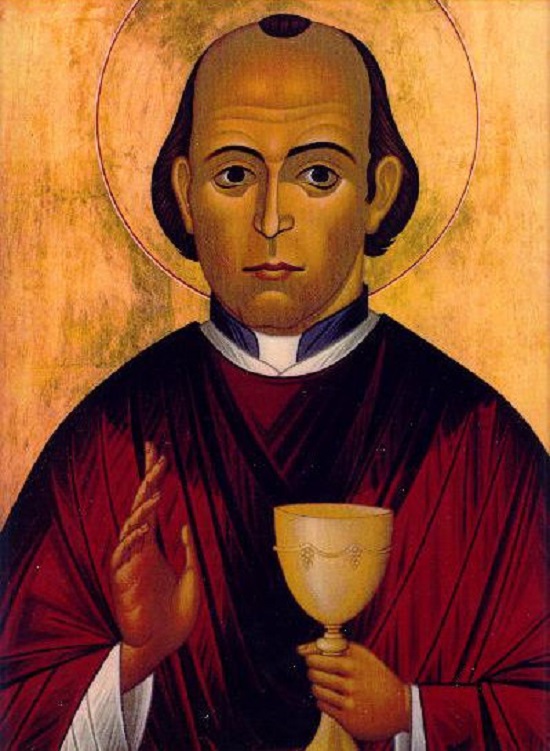
Kaspar del Bufalo
italienischer Name:
Gaspare
Gedenktag katholisch: 28. Dezember
Messe an einigen Orten: 3. Januar
Hochfest bei den Missionaren vom kostbaren Blut, Fest bei den Anbeterinnen des
kostbaren Blutes: 21. Oktober
Name bedeutet: der
Schatzmeister (persisch)
Priester, Ordensgründer
* 6. Januar 1786 in Rom
† 28. Dezember 1837 daselbst
Kaspars Vater war Koch
bei einer Fürstenfamilie, die Mutter erzog den kränklichen Jungen, der schon
als Kind viel Zeit in Kirchen zubrachte; getauft worden war er in der
Kirche San
Martino ai Monti in Rom. Er wollte dann Missionar werden und besuchte
deshalb das Collegio
Romano, empfing die niederen Weihen und begann, vor Kirchen und auf Plätzen
Rom zu predigen; die kleinen Leute waren von seiner einfachen und klaren
Sprache begeistert.
Statue in der
Kirche della
Santissima Annunziata Maggiore in Neapel
1808 empfing Kaspar die
Priesterweihe, kurz darauf besetzte Napoleon die Stadt Rom und
forderte von ihren Priestern einen Treueeid, den Gaspare verweigerte, wofür er
ab 1810 vier Jahre lang in Bologna, Imola und
auf Korsika im
Gefängnis war. Nach der Befreiung von Napoleon konnte Kaspar 1814 nach Rom
zurückkehren und wollte nun endlich als Missionar seinem Vorbild Franz Xaver nacheifern,
wurde jedoch von Papst Pius VII. mit der Volksmission im damaligen Kirchenstaat
betraut.
Am Tag der Himmelfahrt
Maria 1815 gründete Kaspar del Bufalo im alten Kloster
San Felice nahe Giano in Umbrien zusammen mit drei Gefährten den Orden
der Missionari del Preziosissimo Sangue, der Missionare vom kostbaren
Blut, nach dem Stifter auch Bufalini oder
auch Sanguinisten genannt. Die Ordensmitglieder übernahmen Aufgaben
in der Volksmission, in Seelsorge und Unterricht, sie hielten Exerzitien ab und
befruchteten die Erneuerung kirchlicher Praxis in Italien wesentlich.
1837 gründete Kaspar
zusammen mit Maria de
Mattias auch die Suore Adoratrici del Preziosissimo
Sangue, Schwestern von der Anbetung des Kostbaren Blutes. Der Männerorden
wurde 1841, der weibliche Zweig 1855 bestätigt.
Gaspares Freund und
Beichtvater Vinzenz
Pallotti stand ihm in der Sterbestunde bei, bestattet wurde er in
der Kirche
San Paolo in Albano bei Rom; an seinem Grab ereigneten sich zahlreiche
Wunder. 1861 wurden die Gebeine nach
Rom in die Kirche der Sanguinisten, Santa
Maria in Trivio, übertragen. Reliquien liegen
auch in der Kirche San
Paolo - seit 1999 Sanktuarium San Gaspare
del Bufalo - in Albano.
Der heilige Gaspare del Bufalo war ein wahrhaftiger und ganz großer Apostel der Verehrung des allerheiligsten Blutes Jesu für diese Welt.
Papst Johannes
XXIII.
Kanonisation: Die
Seligsprechung erfolgte am 18. Dezember 1904 durch Papst Pius X., die
Heiligsprechung am 12. Juni 1954 durch Papst Pius XII.
Worte des Heiligen
Im Zentrum der Spiritualität von Kaspar del Bufalo steht die Wertschätzung und Verehrung des kostbaren Blutes Jesu:
Das Rote Meer: Symbol des Kostbaren Blutes:
Werfen wir einen Blick auf Jesus. Er hat uns mit dem Holz des Kreuzes in diesem armseligen Meer der Welt den Pfad eröffnet, der uns vor Sturmesfluten und vor dem Ertrinken bewahrt, damit uns die mächtigen Wasser nicht überfluten. Da der Herr es nicht unterlässt, jedem Geschöpf jene Mittel zu geben, die zum vorgegebenen Ziel führen, so gibt er uns das Rote Meer als besonderes Symbol und Gleichnis für das Kostbare Blut. Während wir für unser Heil sorgen, wird durch dieses Blut das Erdreich der Seelen getränkt, das durch die Schuld der Menschen ausgetrocknet war. Dem Sünder bietet es die Straße an, die aus Ägypten dem Bild der verderbten und entarteten Welt, herausführt. Wer Buße tut und von einer großen Liebe zu Jesus erfasst ist, erhält Ansporn und Ermutigung, in diesem geheimnisvollen Meer unterzugehen, um so ein Sieg der Güte Gottes, des Erlösers der Menschen, zu werden: Trockenes Land erschien und durch das Rote Meer führte ein Weg ohne Hindernisse. Ach, wie viele Wahrheiten sind doch in diesen kurzen Andeutungen enthalten!
Das große Buch des Kreuzes:
Jesus, der Erlöser … lädt uns ein, das große Buch des Kreuzes zu lesen, damit
wir zu unserer und der Mitmenschen Heiligung die himmlische Weisheit erlangen.
In den Wunden Jesu, des Gekreuzigten, können wir lesen, dass Jesus der
mystische Felsen ist, da er mit dem Stab des Kreuzes geschlagen wurde. Wir
lesen im Psalm: Da er den Felsen schlug, strömten die Wasser und die Bäche
füllten sich. Damit sind die überfließenden Gnaden gemeint, die uns durch die
Verdienste des Kostbaren Blutes zuteil werden. Sie sollen uns zu einem reinen,
unbescholte¬nen Leben führen und im Nächsten den Glanz guter Sitten
hervorbringen. Ach, hören wir doch auf die eindringliche Stimme des Erlösers,
der uns seine Leiden zeigt und uns auffordert, uns für die Seelen einzusetzen.
Sie kosten den unschätzbaren Preis unserer heiligen Erlösung: Denn um
einen teuren Preis seid ihr erkauft worden.
Quelle: 8. Brief an seine
Mitbrüder 1834. In: Die Exerzitienbriefe des hl. Kaspar del Bufalo -
Anweisungen für das geistliche Leben der Missionare. Missionare vom Kostbaren
Blut, Lins-Verlag, Feldkirch 1985, S.49
Zitat von Kaspar del
Bufalo:
In einem Brief an seine Mitbrüder stellt er folgende sieben Merksätze auf:
Wenn das äußere Leben eines Missionars nicht vom inneren her bestimmt wird und auf ihm aufbaut, dann mögen sich seine physischen Kräfte noch so sehr aufreiben, er wird vor Gott nicht bestehen können.
Wer das verborgene Leben in Einfachheit und Demut liebt, der wird in den. Tugenden voranschreiten und in sich die Liebe Gottes erhalten. Wie die Meister des geistlichen Lebens sagen, schützt man edlen Weinbrand vor dem Verdunsten an offener Luft und gibt sich alle Mühe, ihn wohl verschlossen zu halten.
Wer sich aus Bequemlichkeit mit dem geringeren Gut zufrieden gibt, steht dem Bösen sehr nahe. Wer dagegen immer nach dem höheren Gut strebt, der ist vom Bösen weit entfernt.
Bedauernswert arm ist jemand, der zwar reich an Geistesgaben und Redegewandtheit ist und vom Volk gelobt wird, der aber der dazugehörenden Tugenden entbehrt und nicht alles, was er hat, auf Gott zurückführt.
Irdische Gesinnung verrät, wer von sich selber gut, von anderen aber schlecht
redet.
Wer aus dem Gehorsam lebt, findet den Willen Gottes, bewahrt den Frieden im
Herzen und stützt die Mitmenschen im Glauben.
Die Verehrung des Blutes Christi ist ein vortreffliches Mittel, um jenen Eifer
zu erwerben, mit dem wir all das Gesagte verwirklichen können. Möge sie die
Freude unserer Herzen sein!
Quelle: Die
Exerzitienbriefe des hl. Kaspar del Bufalo - Anweisungen für das geistliche
Leben der Missionare. Missionare vom Kostbaren Blut, Lins-Verlag, Feldkirch
1985, S.62f
zusammengestellt von Abt em. Dr. Emmeram Kränkl OSB,
Benediktinerabtei Schäftlarn,
für die Katholische
SonntagsZeitung
Die Kirche San Martino ai Monti in Rom ist täglich von 8 Uhr bis 12 Uhr und von 16 Uhr bis 19 Uhr geöffnet. (2017)
Die Kirche San
Paolo / Sanktuarium San Gaspare del Bufalo in Albano ist
täglich von 7.30 Uhr bis 12.30 Uhr und von 16 Uhr bis 19 Uhr geöffnet. (2022)
Seite
zum Ausdruck optimiertUnser Reise-Blog:
Reisen zu den Orten, an denen die
Heiligen lebten und verehrt werden.
Empfehlung an
Freunde senden
Artikel
kommentieren / Fehler melden
Fragen? -
unsere FAQs antworten!
Impressum - Datenschutzerklärung
Schauen Sie sich zufällige Biografien an:
Waldredus
von Trier
Maria
Wundern Ortells Gimeno
Germana
von Bar sur Aube
Autor: Joachim
Schäfer - zuletzt aktualisiert am 20.04.2024
Quellen:
• Vera Schauber, Hanns Michael Schindler: Heilige und Patrone im Jahreslauf. Pattloch, München 2001
• Faltblatt The Church of Santa Maria in Trivio - Rome
• https://it.wikipedia.org/wiki/Gaspare_del_Bufalo - abgerufen am 06.06.2022
• https://www.santiebeati.it/dettaglio/35900 - abgerufen am 06.06.2022
korrekt zitieren: Joachim Schäfer: Artikel Kaspar del Bufalo, aus dem Ökumenischen Heiligenlexikon - https://www.heiligenlexikon.de/BiographienK/Kaspar_del_Bufalo.htm, abgerufen am 1. 1. 2026
Die Deutsche Nationalbibliothek verzeichnet das Ökumenische
Heiligenlexikon in der Deutschen Nationalbibliografie; detaillierte
bibliografische Daten sind im Internet über https://d-nb.info/1175439177 und https://d-nb.info/969828497 abrufbar.
SOURCE : https://www.heiligenlexikon.de/BiographienK/Kaspar_del_Bufalo.htm

Gaspare del Bufalo, Rome,
Italië; stichter; † (1836 of) 1837.
Feest 6 januari
& 28 & 29 december.
Hij was in 1786 te Rome,
Italië, geboren, waar hij in 1808 priester werd gewijd. Toen hij de eed van
trouw aan Napoleon weigerde, werd hij naar het eiland Corsica verbannen. Na
zijn terugkeer in 1814 stichtte hij een religieuze broederschap om het
evangelie onder de mensen te brengen. Daarbij had hij juist van de kerkelijke
overheden veel tegenstand te verduren. De uiteindelijke goedkeuring kwam pas af
na zijn dood.
Hij ligt begraven in de
naar hem genoemde San-Gasparekerk bij Rome. In 1955 werd hij heilig verklaard
[014; 101a; 102»Gaspard; 106»Caspar-Buffalo; 108; 111»Kaspar; Dries van den
Akker s.j./2007.12.09]
© A. van den Akker
s.j. / A.W. Gerritsen
SOURCE : https://heiligen-3s.nl/heiligen/12/28/12-28-1837-gaspare.php
