
Suore di Carità delle Sante Bartolomea Capitanio e Vincenza Gerosa
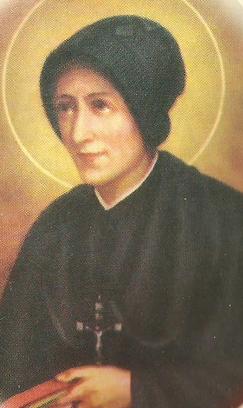
Saint Vincenza Gerosa, Sisters of charity, Calcutta Province, 1950, Sisters of Charity of Saints Bartolomea Capitanio and Vincenza Gerosa (SCCG
Sainte Vincente Gerosa
Cofondatrice de
l'Institut de la Charité (+ 1847)
Née, près de Brescia en 1784, Marie-Catherine Gérosa se dévoue très tôt aux pauvres et aux malades. A 30 ans, elle s'associe à Bartholomée Capitanio pour éduquer les petites filles et soigner les malades. En 1832, elle prononce ses vœux sous le nom de Vincente. L'Institut des sœurs de charité de Marie-Enfant, vient de naître. A la mort de sa compagne, Vincente en devient supérieure.
À Lovere en Lombardie, l'an 1847, sainte Vincente Gerosa, vierge, fondatrice,
avec sainte Bartholomée Capitanio, de l'Institut des Sœurs de la Charité.
Martyrologe romain
SOURCE : https://nominis.cef.fr/contenus/saint/7169/Sainte-Vincente-Gerosa.html

Suore di Carità delle Sante Bartolomea Capitanio e Vincenza Gerosa
Sépulture
de sainte Vincenza Gerosa à Lovere.
Teca
della santa Bartolomea Capitanio nel santuario delle sante Capitanio e Gerosa
di Lovere
28 juin, année A
Le corps de sainte
Vincenza Gerosa (1784-1847) reste incorrompu
Née près de Brescia
(Italie, Lombardie), Vincenza est la cofondatrice des Sœurs de la Charité de
Lovere. Elle rend son âme à Dieu le 20 juin 1847. Dans les heures qui suivent,
les religieuses de son couvent réalisent toilette mortuaire et soins habituels.
Les deux sœurs, chargées
de ses tâches, remarquent quelque chose d’étrange : la physionomie de la
défunte ne change pas le moins du monde et sa peau reste souple et fraîche. Le
lendemain, le processus physiologique normal de rigidité cadavérique est
absent. Personne ne peut expliquer le phénomène. Dans les jours suivants, rien
n’évolue. La même impression de vie et de santé est observée par maints
témoins, religieux et laïcs, pendant des mois. Une première exhumation
officielle a lieu en 1856. Le constat est sans appel : corps « souple
et intact ». La seconde exhumation date de 1858 : même
résultat ! Peu après, le corps est transféré dans la chapelle de la Casa
Gaia, dite « chapelle des origines » car reposent en ce lieu sainte
Vincenza et l’autre fondatrice de la congrégation, sainte Bartolomea Capitanio.
La troisième exhumation est réalisée en 1871. La dépouille est totalement
préservée. On décide de l’exposer à la vénération des fidèles à l’intérieur
d’une châsse vitrée.
En 1938, les deux corps
sont transportés dans une nouvelle chapelle du couvent construite à cet effet.
Mais seul celui de Vincenza est incorrompu, sans jamais avoir été l’objet de la
moindre technique de conservation. Vincenza est béatifiée par le pape
Pie XI en 1933 puis proclamée sainte par son successeur, Pie XII, le
18 mais 1950.
Source : d’après
Luigi Ignazio Mazza, Vita della V. Suor Vincenza Gerosa, fondatrice
seconda delle Suore della Carita in Lovere, Immacolata Concezione, 1910.

Suore
di Carità delle Sante Bartolomea Capitanio e Vincenza Gerosa
Lovere
BG lapide sulla casa natale della santa Vincenza Gerosa (1784-1847)
cofondatrice con la santa Bartolomea Capitanio (1807–1833) dell’Istituto delle
Suore della Carità dette anche di Maria Bambina
QUI'
NACQUE
A
DIO E AL MONDO
LA
B.a VINCENZA GEROSA
A
DIO SERAFINA
AL
MONDO EROICAMENTE
UMILTA'
E CARITA'
I
CONCITTADINI LOVERESI
ESULTANTI
PER LA BEATIFICAZIONE
26
- VII - 1936 - XIV
CANONIZZATA
ANNO SANTO 1950
Also
known as
Catherine Gerosa
Vincenza Gerosa
Profile
Orphaned young.
Spent 40 years as a homemaker and lay
woman devoted to care for the poor.
Around 1832 she
and Saint Bartholomea
Capitanio formed the Sisters of Charity of Lovere, a congregation
for the welfare and support of sick poor people,
and for the education of poor children;
Catherine joined the congregation, taking the name Vincentia. She enjoyed
tending grapevines destined for sacramental wine; as she worked, she meditated
on their conversion to the Blood of Christ. She assumed leadership of the
congregation in 1836 on
the death of Saint Bartholomea,
and led the congregation until her own death.
Born
1784 at Lovere, Bergamo, Italy as Catherine
Gerosa
28 June 1847 at Lovere, Bergamo, Italy following
an extended illness
24 July 1927 by Pope Pius XI (decree
of martyrdom
Additional
Information
Roman
Martyrology, 1914 edition
Saints
of the Day, by Katherine Rabenstein
The Holiness of the Church in the 19th Century
books
Our Sunday Visitor’s Encyclopedia of Saints
other
sites in english
images
videos
sitios
en español
Martirologio Romano, 2001 edición
fonti
in italiano
Dicastero delle Cause dei Santi
MLA
Citation
‘Saint Vincentia
Gerosa‘. CatholicSaints.Info. 1 December 2025. Web. 28 June 2026.
<https://catholicsaints.info/saint-vincentia-gerosa/>
SOURCE : https://catholicsaints.info/saint-vincentia-gerosa/

Suore
di Carità delle Sante Bartolomea Capitanio e Vincenza Gerosa
Sante
Bartolomea Capitanio e Vincenza Gerosa (Lovere)
Saints
of the Day – Vincentia (Vincenza) Gerosa, Virgin
Article
Born in Lovere, Lombardy,
Italy, 1784; died 1846; canonized 1950; feast day formerly on June 28. The
first 40 years of Vincentia’s life were quite ordinary. She was a homemaker.
Then she came to know Saint Bartolomea Capitanio, the foundress of the Italian
Sisters of Charity at Lovere in Lombardy. The women had been moved by the
ignorance and neglect in which so many people lived, so their foundation was
designed to teach the young and nurse the sick. When Bartolomea died in 1833,
Vincentia succeeded her and under her guidance, the institute expanded widely
(Attwater, Benedictines, Encyclopedia).
MLA
Citation
Katherine I
Rabenstein. Saints of the Day, 1998. CatholicSaints.Info.
1 December 2025. Web. 28 June 2026.
<https://catholicsaints.info/saints-of-the-day-vincentia-vincenza-gerosa-virgin/>
SOURCE : https://catholicsaints.info/saints-of-the-day-vincentia-vincenza-gerosa-virgin/
St. Vincenza Gerosa
Feastday: June 28
Birth: 1784
Death: 1847
Co-foundress of the
Sisters of Charity. A native of Lovere, Italy, originally named Catherine, she
was orphaned in her youth and ever after gave her life to
aiding the poor. About 1824, she and St. Bartolomea Capitanio founded the
Sisters of Charity of Lovere to help the poor and sick and educate children,
Following the passing of Bartolomea in 1833, Vincenza assumed the directorship
of the Order and expanded its efforts until her death after a long illness on
June 29. She was canonized in 1975 by Pope Paul VI (r. 1963-1978).
SOURCE : https://www.catholic.org/saints/saint.php?saint_id=2013
A very sympathetic
character is that of Venerable Bartholomea Capitanio, who died on 26 July 1833,
when only twenty-six years of age. In her early years she was deeply affected
by the life of Saint Aloysius Gonzaga. Reading it over again and again she
arrived at the fixed resolve of imitating it as faithfully as possible. She would
become like the princely son of Castiglione in his angelic purity, zeal for
penance, ardent devotion to the Holy Eucharist, practice of prayer, and
self-sacrificing charity toward the neighbor. Both those of her own time and
those of later generations bear witness that her endeavors were crowned with
brightest success.
Bartholomea’s birthplace,
Lovere, at the north end of Lake Iseo in the Brescian Alps, is not far from
Castiglione, where stood the ancestral castle of Saint Aloysius. She was born
on 14 January 1807, the eldest daughter of Modestus Capitanio, a merchant, and
Catharina Canossi, his second wife. The father did not enjoy a good reputation.
He was given to drunkenness, and in consequence was very rude and quarrelsome
with his wife and children. His religious duties he neglected altogether. But
his virtuous daughter, by her prayers and her tactful conduct, succeeded in
bringing him to reflection and he sincerely changed for the better. He died a
truly Christian death. What the children were unable to learn from the father
was supplied by the good example of their mother.
But it was especially an
excellent education in the convent of the nuns of Saint Clare at Lovere that
excited in Bartholomea a zeal for all that is lofty and ideal. She would have been
glad at once to enter the Order of her educators, but she could not obtain the
consent of her parents. With the consent of her confessor, however, she made a
vow of chastity in her seventeenth year.
When she had completed
her studies, with the support of the clergy she opened a private school. Her
success was extraordinary. She easily won the hearts of her pupils and showed
wonderful ability as a teacher. The Austrian Government, to which Lombardy was
subject at the time, freely gave her a teacher’s diploma after a brief
examination. What most captivates the heart of a child and penetrates its
spirit most deeply are the truths of religion explained and illustrated in a
simple and childlike manner. And herein lay the secret of the ability of the
young teacher of Lovere. To this contributed the lofty idea she had of her
vocation. It was not merely to obtain means of livelihood but to attain her
heart’s desire to lead the little ones to their heavenly Friend and to shelter
them from misery, both temporal and eternal, that led her to undertake this
noble office with so great charity and self-sacrifice. She had the spirit of
Aloysius and souls like that of Aloysius she would reproduce in her little
school-girls and in all whom her influence might reach.
Bartholomea, under the
direction of the clergy of the place, employed herself extensively in the care
of the young. A sodality of the Blessed Virgin owes its beginning to her
endeavors. She originated the League of Saint Aloysius for the girls of Lovere.
Its object was the intimate study of the life of that model of youth, with
instruction and direction how best to imitate his virtues in the various
circumstances and conditions of life. Special care was devoted to a profitable
observance of the six Sundays of Saint Aloysius. Since the membership steadily
increased, the foundress divided the association into three sections, according
to the age of the members. Other opportune projects for the benefit of young
people were begun or promoted by her.
Meanwhile, the religious
vocation attracted Bartholomea more strongly as time went on and especially
during the retreat of eight days, which she made each year under the guidance
of her spiritual director.
There was living in
Lovere at this period another holy woman, the Venerable Vincenza Gerosa, who
rivaled Bartholomea in the practice of good works. Vincenza was twenty years
older than Bartholomea, but they had become close friends chiefly through their
work in the sodality of the Blessed Virgin. While Bartholomea achieved great
good as a teacher, Vincenza had won the veneration of the whole city as a nurse
of the sick. She established a little hospital for the poor. The enterprising
and far-seeing Bartholomea formed the plan of founding with Gerosa’s help a
religious institute for the instruction of the young and the care of the sick.
But some years passed before the paths were smoothed. On the Feast of the
Presentation, November 21, 1832, the two foundresses dedicated themselves to
God and began a community life. They called themselves Sisters of Charity and
placed their enterprise under the protection of Our Saviour, His holy Mother,
and Saint Aloysius. It is edifying to read how neither of the two desired to
undertake the office of superior. Bartholomea declared it was incumbent on
Vincenza as the elder, but the latter urged the superior education of her
friend and the fact that Bartholomea was the real author of the plan. Their
charity and harmony, however made any disorder impossible.
God is wont to bring
great works to their accomplishment in ways unexpected by men. So it was in
this case. The whole future of the new institute seemed to depend upon
Bartholomea Capitanio. Weakened by her severe labors, she was attacked by an
incurable consumption in the spring of 1833. The whole city watched the
progress of her illness with greatest anxiety. But, like her patron, Saint
Aloysius Bartholomea awaited the end with cheerfulness and joy and within eight
months after the beginning of her convent life her task on earth was accomplished.
But it soon became
manifest that in heaven she was better able to foster her undertakings than she
had been on earth. Sister Gerosa, in spite of her reluctance, was obliged to
assume the office of superior. The fame of Bartholomews sanctity brought many
of her former pupils and associates to the new Society. It had been originally
intended to restrict the work of the Congregation to Lovere; but it was
impossible to resist the earnest appeals from other localities. In the
development of the foundation the finger of God is everywhere evident. During
the lifetime of Mother Gerosa there were established houses at Bergamo, Milan,
Venice, Roveredo, and Arco, in the Tyrol, and in various smaller towns of
Lombardy. The Congregation received the Papal approbation in 1841. Today it is
active not only in Europe, but also in heathen lands, rendering valuable
assistance to the priests of the mission seminary of Milan.
The humble and devoted
Mother Gerosa governed the Congregation until her death on 29 July 1847, the
apostolic process of her beatification was begun in 1900. The decree declaring
the heroic degree of the virtues of Bartholomea Capitanio followed in 1902.
Both are attractive types of genuine sanctity.
– this text is taken
from The Holiness of the Church in the Nineteenth
Century: Saintly Men and Women of Our Own Times, by Father
Constantine Kempf, SJ; translated from the German by Father Francis Breymann,
SJ; Impimatur by + Cardinal John Farley, Archbishop of New York, 25 September
1916
St. Vincenza Gerosa
St. Vincenza Gerosa was a
religious sister who lived in Italy in the 1700s-1800s. She was a member of the
Sisters of Charity of Lovere. She was also one of the founders of her order.
St. Vincenza Gerosa did a
lot of holy and charitable work. You can use this novena to seek intercession
from this holy sister in many aspects of your life!
About St. Vincenza Gerosa
St. Vincenza Gerosa was
born in 1784 as Caterina Gerosa. She was the eldest child. Her parents later
had three other daughters, one of whom died as a young child. Her parents were
wealthy but lived modestly. They were known to give money generously to
charity.
As a child, Caterina was
reserved in her manner. She prayed often and went to daily Mass.
Caterina’s parents sent
her to the Benedictine Sisters of Gandino for her education, but poor health
soon prevented her from continuing her studies. She left the Benedictine
monastery and returned home. Her parents managed a store that sold the leather
goods from her father’s tanning business, so she assisted at the store counter.
When Caterina was
seventeen years old, her father died. This led to conflict and confusion with
her extended family members over the family business. This greatly distressed
Caterina, but she learned to unite her sufferings with Christ Crucified.
As Caterina grew closer
to the sufferings of Christ, she found herself drawn to assisting the poor out
of love for God. She felt eager to help the sick, the hungry, the thirsty, and
the naked.
Caterina soon began to
devote herself to charitable works and to becoming active in her parish. She
organized retreats and other religious activities for a group of women. She
also established a school for poor girls, to teach them the domestic skills
that could help them out of poverty. She enjoyed growing grapes, and it made
her very happy to consider that her grapes could be used to make the wine that
would be consecrated as the sacred blood of Christ.
In 1824, Caterina met St.
Bartolomea Capitanio. Bartolomea was a school teacher. Together, the two women
used part of Caterina’s inheritance to establish a hospital. In 1832, the two
of them established the Institute of the Sisters of Charity. They both
professed religious vows, and Caterina took the name Vincenza.
In 1833, at age
twenty-six, Bartolomea died from tuberculosis. Vincenza felt inadequate to
continue the work they had begun together all by herself. She felt very tempted
to return home. But her spiritual director encouraged her to continue her work.
She placed her trust in God and remained at her work. Vincenza continued to
feel small and inadequate, but she understood that God works through humble
instruments in His great power.
Vincenza died in 1847
after a lengthy sickness. Her religious order still exists and has hundreds of
houses today.
St. Vincenza Gerosa’s
Feast Day: June 28th
Why Pray the St. Vincenza
Gerosa Novena?
St. Vincenza Gerosa is
the patron saint of the Sisters of Charity of Lovere. You can pray the St.
Vincenza Gerosa Novena if you are discerning a vocation to the Sisters of
Charity of Lovere. Or you can pray this novena to seek St. Vincenza Gerosa’s
intercession for a member of the Sisters of Charity of Lovere whom you know, or
for someone you know who is discerning a vocation to this order.
You can also pray the St.
Vincenza Gerosa Novena for the entire order of the Sisters of Charity of
Lovere, or for a particular house of the Sisters of Charity of Lovere.
You can pray the St.
Vincenza Gerosa Novena for any intention!
St. Vincenza Gerosa
Novena Prayers
St. Vincenza Gerosa
Novena - Day 1
In the name of the
Father, and of the Son, and of the Holy Spirit.
Amen.
Dear Lord, we thank You
and praise You for giving us St. Vincenza Gerosa as an example of holiness.
Please hear all the petitions she brings to You on our behalf.
St. Vincenza, you began
to practice holy habits from the time you were a young child. You prayed often
and went to daily Mass. You soon began to practice charitable works, and you
continued to serve God faithfully for the rest of your life.
We ask you to bring all
of our petitions before the throne of God, and we particularly ask today that
you pray that all children may receive the love and formation they need.
Pray for us, that we may
always do all we can to serve God faithfully. Pray that each day we will
faithfully carry out all the duties of our state in life.
And we especially ask in
this novena for (mention your intentions here).
St. Vincenza Gerosa, pray
for us!
In the name of the
Father, and of the Son, and of the Holy Spirit.
Amen.
St. Vincenza Gerosa
Novena - Day 2
In the name of the
Father, and of the Son, and of the Holy Spirit.
Amen.
Dear Lord, we thank You
and praise You for giving us St. Vincenza Gerosa as an example of holiness.
Please hear all the petitions she brings to You on our behalf.
St. Vincenza, you did not
have the benefit of a stable family life for some of your adolescence. Your
father died when you were young, and you suffered greatly from the conflict
that occurred between your extended family members. Despite this suffering, you
served God faithfully.
We ask you to bring all
of our petitions before the throne of God, and we particularly ask today that
you pray that all families may be full of holiness and love.
Pray for us, that we may
serve God faithfully despite any sufferings we might face. Pray that we may
grow closer to God each day of our lives.
And we especially ask in
this novena for (mention your intentions here).
St. Vincenza Gerosa, pray
for us!
In the name of the
Father, and of the Son, and of the Holy Spirit.
Amen.
St. Vincenza Gerosa
Novena - Day 3
In the name of the
Father, and of the Son, and of the Holy Spirit.
Amen.
Dear Lord, we thank You
and praise You for giving us St. Vincenza Gerosa as an example of holiness.
Please hear all the petitions she brings to You on our behalf.
St. Vincenza, you
suffered from poor health during your time as a student with the Benedictine
Sisters of Gandino. Your poor health forced you to return home. But despite
your sufferings, you continued to serve God faithfully.
We ask you to bring all
of our petitions before the throne of God, and we particularly ask today that
you pray that God may strengthen and assist all who suffer from poor
health.
Pray for us, that we may
always rely on God in all times of trial. Pray that we may never allow any
sufferings to deter us from faithfully serving God.
And we especially ask in
this novena for (mention your intentions here).
St. Vincenza Gerosa, pray
for us!
In the name of the
Father, and of the Son, and of the Holy Spirit.
Amen.
St. Vincenza Gerosa
Novena - Day 4
In the name of the
Father, and of the Son, and of the Holy Spirit.
Amen.
Dear Lord, we thank You
and praise You for giving us St. Vincenza Gerosa as an example of holiness.
Please hear all the petitions she brings to You on our behalf.
St. Vincenza, your father
died when you were seventeen years old. His death brought great turmoil to your
extended family, and you suffered a lot because of this conflict. Throughout
this suffering, you relied deeply on God.
We ask you to bring all
of our petitions before the throne of God, and we particularly ask today that
you pray that God may strengthen and comfort all who are grieving the death of
a loved one.
Pray for us, that we may
always rely on God’s grace throughout times of suffering. Pray that we may grow
closer to God in every circumstance we face in our lives.
And we especially ask in
this novena for (mention your intentions here).
St. Vincenza Gerosa, pray
for us!
In the name of the
Father, and of the Son, and of the Holy Spirit.
Amen.
St. Vincenza Gerosa
Novena - Day 5
In the name of the
Father, and of the Son, and of the Holy Spirit.
Amen.
Dear Lord, we thank You
and praise You for giving us St. Vincenza Gerosa as an example of holiness.
Please hear all the petitions she brings to You on our behalf.
St. Vincenza, you endured
a lot of suffering during your life. When the death of your father brought
great conflict into your extended family, you were deeply distressed. But you
united your sufferings to the sufferings of Christ.
We ask you to bring all
of our petitions before the throne of God, and we particularly ask that you
pray that we may increase our ability to unite our sufferings to the sufferings
of Jesus.
Pray for us, that we may
offer all things to Our Lord each day. Pray that we may grow in our friendship
with Jesus each day of our lives.
And we especially ask in
this novena for (mention your intentions here).
St. Vincenza Gerosa, pray
for us!
In the name of the
Father, and of the Son, and of the Holy Spirit.
Amen.
St. Vincenza Gerosa
Novena - Day 6
In the name of the
Father, and of the Son, and of the Holy Spirit.
Amen.
Dear Lord, we thank You
and praise You for giving us St. Vincenza Gerosa as an example of holiness.
Please hear all the petitions she brings to You on our behalf.
St. Vincenza, you were
moved to practice charity toward those in need from the time you were a young
woman. Out of love for God, you were eager to help the poor and the sick. You
soon began to organize charitable works, and you practiced charity in your
religious order for the rest of your life.
We ask you to bring all
of our petitions before the throne of God, and we particularly ask today that
you pray that we may grow in charity.
Pray for us, that we may
grow in every virtue we need for holiness. Pray that we do all we can to serve
God devotedly each day of our lives.
And we especially ask in
this novena for (mention your intentions here).
St. Vincenza Gerosa, pray
for us!
In the name of the
Father, and of the Son, and of the Holy Spirit.
Amen.
St. Vincenza Gerosa
Novena - Day 7
In the name of the
Father, and of the Son, and of the Holy Spirit.
Amen.
Dear Lord, we thank You
and praise You for giving us St. Vincenza Gerosa as an example of holiness.
Please hear all the petitions she brings to You on our behalf.
St. Vincenza, you formed
a holy friendship with St. Bartolomea Capitanio to carry out holy work.
Together with her, you established a religious order and a hospital. As members
of your religious order, you both served God faithfully.
We ask you to bring all
of our petitions before the throne of God, and we particularly ask today that
you pray that God may grant us holy friendships.
Pray for us, that we may
do all we can to carry out God’s will in our lives each day. Pray that we may
always be open to serving God in whatever ways He calls us to.
And we especially ask in
this novena for (mention your intentions here).
St. Vincenza Gerosa, pray
for us!
In the name of the
Father, and of the Son, and of the Holy Spirit.
Amen.
St. Vincenza Gerosa
Novena - Day 8
In the name of the Father,
and of the Son, and of the Holy Spirit.
Amen.
Dear Lord, we thank You
and praise You for giving us St. Vincenza Gerosa as an example of holiness.
Please hear all the petitions she brings to You on our behalf.
St. Vincenza, you formed
a religious order with St. Bartolomea Capitanio. As a religious sister in the
Sisters of Charity of Lovere, you served God faithfully for the rest of your
life.
We ask you to bring all
of our petitions before the throne of God, and we particularly ask today that
you pray that God may inspire more men and women to serve Him in the religious
and priestly vocations.
Pray for us, that we may
always be eager to answer God’s call in our lives. Pray that we may do all we
can to grow closer to God each day of our lives.
And we especially ask in
this novena for (mention your intentions here).
St. Vincenza Gerosa, pray
for us!
In the name of the
Father, and of the Son, and of the Holy Spirit.
Amen.
St. Vincenza Gerosa
Novena - Day 9
In the name of the
Father, and of the Son, and of the Holy Spirit.
Amen.
Dear Lord, we thank You
and praise You for giving us St. Vincenza Gerosa as an example of holiness.
Please hear all the petitions she brings to You on our behalf.
St. Vincenza, you felt
God calling you to perform works of mercy from the time you were a young woman.
You later realized that it was His will for you to help establish a religious
order devoted to holy work. Together with St. Bartolomea Capitanio, you
established the Sisters of Charity of Lovere.
We ask you to bring all
of our petitions before the throne of God, and we particularly ask today that
you pray that all Sisters of Charity of Lovere may be holy servants of God.
Pray for us, that we may
carry out the duties of our vocation faithfully each day. Pray that we may do
all we can to live saintly lives.
And we especially ask in
this novena for (mention your intentions here).
St. Vincenza Gerosa, pray
for us!
In the name of the
Father, and of the Son, and of the Holy Spirit.
Amen.
Read more at: https://www.praymorenovenas.com/st-vincenza-gerosa-novena
SOURCE : https://www.praymorenovenas.com/st-vincenza-gerosa-novena

Santa Vincenza
Gerosa Vergine
Festa: 28 giugno
Lovere, Bergamo, 29
ottobre 1784 - 20 giugno 1847
Riservata e timida, trascorse alcuni anni della sua infanzia al banco della bottega familiare, poiché non poté studiare, per la salute cagionevole. Già in questo tempo, la sua modestia le faceva vivere una spiritualità semplice e ordinaria, fatta dell'ascolto quotidiano della Messa.
Gli anni seguenti l'invasione napoleonica d'Italia segnarono profondamente la sua vita, sia per le difficoltà economiche, sia per la morte del padre, della sorella Francesca e infine, nel 1814, della stessa madre. Malgrado ciò Vincenza, con animo coraggioso, accettò questi avvenimenti come volontà di Dio e soffrì nel silenzio del suo cuore. Con la costanza della preghiera si impegnò in parrocchia e organizzò un oratorio femminile con incontri, ritiri e scuole pratiche di lavoro domestico.
Con Bartolomea Capitanio, una compagna conosciuta nel 1824, diede vita, non senza titubanza, a una fondazione religiosa regolare per soccorrere le persone nelle condizioni più misere e soprattutto per l'educazione delle ragazze; l'istituto, con sede a Casa de Gaia, assunse la regola delle Figlie della Carità di Antida Thouret.
Morta prematuramente la Capitanio, Vincenza ebbe la tentazione di tornare alla
sua vita di casa, ma spronata dal suo padre spirituale, Angelo Bosio,
acconsentì a continuare l'impresa che, approvata da Gregorio XVI nel 1840, si
diffuse rapidamente in tutta la Lombardia e anche nel Trentino e nel Veneto.
Etimologia: Vincenza
= vittoriosa, dal latino
Emblema: Giglio
Martirologio
Romano: A Lovere in Lombardia, santa Vincenza Gerosa, vergine, che fondò
insieme a santa Bartolomea Capitanio l’Istituto delle Suore della Carità.
Vicino a Bergamo, sul Lago d’Iseo, a Lovere, nel 1784, in una famiglia di ricchi conciatori di pelli, nasce Caterina Gerosa. La bambina, dopo la scuola elementare, viene chiamata a collaborare nell’azienda di famiglia, ma prima di recarsi in negozio e alla fine della giornata va in chiesa a pregare. Come è strano il comportamento di questa ragazzina! Possiede denaro, terreni e case. Eppure, timida e riservata, vive miseramente. Si veste con indumenti semplici e rattoppati, mangia pochissimo, spesso solo polenta e noci, coltiva l’orto. Perché? Per risparmiare e regalare cibo agli affamati che, a quei tempi, erano tantissimi a causa di guerre, carestie, epidemie.
Caterina rimane orfana e con l’eredità ricevuta aumenta la paga degli operai e aiuta ancora di più i bisognosi. Invita a casa sua i poveri, soprattutto le mamme che non riescono a sfamare i loro bambini. Cucina per loro e offre gratuitamente lauti pranzi. Sovente si reca nelle case dove manca tutto per portare pace e pane. Caterina è molto amata e tutti la chiamano zia. Riceve una proposta di matrimonio che rifiuta perché ha deciso di dedicarsi completamente al Signore e ai poveri.
Comincia, poi, ad occuparsi dell’oratorio dove incontra una maestrina molto più giovane di lei, Bartolomea Capitanio (anche lei dichiarata santa). La ragazza ha grandi progetti e convince la timida Caterina a realizzarli con le sue possibilità economiche. Caterina acconsente anche se, essendo molto umile, non si sente all’altezza del compito. Incoraggiata dal parroco del paese Don Angelo Bosio, Caterina acquista un palazzo che adibisce ad ospedale. Purtroppo, dopo pochi anni, Bartolomea muore, lasciando Caterina da sola. La donna non sa cosa fare, si ritiene, come sempre, una buona a nulla. Vorrebbe rinunciare, ma ancora una volta le parole di Don Bosio la incitano a continuare.
Caterina prende i voti e diventa suor Vincenza (dal latino, significa
“vittoriosa”). Fonda la Congregazione delle Suore di Carità, dette di “Maria
Bambina”. Dà vita ad orfanotrofi e ospizi per malati, e offre istruzione
gratuita alle fanciulle. La congregazione attira tante vocazioni. Le suore
diventano centinaia e vengono chiamate in Lombardia, Trentino e Veneto, per
prestare il loro aiuto in situazioni gravi di indigenza e di epidemie. Vincenza
Gerosa muore nel 1847 a Lovere dove è sepolta, presso il Santuario delle Suore
di “Maria Bambina”, oggi presenti in tutto il mondo.
Autore: Mariella
Lentini
Non aveva davvero mai pensato di diventare una “fondatrice”. Il suo orizzonte era Lovere, terra bergamasca soggetta alla Repubblica di Venezia. Era l’impresa commerciale che faceva dei Gerosa una casata benestante. Battezzata col nome di Caterina, ha poi incominciato a studiare dalle Benedettine di Gandino, in Val Seriana. Ma la poca salute le ha impedito di continuare, e così è tornata a Lovere.
La sua vita è costellata di “ma”, di progetti che poi le circostanze continuamente stravolgono. Era contenta di starsene nel negozio di famiglia, ma l’azienda va in crisi sotto il ciclone napoleonico, mentre Lovere passa dal dominio veneziano a quello francese, nella Repubblica Cisalpina. Caduto Napoleone, e passato il Bergamasco sotto l’Impero degli Asburgo, Caterina si dedica all’insegnamento gratuito per le ragazze povere, ad attività di assistenza e di formazione religiosa, incoraggiata da due successivi parroci.
Questa dimensione locale dell’impegno le basta, l’appaga: anche perché si rivela assai ricca di stimoli e di sfide. Ed ecco un altro “ma”. Nel 1824 fa amicizia con una maestrina, anch’essa di Lovere: Bartolomea Capitanio, di 17 anni. L’incontro la spinge in un’avventura nuova: creare un ospedale. Loro due. E ci riescono, inaugurandolo un paio di anni dopo. L’ha reso possibile lei, con beni ereditari del casato dei Gerosa. Ma per un’attività stabile occorre personale votato e preparato all’assistenza.
E la maestrina Capitanio ha un suo progetto chiaro: fondare un apposito istituto religioso, con questi obiettivi: assistenza ai malati, istruzione gratuita alle ragazze, orfanotrofi, assistenza alla gioventù. E ne convince l’amica, sicché nell’autunno del 1837 l’istituto nasce, con loro due.
Ultimo e tremendo “ma”: Bartolomea Capitanio muore il 26 luglio 1833, a 26 anni. Caterina Gerosa è sola, è poco istruita, si sente quasi vecchia, vorrebbe lasciare tutto... Ma rimane, invece. Non rassegnata: decisa: accoglie le prime giovani e per sette anni la piccola comunità segue la regola delle suore di santa Maria Antida Thouret, finché nel 1840 arriva il riconoscimento pontificio, e prendono canonicamente vita le Suore di Maria Bambina, con le regole scritte da Bartolomea Capitanio e con la guida di Caterina Gerosa, che prende i voti assumendo il nome di suor Vincenza. Già nel 1842, sebbene siano ancora poche, le chiamano a Milano. Anzi, l’arcivescovo cardinale Gaysruk (alta aristocrazia austriaca) vorrebbe farne una sua istituzione diocesana. Ma suor Vincenza resiste anche a lui: a Lovere sono nate, e Lovere dev’essere la loro casa, con le loro regole. Quando muore, le suore sono 171. All’inizio del terzo millennio saranno circa cinquemiladuecento. Nell’Anno santo 1950, papa Pio XII ha canonizzato insieme Bartolomea Capitanio e Vincenza Gerosa.
Il corpo si trova nel santuario delle Suore di Carità - dette di Maria Bambina - in Lovere.
Autore: Domenico Agasso
Note: La sua festa
liturgica è il 28 giugno, mentre la Congregazione delle Suore di Maria Bambina
e le diocesi di Brescia, Bergamo e Milano la ricordano il 18 maggio
SOURCE : https://www.santiebeati.it/dettaglio/32700

Suore di Carità delle Sante Bartolomea Capitanio e Vincenza Gerosa
Ospedale
"SS.Capitanio e Gerosa" (Lovere)
VINCENZA GEROSA, santa
di Valentina
Ciciliot
Dizionario Biografico
degli Italiani - Volume 99 (2020)
VINCENZA GEROSA, santa. –
Nacque il 29 ottobre 1784 a Lovere (Bergamo) da Gianantonio e da Giacomina
Macario, primogenita di altre tre sorelle.
Fu battezzata il 31
ottobre nella chiesa di S. Giorgio con i nomi di Caterina, Maria e Francesca.
La famiglia era benestante sia per i possedimenti terrieri sia per il commercio
e la concia di pellami, e molto stimata in paese, anche per la frugalità e la
modestia nello stile di vita e la carità elargita ai medicanti. Delle tre
sorelle di Caterina, la prima morì a tre anni, la seconda, Francesca, morì a
diciassette anni, poco dopo la morte del padre, e la terza, Rosa, fu l’unica a
esserle compagna. Nella casa in cui crebbe Caterina vivevano anche i fratelli
del padre, Ambrogio, Salvatore e Luigi, e due sorelle, Maria e Bartolomea. Si
può ipotizzare, a causa della mancanza di dati archivistici, che Caterina
ricevette tardi la comunione e la cresima, come era uso per le bambine al
tempo. Non ricevette educazione alle scuole elementari, che non c’erano in
paese. Venne affidata solo per un breve periodo a un istituto religioso di
Gandino (Bergamo) per l’istruzione, ma quando fu costretta a rientrare a casa
per malattia, non fu più rimandata. Apprese dal padre e dagli zii a far di
conto e a leggere e scrivere, cose che le vennero insegnate per renderla capace
di seguire gli affari di famiglia. Infatti, venne messa a lavorare fin da
bambina non solo alle faccende di casa e ai lavori agricoli, ma anche come
garzona al banco del negozio. Lo zio Ambrogio, il capo effettivo della famiglia
patriarcale allargata di Caterina, sembrò prediligerla e la scelse come sua
segretaria. Il padre e la madre vennero invece progressivamente emarginati e
rimproverati per la loro inettitudine alle attività commerciali, in un clima di
crescente ostilità familiare.
Secondo le fonti
agiografiche, nonostante l’impegno lavorativo, Caterina riuscì comunque a
trovare il tempo per la preghiera, la meditazione e il disciplinamento del proprio
corpo (anche con cilici e flagelli). Fu la madre, descritta come donna pia e
devota, a ispirarla a una vita condotta cristianamente (comunione giornaliera,
nonostante non fosse una pratica comune al tempo, frequenza alle messe e alla
recita del rosario, frugalità nel cibo e nei vestiti, mortificazione del corpo,
carità verso i poveri). È in questo periodo di giovinezza che Caterina
abbracciò l’idea di non sposarsi, ma piuttosto di consacrarsi a Dio come s.
Agnese.
Quando Caterina compì
diciassette anni il padre si ammalò gravemente e morì in poco tempo. I parenti
paterni – in particolar modo sembrò per il volere della zia Bartolomea –
cacciarono la madre di Caterina da casa e intimarono alle due figlie di
interrompere ogni contatto. Le due giovani seguirono il consiglio del prevosto
Rusticiano Barboglio, che fu parroco di Lovere dal 1802 al 1840 e che ebbe
molta influenza sulla successiva vita religiosa di Caterina, di piegarsi alla
volontà degli zii paterni e dunque, di non seguire la madre, per non perdere il
sostentamento e i diritti all’eredità. Cominciò così una fase di difficile
convivenza a casa degli zii paterni. Il periodo di allontanamento dalla madre
durò per più di dieci anni e fu interrotto solo quando alle figlie fu concesso
di vederla in fin di vita il 7 febbraio 1814. Il giorno seguente morì.
Tra il 1814 e il 1815 la
provincia di Bergamo fu zona di operazioni militari francesi e austriache, a
seguito delle guerre napoleoniche, prima che Lovere passasse al Regno
Lombardo-Veneto. Il paese fu colpito da carestia, seguita da epidemie di vaiolo
e tifo. Caterina in quell’anno intensificò le sue opere di carità verso i
malati e gli indigenti, guadagnandosi l’appellativo di ‘siura’, la ‘signora’
dei poveri. Cominciò inoltre a interessarsi al supporto delle giovani del paese
che «apparivano poco serie, punto timorate di Dio, affascinate dagli affetti
del mondo» (La beata Vincenza Gerosa, 1933, p. 26).
Nel 1816 un religioso
missionario degli operai, Leonardo da Bergamo, propose a Caterina di entrare nell’istituto
delle Figlie della carità canossiane, ma ella, dopo un anno di preghiera e
dietro consiglio del confessore, rifiutò.
Gli inizi degli anni
Venti del 1800 furono segnati da lutti, ma anche da un attivo apostolato
cristiano. Il 17 marzo 1822 morì la zia Maria e il 29 maggio 1822 lo zio
Ambrogio, che lasciò il patrimonio in eredità al fratello Luigi, alla sorella
Bartolomea e alle due nipoti Caterina e Rosa. Nel 1824 morì anche lo zio Luigi
e tutte le proprietà passarono in eredità alle due sorelle, in usufrutto alla
zia Bartolomea. Dopo la perdita di quasi tutti i parenti, il negozio e parte
delle attività commerciali della famiglia vennero chiuse, lasciando Caterina
libera di dedicarsi più liberamente alle sue attività caritatevoli. Tra il 1821
e il 1822 fu incoraggiata dal sacerdote Barboglio e dal suo coadiutore don
Angelo Bosio a organizzare in parrocchia la Congregazione mariana. Così, a sue
spese, Caterina istituì le Figlie di Maria e con esse un piccolo centro
spirituale parrocchiale. Fu qui che qualche tempo dopo arrivò Maria Bartolomea
Capitanio (1807-1833), da poco uscita dal collegio delle clarisse di Lovere con
le competenze per l’insegnamento. Le due divennero presto collaboratrici.
Stando alle fonti
agiografiche, le doti organizzative di Bartolomea e il suo spirito
intraprendente si armonizzarono con il carattere più riservato e pacato di
Caterina, creando una relazione amicale equilibrata e fruttuosa, nonostante la
notevole differenza di età.
Insieme a Barboglio e
Bosio Caterina e Bartolomea organizzarono un oratorio parrocchiale, che presto
Caterina lasciò dirigere a Bartolomea, mentre ella si riservava il compito di
infermiera presso lo stesso oratorio. Caterina si impegnò inoltre nella
costruzione di un ospedale dedicato ai malati poveri, al quale lo zio Ambrogio
aveva legato parte dell’eredità – dietro consiglio di Caterina, infatti, lo zio
aveva lasciato in testamento una casa con orto perché fosse trasformata in
ospedale dopo la morte di Caterina e Rosa, le quali in vita dovevano goderne
l’usufrutto. Morto lo zio, le due sorelle però rinunciarono all’usufrutto e
l’11 novembre 1823 Caterina firmò l’atto di cessione. Il 1° novembre 1826 venne
inaugurato l’ospedale dei cronici e degli infermi per i poveri di Lovere.
Bartolomea ne fu nominata direttrice. Poco dopo un’altra grave perdita scosse
nuovamente Caterina: la sorella Rosa si ammalò e morì, lasciandola sola con la
zia Bartolomea, che però si era molto «irrigidita nell’asprezza del carattere»
(La beata Vincenza Gerosa, 1933, p. 36).
L’ospedale doveva essere
il primo fondamento di un’opera religiosa più vasta ideata da Bartolomea e
appoggiata dagli ecclesiastici locali, ovvero un istituto che doveva unire vita
contemplativa e vita attiva, aperta ai nuovi bisogni dei tempi. Bartolomea
persuase Caterina a unirsi a lei nello sforzo della nuova fondazione, sia per
la sua santità di vita e le sue qualità professionali sia perché disponeva dei
mezzi per aiutarla. Infatti, con le sostanze di Caterina e quelle più modeste
di Bartolomea, venne comprata una casa vicino all’ospedale (22 marzo 1832),
detta Gaia dal nome del proprietario precedente, che servì da luogo di partenza
per il nuovo istituto religioso. L’abitazione venne presto ribattezzata dai
locali ‘conventino’.
Anche se Bartolomea aveva
già abbozzato le regole del nuovo istituto che doveva essere dedicato a Gesù
Redentore, gli ecclesiastici coinvolti nel progetto consigliarono piuttosto di
adottare una regola comunitaria già in vigore, considerato soprattutto il fatto
che Lovere si trovava sotto regime austriaco, restio a promuovere nuove forme
religiose. Si decise così di prendere ‘a prestito’ le regole delle Figlie della
carità di Giovanna Antida Thouret, ispirate a s. Vincenzo de’ Paoli, presenti a
Vercelli presso l’ospedale di S. Andrea (1832). Opportunamente ritoccate, le
regole vincenziane furono applicate al nuovo istituto, che in questa prima fase
tenne conto anche delle idee scritte da Bartolomea in un promemoria. In un
primo momento sembra che Caterina fu incerta se proseguire nell’opera
soprattutto a causa dei dubbi che nutriva sulle sue capacità di seguire le
regole di una comunità religiosa. Inoltre, la zia Bartolomea avversò il
progetto fin dal principio, preoccupata di salvaguardare l’eredità familiare.
Di lì a poco, infatti, chiese la divisione di ogni bene e si allontanò dalla
nipote, fino a poco prima della sua morte, avvenuta il 10 maggio 1843.
Dissipata ogni incertezza, Caterina si consacrò il 21 novembre 1832, prendendo
i voti di povertà, castità, obbedienza e carità verso il prossimo insieme a
Bartolomea. La casa Gaia apriva le porte come scuola gratuita per le figlie
della popolazione locale, come orfanotrofio e come centro di assistenza a
quanti cercassero aiuto morale e materiale. Il 22 giugno 1833 Bartolomea e Caterina
stilarono l’atto civile costitutivo dell’associazione, in attesa di creare il
vero e proprio istituto religioso (l’atto di erezione dell’istituto da parte
delle autorità governative austriache arrivò il 14 aprile 1834).
Inaspettatamente però
Bartolomea, minata dalla tisi, morì di bronchite il 26 luglio 1833, lasciando
Caterina sola con la neonata opera (a quel punto vi era solo una postulante che
si era unita a loro, Maddalena Giudici). Supportata da Barboglio e Bosio,
rispettivamente nominati superiore ecclesiastico e direttore spirituale,
Caterina decise di proseguire. A seguito della cerimonia di vestizione, che
venne introdotta nel novembre del 1835, Caterina assunse il nome di suor Maria
Vincenza, in onore del patrono dell’istituto, Vincenzo de’ Paoli. Il 18 maggio
1836 venne eletta superiora della comunità.
Nel 1836 scoppiò il
colera a Lovere e Vincenza e le altre religiose furono in prima fila nel
soccorrere malati e morenti. La fama del neonato istituto si diffuse così nelle
aree geografiche limitrofe. Se l’istituto aveva utilizzato fino ad allora le
regole delle suore di Vercelli, legate alla casa di Besançon di Antida Thouret,
continuare il legame, seppur più di nome che di fatto, con una casa religiosa
francese divenne politicamente impraticabile. Vincenza dovette chiedere
ufficialmente di poter seguire le regole vincenziane, ma indipendentemente da
Besançon. Il 30 settembre 1839 giunse l’approvazione pontificia. Il 5 giugno
1840 il breve Multa inter pia, firmato da Gregorio XVI, esonerò il sodalizio
religioso dalla dipendenza dalla congregazione di Antida Thouret, autorizzando
così la costituzione di un istituto autonomo, l’istituto delle suore della
carità. Il 20 febbraio 1841 il governo austriaco ratificò il breve papale. Il
14 settembre 1841 vi fu la formale erezione canonica della congregazione con
solenne cerimonia.
Le suore della carità,
sotto la guida di Vincenza, incrementarono la loro presenza nella regione tra
gli anni Trenta e Quaranta dell’Ottocento. A Bergamo, oltre agli stabilimenti
di S. Chiara per orfane e ‘pericolanti’ (21 maggio 1837), delle convertite per
nobili decadute (1° giugno 1838) e del conventino di Treviglio per fanciulle
abbandonate (3 dicembre 1839), le suore si occuparono anche dell’ospedale
civile (5 giugno 1840) e del ricovero (10 dicembre 1840). Nel 1842 esse vennero
richieste anche dall’ospedale di Ciceri, a Milano, inizialmente dedicato alle
nobili decadute e alle donne disagiate, fondato dalla contessa Laura Visconti.
La chiamata all’ospedale milanese rappresentò per l’istituto religioso
un’opportunità sociale, soprattutto perché furono inviate sotto gli auspici di
importanti amicizie tra la nobiltà milanese come il marchese Giuseppe Ermes
Visconti ed Elisabetta di Savoia-Carignano. In breve tempo Ciceri diventò un
secondo centro per le suore di Lovere, dove stabilirono un noviziato (la sede
sarebbe diventata la casa generalizia nel 1876). Fu lì che ebbe origine la
devozione a Maria Bambina, che divenne successivamente protettrice delle suore
di Lovere e che avrebbe dato loro il nuovo nome di suore di Maria bambina dopo
il 1950. Nel 1845 l’istituto prese in gestione anche l’ospedale maggiore di
Milano (Ca’ Granda) e quello di Legnago (Verona). Si occuparono anche del
ricovero di Rovigo. L’origine italiana, oltre a un apostolato attivo, fu un
elemento politicamente rilevante per la diffusione delle religiose nel Regno
Lombardo-Veneto poiché il governo austriaco mal tollerava le congregazioni
francesi che offrivano una missione simile. Inoltre, la prima biografia di Bartolomea
Capitanio scritta da Gaetano Scandella e tradotta in tedesco fece ampiamente
conoscere l’istituto in territorio tirolese. Nel 1848 le suore della carità
gestivano ospedali e ricoveri anche a Rovereto e a Trento.
Quando Vincenza morì a
Lovere, il 29 giugno 1847 per idrope, l’istituto contava venticinque comunità
dislocate fra Lombardia, Veneto e Tirolo con un totale di 156 suore (Siccardi,
2005, p. 106).
La morte della fondatrice
segnò anche l’inizio della sua venerazione come santa. Per tre giorni una folla
di persone andò a visitare la salma e il 2 luglio 1847 fu sepolta nel cimitero
di Lovere. La sua tomba divenne meta di un pellegrinaggio crescente e su volere
di don Bosio fu successivamente spostata nel cimitero del conventino, vicino
alla tomba di Bartolomea Capitanio (1858).
Don Bosio che promosse la
causa di canonizzazione dapprima di Bartolomea e, successivamente, l’inizio
dell’iter processuale di quella di Vincenza. Il 24 luglio 1927 Pio XI
riconobbe l’eroicità delle virtù e il 7 maggio 1933 la proclamò beata. La
canonizzazione avvenne invece il 18 maggio 1950 insieme a Bartolomea Capitanio
(che era stata beatificata il 30 maggio 1926).
Fonti e Bibl.: L.I.
Mazza, Vita della Ven. Suor M. V. G. fondatrice seconda delle suore della
carità di Lovere, Modena 1910; A. Tamborini, La beata G., Milano
1933; La beata V. G. cofondatrice delle suore di carità. Vita popolare
desunta dai processi apostolico e ordinario (con prefazione di S.E. il
cardinale Pietro La Fontaine patriarca di Venezia), Venezia 1933; Giandomenico
da Milano, Lo spirito della b. V. G., Milano 1934; A.
Prevedello, Santa Bartolomea Capitanio, Santa V. G. e la loro opera,
Milano 1948; Santa V. G. cofondatrice delle Suore di Carità, Vicenza 1949;
A. Stocchetti, Le sante Bartolomea Capitanio e V. G., Vicenza 1950; G.
Lubich - P. Lazzarin, V. G., la “siura” della carità, Roma 1982; M.
Carraro - A. Mascotti, L’istituto delle sante Bartolomea Capitanio e V.
G., I-II, Milano 1987-1996; Bartolomea e Vincenza. Sante nella carità,
Milano 2001; C. Siccardi, Santa V. G. “... anche tu fa’ lo stesso”,
Cinisello Balsamo 2005.
© Istituto della
Enciclopedia Italiana fondata da Giovanni Treccani - Riproduzione riservata
SOURCE : https://www.treccani.it/enciclopedia/santa-vincenza-gerosa_(Dizionario-Biografico)/
Saint Vincenza Gerosa :
Compassion, Charity and Vocation - Pilgrims of Faith : https://www.youtube.com/watch?v=pfAGlmKIHfo
Santuario delle Sante loveresi Chiese e luoghi religiosi : https://visitlakeiseo.info/arte-e-cultura/santuario-delle-sante-loveresi/


.jpg)
