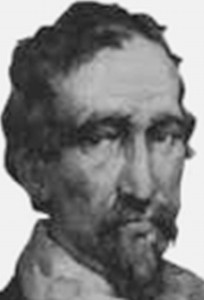
Saint Cuthbert Mayne
Martyr en
Angleterre (+ 1577)
Originaire du Devonshire,
Cuthbert Mayne avait été élevé dans la Communion anglicane. Cet étudiant
d'Oxford se convertit au "papisme", alla recevoir le sacerdoce en
France puis revint dans la Cornouaille britannique. Il fut arrêté au bout d'un
an. Condamné à mort "pour avoir célébré la messe romaine", il fut
éventré publiquement sur la grand-place de Launceston (Cornwall).
Il fait partie des Quarante
martyrs d'Angleterre et du Pays de Galles qui ont été canonisés en
1970.
À Launceston dans le Devon en Angleterre, l’an 1577, saint Cuthbert Mayne,
prêtre et martyr. Ministre anglican, il adhéra à la foi catholique sous
l’influence de saint Edmond Campion, fut ordonné prêtre à Douai et exerça son
ministère en Cornouailles mais, arrêté au bout d’un an, il fut condamné à mort
sous la reine Élisabeth Ière, sous prétexte d’avoir publié une lettre
d’indulgence du pape et d’avoir célébré la messe, il fut livré au supplice du
gibet, le premier des étudiants du Collège anglais de Douai.
Martyrologe romain
SOURCE : http://nominis.cef.fr/contenus/saint/145/Saint-Cuthbert-Mayne.html
Cuthbert
Mayne in a mezzotint by Fournier
Saint Cuthbert Mayne
Memorial
30 November
25 October as
one of the Forty
Martyrs of England and Wales
29 October as
one of the Martyrs
of Douai
1 December as
one of the Martyrs
of Oxford University
Profile
Raised a Protestant by
his uncle, a schimastic priest.
Ordained as a Anglican minister at age 19. Friend of Saint Edmund
Campion. He converted to Catholicism in 1570 while
a student at
Saint John’s College, Oxford. Studied and ordained at Douai, France,
the first Englishman trained
there. Ordained and
returned to England in 1575 with Saint John
Payne to minister to covert Catholics in Cornwall. Arrested in 1576,
condemned and martyred for
the crime of being a priest. Proto-martyr of English seminaries.
One of the Forty
Martyrs of England and Wales.
Born
1544 at
Youlston, Devonshire, England
Died
hanged,
drawn, and quartered on 30 November 1577
relics at
the Carmelite convent,
Lanherne, Cornwall, England
Beatified
29 December 1886 by Pope leo XIII (cultus
confirmation)
4 May 1970 by Pope Paul
VI (decree of martyrdom)
Canonized
25 October 1970 by Pope Paul
VI
Additional
Information
Book
of Saints, by the Monks of
Ramsgate
Catholic
Encyclopedia
Memoirs
of Missionary Priests, by Bishop Richard Challoner
New
Catholic Dictionary
Saints
of the Day, by Katherine Rabenstein
Stories
of Martyr Priests, by Mary Seymour
books
Catholic Martyrs of
England and Wales 1535-1680, by the Catholic Truth Society
Our Sunday Visitor’s Encyclopedia of Saints
other
sites in english
Birr Historical Society
Catholic Ireland
Catholic
Online
English Martyrs, by Christopher Gillibrand
Hagiography
Circle
Wikipedia
video
YouTube PlayList
sitios
en español
Martirologio Romano, 2001 edición
fonti
in italiano
Dicastero delle Cause dei Santi
Santi e Beati
websites
in nederlandse
Heiligen 3s
MLA
Citation
“Saint Cuthbert
Mayne“. CatholicSaints.Info. 4 May 2024. Web. 9 May 2026.
<https://catholicsaints.info/saint-cuthbert-mayne/>
SOURCE : https://catholicsaints.info/saint-cuthbert-mayne/
Book of Saints –
Cuthbert Mayne
Article
(Blessed) Martyr (November
29) (16th century) Blessed Cuthbert Mayne was the first of the Seminary priests
ordained abroad to give his life in England for Christ. Born in Devonshire, he
had been educated as a Protestant, but was converted to the True Faith while
studying at Oxford. He was ordained priest at Douai, and then began to labour
as a missionary priest in Cornwall; but before a year had elapsed, was
arrested, tried and condemned to death, for the crime of having said Mass. He
suffered near Launceston, A.D. 1577.
MLA
Citation
Monks of Ramsgate.
“Cuthbert Mayne”. Book of Saints, 1921. CatholicSaints.Info. 17
October 2012.
Web. 10 May 2026.
<http://catholicsaints.info/book-of-saints-cuthbert-mayne/>
SOURCE : https://catholicsaints.info/book-of-saints-cuthbert-mayne/
St. Cuthbert Mayne
Feastday: October 29
Birth: 1544
Death: 1577
An English martyr, born
near Branstaple, in Devonshire, as a Protestant. He converted to Catholicism at
St. John’s, Oxford. Cuthbert was
ordained at Douai, France, and sent home to England about 1575. Working in
Cornwall, he was captured after a year. Condemned for celebrating a Mass, he
was hanged, drawn, and quartered on November 25. Cuthbert was
a friend of Edmund Campion, and he was aided by Francis Tregian in Cornwall. He
was the first Englishman trained for the priesthood at Douai and
was the protomartyr of English seminaries. Cuthbert was
canonized by Pope Paul VI as one of the Forty Martyrs of
England and Wales.
SOURCE : https://www.catholic.org/saints/saint.php?saint_id=2790
New
Catholic Dictionary – Blessed Cuthbert Mayne
Article
Martyr,
born Youlston, Devonshire, England,
c.1543; died Launceston, 1577.
He was ordained a Protestant minister, 1562, and went to Saint John’s College,
Oxford (M.A., 1570), where his intimacy with Blessed Edmund Campion and other
Catholics made it necessary for him to flee from England.
Having become a Catholic, 1573,
he was ordained at Douai, 1575,
and returned to the English mission in Cornwall. A year later he was arrested
by the sheriff, Grenville, who was knighted in consequence. Convicted of high
treason under the statute of Elizabeth, he was executed, 29 November. Relics at
the Carmelite Convent,
Lanherne, Cornwall. Feast,
at Liverpool, Hexham, Plymouth, Salford, and in the Brigittine
Order, 29
November.
MLA
Citation
“Blessed Cuthbert
Mayne”. New Catholic Dictionary. CatholicSaints.Info. 16
September 2012.
Web. 10 May 2026.
<http://catholicsaints.info/new-catholic-dictionary-blessed-cuthbert-mayne/>
SOURCE : https://catholicsaints.info/new-catholic-dictionary-blessed-cuthbert-mayne/
Saint Cuthbert Mayne 1577
WHEN Protestant chaplain
at St. John's College, Oxford,
he was nearly arrested on account of an intercepted letter from Douay urging him to
go there. After an interval of three years he arrived there in 1573, and in
1576 was welcomed as a priest in Mr. Tregian's house in
Cornwall, where he passed as his steward. On June 8, 1577, High Sheriff Greville surrounded
the house with some hundred men, and in seizing the martyr struck his hand
against something hard, and asked him if he wore a coat of mail. On tearing
open his clothes an Agnus
Dei was discovered hanging from his neck in a case of silver and
crystal. In his indictment the fourth article charged him with having brought
into the Kingdom a vain and superstitious thing called an Agnus Dei, blessed,
as they say, by the Bishop of Rome, and having delivered the same to Mr.
Francis Tregian.
There was no proof in support of any of the charges against him, but he was
nevertheless sentenced to death. After five months' imprisonment amongst the
lowest criminals, he suffered at Launceston,
November 29, 1577. On the eve of his execution a bright light filled his cell,
as a harbinger of the Proto-martyr of Douay on receiving
his crown.
SOURCE : https://englishmartyrs.blogspot.com/search/label/Cuthbert%20Mayne
Cuthbert Mayne M (AC)
Born at Youlston (near
Barnstaple), Devonshire, England, 1544; died 1577; beatified in 1886; canonized
by Pope Paul VI in 1970 as one of the Forty Martyrs of England and Wales
(general feast day is October 25); feast day was November 29.
Saint Cuthbert was raised
as a Protestant by his uncle, a schismatic priest. His elementary education was
provided at the Barnstaple Grammar School. He himself was ordained a Protestant
minister when he was about 19 without an inclination or preparation for the
role.
Cuthbert studied at Saint
John's, Oxford, where he received his master's degree and met the
still-Protestant Saint Edmund Campion. Like many converts to Catholicism,
Cuthbert Mayne hesitated out of fear--of rejection by family and friends, of
losing his appointments and falling into poverty--although his was convicted of
its truth. At the urging of Campion, Mayne became a Catholic in 1570 (age 26)
(another source says 1573 at Douai). He was forced to flee England when letters
from Campion at Douai were intercepted by the bishop of London, who ordered the
arrest of all mentioned in the letter. He went to the English College at Douai,
which was founded in 1568, to study for the priesthood. He received his
bachelor's degree in theology and was ordained there in 1575. The following
year he was sent back to England with Saint John Payne to preach in the
mission.
He became estate steward
of Francis Tregian at Golden, Cornwall, and was arrested the following year
with Tregian after the high sheriff, Richard Grenville searched Tregian's
mansion and found Mayne with an agnus Dei around his neck. Mayne was taken to
Launceston, thrown into a filthy prison, and chained to the bedpost.
At Launceston assizes
during Michelmas, he was found guilty of having obtained from Rome and
published at Golden a "faculty containing matter of absolution" of
the Queen's subjects. (What they had actually found was an outdated
announcement of the jubilee indulgence of 1575 published at Douai.) He was also
charged with having celebrated Mass, because they found a missal, chalice, and
vestments at Golden. But at the direction of Justice Manwood, after consultation
with Grenville, the jury found him guilty of violating statutes 1 and 13 of
Elizabeth and sentenced him to death. Several gentlemen, including Tregian, and
their three yeomen were charged with abetting Mayne and sentenced to perpetual
imprisonment and forfeiture of their property.
The circumstances were
such that a majority of the judges of the country, gathered at Serjeants' Inn
to reconsider the case, thought the conviction could not stand. But the Privy
Council directed that the sentence be executed as a warning to priests coming
from the Continent.
The day before his
scheduled execution, Mayne was offered his liberty in exchange for his oath
that the queen possessed ecclesiastical supremacy. He asked for a Bible, kissed
it, and said: "The queen neither ever was nor is nor ever shall be the
head of the Church of England." At the marketplace before his execution,
Cuthbert Mayne aws not given the opportunity to address the crowd from the
scaffold. When invited to implicate Tregian and his brother-in-law, Sir John
Arundell, the saint replied: "I know nothing of them except that they are
good and pious men; and of the things laid to my charge no one but myself has
any knowledge."
Thus, Cuthbert was
hanged, drawn, and quartered at Launceston on November 25 on the charge of
treason because he was a priest who refused to accept the supremacy of Queen
Elizabeth I in ecclesiastical matters. He was cut down before he died, but was
probably unconscious before the disembowelling began. He was the first
Englishman trained for the priesthood at Douai to be martyred (at that time the
penal code distinguished between priests trained on the Continent and those
"Marian priests," who had been ordained in England). For this reason,
Cuthbert Mayne is the protomartyr of English seminaries. His feast is kept at
Plymouth and in several other English dioceses (Attwater, Attwater 2,
Benedictines, Delaney, Walsh).
SOURCE : https://catholicsaints.info/saints-of-the-day-cuthbert-mayne/
Blessed Cuthbert Mayne
Martyr,
b. at Yorkston, near Barnstaple, Devonshire (baptized 20
March, 1543-4); d. at Launceston, Cornwall, 29 Nov., 1577. He was the
son of William Mayne; his uncle was a schismatical priest,
who had him educated at Barnstaple Grammar
School, and he was ordained a Protestant minister at
the age of eighteen or nineteen. He then went to Oxford,
first to St.
Alban's Hall, then to St. John's College, where he took the
degree of M.A. in 1570. He there made the acquaintance of Blessed
Edmund Campion, Gregory
Martin, the controversialist,
Humphrey Ely, Henry Shaw, Thomas Bramston,
O.S.B., Henry Holland, Jonas Meredith,
Roland Russell, and William Wiggs. The above list shows how
strong a Catholic leaven
was still working at Oxford. Late in 1570 a letter from Gregory
Martin to Blessed Cuthbert fell into the Bishop of London's hands.
He at once sent a pursuivant to arrest Blessed Cuthbert and
others mentioned in the letter. Blessed Cuthbert was in the
country, and being warned by Blessed
Thomas Ford, he evaded arrest by going to Cornwall, whence he arrived
at Douai in
1573. Having become reconciled to the Church,
he was ordained in
1575; in Feb., 1575-6 he took the degree of S.T.B. at Douai
University; and on 24 April, 1576 he left for the English mission
in the company of Blessed
John Payne. Blessed Cuthbert took up his abode with the
future confessor, Francis
Tregian, of Golden, in St. Probus's parish, Cornwall.
This gentleman suffered imprisonment and
loss of possessions for this honour done
him by our martyr.
At his house our martyr was
arrested 8 June, 1577, by the high sheriff, Grenville, who
was knighted for the capture. He was brought to trial in September;
meanwhile his imprisonment was
of the harshest order. His indictment under statutes of
1 and 13 Elizabeth was under five counts: first, that he had obtained
from the Roman
See a "faculty", containing absolution of
the queen's subjects; second, that he had published the same at Golden; third,
that he had taught the ecclesiastical authority
of the pope in
Launceston Gaol; fourth, that he had brought into the kingdom an Agnus
Dei and had delivered the same to Mr.
Tregian. fifth, that he had said Mass.
As to the first and
second counts, the martyr showed
that the supposed "faculty" was merely a copy printed at Douai of
an announcement of the Jubilee of 1575, and that its application
having expired with the end of the jubilee, he certainly had not
published it either at Golden or elsewhere. As to the third count, he
maintained that he had said nothing definite on the subject to the three
illiterate witnesses who asserted the contrary. As to the fourth
count, he urged that the fact that he was wearing an Agnus Dei at the
time of his arrest was no evidence that he had brought it into
the kingdom or delivered it to Mr.
Tregian. As to the fifth count, he contended that the finding of a Missal,
a chalice,
and vestments in his room did not prove that he had
said Mass.
Nevertheless the jury
found him guilty of high treason on all counts, and he
was sentenced accordingly. His execution was delayed
because one of the judges, Jeffries, altered
his mind after sentence and sent a report to the Privy
Council. They submitted the case to the whole Bench of Judges,
which was inclined to Jeffries's view. Nevertheless, for motives of policy,
the Council ordered the execution to proceed. On the night
of 27 November his cell was seen by the other prisoners to
be full of a strange bright light. The details of his martyrdom must
be sought in the works hereinafter cited. It is enough to say that all agree
that he was insensible, or almost so, when he was disembowelled. A rough
portrait of the martyr still
exists; and portions of his skull are in various places, the largest being in
the Carmelite Convent, Lanherne, Cornwall.
Sources
CAMM, Lives of the
English Martyrs, II (London, 1905), 204-222, 656; POLLEN, Cardinal
Allen's Briefe Historief (London, 1908), 104-110; COOPER in Dict. Nat.
Biog., s.v.; CHALLONER, Memoirs of Missionary Priests, I;
GILLOW, Bibl. Dict. Eng. Cath., s.v.; DASENT, Acts of the Privy
Council (London, 1890-1907), IX, 375, 390; X, 6, 7, 85.
Wainewright, John.
"Blessed Cuthbert Mayne." The Catholic Encyclopedia. Vol. 10. New
York: Robert Appleton Company, 1911. 2 Dec. 2015
<http://www.newadvent.org/cathen/10087a.htm>.
Transcription. This article was transcribed for New Advent by
WGKofron. With thanks to Fr. John Hilkert and St. Mary's Church, Akron,
Ohio.
Ecclesiastical
approbation. Nihil Obstat. October 1, 1911. Remy Lafort, S.T.D.,
Censor. Imprimatur. +John Cardinal Farley, Archbishop of New York.
Copyright © 2026 by New Advent LLC.
Dedicated to the Immaculate Heart of Mary.
SOURCE : http://www.newadvent.org/cathen/10087a.htm
Saint Cuthbert
Mayne
Cuthbert Mayne is one of the Forty Martyrs of England and
Wales canonised by Pope Paul VI on 25th October 1970. He converted from
Protestantism to Catholicism and became a priest and a martyr. Patrick Duffy
tells his story. A Protestant minister Cuthbert Mayne was born at Yorkston,
near Barnstaple in Devon and baptized on St […]
Cuthbert Mayne is
one of the Forty Martyrs of England and Wales canonised by Pope Paul VI on
25th October 1970. He converted from Protestantism to Catholicism and became a
priest and a martyr. Patrick Duffy tells his story.
A Protestant minister
Cuthbert Mayne was born at Yorkston, near Barnstaple in Devon and baptized on
St Cuthbert’s Day, 20th March, 1543. He grew up in the early days of the
Boy King Edward VI with an overtly Protestant government
installed. Cuthbert’s uncle was a former Catholic priest who favoured the
new doctrines and it was expected that Mayne, a good-natured and pleasant young
man, but with no great thought of principles of any kind, would inherit his
uncle’s benefice. Educated at Barnstaple Grammar School and ordained
a Protestant minister at the age of nineteen, he was installed as rector of
Huntshaw, near his birthplace. There followed university studies at
Oxford, first at St Alban’s Hall, and then at St John’s
College, where he was made chaplain, taking his BA in 1566 and MA 1570.
A convert
to Catholicism
It was in Oxford that Mayne made the acquaintance of Edmund Campion (see 1st
December), who at that time was still a Protestant like himself and a
Catholic Dr Gregory Martin. Mayne became convinced of the truth of the
Catholic faith and converted to Catholicism. Late in 1570, a letter
addressed to him from Gregory Martin fell into the hands of the Anglican Bishop
of London and officers were sent at once to arrest him and others mentioned in
the letter. Mayne evaded arrest by going to Cornwall and from there went in
1573 to the English College at Douai.
Returns to England as a
Catholic priest
Ordained a Catholic priest at Douai in 1575, he left for the English mission
with another priest, John Paine, and took up residence in the guise of an
estate steward with Francis Tregian, a gentleman, of Golden, in St Probus’s
parish, Cornwall. Tregian’s house was raided and the searchers found a Catholic
devotional article (an Agnus Dei symbol) round Mayne’s neck and took
him into custody along with his books and papers. Imprisoned in Launceston
jail, the authorities sought a death sentence but had difficulty in framing a
treason indictment, but five different charges of contravening the Act of
Supremacy were brought against him.
Trial
The trial judge directed the jury to return a verdict of guilty and he was
sentenced to be hanged, drawn and quartered. Mayne responded, Deo gratias.
Francis Tregian was also sentenced to die, but in fact he spent 26 years in
prison. Two nights before his execution, Mayne’s cell was reported by his
fellow prisoners to have become full of a “great light”. Before his execution,
some Protestant ministers came to offer him his life if he would acknowledge
the supremacy of the Queen as head of the church. His reply was to kiss his
Bible and say: “The Queen neither ever was, nor is, nor ever shall be head of
the Church of England”.
Execution
Mayne was executed in the market place at Launceston on November 29, 1577. He
was not allowed to speak to the crowd, but only to say his prayers
quietly. He was the first martyr not to be a member of a religious order.
He was the first “seminary priest”, priests who were not trained in
England but in houses of studies on the continent, as distinct from those who
were (“Marian priests”).
SOURCE : http://www.catholicireland.net/saintoftheday/st-cuthbert-mayne-1543-77-priest-and-martyr/
Memoirs
of Missionary Priests and Other Catholics of Both Sexes That Have Suffered
Death in England on Religious Accounts – Cuthbert Maine, Priest, 1677
Article
He was the first
missionary priest that suffered in England for religious matters, and the
protoraartyr of Douay college, and all the seminaries. I have a short account
of his life and death in English, published in 1582: I have also a more ample
account of him in a Latin manuscript of Douay college. I shall present the
reader with an abstract of the former, in the very words of the author, who was
an intimate friend of Mr Maine; choosing rather to offend the ears with the old
language of the writer, than, by new modelling the narration, to lessen its
authority, or spoil its amiable simplicity. I shall here and there add some
things out of the Latin manuscript, which, for distinction sake, I shall
enclose within these marks “”
‘Cuthbert Maine was born
in Barnstaple, “or rather in the parish of Yalston, three miles from
Barnstaple,” in Devonshire. He had an old schismatical priest to his uncle,
that was well beneficed; who being very desirous to leave his benefice to this
his nephew, brought him up at school, and when he was eighteen or nineteen
years old, got him made minister; at which time (as Mr Maine himself, with
great sorrow and deep sighs, did often tell me) he knew neither what ministry
nor religion meant. Being sent afterwards to Oxford, he heard his course of
logic in Alborn-hall, and there proceeded bachelor of arts.
‘At that time Saint
John’s college wanted some good fellow to play his part at the communion table;
to play which part Mr Maine was invited and hired. In which college and
function he lived many years, being of so mild a nature, and of such sweet
behaviour, that the protestants did greatly love him, and the catholics did
greatly pity him; insomuch that some dealing with him, and advertising him of
the evil state he stood in, he was easily persuaded that “the new” doctrine was
heretical, and, withal, was brought to lament and deplore his own miserable
state and condition. And so being in heart and mind a persuaded catholic, “he
unhappily, nevertheless,” continued yet in the same college for some years, and
there proceeded master of arts.
‘Some of his familiar
friends, “particularly Mr Gregory Martin and Mr Edmund Campion,” being already
beyond the seas for their conscience, did often solicit him by letters to leave
that function of the ministry, and invited him to come to Douay. One of these
letters, by chance, fell into the hands of the bishop of London, who despatched
a pursuivant straight to Oxford for Mr Maine and some others: the rest appeared
and were sent to prison; but by chance Mr Maine was then in his country, and
being advertised by his countrymen and friend, Mr Ford, (then fellow of Trinity
college, in Oxford, and of late martyred) that there was process out for him,
he took shipping on the coast of Cornwall, and so went to Douay, when the
seminary there was but newly erected.
‘Here, “being taken into
the church,” falling to divinity, and keeping the private exercises within the
house diligently, and doing the public exercises in the school with
commendation, after some years he proceeded bachelor of divinity, and was made
priest And desirous partly to honour God in this sacred order, and to satisfy
for that he had dishonoured him by taking the sacrilegious title of ministry;
partly inflamed with zeal to save souls, he returned to England, “being sent by
Dr Allen, afterwards cardinal, first president of Douay college,” together with
Mr John Payne, who was since martyred, “where he arrived safely,” anno 1576. Mr
Maine placed himself in his own country, with a catholic and virtuous
gentleman, Mr Tregian, “of Volveden, or Golden, five miles from Truro, in
Cornwall, passing in the neighbourhood for his steward.”
‘In the year 1577, in the
month of June, the bishop of Exeter being in his visitation at Truro, was
requested by “Mr Greenfield,” the sheriff of the county, and other busy men, to
aid and assist them to search Mr Tregian’s house, where Mr Maine did lie. After
some deliberation, it was concluded, that the sheriff and the bishop’s
chancellor, with divers gentlemen and their servants, should take the matter in
hand. As soon as they came to Mr Tregian’s house, the sheriff first spoke to
him, saying, that he and his company were come to search for one Mr Bourne, who
had committed a fault in London, and so fled into Cornwall, and was in his
house, as he was informed. Mr Tregian answering, that he was not there, and
swearing by his faith, that he did not know where he was; further telling him,
that to have his house searched, he thought it great discourtesy; for that he
was a gentleman, and that they had no commission from the queen. The sheriff
being bold, for that he had a great company with him, swore by all the oaths
that he could devise, that he would search his house, or else he would kill, or
be killed, holding his hand upon his dagger, as if he would have stabbed it
into the gentleman.
‘This violence being
used, he had leave to search the house. The first place they went to was Mr
Maine’s chamber, which being fast shut, they bounced and beat at the door. Mr
Maine came and opened it (being before in the garden, where he might have gone
from them.) As soon as the sheriff came into the chamber, he took Mr Maine by
the bosom, and said to him, What art thou? he answered, I am a man. Whereat,
the sheriff being very hot, asked if he had a coat of mail under his doublet?
and so unbiktoned it, and found an Agnus Dei case about his neck, which he took
from him, and called him traitor and rebel, with many other opprobrious names.
‘They carried him, his
books, papers and letters, to the bishops, who, when he had talked with him,
and examined him about his religion, confessed that he was learned, and had
gathered very good notes in his book, but no favour he showed him. Thence the
sheriff carried him from one gentleman’s house to another, till he came to
Launceston, where he was cruelly imprisoned, being chained to his bed posts,
with a pair of great gives about his legs, and strict commandment given that no
man should repair unto him.
‘Thus he remained in
prison, from June to Michaelmas; at which time the judges came their circuit.
The Earl of Bedford was also present at Mr Maine’s arraignment, and did deal
most in the matter.’
“Several heads of
accusation were exhibited against him at his trial, as,
“1st. That he had
obtained from Rome a bull, containing matter of absolution of the queen’s
subjects. This was no other than a printed copy of the bull ofjubilee of the
foregoing year, which they had found amongst his papers.
“2dly. That he had
published this bull at Golden, in the house of Mr Tregian.
“3dly. That he had
maintained the usurped power of the bishop of Rome, and denied the queen’s
supremacy.
“4thly. That he had
brought into the kingdom an Jlgnus Dei, and delivered it to Mr Tregian.
“5thly. That he had said
mass in Mr Tregian’s house.
“There were no sufficient
proofs of any of these heads of the indictment. And as to the bull, it being
only a printed copy of the grant of the jubilee of the past year, now of no
force, and no ways procured from Rome by Mr Maine, but bought at a bookseller’s
shop at Oouay, out of curiosity to see the form of it, it was very certain that
the case was quite foreign both to the intent and to the words of the statute.
Yet judge Manhood, who behaved himself very partially in the whole trial,
directed the jury to bring him in guilty of the indictment,
alledging, that where plain proofs were wanting, strong presumptions ought
to take place; of which, according to his logic, they had a good store in the
cause in hand, knowing the prisoner to be a popish priest, and an enemy of the
queen’s religion.”
‘The jury that went upon
him were chosen men for the purpose, and thought him worthy of death, whether
there came any proof against him or no, because he was a catholic priest; such
is their evangelical conscience. After the twelve had given their verdict,
‘guilty‘ “judge Manhood gave sentence on him, in the usual form, as in cases of
high treason; which Mr Maine heard with a calm and cheerful countenance, and
lifting up his hands and eyes to heaven, answered, Deo gratius, thanks be
to God. He was to have been executed within fifteen days, but his execution was
deferred until Saint Andrew’s day; upon what occasion I know not, says my
author; but the Latin manuscript says the occasion was, that judge Jeffries
being dissatisfied with the proceedings of his colleague; and the privy
council, informed of all that had passed, they thought proper to have all the
judges meet upon the matter; that, accordingly, they met, but disagreed in
their sentiments, several of the older and wiser of them being of judge
Jeffries’s opinion. However, such was the iniquity of the times, that the
council concluded that the prisoner should be executed for a terror to the
papists. My author says, the sheriff, who went to court, and was there made a
knight for his late service in this cause, was the man that procured the dead
warrant to be signed for Mr Maine’s execution, which he sent into the country,
to the justices there.”
‘Three days before he was
put to death, there came a serving-man unto him, and willed him to prepare for
death; for, saith he, you are to be executed within these three days
at the farthest. Which kind admonition, Mr Maine took very thankfully, and said
to the servingman, that if he had any thing to give, he would rather bestow it
upon him than on any other; for he had done more for him than ever any man did.
After that advertisement he gave himself earnestly to prayer and contemplation
until his death. The second night after he gave himself to these spiritual
exercises, there was seen a great light in his chamber, between twelve and one
of the clock, insomuch that some of the prisoners that lay in the next rooms,
called unto him to know what it was (for they knew very well that he had
neither fire nor candle.) He answered, desiring them to be quiet, for it did
nothing appertain unto them.
‘At the day of his
execution many justices and gentlemen came to see him, and brought with them
two ministers, who did dispute with him, whom he confuted in every point; but
the justices and gentlemen, who were blind judges, would hear nothing of that;
but they affirmed that the ministers were much better learned than he. Although
they confess he died very stoutly, whereat they did much marvel, telling the
ignorant people, that he could avouch no scripture for his opinion, which was
most untrue; for 1 know by the report of honest men that were present, that he
did confirm every point in question with testimonies of scriptures and fathers;
and that abundantly.’
“It was upon this
occasion, (according to the Latin manuscript) that his life was offered him, if
he would renounce his religion; which when he refused to do, they pressed him
at least to swear upon the bible, that the queen was the supreme head of the
church of England, assuring him of his life if he would do this; but if he
refused it, he must then be hanged, drawn and quartered, according to sentence.
Upon this” ‘he took the bible into his hands, made the sign of the cross upon
it, kissed it; and said, the queen neither ever was, nor is, nor ever shall be,
the head of the church of England.’
‘He was to be drawn a
quarter of a mile to the place of execution, and when he was to be laid on the
sledge, some of the justices moved the sheriff’s deputy, that he would cause
him to have his head laid over the car, that it might be dashed against the
stones in drawing; and Mr Maine offered himself that it might be so, but the
sheriff’s deputy would not suffer it.
‘When he came to the
place of execution, “which was the market-place of the town, where they had on
purpose erected a gibbet of unusual height, being taken off the sledge,” he
kneeled down and prayed; when he was on the ladder, and the, rope about his
neck, he would have spoken to the people, but the justices would not suffer
him, but bid him say his prayers, which he did very devoutly. And as the
hangman was about to turn the ladder, one of the justices spoke to him in this
manner: Now villian and traitor, thou knowest that thou shalt die, and
therefore tell us whether Mr Tregian and Sir John Arundel did know of these
things which thou art condemned for; and also what thou dost know by them? Mr Maine
answered him very mildly: I know nothing of Mr Tregian and Sir John Arundel,
but that they are good and godly gentlemen; and as for the things I am
condemned for, they were only known to me, and to no other. Then he was cast
off the ladder saying, in manus tuas, etc, and knocking his breast.
‘Some of the gentlemen would have had him cut
down strait way, that they might have had him quartered alive; but the sheriffs
deputy would not, but let him hang till he was dead.’ The Latin manuscript
says, “he was, indeed, cut down alive, but falling from the beam, which was of
an unusual height, with his head upon the side of the scaffold, on which he was
to be quartered, he was by that means almost quite killed; and therefore but
little sensible of the ensuing butchery. His quarters were disposed of, one to
Bodwin, one to Tregny, one to Barnstable, and the fourth to remain at
Launceston castle: his head was set upon a pole at Wadebridge, a noted highway.
The hangman, who embrued his hands in his innocent blood, in less than a
month’s time became mad, and soon after miserably expired. And it is
particularly remarked, that not one of those whom Mr Maine reconciled to the
church, could ever be induced to renounce the catholic truth, which they had
learned from so good a master. Mr Tregian, the gendeman who had entertained
him, lost his estate, which was very considerable, for his religion, and was
condemned to perpetual imprisonment; and several of his neighbours and servants
were cast in a pre* munire as abettors and accomplices of Mr Maine: Sir John
Arundel was also persecuted and cast into prison upon this occasion.
“Mr Maine suffered at
Launceston, in Cornwall, 29 November 1577, of whom, thus writes Mr Stow, in his
chronicle of this year:” – Cuthbert Maine was drawn, hanged, and quartered at
Launceston, in Cornwall, for preferring Roman power.’
The persons that were
condemned with Mr Maine, and cast in a premunire, were Richard Tremayne,
gentleman, John Kemp, gentleman, Richard Hoar, gentleman, Thomas Harris,
gentleman, John Williams, M. A. John Philips, yeoman, John Hodges, yeoman, and
James Humphreys, yeoman; all neighbours or servants to Mr Tregian.
MLA
Citation
Bishop Richard Challoner.
“Cuthbert Maine, Priest, 1677”. Memoirs of
Missionary Priests and Other Catholics of Both Sexes That Have Suffered Death
in England on Religious Accounts, 1839. CatholicSaints.Info.
12 April 2017. Web. 10 May 2026.
<https://catholicsaints.info/memoirs-of-missionary-priests-and-other-catholics-of-both-sexes-that-have-suffered-death-in-england-on-religious-accounts-cuthbert-maine-priest-1677/>
SOURCE : https://catholicsaints.info/memoirs-of-missionary-priests-and-other-catholics-of-both-sexes-that-have-suffered-death-in-england-on-religious-accounts-cuthbert-maine-priest-1677/
Stories
of Martyr Priests – Father Cuthbert Maine
Three centuries ago
England was wet with the blood of many martyrs. There were men dying daily for
conscience sake. There were men bearing daily the most cruel tortures, who lay
in damp and uncleanly dungeons awaiting the rack and the gallows, simply
because they were true to the faith taught by Jesus Christ, and for His sake
were glad to lay down their lives. Yet these champions of the faith are little
known by us who have succeeded them, and who tread the ground hallowed by their
sufferings, with scarce a thought of those whose fortitude preserved the Church
in England, that we might share in all its glorious privileges without fear or
hindrance.
Elizabeth was then upon
the throne, and she had brought about an entire change in the religion of the
country. Holy Mass was abolished, and “common prayer” established in its place,
and – as if the loss of liberty and of goods was not deemed punishment
sufficient for those who continued faithful to the Church of God – it was made
high treason for a Catholic priest to remain in the kingdom, high treason for
any one who helped or concealed such priests, and high treason, too, for any
one who paid regard to commands or letters coming from the Pope of Rome.
These severe laws would
soon have left England destitute of priests to administer the sacraments, as
death and imprisonment made great havoc among the clergy; but God in His good
providence inspired His servants in other lands to raise up seminaries, where
English students might fit themselves for the priesthood, and return to their
own land again, ready, first to work for God, and then to die for Him. At Douai
the first seminary was instituted, from whence many noble missioners came to
face the danger which had for them no terror, the labour which to them was
sweet, because they loved their Master so well; but later, in the year 1578,
this seminary was removed from Douai to Rheims, in France.
The proto-martyr of Douai
College was Cuthbert Maine, the first missionary priest who suffered in England
for conscience sake.
His early home was near
the town of Barnstaple, in Devonshire; and an old uncle, who was a schismatical
priest, brought him up, seeing that he was properly educated at school, so that
he might afterwards be his own successor to the benefice he enjoyed. After this
Cuthbert went to Oxford, where he remained some years, much beloved because of
his mild and sweet disposition. Many Catholics who knew this young man grieved
much that one so good and earnest should not wholly belong to God, and embrace
the true faith, so they prayed constantly for him, and tried to show him the
danger in which he stood.
Cuthbert’s eyes were
gradually opened to see that the new doctrines introduced were heretical, and
he deeply lamented over his own position; but even then he continued some time
at college, though his judgment was convinced that the Catholic Faith alone was
the truth of God.
He had been friendly with
Edmund Campion and others who were then banished from their country for
adhering to their faith, and these good men would often write to Cuthbert
Maine, beseeching him to give up what he had proved to be wrong, and to come to
Douai. One of these letters fell into the hands of the Bishop of London, who
immediately sent to Oxford for Mr. Maine, but happily he was absent then on a
visit to his native town, and, as a friend let him know the danger which
threatened him, he embarked in a little ship from the Cornish coast and went direct
to Douai.
After some years spent
there in the diligent observance of the rules of the seminary, he was made
priest, and then, with a heart longing to work for God in the country where he
had once dishonoured Him by heresy, he obtained permission to return to
England, for greater safety placing himself as steward to a good Catholic
gentleman, whose home was near Truro, in Comwall. But the spirit of persecution
was rife, and Cuthbert Maine was not long undiscovered, and only a year after
his arrival the sheriff of the county came to search for him in the house of
Mr. Tregian. They did not ask for him by name, but said they were looking for a
person called Mr. Bourne, who had committed some great misdemeanour in London,
and fled for refuge to Comwall. Mr. Tregian at once replied that no one so
named was in his house, and he objected to the search, on the ground that they
held no commission from the Queen. The sheriff, however, was not so easily
repulsed, and he swore with frightful oaths that he would search the house,
even at the cost of his life; and thus with great violence he made his entrance
and went straight to the room which was used by Cuthbert Maine. The door was
locked, and they beat upon it roughly till Mr. Maine opened it for them, and
then the sheriff seized him, and asking him “who he was,” tore open his coat
and found an Agnus Dei hanging round his neck. That little, silent memorial of
Jesus, the Lamb of God, was enough to warrant the sheriff in taking his
prisoner at once before the bishop; and his books, letters, and papers were
examined, and he was called a traitor and a rebel. From one house to another
Mr. Maine was taken until he reached Launceston, and there he was imprisoned in
a small room from June to September, chained to the posts of his bed, with
heavy irons round his ankles, while it was forbidden that any one should
converse with him.
At the time of Michaelmas
the judges came upon their circuit, and he was arraigned upon several
accusations. Among his papers had been found a printed copy of the bull of the
Jubilee of the year before, and this gave them the opportunity of saying that
he was guilty of high treason –
By holding a bull from
Rome, giving authority for absolving the subjects of the Queen.
That he had made known
this bull in the house of Mr. Tregian.
The third charge was that
he upheld the authority of the Pope, and thus denied the supremacy of the
Queen.
The fourth charge was
that he had brought into the kingdom an Agnus Dei.
The fifth that he had
said Mass in Mr. Tregian’s house.
The jury who were to try
this case gladly gave in a verdict of “guilty” to all these charges; even had
there been no proof against him, the fact of his being a Catholic priest was
sufficient to decide them, and accordingly the judge gave sentence of execution
within fifteen days. The servant of God did not tremble or fear; he lifted his
hands to heaven, exclaiming, “Deo gratias,” for it was indeed with him a matter
of thanksgiving that he was so soon permitted to die for the truth of Christ.
However, the time of his execution was afterwards postponed until Saint
Andrew’s Day.
Three days before, a
servant-man came to Mr. Maine to tell him that the hour of his death drew near,
and the pious priest gave himself wholly to prayer during those last days. Upon
the second night as he was thus engaged, a sudden brilliant light was seen in
his chamber, so that some of the prisoners who were confined in rooms close by
called to him to ask what this might be, because they knew he had neither a
fire nor a candle; but he answered not, except by begging them to be quiet.
Whatever God granted him of Divine favours he hid in the humility of his heart.
Thus drew on the hour for
the execution, and many gentlemen came to visit the priest, bringing ministers
of the new religion to argue with him; but he answered them on every point and
covered them with confusion. His life was offered him if he would give up his
faith and swear upon the Bible that the Queen of England was supreme head of
the Church, but he would not do this. Taking the Bible in his hands, he made
upon it the sign of the Cross he loved, the Cross he died for; and, kissing the
sacred sign, declared aloud that the Queen was not, nor ever would be, the head
of the Church of England.
There was no further
chance of life given him after that. He had been sentenced to death, and after
death to be drawn and quartered, as the cruelty of those times would have it;
but first he was to be dragged upon a sledge to the place of execution.
There – the market-place
of the town – an unusually high gibbet had been prepared, and at the sight of
it the martyr knelt down calmly for a moment’s prayer; then the rope was put
about his neck, and he attempted to speak to the people, but the judges would
not permit him. His last words were a prayer: “In manus tuas Domino commendo
spiritum meum;” but even before he had uttered them he was thrown off the
ladder on which he had been standing, and falling from the beam, which was very
high, he was scarcely sensible of the cruel butchery which followed, for some
present had begged the sheriff to allow him to be quartered alive.
One quarter of the
martyred body was sent to Barnstaple, one to Bodmin, another to Trigny, while
the fourth remained at Launceston Castle, and his head was fixed upon a pole at
Wadebridge. Thus, on the 29th of November, 1577, died one whose only crime was
the love of God and faithful allegiance to the Vicar of Jesus Christ; but
though his enemies had destroyed a holy and useful life, its work had borne
fruit which was beyond their reach.
Many persons had been
reconciled to the Catholic Church by Mr. Maine, many had received Christ’s
pardon from his lips, and learned truth which sank deep down into their hearts,
and it is recorded that there was not one of these who could ever be induced to
renounce what they had been taught by so holy a father; in poverty, in
temptation, in prison, in torture, and in death they were steadfast as he had
been steadfast, helped by the example he had set them, and still more
strengthened by the prayers he made for them before the throne of God.
SOURCE : https://catholicsaints.info/stories-of-martyr-priests-father-cuthbert-maine/
San Cuthberto
Mayne Sacerdote e martire
Festa: 30 novembre
>>> Visualizza la
Scheda del Gruppo cui appartiene
Youlston (Cornovaglia,
GB), 1544 - Launceston, 30 novembre 1577
Martirologio Romano: A
Lanceston in Inghilterra, san Cutberto Mayne, sacerdote e martire, che,
abbracciata le fede cattolica e ordinato sacerdote, esercitò il suo ministero
in Cornovaglia, finché, condannato a morte sotto la regina Elisabetta I per
aver reso di pubblico dominio una Lettera Apostolica, fu consegnato al
patibolo, primo fra gli studenti del Collegio Inglese di Douai.
Nasce al tempo della
crisi che sotto Enrico VIII Tudor (1509-1547) stacca l’Inghilterra dalla Chiesa
di Roma, dando vita a una sorta di “cattolicesimo autonomo”, che ha per capo il
re. Chi non gli obbedisce, anche in materia religiosa, diventa un traditore. E
infatti con questa accusa vanno al supplizio sacerdoti, frati e laici eminenti
come Tommaso Moro, già cancelliere della corona.
Morto Enrico VIII, e dopo un lustro di regno nominale di suo figlio Edoardo VI
ancora minorenne, va sul tronol la sua prima figlia Maria, detta “la
Cattolica”, che capovolge la politica del padre, ristabilendo la situazione di
prima. Ma copia sciaguratamente la brutalità di Enrico: pensa di ravvivare la
fede usando i patiboli, e si merita il soprannome di “Sanguinaria”.
Cuthberto Mayne ha uno zio prete che lo ha messo molto presto a scuola, con un
disegno preciso: portare anche lui al sacerdozio, e averlo poi come
collaboratore e successore. Quando è sui 14 anni, ecco in Inghilterra un’altra
svolta: Elisabetta I, succeduta alla sorellastra Maria nel 1558, riprende la
politica di Enrico e la porta alle estreme conseguenze: non solo il distacco
dalla Sede romana, ma il ripudio del cattolicesimo nella dottrina, nel culto,
nell’ordinamento del clero; severa imposizione del giuramento di fedeltà alla
Corona. E gran lavoro per il boia, come ai tempi di Enrico VIII e a quelli di
Maria. Lo zio prete di Cuthberto non ha avuto fastidi e ha conservato il posto
perché si è affrettato a giurare: è diventato “anglicano”, insomma.
E sui suoi passi procede anche il nipote. Verso i vent’anni è ordinato a sua
volta ministro del culto, prosegue poi gli studi a Oxford. Ma qui entra in
contatto con gente nuova: cattolici clandestini. Ce n’è ancora qualche decina
di migliaia nel regno d’Inghilterra. (Ben pochi, ma attivissimi. Preti che
improvvisano attività missionaria nel loro carcere; laici che organizzano reti
di nascondigli per i ricercati, e tipografie clandestine e contrabbando di
messali).
In Francia, a Douai, è nato addirittura un seminario per i giovani inglesi che
in questi climi vogliono diventare sacerdoti cattolici. Dalle amicizie
personali, poi, gli viene una spinta crescente, un’attenzione nuova per la fede
cattolica. In un giorno del 1570, proprio una lettera spedita a lui da Douai lo
trasforma da cappellano in ricercato: l’ha intercettata la polizia, c’è
pericolo di arresto, e Cuthberto abbandona Oxford entrando in clandestinità.
Riesce a lasciare l’Inghilterra, raggiunge Douai, ed eccolo infine accolto nel
seminario.
Nel 1575 riceve l’ordinazione sacerdotale; rimane ancora per qualche mese per
completare la preparazione, e nel 1576 eccolo in Cornovaglia sotto copertura:
ufficialmente dirige una fattoria, e di fatto è il parroco clandestino dei
cattolici del luogo. Un ministero molto breve, il suo: a metà del 1577 lo
arrestano, ed è già tutto scritto: la sua opera di prete clandestino è alto
tradimento e comporta la morte. Lui potrebbe salvarsi se giurasse fedeltà alla
Corona, secondo le leggi di Elisabetta I. Ma rifiuta. Morte con squartamento,
dunque, previa impiccagione.Ma forse lui non soffre, perché cade e sviene
salendo il patibolo a Launceston. E così, privo di sensi, viene appeso alla
forca.
Paolo VI lo canonizza nel 1970 come uno dei quaranta martiri d’Inghilterra e
Galles (la cui festa è il 25 ottobre).
Autore: Domenico Agasso
SOURCE : http://www.santiebeati.it/Detailed/92157.html
CANONIZZAZIONE DI
QUARANTA MARTIRI DELL’INGHILTERRA E DEL GALLES
OMELIA DEL SANTO PADRE
PAOLO VI
Domenica, 25 ottobre l970
We extend Our greeting
first of all to Our venerable brother Cardinal John Carmel Heenan, Archbishop
of Westminster, who is present here today. Together with him We greet Our
brother bishops of England and Wales and of all the other countries, those who have
come here for this great ceremony. We extend Our greeting also to the English
priests, religious, students and faithful. We are filled with joy and happiness
to have them near Us today; for us-they represent all English Catholics
scattered throughout the world. Thanks to them we are celebrating Christ’s
glory made manifest in the holy Martyrs, whom We have just canonized, with such
keen and brotherly feelings that We are able to experience in a very special
spiritual way the mystery of the oneness and love of .the Church. We offer you
our greetings, brothers, sons and daughters; We thank you and We bless you.
While We are particularly pleased to note the presence of the official
representative of the Archbishop of Canterbury, the Reverend Doctor Harry Smythe,
We also extend Our respectful and affectionate greeting to all the members of
the Anglican Church who have likewise come to take part in this ceremony. We
indeed feel very close to them. We would like them to read in Our heart the
humility, the gratitude and the hope with which We welcome them. We wish also
to greet the authorities and those personages who have come here to represent
Great Britain, and together with them all the other representatives of other
countries and other religions. With all Our heart We welcome them, as we
celebrate the freedom and the fortitude of men who had, at the same time,
spiritual faith and loyal respect for the sovereignty of civil society.
STORICO EVENTO PER LA
CHIESA UNIVERSALE
La solenne canonizzazione
dei 40 Martiri dell’Inghilterra e del Galles da Noi or ora compiuta, ci offre
la gradita opportunità di parlarvi, seppur brevemente, sul significato della
loro esistenza e sulla importanza the la loro vita e la loro morte hanno avuto
e continuano ad avere non solo per la Chiesa in Inghilterra e nel Galles, ma
anche per la Chiesa Universale, per ciascuno di noi, e per ogni uomo di buona
volontà.
Il nostro tempo ha bisogno di Santi, e in special modo dell’esempio di coloro
che hanno dato il supremo testimonio del loro amore per Cristo e la sua Chiesa:
«nessuno ha un amore più grande di colui che dà la vita per i propri amici» (Io.
l5, l3). Queste parole del Divino Maestro, che si riferiscono in prima istanza
al sacrificio che Egli stesso compì sulla croce offrendosi per la salvezza di
tutta l’umanità, valgono pure per la grande ed eletta schiera dei martiri di
tutti i tempi, dalle prime persecuzioni della Chiesa nascente fino a quelle –
forse più nascoste ma non meno crudeli - dei nostri giorni. La Chiesa di Cristo
è nata dal sacrificio di Cristo sulla Croce ed essa continua a crescere e
svilupparsi in virtù dell’amore eroico dei suoi figli più autentici. «Semen est
sanguis christianorum» (TERTULL., Apologet., 50; PL l, 534). Come
l’effusione del sangue di Cristo, così l’oblazione che i martiri fanno della
loro vita diventa in virtù della loro unione col Sacrificio di Cristo una
sorgente di vita e di fertilità spirituale per la Chiesa e per il mondo intero.
«Perciò - ci ricorda la Costituzione Lumen gentium (Lumen
gentium, 42) – il martirio, col quale il discepolo è reso simile al Maestro
che liberamente accetta la morte per la salute del mondo, e a Lui si conforma
nell’effusione del sangue, è stimato dalla Chiesa dono insigne e suprema prova
di carità».
Molto si è detto e si è scritto su quell’essere misterioso che è l’uomo : sulle
risorse del suo ingegno, capace di penetrare nei segreti dell’universo e di
assoggettare le cose materiali utilizzandole ai suoi scopi; sulla grandezza
dello spirito umano che si manifesta nelle ammirevoli opere della scienza e
dell’arte; sulla sua nobiltà e la sua debolezza; sui suoi trionfi e le sue
miserie. Ma ciò che caratterizza l’uomo, ciò che vi è di più intimo nel suo
essere e nella sua personalità, è la capacità di amare, di amare fino in fondo,
di donarsi con quell’amore che è più forte della morte e che si prolunga
nell’eternità.
IL SACRIFICIO NELL’AMORE
PIÙ ALTO
Il martirio dei cristiani
è l’espressione ed il segno più sublime di questo amore, non solo perché il
martire rimane fedele al suo amore fino all’effusione del proprio sangue, ma
anche perché questo sacrificio viene compiuto per l’amore più alto e nobile che
possa esistere, ossia per amore di Colui che ci ha creati e redenti, che ci ama
come Egli solo sa amare, e attende da noi una risposta di totale e
incondizionata donazione, cioè un amore degno del nostro Dio.
Nella sua lunga e gloriosa storia, la Gran Bretagna, isola di santi, ha dato al
mondo molti uomini e donne che hanno amato Dio con questo amore schietto e
leale: per questo siamo lieti di aver potuto annoverare oggi 40 altri figli di
questa nobile terra fra coloro che la Chiesa pubblicamente riconosce come
Santi, proponendoli con ciò alla venerazione dei suoi fedeli, e perché questi
ritraggano dalle loro esistenze un vivido esempio.
A chi legge commosso ed ammirato gli atti del loro martirio, risulta chiaro,
vorremmo dire evidente, che essi sono i degni emuli dei più grandi martiri dei
tempi passati, a motivo della grande umiltà, intrepidità, semplicità e
serenità, con le quali essi accettarono la loro sentenza e la loro morte, anzi,
più ancora con un gaudio spirituale e con una carità ammirevole e radiosa.
È proprio questo atteggiamento profondo e spirituale che accomuna ed unisce
questi uomini e donne, i quali d’altronde erano molto diversi fra loro per
tutto ciò che può differenziare un gruppo così folto di persone, ossia l’età e
il sesso, la cultura e l’educazione, lo stato e condizione sociale di vita, il
carattere e il temperamento, le disposizioni naturali e soprannaturali, le
esterne circostanze della loro esistenza. Abbiamo infatti fra i 40 Santi
Martiri dei sacerdoti secolari e regolari, abbiamo dei religiosi di vari Ordini
e di rango diverso, abbiamo dei laici, uomini di nobilissima discendenza come
pure di condizione modesta, abbiamo delle donne che erano sposate e madri di
famiglia: ciò che li unisce tutti è quell’atteggiamento interiore di fedeltà
inconcussa alla chiamata di Dio che chiese a loro, come risposta di amore, il
sacrificio della vita stessa.
E la risposta dei martiri fu unanime: «Non posso fare a meno di ripetervi che
muoio per Dio e a motivo della mia religione; - così diceva il Santo Philip
Evans - e mi ritengo così felice che se mai potessi avere molte altre vite,
sarei dispostissimo a sacrificarle tutte per una causa tanto nobile».
LEALTÀ E FEDELTÀ
E, come d’altronde
numerosi altri, il Santo Philip Howard conte di Arundel asseriva egli pure: «Mi
rincresce di avere soltanto una vita da offrire per questa nobile causa». E la
Santa Margaret Clitherow con una commovente semplicità espresse sinteticamente
il senso della sua vita e della sua morte: «Muoio per amore del mio Signore
Gesù». « Che piccola cosa è questa, se confrontata con la morte ben più crudele
che Cristo ha sofferto per me », così esclamava il Santo Alban Roe.
Come molti loro connazionali che morirono in circostanze analoghe, questi
quaranta uomini e donne dell’Inghilterra e del Galles volevano essere e furono
fino in fondo leali verso la loro patria che essi amavano con tutto il cuore;
essi volevano essere e furono di fatto fedeli sudditi del potere reale che
tutti - senza eccezione alcuna - riconobbero, fino alla loro morte, come
legittimo in tutto ciò che appartiene all’ordine civile e politico. Ma fu
proprio questo il dramma dell’esistenza di questi Martiri, e cioè che la loro
onesta e sincera lealtà verso l’autorità civile venne a trovarsi in contrasto
con la fedeltà verso Dio e con ciò che, secondo i dettami della loro coscienza
illuminata dalla fede cattolica, sapevano coinvolgere le verità rivelate,
specialmente sulla S. Eucaristia e sulle inalienabili prerogative del
successore di Pietro, che, per volere di Dio, è il Pastore universale della
Chiesa di Cristo. Posti dinanzi alla scelta di rimanere saldi nella loro fede e
quindi di morire per essa, ovvero di aver salva la vita rinnegando la prima,
essi, senza un attimo di esitazione, e con una forza veramente soprannaturale,
si schierarono dalla parte di Dio e gioiosamente affrontarono il martirio. Ma
talmente grande era il loro spirito, talmente nobili erano i loro sentimenti,
talmente cristiana era l’ispirazione della loro esistenza, che molti di essi
morirono pregando per la loro patria tanto amata, per il Re o per la Regina, e
persino per coloro che erano stati i diretti responsabili della loro cattura,
dei loro tormenti, e delle circostanze ignominiose della loro morte atroce.
Le ultime parole e l’ultima preghiera del Santo John Plessington furono appunto
queste: «Dio benedica il Re e la sua famiglia e voglia concedere a Sua Maestà
un prospero regno in questa vita e una corona di gloria nell’altra. Dio conceda
pace ai suoi sudditi consentendo loro di vivere e di morire nella vera fede,
nella speranza e nella carità».
«POSSANO TUTTI OTTENERE
LA SALVEZZA»
Così il Santo Alban Roe,
poco prima dell’impiccagione, pregò: «Perdona, o mio Dio, le mie innumerevoli
offese, come io perdono i miei persecutori», e, come lui, il Santo Thomas
Garnet che - dopo aver singolarmente nominato e perdonato coloro che lo avevano
tradito, arrestato e condannato - supplicò Dio dicendo: «Possano tutti ottenere
la salvezza e con me raggiungere il cielo».
Leggendo gli atti del loro martirio e meditando il ricco materiale raccolto con
tanta cura sulle circostanze storiche della loro vita e del loro martirio,
rimaniamo colpiti soprattutto da ciò che inequivocabilmente e luminosamente
rifulge nella loro esistenza; esso, per la sua stessa natura, è tale da
trascendere i secoli, e quindi da rimanere sempre pienamente attuale e, specie
ai nostri giorni, di importanza capitale. Ci riferiamo al fatto che questi
eroici figli e figlie dell’Inghilterra e del Galles presero la loro fede
veramente sul serio: ciò significa che essi l’accettarono come l’unica norma
della loro vita e di tutta la loro condotta, ritraendone una grande serenità ed
una profonda gioia spirituale. Con una freschezza e spontaneità non priva di
quel prezioso dono che è l’umore tipicamente proprio della loro gente, con un
attaccamento al loro dovere schivo da ogni ostentazione, e con la schiettezza
tipica di coloro che vivono con convinzioni profonde e ben radicate, questi
Santi Martiri sono un esempio raggiante del cristiano che veramente vive la sua
consacrazione battesimale, cresce in quella vita che nel sacramento
dell’iniziazione gli è stata data e che quello della confermazione ha
rinvigorito, in modo tale che la religione non è per lui un fattore marginale,
bensì l’essenza stessa di tutto il suo essere ed agire, facendo sì che la
carità divina diviene la forza ispiratrice, fattiva ed operante di una
esistenza, tutta protesa verso l’unione di amore con Dio e con tutti gli uomini
di buona volontà, che troverà la sua pienezza nell’eternità.
La Chiesa e il mondo di
oggi hanno sommamente bisogno di tali uomini e donne, di ogni condizione me
stato di vita, sacerdoti, religiosi e laici, perché solo persone di tale
statura e di tale santità saranno capaci di cambiare il nostro mondo tormentato
e di ridargli, insieme alla pace, quell’orientamento spirituale e veramente
cristiano a cui ogni uomo intimamente anela - anche talvolta senza esserne
conscio - e di cui tutti abbiamo tanto bisogno.
Salga a Dio la nostra gratitudine per aver voluto, nella sua provvida bontà,
suscitare questi Santi Martiri, l’operosità e il sacrificio dei quali hanno
contribuito alla conservazione della fede cattolica nell’Inghilterra e nel
Galles.
Continui il Signore a suscitare nella Chiesa dei laici, religiosi e sacerdoti
che siano degni emuli di questi araldi della fede.
Voglia Dio, nel suo amore, che anche oggi fioriscano e si sviluppino dei centri
di studio, di formazione e di preghiera, atti, nelle condizioni di oggi, a
preparare dei santi sacerdoti e missionari quali furono, in quei tempi, i
Venerabili Collegi di Roma e Valladolid e i gloriosi Seminari di St. Omer e
Douai, dalle file dei quali uscirono appunto molti dei Quaranta Martiri, perché
come uno di essi, una grande personalità, il Santo Edmondo Campion, diceva:
«Questa Chiesa non si indebolirà mai fino a quando vi saranno sacerdoti e
pastori ad attendere al loro gregge».
Voglia il Signore concederci la grazia che in questi tempi di indifferentismo
religioso e di materialismo teorico e pratico sempre più imperversante,
l’esempio e la intercessione dei Santi Quaranta Martiri ci confortino nella
fede, rinsaldino il nostro autentico amore per Dio, per la sua Chiesa e per gli
uomini tutti.
PER L’UNITA DEI CRISTIANI
May the blood of these
Martyrs be able to heal the great wound inflicted upon God’s Church by reason
of the separation of the Anglican Church from the Catholic Church. Is it not
one-these Martyrs say to us-the Church founded by Christ? Is not this their
witness? Their devotion to their nation gives us the assurance that on the day
when-God willing-the unity of the faith and of Christian life is restored, no
offence will be inflicted on the honour and sovereignty of a great country such
as England. There will be no seeking to lessen the legitimate prestige and the
worthy patrimony of piety and usage proper to the Anglican Church when the
Roman Catholic Church-this humble “Servant of the Servants of God”- is able to
embrace her ever beloved Sister in the one authentic communion of the family of
Christ: a communion of origin and of faith, a communion of priesthood and of
rule, a communion of the Saints in the freedom and love of the Spirit of Jesus.
Perhaps We shall have to go on, waiting and watching in prayer, in order to
deserve that blessed day. But already We are strengthened in this hope by the
heavenly friendship of the Forty Martyrs of England and Wales who are canonized
today. Amen.
Copyright © Dicastero per
la Comunicazione
La Santa Sede
SOURCE : https://www.vatican.va/content/paul-vi/it/homilies/1970/documents/hf_p-vi_hom_19701025.html
I MARTIRI
Elenco dei martiti con
relativa ricorrenza:
John Houghton, Sacerdote
certosino, 4 maggio
Robert Lawrence,
Sacerdote certosino, 4 maggio
Augustine Webster,
Sacerdote certosino, 4 maggio
Richard Reynolds,
Sacerdote brigidino, 4 maggio
John Stone, Sacerdote
agostiniano, 23 dicembre
Cuthbert Mayne,
Sacerdote, 30 novembre
Edmund Campion, Sacerdote
gesuita, 1 dicembre
Ralph Sherwin, Sacerdote,
1 dicembre
Alexander Briant,
Sacerdote gesuita, 1 dicembre
John Paine, Sacerdote, 2
aprile
Luke Kirby, Sacerdote, 30
maggio
Richard Gwyn, Laico, 17
ottobre
Margaret Clitherow,
Laica, 25 marzo
Margaret Ward, Laica, 30
agosto
Edmund Gennings,
Sacerdote, 10 dicembre
Swithun Wells, Laico, 10
dicembre
Eustace White, Sacerdote,
10 dicembre
Polydore Plasden,
Sacerdote, 10 dicembre
John Boste, Sacerdote, 24
luglio
Robert Southwell,
Sacerdote gesuita, 21 febbraio
Henry Walpole, Sacerdote
gesuita, 7 aprile
Philip Howard, Laico, 19
ottobre
John Jones, Sacerdote dei
Frati Minori, 12 luglio
John Rigby, Laico, 21
giugno
Anne Line, Laica, 27
febbraio
Nicholas Owen, Religioso
gesuita, 2 marzo
Thomas Garnet, Sacerdote
gesuita, 23 giugno
John Roberts, Sacerdote
benedettino, 10 dicembre
John Almond, Sacerdote, 5
dicembre
Edmund Arrowsmith,
Sacerdote gesuita, 28 agosto
Ambrose Edward Barlow,
Sacerdote benedettino, 10 settembre
Alban Bartholomew Roe,
Sacerdote benedettino, 21 gennaio
Henry Morse, Sacerdote
gesuita, 1 febbraio
John Southworth,
Sacerdote, 28 giugno
John Plessington,
Sacerdote, 19 luglio
Philip Evans, Sacerdote
gesuita, 22 luglio
John Lloyd, Sacerdote, 22
luglio
John Wall (Gioacchino di
Sant’Anna), Sacerdote dei Frati Minori, 22 agosto
John Kemble, Sacerdote,
22 agosto
David Lewis, Sacerdote
gesuita, 27 agosto
SOURCE : https://www.causesanti.va/it/santi-e-beati/40-martiri-di-inghilterra-e-galles.html
Cuthbert Mayne, Launceston,
Cornwall, Wales; Groot-Brittannië; martelaar; † ca
1577.
Feest 25 oktober
(Veertig Martelaren Engeland & Wales) & 29 november.
Tijdens zijn
theologiestudie bekeerde hij zich in het anglicaanse Engeland tot de
Rooms-Katholieke Kerk. In Frankrijk werd hij priester gewijd; 1576.
Teruggekeerd in Engeland wist hij een jaar lang clandestien het evangelie te
verkondigen vanuit de katholieke traditie. Toen werd hij gearresteerd en moest
hij de marteldood ondergaan op beschuldiging van de aanklacht dat hij een
bijgeloof had verkondigd en de Roomse Mis had opgedragen.
Bronnen
[Mul.1860; Dries van den Akker s.j./2007.12.28]
© A. van den Akker
s.j. / A.W. Gerritsen
SOURCE : https://www.heiligen-3s.nl/heiligen/11/29/11-29-1580-cuthbert.php
RITO DE CANONIZAÇÃO DE
QUARENTA MÁRTIRES
DA INGLATERRA E DE GALES
HOMILIA DO PAPA PAULO VI
Domingo, 25 de Outubro de
1970
Dirigimos a Nossa
saudação, em primeiro lugar, ao venerado Irmão, Cardeal Dom John Carmel Heenan,
Arcebispo de Westminster, aqui presente, e também aos Nossos Irmãos, Bispos da
Inglaterra, de Gales e de outros Países, que vieram a Roma para assistir a esta
grandiosa cerimónia, juntamente com muitos sacerdotes, religiosos, estudantes e
fiéis de língua inglesa. Sentimo-Nos feliz e comovido por os ter hoje à Nossa
volta. Representam, para Nós, todos os católicos ingleses, espalhados pelo
mundo e levam-Nos a celebrar a glória de Cristo nos Santos Mártires, que
acabámos de canonizar, com um sentimento tão vivo e tão fraterno que Nos
permite saborear, com singularíssima experiência espiritual, o mistério da
unidade e da caridade da Igreja. Saudamo-vos, Irmãos e Filhos, agradecemo-vos e
abençoamo-vos.
A Nossa saudação, cheia
de respeito e de afecto, também se dirige aos membros da Igreja Anglicana,
presentes a este rito. De modo particular, apraz-Nos sublinhar a presença do
representante oficial do Arcebispo de Canterbury, Reverendo Doutor Harry
Smythe. Como os sentimos perto! Gostaríamos que eles lessem no Nosso coração a
humildade, o reconhecimento e a esperança com que os acolhemos. E, agora,
saudamos as Autoridades e as Personalidades que aqui vieram representar a Grã-
Bretanha e, com elas, todos os Representantes de outros Países e de outras
Religiões. Associamo-los, de bom grado, a esta celebração da liberdade e da
fortaleza do homem, que tem fé e vive espiritualmente, ao mesmo tempo que
mantém respeitosa fidelidade à soberania da sociedade civil.
A solene canonização dos
Quarenta Mártires da Inglaterra e de Gales, que acabámos de realizar,
proporciona-Nos a agradável oportunidade de vos falar, embora brevemente, sobre
o significado da sua existência e sobre a importância que a sua vida e a sua
morte tiveram, e continuam a ter, não só para a Igreja na Inglaterra e no País
de Gales, mas também para a Igreja Universal, para cada um de nós e para todos
os homens de boa-vontade.
O nosso tempo tem
necessidade de Santos e, de modo especial, do exemplo daqueles que deram o
testemunho supremo do seu amor por Cristo e pela sua Igreja: «Ninguém tem maior
amor do que aquele que dá a sua vida pelos seus amigos » (Jo 15, 13).
Estas palavras do Divino Mestre, que se referem, em primeiro lugar, ao
sacrifício que Ele próprio realizou na cruz, oferecendo-se pela salvação de
toda a humanidade, são válidas para as grandes e eleitas fileiras dos mártires
de todos os tempos, desde as primeiras perseguições da Igreja nascente até às
dos nossos dias, talvez mais veladas, mas igualmente cruéis. A Igreja de Cristo
nasceu do sacrifício de Cristo na cruz, e continua a crescer e a desenvolver-se
em virtude do amor heróico dos seus filhos mais autênticos. Semen est
sanguis christianorum (Tertuliano, Apologeticus, 50,
em: PL 1, 534). A oblação que os mártires fazem da própria vida, em
virtude da sua união com o sacrifício de Cristo, torna-se, como a efusão do
sangue de Cristo, uma nascente de vida e de fecundidade espiritual para a
Igreja e para o mundo inteiro. Por isso, a Constituição sobre a Igreja
recorda-nos: «o martírio, pelo qual o discípulo se assemelha ao Mestre que
aceitou livremente a morte pela salvação do mundo e a Ele se conforma na efusão
do sangue, é considerado pela Igreja como doação insigne e prova suprema da
caridade » (Lumen
Gentium, n. 42)-
Tem-se falado e escrito muito
sobre este ser misterioso que é o homem: sobre os dotes do seu engenho, capaz
de penetrar nos segredos do universo e de dominar as realidades materiais,
utilizando-as para alcançar os seus objectivos; sobre a grandeza do espírito
humano, que se manifesta nas admiráveis obras da ciência e da arte; sobre a sua
nobreza e a sua fraqueza; sobre os seus triunfos e as suas misérias. Mas o que
caracteriza o homem, o que ele tem de mais íntimo no seu ser e na sua
personalidade, é a capacidade de amar, de amar profundamente, de se dedicar com
aquele amor que é mais forte do que a morte e que continua na eternidade.
O martírio dos cristãos é
a expressão e o sinal mais sublime deste amor, não só porque o mártir se
conserva fiel ao seu amor, chegando a derramar o próprio sangue, mas também
porque este sacrifício é feito pelo amor mais nobre e elevado que pode existir,
ou seja, pelo amor d'Aquele que nos criou e remiu, que nos ama como só Ele sabe
amar, e que espera de nós uma resposta de total e incondicionada doação, isto
é, um amor digno do nosso Deus.
Na sua longa e gloriosa
história, a Grã-Bretanha, Ilha de Santos, deu ao mundo muitos homens e
mulheres, que amaram a Deus com este amor franco e leal. Por isso, sentimo-Nos
feliz por termos podido incluir hoje, no número daqueles que a Igreja reconhece
publicamente como Santos, mais quarenta filhos desta nobre terra, propondo-os,
assim, à veneração dos seus fiéis, para que estes possam haurir, na sua
existência, um vívido exemplo.
Quem lê, comovido e
admirado, as actas do seu martírio, vê claramente e, podemos dizer, com
evidência, que eles são os dignos émulos dos maiores mártires dos tempos
passados, pela grande humildade, simplicidade e serenidade, e também pelo
gáudio espiritual e pela caridade admirável e radiosa com que aceitaram a
sentença e a morte.
É precisamente esta
atitude de profunda espiritualidade que agrupa e une estes homens e mulheres,
que, aliás, eram muito diversos entre si em tudo aquilo que pode diferenciar um
grupo tão numeroso de pessoas: a idade e o sexo, a cultura e a educação, o
estado e a condição social de vida, o carácter e o temperamento, as disposições
naturais, sobrenaturais e as circunstâncias externas da sua existência.
Realmente, entre os Quarenta Mártires, temos sacerdotes seculares e regulares,
religiosos de diversas Ordens e de categoria diferente, leigos de nobilíssima
descendência e de condição modesta, mulheres casadas e mães de família. O que
os une todos é a atitude interior de fidelidade inabalável ao chamamento de
Deus, que lhes pediu, como resposta de amor, o sacrifício da própria vida.
E a resposta dos Mártires
foi unânime. São Philip Evans disse: « Não posso deixar de vos repetir que
morro por Deus e por causa da minha religião. E sinto-me tão feliz que, se
alguma vez pudesse ter mais outras vidas, estaria muito disposto a
sacrificá-las todas por uma causa tão nobre ».
E, como aliás também
muitos outros, São Philip Howard, conde de Arundel, afirmou igualmente: «Tenho
pena de ter só uma vida a oferecer por esta nobre causa». Santa Margaret
Clitherow, com simplicidade comovedora, exprimiu sintèticamente o sentido da
sua vida e da sua morte: « Morro por amor do meu Senhor Jesus ». Santo Alban
Roe exclamou: «Como isto é pouco em comparação com a morte, muito mais cruel,
que Jesus sofreu por mim ».
Como muitos outros dos
seus compatriotas, que morreram em circunstâncias análogas, estes quarenta
homens e mulheres da Inglaterra e de Gales queriam ser, e foram até ao fim,
leais para com a própria pátria que eles amavam de todo o coração. Queriam ser
e foram, realmente, fiéis súbditos do poder real, que todos, sem qualquer
excepção, reconheceram até à morte como legítimo em tudo o que pertencia à
ordem civil e política. Mas consistia exactamente nisto o drama da existência
destes mártires: sabiam que a sua honesta e sincera lealdade para com a
autoridade civil estava em contraste com a fidelidade a Deus e com tudo o que,
segundo os ditames da sua consciência, iluminada pela fé católica, compreendia
verdades reveladas sobre a Sagrada Eucaristia e sobre prerrogativas
inalienáveis do sucessor de Pedro que, por vontade de Deus, é o Pastor
universal da Igreja de Cristo. Devendo escolher entre a perseverança na fé e,
portanto, a morte por ela, e a conservação da própria vida, renegando a fé, eles,
sem um momento de hesitação e com uma energia verdadeiramente sobrenatural,
puseram-se da parte de Deus e enfrentaram alegremente o martírio. O seu
espírito era tão magnânimo, os seus sentimentos tão nobres, e a inspiração da
sua existência tão cristã, que muitos deles morreram a rezar pela sua querida
pátria, pelo Rei ou pela Rainha e, até, pelos responsáveis directos da sua
prisão, dos seus tormentos e das circunstâncias ignominiosas da sua morte
atroz.
As últimas palavras e a
última oração de São John Plessington foram exactamente estas: « Que Deus
abençoe o Rei e a sua família e queira conceder a Sua Majestade um reinado
próspero nesta vida e uma coroa de glória na outra. Que Deus conceda a paz aos
seus súbditos, permitindo-lhes que vivam e morram na verdadeira fé, na
esperança e na caridade ».
Santo Alban Roe, pouco
antes de ser enforcado, implorou: « O meu Deus, perdoa as minhas inumeráveis
ofensas, como eu perdoo os meus perseguidores ». E São Thomas Garnet, depois de
ter nomeado e perdoado aqueles que o tinham traído, encarcerado e condenado,
dirigiu uma súplica a Deus, dizendo: «Que todos eles possam obter a salvação e
chegar ao céu comigo».
Ao ler as actas do
martírio deles e ao meditar sobre o abundante material, recolhido com tanto
cuidado, sobre as circunstâncias históricas da sua vida e do seu sofrimento,
ficamos impressionado, de modo particular, com o que inequívoca e luminosamente
refulge na sua existência, e que, pela sua própria natureza, transcende os
séculos, conservando, portanto, toda a sua actualidade, e evidentemente,
sobretudo nos nossos dias, uma importância capital. Referimo-Nos ao facto de
estes filhos e filhas da Inglaterra e Gales terem vivido a sua fé com
seriedade, o que significa terem-na aceitado como regra única da sua vida e do
seu comportamento, haurindo nela uma grande serenidade e uma profunda alegria
espiritual. Com a simplicidade e a espontaneidade, aliadas ao precioso dote do
humor, tipicamente próprio do seu povo, com dedicação ao cumprimento dos seus
deveres, sem qualquer ostentação e com a franqueza característica de quem vive
com convicções profundas e bem radicadas, estes Santos Mártires são um exemplo
radioso do cristão, que vive realmente a sua consagração baptismal, crescendo
na vida que lhe foi dada no sacramento da iniciação, e que o da Confirmação
robusteceu tanto, que a religião, para ele, não é um facto marginal, mas a
própria essência de todo o seu ser e das suas acções, ao ponto de fazer com que
a caridade divina se torne a força inspiradora, efectiva e operante de uma
existência, totalmente dedicada à união de amor com Deus e com todos os homens
de boa-vontade, que encontrará a sua plenitude na eternidade.
A Igreja e o mundo de
hoje têm suma necessidade destes homens e destas mulheres, de todas as condições
e estados de vida: sacerdotes, religiosos e leigos, porque só pessoas com tanta
envergadura e santidade serão capazes de transformar o nosso mundo atormentado
e de lhe dar de novo, juntamente com a paz, aquela orientação espiritual e
verdadeiramente cristã a que todos os homens intimamente aspiram, embora
algumas vezes inconscientemente, e de que todos temos tanta necessidade.
Elevamos a nossa prece de
gratidão a Deus, por ter querido, com a sua próvida bondade, suscitar estes
Santos Mártires, cuja operosidade e sacrifício muito contribuíram para
conservar a fé católica na Inglaterra e no País de Gales.
Que o Senhor continue a
suscitar, na Igreja, leigos, religiosos e sacerdotes, que sejam émulos dignos
destes arautos da fé.
Queira Deus, com o seu
amor, que também hoje floresçam e se desenvolvam centros de estudo, formação e
oração, capazes, nas actuais circunstâncias, de preparar santos sacerdotes e
missionários, como fizeram, naqueles tempos, os veneráveis Colégios de Roma e
Valladolid e os gloriosos Seminários de Saint Omer e Douai, dos quais saíram
muitos dos Quarenta Mártires, porque, como disse um deles, Santo Edmund
Campion: « Esta Igreja nunca se enfraquecerá enquanto houver sacerdotes e
pastores que se preocupem com a própria grei».
Queira o Senhor
conceder-nos a graça de fazer com que, nestes tempos de indiferentismo
religioso e de materialismo teórico e prático cada vez mais difundidos, o
exemplo e a intercessão dos Quarenta Santos Mártires nos fortifiquem na fé,
robusteçam o nosso autêntico amor a Deus, à Igreja e a todos os homens.
E que o sangue destes
Mártires possa curar a grande ferida, aberta na Igreja de Deus, pela separação
da Igreja Anglicana da Igreja Católica. Não é só uma, dizem-nos estes Mártires,
a Igreja que Jesus Cristo fundou? Não foi este o testemunho que eles deram? O
seu amor à própria pátria dá-nos a certeza que, no dia em que for
restabelecida, com a graça de Deus, a unidade da fé e da vida cristã, a honra e
a soberania deste grande País, que é a Grã-Bretanha, não sofrerão qualquer
ofensa, assim como o devido prestígio e o grande património de piedade e de
bons costumes, próprios da Igreja Anglicana, não serão diminuídos quando esta
Igreja Católica Romana e este humilde « Servo dos Servos de Deus » puderem
abraçar a sempre dilectíssima irmã, na única e autêntica comunhão da família de
Cristo: comunhão de origem, comunhão de fé, comunhão de sacerdócio, comunhão de
regime e comunhão dos Santos, na liberdade e na caridade do Espírito de Jesus.
Talvez ainda tenhamos que
esperar e velar para merecer aquele dia feliz. Mas esta esperança agora é
confortada com a amizade celeste dos Quarenta Mártires da Inglaterra e do País
de Gales, hoje canonizados.
Assim seja!
Copyright © Dicastério
para a Comunicação
A Santa Sé
SOURCE : https://www.vatican.va/content/paul-vi/pt/homilies/1970/documents/hf_p-vi_hom_19701025.html
~ Martyrs of England and
Wales († 1535-1680) ~ (I) : http://newsaints.faithweb.com/martyrs/England01.htm