Martre
de Saint Antipas de Pergame, fresque, monastère de Roussanou en Grèce.
Saint Antipas of Pergamum (fresco in Rousanu) - Saint Antipas of Pergamum ; Frescos of Moni Rousanou (Meteora)
Martirio
del santo, affresco del 1560 nella Chiesa della Trasfigurazione e di Santa
Barbara, Monastero di Rousanou, Meteora
(Grecia)
Священномученик
Антипа Пергамский (фреска монастыря Русану)
Saint Antipas de Pergame
Martyr (Ier siècle)
Saint Jean, dans l'Apocalypse témoigne de son martyre: "Écris à l'ange de l'Église de Pergame: je sais où tu habites, là où se trouve le trône de Satan. Mais tu es fermement attaché à mon nom et tu n'as point renié ma foi, même en ces jours où Antipas, mon témoin fidèle, a été mis à mort, chez vous où Satan habite." (Apoc. 2. 12 et 13)
Commémoraison de saint Antipas, le témoin fidèle, qui fut mis à mort à Pergame
en Asie, pour le nom de Jésus, comme le dit saint Jean dans l'Apocalypse.
Martyrologe romain
SOURCE : https://nominis.cef.fr/contenus/saint/6512/Saint-Antipas-de-Pergame.html

Saint
Antipas roasted alive in a copper steer, AD 95. The Martyrs
Mirror Images. Mennonite Library and Archives. "Book 1, page
34. Etching by en:Jan Luyken (1649-1712).
ANTIPAS DE PERGAME, LE TÉMOIN FIDÈLE DE JÉSUS-CHRIST
BY TONY
KUNSENDE MINISTRIESPOSTED ONAUGUST
6, 2019
Je sais où tu demeures,
je sais que là est le trône de Satan. Tu retiens mon nom, et tu n’as pas renié
ma foi, même aux jours d’Antipas, mon témoin fidèle, qui a été mis à mort chez
vous, là où Satan a sa demeure.
APOCALYPSE 2: 13
Mais je ne fais pour
moi-même aucun cas de ma vie, comme si elle m’était précieuse, pourvu que
j’accomplisse ma course avec joie, et le ministère que j’ai reçu du Seigneur
Jésus, d’annoncer la bonne nouvelle de la grâce de Dieu.
Actes 20 : 24
Pergame : Autrefois
Pergumum, ou Pergamos fut la ville la plus importante de la Mysie, à 5 km au
nord de la rivière Caïque, à environ 24 km de la mer Égée et à 96 kilomètres au
nord de Smyrne.
Les Romains s’en
emparèrent, et érigèrent le royaume en province d’Asie (129-126 av. J.-C), dont
la capitale devint Pergame. Construite sur une hauteur de 335 mètres,
cette citadelle devint, non seulement le centre de quatre cultes païens
(Zeus, Athéna, Dionysos et Asclépios),
mais surtout le siège du culte blasphématoire de l’empereur. Le Seigneur l’a
nommé et reconnu comme étant le trône de Satan, l’endroit où demeure
Satan. Antipas, chrétien fidèle, subit le martyre dans cette citadelle
du paganisme (Apocalypse 1.11;2.12-17) où se trouvait la troisième des 7
Églises d’Asie à laquelle Jean s’adresse dans le livre d’Apocalypse (Apocalypse
2.13).
Le parchemin (grec
ancien : pergamênê qui veut dire : peau de Pergame, devenu
en français « parchemin ») tire son nom de cette ville, où il fut
inventé. Pergame est la troisième des 7 Églises d’Asie. L’ Apocalypse dit que
là se retrouve le « trône de Satan ». Pergame s’appelle, à l’heure
actuelle, Bergama (Turquie, province d’Izmir).
Selon le document vidéo
sur l’Église de Pergame, intitulé Pergame, le mot trône a d’abord été
utilisé pour désigner un fauteuil d’une résidence personnelle privée, c’était
le sens à l’origine du mot trône. Le fauteuil du maitre de lieu, maitre de
maison.
Satan se sentait chez lui
à Pergame, il y était assis sur un trône, c’était son territoire. Il était le
maitre de cette maison. La ville possédait également un centre thérapeutique
appelé l’Asclépiéion bâti
à l’honneur du dieu serpent Asclépios. L’empereur faisait de voyages depuis
Rome pour venir recevoir des soins à Pergame. Il ne s’agissait pas d’une visite
médicale ordinaire.
Les habitants de Pergame
adoraient une myriade de dieux grecs et romains. Lorsque le christianisme
arriva avec sa croyance en un Dieu unique, les prêtres de temples
devinrent très agressifs, et leur plus célèbre victime fut un homme du nom
d’Antipas. Dans le livre d’Apocalypse, le Seigneur Jésus appela
Antipas mon témoin fidèle.
Il était évêque de
Pergame et y avait été ordonné par l’apôtre Jean. Sa foi en
Jésus-Christ attira l’attention des prêtres d’Asclépiéion qui
portèrent plainte auprès du gouverneur romain de Pergame. Les prêtres témoignèrent
que les démons leur étaient apparus en rêve, leur disant que les prières d’Antipas les chassaient de
la ville. Antipas avait chassé tant des démons que les démons et les esprits
s’étaient plaints auprès des païens leur demandant de trouver une solution au
sujet de cet Antipas. Il fut ordonné à Antipas d’offrir un sacrifice de vin et
d’encens à une statue de l’empereur romain en déclarant que l’empereur était
Seigneur et Dieu. Il refusa. Le rejet de la divinité de l’empereur
signifiait le rejet la ville de Rome. Les croyants étaient mis à mort pour
cette raison. Antipas fut condamné à mort sur l’autel de Zeus.
Quelques années plus tard, l’apôtre Jean écrivit le livre de l’Apocalypse qui
mentionne la mort d’Antipas à cet endroit.
L’Antipas de Pergame est,
au fait, le modèle d’un témoin de Jésus qui n’a pas renoncé à sa foi, devant
les persécutions féroces, même au prix de sa vie. Il a été, à l’image de son
sauveur, notre Seigneur Jésus-Christ, fidèle jusqu’à la mort. Antipas de
Pergame, l’apôtre Paul et les autres martyrs de premiers siècles de l’Église
constituent, sans nul doute, des exemples de témoins fidèles de Christ pour les
générations actuelles de chrétiens qui font face au postmodernisme. Leur
existence sur la terre, après leur conversion, avait un seul but :
annoncer la bonne nouvelle de la grâce de Dieu en ne faisant aucun cas de leur
vie. Ils se sont offerts sincèrement et entièrement à Dieu comme de
sacrifices vivants, saints et agréables (Actes 20 :24, Romains 12 : 1-2).
La foi du peuple de Dieu,
dans ces derniers jours, de manière individuelle ou collective ballotera
toujours d’un côté ou de l’autre aussi longtemps que nous ne serions capables
de renoncer sincèrement à nous-mêmes en vue de sauver nos âmes. « Mais ces
choses qui étaient pour moi de gains, je les ai regardées comme une perte à
cause de Christ », a confessé l’apôtre Paul dans son épitre aux
Philippiens.
Ne perdons donc pas notre
dignité comme les anges déchus, en désertant notre précieuse demeure
spirituelle en Jésus à cause de choses périssables qui ne donnent pas la vie.
La fidélité à Dieu exige le reniement total de soi pour gagner Christ.
Demeurons fermes dans le Seigneur de gloire, car notre récompense sera
grande.
Le Seigneur Jésus revient
bientôt.
SOURCE : https://tkm-edu.net/2019/08/06/antipas-de-pergame-le-temoin-fidele-de-jesus-christ/
Saint Hiéromartyr Antipas
Évêque de Pergame
24/04 - 11/04
Le Saint et glorieux
Martyr Antipas était contemporain des Apôtres et avait été placé par eux à la
tête de l'Eglise de Pergame. Au temps de la persécution de Dométien (vers 83),
alors qu'il était très âgé, le Saint Evêque fut arrêté par les païens, auxquels
les démons avaient révélé qu'il ne leur était plus possible d'accepter leurs
sacrifices, car la prière d'Antipas les repoussait de la ville. Le Saint fut
donc traîné devant le gouverneur qui tenta de lui faire renier le Christ, sous
prétexte que le culte des idoles était plus ancien et plus respectable que
cette religion nouvelle prêchée par des pêcheurs et des gens de rien. Pour
toute réponse Saint Antipas rappela au magistrat l'histoire de Caïn qui, bien
qu'il fût l'ancêtre du genre humain, n'en reste pas moins abominable et
méprisable à cause du meurtre de son frère. De même, les croyances et les
cultes helléniques, bien qu'antérieurs dans le temps, n'en sont pas moins
méprisables pour ceux qui ont reçu, en ces derniers temps, la révélation de la
plénitude de la Vérité.
En entendant ces paroles
le gouverneur et les païens présents éclatèrent de fureur et jetèrent le Saint
dans un boeuf d'airain rougi au feu. Au cur de cette fournaise Saint Antipas
élevait une ardente prière vers le Seigneur, et lui rendait grâce de souffrir
pour témoigner que l'amour de Dieu est plus fort que la mort. Il demanda aussi
au Christ d'accorder à tous ceux qui invoqueront son nom la délivrance des
maladies, en particulier des maux de dents, et à tous ceux qui célébreront avec
dévotion sa mémoire annuelle le pardon des péchés et la faveur divine au Jour
du Jugement. Ayant obtenu cette faveur, il remit son âme au Seigneur. Son corps
fut enseveli dans l'église de Pergame, et un baume aux propriétés
thérapeutiques se dégagea de son tombeau pendant de longues années, pour la
consolation des Chrétiens de la cité et des nombreux pèlerins qui, de toutes
parts, venaient le vénérer.
Quelque temps après le
martyre de Saint Antipas, Saint Jean le Théologien témoigna de lui au Nom du
Christ dans son Apocalypse, en disant : « Ecris à l'Ange de l'Eglise de Pergame
: Voici ce que dit Celui qui a le glaive aigu à deux tranchants : Je sais où tu
habites, là où se trouve le trône de Satan : mais tu es fermement attaché à mon
Nom et tu n'as point renié ma foi, même en ces jours où Antipas, mon témoin
fidèle, a été mis à mort chez vous, où Satan habite ».
SOURCE : https://www.histoire-russie.fr/icone/saints_fetes/textes/antipas_pergame.html

Hosios
Loukas (diakonikon) - Antipas
Монастырь
Осиос Лукас
Also
known as
Antipas of Pergamum
Antipas of Pérgamo
Antipas of Pergamus
Antipa of….
Profile
Spiritual student of Saint John
the Apostle. Bishop
of Pergamum during the persecutions
of emperor Domitian.
Martyr.
Mentioned in the canonical Book of Revelations.
roasted
to death in a bronze bull in c.92
at Pergamum, Greece
(an area in modern Turkey)
his tomb became a site of
miracles
Additional
Information
Book
of Saints, by the Monks
of Ramsgate
Lives
of the Saints, by Father
Alban
Butler
Roman Martyrology
Saints
of the Day, by Katherine Rabenstein
books
Our Sunday Visitor’s Encyclopedia of Saints
other
sites in english
Greek Orthodox Archdiocese of America
Greek
Orthodox Archdiocese of Australia
images
sitios
en español
Martirologio Romano, 2001
edición
sites
en français
fonti
in italiano
Martirologio Romano, 2005
edition
websites
in nederlandse
nettsteder
i norsk
strony
w jezyku polskim
Readings
I know that you live
where Satan’s throne is, and yet you hold fast to my name and have not denied
your faith in me, not even in the days of Antipas, my faithful witness, who was
martyred among you, where Satan lives. – Revelations 2:13
MLA
Citation
‘Saint Antipas of
Pergamon‘. CatholicSaints.Info. 10 April 2024. Web. 13 October 2026.
<https://catholicsaints.info/saint-antipas-of-pergamon/>
SOURCE : https://catholicsaints.info/saint-antipas-of-pergamon/

Article
ANTIPAS (Saint) Bishop
Martyr (April 11) (1st century) He is venerated as the first Bishop of Pergamus
(Asia Minor), and is by Saint John in the Apocalypse (2:13) styled the
“Faithful witness.” Tradition avers that he was roasted to death in a brazen ox
in the reign of the Emperor Domitian (A.D. 81-A.D. 96).
MLA
Citation
Monks of Ramsgate.
“Antipas”. Book of Saints, 1921.
CatholicSaints.Info. 22 July 2012.
Web. 13 October 2026.
<http://catholicsaints.info/book-of-saints-antipas/>
SOURCE : https://catholicsaints.info/book-of-saints-antipas/
Antipas of Pergamus BM
(RM)
Died c. 90. Saint John
calls Antipas, bishop of Perganum, Asia Minor, "my faithful witness"
in Revelation 2:13; he died under Domitian, imprisoned in a bronze bull and
roasted over the fire. His tomb was the site of many miracles (Benedictines,
Delaney, Encyclopedia, Husenbeth).
SOURCE : http://www.saintpatrickdc.org/ss/0411.shtml
St. Antipas
Feastday: April 11
Patron: against toothache
Death: 90
Martyr and disciple of St. John the
Apostle who
called Antipas "my faithful witness." Tradition states that Antipas
was the bishop
of Pergamum, but this is not documented. He is believed to have been burned to
death. The only mention of him is in Revelation.
SOURCE : https://www.catholic.org/saints/saint.php?saint_id=1474
New Catholic
Dictionary – Saint Antipas
Article
Martyred
in 92,
died
Pergamum. In the reign of Domitian
he was Bishop
of Pergamum, where he suffered martyrdom.
In the Apocalypse he is called the “faithful witness” of Jesus Christ. Feast,
11
April.
MLA
Citation
“Saint Antipas”. New Catholic Dictionary. CatholicSaints.Info. 30
July 2012.
Web. 13 October 2026.
<http://catholicsaints.info/new-catholic-dictionary-saint-antipas/>
SOURCE : https://catholicsaints.info/new-catholic-dictionary-saint-antipas/
April 11
St. Antipas, Martyr
CALLED by Christ his
faithful witness, Apoc. xi. 13. He suffered at Pergamus, where his tomb was
famed for miracles in after ages. See Papebroke, p. 4; Tillemont, t. 2, p. 130.
Rev. Alban
Butler (1711–73). Volume IV: April. The Lives of the
Saints. 1866.
SOURCE : https://www.bartleby.com/210/4/112.html
Pergamus
A titular
see, suffragan of Ephesus. This city was situated on the banks of the
Selinus. It was at first a city
of refuge, as its name indicates, for the people of the plain, and has been
regarded as a colony of Arcadians. The Greek historians have reconstructed for
it a complete history because they confused it with the distant Teuthrania. It
is mentioned for the first time by Xenophon ("Anab.", VII, viii, 8;
"Hellen.", III, i, 6). Captured by Xenophon in 399 and immediately
recaptured by the Persians,
it was severely punished in 362 after a revolt. It did not become important
until Lysimachus, King of Thrace, took possession, 301 B.C. His
lieutenant Philetairos enlarged the town, which in 281 he made the capital of
the new kingdom which he founded. In 261 he bequeathed his possessions to his
nephew Eumenius I (263-41 B.C.), who increased them greatly, leaving as
heir his cousin Attalus I (241-197 B.C.).
Its highest prosperity
was reached under his son Eumenius II (197-59 B.C.). He founded a school of sculpture,
built in memory of his exploits a magnificent marble altar adorned with a
battle of the giants (Ampelius, "Miracula Mundi", 14), the splendid remains
of which are in the museum of Berlin,
and finally founded the celebrated library.
Attalus III at his death in 133 B.C. bequeathed his kingdom to Rome.
Aristonicus, natural son of Eumenius II, endeavoured to restore the monarchy,
but he was captured in 129 B.C. by Perpenna, and the kingdom was
annexed to the Roman Empire under the name of Asia Propria.
It is worthy of mention that parchment was discovered there, and that the
physician Galen was a native.
The Apocalypse (2:12),
mentions the martyr Antipas
in connexion with Pergamus. Gaius, to whom was addressed the Third Epistle of
St. John, became bishop of
this city, according to the Apostolic Constitutions (vii, 46). Attalus, martyred at Lyons under Marcus
Aurelius, was a native of Pergamus. Eusebius
of Cæsarea (Church
History IV.15, IV.48), mentions the martyrs Carpus,
Papylus, and Agathonice, executed in March, 250. Out of a population of 120,000
inhabitants which Pergamus then possessed, a large number were Christians.
Among its bishops may
be mentioned: Theodotus who about 150 was active against the Gnostic sect of
Colorbasiani; Eusebius,
present at the Councils of Sardica and
Philippopolis in 344; Dracontius, deposed in 360 at the Council of
Constantinople; Philip, present at the Council of Ephesus in 431; Eutropius, at
the Robber Synod of 449; John, died about 549; Theodore, at the Sixth
Œcumenical Council in 681; Basil, at the Seventh in 787; Methodius at the
Eighth in 878; George, living in 1256; Arsenius, 1303-16. Pergamus was a
suffragan of Ephesus until the twelfth century, when it became a metropolitan see.
Although long occupied by the Turks the
town was still a metropolis in
1387, when the title was removed and it became once more a diocese (Miklosich
and Müller, "Acta patriarchatus Constantinopolitani", II, 103, 397).
The diocese itself soon disappeared.
In 610 the body of
Emperor Phocas was burned in a brazen ox brought from Pergamus. In the seventh
century an Armenian colony,
much attached to Monophysitism,
and from which sprang the Byzantine Emperor Philippicus Bardanes (711-13),
established itself there. In 716 the Arab general
Maslama captured the town. From this period dates its decline. It was rebuilt
on a smaller scale and formed part of the theme of Thrakesion. Constantine
Porphyrogenitus still speaks of it (De themat., I, 24, 5-13) as a brilliant
city of Asia.
In 1197 the French of the Second
Crusade halted there. The town had already suffered from Turkish incursions.
It then became the capital of the theme of Neocastra, and a stronghold against
the sultans of Iconium.
In 1306 the Emir of Karasi captured it from the Greeks, but thirty years later
Sultan Orkhan took it from him. Save for the temporary occupation of Timur-Leng
in 1402, it has since belonged to the Osmanlis. Under the name of Bergama it
now forms a caza of the vilayet of Smyrna and
numbers 20,000 inhabitants, of whom 10,000 are Turks,
700 Jews,
and 9,300 Christians (300 Armenians and
9000 Greek
schismatics). The latter have two schools for
boys and girls, with about 800 pupils, and five churches. The remains of three
ancient churches have been discovered, among them the magnificent basilica of
St. John. The church of
St. Sophia was converted into a mosque in 1398.
Sources
LE QUIEN, Oriens
christianus, I, 713-16; III, 957-60; VAN CAFELLEN, De regibus et
antiquitatibus pergamenis (Amsterdam, 1840); IMHOOF-BLUMER, Die
Münzen der Dynastie von Pergamon (Berlin, 1884); URLICHS, Pergamon,
Geschichte und Kunst (Leipzig, 1883); CONZE, HUMANN AND BONN, Die
Ergebnisse der Ausgrabungen zu Pergamon (Berlin, 1880-88); PEDROLI, Il
regno di Pergamo (Turin, 1896); HUMANN, Führer durch die Ruinen von
Pergamon (Berlin, 1887); Allertümer von Pergamon (8 vols.,
Berlin); CONZE, Pro Pergamo (Berlin, 1898); Pergamon in
BAUMEISTER, Denkmäler des klassischen Altertums, II, 1206-87;
USSING, Pergamos, seine Geschichte und Monumenta (Berlin, 1899);
COLLIGNON ET PONTREMOLI, Pergame (Paris, 1900); Acad. des
Inscriptions et Belles-Lettres (Paris, 1901), 823-30; CARDINALI, Il
regno di Pergamo (Rome, 1906); GELZER, Pergamon unter Byzantinern und
Osmanen (Berlin, 1903); CUINET, La Turquie d'Asie, III, 472-78;
LAMPAKÈS, Les sept astres de l'Apocalypse (Athens, 1909), 251-300;
RAMSAY, The Seven Churches of Asia; Journal of Hellenic Studies, passim.
Vailhé,
Siméon. "Pergamus." The Catholic Encyclopedia. Vol.
11. New York: Robert Appleton Company, 1911. 11 Apr.
2020 <http://www.newadvent.org/cathen/11666a.htm>.
Transcription. This
article was transcribed for New Advent by Douglas J. Potter. Dedicated to
the Immaculate Heart of the Blessed Virgin Mary.
Ecclesiastical
approbation. Nihil Obstat. February 1, 1911. Remy Lafort, S.T.D.,
Censor. Imprimatur. +John Cardinal Farley, Archbishop of New York.
Copyright © 2026 by New Advent LLC.
Dedicated to the Immaculate Heart of Mary.
SOURCE : http://www.newadvent.org/cathen/11666a.htm
St. Antipas of Pergamum,
Pray For Us
The memorial of St.
Antipas is April 11, and his is the patron saint of dental problems.
“I know that you live
where Satan’s throne is, and yet you hold fast to my name and have not denied
your faith in me, not even in the days of Antipas, my faithful witness, who was
martyred among you, where Satan lives.” ―Revelation 2:13
The very last book of the
Bible, the Book of Revelation, presents many dramatic symbols and passages that
can be puzzling to many. A certain message seems to persist, however―to be
committed and loyal to the truths of Christ, even during times of suffering.
When John the Apostle (or
perhaps a disciple of his) wrote the Book of Revelation, he made an interesting
reference to a person named Antipas, calling the man a “faithful witness” and
one “who was martyred.” This reference can be found fairly early on in
Revelation, within the section containing special messages for seven different
Christian communities in Asia Minor (present-day Turkey). Antipas’s name is
found in the third of the seven letters―the letter to the church in the city of
Pergamum.
Pergamum was a city not
far from the Aegean Sea. It was considered to be a beautiful and cultural city.
Impressively, parchment was invented in Pergamum about 150 years before the
birth of Christ. The modern city of Bergama, Turkey, overlaps some of the ruins
of ancient Pergamum. Interestingly, the author of Revelation referred to
Pergamum as the location of Satan’s throne! It has been suggested that this
distressing label could be due to the multitude of pagan practices that
abounded in the city, including the worshipping of the Roman emperor as a God.
The fact that Antipas
could withstand living within a culture that embraced sacrilege so freely is
impressive. While multitudes tend to get drawn into their surroundings, Antipas
was obviously steadfast to the truths of Christ—despite his cultural backdrop.
Some claim that Antipas
was the Bishop of Pergamum. Tradition asserts that during the brutal Christian
persecutions ordered by Emperor Domitian (AD 81–96), Antipas was forced into a
brazen ox that was set to fire, hence suffocating and roasting the saintly man.
After his burial, many miracles were reported, and it has been claimed that at
times, a secretion of oil from his relics has occurred.
The memorial of St.
Antipas is April 11, and his is the patron saint of dental
problems. St. Antipas is mentioned only once in the Bible. You can find
his brief mentioning in Revelation 2:12–17.
SOURCE : https://www.ncregister.com/blog/tdoylenelson/st.-antipas-of-pergamum-pray-for-us

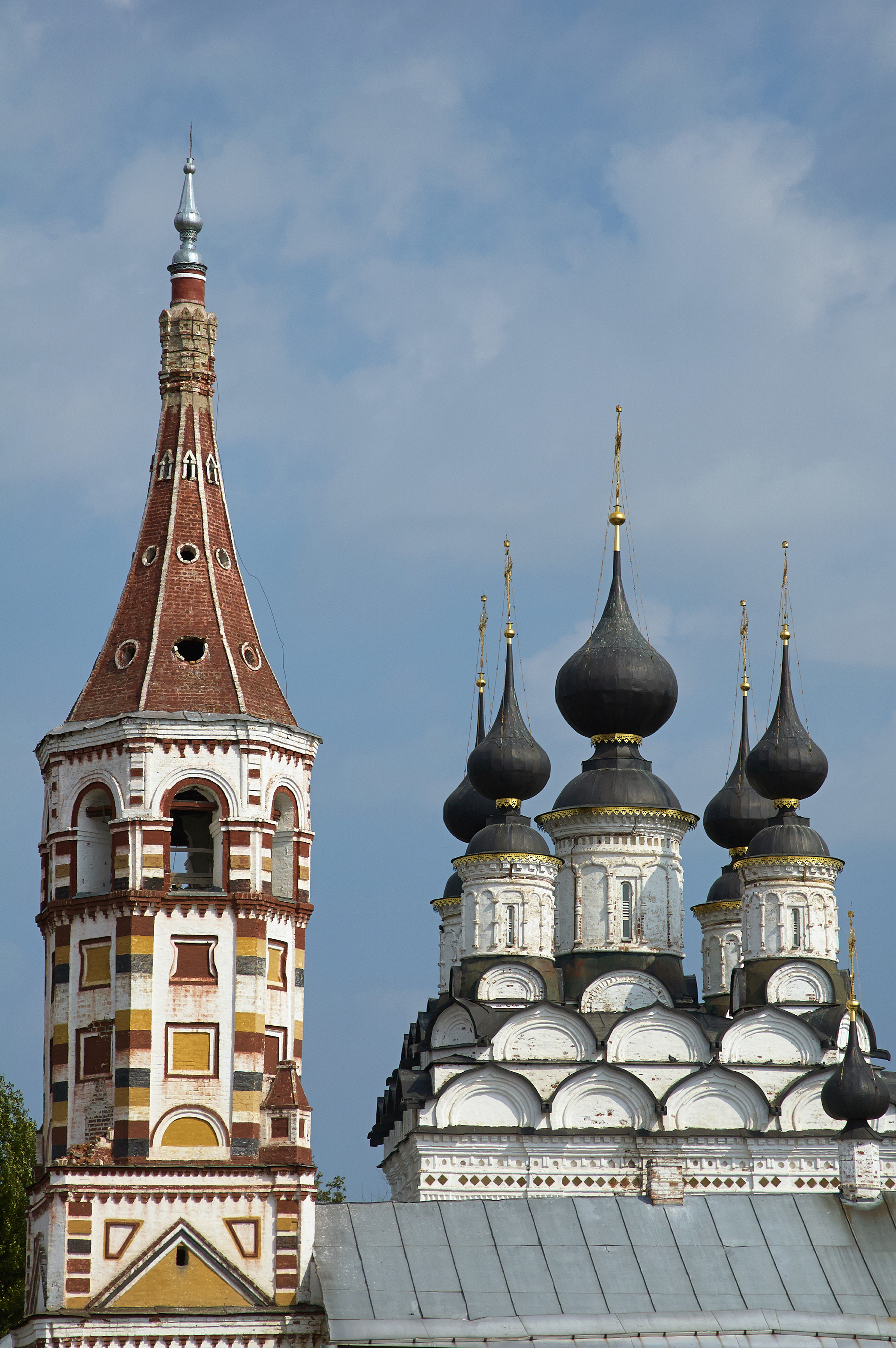
Église
Saint Antipas (1745) et sa voisine l’Église de la Résurrection de Lazare
(1667) Suzdal
Зимняя Антипьевская (1745) и летняя Лазоревская (1667) церкви, Суздаль

Église
Saint Antipas (1745) et sa voisine l’Église de la Résurrection de Lazare
(1667) Suzdal
Зимняя
Антипьевская (1745) и летняя Лазоревская (1667) церкви, Суздаль
Hieromartyr Antipas,
Bishop of Pergamum and Disciple of Saint John the Theologian
Commemorated on April
11
The Hieromartyr Antipas,
a disciple of the holy Apostle John the Theologian (September 26), was bishop
of the Church of Pergamum during the reign of the emperor Nero (54-68).
During these times,
everyone who would not offer sacrifice to the idols lived under threat of
either exile or execution by order of the emperor. On the island of Patmos (in
the Aegean Sea) the holy Apostle John the Theologian was imprisoned, he to whom
the Lord revealed the future judgment of the world and of Holy Church.
“And to the angel of the
Church of Pergamum write: the words of him who has the sharp two-edged sword. I
know where you live, where the throne of Satan is, and you cleave unto My Name,
and have not renounced My faith, even in those days when Antipas was My
faithful martyr, who was slain among you, where Satan dwells” (Rev 2:12-13).
By his personal example,
firm faith and constant preaching about Christ, Saint Antipas began to turn the
people of Pergamum from offering sacrifice to idols. The pagan priests
reproached the bishop for leading the people away from their ancestral gods,
and they demanded that he stop preaching about Christ and offer sacrifice to
the idols instead.
Saint Antipas calmly
answered that he was not about to serve the demons that fled from him, a mere
mortal. He said he worshiped the Lord Almighty, and he would continue to
worship the Creator of all, with His Only-Begotten Son, and the Holy Spirit.
The pagan priests retorted that their gods existed from of old, whereas Christ
was not from of old but was crucified under Pontius Pilate as a criminal. The
saint replied that the pagan gods were the work of human hands and that
everything said about them was filled with iniquities and vices. He steadfastly
confessed his faith in the Son of God, incarnate of the Most Holy Virgin.
The enraged pagan priests
dragged the Hieromartyr Antipas to the temple of Artemis and threw him into a
red-hot copper bull, where usually they put the sacrifices to the idols. In the
red-hot furnace the martyr prayed loudly to God, imploring Him to receive his
soul and to strengthen the faith of the Christians. He went to the Lord
peacefully, as if he were going to sleep (+ ca. 68).
At night Christians took
the body of the Hieromartyr Antipas, which was untouched by the fire. They buried
him at Pergamum. The tomb of the hieromartyr became a font of miracles and of
healings from various sicknesses.
We pray to the
Hieromartyr Antipas for relief from toothache, and diseases of the teeth.

Halbfigurenbild
des Heilige Antipas von Pergamon. Ikone ausgeführt in abendländischem Stil,
möglicherweise von einem venezianischen Künstler. Zweite Hälfte des 13.
Jahrhunderts. 58,2 x 44,9
Half-length
portrait of Saint Antipas of Pergamum. Icon carried out in a rather
occidential, possibly venetian style by a crusading artist (?). Second half of
13th century. 58.2 x 44.9, Saint Catherine's Monastery, Sinai (Egypt) / K.
Weitzmann: "Die Ikone"
Portrait
demi-longueur du Saint Antipas de Pergame. Icône exécuté en style occidental,
peut-être un artiste vénitien. Deuxième moitié du 13ième siècle. 58,2 x 44,9
Sant’ Antipa di Pergamo Martire
m. Pergamo, Asia Minore,
I secolo
Sant’Antipa da “fedele
testimone”, come narra l’evangelista Giovanni nell’Apocalisse, portò a
compimento il suo martirio in nome di Cristo presso Pergamo, in Asia Minore.
L’iconografia lo raffigura quale vescovo. La tradizione orientale lo annovera
tra i 72 apostoli di Cristo citati nei Vangeli.
Martirologio
Romano: A Pergamo nell’Asia, nell’odierna Turchia, commemorazione di
sant’Antípa, che, testimone fedele, come dice san Giovanni nell’Apocalisse,
subì il martirio in nome di Gesù.
Il nome di Sant’Antipa ci
è stato tramandato esclusivamente dal libro dell’Apocalisse, ove è detto
dall’apostolo Giovanni “testimonio mio fedele, che fu ucciso tra voi, dove
abita Satana”. Se ne può dedurre che Antipa abbia subito il martirio a Pergamo
in Asia Minore sotto il regno di Nerone, imperatore feroce nella persecuzione
ai cristiani. Andrea di Cesarea, nel commentare l’Apocalisse all’inizio del VII
secolo, attestò di aver letto il racconto del martirio del santo, ma la
“passio” tramandata non sembra corrispondere a quanto citato da Andrea, ma
sarebbe piuttosto ricalcata sullo schema tipico di tale genere letterario.
Antipa in età ormai avanzata fu arestato in seguito ad una sommossa popolare e
condotto dinnanzi al tribunale del prefetto della città. Interrogato come di
consueto ed esortato ad ubbidire agli ordini imperiali e sacrificare agli dei,
per il suo rifiuto fu allora trascinato al tempio di Diana e rinchiuso in un
toro di bronzo arroventato. Pare che venne edificata una chiesa sul suo
sepolcro ed il suo culto è antichissimo in Oriente. Sia i sinassari bizantini
che il Martyrologium Romanum pongono la commemorazione di Sant’Antipa all’11
aprile. L’iconografia lo raffigura quale vescovo. La tradizione orientale lo
annovera tra i 72 apostoli di Cristo citati nei Vangeli.
Autore: Fabio
Arduino
SOURCE : http://www.santiebeati.it/dettaglio/92520

Фрески
во Црквата „Св. Богородица Перивлепта“ во Охрид
Frescos
in the Church of the Theotokos Peribleptos, Оhrid Macedonia
Фресок
церкви Перивлепты Охридской Македония

Фрески
во Црквата „Св. Богородица Перивлепта“ во Охрид
Frescos
in the Church of the Theotokos Peribleptos, Оhrid Macedonia
Фресок
церкви Перивлепты Охридской Македония
Den hellige Antipas av
Pergamon (d. ~90)
Minnedag:
11. april
Den hellige Antipas
kalles av den hellige evangelisten Johannes i hans
Åpenbaring «mitt trofaste vitne [martyr]» (Åp 2,13) og evangelisten forteller
at han ble drept i Pergamon i Lilleasia:
Skriv til engelen for
menigheten i Pergamon: Dette sier han som har det skarpe, tveeggede sverd: Jeg
vet hvor du bor, der hvor Satan har sin trone. Likevel holder du fast ved mitt
navn. Og du har ikke fornektet troen på meg, ikke engang i de dager da Antipas,
mitt trofaste vitne, ble slått i hjel i byen deres, der Satan bor.
Ifølge kristen tradisjon
viet Johannes Antipas til biskop av Pergamon (lat: Pergamum) under keiser
Domitian (81-96), men dette er lite sannsynlig. Pergamon (gr: Πέργαμον: lat:
Pergamum) var en gresk oldtidsby i landskapet Mysia ved kysten i Anatolia
(Lilleasia) i dagens Tyrkia.
Det fortelles at Antipas
led martyrdøden rundt år 90 eller 92 under keiser Domitian, innesperret i en
okse laget av bronse som ble grillet over en ild. Mange undere skjedde ved hans
grav. Hans minnedag i Martyrologium Romanum er 11. april. I ikonografien fremstilles
han som biskop. Han er skytshelgen mot tannverk.
Det er en tradisjon i den
østlige kirken som hevder at Antipas var biskop av Pergamon. Da han ble
arrestert i forfølgelsene under keiser Domitian (81-96) og stilt for retten,
var han ifølge tradisjonen allerede en eldre mann. Derfor prøvde retten å
overbevise ham om at den hedenske religionen allerede bygde på en mye lengre
tradisjon enn den nye kulten som Antipas hadde overgitt seg til. Antipas for
sin del henviste dommeren til alderen på Den hellige skrift. Videre var læren
mer konsekvent og mye mindre tvetydig enn alle de mangfoldige krav fra de
greske filosofer i det siste. I tillegg kunne ikke den etiske holdningen til de
hedenske gudene måle seg med egenskapene til de kristnes ene Gud.
Dommeren følte seg dypt
krenket. I sin vrede lot han den ærverdige gamle mannen sette i en hul okse
laget av bronse, og deretter den ble oppvarmet av et bål. Martyren ba høyt for
sine fiender og sang lovsanger til Gud, og så døde han.
På et kuppelmaleri fra
1700-tallet på Athosfjellet avbildes de hellige som står i den gresk-ortodokse
kalenderen fra 1. til 13. april (se bildet). Vi starter med paret over hodet på
duen som symboliserer Den Hellige Ånd. Merk at «til høyre for» = mot klokken.
Til høyre den hellige Maria av Egypt
(400-t), minnedag 1. april (øst) og 2. april (vest), og til venstre hennes
åndelige veileder Zosimus
(400-t), minnedag 4. april. Til høyre for Maria står den hellige Titus
Undergjøreren (800-t), minnedag 2. april. Til høyre for Titus står Niketas Bekjenneren
(d. 824), minnedag 3. april. På den 4. april skulle egentlig Zosimus stå, men
han er allerede vist sammen med Maria av Egypt. Til høyre for Niketas: martyren
Theodulus og
Agathapodus (t.v. og t.h.) (d. 303), minnedag 5. april. Til høyre for disse
to: Eutykios av
Konstantinopel (d. 582), minnedag 6. april.
Til høre for Eutykios
(under duens føtter): Kalliopios av
Pompeiopolis (d. 303), minnedag 7. april. Til høyre for Kalliopios: Herodion av Patras
(d. 1. årh), minnedag 8. april; til høyre for Herodion: Eupsychius av
Caesarea (d. 362), minnedag 9 april. Til høyre for Eupsychius: Terentius av Kartago
(d. 250), minnedag 10. april; til høyre for Terentius: Antipas av Pergamon (d.
90), minnedag 11. april. Til høyre for Antipas (til venstre for Maria og
Zosimas): Basilios
av Parium (d. 750), minnedag 12. april.
I nedre venstre hjørne
under Maria og Zosimus: Maximus av Ozovia og
to brødre (d. 303), minnedag 13. april. I det andre hjørnet: nederst til
høyre: (sannsynligvis) martyrdøden til Simeon Barsabae av
Selevkia-Ktesifon (d. 341), minnedag 17. april. I hjørnet overfor over
diagonalen: til venstre Elisabeth
undergjøreren (d. 540), minnedag 24. april; og til høyre Pasikrates av
Durostorum og Valentinus (d. 228), minnedag 24. april. Bildet i det fjerde
hjørnet er ukjent. Videre under Titus Undergjøreren: den korsfestede Maura av Antinoë
(d. 298), minnedag 3. mai.
Kilder:
Benedictines, Delaney, Bunson, KIR, CSO, Patron Saints SQPN, Infocatho,
santiebeati.it, en.wikipedia.org, zeno.org, heiligen-3s.nl, goarch.org,
chrysostompress.org, sacredartgallery.com - Kompilasjon og oversettelse: p. Per Einar Odden
Opprettet: 20. desember
2007
SOURCE : https://www.katolsk.no/biografier/historisk/apergamu

Фреско-иконна
реплика на чудотворната рилска икона. Западна нартика. Димитър Христов и Зафир.
1843
Antipas van Pergamum,
Klein-Azië; martelaar;
† ca 90.
Feest 11 april.
Het enige dat we van hem
weten staat vermeld in het Nieuw-Testamentische bijbelboek van de Apokalyps (of
Openbaring):
'En schrijf aan de engel
van de gemeente te Pergamum:
"[-] U hebt het
geloof in mij niet verloochend, ook niet in de dagen van Antipas, mijn trouwe
getuige, die gedood werd bij u, daar waar de satan woont"' (Apokalyps
2,13).
We kennen dus niet de
omstandigheden van zijn marteldood, noch weten wij, of hij een ambt bekleedde.
Omdat zijn naam in geen enkele bron voorkomt, lijkt het onwaarschijnlijk, dat
hij bisschop was te Pergamum.
Toch bestaat er in de
oosterse kerk een traditie, die juist wel beweert dat Antipas de bisschop was
van Pergamum. Op het moment, dat hij ten tijde van de christenvervolgingen van
keizer Domitianus (81-96) werd gearresteerd en voor de rechter geleid, was hij
volgens de overlevering al een bejaard man. Daarom trachtte de rechter hem
ervan te overtuigen, dat de heidense godsdienst reeds steunde op een veel
langere geschiedenis dan de nieuwe eredienst, waaraan hij, Antipas, zich
overgaf. Antipas van zijn kant wees de rechter op de ouderdom van de Heilige
Schrift. Bovendien was de leer die daarin stond veel consequenter en voor veel
minder uitleg vatbaar dan al die veelsoortige beweringen van de Griekse
filosofen uit het verleden. Om nog maar te zwijgen van de ethische
levenshouding der heidense goden tegenover de eigenschappen van de ene God der
christenen.
De rechter voelde zich
diep gekrenkt. In zijn woede liet hij de eerbiedwaardige grijsaard in een
koperen stier opsluiten, waarna deze door vuren werd verhit. Luid hoorbaar bad
de martelaar voor
zijn vijanden en zong lofliederen voor God: zo is hij gestorven.
[ 102; 127; 140; 141» 04.11; 500; 1999.04.17]
© A. van den Akker
s.j. / A.W. Gerritsen
SOURCE : https://www.heiligen-3s.nl/heiligen/04/11/04-11-0090-antipas.php
Hieromartyr Antipas,
Bishop of Pergamum : https://www.goarch.org/chapel/saints?contentid=15&type=saints


_-_Antipas_by_shakko.jpg?utm_source=commons.wikimedia.org&utm_campaign=imageinfo&utm_content=original)