
Filippo Lippi, San Benedetto ordina a San Mauro di salvare san Placido, circa 1445, tempera on panel, 40 x 69.5, Samuel H. Kress Collection, National Gallery of Art, Washington, D.C., District of Columbia
Saint Maur
Disciple de saint
Benoît (+ 584)
Amaury ou Amalric
Cofondateur de l'ordre, disciple et successeur de St Benoît.
Abbé de Glanfeuil.
Des internautes nous signalent:
- "Né à Rome, fils d'un Sénateur romain, il fut confié à St Benoît, dont il devint le plus proche disciple, qui le nomme prieur du monastère du Mont Cassin. Envoyé en Gaule pour implanter l'Ordre, il aurait fondé un monastère sur les bords mêmes de la Loire près de Saumur en 542 (abbaye de Glanfeuil, dénomination actuelle abbaye de St Maur (49 Le Thoureil). Ses reliques sont transférées à St Maur des Fossés (94) en 921."
- "Le bréviaire romain dit: 'Maurus, nobilis Romanus ...' et nous apprend que son père portait le nom grec d'Eutychius (de eutukhia= bonheur). La 'Légende dorée' mentionne Maur dans la vie de saint Benoît, et raconte un épisode auquel le bréviaire fait également allusion (sauvetage du moine Placide). Les 'mauristes'* ont marqué l'histoire des bénédictins français."
- "Selon la légende, St Maur est né dans une riche famille de Rome en 512 et entre au monastère du Mont Cassin pour recevoir une éducation chrétienne. Il devient disciple de St Benoît de Nursie. De là il fut envoyé en Gaule pour diffuser la règle bénédictine. Il reçoit du roi Théodebert 1er (534-547) des terres à Glanfeuil en Anjou pour y établir une communauté monastique. Il meurt d'une pleurésie en 584 et sa dépouille est conservée par les moines de l'abbaye." Dans l'église de Corpeau - 21190 (GoogleMaps) sont déposées des reliques de Saint Maur et un autel lui est dédié.
*congrégation placée sous le patronage de saint Maur, disciple de saint Benoît qui, croyait-on, avait apporté en Gaule la Règle de son maître, elle fut approuvée en 1621 par le pape Grégoire XV.
A découvrir: le site de l'Association des abbayes et prieurés bénédictins de la congrégation de Saint-Maur.
À Glanfeuil sur la Loire en Anjou, au VIe ou VIIe siècle, saint Maur, abbé.
Martyrologe romain
SOURCE : https://nominis.cef.fr/contenus/saint/434/Saint-Maur.html
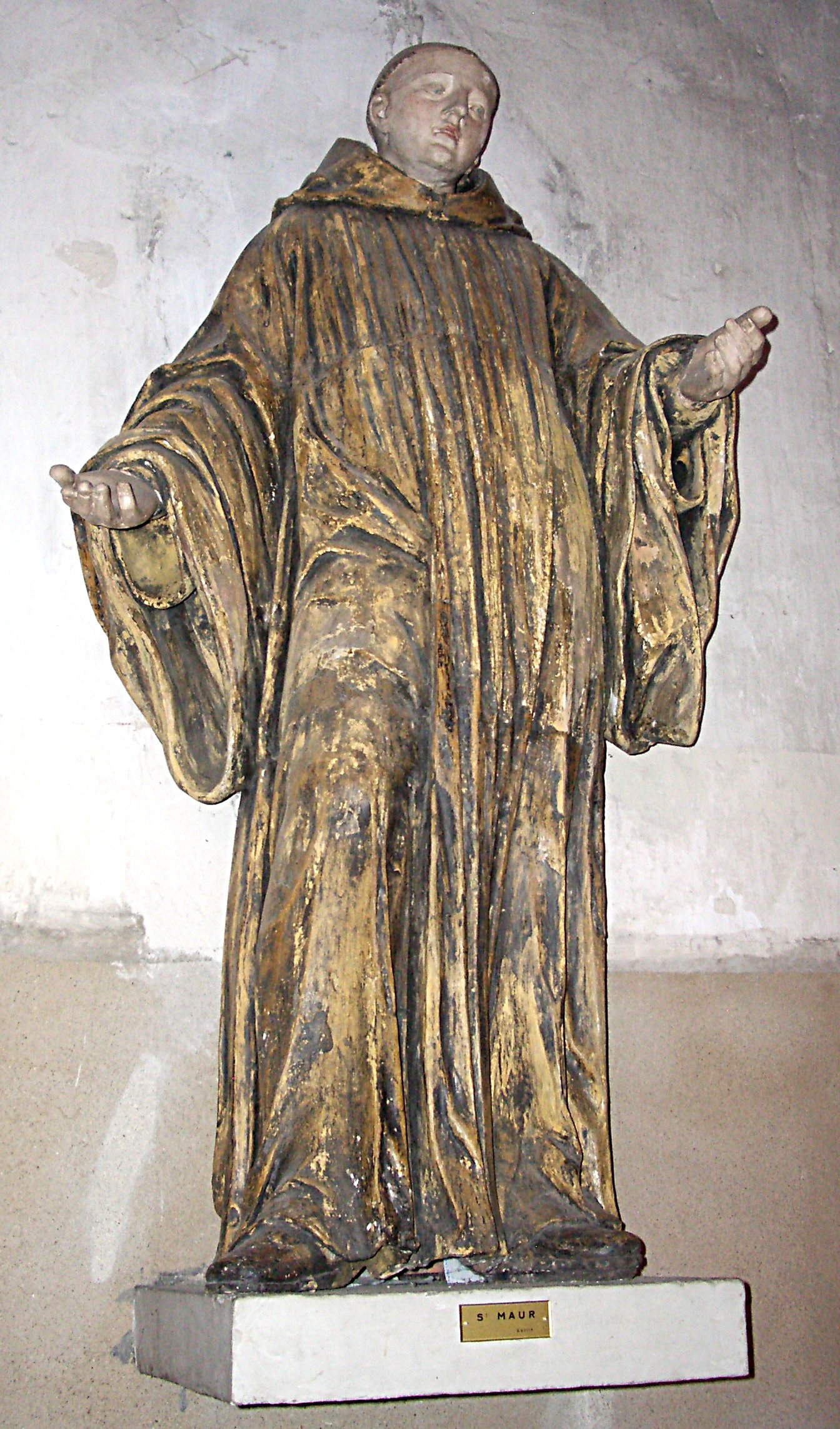
Statue
de saint Maur dans l'église paroissiale du Bel Hellouin (Eure)
Saint
Maur in the Bec Hellouin church
St Maur, abbé
A Glanfeuil, déposition
de St Maur (VI-VIIe siècle). Usuard introduisit St Maur dans son martyrologe
lorsque les moines de Glanfeuil, fuyant les Normands, ne viennent se réfugier
près de Paris, en 869, en un lieu qui deviendra St Maur des Fossés.
Certains historiens
prétendent que l’abbé Maur de Glanfeuil n’est qu’un homonyme du disciple de St
Benoît.
Son culte s’étendit avec
le développement des filiales de l’Abbaye de Cluny, et attint Rome au XIe
siècle, d’abord dans les abbayes bénédictines de la Ville, puis à St Pierre et
au Latran au XIIe siècle.
eodem die 15 ianuarii
S. Mauri
Abbatis
Commemoratio
Missa Os
iusti, de Communi Abbatum.
ce même 15 janvier
St Maur
Abbé
Commémoraison
Messe Os
iusti, du Commun des Abbés.
Leçon des Matines avant
1960
Neuvième leçon. Maur,
noble romain, était encore enfant, lorsque son père Eutychius l’offrit à Dieu,
pour vivre sous la discipline de saint Benoît. Il fit en peu de temps, avec la
grâce divine, de si grands progrès, qu’il était un sujet d’admiration pour son
maître lui-même, qui le proposait souvent à l’imitation de ses autres
disciples, comme un modèle de l’observance régulière et de toutes les vertus.
Saint Grégoire, Pape, rapporte de Maur, encore adolescent, cet admirable
exemple d’obéissance. Un moine, nommé Placide, étant tombé dans un lac et se
trouvant emporté par le courant, Maur accourut sur l’ordre de son saint Père,
et marchant sur les eaux, il saisit par les cheveux son jeune compagnon et le
tira jusqu’à terre. Envoyé dans les Gaules par le même saint Benoît, il y bâtit
un célèbre monastère qu’il gouverna pendant quarante ans, et y propagea
merveilleusement la discipline monastique. . Enfin, illustre par sa sainteté et
ses miracles, ii émigra pour le ciel, l’an du salut cinq cent soixante cinq.
Dom
Guéranger, l’Année Liturgique
Un des plus grands
maîtres de la vie cénobitique, le plus illustre des disciples du Patriarche des
moines de l’Occident, saint Maur, partage avec l’ermite
Paul les honneurs de cette journée. Comme lui, fidèle aux leçons de
Bethlehem, il est venu prendre place sur le Cycle, dans cette sainte période
des quarante jours consacrés au divin Enfant. Il est là pour attester, à son
tour, la puissance des abaissements du Christ. Car qui oserait douter de la
force victorieuse de cette pauvreté, de cette obéissance de la crèche, en
voyant les admirables résultats de ces vertus dans les cloîtres de la
France ?
Notre patrie dut à saint
Maur l’introduction dans son sein de cette Règle admirable qui produisit les
grands saints et les grands hommes à qui notre patrie est redevable de la
meilleure partie de sa gloire. Les enfants de saint Benoît par saint Maur
luttèrent contre la barbarie franque, sous le règne de la première race de nos
rois ; sous la seconde, ils enseignèrent les lettres sacrées et profanes à
un peuple dont ils avaient puissamment aidé la civilisation ; sous la
troisième, et jusque dans ces derniers temps où l’Ordre Monastique, asservi par
la Commende, et décimé par les violences d’une politique perverse, expirait au
milieu des plus pénibles angoisses, ils furent la providence des peuples par le
charitable usage de leurs grandes propriétés, et l’honneur de la science par
leurs immenses travaux sur l’antiquité ecclésiastique et sur l’histoire
nationale.
Le monastère de Glanfeuil
communiqua sa législation à tous nos principaux centres d’influence
monastique : Saint-Germain de Paris, Saint-Denis en France, Marmoutiers,
Saint-Victor de Marseille, Luxeuil, Jumièges, Fleury, Corbie, Saint-Vannes,
Moyen-Moutier, Saint-Wandrille, Saint-Vaast, la Chaise-Dieu, Tiron,
Chezal-Benoît, le Bec, et mille autres Abbayes de France, se glorifièrent
d’être filles du Mont-Cassin par le disciple chéri du grand Patriarche. Cluny,
qui donna, entre autres, au Siège Apostolique, saint Grégoire VII et Urbain II,
se reconnut redevable à saint Maur de la Règle qui fit sa gloire et sa
puissance. Que l’on compte les Apôtres, les Martyrs, les Pontifes, les
Docteurs, les Ascètes, les Vierges, qui s’abritèrent sous les cloîtres
bénédictins de la France, pendant douze siècles ; que l’on suppute les
services rendus par les moines à notre patrie, dans l’ordre de la vie présente
et dans l’ordre de la vie future, durant cette longue période : on aura
alors quelque idée des résultats qu’opéra la mission de saint Maur, résultats
dont la gloire revient tout entière au Sauveur des hommes, et aux mystères de
son humilité, qui sont le principe de l’institution monastique. C’est donc
glorifier l’Emmanuel que de reconnaître la fécondité de ses Saints, et de
célébrer les merveilles qu’il a opérées par leur ministère.
Nous lirons maintenant le
récit abrégé de la vie de saint Maur, dans les Leçons que lui consacre le
Bréviaire monastique [1].
Maur, Romain de
naissance, eut pour père Eutychius, de l’ordre des Sénateurs. Encore enfant, il
fut offert à Dieu par son père, pour vivre sous la discipline de saint Benoit.
Formé à l’école d’un si grand et si habile maître, il atteignit le sublime
degré de la perfection monastique avant même les premières années de
l’adolescence, en sorte que Benoit lui-même admirait et recommandait ses
vertus, ayant coutume de le proposer à l’imitation des autres, comme le modèle
de l’observance régulière. Il macérait sa chair par le cilice, par les veilles
et par un jeûne continuel, tandis qu’il récréait son esprit par une oraison
assidue, par de pieuses larmes et par la lecture des saintes lettres. Durant le
carême, il ne mangeait que deux fois la semaine, et en si petite quantité,
qu’il semblait plutôt goûter les mets que s’en nourrir. Il se tenait debout
pour prendre son sommeil, et, lorsqu’une trop grande fatigue l’y contraignait,
il dormait assis. D’autres fois, il reposait sur un monceau de chaux et de sable
que recouvrait un cilice. Le temps de son repos était si court, que toujours il
faisait précéder l’Office de la nuit par de longues prières, souvent même par
l’entière récitation du psautier.
Il donna l’exemple d’une
admirable obéissance, lorsque, par l’ordre du bienheureux Père, courant au lac
dans les eaux duquel Placide était en péril, il marcha à pied sec sur les
flots ; puis, saisissant l’enfant par les cheveux, il retira saine et
sauve des eaux cette victime que Dieu réservait pour le tranchant du glaive. Ce
furent ces excellentes vertus qui portèrent le bienheureux Père à l’associer à
ses sollicitudes, comme déjà il l’avait associé à ses miracles dès son entrée
dans la vie monastique. Elevé au degré sacré du Diaconat par le commandement du
saint Patriarche, il rendit la parole et l’agilité à un enfant muet et boiteux
par le simple attouchement de son étole.
Envoyé dans les Gaules
par le même saint Benoit, à peine y était-il arrivé, qu’il eut révélation de
l’entrée triomphante de son bienheureux Père dans les cieux. Après bien des
sollicitudes et de pénibles travaux, il promulgua la Règle que le saint
Législateur lui avait donnée écrite de sa main. Il construisit à Glanfeuil, en
Anjou, un célèbre monastère qu’il gouverna durant quarante ans ; et la
renommée de son nom et de ses actions y brilla d’un tel éclat, que les plus
nobles seigneurs de la cour du roi Théodebert volèrent sous ses étendards, pour
servir dans une milice plus sainte.
Deux ans avant sa mort,
il abdiqua la conduite du monastère, et se retira dans une cellule proche d’un
oratoire de Saint-Martin. Là, il s’exerça aux œuvres de la plus rigoureuse
pénitence, et descendit dans l’arène pour combattre l’ennemi du genre humain
qui menaçait de faire périr ses moines. Dans cette lutte, il eut pour
consolateur un Ange de lumière, qui lui découvrit les ruses de l’esprit de
malice, et aussi la volonté divine, et qui l’invita à conquérir la couronne
avec ses Disciples. Avant donc envoyé au ciel, comme les avant-coureurs de son
triomphe, plus de cent de ces valeureux soldats qu’il devait suivre bientôt
lui-même, il se fit porter dans l’oratoire, où, s’étant muni du Sacrement de
vie, étendu sur le cilice, semblable à une victime présentée à l’autel, il
expira d’une mort précieuse, âgé de plus de soixante-dix ans, ayant propagé
merveilleusement dans les Gaules la discipline monastique, et étant devenu
célèbre par d’innombrables miracles avant et après sa mort.
Nous donnons ici un choix
d’Antiennes extraites de l’Office Monastique de saint Maur.
Le bienheureux Maur,
illustre par son origine patricienne, estima, des son enfance, les humiliations
du Seigneur Christ un plus grand trésor que toutes les richesses du monde.
Le Seigneur le revêtit de
l’étole sainte des Lévites, par l’attouchement de laquelle il fit marcher les
boiteux et parler les muets.
Envoyé en France, il y
fit briller la doctrine de la Règle comme l’aurore d’un nouveau soleil, et il
la propagea jusqu’en de lointaines contrées.
La solitude du nouveau
monastère, embellie par la présence de Florus et des premiers seigneurs du
royaume, tressaillait d’allégresse, et fleurissait comme un lis.
Près de mourir, il envoya
devant lui dans les cieux les fils qu’il avait engendrés en Jésus-Christ ;
et, au milieu des prières, laissant son corps au pied des autels, son âme
s’envola au ciel. Alléluia.
O très digne disciple du
Père Benoît ! qu’il a laissé pour héritier de son esprit, afin qu’il fût,
dans les Gaules, le premier Apôtre de la sainte Règle, et l’admirable
propagateur de l’Ordre Monastique. Alléluia.
O l’heureux homme !
Qui, méprisant le siècle, porta avec amour le joug de la sainte Règle, et,
obéissant jusqu’à la mort, se renonça lui-même pour s’attacher tout entier au
Christ ! Alléluia.
Aujourd’hui saint Maur,
étendu sur le cilice, devant l’autel, a rendu heureusement le dernier soupir.
Aujourd’hui le disciple premier-né du bienheureux Benoit, montant avec sécurité
par le sentier de la sainte Règle, escorté des chœurs angéliques, est parvenu
jusqu’au Christ. Aujourd’hui, l’homme obéissant, chantant ses victoires, a
mérité d’être couronné par le Seigneur. Alléluia.
Les Répons suivants
appartiennent au même Office, et ne sont pas moins remarquables.
R/. Maur confié dès
sa plus tendre enfance, par son père Eutychius, à saint Benoît, pour être élevé
dans la solitude de Sublac, reproduisit, par une imitation fidèle, les vertus
de son maître : * Et devint semblable à lui. V/. Il
considéra et fit selon l’exemplaire qui lui fut montré sur la montagne ; * Et
il devint semblable à lui.
R/. Placide étant
tombé dans le lac, Maur vole à son secours, porté sur les eaux par l’Esprit du
Seigneur : * Quand il obéit sans délai au commandement de son
Père. V/. Les grandes eaux ne purent éteindre sa charité, ni les
fleuves l’engloutir ; * Quand il obéit.
R/. Saint Benoît
envoie dans les Gaules Maur, son disciple le plus chéri : * Et
consent à être privé d’une grande consolation pour procurer le salut du
prochain. V/. La charité est bénigne ; elle ne cherche point ce
qui est pour elle, mais ce qui est pour Jésus-Christ ; * Et
consent.
R/. Maur, ravi en
Dieu, aperçut une voie étincelante de mille flambeaux, par laquelle Benoît
montait dans la gloire : * Pour l’éternité, à jamais. V/. Le
sentier des justes s’avance comme une lumière brillante, et va croissant
jusqu’au jour parfait ; * Pour l’éternité, à jamais.
R/. Les fleuves de
sagesse que Maur avait puisés au sein du bienheureux Benoît, il les répand sur
les Gaules : * Et c’est au milieu des lis de France qu’il plante
les rejetons de son Ordre sacré. V/. Semblable à un ruisseau sorti
d’un fleuve, il a arrosé le jardin qu’il a planté ; * Et c’est
au milieu.
R/. Le très chrétien
Roi des Francs vint au monastère, pour écouter la sagesse du nouveau
Salomon : * Et il mit à ses pieds la pourpre royale. V/. Comme
il était humble à ses propres yeux, le Seigneur le glorifia en la présence des
rois ; * Et il mit à ses pieds.
R/. Deux ans avant sa
mort, il entra dans le silence, séparé des hommes, * Et seul, il
habita avec lui-même sous les yeux du témoin céleste. V/. Il prépara
son cœur, et, en présence du Seigneur, il sanctifia son âme ; * Et
seul.
R/. La plus grande
partie des frères qui militaient sous .Maur leur chef, avertie d’une mort
prochaine par un Ange, soutint avec le démon son dernier combat : * Et
succombant glorieusement dans la lutte, mérita les triomphes célestes. V/. Maur
a combattu le bon combat, il a achevé sa course, il a gardé la foi ; * Et
succombant.
R/. Ayant servi
soixante ans dans la milice sacrée, sa mort étant proche, il voulut être porté
au pied des autels, pour répandre, en présence du Seigneur, sa prière et son
âme, disant : * Mon âme haletante défaille dans le sanctuaire du
Seigneur V/. Vos autels , Seigneur des armées, mon Roi et mon
Dieu ! * Mon âme haletante.
R/. Étendu dans
l’Église sur un cilice, il passa, de la maison de prière, au lieu du tabernacle
admirable, à la maison de Dieu : * Pour lequel il brûlait d’un
ardent amour. V/. Car il était dans l’angoisse, désirant voir briser
ses liens, et être avec Jésus-Christ ; * Pour lequel il brûlait.
Entre les trois Hymnes de
saint Maur, nous choisissons celle-ci comme la plus belle :
HYMNE.
Gaule, consacre tes
chants à la gloire de Maur : c’est lui qui t’enrichit d’une nouvelle
famille ; gardien de ton illustre empire, il protège, par sa tombe sacrée,
les lis de tes rois.
Plus grand que les
honneurs de sa naissance, il méprise les palais, et s’enfuit joyeux sous
l’ombre du cloître ; les délices, les héritages, la pourpre, il foule tout
aux pieds, pour porter le joug du Christ.
Plein de zèle, il exprime
dans ses actions les traits du bienheureux Père ; dans la vie merveilleuse
d’un enfant, brille la règle de la vie monastique.
Dur à lui-même, il se
couvre d’un cilice ; pour toujours il s’enchaîne sous la loi du
silence ; la nuit, il veille dans la prière, et le jeûne remplit ses
journées.
A l’ordre du Père, il
vole, intrépide, et, d’un pied sec, il foule les eaux ; il arrache et
sauve Placide de l’abîme, et revient, comme Pierre autrefois.
Que l’éternel honneur de
la louange à vous soit rendu, ô Trinité, qui rassasiez les habitants du ciel de
la lumière de votre visage ; accordez à vos serviteurs d’arriver à la
récompense de Maur, par le sentier de la Règle sainte. Amen.
Qu’il fut fécond votre
Apostolat, ô sublime disciple du grand Benoît ! Qu’elle est innombrable
l’armée des saints qui sont sortis de vous et de votre illustre Père ! La
Règle que vous avez promulguée a été véritablement le salut des peuples de
notre patrie ; et les sueurs que vous avez versées sur l’héritage du
Seigneur n’ont pas été stériles. Mais quand, du séjour de la gloire, vous
considérez la France jadis couverte de cette multitude innombrable de
monastères, du sein desquels la louange divine montait sans cesse vers le ciel,
et que vous n’apercevez plus que les ruines des derniers de ces sacrés asiles,
ne vous tournez-vous pas vers le Seigneur, pour lui demander que la solitude
refleurisse enfin ? Où sont ces cloîtres où s’élevaient les Apôtres des
nations, les Pontifes éclatants de doctrine, ces défenseurs intrépides de la
liberté de l’Église, ces Docteurs de toute science, ces héros de la sainteté
qui vous appelaient leur second père ? Qui nous rendra ces fortes maximes
de la pauvreté, de l’obéissance, du travail et de la pénitence, qui ravirent d’admiration
et d’amour tant de générations, et poussaient vers la vie monastique tous les
ordres de la société à la fois ? En place de cet enthousiasme divin, nous
n’avons plus que la timidité du cœur , l’amour d’une vie terrestre, la
recherche des jouissances, l’horreur de la croix, et tout au plus les habitudes
d’une piété molle et stérile. Priez, ô grand Maur, pour que ces jours soient
abrégés ; obtenez que les mœurs chrétiennes de nos temps se retrempent à
l’étude de la sainteté ; qu’un peu de force renaisse dans nos cœurs
attiédis. Les destinées de l’Église, qui n’attendent que des hommes courageux,
redeviendront alors aussi grandes, aussi belles que nous les espérons dans nos
rêves impuissants. Que, par vos prières, le Seigneur daigne nous rendre
l’élément monastique dans sa pureté et sa vigueur, et nous serons sauvés ;
et la décadence morale qui nous désole, au milieu même des progrès de la foi,
s’arrêtera dans son cours. Faites-nous connaître, ô Maur, le divin
Enfant ; initiez-nous à sa doctrine et à ses exemples ; alors nous
comprendrons que nous sommes la race des saints, et qu’il nous faut marcher,
comme le Chef de tous les saints, à la conquête du monde par les moyens qu’il a
employés lui-même.
[1] St Maur n’étant que commémoré dans le calendrier romain,
il n’a droit aux matines romaines qu’à une leçon contractée qu’on
trouvera ici.
Bhx
Cardinal Schuster, Liber Sacramentorum
On fait aujourd’hui la
commémoraison de saint Maur, fils du Romain Eutychius et premier disciple de
saint Benoît. Comme nous le montre admirablement saint Grégoire le Grand dans
son précieux livre des Dialogues (une composition si délicate et si pleine de
poésie que, durant le haut moyen âge, elle occupa la place que prirent plus
tard en Italie les Fioretti de saint François), Maur, dès son enfance, fut
d’une si éminente vertu, que par les mérites de son obéissance il marcha à pied
sec sur le lac néronien de Subiaco. Pourtant sa mémoire dans le Missel n’est
pas très ancienne, puisqu’elle remonte seulement aux dernières années du moyen
âge.
Dom
Pius Parsch, le Guide dans l’année liturgique
Saint Maur. — Jour de
mort : 15 janvier 565. — Tombeau : à Glanfeuil (St-Maur-sur-Loire).
Image : en bénédictin, auprès de saint Benoît, ou bien au moment où il
sauve l’enfant Placide. Sa vie : Maur fut un des plus célèbres disciples
de saint Benoît. Il fut amené tout enfant par son père, en même temps que
Placide, au patriarche des moines pour être élevé en vue de la vie monastique.
Un épisode de sa vie nous montre quelle était son obéissance enfantine. Le
jeune Placide se hâtait un jour vers la mer. Avec un zèle actif, mais aussi de
l’étourderie juvénile, Placide s’acquittait de la tâche qui lui avait été
confiée. Il se précipitait vers la mer pour puiser de l’eau, mais il se pencha
trop en avant pour puiser plus vite, et le poids de la cruche, qui s’emplissait
rapidement, l’entraîna dans les flots. Déjà les vagues l’entraînaient, à la
distance d’un jet de flèche, loin de la rive. Saint Benoît qui était dans sa
cellule connut immédiatement le danger et appela Maur qui était sans doute
occupé dehors : « Cours aussi vite que tu pourras vers la mer,
Placide est tombé à l’eau. » Avec la bénédiction du Père vénéré, Maur se
précipite, saisit l’enfant par les cheveux et le ramène à terre. Quelle ne fut
pas son effroi quand, après avoir mis Placide en sûreté, il constata qu’il
avait marché pendant plusieurs pas sur les flots. Seul l’ordre de son maître
avait pu opérer ce miracle. L’opinion d’après laquelle Maur fut plus tard abbé
de Glanfeuil, en France, ne peut pas se démontrer historiquement.
SOURCE : http://www.introibo.fr/15-01-St-Maur-abbe#nh1
Saint MAUR (+584)
Fêté le
15 Janvier
Nom et iconographie
Nom d'origine latine
signifie "de Mauritanie"
On le représente sous la
bure noire des bénédictins,parfois avec une croix abbatiale,une bêche,une
crosse ou une balance.
Patronages.
Protecteurs des boîteux
des chaudronniers
des chabonniers
des jardiniers
Dictons.
A la Saint Maur, tout est
mort
Le 15 janvier, Maur
réjouit les chaudronniers
D'habitude à la
Saint-Maur, la moitié de l'hiver est dehors
Sa vie
"Né à Rome, fils
d'un Sénateur romain, il fut confié à St Benoît, dont il devint le plus proche
disciple, qui le nomme prieur du monastère du Mont Cassin. Envoyé en Gaule pour
implanter l’Ordre, il aurait fondé un monastère sur les bords mêmes de la Loire
près de Saumur en 542 (abbaye de Glanfeuil, dénomination actuelle abbaye de St
Maur (49 Le Thoureil). Ses reliques sont transférées à St Maur des Fossés (94)
en 921."
Intercessions.
Invoqué contre les
rhumatismes articulaires
le coryza
l'arthrite
la goutte
Prières
Prières à Saint MAUR
Prière
en l'église de Saint Maur les Bois (Manche) ici
SOURCE : https://www.saintsguerisseurs.fr/le-nom-des-saints-1/m/saint-maur/
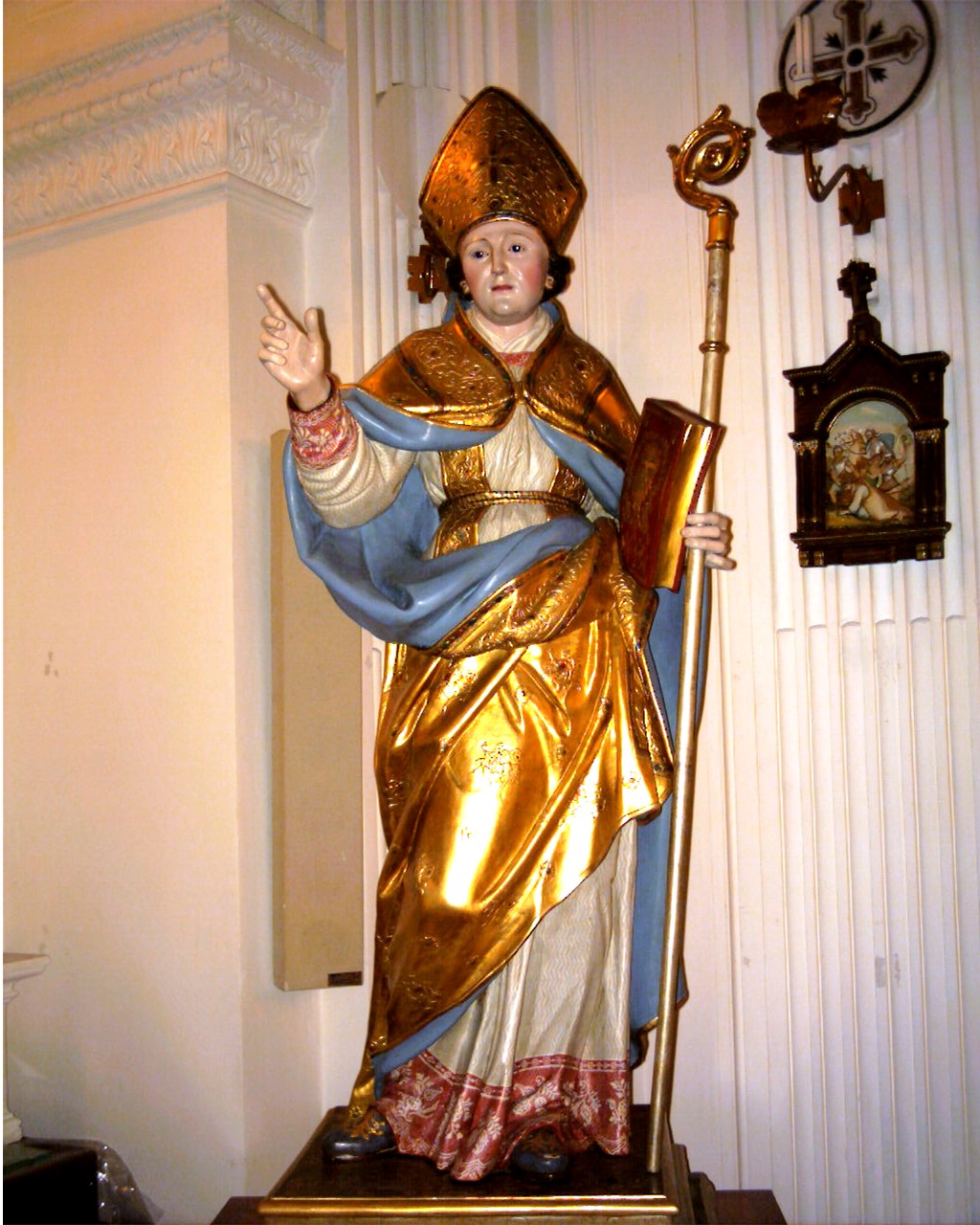
Statua
di San Mauro abate venerata a San Mauro La Bruca
Also
known as
Mauro
Profile
Born to the nobility, the
son of Equitius, a senator, and Giulia. Disciple of Saint Benedict
of Nursia at age 12. Studied with Saint Placid. Deacon. Benedictine monk.
Assisted Saint Benedict at Subiaco, Italy, and
at Monte
Cassino in 528. Founder
and abbot of
the abbey at
Glanfeuil, France in 543; it was
later renamed for him. Could heal by prayer, and there
are multiple stories of him bringing the dead back
to life. At the moment of the death of Saint Benedict,
Maurus received a vision of his old teacher travelling a
street that led to heaven.
Born
15 January 584 of
natural causes
relics transferred
to St-Pierre-des-Fosses in 868 to
avoid Norman invaders
relics interred
in the church of St-Germain-des-Prés, Paris, France
relics destroyed
in 1793 during
the anti-Catholic excesses
of the French
Revolution
Saint-Bonnet-de-Vieille-Vigne, France
in Italy
monk saving Saint Placid from drowning while
a cowl floats
above him
monk walking
on water, which is how he reached Saint Placid to
save him from drowning
man holding the weights
and measures of food and drink given him by Saint Benedict
Additional
Information
Book
of Saints, by the Monks of
Ramsgate
Catholic
Encyclopedia, by Francis Mersman
Lives
of the Saints, by Father Alban
Butler
Roman
Martyrology, 1914 edition
Saints
of the Day, by Katherine Rabenstein
Saints
of the Order of Saint Benedict, by Father Aegedius
Ranbeck, O.S.B.
books
Our Sunday Visitor’s Encyclopedia of Saints
Saints
and Their Attributes, by Helen Roeder
other
sites in english
1001 Patron Saints and Their Feast Days, Australian
Catholic Truth Society
images
sitios
en español
Martirologio Romano, 2001 edición
Martirologio Romano, 2001 edición
sites
en français
fonti
in italiano
websites
in nederlandse
spletne
strani v slovenšcini
MLA
Citation
“Saint Maurus“. CatholicSaints.Info.
25 February 2024. Web. 9 January 2026.
<https://catholicsaints.info/saint-maurus/>
SOURCE : https://catholicsaints.info/saint-maurus/
Book of Saints –
Maurus – 15 January
Article
(Saint) Abbot (January
15) (6th
century) The first disciple of Saint Benedict of Nursia. Maurus was with
him as a monk both at Subiaco, where Saint Benedict founded the Benedictine
Order, and afterwards at Monte Cassino. The tradition is that about A.D. 528
Saint Maurus was sent by Saint Benedict into France to found monasteries there,
and that in effect he established the great Abbey of Glanfeuil on the Loire. He
is said to have resigned his position some time before his death and to have
retired to a hermit’s cell. He passed away A.D. 584. His relics were several
times translated from church to church during the next twelve hundred years,
and finally disappeared in the catastrophe of the great French Revolution.
MLA
Citation
Monks of Ramsgate.
“Maurus”. Book of Saints, 1921. CatholicSaints.Info.
25 December 2016. Web. 9 January 2026.
<https://catholicsaints.info/book-of-saints-maurus-15-january/>
SOURCE : https://catholicsaints.info/book-of-saints-maurus-15-january/
St. Maurus
Deacon,
son of Equitius, a nobleman of Rome,
but claimed also by Fondi, Gallipoli,
Lavello etc.; died 584. Feast, 15 Jan. He is represented as an abbot with crozier,
or with book and censer,
or holding the weights and measures of food and drink given him by his holy
master. He is the patron of charcoalburners, coppersmiths etc. — in Belgium of
shoemakers — and is invoked against gout, hoarseness etc. He was a disciple of
St. Benedict, and his chief support at Subiaco.
By St.
Gregory the Great (Lib. Dialog., II) he is described as a model of
religious virtues, especially of obedience. According to the Vita ("Acta
SS." II Jan., 320, and Mabillon "Acta SS. O.S.B.", I, 274) he
went to France in
543 and became the founder and superior of the abbey at
Glanfeuil, later known by his name. This Vita ascribed to a companion,
the monk Faustus
of Monte Cassino, has been severely attacked. Delehaye (loc. cit., 106) calls
it a forgery of
Abbot Odo
of Glanfeuil in the ninth century but Adlhoch (Stud. u. Mittheil .,
1903, 3, 1906, 185) makes a zealous defence.
On the Signum S. Mauri, a blessing of the sick with invocation of St. Maurus
given in the Appendix of Rituale Romanum, see "Studien u.
Mittheil." (1882), 165.
Mershman,
Francis. "St. Maurus." The Catholic Encyclopedia. Vol.
10. New York: Robert Appleton Company, 1911. 15 Jan.
2017 <http://www.newadvent.org/cathen/10072a.htm>.
Transcription. This
article was transcribed for New Advent by Joseph P. Thomas. Dedicated to
Fr. Joseph Kelly.
Ecclesiastical
approbation. Nihil Obstat. October 1, 1911. Remy Lafort, S.T.D.,
Censor. Imprimatur. +John Cardinal Farley, Archbishop of New York.
Copyright © 2020 by Kevin
Knight. Dedicated to the Immaculate Heart of Mary.
SOURCE : http://www.newadvent.org/cathen/10072a.htm
January 15
St. Maurus, Abbot
AMONG the several
noblemen who placed their sons under the care of St. Benedict, to be brought up
in piety and learning, Equitius, one of that rank, left with him his son
Maurus, then but twelve years old, in 522. The youth surpassed all his fellow
monks in the discharge of monastic duties, and when he was grown up, St.
Benedict made him his coadjutor in the government of Sublaco. Maurus, by his
singleness of heart and profound humility, was a model of perfection to all the
brethren, and was favoured by God with the gift of miracles. St. Placidus, a
fellow monk, the son of the senator Tertullus, going one day to fetch water,
fell into the lake, and was carried the distance of a bow-shot from the bank.
St. Benedict saw this in spirit in his cell, and bid Maurus run and draw him
out. Maurus obeyed, walked upon the waters without perceiving it, and dragged
out Placidus by the hair, without sinking in the least himself. He attributed
the miracle to the prayers of St. Benedict; but the holy abbot, to the
obedience of the disciple. Soon after that holy patriarch had retired to
Cassino, he called St. Maurus thither, in the year 528. Thus far St.
Gregory, Dial. l. 2. c. 3, 4. 6.St. Maurus coming to France in 543, founded, by
the liberality of king Theodebert, the great abbey of Glanfeuil, now called St.
Maur-sur-Loire, which he governed several years. In 581, he resigned the abbacy
to Bertulf, and passed the remainder of his life in close solitude, in the
uninterrupted contemplation of heavenly things, in order to prepare himself for
his passage to eternity. After two years thus employed, he fell sick of a
fever, with a pain in his side: he received the sacraments of the church, lying
on sackcloth before the altar of St. Martin, and in the same posture expired on
the 15th of January, in the year 584. He was buried on the right side of the
altar in the same church, 1 and
on a roll of parchment laid in his tomb was inscribed this epitaph: “Maurus, a
monk and deacon, who came into France in the days of king Theodebert, and died
the eighteenth day before the month of February.” 2 St.
Maurus is named in the ancient French litany composed by Alcuin, and in the
Martyrologies of Florus, Usuard and others. For fear of the Normans, in the
ninth century, his body was translated to several places; lastly, in 868, to
St. Peter’s des Fosses, then a Benedictin abbey, near Paris, 3 where
it was received with great solemnity by Æneas, bishop of Paris. A history of
this translation, written by Eudo, at that time abbot of St. Peter’s des
Fosses, is still extant. This abbey des Fosses was founded by Blidegisilus,
deacon of the church of Paris, in the time of king Clovis II. and of Audebert,
bishop of Paris: St. Babolen was the first abbot. This monastery was reformed
by St. Mayeul, abbot of Cluni, in 988: in 1533 it was secularized by Clement
VII. at the request of Francis I. and the deanery united to the bishopric of
Paris; but the church and village have for several ages born the name of St.
Maur. The abbey of Glanfeuil, now called St. Maur-sur-Loire, was subjected to
this des Fosses from the reign of Charles the Bald to the year 1096, in which
Urban II. at the solicitation of the count of Anjou, re-established its
primitive independence. Our ancestors had a particular veneration for St.
Maurus, under the Norman kings: and the noble family of Seymour (from the
French Saint Maur) borrow from him its name, as Camden observes in
his Remains. The church of St. Peter’s des Fosses, two leagues from
Paris, now called St. Maurus’s, was secularized, and made a collegiate, in
1533; and the canons removed to St. Louis, formerly called St. Thomas of
Canterbury’s, at the Louvre in Paris, in 1750. The same year the relics of St.
Maurus were translated thence to the abbey of St. Germain-des-Prez, where they
are preserved in a rich shrine. 4 An
arm of this saint was, with great devotion, translated to Mount Cassino, in the
eleventh century, 5 and
by its touch a demoniac was afterwards delivered, as is related by Desiderius,
at that time abbot of Mount Cassino, 6 who
was afterwards pope, under the name of Victor III. See Mabill. Annal. Bened. t.
1. l. 3 and 4; and the genuine history of the translation of the body of St.
Maurus to the monastery des Fosses, by Eudo, at that time abbot of this house.
The life of St. Maurus and history of his translation, under the pretended name
of Faustus, is demonstrated by Cointe and others, to be a notorious forgery,
with several instruments belonging to the same. 7
Note
1. Mab. Annal. Ben. T. 1. l. 7. ad annos 581. 584
Note
2. All writers, at least from the ninth century, are unanimous in
affirming with Amalarius, that St. Maurus of Anjou, the French abbot, was the
same Maurus that was the disciple of St. Benedict; which is also proved against
certain modern critics, by Dom Ruinart in his Apologia Missionis St. Mauri, in
append. 1. annal. Bened. per Mabill. T. 1. p. 630. The arguments which are
alleged by some for distinguishing them, may be seen in Chatelain’s notes on
the Martyrol. p. 253. In imitation of the congregation of SS. Vane and
Hydulphus, then lately established in Lorrain, certain French Benedictin monks
instituted a like reformation of their order, under the title of the
congregation of Saint Maurus, in 1621, which was approved of by Gregory XV. and
Urban VIII. It is divided into six provinces, under its own general, who
usually resides at St. Germain-des-Prez, at Paris. These monks live in strict
retirement, and constantly abstain from flesh meat, except in the infirmary.
Their chief houses are, St. Maur-sur-Loire, St. Germain-des-Prez, Fleury, or St
. Benoit-sur-Loire. Marmoutier at Tours, Vendome, St. Remigius at Rheims, St.
Peter of Corbie, Fecam, &c.
Note
3. Ib. l. 15. p. 465. l. 36. p. 82. See Dom Beaunier Recueil
Historique des Evech. et Abbayes, T. 1. p. 17.
Note
4. Dom Vaissette, Géographic Histor. T. 6. p. 515. and Le Beuf, Hist.
du Diocèse de Paris, T. 5. p. 97. Piganiol, Descrip. of Paris, T. 8. p.
165. T. 3. p. 114. T. 7. p. 79.
Note
5. S. Odilo in vitâ S. Majoli; et Leo Ostiens in chron. Casin. l. 2.
c. 55.
Note
6. Victor III. Dial. l. 2. Ruinart, Apol. Miss. S. Mauri, p. 632.
Mabill. Annal. Bened. l. 56. c. 73.
Note
7. Dom Freville, the Maurist monk, and curate of St. Symphorian’s, at
the abbey of St. Germain-des-Prez, has nevertheless made use of these pieces in
a MS. history of the life and translations of this saint, which he has
compiled, and of which he allowed me the perusal. When the relics of Saint
Maurus were translated to St. Germain-des-Prez, those of St. Babolen, who died
about the year 671, and is honoured in the Paris breviary on the 28th of June,
and several others which had enriched the monastery des Fosses, were conveyed
to the church of St. Lewis, at the Louvre.
Rev. Alban
Butler (1711–73). Volume I: January. The Lives of the
Saints. 1866.
SOURCE : http://www.bartleby.com/210/1/152.html
New Catholic
Dictionary – Saint Maurus
Article
Abbot, died 584.
He was a disciple of Saint Benedict, assisting him in the government of
Subiaco, and in 528 joined
him at Monte
Cassino. In 543 Maurus
founded the abbey at
Glanfeuil, France,
which he governed for several years and which was later named for him. Patron
of the Azores, coppersmiths, and charcoal-burners; invoked against gout and
hoarseness. Emblems:
scales, spade, crutch. Relics in San Germain, Paris, destroyed 1793. Feast,
Roman Calendar, 15
January.
MLA
Citation
“Saint Maurus”. People of the Faith. CatholicSaints.Info. 11
December 2010.
Web. 9 January 2026.
<http://catholicsaints.info/new-catholic-dictionary-saint-maurus/>
SOURCE : https://catholicsaints.info/new-catholic-dictionary-saint-maurus/
Saints of the Day
– Maur(us), Abbot
Article
Died c.580.
Saint Maurus was a disciple of Saint Benedict. His noble Roman father,
Eutychius (Equitius), placed the 12-year-old Maurus under the founder’s care in
522 (when Benedict was still at Subiaco). The youth grew up in faithful
obedience to the rule – a model monk.
Saint Gregory tells the
story of Placido, a fellow monk, son of the senator Tertullius, who fell into
the lake when he was sent to fetch water, and was carried some distance from
the bank. Praying in his cell, Saint Benedict saw this in spirit and sent
Maurus to pull him out. Maurus obeyed immediately. It is said that Maurus
walked upon the waters without perceiving it and dragged Placido out by the
hair without sinking at all himself. Maurus attributed the miracle to the
prayers of Saint Benedict, but the holy abbot to the obedience of the disciple
(Husenbeth).
(It should be noted that
Saint Placido’s October 10 feast was removed from the general calendar in 1969,
together with that of a Sicilian martyr of the same name. The 6th century
saint’s name had been added in the 16th century based on a forged document from
the 12th century. He was probably a real disciple of Saint Benedict, according
to Saint Gregory the Great, a near contemporary, Placido was the son of
Tertullius, saved from drowning by Maurus, and went with Benedict to Monte
Cassino, which was a gift of Placido’s father. That’s all that is known until
the 12th C. On October 5 Monte Cassino celebrated feast of Placid, also a
Sicilian martyr on that day and of that name, so Peter the deacon, undertook to
merge the two stories. On August 8, 1588, in the Church of Saint John the
Baptist in Messina, 33 bodies found and attributed to Placido and companions
(Sheppard, pp. 104-108).)
When Benedict migrated to
Monte Cassino around 525, he left Maurus in charge of the monasteries in
Subiaco. That legend makes Saint Maurus abbot-founder of Glanfeuil in France is
now completely discredited (Benedictines).
Saint Maurus is
represented as a young Benedictine commanded by Saint Benedict to walk across
the water to the rescue of the drowning Saint Placidus. He may also be shown as
a Benedictine abbot with a book and a pastoral staff. He is invoked against
colds (Roeder).
MLA
Citation
Katherine I Rabenstein. Saints of the Day, 1998. CatholicSaints.Info.
15 May 2020. Web. 9 January 2026.
<https://catholicsaints.info/saints-of-the-day-maurus-abbot/>
SOURCE : https://catholicsaints.info/saints-of-the-day-maurus-abbot/
Saint Maurus, who was of
noble birth, was placed when only a child under the care of Saint Benedict, at
Subiaco, where, even in his extreme youth, he shared the austere life of his
holy father, nor did he shirk the mortifications, or even miss the nocturnal
offices in the choir. So strictly did he fast, that during Lent he would only
take food twice a week. When obliged by extreme fatigue to take some rest, he
would only sleep for a short time, wrapped in his hair shirt. His obedience was
so perfect that when, like Saint Peter, he was sent by Saint Benedict to walk
on the water to save Placidus, he at once obeyed, and brought him safely to
land.
At this time Saint
Benedict was earnestly entreated to send some Monks to Gaul, to establish a
Monastery of his Order in that country; and no one could be better fitted for
such an enterprise than Saint Maurus. He was accordingly appointed Abbot of the
new community, which established itself at Glanfeuil, and from this seed first
planted by the Saint, no less than a hundred and sixty monasteries of the Order
soon sprang up in Gaul. What Saint Benedict was to Italy, Saint Maurus was to
France. His Monastery was resorted to by the great ones of the earth, who
eagerly sought his counsel, and the holiness of his life was attested by the
innumerable miracles which he wrought. When he drew near to the end of his most
blessed life, he ordered his children to lay him at the foot of the altar in
the church of Saint Martin, where, lying on sackcloth and clad in his hair
shirt, he earnestly and lovingly exhorted his disciples to observe most exactly
the regulations contained in the Rule of Saint Benedict. He died on January
15th in the year 543.
– text and illustration
taken from Saints
of the Order of Saint Benedict by Father Aegedius
Ranbeck, O.S.B.
Life
of St. Maurus (Maur)
St. Maurus, abbot and
deacon, son of Equitius, a nobleman of Rome, was born about the year 510
and died in 584. When he was about twelve years old, his father placed him
under the care of St. Benedict at Subiaco, to be educated in piety and learning.
When he had grown up, St.
Benedict chose him as his coadjutor in the government of the
monastery. He was a model of perfection to all his brethren, but especially in
the virtue of obedience.
St. Placid, one of
his fellow disciples, the son of the senator Tertullus, going one day to draw
water, fell into the lake, and was at once carried away by the current. St. Benedict saw this in
spirit in his cell and bade Maurus run and draw him out. Having asked
and received the holy Father's blessing,
Maurus hastened down to
the lake, walked upon the waters, thinking he was on dry land, and dragged
Placid out by the hair, without sinking in the least himself. He attributed the
miracle to the command and prayers of St. Benedict; but the holy abbot, to the
obedience of the disciple.
St. Maurus was sent to
France in 543 to propagate the order of St. Benedict in that country. He
founded the famous abbey of Glanfeuil, over which he ruled as abbot for
thirty-eight years. In 581 he resigned the abbacy, built for himself a small
cell near the church of St. Martin, so that in solitude and prayer he might
prepare himself for his passage into eternity. After two years he fell sick sof
a fever: he received the sacraments of the Church, lying on sackcloth before
the altar of St. Martin, and in that posture expired on January 15, 584.
Gift of Miracles
St. Maurus was
favored by God with the gift of miracles. To show in what high degree the Saint
possessed the gift of miracles, it will be sufficient to cite a few examples of
how he miraculously cured the sick and restored to health those who were
stricken with a grievous affliction. It has already been stated, according to
the testimony of Pope St. Gregory the Great, in the Second Book of his
Dialogues, how when a youth, St.Maurus rescued St. Placid from drowning.
A few more examples of
miracles wrought by the Saint, as related by the monk St. Faustus (Bollandists,
Vol. 2), who accompanied St. Maurus to France and later wrote his life, will be
given here. They were invariably wrought by means of the sign of the Cross, and
the relic of the true Cross, which he had taken along to France.
When St. Maurus, at that
time prior of the abbey of Monte
Cassino, was returning with the brethren from gathering the harvest in the
fields, he met a boy who was mute and crippled, accompanied by his parents.
When the father and mother of the boy cast themselves at the feet of the Saint
and implored him to cure their child of his maladies, St. Maurus, having for
some time given himself to prayer, imposed upon the head of the boy his
levitical stole, for he was a deacon, and made the sign of the Cross over him,
saying to him: "In the name of the most holy and undivided Trinity, and
supported by the merits of the-most holy Father Benedict, I bid you to rise,
stand upon your feet and be cured." And forthwith the boy arose, walked
about, and with a loud voice praised and glorified God.
A certain Vicar,
Ardenard, had been sent by Innocent, the Bishop of Mans, to Monte Cassino, in
order to petition St. Benedict to send some monks to France. Arriving at a
place called Vercella, the Vicar fell down headlong from a high stairway in the
place where he was lodging. His body was so crushed by the fall that his life
was despaired of. His right shoulder, arm and hand had so swelled with
inflammation, that amputation of the arm was deemed necessary. Recourse was
then had to their companion, St. Maurus, who was engaged in prayer in the
oratory. Moved by the earnest supplications of his brethren, and the misery of
the sick man, the Saint cast himself prostrate at the foot of the altar,
pouring forth his soul in fervent prayer. Having finished praying, he took from
the altar the case of relics which had been sent him by his master, St.
Benedict, and went to the bedside of the sick man. Having exposed the relic of
the Cross, he made the sign of the Cross over every part of the arm from the
shoulder to the fingers, saying:
"O God, the Creator
of all things, You ordained that Your only Son should take flesh of the Virgin
Mary by the power of the Holy Spirit for the restoration of your people, and
You deigned to heal the wounds and infirmities of our souls by the redemption
accomplished upon the sacred and glorious wood of the life-giving Cross: do You
also vouchsafe through this powerful sign to restore health to Your
servant."
His prayer being ended, all
the poisoned blood, by which the Vicar's arm had beer inflamed, began to flow
off from three different places in his arm, and his arm was cured.
While continuing their
journey and reaching the Alps, one of the servants, Sergius, riding on
horseback, fell from his horse and struck his leg against a huge rock, and so
crushed it that it was but one bruised mass. Whereupon St. Maurus went up to
the unfortunate man, seized his crushed leg with his left hand, and with his
right made the sign of the Cross over it, saying: "In the name of almighty
God, arise and be cured," and immediately, to the joy of all, his crushed
leg became whole and sound.
When St. Maurus and his
little band came to the church of the holy martyrs Sts. Maurice and his
companions, they entered it to pray. At the entrance of the church sat a
certain man who was born blind, begging alms from those who entered and left
the edifice. He had learned that Maurus, the disciple of the holy man Benedict,
had arrived, the fame of his sanctity having already preceded him. When Maurus
and his companions had finished their prayers and left the church, they found
the blind man lying prostrate on the ground, begging and imploring the Saint to
obtain for him by his prayers the light of his eyes. Maurus commanded him to
rise, and pressing the fingers of his right hand upon his eyes, he imprinted on
them the sign of our redemption. Thereupon the blind man instantly obtained his
eyesight.
Since St. Maurus
miraculously freed many persons from their bodily afflictions through the
sign of the Cross and the relic of the true Cross of Christ, in many
monasteries of the Order of St. Benedict from time immemorial, after the
example of this miracle-worker, the custom of blessing the sick with the relic
of the true Cross, has prevailed, in order to restore their health. But until
recent years, there was no uniform and approved formula of blessing of the
Church. There existed a number of old and new formulas, which were essentially
the same, but differed from each other in many details. Some formulas were
exceedingly lengthy. In the face of these facts, the Rt. Rev. Dom Maurus Wolter
OSB, President of the Beuronese Congregation, petitioned Rome for an approved
and authentic formula. A carefully prepared and much abbreviated formula was
therefore presented to the Sacred Congregation of Rites for its approval.
This formula was approved
by the Sacred Congregation for all priests and deacons, secular as well as
regular clerics, to impart the
blessing, provided the formula approved by the Sacred Congregation is used.
Nihil obstat: John
Eidenschink, OSB JCD, Censor deputatus. Imprimatur:
+ Peter W. Bartholome, DD, Bishop of St. Cloud, March 3, 1963.
SOURCE : http://www.osb.org/gen/maurus/maurlife.html

Pietro Perugino, Scomparto
di polittico con San Mauro (1496 - 1500), tempera su tavola; Perugia, Abbazia di San Pietro
San Mauro Monaco
sec. VI
Vissuto nel VI secolo,
figlio di un nobile romano, affidato bambino a S. Benedetto, ne divenne il
discepolo prediletto e quindi fidato collaboratore. Mandato in Francia fondò a
Granfeul un monastero. Nell’ultimo periodo della sua vita si dedicò alla
preghiera e alle letture. La sua vita, oltre che di amore verso Dio, è ancora
oggi esempio di obbedienza all’Ordine.
Etimologia: Mauro =
nativo della Mauritania oppure bruno di carnagione come un moro, dal lat
Martirologio Romano: A
Glanfeuil lungo la Loira nel territorio di Angers in Francia, san Mauro, abate.
Nacque a Roma dal
senatore e console Eutichio e dalla nobile Giulia nel 512. È il periodo delle
invasioni barbariche: le antiche virtù romane erano un pallido ricordo,
violenza e corruzione regnavano incontrastate; le scuole sparivano e il
Cristianesimo veniva considerato una mera superstizione. Il padre, allora,
avendo saputo dell’opera di S. Benedetto nel monastero di Subiaco, decise di
affidarlo alle sue cure. Fu così che all’età di 12 anni Mauro, insieme al
coetaneo Placido, venne accolto da Benedetto e divenne il primo “oblato” del
suo ordine.
Benché Mauro non sia stato il primo in ordine di tempo, Benedetto per lui ebbe sempre un affetto speciale, perché ravvisò in lui la più perfetta espressione della vita monastica da lui concepita. Per questo gli affidò ben presto responsabilità di rilievo. Preghiera e lavoro accompagnarono tutta la vita di Mauro e proprio grazie alla preghiera, racconta S. Gregorio Magno, che Mauro riuscì a vedere un demonio tirare per l’abito un monaco. La stessa scena si ripresentava tutti i giorni all’ora della preghiera, e grazie a un intervento provvidenziale, Mauro riuscì a liberare il confratello.
Racconta ancora S. Gregorio che un giorno Placido uscì a prendere dell’acqua:
cadutagli la brocca di mano, nel tentativo di recuperarla cadde e fu trascinato
verso il centro del lago. Benedetto, chiuso nella sua cella ebbe, per volontà
divina, conoscenza dell’accaduto e incaricò Mauro di aiutare il compagno.
Questi, chiesta e ottenuta la benedizione, partì e nella foga di arrivare
presto dall’amico corse sull’acqua senza accorgersi di farlo e, dopo averlo
afferrato per i capelli, lo trascinò a riva. Giunto in salvo, Mauro capì
cosa aveva fatto e ritornò dall’abate per raccontargli dell’accaduto. Il
frate scaricava tutto il merito alla forza del comando di Benedetto, ma l’abate
attribuì tutto alla sua ubbidienza. Questo episodio rese Mauro celebre nella
storia dell’ascetica cristiana.
Un altro giorno, solo in monastero, accolse i genitori di un fanciullo zoppo e muto, che gli si presentarono dinanzi con le lacrime agli occhi, gli si prostrarono ai piedi e implorarono la Grazia per la salute del figlio. Mauro poggiò sull’infermo la stola che il Santo Patriarca gli aveva donato in occasione del diaconato e il fanciullo guarì. Ancora una volta attribuì il miracolo alla virtù della stola di S. Benedetto.
Nel 529 tutti i monaci si trasferirono a Cassino, mentre Mauro rimase a Subiaco per dar vita a quell’abbazia che sarebbe divenuta in seguito la più celebre del mondo perché diede alla Chiesa uomini illustri per santità e dottrina. Quando il Vescovo di Le Mans, spinto dalla fama della santità di Benedetto, lo pregò di inviare alcuni dei suoi monaci più Santi a costruire un monastero, Benedetto non esitò un attimo e scelse Mauro e a quattro altri suoi compagni. Non senza qualche difficoltà, i monaci riuscirono comunque a edificare il monastero di Glanfeuil (oggi Saint Maur sur Loire).
La nuova abbazia divenne celebre in breve tempo e accolse ben 140 monaci. In seguito Mauro ne fondò ancora altri sparsi per tutta la Francia. In tutti gli anni passati Oltralpe, il frate compì diversi miracoli e proprio a Glanfeuil Mauro si ritirò sempre più nella preghiera per prepararsi alla morte che sapeva vicina.
Colpito da una pleurite, morì il 15 gennaio 584, all’età di 72 anni.
Pregato contro le malattie del raffreddamento, per i reumatismi e la gotta,
contro i dolori muscolari, San Mauro divenne molto amato nel popolo e venerato
come santo taumaturgo. Nel viaggio verso la Francia inoltre si narra del
miracolo della moltiplicazione dei pani in un povero convento che lo ospitò,
infatti i poveri moncaci pur di ospitare il santo pellegrino gli diedero l’unico
panino rimasto nella dispensa ma al mattino per miracolo trovarono proprio la
dispensa piena di pane fresco e in abbondanza per oltre un mese, è chiaro qui
il simbolo dell’Eucarestia e della carità; in molti paesi ancora nella festa
del santo si usa benedire i panini simbolo di condivisione.
Autore: Don Luca Roveda
Un prete di vita sconcia, per far fuori Benedetto da Norcia, gli manda nella sua comunità di Subiaco l’omaggio tradizionale di un grosso pane benedetto. Ma a lui basta toccarlo per “sentire” che è avvelenato. E chiama un corvo suo amico, che pronto arriva a uncinare il pane col becco e a portarlo lontano. Un affresco nel Sacro Speco di Subiaco mostra il corvo già in volo col pane, Benedetto che lo saluta e due ragazzi che stanno a guardare stupe fatti. Si chiamano Placido e Mauro, figli dei patrizi romani Tertullo ed Eutichio, che li hanno condotti nella “confederazione” di piccoli monasteri creata da Benedetto, e a lui li hanno affidati per l’educazione.
Parla di Mauro il papa Gregorio Magno (590-604) nei suoi Dialoghi e gli attribuisce gesta prodigiose. Come quando, visto cadere Placido nel vicino lago, lo raggiunge camminando sull’acqua e lo tira in salvo per i capelli. O quando si mette a pedinare un monaco che taglia sempre la corda nell’ora del la preghiera: e smaschera così un piccolo diavolo che sta vicino a lui, e lo tira per la tonaca... Ma tutto avviene sempre per ordine e con l’aiuto del padre spirituale, cioè di Benedetto. (Con i Dialoghi, papa Gregorio voleva trasmettere insegnamenti ascetici e morali; non certo fare opera di puro cronista. I suoi molti racconti hanno appunto questo scopo. Ma va anche detto che gli studiosi del nostro tempo si stanno interessando anche all’importanza storica dell’opera).
Quando Benedetto lascia Subiaco per Montecassino (verso il 529), Mauro quasi certamente rimane lì, come abate di Subiaco. E a questo punto finisce la sua storia, già tanto esile e monca: non conosciamo gli anni di nasci ta e di morte né alcun altro fatto che lo riguardi. Affondato nel mistero.
Trecento anni dopo (863) compare in Francia una sedicente “biografia” di lui. Autore: l’abate Odone di Glanfeuil, che dice di aver praticamente riscritto il racconto di un certo Fausto, amico di Mauro e arrivato con lui in Francia, portandovi la Regola benedettina. Non c’è alcun documento che confermi il racconto di Odone o che certifichi la presenza di Mauro in terra francese. Pura fantasia, si direbbe. Eppure...
Eppure il paese dell’abate Odone, Glanfeuil, si è poi chiamato Saint Maur sur Loire. Eppure nel 1618, mille anni dopo Mauro, nasce in Francia una congregazione benedettina, che nel 1766 avrà 191 case e 1.917 monaci. E con loro, ecco tornare il nome del discepolo di san Benedetto: questi religiosi si chiamano infatti monaci maurini. La fine della loro congregazione, poi, è una grande pagina di storia benedettina: nei “massacri di settembre” della Francia rivoluzionaria (1792) viene messo a morte l’ultimo abate generale: Agostino Chevreux. E con lui altri quaranta confratelli. Tutti monaci maurini. Ne ha fatto di strada, questo nome.
Autore: Domenico Agasso
SOURCE :
Voir aussi : http://orthodoxievco.net/ecrits/vies/synaxair/janvier/maur.pdf
MAURO, santo
di Gianluca Pilara
Dizionario Biografico degli Italiani - Volume 72 (2008)
MAURO, santo. – Nacque
probabilmente nel 516; fu affidato dal padre, il nobile romano Eutichio (o
Equizio), a Benedetto da Norcia, che nel 528 aveva dato inizio
all’organizzazione di alcuni piccoli cenobi nell’area di Subiaco perché
ricevesse un’educazione e abbracciasse la vita monastica.
Le testimonianze relative
alla sua vita e alla sua attività ascetica sono poche. Per quanto concerne i
primi anni della sua esperienza a Subiaco sono preziosi i Dialogi di
Gregorio Magno.
Gregorio accenna
all’arrivo di M. a Subiaco insieme con Placido, figlio di un altro nobile e suo
futuro compagno di ascesi (Dial. II, 3, 14); narra poi della percezione
miracolosa di M. nel vedere un diavolo che tormentava un compagno di cenobio (ibid.,
4, 2). In particolare i Dialogi sono la fonte principale del miracolo
del salvamento di Placido: mentre pregava nella sua cella, Benedetto ebbe la
visione di Placido che, uscito per attingere acqua, cadeva nel lago;
immediatamente il monaco chiamò M. perché corresse a salvare il suo compagno; questi,
nel desiderio di obbedire alla volontà del suo abate, corse in aiuto di Placido
e, vistolo fra le onde, lo raggiunse camminando sulla superficie del lago e lo
trasse in salvo (ibid., 7). L’episodio assurse per l’agiografia e per
l’iconografia cristiana a prototipo della virtù dell’obbedienza. Sempre secondo
il racconto di Gregorio fu M. il monaco a cui ricorse un contadino goto per
recuperare la roncola che gli era caduta nel lago (ibid., 6, 2) e,
probabilmente, fu sempre M. il giovane monaco che raggiunse Benedetto mentre
era in partenza per Montecassino, per annunciargli la morte del prete Fiorenzo
avversario dell’abate, venendo da questo rimproverato (ibid., 8, 7).
I Dialogi non
dicono altro in merito a M. e le informazioni sugli anni successivi alla
partenza di Benedetto da Subiaco (530 circa) vengono da una biografia,
risalente all’863 circa, di Oddone abate del monastero di Glanfeuil, il quale
sostiene che la sua Vita sancti Mauri è un rifacimento e
ammodernamento di una precedente biografia di un monaco di nome Fausto,
discepolo anche lui di Benedetto e compagno di Mauro. Secondo Oddone, sotto la
spinta di Benedetto alcuni monaci di Montecassino, guidati da M., nell’anno
della morte del fondatore del cenobio (547) avrebbero preso la via della Gallia
per diffondere in quella terra la regola benedettina. La Vita narra
così del lungo viaggio fino a «Glannafolium» (odierna Saint-Maur-sur-Loire),
dove M. avrebbe fondato un monastero, di cui sarebbe divenuto anche abate e
dove sarebbe morto a seguito di una pestilenza, dopo averne affidato la
direzione a Bertulfo.
Dunque, alcuni anni dopo
la partenza di Benedetto da Subiaco, M. decise di raggiungerlo nel cenobio di
Montecassino, dove rimase presumibilmente fino alla morte di Benedetto,
avvenuta nel 547, anno in cui egli iniziò il suo viaggio verso la Gallia. La
data della morte di Benedetto è l’unico termine cronologico che permette di
datare il periodo di vita e l’anno di morte di M.: la Vita sancti Mauri informa
che M. visse settantadue anni e che trascorse quarantuno anni nel monastero di
Glannafolium. La stessa fonte afferma che M. fondò il cenobio durante il regno
di Teodeberto I (533-547), quindi presumibilmente nel 547. La data di morte di
M. cadrebbe pertanto nell’anno 588.
Il culto di M. ebbe
inizio nel Medioevo ma sempre in connessione con quello di Benedetto e si
estese nell’Italia settentrionale a opera soprattutto dei cluniacensi, e in
Francia a opera della Congregazione dei maurini, che proprio da lui prese il
nome, dove la venerazione nei suoi confronti andò sempre più diffondendosi in
età moderna. In particolare una più radicata devozione verso M. maturò a
seguito del concilio di Trento, grazie all’impegno dell’abate cassinese Placido
Puccinelli, il quale diede il via a una nutrita raccolta di studi su Mauro.
M. è stato oggetto, dal X
secolo, di una considerevole quantità di raffigurazioni miniate e di immagini
dove egli appare quasi sempre in compagnia di Benedetto e del compagno Placido,
senza però dimostrare particolari attributi iconografici. L’episodio più
rappresentato è quello di M. che per salvare Placido cammina sulle acque del
lago, ma egli compare spesso anche come propagatore della regola benedettina in
Francia. Si ricordano per antichità le due figure, risalenti entrambe al X-XI
secolo, della cosiddetta «grotta del Salvatore» a Vallerano e della basilica di
S. Crisogono a Roma. Di particolare rilievo sono le opere di Giovanni
Antonio Bazzi, detto il Sodoma, nel chiostro dell’abbazia di Monte Oliveto
Maggiore, presso Siena, la serie di affreschi di Spinello Aretino nella
sacrestia di S. Miniato al Monte a Firenze e le opere del Perugino (Pietro
Vannucci) nella chiesa abbaziale di S. Pietro di Perugia.
Fonti e Bibl.: Chronica
monasterii Casinensis, a cura di W. Wattenbach, in Mon. Germ. Hist., Scriptores,
VII, Hannoverae 1846, pp. 579-581, 602 s., 843 s.; Pietro
Diacono, Liber de ortu et obitu iustorum coenobii Casinensis, II, in
J.-P. Migne, Patr. Lat., CLXXIII, coll. 1064 s.; Odo Glannafoliensis, Vita
sancti Mauri, in Acta sanctorum, Ianuarii, II, Parisiis 1863, coll.
320-344; Gregorio Magno, Dialogorum libri IV, a cura di A. de Vogüé, Paris
1979, pp. 150, 152, 156-160, 164; J. Mabillon, Annales Ordinis Sancti
Benedicti occidentalium monachorum patriarchae, I, Lutetiae Parisiorum 1703,
pp. 629-654; A. Giry, La vie de saint Maur du Pseudo-Faustus,
in Bibliothèque de l’École des chartes, LVII (1898), pp. 149-152;
B.F. Adloch, Die Benedictiner-Tradition über den hl. Maurus und Abt Odo
von Glanfeuil, in Studien und Mitteilungen aus dem Benedictiner - und dem
Cistercienser-Orden, XIX (1898), pp. 310-326; Id., Zur «Vita
s. Mauri», ibid., XXVI (1905), pp. 3-22, 202-226; Id., «Légendes
hagiographiques» und die «Vita sancti Mauri» per Faustum, ibid., XXVIII
(1907), p. 101; R. Grégoire, Prières liturgiques médiévales en
l’honneur de saint Benoît, de sainte Scolastique e de saint Maur, in Analecta
monastica, VII, Roma 1965, pp. 32-39; F. Newton, A newly discovered
poem on st. Maur by Laurence of Amalfi, in Benedictina, XX (1973),
pp. 91-107; A. Lentini, A third and older Cassinese lectionary for
the feasts of saints Benedict, Maur and Scholastica, in Monastica,
III, Scritti… centenario della nascita di s. Benedetto (480-1980),
Montecassino 1983, pp. 45-75; B. Fiore, M. d’Equizio discepolo e
collaboratore di san Benedetto, Montecassino 1984; S.M. Avanzo, San M.
abate discepolo di san Benedetto, Seregno 2000; J. Torsy - H.J. Kracht, Der
Grosse Namenstagskalender, Freiburg-Basel-Wien 2002, pp. 37 s.; J.B. Wickstrom, Cluny,
Cîteaux, and blessed Maurus of Glanfeuil, in Revue bénédictine, CXIII
(2003), pp. 124-134; Il grande libro dei santi, II, Cinisello Balsamo
1998, pp. 1442-1444; Oxford Dictionary of the Christian Church,
Oxford 2005, pp. 1067; Bibliotheca hagiografica Latina, II,
5772-5781, Novum Supplementum; Dictionnaire d’histoire et de
géographie ecclésiastiques, XXI, coll. 141-145; Bibliotheca sanctorum, IX,
coll. 210-219; Lexikon des Mittelalters, VI, col. 416.
© Istituto della
Enciclopedia Italiana fondata da Giovanni Treccani - Riproduzione riservata
SOURCE : https://www.treccani.it/enciclopedia/santo-mauro_(Dizionario-Biografico)/

† 584 Maurus
van Glanfeuil
Maurus van Glanfeuil,
Frankrijk (ook van Anjou, van Rome, van St-Maur of van
Subiaco, Italië) osb; kloosterling tezamen met zijn medebroeder Placidus; †
584.
Feest 15 januari &
5 oktober (met Placidus).
Alles wat we van de
heilige Maurus weten, komt uit de 'Dialogen' van Gregorius de Grote († 604;
feest 3 september).
'In die dagen [dat Sint
Benedictus van Nursia († 547; feest 11 juli) een kluizenarij had gesticht te
Subiaco, waar vele jongemannen zich bij aansloten] begonnen ook godvruchtige
edellieden uit de stad Rome naar hem toe te komen om hun kinderen aan hem toe te
vertrouwen ter opvoeding voor de almachtige Heer. Toen ook brachten Euthicius
zijn zoon Maurus en de patriciër Tertullus zijn zoon Placidus naar hem toe,
kinderen die goede verwachtingen wekten. Van die twee was Maurus een nog jonge
knaap, maar zijn gedrag was zo uitstekend dat hij de helper van zijn meester
werd. Placidus daarentegen was nog in de kinderjaren en gedroeg zich nog als
een kind.'
[Gregorius de Grote 'Dialogen' Boek II,iii,14]
In een van de kloostervestigingen woonde een monnik die last had van ongedurigheid tijdens het gebed. Als de anderen roerloos neerknielden, stond hij op om allerlei futiele handelingetjes te verrichten. Zijn abt had hem erop aangesproken en hem zelfs naar Benedictus toegestuurd, maar hoe hij ook zijn best deed, het hielp niet. Tenslotte ging Benedictus zelf naar dat klooster toe. Hij vroeg aan de plaatselijke abt, die Ponpeianus heette en zijn knechtje Maurus: "Zien jullie niet wie het is die hem daar mee naar buiten trekt?" "Neen", antwoordden beiden. Daarop zei hij: "Laat ons samen bidden dat ook jullie mogen zien achter wie de monnik aanloopt." Na twee dagen bidden zag Maurus hem; Pompeianus, de vader van dat klooster, kon hem niet zien. Tenslotte hielp vader Benecditus hem van zijn probleem af door een fikse tik met de roede.
[Gregorius de Grote 'Dialogen' Boek II,iv,1-3]
'Op zekere dag, toen onze
eerwaarde Benedictus binnen het klooster was, ging het jongetje Placidus - de
al eerder genoemde monnik van de heilige man - naar buiten om water te scheppen
uit het meer. Hij liet de meegebrachte kruik wat onvoorzichtig in het water
neer, verloor het evenwicht en viel er zelf ook in. Het water sleurde hem mee
het meer op, tot ongeveer een pijlschot van de oever. De man Gods [Benedictus]
die in het klooster zat wist het meteen. IJlings riep hij Maurus en zei:
"Broeder Maurus, vlug, dat kind dat naar buiten is gegaan om water te
scheppen, is in het meer gevallen en het water heeft hem al een heel eind doen
afdrijven."
Toen gebeurde er iets
wonderlijks, iets ongehoords sinds de apostel Petrus. Want toen Maurus zijn
zegen had gevraagd en gekregen, rende hij op het bevel van zijn vader in
vliegende haast naar het meer. Tot aan de plek waar het jongetje door het water
was meegevoerd meende hij nog op vaste grond te gaan, maar hij draafde op het
water. Hij pakte het jongetje bij zijn haren en liep zo hard hij kon terug.
Eerst toen hij de wal voelde, bedacht hij zich ineens, keek om en ontdekte dat
hij over water had gedraafd. Wat hij voor onbestaanbaar hield, was tot zijn
verbijstering toch gebeurd. Hij trilde op zijn benen.
Terug bij zijn vader,
vertelde hij wat er gebeurd was. Maar onze eerbiedwaardige Benedictus schreef
het dadelijk toe, niet aan zijn eigen verdiensten, maar aan Maurus' prompte
gehoorzaamheid. Maurus kwam daartegen op. Het was louter op zijn bevel gebeurd,
zei hij. Hij was zich helemaal niet bewust geweest van die deugd, krachtens
welke hij dit, zonder het te merken, zou hebben gedaan. Toen kwam in deze
vriendenwedstrijd in wederzijdse nederigheid het geredde kind als
scheidsrechter tussenbeide; hij zei: "Toen ik uit het water omhoog werd
getrokken, zag ik boven mijn hoofd de schapenpels van onze abt, en ik dacht dat
hij het was die mij uit het water haalde."
[Gregorius de Grote 'Dialogen' Boek II,vii]
Latere legendevertellers
hebben deze gegevens aangevuld. Zo weet men te vertellen dat Maurus geboren
moet zijn rond het jaar 510, en dat hij twaalf was, toen hij bij Sint
Benedictus werd gebracht. Hij zou zijn meester gevolgd zijn, toen deze zich
vestigde op de Monte Cassino. Benedictus benoemde hem tot abt van het hoofd van
het klooster in Subiaco (ten oosten van Rome).
In het jaar 528 zou Sint Benedictus hem naar Gallië hebben gezonden om daar een nieuwe vestiging te beginnen. Daar zou de oorspong liggen van het beroemde klooster Glanafolium (Glanfeuil), het tegenwoordige St-Maur-sur-Loire. Maar geschiedkundigen menen dat dit verhaal ontstond in de 9e eeuw, toen abt Odo zijn abdij wenste voor te stellen als de bakermat van het benedictijnse leven in Frankrijk. Wel zijn in Glanfeuil resten van een merovingisch klooster gevonden en daaronder de fundamenten van een grote Gallo-Romeinse villa.
[Gregorius de Grote 'Dialogen. Het leven van Benedictus en andere heiligen.
Vertaald en van een nawoord voorzien door G.Bartelink en F.van der Meer.
Met een Ten geleide van dom Gerard Mathijsen OSB' Nijmegen, Sun, z.j. ISBN
90-5875-111-2p:87 voetnoot23]
In 581 zou hij afgetreden
zijn en zich in de eenzaamheid hebben teruggetrokken om zich op de dood voor te
bereiden. Deze kwam drie jaar later. Hij zou dus aan de Loire begraven zijn.
Verering & Cultuur
Ten tijde van abt Odo, in 845, werd zijn lichaam daar 'dan ook' teruggevonden.
Uit vrees voor de Noormannen vervoerde men het in 868 naar St-Pierre-des-Fossés
en nog later naar Parijs, waar men hem bijzette in de kerk van
St-Germain-des-Prés.
Toen de Franse benedictijnen zich in de 1621 hervormden, noemden zij zich
Congregatie van St-Maur; zij staan bekend als de Mauristen, en worden geprezen
om hun wetenschappelijk werk, vooral de uitgaven van kerkvaderteksten.
Sint Maurus is patroon van
Badajoz en van het Bourgondische plaatsje St-Bonnet-de-Vieille-Vigne. Daar
bevindt zich nog een St-Maurusbron, waar met name op 15 januari en met
Pinksteren reumapatiënten en jichtlijders heentrokken. Men beweert zelfs dat
Sint Maurus zelf destijds nog van dat water gedronken had.
Jichtlijders, kreupelen,
lammen en reumapatiënten, lijders aan struma, verkoudheid en heesheid roepen
zijn voorspraak in, omdat hij geen enkele kwaal overhield aan de reddingsactie
van Placidus. Kolenbranders, ketellappers en kopersmeden zoeken bij hem hun
toevlucht, omdat zij door hun beroep altijd zwart zien; welnu 'Maurus' betekent
'Moor' = 'zwart'; van de weeromstuit ook van lantaarnopstekers, en
kaarsenmakers. Daarnaast is hij patroon van kleermakers, schoenlappers en lastdragers.
[Bau.1925; Bei.1983/1p:103; Bly.1986p:197»10.05; Bri.1953; Cal.0000;
Gri.1974p:317; Ha1.1838p:78.80; Lin.1999; Pra.1988; Rge1989; Rgf.1991;
Rld.1963; RR1.1640»01.15; S&S.1989p:33; Süt.1941; Dries van den Akker
s.j./2010.02.25]
© A. van den Akker
s.j. / A.W. Gerritsen
SOURCE : https://heiligen-3s.nl/heiligen/01/15/01-15-0584-maurus-glanfeuil.php
