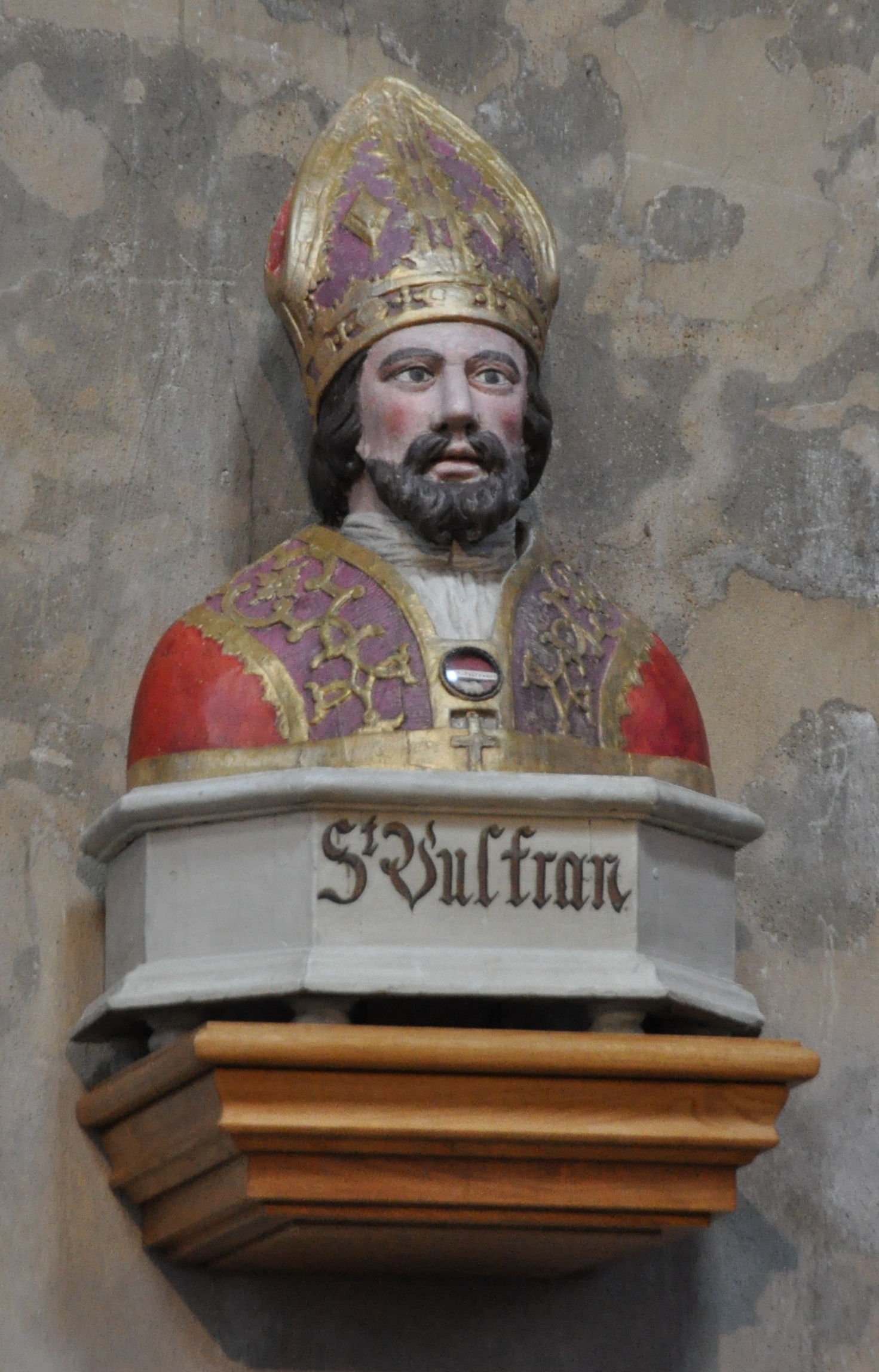
Saint-Vulfran,
collégiale d'Abbeville
Saint
Wulfran, Saint-Wulfran church in Abbeville
Busto-reliquiario di San Vulfranno ad Abbeville
Saint Wulfran
Confesseur - Archevêque
de Sens (+ 720)
ou Vulfran.
Il était le fils d'un officier de l'armée de Clovis II. Quand il perdit son père, il quitta la cour, distribua ses biens aux pauvres et donna ses terres à l'abbaye de Fontenelle. En 682, il fut nommé au siège épiscopal de Sens et, de là, partit évangéliser la Frise où il obtint la conversion du chef de ce pays. Il rentra à Fontenelle pour y mourir. Ses reliques sont toujours vénérées à Abbeville.
Au monastère de Fontenelle, vers 700, la mise au tombeau de saint Vulfran.
Moine élu évêque de Sens, il entreprit, après quelques années, de porter
l’annonce de l’Évangile au peuple de la Frise et, revenu au monastère de
Fontenelle, il y termina ses jours.
Martyrologe romain
SOURCE : http://nominis.cef.fr/contenus/saint/841/Saint-Wulfran.html
Saint Wulfran
Archevêque de Sens
(647-720)
Saint Wulfran était fils
d'un officier du roi Dagobert; il passa quelques années à la cour, mais il
n'échoua point contre les écueils où la vertu des grands fait si souvent
naufrage, et sut allier toujours les devoirs de son état avec la pratique des
maximes de l'Évangile.
Élevé sur le siège
archiépiscopal de Sens, il se livra tout entier aux oeuvres de son saint
ministère. Après avoir gouverné son diocèse pendant deux ans et demi à peine,
il se sentit intérieurement sollicité d'aller prêcher l'Évangile aux Frisons.
Il s'embarqua avec plusieurs religieux décidés à courir tous les dangers de son
apostolat.
Pendant la traversée, un
fait miraculeux fit connaître le mérite de l'évêque missionnaire. Comme il
disait la Messe sur le navire, celui qui faisait l'office de diacre laissa
tomber la patène à la mer; Wulfran lui commanda de mettre la main à l'endroit
où la patène était tombée, et aussitôt elle remonta du fond des eaux jusque
dans sa main, à l'admiration de tous.
A force de miracles, le
courageux apôtre opéra chez les sauvages Frisons de nombreuses conversions.
Wulfran, son oeuvre à peu près terminée, alla passer le reste de ses jours dans
un monastère; sa sainte mort arriva vers l'an 720. Saint Wulfran a toujours été
très honoré en Picardie, et de nombreuses faveurs ont été obtenues de Dieu par
son intercession.
Abbé L. Jaud, Vie
des Saints pour tous les jours de l'année, Tours, Mame, 1950
SOURCE : http://magnificat.ca/cal/fr/saints/saint_wulfran.html

Saint Wulfran
Évêque de Sens
(7ème s.)
Martyrologe Romain :
Au monastère de Fontenelle, vers 700, la mise au tombeau de saint Vulfran.
Moine élu évêque de Sens, il entreprit, après quelques années, de porter
l’annonce de l’Évangile au peuple de la Frise et, revenu au monastère de
Fontenelle, il y termina ses jours.
Saint Wulfran était fils d’un officier du roi Dagobert. ll passa quelques années à la cour sous Clotaire III et sainte Bathilde, sa mère ; mais il n’échoua point contre les écueils où la vertu des courtisans fait si souvent naufrage. Il sut allier les devoirs de son état avec la pratique des maximes de l’Évangile. Il avait une estime particulière pour les vrais serviteurs de Dieu. Ayant été élevé sur le siège de Sens en 682, il se livra tout entier aux fonctions de l’épiscopat ; mais à peine eut-il gouverné son diocèse deux ans et demi, qu’il résolut de le quitter pour aller prêcher la foi dans la Frise, à l’exemple de plusieurs missionnaires anglais qui travaillaient de ce côté-là. Il s’y rendit donc après avoir fait une retraite, et ses prédications eurent les plus heureux succès. Un grand nombre de personnes, parmi lesquelles on comptait le fils du roi Radhod, se convertirent et reçurent le baptême.
Ce saint sauva la vie à un malheureux nommé Ovon, destiné par le sort à être
immolé aux idoles. Ayant été pendu, il resta deux heures à la potence de sorte
que tout le monde le croyait mort ; mais la corde ayant cassé par la vertu
des prières de Wulfran, Ovon tomba par terre et se trouva plein de vie. Le
saint à qui on le donna, l'instruisit des vérités de la religion. Ovon fut
depuis moine et prêtre de Saint-Wandrille. Wulfran rendit aussi la vie à deux
enfants qu'on avait jetés dans la mer en l'honneur des idoles du pays. Notre
saint se retira ensuite au monastère de Saint-Wandrille, où il mourut en 720.
Pratique : Ayez une estime particulière pour ceux qui procurent la gloire de
Dieu.
©Evangelizo.org 2001-2018
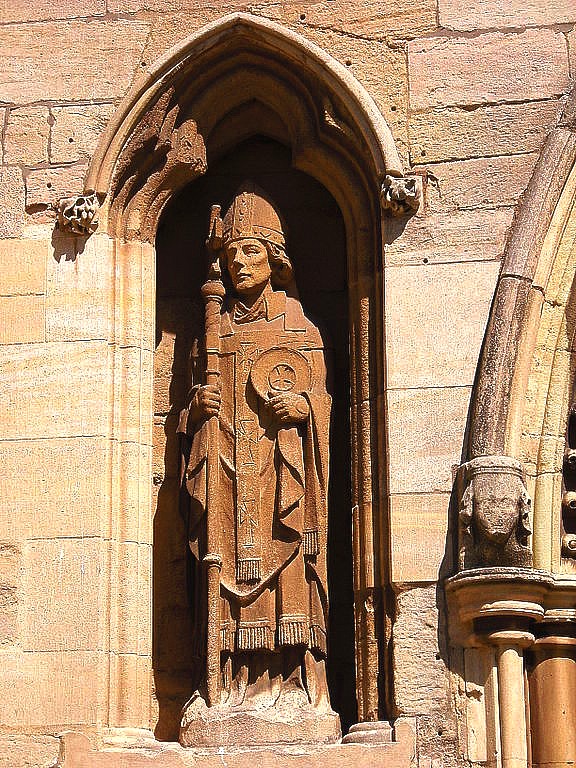
St.
Wulfram statue at his church in Grantham, Lincolnshire.
Also
known as
Wulfram of Fontenelle
Offran…
Oufran…
Suffrain…
Vuilfran…
Vulfran…
Vulfranno…
Vulphran…
Wilfranus…
Wolfram…
Wolframus…
Wolfran…
Wulframnus…
Wulfran…
Wulfrann…
Wulfrannus…
15 October (translation
of relics)
8 November as
one of the Saints
of the Diocese of Evry
Profile
Son of an official in
the court of King Dagobert. Courtier under
Clotaire III. Priest. Benedictine. Archbishop of Sens, France in 682,
but in 685 he
surrendered his see to Saint Amatus,
whom he felt was the rightful bishop.
Gave away his lands and evangelized the Frisians in Scandanavia with
a group of monks for
twenty years, remembered there as the Christian crew
who “bore the White Christ” to these people.
Converted the
son of King Radbod,
and was allowed to preach the
Gospel. He met with some success, but it was a rough and pagan land. children were
sacrificed to heathen gods by hanging or drowning in
the sea;
people would cast lots at festivals to pick a victim, and the loser was
immediately hanged or cut to pieces. Wulfram appealed to King Radbod
to stop the slaughter, but the king said
it was their custom, and he could not change it. He challenged Wulfram to
rescue the victims if he could; Wulfram then waded into the sea to
save two children who
had been tied to posts and left to die in
the rising tide.
The turning point in the
mission came with the rescue of Ovon. Ovon had been picked by lot to be
sacrificed by hanging. Wulfram begged King Radbod
to stop the killing, but the commoners were outraged at the sacrilege.
Wulfram eventually obtained an agreement that if Wulfram’s God saved
Ovon’s life, Wulfram and the God could
have the man. Ovon was hanged, and swung from the rope for two hours, during
which Wulfram prayed.
When the heathens decided to leave Ovon for dead,
the rope broke, Ovon fell – and was alive. Ovon became Wulfram’s slave,
his follower, a monk,
and then a priest at
Fontenelle. The faith of
the missionaries (and
their power to work miracles),
frightened and awed the people who turned from their old ways, and were baptized.
Even King Radbod converted,
but just before his baptism,
Radbod asked where his ancestors were. Wulfram told him that idolators went
to hell. “I will go to hell with my ancestors,” said the King,
“rather than be in heaven without them.” Later, near death,
Radbod sent for Saint Willibrord
to baptize him,
but died before
the saint‘s
arrival.
Wulfram’s relics were
translated from Fontenelle to Abbeville,
and in 1062,
they were moved to Rouen, France.
The life of Wulfram was written by
the monk Jonas
of Fontenelle eleven years after his death.
Born
c.640; French
20 March 703 at
Fontenelle, France of
natural causes
against
the dangers of the sea
in France
cleric with
a young king nearby
cleric arriving
by ship with monks and baptizing a king
baptizing the
son of King Radbod
Additional
Information
Book
of Saints, by the Monks of
Ramsgate
Lives
of the Saints, by Father Alban
Butler
Saints
of the Day, by Katherine Rabenstein
Saints
of the Order of Saint Benedict, by Father Aegedius
Ranbeck, O.S.B.
books
Our Sunday Visitor’s Encyclopedia of Saints
Oxford Dictionary of Saints, by David Hugh Farmer
Saints
and Their Attributes, by Helen Roeder
other
sites in english
images
sitios
en español
Martirologio Romano, 2001 edición
fonti
in italiano
websites
in nederlandse
Readings
To the ship’s bow he
ascended,
By his choristers attended,
Round him were the tapers lighted,
And the sacred incense rose.
On the bow stood Bishop Sigurd,
In his robes as one transfigured,
And the Crucifix he
planted.
– from The Saga of King Olaf by Longfellow,
concerning Wulfram’s voyage
MLA
Citation
“Saint Wulfram of
Sens“. CatholicSaints.Info. 25 February 2024. Web. 25 January 2026.
<https://catholicsaints.info/saint-wulfram-of-sens/>
SOURCE : https://catholicsaints.info/saint-wulfram-of-sens/
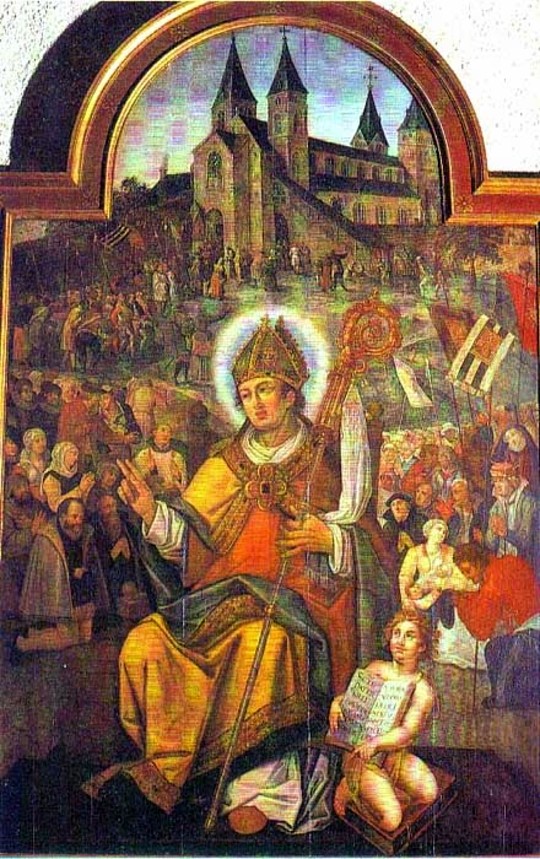
(Saint) Bishop (March 20)
(8th
century) A French Saint, Archbishop of Sens,
who resigned his See to
retire to the Abbey of
Fontenelle, where he prepared himself for the work of a missionary to
the Frieslanders. He underwent much persecution, made a multitude of converts to Christianity,
and in the end returned to die at Fontenelle (A.D. 720)
MLA
Citation
Monks of Ramsgate.
“Wulfram”. Book of Saints, 1921. CatholicSaints.Info.
15 March 2017. Web. 26 January 2026.
<https://catholicsaints.info/book-of-saints-wulfram/>
SOURCE : https://catholicsaints.info/book-of-saints-wulfram/
St. Wulfram of Sens
Feastday: March 20
Patron: of Abbeville, France
Death: 703
Wulfram (d. early eighth
century) + Bishop and
missionary Born at Milly. France, he was the son of Fuldert, a courtier in the
service of the Frankish king Dagobert (r. 623-639). Wulfram served in the Court
of KingThierry (r. 670-687) of Neustria (parts of l:rancc). Ordained a priest,
he was appointed bishop of
Sens, replacing the rightful occupant of the see, St. Amatus, who was then in
exile. Owing to the controversy, Wulfram resigned after two-and-one-half years
and set out to preach among the Frisians. With a group of monks, he converted
many Frisians, including the son of the pagan ruler
Radbod, before finally returning to Fontenelle, France, where he died. Feast
day: March 20.
SOURCE : https://www.catholic.org/saints/saint.php?saint_id=2052
Wulfram of Fontenelle, OSB B (RM)
(also known as Wolfram, Wulfrannus)
Died at Fontenelle, France, April 20, c. 703 (or 720?); feast of his
translation, October 15. The story of Saint Wulfram takes us back to the days
of the Franks and the dark gods of the north, and of the wild Teutonic tribes
and old Norse sagas, when a handful of devoted men sailed into the northern
night with the Cross at their prow and challenged the power of Odin and Thor.
Wulfram came of a gentler
race, born and bred in a civilized land, nurtured in the wealthy home of his
father, an official of King Dagobert. He found his first employment in the
French court under Clotaire III, and, in 682, was rewarded with the
archbishopric of Sens in place of its rightful bishop, Saint Amatus. But,
strangely moved by God's Spirit to acknowledge the see's licit bishop and by
the challenge of the pagan lands, within three years he laid aside his high
employments and gave his property of Maurilly to the Church. In order to
prepare himself to take the Gospel to the Frisians and obtain the help of
monks, he retired for a time at Fontenelle. Then he set sail for Scandinavia
with a small group of followers.
Longfellow in his poem,
The Saga of King Olaf, vividly describes how during the voyage Wulfram,
surrounded by his choristers chanting into the night, held service on deck:
To the ship's bow he
ascended,
By his choristers attended,
Round him were the tapers lighted,
And the sacred incense rose.
On the bow stood Bishop Sigurd,
In his robes as one transfigured,
And the Crucifix he planted
It was a hard and evil
time, and only with great difficulty did his enterprise make headway. The son
of king Radbod was converted. Wulfram, however, was allowed to settle and to
preach the Gospel. The missionaries had some success, but as in other parts of
Europe during the period, the attitude of the king was likely to be decisive.
Wulfram found that
children were sacrificed to appease their heathen gods, hung on roadside
gibbets, or fastened to posts on the shore and left to drown with the tide. On
great pagan festivals, the people would cast lots to see who should be
sacrificed. Immediately the chosen one would be hanged or cut into pieces. In
vain he appealed to Radbod to prohibit such inhuman practices, but the king
replied that it was the custom of the country and he could not alter it. He
even cynically challenged Wulfram to rescue the victims if he could, whereupon
Wulfram, taking him at his word, strode into the raging sea to save two
children who were helpless and almost submerged.
At other times he cut
down the bodies of those who were nearly dead from the gallows to which they
were tied and restored them as in the case of Ovon. The lot decided that Ovon
should be sacrificed. Wulfram earnestly begged King Radbod to save him: but the
people ran to the palace, outraged at such a sacrilege. After much discussion
they agreed that if Wulfram's God should save Ovon's life, he should ever serve
him and be Wulfram's slave. The saint went into prayer. After hanging on the
gibbet for two hours, the man was left for dead. The cord hanging him broke.
When the body fell to the ground, Ovon was found to be alive. He was given to
the saint and became a monk and priest at Fontenelle.
The missionaries and
their miracles so impressed the inhabitants that, filled with fear and wonder,
they renounced their false gods and were baptized, and even Radbod himself was
converted. But at the point of baptism, Radbod asked where his ancestors were.
Wulfram answered that hell was the destiny of idolators. Radbod then declared:
"I will go to hell with my ancestors rather than be in heaven without
them." Radbod later sent for Saint Willibrord to baptize him, but when the
saint arrived the king was already dead. Thus, he was never experienced the
mercy of the sacrament.
For twenty years Wulfram
continued his arduous missionary activity until failing health compelled him to
return to France; but always he is remembered as the captain of a Christian
crew, who "bore the White Christ" through the vapors of the northern
night.
His relics were
translated from Fontenelle to Abbeville, where Wulfram is venerated as patron
and where several miracles occurred. In 1062, his relics were moved to Rouen.
Both his feasts are celebrated in Croyland Abbey (Lincolnshire), England,
probably because their abbot Ingulfph (1086-1109) was a monk of Fontenelle. The
vita of Wulfram was written by the monk Jonas of Fontenelle eleven years after
his death (Attwater2, Benedictines, Encyclopedia, Farmer, Gill, Husenbeth).
Saint Wulfram is depicted
in art as baptizing a young king. Sometimes (1) the young king is near him; (2)
he is shown arriving by ship with monks and baptizing the king; or (3) he is
shown baptizing the son of King Radbod (Roeder).
Wulfram is venerated at Fontenelle, Frisia, and Sens (Roeder).
SOURCE : http://www.saintpatrickdc.org/ss/0320.shtml
St. Wulfram
(VULFRAMNUS.)
Bishop of Sens,
missionary in Frisi, born at Milly near Fontainebleau, probably during the
reign of Clovis II (638-56); died 20 March, before 704, in which year a
translation of his body took place (Duchesne, "Fastes épiscopaux de
l'ancienne Gaule", II, Paris, 1900, 413). His father Fulbert stood high in
the esteem of Dagobert I and Clovis II. Wulfram received a good education,
and was ordained priest.
He intended to spend a secluded life but was called to
the Court of Theodoric III of Neustria and from there was elevated to
the episcopacy of Sens,
684 (690, 692). He was present at an assembly of bishops in
693 at Valenciennes. Two years later he resigned and retired to the Abbey of
Fontanelle. During the second journey of St.
Boniface to Rome Wulfram
is said to have preached in Frisia. He tried to convert Radbod,
but not succeeding he returned to Fontanelle. Some authorities record
another and longer stay in Frisia, but, as neither Bede nor Alcuin mention
his missionary labour there, it is barely possible. The relics of
the saint were
brought to Notre Dame at Abbeville in 1058. His feast is
celebrated 20 March.
Sources
Acta SS., III March, 143;
MABILLON, Acta SS. O. S. B., III, i, 340; BENNETT in Dict. Christ.
Biog., s.v. Wulframnus, St.; DELETOILLE, Éloge de St. Wulfran (Paris,
1808); GLAISTER, Life and times of St. Wulfram, bishop and
missionary (London, 1878); LA VIEILLE, ed. SAUVAGE, Abrégé de la
vie et miracles de St. Wulfran (Rouen, 1876); LEFRANC, L'authenticité des reliques de St. Wulfran. . . réponse à . .Sauvage (Paris, 1890).
Mershman,
Francis. "St. Wulfram." The Catholic
Encyclopedia. Vol. 15. New York: Robert Appleton Company, 1912. 9
Apr. 2015 <http://www.newadvent.org/cathen/15716a.htm>.
Transcription. This
article was transcribed for New Advent by Thomas M. Barrett. Dedicated to
Saint Wulfram.
Ecclesiastical
approbation. Nihil Obstat. October 1, 1912. Remy Lafort, S.T.D., Censor. Imprimatur. +John
Cardinal Farley, Archbishop of New York.
Copyright © 2023 by Kevin Knight.
Dedicated to the Immaculate Heart of Mary.
SOURCE : http://www.newadvent.org/cathen/15716a.htm
[And Apostolic Missionary in Friseland.] HIS father was an officer in the armies of King Dagobert, and the saint spent some years in the court of King Clotaire III. and of his mother St. Bathildes, but occupied his heart only on God, despising worldly greatness as empty and dangerous, and daily advancing in virtue in a place where virtue is often little known. His estate of Maurilly he bestowed on the abbey of Fontenelle, or St. Vandrille, in Normandy. He was chosen and consecrated archbishop of Sens, in 682, which diocess he governed during two years and a half with great zeal and sanctity. A tender compassion for the blindness of the idolaters of Friseland, and the example of the English zealous preachers in those parts, moved him to resign his bishopric with proper advice, and after a retreat at Fontenelle, to enter Friseland in quality of a poor missionary priest. He baptized great multitudes, with a son of King Radbod, and drew the people from the barbarous custom of sacrificing men to idols. The lot herein decided, on great festivals, who should be the victim; and the person was instantly hanged or cut in pieces. The lot having fallen on one Ovon, St. Wulfran earnestly begged his life of King Radbod; but the people ran tumultuously to the palace, and would not suffer what they called a sacrilege. After many words, they consented that if the God of Wulfran should save Ovon’s life, he should ever serve him, and be Wulfran’s slave. The saint betook himself to prayer, and the man, after hanging on the gibbet two hours, being left for dead, by the cord breaking fell to the ground; and being found alive was given to the saint, and became a monk and priest at Fontenelle. Wulfran also miraculously rescued two children from being drowned in the sea, in honour of the idols. Radbod, who had been an eye-witness to this last miracle, promised to become a Christian, and was instructed among the catechumens; but his criminal delays rendered him unworthy such a mercy. As he was going to step into the baptismal font, he asked where the great number of his ancestors and nobles were in the next world? The saint replied, that hell is the portion of all who die guilty of idolatry. At which the prince drew back, and refused to be baptized, saying, he would go with the greater number. This tyrant sent afterwards to St. Willebrord to treat with him about his conversion; but before the arrival of the saint was found dead. St. Wulfran retired to Fontenelle, that he might prepare himself for death, and died there on the 20th of April, in 720. His relics were removed to Abbeville, where he is honoured as patron. See his life written by Jonas, monk of Fontenelle, eleven years after his death, purged from spurious additions, by Mabillon, sæc. 3. Ben. Fleury, b. 41. t. 9. p. 190. See also the history of the discovery of his relics at St. Vandrille’s, accompanied with miracles, and the translation to Rouen in 1062, well written by an anonymous author who assisted at that ceremony, several parts of which work are published by D’Achery, Spicil. t. 3. p. 248. the Bollandists and Mabillon. The Bollandists have added a relation of certain miracles said to have been performed by the relics of this saint at Abbeville.
Rev. Alban Butler (1711–73). Volume III: March. The Lives of the Saints. 1866.
SOURCE : http://www.bartleby.com/210/3/202.html
Pictorial
Lives of the Saints – Saint Wulfran, Archbishop
Article
His father was an officer
in the armies of King Dagobert, and the Saint spent some years in the court of King
Clotaire III, and of his mother Saint Bathildes, but occupied his heart only on
God, despising worldly greatness as empty and dangerous, and daily advancing in
virtue. His estate of Maurilly he bestowed on the Abbey of Fontenelle, or Saint
Vandrille, in Normandy. He was chosen and consecrated Archbishop of Sens in
682, which diocese he governed two years and a half with great zeal and
sanctity. A tender compassion for the blindness of the idolaters of Friesland,
and the example of the English zealous preachers in those parts, moved him to
resign his bishopric, with proper advice, and after a retreat at Fontenelle to
enter Friesland in quality of a poor missionary priest. He baptized great
multitudes, among them a son of King Radbod, and drew the people from the
barbarous custom of sacrificing men to idols. On a certain occasion, one Ovon,
having been selected as a vie164 tim of a sacrifice to the heathen gods, Saint
Wulfran earnestly begged his life of King Radbod; but the people ran
tumultuously to the palace, and would not suffer what they called a sacrilege.
After many words they consented, but on condition that Wulfran’s God should
save Ovon’s life. The Saint betook himself to prayer; the man, after hanging on
the gibbet two hours, and being left for dead, fell to the ground by the
breaking of the cord; being found alive he was given to the Saint, and became a
monk and priest at Fontenelle. Wulfran also miraculously rescued two children
from being drowned in honor of the idols. Radbod, who had been an eye-witness
to this last miracle, promised to become a Christian; but as he was going to
step into the baptismal font he asked where the great number of his ancestors
and nobles were in the next world. The Saint replied that hell is the portion
of all who die guilty of idolatry. At which the prince refused to be baptized,
saying he would go with the greater number. This tyrant sent afterward to Saint
Willebrord to treat with him about his conversion; but before the arrival of
the Saint was found dead. Saint. Wulfran retired to- Fontenelle that he might
prepare himself for death, and expired there on the 20th of April, 729.
Reflection – In every age
the Catholic Church is a missionary Church. She has received the world for her
inheritance, and in our own days many missioners have watered with their blood
the lands in which they labored. Help the propagation of the Faith by alms, and
above all by prayers. You will quicken your own faith, and gain a part in the
merits of the glorious apostolate.
MLA
Citation
John Dawson Gilmary Shea.
“Saint Wulfran, Archbishop”. Pictorial Lives of
the Saints, 1889. CatholicSaints.Info.
5 February 2014. Web. 26 January 2026.
<https://catholicsaints.info/pictorial-lives-of-the-saints-saint-wulfran-archbishop/>
SOURCE : https://catholicsaints.info/pictorial-lives-of-the-saints-saint-wulfran-archbishop/
Saints
of the Order of Saint Benedict – Saint Wulfran, Archbishop
Though it was late in
life when Saint Wulfran was clothed as a monk, yet he had from his youth
cherished a great love of the Order. Before he became Archbishop of Sens, he
had bestowed his ancestral estate of Maurilly on the Monastery of Fontenelle –
the monastery which he afterwards joined.
Wulfran’s father was
Wulbert, an officer who had distinguished himself in the service of King
Dagobert. He was desirous that his son should receive a good education; and as
the boy grew up, he devoted himself with great assiduity both to his studies
and to works of piety. Having reached manhood, Wulfran was admitted to Holy
Orders, and, through his father’s influence, obtained preferment at the Court
of King Clothair. Such was the estimation in which he was held, that, on the
death of Lambert, Archbishop of Sens, the king and the clergy and people of
Sens united in calling on Wulfran to be his successor. Worthily did he
discharge the duties of his exalted position. He was moderate as regards food
and drink, of grave demeanour, and caring not in the least for pomp; visiting
his people, he consoled the afflicted, gave alms to the poor, heard the
confessions of the penitent, encouraged the good, and rebuked the wicked.
Whatever time remained over from his public duties, he gave to prayer,
meditation, and the study of the Scriptures.
One night while praying,
he received a command from Heaven to preach the Gospel to the Frisians, who
were then blinded by idolatry. Straightway the Archbishop betook himself to
Ausbert, who was both Bishop of Rouen and Abbot of Fontenelle, and telling him
the order he had received from Above, asked for some monks from Fontenelle to
help him in his mission. Ausbert was only too glad to be allowed to assist in a
task imposed by Heaven. Accordingly, having chosen twelve monks, Wulfran set sail
with them for Friesland.
When they arrived there,
they were allowed by King Radbold, though he was addicted to heathen practices,
to preach Christianity. Far and wide did Wulfran and his missionaries carry the
war against idols. At first the Frisians derided them; but when miracles proved
the truth of their preaching, multitudes came to them to be baptized. Among
them was the son of Radbold.
It was the custom of the
Frisians to offer human sacrifices to their gods on certain festivals. The
victim was chosen by lot. Wulfran happened to be giving instruction in a remote
part of the town when he saw the unfortunate victim – his name was Ovon – being
dragged to the place of sacrifice. Wulfran begged his life of the king; but
Radbold’s reply was: “If I were to permit such a violation of our ancestral
customs, this crowd, which you see surrounding us, would tear me to pieces.
However, if your Christ, of Whose power you are constantly boasting, can save
him, let him be yours and Christ’s.” The sacrifice was carried out; but, in
answer to the Saint’s prayers, the rope by which the victim was hanging broke,
and the body fell from the gibbet and was restored to life. Ovon, who was thus
miraculously saved, afterwards became a monk at Fontenelle. Many were the
converts made by this miracle; still Radbold remained obstinate.
Six months later, two
babes, also chosen by lot, were to be offered up to the god of the sea. Again
Wulfran besought the king to spare them, but in vain. The children were exposed
where the rising waves would engulf them. The Saint prayed the Almighty for
help. It was not refused. The billows, as they advanced, rose like a wall round
the victims, leaving a clear dry space where they were unharmed. Then Wulfran
dashed into the raging waters, and carried them back to their distracted
mother, himself dryshod.
Radbold witnessed this
miracle, and was so moved by it, that at last he consented to be baptized.
However, as he was about to enter the font, he asked Wulfran whether his
ancestors too were in Heaven. When the Saint could not assure him on this
point, he said he preferred joining his forefathers to being with Christ and
His low fishermen; and he immediately drew back from the font. The opportunity
thus lost was not to return. Soon after he was carried off, still an
unbeliever.
Meanwhile Wulfran, who
during his missionary labours had frequently revisited Fontenelle, retired
there lor good, to take the vows as a monk and to prepare for his end. This was
not long in coming. He died A.D. 720. Nine years after, his remains, together
with those of the holy bishops Wandregesil and Ausbert, were transferred to the
Church of Saint Peter at Abbeville.
– text and illustration
taken from Saints
of the Order of Saint Benedict by Father Aegedius
Ranbeck, O.S.B.
SOURCE : https://catholicsaints.info/saints-of-the-order-of-saint-benedict-saint-wulfran-archbishop/
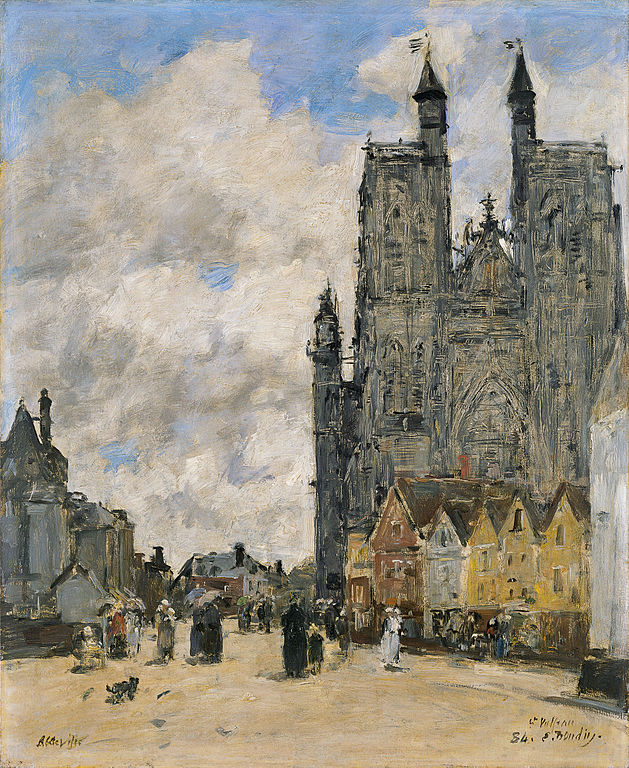
Eugène Boudin, The Square of the Church of Saint Wulfram in Abbeville, 1884
Saint of the Day – 20
March – Saint Wulfram of Sens (c 640-c 703)
Posted on March
20, 2021
Saint of the Day – 20
March – Saint Wulfram of Sens (c 640-c 703) Archbishop of Sens and Confessor,
Missionary, miracle-worker. Born in c 640 in France and died on 20 March c 703
at Fontenelle, France of natural causes. Patronages – Abbeville,
France, against the dangers of the sea/of sailors, childbirth and young
children. Also known as Wulfram of Fontenelle, Offran, Oufran, Suffrain,
Vuilfran, Vulfran, Vulfranno, Vulphran, Wilfranus, Wolfram, Wolframus, Wolfran,
Wulframnus, Wulfran, Wulfrann, Wulfrannus. Additional Memorials – 15
October (translation of relics) and 8 November as one of the Saints of the
Diocese of Evry.
Wulfran’s life was
recorded eleven years after he died by the Monk Jonas of Fontenelle. However,
there seems to be little consensus about the precise dates of most events,
whether during his life or after hs death.
Wulfran’s father was an
Officer in the armies of Dagobert, a powerful King of the Franks. The Saint
spent some years in the Court of King Clotaire III and his mother, Saint
Bathildes but he occupied his heart only with God, despising worldly greatness
as empty and dangerous and daily advancing in virtue. He renounced the world
and received Sacred Orders; his estate he bestowed on the Abbey of Fontenelle,
or Saint Wandrille, in Normandy. He was nonetheless called to the Court, where
he served until his father died. Then, because the Archbishop of Sens had
recently died in 682, he was chosen to replace him, by the common consent of
the clergy and people of that City.
He governed that Diocese
for two and a half years, with great zeal and sanctity. It was a tender
compassion for the blindness of the idolaters of Friesland and the example of
the zealous English preachers in those parts, which moved him then to resign
his Bishopric, with proper advice and after a retreat at Fontenelle, to enter
Friesland as a poor missionary Priest.
On the voyage by water,
the Deacon who served him at the Altar, accidentally dropped the paten into the
sea. Saint Wulfran told him to place his hand where it had fallen on the waves and
it came up to him by a miracle. For long years that paten was conserved in the
Monastery of Saint Wandrille. On this mission wULFRAM baptized great
multitudes, among them a son of their King, Radbod and drew the people away
from the barbarous custom of sacrificing human beings to idols.
The custom was that pagan
people, including children, were sacrificed to the local gods having been
selected by a form of lottery. Wulfram, having remonstrated with Radbod on the
subject, was told that the King was unable to change the custom but Wulfram was
invited to save them if he could. The saint then waded into the sea, to save
two children who had been tied to posts and left to drown as the tide rose. The
turning point came, with the rescue of a young man, Ovon, who had been chosen
by lot, to be sacrificed by hanging. Wulfram begged King Radbod to stop the
killing but the people were outraged at the sacrilege proposed. In the end,
they agreed that Wulfram’s God could have a chance to save Ovon’s life and if
he did, Wulfram and his God could rescue him. Ovon was hanged and left for a
few of hours, while Wulfram prayed. When the Frisians decided to leave Ovon for
dead, the rope broke, Ovon fell and was still alive. Ovon became Wulfram’s
devoted servant, his disciple, a Monk and then a Priest at Fontenelle Abbey.
The faith of the missionaries (and their power to work miracles) frightened and
awed the pagan people, who were Baptised and turned away from paganism.
Even Radbod seemed ready
for conversion but just before his Baptism, he asked where his ancestors were.
Wulfram told him that idolaters went to Hell. Rather than be apart from his
ancestors, he chose to stay as he was.
Wulfran finally retired
to Fontenelle, where he died in c 703. The Saint’s year of death is sometimes
given as 720 but his interred body is said to have been moved in 704.
Regardless of the exact year, St Wulfram’s feast day is kept on 20 March. He
was buried in St Paul’s Chapel in the Abbey but in 704, his relics were
translated to the Church. The body was again moved in 1058, this time to the
collegiate Church of Our Lady in Abbeville, which was then re-dedicated in
Wulfram’s name. The translation of his body to Abbeville is commemorated on 15
October.
At about this time or
later, perhaps when his body was again moved, this time to Rouen, his arm was
taken as a relic to Croyland Abbey, Lincolnshire. The interest in him there,
may have arisen from Ingulph, the Zbbot being a former Monk of Fontenelle.
After the building at Crowland was damaged by fire, there was no longer a
suitable place for keeping the relic, so it went to Grantham for safe-keeping. For
two or three hundred years, it was kept in the Crypt Chapel below the Lady
Chapel, where the pilgrims helped to wear the hollow, now to be seen in stone
step before the Altar. Later, towards 1350, the arm went to the specially added
Chapel above the north porch. At some stage in the long process of the English
Reformation, this relic was lost.
A hagiographical account
of his miracles was produced at the Abbey of Saint Wandrille before 1066. Among
the miracles are two pertaining to childbirth and children. In one, Wulfram is
credited with the miraculous delivery of a stillborn baby, the mother having
commenced labour on 20 January (the feast day of Saint Sebastian). A week after
Easter, prayers to Wulfram caused her belly to split open so the dead child could
be delivered, after which, the wound healed as if it had never been, leaving
only a “token of the cut.”
In the other, Wulfram is
credited with the safe passage of an accidentally swallowed clothespin, which
left the body of a two-year-old boy, after three days, without having injured
it: “Is it not miraculous how through all the twists of the boy’s
intestines, as if through fine small round tubes, the copper sharp object, now
going up high, now going down low, could travel without getting stuck anywhere
or causing wounds and so at last through Nature’s lower parts, find a way out
all in one piece?”
Author: AnaStpaul
Passionate Catholic.
Being a Catholic is a way of life - a love affair "Religion must be like
the air we breathe..."- St John Bosco Prayer is what the world needs
combined with the example of our lives which testify to the Light of Christ.
This site, which is now using the Traditional Calendar, will mainly concentrate
on Daily Prayers, Novenas and the Memorials and Feast Days of our friends in
Heaven, the Saints who went before us and the great blessings the Church
provides in our Catholic Monthly Devotions. This Site is placed under the
Patronage of my many favourite Saints and especially, St Paul. "For the
Saints are sent to us by God as so many sermons. We do not use them, it is they
who move us and lead us, to where we had not expected to go.” Charles Cardinal
Journet (1891-1975) This site adheres to the pre-Vatican II Catholic Church and
all her teachings. . PLEASE ADVISE ME OF ANY GLARING TYPOS etc - In June 2021 I
lost 100% sight in my left eye and sometimes miss errors. Thank you and I pray
all those who visit here will be abundantly blessed. Pax et bonum!
SOURCE : https://anastpaul.com/2021/03/20/saint-of-the-day-20-march-saint-wulfram-of-sens-c-640-c-703/
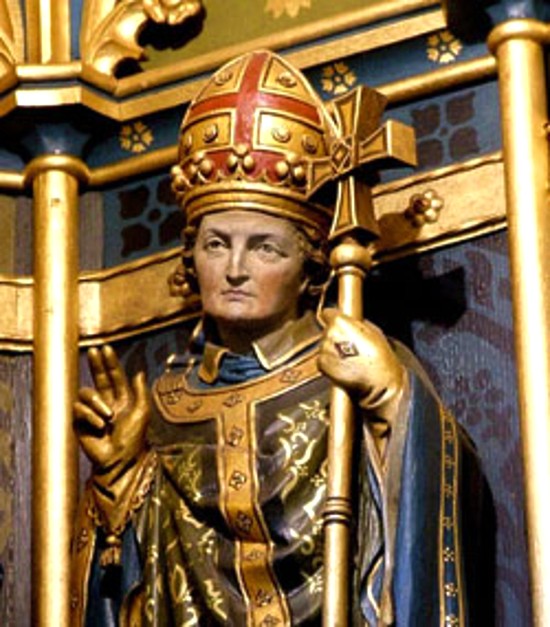
San Vulfranno Arcivescovo
di Sens
Festa: 20 marzo
† 700/703 circa
Nato in Neustria,
Vulfranno divenne monaco a Fontenelle. La sua fama di uomo di fede lo portò a
diventare vescovo di Sens, dove si dedicò alla cura del gregge e alla riforma
del clero. Spinto da zelo missionario, Vulfranno si recò in Frisia,
evangelizzando la regione con predicazione e miracoli. Tornato a Fontenelle,
trascorse i suoi ultimi anni in preghiera e penitenza, morendo intorno al
700/703.
Martirologio
Romano: Nel monastero di Fontenelle nella Neustria, in Francia,
deposizione di san Vulframno, che, prima monaco e poi vescovo di Sens, si
dedicò a donare al popolo frisio l’annuncio del Vangelo; tornato infine nel
monastero di Fontenelle, vi riposò in pace
La figura di San Vulfranno, Arcivescovo di Sens, si staglia sullo sfondo del VII secolo, un periodo di fermenti religiosi e politici nell'Europa occidentale. La sua vita, avvolta in parte nella nebbia del tempo, ci è tuttavia nota grazie a diverse fonti agiografiche, che ne delineano il profilo di un vescovo missionario, dedito alla predicazione del Vangelo e alla cura del suo gregge.
Nato in Neustria, regione della Francia settentrionale, Vulfranno abbracciò la vita monastica nel celebre monastero di Fontenelle, noto per la sua rigida disciplina e il fervore spirituale. La sua fama di uomo di fede e di dottrina giunse alle orecchie del re Teodorico III, che lo volle come vescovo di Sens, importante diocesi della Gallia.
L'episcopato di Vulfranno a Sens, durato circa un decennio, fu segnato da una intensa attività pastorale. Il vescovo si dedicò con zelo alla cura del suo gregge, promuovendo la riforma del clero e la diffusione del Vangelo. La sua fama di santità e di taumaturgo attirò a lui la venerazione dei fedeli, che lo consideravano un intercessore presso Dio.
Spinto da un ardente zelo missionario, Vulfranno si recò in Frisia, regione costiera dell'Europa settentrionale, dove il Vangelo era ancora poco conosciuto. La sua predicazione, accompagnata da segni miracolosi, incontrò un terreno fertile e numerose conversioni furono il frutto del suo apostolato.
Dopo aver trascorso alcuni anni in Frisia, Vulfranno fece ritorno al monastero di Fontenelle, dove trascorse i suoi ultimi anni in preghiera e penitenza. La sua morte, avvenuta intorno al 700/703, fu salutata come quella di un santo.
Autore: Franco Dieghi
SOURCE : https://www.santiebeati.it/dettaglio/46080
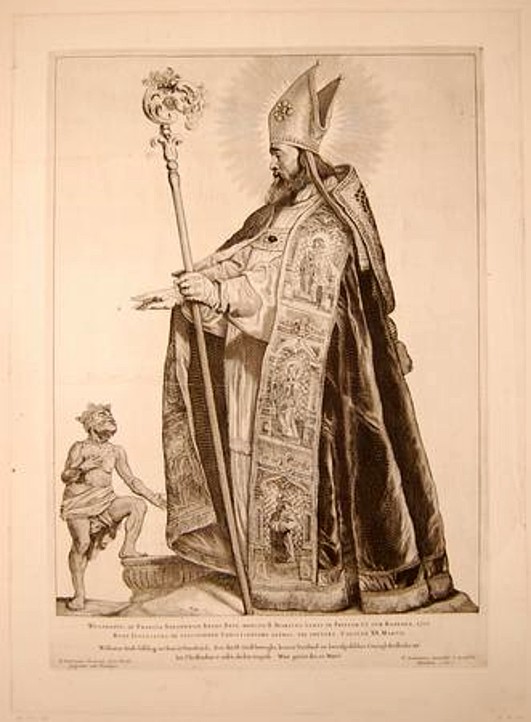
Inscriptio: Wulfranus,
in Francia Senonensis Archi-Epis. monitu S. Spiritus venit in Frisiam ut cum
Radebodo, ejus Rege Idololatra de suscipiendo Christianismo ageret, sed
frustra. Colitur XX. Martii.
H.
Wolframus van Sens Nederlandse heiligen (serietitel)
† ca
720 Wulfram van Sens
Wulfram (ook Offran, Oufran, Suffrain, Vulfran, Wilfranus, Wolfram, Wolframus, Wulframnus, Wulfran of Wulfrannus) van
Sens (ook van Fontenelle) osb, Abbeville, Frankrijk; bisschop; †
ca 720?.
Feest 20 maart .
Hij werd rond 647 geboren
in het plaatsje Milly in Gâtinais in het Franse arrondissement Brie als zoon
van ene Wolbert en verbleef als jongeman aan het hof van koning Theodorik (of
Thierry) III van Neustrië (†
687). Op een goed moment trad hij toe tot de kloostergemeenschap van
Fontenelle. Rond 690 ontving hij de priesterwijding met het oog op zijn
gewenste bisschopsbenoeming van de stad Sens. In deze functie bleef hij maar
twee jaar. Want hij keerde voor even terug naar zijn klooster Fontenelle om
vandaar in gezelschap van een paar andere monniken als missionaris uitgezonden
te worden naar de Friezen.
Om te beginnen ging hij zich natuurlijk melden bij zijn collega van Utrecht, de heilige Willibrordus († 739; feest 7 november). Vervolgens werkte hij vooral in de nabijheid van de plaats Medemblik, waar de koning der Friezen, Radboud, hof hield. Bijna had hij deze vorst tot Christus gebracht, maar op het allerlaatste moment zag de Fries van het doopsel af. Dit voorval vindt men vaak afgebeeld op zijn dramatisch hoogtepunt. Radboud zou al met één been in de doopvont gestaan hebben, toen hij zich op het allerlaatste moment bedacht met de vraag:
"U zegt dat ik, als ik mij niet laat dopen, onvermijdelijk naar de hel zal gaan; waar zijn dan al mijn voorouders?"
Wulfram antwoordde naar zijn beste overtuiging: "Ik moet vrezen in de hel, majesteit."
"Dan", sprak de vorst der Friezen, terwijl hij zich weer begon aan te kleden", wil ik niet gescheiden worden van mijn voorouders en zie ik af van uw doopsel."
Volgens de overlevering redde hij in het gebied van de Friezen meerdere
kinderen van de offerdood en wekte hij ook het reeds overleden jongetje Ovo
weer tot leven.
Waarschijnlijk hebben
deze verhalen vooral de bedoeling om te verwijzen naar de geloofsinhoud ervan:
Wulfram deed kinderen van het Friese volk - dat kunnen dus ook volwassenen zijn
- opstaan tot het nieuwe leven van het geloof in Christus.
Aan het eind van zijn
leven keerde hij als benedictijn naar Fontenelle terug. Daar stierf hij.
Volgens sommigen overleed hij in 704, volgens anderen leefde hij nog in 720;
ook 741 wordt als sterfjaar genoemd.
Verering & Cultuur
Zijn lichaam werd in 1058 overgebracht naar Abbeville, noordoostelijk van
Fontenelle, waar de hoofdkerk Saint-Vulfran heet.
Hij is patroon van Abbeville en draagt de eretitel 'Apostel der Friezen'.
Daarnaast wordt hij vereerd als patroon van - kleine - kinderen (op basis van
de verhalen dat er een aantal van de dood wist te redden).
Afgebeeld
Hij wordt afgebeeld als bisschop (mijter, tabberd, staf en boek); met koning
Radboud, terwijl deze uit de doopvont stapt; met pateen of een peillood dat hij
vanuit zijn boot in het water neerlaat. (Volgens de legende liet een van zijn
klerken een pateen in het water vallen; Wolfram zou hem met behulp van een
peillood boven water hebben gehaald). De mis opdragend op zijn schip.
[000»jrb; 125p:152-153; 127; 132; 143p:39; 147/2p:163; 149/1p:455.458;
153p:125; 189p:54; 193p:238; 200/1»03.20; Dries van den Akker s.j./2010.03.27]
© A. van den Akker
s.j. / A.W. Gerritsen
SOURCE : https://heiligen-3s.nl/heiligen/03/20/03-20-0720-wulfram.php
