

Buste
en bois polychrome de Sainte Restituta, 1711, sanctuaire de la sainte à Lacco
Ameno.
Santa
Restituta, busto ligneo policromo del 1711, santuario della santa a Lacco Ameno
(NA)
Sainte Restitute
Martyre en Afrique
proconsulaire (4ème s.)
La tradition légendaire
la fait placer par ses bourreaux dans une barque remplie d'étoupe pour y être
brûlée vive. Les mariniers la conduisirent en haute mer, allumèrent l'étoupe,
mais les flammes se retournèrent contre eux et ils moururent dans d'atroces
souffrances tandis que sainte Restitute monta paisiblement au ciel. La barque
conduisit son corps jusqu'à Ischia en Italie et de là ses reliques furent
emmenées à Naples. La vérité, c'est que les reliques vinrent à Ischia au IXe
siècle en provenance de Teniza près de Carthage où il semble bien que sainte
Restitute ait subi le martyre au début du IVe siècle.
Commémoraison de sainte
Restitute, vierge et martyre en Afrique proconsulaire, dont le culte s’est
étendu sur les côtes de la Méditerranée.
Martyrologe romain
SOURCE : http://nominis.cef.fr/contenus/saint/7007/Sainte-Restitute.html

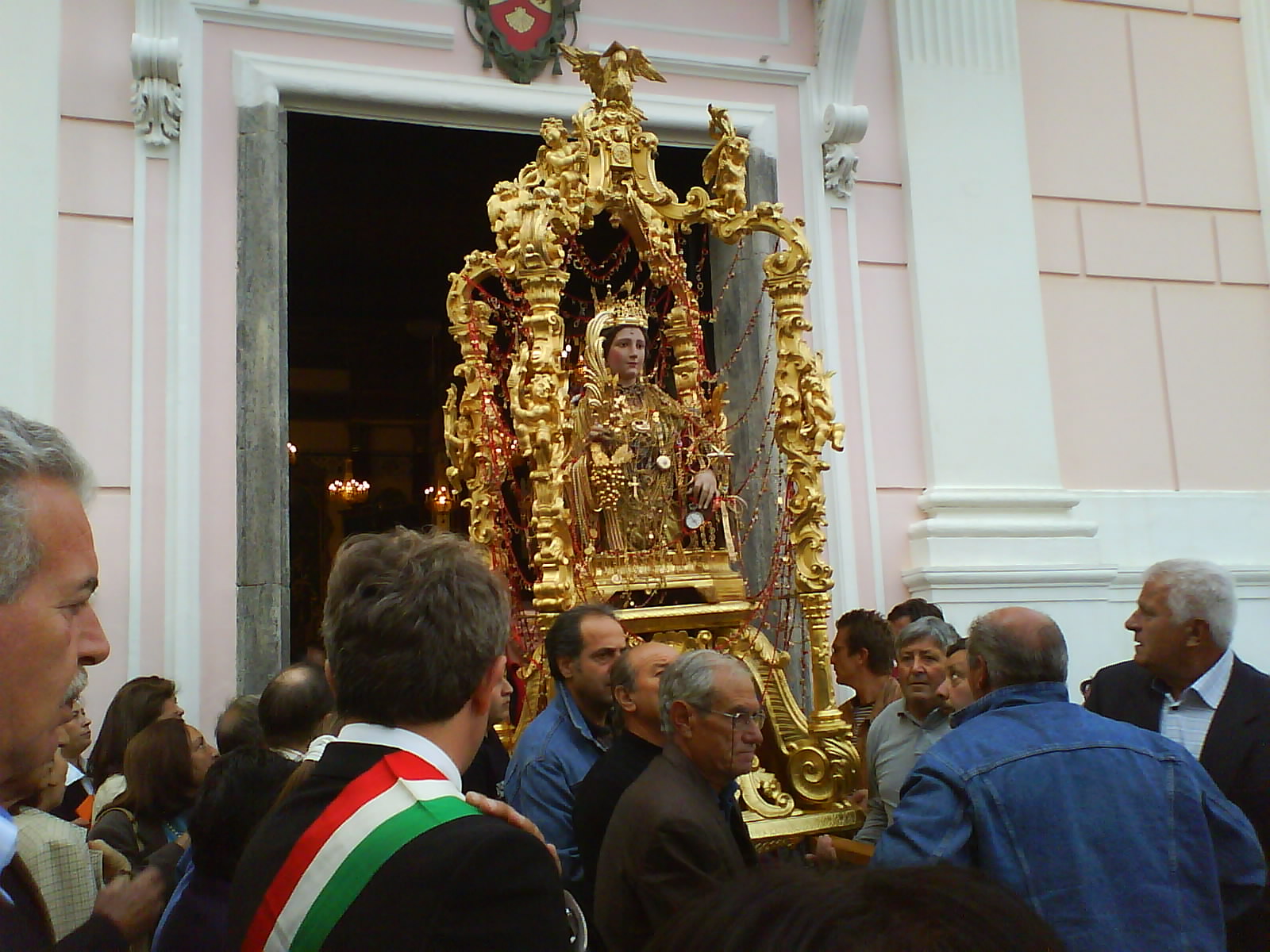
Santa
Restituta, processione a Lacco Ameno, di cui è patrona; autore: Vito Calise,
licenza PD-utente.
Also
known as
Restituta of Africa
Restituta of Ischia
Restituta of Naples
Restituta of Teniza
Profile
Virgin–martyr, tortured and killed during
the persecutions of Diocletian.
Born
burned
to death on a boat c.304 off
Carthage, Tunisia
the boat grounded
on the island of Ischia near Naples, Italy
relics believed
housed in the Cathedral of Naples
in Italy
Additional
Information
Book
of Saints, by the Monks of
Ramsgate
Roman
Martyrology, 1914 edition
Saints
of the Day, by Katherine Rabenstein
The
Legenda of Santa Restituta, from Catholic World
books
Our Sunday Visitor’s Encyclopedia of Saints
Saints
and Their Attributes, by Helen Roeder
other
sites in english
sitios
en español
Martirologio Romano, 2001 edición
fonti
in italiano
Martirologio Romano, 2005 edition
MLA
Citation
“Saint Restituta of
Carthage“. CatholicSaints.Info. 7 April 2024. Web. 17 April 2026.
<http://catholicsaints.info/saint-restituta-of-carthage/>
SOURCE : http://catholicsaints.info/saint-restituta-of-carthage/

(Saint) Virgin Martyr (May 17)
(3rd
century) An African maiden,
victim to heathen fury under Valerian (A.D. 255).
She was put on board a boat loaded with combustibles, which, when afloat, was
set on fire. God’s Providence allowed what remained of the boat to drift to the
Coast of Italy,
the Relics of
the Saint being
still recognisable. These Relics are
now enshrined in
one of the churches of Naples.
MLA
Citation
Monks of Ramsgate.
“Restituta”. Book of Saints, 1921. CatholicSaints.Info.
2 April 2017. Web. 17 April 2026.
<https://catholicsaints.info/book-of-saints-restituta/>
SOURCE : https://catholicsaints.info/book-of-saints-restituta/

Luca
Giordano, Trasporto del corpo di santa Restituta, Basilica di Santa Restituta,
Duomo di Napoli
Restituta of Carthage VM
(RM)
Died 255 or 304. An
African girl who died for Christ during the persecution of Valerian or Diocletian,
probably at Carthage. Her relics are housed in the cathedral of Naples
(Attwater2, Benedictines).
SOURCE : http://www.saintpatrickdc.org/ss/0517.shtml
.jpg)
Sainte
Restituta, vitrail, Église Saint-Nicolas, Noircourt, Aisne
Restituta ; Église
Saint-Nicolas de Noircourt - stained-glass windows
St. Restituta
Feastday: May 17
Death: 255
Virgin martyr. A maiden
in Africa, she was put to death during the Roman persecutions at Carthage. Her
date of death has been set at 255, which would mean she was martyred under
Emperor Valerian; there is a possibility that she was executed at a later date,
under Emperor Diocletian. Her relics are
in Naples, Italy.
SOURCE : https://www.catholic.org/saints/saint.php?saint_id=4587
Saint Restituta
Lacco Ameno from 16/05 to 18/05
The feast of Santa Restituta is a religious celebration, which takes place in the month of May, 16-18. The streets are decorated with lights, there are dozens stalls with peanuts, nougat, games and much more.
For young people is prepared an area of the country with various rides that remain for a whole month. The first day of the celebrations, on May 16 of each year, in the Bay of San Montano takes place and the representation of the martyrdom and landing of the Saint in Lacco Ameno. According to legend, it was on May 16 of the year 284, the young Restituta claimed to worship God and refused to pronounce the name of Jupiter, was put in prison. After another examination and refusal to bow to the majesty of the Gods, she was sentenced to be flogged and cruelly placed in a boat, filled with pitch and oakum and left to sink into the depths of the sea. At execution of the sentence something incredible happened, the flames rushed the vessel of the executioners, saving the boat in which was placed the body of Restituta, there appeared an angel of the Lord who pushed the boat in the bay of San Montano, on the island Ischia.
The matron Lucina, awakened by the Angel, went on the site and was surprised in front of such an extraordinary show. Returned to the country and to rally the people shouting: "A boat without sails and without oars came to our land. On Boat holy body of a virgin martyr. Women, men, priests, come! Come to contemplate the Lord’s gift ".
Landing, a wooden statue of the saint, adorned with many precious objects that were offered, is carried in procession from the bay to the church.
On May 17, the Saint is carried by sea by ferry, the boat starts from the jetty of Lacco Ameno towards Punta Caruso, where it made and continues to Casamicciola. Landing is greeted by fireworks, as faithful and participants and priests from all over the island. The bishop, in Piazza Marina, a speech to the faithful and gives the blessing with the relic of the Saint. Continues the procession to reach the Basilica of Santa Restituta.
On May 18, the Saint is carried in procession through the city streets. At midnight, the sky is lit by the rich fireworks concluding the celebration of the Saint.
During the evenings of holiday music, bands and singers, is echoed in the
square outside the church, and it's great to walk in under the colorful lights
and among the numerous people involved in the party.
SOURCE : https://www.ischia.it/en/folk-feasts/saint-restituta

Busto
reliquiario di Santa Restituta in legno intagliato, dorato e dipinto
di Ignoto intagliatore napoletano (prima metà XVII secolo) - Museo diocesano di
Napoli
Santa Restituta d'Africa
(o di Teniza) Vergine e martire
Festa: 17 maggio
† Tunisia, 304
La giovane Restituta con
le compagne pregava il suo Gesù nelle grotte, quando un giorno venne
imprigionata dal tiranno Proclino, che le chiedeva di credere ai suoi dei: ma
Restituta coraggiosamente riaffermò la sua grande fede per Gesù, che è il vero
Dio.
Proclino la fece torturare con chiodi conficcati nei piedi e, legatala con i
suoi lunghi capelli ad un palo, la fece flagellare; dopo tante torture la mise
su una barca piena di pece e, accompagnata da un'altra barca dei torturatori,
le fecero prendere il largo per bruciarla in mezzo al mare. Ma il miracolo di
Dio fece in modo che invece di bruciare la barca di Restituta bruciasse la
barca dei carnefici, e Restituta giunse dopo le torture alla spiaggia di San
Montano, trascinata dal vento dall'Africa ad Ischia.
Patronato: Isola e
Diocesi d'Ischia
Emblema: Palma,
Giglio, Grappolo d'uva
Martirologio
Romano: In Africa Proconsolare, nell’odierna Tunisia, commemorazione di
santa Restituta, vergine e martire.
Santa Restituta, vergine e martire africana, secondo alcune fonti era originaria di Cartagine, secondo altre di Tenizia, cioè Ponizarius, forma grafica contraffatta di Hippo-Diarrhytus, l’attuale Biserta in Tunisia: questa sorge sulla costa prospiciente lo stretto di Sicilia, ed era già nel III secolo illustre sede episcopale presso Cartagine.
Restituta, formatasi alla scuola di San Cipriano, vescovo di Cartagine, fece
parte del gruppo dei martiri Abitinesi, descritto nella “Passio SS. Dativi,
Saturnini et aliorum”, redatta da Pio Franchi Dei Cavalieri.
Durante la decima persecuzione anticristiana, ordinata dall’Imperatore
Diocleziano nel 304, un folto numero di cristiani, provenienti anche dalle
vicine città di Cartagine e Biserta, continuarono a radunarsi nella città di
Abitina in casa di Ottavio Felice, per celebrarvi il rito eucaristico, detto
“dominicum”, sotto la guida del presbitero Saturnino.
Una cinquantina di loro venne sorpresa dai soldati romani: furono arrestati, interrogati e quindi trascinati in catene a Cartagine.
Il 12 febbraio del 304 subirono l’interrogatorio rituale alla presenza del proconsole Anulino e, riconfermata la loro fede nonostante le torture, vennero condannati a morte: fra loro c’era anche Restituta.
Mancano dati storici precisi sul luogo e il tempo del suo martirio; la diffusione del culto di S. Restituta in Italia, è storicamente legata alla persecuzione vandalica del 429 in Nord Africa, ordinata dal re Genserico e descritta nelle pagine di Vittore di Vita.
Nei vari luoghi dove trovarono rifugio gli esuli cartaginesi, ebbe origine la devozione alla martire africana.
Tra i luoghi legati al culto della Santa, ricordiamo Napoli, Lacco Ameno nell'isola d'Ischia, Palermo, Cagliari, Oristano, Calenzana in Corsica e Oricola, in provincia dell'Aquila .
A Napoli è intitolata alla Santa una basilica, originariamente eretta dall’imperatore Costantino, ma la festa di S. Restituta si celebra con maggiore solennità nell’isola d’Ischia, di cui è compatrona, in particolare a Lacco Ameno, di cui è patrona, dove il suo nome viene ricordato il 17 di maggio con undici giorni di festeggiamenti, dall' 8 al 18, culminanti con la processione del giorno 17.
Tardive “Passiones” medioevali hanno completato gli scarsi dati storici citati: ricordiamo quella dell’agiografo Pietro Suddiacono, risalente al X secolo, che descrive il processo, la condanna e il martirio della Santa che, stremata dalle torture, fu posta su di una barca carica di stoppa, intrisa di resina e pece; quando questa fu portata al largo dai carnefici e data alle fiamme, la Santa rimase illesa, mentre il fuoco annientò l’altra imbarcazione con i suoi occupanti. Restituta ringraziò il Signore, castigo degli empi, e invocò che un Angelo la accompagnasse durante la traversata: esaudita, riconoscente domandò di accedere alla pace eterna e serenamente spirò.
Una tradizione ultramillenaria narra ancora che la barca, guidata dall’Angelo, approdò all’isola Aenaria, oggi detta Ischia, situata di fronte al golfo di Napoli, toccando terra nella località detta “ad ripas”, oggi San Montano.
Viveva in quel luogo una matrona cristiana di nome Lucina: avvertita in sogno dall’Angelo, si recò sulla spiaggia, dove trovò l’imbarcazione arenata e in essa il corpo intatto e splendente di Restituta. Radunata la popolazione, venne data solenne sepoltura alla Martire nel luogo detto Eraclius, alle falde dell’attuale Monte Vico in Lacco Ameno, dove sono conservati i ruderi di una basilica paleocristiana, e dove sorge oggi un Santuario dedicato alla Santa.
Il viaggio leggendario ha ispirato il poeta francese A. de Lamartine, che compose nel 1842 “ Le lis du golfe de Santa Restituta dans l’ìle d’Ischia.”
Ricordiamo infine che a Cagliari, in via S. Efisio, nello storico quartiere di Stampace, si trova la cripta di S. Restituta, una grotta in parte naturale e in parte artificiale, dove è posto un altare a tre nicchie: in quella centrale è situata una statua della Santa; nella grotta vennero rinvenute nel 1614 delle reliquie a lei appartenenti: gli studiosi ritengono che esse siano state portate dai vescovi africani, esiliati nel VI secolo dal vandalo Trasamondo; ci si ricollega così ai martiri di Abitine, citati in precedenza.
Autore: Vito Calise
SOURCE : https://www.santiebeati.it/dettaglio/53650
Sainte Restitute, sa
légende et son pèlerinage : https://sahs-soissons.org/wp-content/uploads/2022/01/19-Sainte-Restitue.pdf
Sainte Restitute, vierge
et martyre : http://orthodoxievco.net/ecrits/vies/synaxair/mai/restitute.pdf
La chapelle Sainte
Restitude : https://corse-romane.eu/calenzana-restituta-y/



.jpg)
