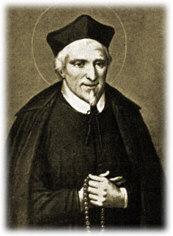
Saint Sébastien
Valfré, prêtre
Prêtre de l'Oratoire de
saint Philippe Néri, il passa toute sa vie à Turin, directeur spirituel très
sollicité. Il aimait visiter les prisonniers et les infirmes. Sa grande
capacité d'amitié lui fit conduire beaucoup de juifs à la foi en Jésus-Christ. « Le
père qui avait le paradis dans ses yeux » mourut en 1710.
Saint Sébastien Valfré
Oratorien (+ 1710)
Prêtre de l'Oratoire
de saint
Philippe Néri, il passa toute sa vie à Turin, directeur spirituel très
sollicité. Il aimait visiter les prisonniers et les infirmes. Sa grande
capacité d'amitié lui fit conduire beaucoup de juifs à la foi en Jésus-Christ.
Il fut béatifié en août 1834.
Voir aussi (en anglais)
sur le site de l'Oratoire
de Birmingham.
À Turin dans le Piémont,
en 1710, le bienheureux Sébastien Valfré, prêtre de l’Oratoire, qui se dévoua
tout entier à aider les pauvres, les malades et les prisonniers et, par son
amitié et son exquise charité, il conduisit bien des personnes au Christ.
Martyrologe romain
'Le père qui avait le
paradis dans ses yeux'
SOURCE : http://nominis.cef.fr/contenus/saint/542/Saint-Sebastien-Valfre.html
Also
known as
Apostle of Turin
Profile
Born to a poor family,
he struggled for years to work his way through schools,
finally graduating from the University of Turin. Joined the Oratory of Saint
Philip Neri in Turin, Italy on 26 May 1651. Ordained on 24
February 1652.
Received his Doctorate in Theology in 1656. Parish priest in Turin with
a special ministry to the sick,
the poor and
the confessional. Confessor to Duke Victor
Amadeus II of Savoy and other members of the nobility and royal court.
He used these connections to improve charity to widows and ophans,
and to procure the funding for the Basilica of
Superga. Provost of the Turin Oratory
for years. Offered the archbishopric of Turn,
but declined. Had a great devotion to the Shroud
of Turin, and supervised repairs to it in 1695.
Supported catechists in
the region, and taught catechism classes
himself. Helped to found the Pontifical Academy of Ecclesiastical Nobles
in Rome, Italy in 1701 to train diplomats for
the Papal States.
Born
9 March 1629 in Verduno,
Duchy of Savoy (in modern Italy
30
January 1711 in Turin,
Duchy of Savoy (in modern Italy of
natural causes
relics enshrined in
a silver urn in the Oratory Church of Turin
31 August 1834 by Pope Gregory
XVI
Additional
Information
Book
of Saints, by the Monks of
Ramsgate
Saints
of the Day, by Katherine Rabenstein
Stories
of Holy Lives, by M.F.S.
books
Our Sunday Visitor’s Encyclopedia of Saints
other
sites in english
images
sitios
en español
Martirologio Romano, 2001 edición
fonti
in italiano
MLA
Citation
“Blessed Sebastian
Valfrè“. CatholicSaints.Info. 5 May 2022. Web. 5 March 2026.
<https://catholicsaints.info/blessed-sebastian-valfre/>
SOURCE : https://catholicsaints.info/blessed-sebastian-valfre/
Book of Saints –
Sebastian Valfre
Article
(Blessed)
(December
30) (18th
century) A native of Savoy and a priest of
the Oratory of Saint Philip
Neri. He was a man of God, intent only on prayer and
on the doing of good works. In his humility, he refused the Archbishopric of Turin offered
him by King Victor
Amadeus of Piedmont, who greatly esteemed and respected him. He literally sold
all his goods and gave the proceeds to the poor.
He died at Turin at
the age of eighty (A.D. 1710).
MLA
Citation
Monks of Ramsgate.
“Sebastian Valfre”. Book of Saints, 1921. CatholicSaints.Info.
15 December 2016. Web. 5 March 2026.
<https://catholicsaints.info/book-of-saints-sebastian-valfre/>
SOURCE : https://catholicsaints.info/book-of-saints-sebastian-valfre/
Blessed Sebastian Velfré,
Orat. (AC)
(also known as Sebastian
Valfré)
Born at Verduno, Alba,
Italy, in 1629; died in Turin, Italy, 1710; beatified in 1834. Sebastian joined
the Oratorians at Turin after his ordination to the priesthood. He became
prefect of the Oratory and was much demanded as a spiritual director because of
the endless care he gave to each who came to him for help. But he did not just
wait for sinners to come to him, he sought them out and converted many.
Sebastian acquired in full measure the spirit of Saint Philip Neri, whose
cheerfulness he imitated through even the most grieous spiritual trials
(Attwater2, Benedictines).
SOURCE : http://www.saintpatrickdc.org/ss/0130.shtml#savi
Blessed Sebastian Valfre, C.O.
Born: March 9, 1629
Died: January 30, 1710
Beatified: August 31, 1834
When Sebastian Valfre
joined the Oratory of Turin as a 22-year-old seminarian in 1651, the community
was down to one member. By the time of his ordination the following year,
three more priests had joined the Oratory; this was a sign of the great impact
Fr. Valfre would have on the Church in Piemonte and beyond.
Fr. Valfre is known for
his work with the poor, despite his attempts to work discretely and
anonymously. He was particularly effective in his service of the poor
during the famine of 1678-80 and the 17-week siege of Turin during the war
between Piemonte and Louis XIV. He is still invoked as patron of military
chaplains for his ministry to soldiers during the war.
As a confessor, Fr.
Valfre was known for his attentiveness and compassion. Along with his
promotion of Marian devotion and the Forty Hours, his work in the confessional
is credited with a religious revival in Turin, and he served as confessor to
the royal family of Piemonte. He declined appointment as archbishop of
Turin out of humility.
Fr. Valfre was also a
scholar, earning a doctorate in theology at age 27. His writings run to 22
volumes, including a catechism called the Compendium of Christian
Doctrine, which remained in use until the pontificate of Pope St. Pius X
The Apostle of Turin died
on January 30, 1710. He was beatified by Pope Gregory XVI in 1834
SOURCE : http://www.nboratory.org/html/valfre.html
Stories
of Holy Lives – Blessed Sebastian Valfrè
Article
Sebastian Valfrè was born
in a small village of Piedmont upon the March, 1629, and that same day he was
made one of God’s children by the Sacrament of Baptism. His was a good old
family, but one so tried by misfortune, that at the time of the little boy’s
birth his mother and father were working hard for their daily bread. But though
Sebastian was reared in the midst of poverty, he had from his earliest years a
great desire to help every one in need, and if any poor person was sent from
the door unaided he wept bitterly, so bitterly, that the neighbours would come
to ask what was the matter, and often gave him the food for their relief which
his mother could not bestow.
At ten years of age this
boy fasted during the whole of Lent on bread and water, and at all times denied
himself many of the little indulgences which came in his way so rarely. He was
also a very obedient child, never requiring to be told of even a trifling thing
a second time, because his delight was to attend to the first wish and word of
his parents. One day Sebastian was left in the kitchen to watch some food which
was boiling on the fire, yet in spite of all his care it boiled over, and was
spilt on the floor. The little boy was very much troubled – in a poor home this
was a terrible misfortune – and he knew how grieved his mother would feel at
the loss; but he never thought of concealing what had happened, or even making
excuses for himself, as most children would do. He almost expected he might be
punished, yet when his mother came in he went towards her, saying directly,
“Mother, if you like I am ready to be beaten, but the pot on the fire has all
boiled over.”
Argentina of course did
not punish or scold her little son, because she was a good woman, who rejoiced
to see this proof of Sebastian’s truthfulness and obedience.
As the lad grew older, he
felt God’s voice drawing him to the priesthood, but his parents had too much
difficulty in providing food and clothing for their twelve children, to be able
to place Sebastian where he could pursue the necessary studies. After a time an
opportunity was found of sending him to receive a course of instruction, but
his master with whom he lodged treated him very roughly, making him sleep in a
barn, with very little to cover him. Through the nights Sebastian lay in cold
and wretchedness, unable to take off his clothing, yet even when his father
came to see him he made no complaint, and did not explain how it was he looked
so weak and ill.
A boy who was one of
Valfre’s school companions had a quarrel with another, and his heart was full
of revenge. Sebastian heard of this, and it made him very unhappy, because he
knew how it must grieve the good God, and he thought he would try to make peace
between the enemies. So he went to his schoolmate and asked him if he had said
the Pater noster that morning. Cappello did not know his reason for putting the
question, so he replied quite promptly that he had said it.
“Did you say it
carefully?” then asked Valfrè, trying to speak with great love and gentleness,
lest he might give offence. The boy again replied that he had done so.
“Surely you did not
notice those words of Christ, ‘Forgive us our trespasses as we forgive them
that trespass against us,'” added Sebastian, earnestly; and young Cappello was
so struck with shame and repentance, that he quickly asked pardon of God, and
was reconciled to the lad who had offended him.
Having overcome great
difficulties, and studied hard to fit himself for the life he desired, Valfrè
had the great happiness of receiving the habit which those wore who were
preparing for the priesthood, and in 1651 he was received into the congregation
of the Oratory at Turin, where, as a novice, he set a bright example of
humility and obedience. On the 24th of February, 1652, he was ordained a priest
by his own bishop in Alba, but after celebrating his first Mass he returned to
the Oratorians, to whom he was much attached. Father Sebastian still applied
himself very much to study, but he tried to become a true priest, setting
before him as a model Saint Philip Neri, the father and founder of the Oratory.
In the instructions and short sermons which were part of his duty to give, he
had much of the winning sweetness which made Saint Philip so much beloved, and
it was a common thing to see persons moved to tears by his earnest words. At
the beginning of his priestly life Father Valfrè was so humble, that he feared
to undertake the duties of a confessor, as he judged himself unworthy of so
holy a ministry; but afterwards, when he yielded to the opinion of several
learned and pious men, who advised him to undertake the care of souls, he was
sought by crowds of penitents. God gave Sebastian a great power over the hearts
of these people: both learned and ignorant, rich and poor, came from him with
fresh sorrow for their sins and fresh purpose of amendment in the time to come,
and many notorious sinners were drawn from the depth of wickedness to begin a
truly Christian life. It pleased Almighty God to bestow upon this holy man that
wonderful knowledge of what is passing in the hearts of others, which has
sometimes been an extraordinary grace and help to those who have a great work
to do in saving souls. He often clearly knew what the penitent had either
forgotten or was simply trying to conceal, and saying, “Will you let me tell
you of something?” would put clearly before the person the diseased state of
his soul. The King of Sardinia took Father Valfrè as confessor, and under his
guidance gave proofs of an unusual degree of piety, which won for him the
admiration of all his people. The royal princesses, his daughters, also looked
to the holy priest for counsel, and many letters from them have been preserved
by the Congregation, which show the respect and confidence which they felt
towards their spiritual father. But while Father Sebastian had so much time
employed in assisting and directing the great and noble, his chief love was for
the poor, to whom he gave every spare moment. He also took great care of his
own soul, striving that while he led others to God he might himself grow daily
more conformed to the example of his Master.
One of the chief works of
the Fathers of the Oratory is the preaching of God’s word in their churches,
and Sebastian Valfre entered into this labour with the greatest zeal. He
preached in the church of the Congregation at least once a week, and was
besides this always ready to take the place of any priest who was called away
to some other duty. In poor-houses, prisons, and hospitals, Father Sebastian
laboured to win souls to God, and many were the hard hearts which he softened,
and the cold indifferent lives which his earnestness awakened to a more ardent
love of Jesus. He delighted, too, in catechising the poor and young, going
himself to seek out the country people and collect them into small chapels. No
matter whether he had to bear the cold of winter or the burning heat of summer,
he journeyed on foot in search of those whose souls were so precious in the
sight of God.
A woman who had been
under instruction gave up the good resolution of professing the Christian
faith. Happily Father Sebastian heard of this, and, going to the place where
she was, requested her to say a Pater noster with him. Having said the prayer,
he drew close to the woman and asked her if she would he a Christian. “Yes,
Father,” she answered, “very willingly;” and without any further doubts or
drawing back she made her profession of Christianity, and persevered in piety
and virtue until a great age, when she died a happy and holy death. At that
time the number of Catholics in the valley of Lucerne was small, but by his
journeys there Valfrè did so much good, that new churches had to be provided
for those who were converted to the faith by his preaching. As the love of God
bums more and more brightly within the soul, so must there increase displeasure
with all that offends Him; and thus if Father Sebastian knew of any one who was
doing wrong in thought, or word, or deed, he would shudder, from the horror he
felt, and even became seriously ill if he was very much distressed. He had a
great dread of venial sin, and he always tried to excite the same feeling in
those under his care. His own nephew once was found out to have told a falsehood,
and although it was not about a matter sufficient to make it a grievous sin,
Father Sebastian reproved him most severely, and told him that he should never
again set foot in that room if he repeated the fault. Neither could this holy
man endure to see any persons idle or tepid who professed to be the friends of
God; he would strive to rouse them to do something for their neighbours,
saying, “One who loves God never says it is enough, but the more he has
laboured the more he is ready to labour.” He certainly carried out these
lessons in his own practice, for even when he was old and weak, and people
thronged his confessional, or came seeking advice or alms, he never complained
of being too much disturbed, but found time and a kind word for each one, all for
the love of his Master.
During Sebastian Valfrè’s
lifetime Turin was shut up by a siege, and that was a time for fresh exertions
to do good to others. He hurried to the wounded when they were carried to the
hospitals, comforting them with the holy Sacraments, and he would even stand
amidst the dangers of the streets, where he might at any moment be struck down
in the continual cannonading, because he thought that there in the midst of
peril the hearts of men might be more easily moved to make acts of contrition.
A miracle happened one day in one of his errands of mercy when the Blessed
Sebastian had gone to the Royal Hospital of Charity in company with a young
cleric. They had entered a room through which was the passage to the place
where the sick lay, and Sebastian was going on, followed by his young friend;
but, after taking a few steps this student stopped, and, turning hastily back,
just avoided falling into a deep opening, which was there because the building
was yet unfinished. Pale with fright at his narrow escape, the young man looked
for his holy companion, whom he clearly saw walking upon the air, as if it had
been solid ground, and thus reached the sick rooms, to which he himself had to
pass by a longer way.
Another day a priest
named Garresio was walking through Turin with Father Sebastian, who suddenly
stopped at the door of a house and exclaimed, “Garresio, make haste and go up
to the garret of this house, while there is yet time.” The priest, without
pausing to ask a question, ran up to the place mentioned, and there found a
poor woman lying upon a little straw, evidently in her last agony, with no one
to assist her. Garresio instantly begged her to make an act of contrition, and
he gave her absolution, upon which she calmly expired, at peace with God. He
then went back to the street and rejoined Sebastian, who had remained there
till his return, and who quietly said, “Now we have gained a soul we may pursue
our way.”
Many such cases happened
which showed the great graces God had bestowed upon this holy man as a reward
for his faithfulness; many, too, were the miraculous cures he wrought, not only
of the soul, but also in the bodies of those who came to him for help, and in
spite of his many illnesses and great weakness, he seemed to receive from
heaven power to toil on as many a stronger man could scarcely have done. When,
however, the time of his death drew near, blessed Sebastian had a distinct
knowledge of the day it should happen, and for some months he occupied himself
in setting all things in order. In December (the last month of his life) he
visited some of his friends, bidding them farewell as for the last time. Two
days before he took to his bed he told a person in the confessional that he
should never hear her confession again, as within a week he should be dead. The
woman was greatly distressed, and cried out, “What can I do when you are gone?
who will help me as you have done?” But Father Sebastian comforted her by
bidding her trust in God and the Blessed Virgin, who would, in answer to her
prayers, take care that she should want for nothing. The holy man was not
mistaken, for his knowledge had come by God’s revelation. After a short illness
he died peacefully upon the 80th of January, 1710, having reached the age of
nearly eighty-one years. When the news was made public, crowds of people went
to the church, crying, “A great saint is dead.” All wanted to see him who had
been their patient loving father and friend, to kiss his hands and feet, and,
if possible, cut off little morsels of his vestments, so that the Fathers
thought it would be necessary to call a guard of soldiers to their aid, but all
was in vain. The crowd thickened and would not be kept back, and so an order
came from the archbishop to permit his body to be exposed for public veneration
until late in the evening. The coffin was afterwards closed and sealed, and
carried to the place appointed for the sepulchre of the Fathers of the
Congregation; and many miracles were granted by God after the death of His
servant in answer to those who asked his intercession to obtain for them Divine
favours.
MLA
Citation
M.F.S. “Blessed Sebastian
Valfrè”. Stories of Holy Lives. CatholicSaints.Info.
5 May 2022. Web. 5 March 2026.
<https://catholicsaints.info/stories-of-holy-lives-blessed-sebastian-valfre/>
SOURCE : https://catholicsaints.info/stories-of-holy-lives-blessed-sebastian-valfre/
Blessed Sebastian Valfrè
Sebastian Valfrè is one
of the most important members of the Piedmontese clergy, and the forerunner of
the many Saints who have graced the Church of Turin in recent centuries.
Sebastian was born at Verduno, in the Diocese of Alba, on 9th March, 1629. His
family was poor, but despite hardships and difficulties he managed to follow a
course of studies at Alba, Bra and finally Turin.
He joined the Oratory of
Turin on 26th May, 1651, and was ordained priest on 24th February, 1652. He
gained his doctorate in theology in 1656. He went on to hold many of the
offices at the Oratory and, although he declined being made Archbishop of his
city, he nevertheless, through his tireless work, is honoured as the Apostle of
Turin. His particular concerns were the teaching of the Catechism, hearing
confessions, giving spiritual direction, helping the poor and the sick, widows,
orphans and prisoners. Sebastian became confessor to the Piedmontese Royal
Family and his influence at Court enabled him to do much for the poor of the
city. He was greatly devoted to the Shroud of Turin, and there is a print in
existence showing him supervising some repair work being done to the Shroud.
During his years in Turin
the Kingdom endured several wars, including a siege of the city. He organised
practical aid for the soldiers – so much so that today he is invoked as the
patron of military chaplains. He introduced to Turin the Forty Hours Devotion
to the Blessed Sacrament, and encouraged devotion to Our Lady, inspiring King
Victor Amadeus II to build the Basilica of Superga. Sebastian also helped in
the founding of the Accademia at Rome for the training of Papal diplomats. He
is remembered, too, in difficult times, for striving to build up good relations
with both Protestants and Jews in Piedmont.
The Archives of the Turin
Oratory possess some 22 volumes of his writings. One of his most important
works was his ‘Compendium of Christian Doctrine’, a catechism organised on a
question and answer basis. This rapidly became a well-used teaching aid, and
lasted until the introduction of the Catechism of Pope Pius X.
The Father who had
Paradise in his eyes died at Turin on 30th January, 1711, and was beatified by
Pope Gregory XVI on 31st August, 1834. His body rests in a silver shrine in the
Oratory Church in Turin. His feast is kept each year on 30th January.
Blessed Sebastian Valfrè,
pray for us!
SOURCE : https://birminghamoratory.org.uk/blessed-sebastian-valfre/
Blessed Sebastian Valfre
The Cross received the
living Jesus and gave Him back to us dead; the Shroud received the dead
Jesus and restored Him to us alive. (Blessed Sebastian speaking of the
Shroud of Turin)
The Congregation of the
Oratory and devoted faithful liturgically recall Blessed Sebastian Valfre, C.O.
(1629-1710), a priest of the Oratory.
Unless you are plugged
into the life of the Oratorians, such as the fine men at the Brooklyn Oratory, the New Brunswich, NJ Oratory, or the New York
Oratory, Blessed Sebastian Valfre (1629-1710) of the Turin Oratory, is not well
known. He was beatified by Pope Gregory XVI in 1834.
Father Sebastian Valfre
is remembered for a number of things: he produced a popular Catechism and
introduced the Quarant’Ore (the 40 Hours devotion to the Eucharist) to Turin;
he cared for the poor and needy; he was a Spiritual Director to the Piedmontese
Royal Family (he tutored the young Victor Amadeus II); he had a great love for
the Holy Shroud of Turin and was involved in the foundation of Rome’s Accademia
(where diplomats are trained); the feast of the Sacred Heart was first
celebrated in Turin for the first time Father Sebastian in 1694.
When Father Sebastian
died and his body was laid out in the church, Turin’s citizens wanted to say
goodbye to the priest who walked with them through all the joys and
difficulties in life for sixty years. Father Sebastian’s legacy was the
extroversion of the faith preached by Christ for the dignity of all people: the
witness of Christian charity knew no boundaries.
Today, the most important
aspect we take away from Sebastian Valfre is the example he gave as a man of prayer
and contemplation from which he drew his mission for preaching rooted in his
education and authentic spiritual formation.
SOURCE : https://communio.stblogs.org/index.php/2013/01/blessed-sebastian-valfre/
Blessed Sebastian
Valfrè
(1629-1710)
Sebastian Valfrè is one
of the most important members of the Piedmontese clergy, and the forerunner of
the many Saints who have graced the Church of Turin in recent centuries.
Sebastian was born at Verduno, in the Diocese of Alba, on 9th March, 1629. His
family was poor, but despite hardships and difficulties he managed to follow a
course of studies at Alba, Bra and finally Turin.
He joined the Oratory of
Turin on 26th May, 1651, and was ordained priest on 24th February, 1652. He
gained his doctorate in theology in 1656. He went on to hold many of the
offices at the Oratory and, although he declined being made Archbishop of his
city, he nevertheless, through his tireless work, is honoured as the Apostle of
Turin. His particular concerns were the teaching of the Catechism, hearing
confessions, giving spiritual direction, helping the poor and the sick, widows,
orphans and prisoners. Sebastian became confessor to the Piedmontese Royal
Family and his influence at Court enabled him to do much for the poor of the
city. He was greatly devoted to the Shroud of Turin, and there is a print in
existence, showing him supervising some repair work being done to the Shroud.
During his years in Turin
the Kingdom endured several wars, including a siege of the city. He organised
practical aid for the soldiers – so much so that today he is invoked as the
patron of military chaplains. He introduced to Turin the Forty Hours Devotion
to the Blessed Sacrament, and encouraged devotion to Our Lady, inspiring King
Victor Amadeus II to build the Basilica of Superga. Sebastian also helped in
the founding of the Accademia at Rome, for the training of Papal diplomats. He
is remembered, too, in difficult times, for striving to build up good relations
with both Protestants and Jews in Piedmont.
The Archives of the Turin
Oratory possess some 22 volumes of his writings. One of his most important
works was his ‘Compendium of Christian Doctrine’, a catechism organised on a
question and answer basis. This rapidly became a well-used teaching aid, and
lasted until the introduction of the Catechism of Pope Pius X.
‘The Father who had
Paradise in his eyes’ died at Turin on 30th January, 1711, and was beatified by
Pope Gregory XVI on 31st August, 1834. His body rests in a silver shrine in the
Oratory Church in Turin. His feast is kept each year on 30th January.
Blessed Sebastian Valfrè,
pray for us!
SOURCE : http://www.birminghamoratory.org.uk/oratorian-saints/blessed-sebastian-valfre/
Sebastian Valfrè was
born on 9th March 1629 at Verduno in the southern Alps. His background was
humble: his mother and father were poor farmers, and the dull routine of work
in the fields with his parents and seven siblings took up much of his
childhood. He felt a call to the priesthood at an early age, but ran into
difficulties with his family, who were loathe to lose his assistance with the
farm work; however, he persevered and eventually won them over. He left Verduno
to begin his studies in 1641 at the age of twelve, and again these were not
easy for him: at one stage he had to stay up most nights copying out books to
pay for his education, which took him in its later stages to Turin for studies
with the Jesuits.
Also at Turin was the
Oratory, which had in earlier years been influential, particularly on the youth
of the city, but by 1650 was rather down-at-heel: only one priest, Fr Cambiani,
remained, and he is described as ‘ragged and eccentric’. It can hardly have
been an enticing prospect in human terms, but Sebastian nonetheless joined it
on St Philip's Day, 26th May 1651, being ordained deacon only a week later. By
the end of the year, the community had been bolstered by the arrival of three
new priests, so by the time Sebastian was ordained priest in February 1652, the
Oratory showed signs of life once more.
Turin soon began to
benefit from his presence as a priest. In common with many cities of that and
other ages, it had its share of poverty, which Sebastian did much to alleviate.
He was not afraid to ask the rich for alms to give to the poor, but he took
care to be as discreet as possible, doing much of the distribution at night
when it was easier to remain anonymous. These activities took on heightened
importance from 1678 to 1680, when famine struck Piedmont, and again during the
war between Piedmont and Louis XIV, which culminated for Turin in a
seventeen-week siege which caused great hardship as well as anxiety — and which
Sebastian's prayers are said to have been efficacious in bringing to a
successful end for the inhabitants.
If Sebastian was esteemed
by the less well-off, he was also on good terms with those who were more
fortunate. In particular, he maintained good relations with the Dukes of Savoy,
one of whom, Victor Amadeus II, he had helped to form from the age of nine into
the just ruler he later became. Sebastian was the spiritual director to the
entire court of the Duke, and such was the esteem in which he was held that at
one stage the Duke did his best to procure the Archbishopric of Turin for Sebastian.
His cause was furthered by the good reputation which he had in the Vatican, but
Sebastian's humility led him to dread this ecclesiastical dignity, and was
profoundly grateful to be able to avoid accepting it.
Sebastian's corporal
works of mercy went hand in hand with the spiritual. He was very reluctant at
first to start taking on the special responsibility for souls involved in
hearing confessions — again, his humility is evident — but, once he did, his
reputation spread throughout the city. He also searched out penitents far and
wide — hospitals, schools, convents, barracks, prisons, galleys all benefited
from his concern for spiritual well-being. His success in this field, as well
as in his approach to life in the Oratory in general, was probably due above
all else to his blending of careful attention to detail with a genuine
compassion, and his penances reflected this. His penitents told of his ability
to read souls. Sebastian's work in the confessional was at the very least
instrumental in sparking something of a revival of religious observance in
Turin: like St Philip, it was said that he had the gift of discernment of
spirits.
The life of Sebastian
Valfrè was not one of extravagant and heroic deeds done for God, but of the
sanctification of an existence of regular routine, year in, year out, and of
service to God in the circumstances of ordinary life. His cheerful and
attractive manner were an example, and he also had his fair share of
difficulties which he had to work hard to overcome. He was, for example, rather
petulant and sensitive by nature, being easily offended: he remedied this by
trying to be unfailingly polite even to those who hurt him. He also knew what
it was to suffer from spiritual darkness, finding prayer a real struggle at times,
and study even more unattractive. But his perseverance, which manifested itself
from his earliest years, stood him in good stead.
Sebastian died early in
the morning of January 30th 1710; miracles began even before he could be
buried, and he was beatified by Pope Gregory XVI in 1834.
Grant us, we beseech you,
O Lord, that, as you did wonderfully raise your priest Blessed Sebastian, for
the salvation of many, so we may persevere in your love, for the sake of
helping souls. Through Christ our Lord. Amen.
Copyright © The Oxford
Oratory 2009–2015
The Oxford Oratory Trust
is a Registered Charity number 1018455
SOURCE : http://www.oxfordoratory.org.uk/bl-sebastian-valfre.php

Beato Sebastiano Valfrè Sacerdote oratoriano
Verduno, Cuneo, 9 marzo 1629 - Torino, 30 gennaio 1710
Il suo invito costante era «catechismo, catechismo!». E la sua opera si svolse tra i più umili, anticipando la messe ottocentesca di santi sociali piemontesi. Il beato Sebastiano Valfrè, nato a Verduno, comune di Alba, nel 1629, si trasferì a Torino per studiare filosofia. Qui si distinse per l'aiuto verso valdesi ed ebrei. Entrò nella congregazione Oratoriana (Filippini) nel 1651. Appoggiato dai Savoia, si prodigò per i più deboli, negli ospedali, nelle carceri e tra i soldati. Durante l'assedio francese di Torino nel 1706 soccorse i feriti, tra i quali Pietro Micca, di cui fu confessore. Morì nel 1710 ed è beato dal 1834. (Avvenire)
Patronato: Cappellani militari
Etimologia: Sebastiano = venerabile, dal greco
Martirologio Romano: A Torino, beato Sebastiano Valfré, sacerdote della Congregazione dell’Oratorio, che si dedicò con impegno all’assistenza dei poveri, degli infermi e dei carcerati e con la sua amicizia e la sua operosa carità condusse molti a Cristo.
Il Beato Valfrè nacque a Verduno, diocesi di Alba, il 9 marzo del 1629, da umile famiglia: quando il Duca Vittorio Amedeo II nel 1689 lo volle Arcivescovo di Torino per le straordinarie qualità dimostrate in oltre trent’anni di fecondo ministero, la modestia dei suoi parenti, fatti venire appositamente dal Valfrè nella Capitale, gli servì per sfuggire l’altissimo onore.
Compiuti con successo, ma tra stenti e disagi, i suoi studi ad Alba, a Bra, e a Torino, dove fece l’amanuense per mantenersi, entrò nel 1651 nella Congregazione dell’Oratorio. Questa era stata fondata due anni prima da P. Pier Antonio Defera, sollecitato dal Nunzio in Piemonte Alessandro Crescenzi, devotissimo di S. Filippo Neri ed intenzionato a promuoverne il culto e le opere. P. Defera, con il sacerdote Ottavio Cambiani, figura modesta per doti naturali, ma di intensa vita spirituale, aveva iniziato l’Oratorio nello stile di semplicità evangelica che una cronaca manoscritta 18 descrive in questi termini: “Il capitale loro fu la virtù e la confidenza in Dio; poveri di roba, ma ricchi di devozione, assistevano all’angusta chiesetta [ricavata in una bottega presa in affitto in casa Blancardi, presso la chiesa di S. Francesco d’Assisi] con cuore ampio e con fervore di spirito”.
La Comunità e gli esercizi dell’Oratorio si trovarono in piena crisi, dopo un anno e mezzo di vita, quando P. Defera l’11 settembre 1650, all’età di trentaquattro anni, morì: aveva dato l’avvio ad uno straordinario ministero di predicazione - non solo in chiesa, ma anche “discorrendo qua e là per la città” -, di confessioni, di visite agli ospedali ed alle carceri, facendo rivivere tra i Torinesi lo spirito dell’Apostolo di Roma. Il progetto sarebbe naufragato se il giovane suddiacono Sebastiano Valfrè, otto mesi dopo la morte del Fondatore, non si fosse presentato a P. Cambiani per chiedere di essere ammesso in quella Congregazione di un solo soggetto, povera di mezzi, sull’orlo della chiusura. Era un povero, Sebastiano, e non gli fece paura la povertà dell’istituzione: vide, anzi, in essa l’ambiente più adatto ad un dono senza riserve. Amò quella Comunità con tutto se stesso dedicandosi ai più umili lavori ed intraprendendo nel contempo, sulle orme del P. Defera, un’azione pastorale di incredibile dedizione.
Si formò perfettamente allo spirito di S. Filippo e lo visse con slancio per tutto il resto della sua vita, fino agli ottant’anni, quando si spense, il 30 gennaio 1710, nella sua piccola camera, ingombra delle carte di studioso - si addottorò nel 1656 in Teologia all’Università di Torino - e piena di imballaggi di vestiario e di viveri per i poveri, amati e serviti da P. Valfrè con la dedizione di un servo fedele. Lo assistette nell’agonia Sua Altezza Reale il Duca Sovrano di Piemonte, che svolse personalmente l’ufficio di infermiere nelle più umili mansioni. Anche l’ultima malattia che lo avrebbe condotto alla morte fu fervida testimonianza della fedeltà di P. Valfrè ai suoi impegni: il 24 gennaio aveva predicato alle monache di S. Croce e si era recato subito dopo nelle carceri a confortare un condannato a morte; corse verso casa, per arrivare in tempo, e si inginocchiò in chiesa per la Benedizione Eucaristica, passando poi immediatamente nel freddo ambiente dell’Oratorio per gli esercizi della comunità; febbricitante, il giorno seguente celebrò la Messa ed accolse per la Confessione molte persone, ma fu costretto a mettersi a letto; trascorse i pochi giorni che gli rimanevano su questa terra attendendo alla continua visita di penitenti e di amici, e spirò verso le otto del 30 gennaio.
La sua salma, esposta nella chiesa, attirò tutta Torino che voleva ancora salutare quel prete che per sessant’anni aveva percorso le strade e le piazze della città facendo il catechismo e sollevando ogni genere di povertà, con la stessa dedizione con cui a Corte svolgeva l’ufficio di Confessore della Real Famiglia, e nelle carceri, negli ospedali, nella cittadella e sui bastioni, durante la guerra, infondeva coraggio e testimoniava la carità del cristiano. Uomo di preghiera intensa e nutrito di contemplazione, attinse dalla sua ottima preparazione intellettuale e dalla fervida esperienza spirituale lo zelo della predicazione. Aveva iniziato, giovane diacono, ad annunciare il Vangelo nella cappella dell’Oratorio in Casa Blancardi, ed aveva continuato come Prefetto dell’Oratorio e come Preposito della Congregazione; chiamato incessantemente in conventi e monasteri, in chiese parrocchiali ed in vari istituti di carità mai rifiutò il suo servizio.
Ma il suo desiderio di annunciare la Parola del Signore lo portò anche fuori da questi ambienti convenzionali: alla scuola di P. Filippo aveva appreso il metodo del colloquio personale e della parola pronunciata “alla semplice” - come ricordano i primi biografi - nell’incontro con ogni genere di persone, per le vie e sulle piazze: per quarant’anni in Piazza Carlina, fece catechismo ai mercanti di vino ed ai loro clienti iniziando, in un gruppetto, a parlare di qualche argomento interessante, e rispondendo alle domande di quelli che si lasciavano coinvolgere nel discorso. Fu lui a celebrare in Torino, nel 1694, per la prima volta in Italia e forse nel mondo, la festa del S. Cuore di Gesù, che sarebbe stata ufficialmente istituita soltanto cento anni più tardi.
Anche i ragazzi furono campo in cui l’Apostolo del catechismo esercitò la sua missione; tra i suoi scritti di valore, lasciò un testo di catechesi che sarebbe servito alla Chiesa per molto tempo. Una tale dedizione al servizio dell’annuncio potrebbe lasciar pensare che poco tempo restava al Beato per occuparsi di altre attività. Egli, invece, si presenta non meno eccellente come Apostolo della carità. Conobbe i problemi e le necessità soprattutto dei più poveri nel contatto diretto con essi, fu attivamente partecipe di tutte le iniziative di bene che in Torino fiorivano, ma fu soprattutto la cura che personalmente dedicò alle numerose situazioni di immediato bisogno ad attirargli il cuore della Città: quante volte fu visto - e sono i soldati di ronda a darne testimonianza - passare durante le notti per le strade a caricarsi sulle spalle poveri cenciosi per condurli in qualche ricovero, o salire furtivamente le scale di misere case per depositare davanti alla porta pacchi di viveri e di indumenti. Non vi fu categoria di bisognosi in Torino che non abbia ricevuto il suo aiuto concreto.
La stima di cui godeva a Corte, dove il Duca lo aveva nominato Confessore affidandogli in particolare la formazione spirituale dei figli, diedero a P. Valfrè la possibilità di svolgere un’azione anche sociale e politica. Consigliere tra i più ascoltati del Duca, a cui P. Sebastiano ricordava anche per iscritto che la giustizia deve precedere la carità, il Beato esercitò una profonda influenza sulla società sabauda, in un’epoca travagliata da guerre, da conflitti giurisdizionali, da rapporti difficili con le minoranze valdesi e con gli Ebrei. Nelle complesse vicende di conflitto istituzionale fra la Corte Sabauda e la Sede Apostolica, P. Valfrè si rese conto della impellente necessità che i Rappresentanti diplomatici di Roma fossero ecclesiastici formati culturalmente ma anche nello spirito. Fu lui a suggerire la fondazione della Scuola di formazione che prepara il personale diplomatico della Chiesa: la Pontificia Accademia Ecclesiastica non ha dimenticato l’opera di colui che la ispirò, ed anche in occasione del suo III centenario, solennizzato il 26 aprile 2001 con una grande celebrazione nella Basilica Vaticana, lo ha ricordato.
Il 15 luglio 1834 Gregorio XVI iscriveva P. Valfrè nell’albo dei Beati. Accanto
all’altare in cui riposano le spoglie mortali del B. Sebastiano, è stata posta
per lunghi anni la cattedra dell’insegnamento catechistico, dalla quale
l’invito costante di P. Valfrè sembrava ancor risuonare: “Catechismo,
catechismo…!”.
PREGHIERA
Con la Tua preghiera fiduciosa alla Vergine Consolata,
o Beato Padre Sebastiano,
e con la Tua presenza intelligente ed attiva in Torino assediata,
hai mostrato che nell’amore per Cristo
fiorisce il più autentico amore per la propria città,
frutto di una fede che non è evanescente spiritualismo
ma adesione della vita a quel Dio che, facendosi Uomo,
siè fatto carico delle concrete situazioni degli uomini.
Ottienici in dono la Fede che fiorisce nell’incontro con Cristo
e che ha colmato il Tuo cuore ed illuminato il Tuo sguardo;
la Carità che ha mosso le Tue mani a servire,
le Tue labbra a parlare, i Tuoi piedi a percorrere le vie della città;
la Speranza che Ti ha sostenuto
quando le umane certezze svanivano e spesse nubi coprivano il cielo.
Prega per noi, Beato Sebastiano,
innamorato di Cristo, di Maria, della città!
Autore: Mons. Edoardo Aldo Cerrato CO
Il beato Sebastiano Valfré è un’anticipatore di quella grande stagione di santità che coinvolse il Piemonte nei secoli XVIII e XIX, ove fiorirono figure di santi anche di tipo sociale che onorarono la Chiesa con la loro vita e attività; per citarne alcuni: s. Giuseppe Cafasso, s. Giovanni Bosco, s. Giuseppe Benedetto Cottolengo, santa Maria Mazzarello, ecc.
Nacque a Verduno nel comune di Alba, il 9 marzo 1629 da umile ma religiosa famiglia, a sedici anni si recò a Torino per gli studi filosofici, laureandosi in teologia nel 1650, ordinato sacerdote si trovò nel pieno della questione Valdese del 1686, orientandosi con rettitudine nella situazione che vedeva contrapposti Roma e i Valdesi, con relativi decreti di condanna da parte del Ducato governato da Vittorio Amedeo II e successivo reintegro del Movimento.
Fu un precursore dei tempi moderni riguardo la tolleranza e la comprensione del mondo spirituale ebraico, la tradizione biblica e del dramma di questi immigrati. Divenuto oratoriano della Congregazione Filippina di Torino, iniziò un’opera di mediazione e integrazione fra l’aristocrazia piemontese e la popolazione, sia cittadina sia rurale che viveva una grande povertà, mentre la ricchezza era accentrata nelle mani pochi nobili.
Si fece questuante per il popolo e i possidenti piemontesi e della Savoia accettarono quest’opera e collaborarono efficacemente con i loro beni, la sua opera d’aiuto ai bisognosi smosse anche i ricchi spagnoli e persino olandesi e francesi.
Divenne il padre dei bisognosi e i possidenti facevano a gara nell’affidargli cifre cospicue per i suoi scopi. Altro aspetto della sua carità fu quella della visita agli ammalati, svolta con la collaborazione di un gruppo di giovani oratoriani, specialmente durante l’assedio di Torino del 1706 da parte dei francesi, fra i feriti aiutati vi fu anche l’eroico Pietro Micca di cui fu il confessore. Altri campi in cui si dedicò, furono le carceri, gli ospizi, l’assistenza economica a vedove e orfani, l’aiuto ai Valdesi colpiti dagli editti restrittivi.
Fu in ottimi rapporti con la Corte savoiarda che gli permise di attuare le sue iniziative sul campo sociale, e esplicando anche una discreta azione diplomatica, che gli procurò nei secoli successivi un ricordo annuale dai futuri diplomatici della Chiesa che frequentano la prestigiosa Accademia Ecclesiastica a Roma.
Per la sua attività di assistenza spirituale alle truppe savoiarde durante la guerra contro i francesi è stato nominato patrono dei cappellani militari.
Si spense il 30 gennaio 1710 lasciando il rimpianto unanime per l’immensa opera
caritatevole svolta e un discreto numero di scritti di ascetica e di sacra
predicazione.
Fu beatificato il 15 luglio 1834 da papa Gregorio XVI.
Autore: Antonio Borrelli
Verduno, piccolo borgo delle Langhe poco distante da Alba, diede i natali a Sebastiano Valfrè il 9 marzo 1629. Nacque in una numerosa famiglia contadina, ma poté ricevere un po’ di istruzione da un sacerdote e, dotato di intelligenza vivace, a dodici anni già voleva diventare prete. Studiò ad Alba, dai Minori Conventuali, poi entrò in seminario a Bra. A 16 anni, dopo aver ricevuto gli ordini minori, si trasferì a Torino per studiare al Collegio dei Gesuiti. Era una scuola prestigiosa, la frequentò da esterno, mantenendosi copiando, nottetempo, libri e lettere. A 22 anni, affascinato dal carisma di S. Filippo Neri, decise di entrare nell’Oratorio. A Torino era presente un solo padre ma, senza scoraggiarsi, pensarono ad un apostolato semplice, tra la gente del mercato. Mentre il confratello, cantando, radunava la folla, Sebastiano faceva la predica. Fu ordinato sacerdote nel 1652 dopo aver ottenuto la dispensa papale per la giovane età, tre anni dopo si laureò in teologia all’Università di Torino. Gli Oratoriani, intanto, crebbero e fu loro affidata la Chiesa del Miracolo Eucaristico, anche se poi i locali risultarono angusti. Nel 1668 ebbero la parrocchia di S. Eusebio che poterono ingrandire nel 1675 quando Madama Reale Giovanna Battista, seguendo le volontà del defunto marito Carlo Emanuele II, confortato morente dal Valfrè, donò il terreno per la costruzione dell’attuale grandiosa chiesa di S. Filippo edificata dal Guarini.
Il lungo ministero sacerdotale di p. Valfrè fu prezioso sia per la congregazione che per l’intera diocesi. Fu prefetto dell’Oratorio piccolo per diciotto anni, a partire dal 1653, rivolgendo le sue attenzioni ai laici: il venerdì teneva l’Oratorio, con una lettura spirituale, un sermone e la preghiera; la domenica mattina si visitavano gli infermi e le sette chiese. Nello spirito filippino, grande importanza avevano le “passeggiate”, che terminavano con la preghiera in un santuario. Dal 1671, fino alla morte, seguì i novizi e per oltre venti anni fu Preposito. Contribuì alla fondazione degli Oratori di Mondovì, di Carmagnola e di Asti. Sapeva bene che dall’ignoranza religiosa, anche nel clero, nasceva la superstizione e come rettore della Compagnia della Dottrina Cristiana vigilò sulle scuole di catechismo. Fu esaminatore per quaranta anni dei candidati diocesani agli ordini sacri; vescovi e cardinali gli chiesero più volte consiglio in merito ai decreti sinodali. Nel 1688 fu nominato assistente dell’inquisitore, con licenza di leggere i libri “proibiti”. Nel 1675 fu autorizzato ad operare nella diocesi di Alba, così a Mondovì nel 1692. Fu sua l’intuizione di fondare a Roma l’Accademia dei Nobili Ecclesiastici per la formazione dei diplomatici al servizio del Papa: il confratello cardinale Colloredo la presentò a Clemente XI.
Tanta era la stima di cui godeva che gli fu affidata l’educazione di Vittorio Amedeo II: l’amicizia tra i due durerà tutta la vita, nonostante la personalità complessa del sovrano. Sebastiano fu assistente spirituale di tutta la corte e in particolare delle giovani principesse Maria Adelaide e Maria Luisa Gabriella che andarono spose, rispettivamente, al Duca di Borgogna, futura madre di Luigi XV, e a Filippo V di Spagna. Con entrambe rimase in contatto epistolare, ricevendo da loro denaro da dare ai poveri. Sebastiano passava dalle stanze sfarzose di palazzo alle celle dei carcerati, sino ai tuguri dei poveri. Dalle sue mani passò un fiume di denaro. Visitava regolarmente l’ospedale di S. Giovanni Battista, di notte era facile vederlo accompagnare sorridente un povero al ricovero, alle volte portandoselo a spalla, o con pacchi di viveri e vestiti che donava anonimamente. Non mancava di aiutare le ragazze costrette a prostituirsi, che salvò in grande numero. Nel 1689, nonostante la consuetudine che l’arcivescovo fosse nobile, il sovrano propose l’incarico al Valfrè che per umiltà rifiutò.
Gli anni in cui visse il Valfrè furono funestati da guerre continue come quella del Monferrato e quella di successione spagnola in cui si colloca l’Assedio di Torino del 1706. Valfrè fu costantemente impegnato nell’assistenza spirituale dei soldati, li esortava ad essere buoni cristiani e servitori della patria. Nel Regno Sabaudo, che finalmente acquisiva il rango di stato europeo, erano anni di lotta alle dottrine protestanti, calviniste, luterane e valdesi provenienti dalla Francia e dalla Svizzera. Il 31 gennaio 1686 Vittorio Amedeo II, dietro pressione francese, dispose l’abbattimento dei templi e l’esilio dei pastori valdesi. Sebastiano visitò i prigionieri rinchiusi nella cittadella, distribuì elemosine e medicinali. Per incarico del Duca, tra il 25 agosto e il 5 settembre 1687, visitò le valli pinerolesi dove forte era la presenza valdese. Per quanto gli fu possibile fece da mediatore tra il Duca e la Santa Sede per le interferenze statali sulle immunità ecclesiastiche, sui poteri del nunzio pontificio o dell’inquisitore, sul diritto di nomina di abati e vescovi. Il beato concretizzò un impegno straordinario anche in favore degli Ebrei.
Padre Sebastiano molte volte ebbe la fortuna di meditare davanti alla Sindone la Passione del Signore. Il 26 giugno 1694, in occasione dell’inaugurazione della nuova Cappella ideata da Guarino Guarini, alla presenza del Duca e della Duchessa Anna, sostituì i teli di sostegno della sacra Reliquia. Tra le lacrime rammendò personalmente alcuni strappi.
Sebastiano fu padre spirituale di persone appartenenti ad ogni ceto sociale. Emerge tra gli altri Anna Maria Emmanueli Buonamici, una povera contadina, di cui nel 1772 fu pubblicata una biografia grazie agli appunti del beato. Grande fu il suo impegno per i monasteri di clausura, le sue “cittadelle spirituali”, in Torino o fuori città. Li aiutò anche materialmente. Come un vero padre si preoccupava delle doti di quelle giovani che non potevano prendere il velo per mancanza di mezzi. Tra le monache si distinsero in quegli anni la cappuccina Amedea Vercellone (1610-1670) e la visitandina Jean-Benigne Gojos (1615-1692) che, venuta dalla Francia nel 1638 con Santa Giovanna Francesca de Chantal, fu favorita da rivelazioni del Sacro Cuore. Era morta da due soli anni quando il Valfrè, nel 1694, celebrò privatamente, per primo in Italia, nella chiesa della Visitazione, la festa del Sacro Cuore. Privilegiato fu il rapporto con la carmelitana Beata Maria degli Angeli (Marianna Fontanella, 1661-1717). Il ruolo di p. Sebastiano fu determinante nella fondazione del Carmelo di Moncalieri e i due furono i protagonisti religiosi durante l’Assedio del 1706, quando la Francia tentò la conquista dello Stato Sabaudo. Tra maggio e agosto 60.000 soldati francesi tentarono la presa di Torino, contro le truppe piemontesi di molto inferiori. La carmelitana pregò senza soste davanti al Santissimo, Sebastiano tenne viva la speranza tra i soldati e i loro comandanti e, nonostante i suoi 77 anni, si prodigò nel confortare i soldati, soprattutto quelli feriti. In Piazza San Carlo si allestì un ospedale e un altare in onore della Consolata il cui santuario era la roccaforte religiosa. Il 7 settembre, festa della Natività di Maria, come predetto dalla Beata, i Francesi finalmente si arresero. Per riconoscenza, negli anni a venire, fu costruita la Basilica di Superga.
P. Valfrè fu un uomo di grande preghiera, prolungate erano le sue adorazioni, anche notturne, al Santissimo Sacramento che definiva “fuoco d’amore di Dio”, “ mare di fuoco troppo immenso”. Scrisse diverse operette: «Sulla perfezione cristiana», «Avvisi agli ecclesiastici», «Novena del Santo Natale», ma la maggior parte sono a tutt’oggi inedite. Nei suoi componimenti e nelle sue prediche invitava sovente a meditare sulla presenza di Dio in ogni occupazione, all’adempimento dei doveri secondo i diversi ruoli assunti nella società, ai padri di famiglia di seguire i figli fin dalla più tenera età. Compose meditazioni per i carcerati, era infatti membro dell’Arciconfraternita della Misericordia per il conforto dei condannati a morte.
Il 24 gennaio 1710, dopo aver tenuto un sermone in un monastero, nonostante il freddo, visitò un condannato che il giorno seguente doveva essere giustiziato. Poi corse alla preghiera della Comunità, ma era febbricitante. Il 29, dopo aver ricevuto l’olio Santo, volle essere benedetto con la corona di San Filippo con cui tante volte egli stesso aveva benedetto gli infermi. Spirò la mattina del 30 gennaio. Nella sua piccola camera c’erano ancora vestiti e viveri pronti per i poveri.
Padre Valfrè, beatificato il 15 luglio 1834 da Gregorio XVI, fu “maestro” per i santi che hanno reso Torino celebre nel mondo. Davanti al quadro della Madonna delle Grazie che donò alla Chiesa del Corpus Domini il Cottolengo ebbe l’ispirazione di fondare la sua opera. Il Cafasso ne seguì le orme nell’apostolato verso i carcerati e nella formazione dei sacerdoti, don Bosco pubblicò una raccolta di suoi pensieri; nel 1871 san Leonardo Murialdo fondò con il suo nome un circolo giovanile. Pregando davanti alla sua urna il beato Federico Albert, destinato all’esercito, ebbe la vocazione sacerdotale. Le spoglie mortali del B. Sebastiano riposano nella cappella che gli è dedicata nella Chiesa di S. Filippo a Torino.
Autore: Daniele Bolognini
Note: Per approfondire: www.studibeatovalfre.org
Daniele Bolognini "Beato Sebastiano Valfrè" ed. Velar
SOURCE : http://www.santiebeati.it/dettaglio/31200
THE LIFE OF THE BLESSED SEBASTAN VALFRÉ OF THE TURIN ORATORY BY LADY AMABEL
KERR WITH A PREFACE BY HENRY SEBASTIAN BOWDE OF THE ORATORY : http://www.liturgialatina.org/oratorian/valfre.htm