
Buste
reliquaire de saint Engelbert de Cologne, cathédrale d'Essen
Reliquienbüste
des heiligen Engelbert von Köln aus dem Essener Domschatz
Saint Engelbert
Archevêque de
Cologne (+ 1225)
Excommunié dans sa
jeunesse en raison de ses actes de violence, il fit pénitence et, pour cela,
partit à la croisade contre les Albigeois. Il fut archevêque de Cologne, mais
sa manière vigoureuse à l'égard des puissants de ce monde, et son empressement
pastoral à défendre les faibles lui attirèrent l'inimitié de plusieurs
seigneurs qui l'assassinèrent.
Pour avoir pris la
défense de la liberté de l’Église, il fut entouré sur la route par des
agresseurs et tomba frappé de multiples blessures.
Martyrologe romain
SOURCE : http://nominis.cef.fr/contenus/saint/58/Saint-Engelbert.html

Engelberts Herzreliquie im Altenberger Dom
SAINT ENGELBERT DE
COLOGNE
7 novembre
Par ACI
Afrique
Afrique de l'Ouest, 07
novembre, 2025 / 11:15 (ACI Africa).
Saint Engelbert est né à
Berg vers 1185, d'Engelbert, comte de Berg, et de Margaret, fille du comte de
Gueldre. Il étudia à l'école de la cathédrale de Cologne et, alors qu'il était
encore un garçon, il fut nommé prévôt des églises de Saint-Georges et de
Saint-Severin à Cologne et de Sainte-Marie à Aix-la-Chapelle, car c'était un
abus courant dans l'Église de l'époque de nommer les enfants de nobles à de
tels postes.
En 1199, il est élu
prévôt de la cathédrale de Cologne. Il mène une vie mondaine et, lors du
conflit entre deux archevêques, Adolf et Bruno, il prend le parti de son cousin
Adolf et fait la guerre pour lui. En conséquence, il fut excommunié par le pape
en même temps que son cousin. Après sa soumission, il est réintégré en 1208 et,
pour expier son péché, il participe à la croisade contre les Albigeois en 1212.
Le 29 février 1216, le chapitre de la cathédrale l'élit archevêque à
l'unanimité.
Les ordres mendiants des
Franciscains et des Dominicains s'installent dans son royaume alors qu'il est
archevêque. Il était bien disposé à l'égard des monastères et insistait sur la
stricte observance de la religion dans ceux-ci. Les affaires ecclésiastiques
étaient réglées par des synodes provinciaux. Il était considéré comme l'ami du
clergé et l'assistant des pauvres.
Engelbert exerce une
forte influence dans les affaires de l'empire. L'empereur Frédéric II, qui
avait établi sa résidence permanente en Sicile, donna l'Allemagne à son fils,
Henri VII, alors encore mineur, et en 1221, il nomma Engelbert tuteur du roi et
administrateur de l'empire. Lorsque le jeune roi atteint l'âge de douze ans, il
est couronné à Aix-la-Chapelle par Engelbert, qui l'aime comme son propre fils
et l'honore comme son souverain. Engelbert veille à l'éducation du jeune roi et
gouverne l'empire en son nom, en veillant à assurer la paix à l'intérieur et à
l'extérieur du royaume.
Le dévouement d'Engelbert
à son devoir, son obéissance au pape et à l'empereur, furent finalement la
cause de sa ruine. Une grande partie de la noblesse le craignait plutôt que de
l'aimer, et il fut obligé de s'entourer de gardes du corps. Le plus grand
danger vient de ses proches.
Son cousin, le comte
Frédéric d'Isenberg, administrateur séculier des moniales d'Essen, avait
gravement opprimé cette abbaye. Honorius III et l'empereur pressent Engelbert
de protéger les moniales et leurs droits. Frédéric souhaitait devancer
l'archevêque, et sa femme l'incitait au meurtre. Le 7 novembre 1225, alors
qu'il se rendait de Soest à Schwelm pour consacrer une église, Engelbert fut
attaqué par une sombre soirée par Frédéric et ses associés, fut blessé à la
cuisse, arraché de son cheval et tué. Son corps était couvert de quarante-sept
blessures. Il est placé sur un char à fumier et amené à Cologne quatre jours
plus tard. Le roi Henri pleura amèrement sur la dépouille, mit Frédéric au ban
de l'empire, et le vit brisé sur la roue un an plus tard à Cologne. Frédéric
mourut contrit, ayant reconnu et confessé sa culpabilité.
Le corps d'Engelbert fut
placé dans la vieille cathédrale de Cologne le 24 février 1226, par le cardinal
Conrad von Urach. Ce dernier l'a également déclaré martyr, bien qu'une
canonisation formelle n'ait pas eu lieu. Dans le martyrologe, Engelbert est
commémoré le 7 novembre comme un martyr. Un couvent de religieuses a été érigé
sur le lieu de sa mort.
SOURCE : https://www.aciafrique.org/news/4302/aujourdhui-7-novembre-nous-celebrons-saint-engelbert-de-cologne

Mémorial
de Saint Engelbert, Gevelsberg
Memorial
to the assassinated Archbishop in Gevelsberg
Gevelsberg,
Monumento a ricordo dell'assassinio di Engelberto di Berg
Paul
Wynand: Standbild aus Bronze, ursprünglich vergoldet, 1925, vor Schloss
Burg
Also
known as
Engelbert of Berg
Profile
Son of the
influential Count Englebert
of Berg and Margaret, daughter of the Count of
Gelderland. Studied at
the cathedral school at Cologne, Germany.
In a time when clerical and episcopal positions
were a part of political patronage, Englebert was made provost of churches
in Cologne and Aachen, Germany while
still a young boy,
and of the Cologne cathedral at
age 14. He led a worldly and dissolute youth; known for his good looks, keen
mind, and wild ways. Englebert went to war to
support his cousin, Archbishop Adolf,
against Archbishop Bruno;
for this, and for threatening to attack the Holy Roman Emperor Otto
IV, both Engelbert and Adolf were excommunicated in 1206.
In 1208 Engelbert
publicly submitted to the pope‘s
authority, and was received back into the Church.
He fought the Albigensians in 1212.
Chosen archbishop of Cologne on 29
February 1216.
By this point, Engelbert had mellowed somewhat, and cared about his see,
but still had worldly ambitions. To preserve the possessions and revenues of
his see and
the countship of
Berg, he went to war with
the Duke of
Limburg and the Count of
Cleves, restored civil order, demanded the allegiance of his nobles, erected
defences around his lands, and even prosecuted family members when needed. He
enforced clerical discipline,
helped establish the Franciscans in
his diocese in 1219 and
the Dominicans in 1221,
built monasteries and
insisted on strict observance in them, and used a series of provincial synods
to regulate church matters.
Engelbert was appointed
guardian of the juvenile King Henry
VII and administrator of the Holy Roman Empire by Emperor Frederick II in 1221.
He supervised the kingdom and the king‘s education,
and placed the crown himself
during Henry’s coronation in 1222.
Worked for a treaty with Denmark at
the Diet of Nordhausen on 24
September 1223.
However, for all that he
was loved by his people for the stability and security he brought, many of the nobility
hated and feared him, and the archbishop had
to travel with
a troupe of bodyguards. Pope Honorius
III and Emperor Frederick II advised Engelbert to protect the nuns of Essen who
were being oppressed and harassed by Engelbert’s cousin, Count Frederick
of Isenberg. To prevent action by the archbishop, Count Frederick
and some henchmen ambushed Engelbert on the road from Soest to Schwelm,
stabbing him 47 times. Considered a martyr as
he died over
the defense of religious sisters.
Born
c.1185 at
Berg in modern Germany
stabbed
to death on the evening of 7
November 1225 near
Schwelm, Germany
relics translated
to the old cathedral of Cologne, Germany on 24
February 1226
no formal canonization
proclaimed a
venerated martyr by Cardinal Conrad
von Urach on 24
February 1226,
and by Archbishop Ferdinand
in 1618
listed in the Roman
Martyrology
archbishop with
a crosier in
one hand and an upraised sword,
piercing a crescent moon, in
the other
archbishop blessing his
killers
Additional
Information
Book
of Saints, by the Monks of
Ramsgate
Catholic
Encyclopedia, by Gabriel Meier
Lives
of the Saints, by Father Francis
Xavier Weninger
Saints
of the Day, by Katherine Rabenstein
books
Our Sunday Visitor’s Encyclopedia of Saints
other
sites in english
images
video
sitios
en español
Martirologio Romano, 2001 edición
fonti
in italiano
Martirologio Romano, 2005 edition
Readings
True guardian of
the king,
thy exalted traits do honour to our emperor; chancellor whose
like has never been. – Walther von der Vogelweide, poet, writing about
Engelbert
MLA
Citation
“Saint Engelbert of
Cologne“. CatholicSaints.Info. 7 November 2022. Web. 21 June 2026.
<http://catholicsaints.info/saint-engelbert-of-cologne/>
SOURCE : http://catholicsaints.info/saint-engelbert-of-cologne/

Paul Wynand. Statue de saint Engelbert, Schloss Burg
Statue
of Archbishop Engelbert at Schloss Burg (sculptor Paul
Wynand)
Statua
di Engelberto nel castello di Burg
Engelbert of Cologne BM
(RM)
Born at Berg, Germany, c.
1187; died near Schwelm, 1225. Engelbert was the son of the count of Berg.
While still a boy studying at the Cathedral school at Cologne, he received
several ecclesiastic benefices through family influence. The future saint was
excommunicated either for threatening Emperor Otto IV with armed violence or
for taking unlawful possession of benefices. After he joined the crusade
against the Albigensians, the excommunication was lifted. Shortly thereafter he
was appointed archbishop of Cologne in 1217 (about age 30).
Engelbert's life was
chiefly taken up with secular affairs of state, and he would hardly have
received a saint's cultus had it not been for the circumstances of his death.
He did, however, rule his see well, restored clerical discipline, brought
Franciscans and Dominicans into the diocese, held regular synods, encouraged
monastic life, and was generous to the poor.
As previously stated, he
was also deeply involved in politics. He supported Emperor Frederick II (who
appointed him regent during the minority of Henry's son in 1220 when the
Emperor went to Sicily), tutored the crown prince, was chief minister of the
empire, and crowned Henry King of the Romans in 1222.
Engelbert's crusade
against the Albigensians did redeem him in the eyes of the church. Probably
only a fighting bishop could have looked after the diocese of Cologne in those
turbulent times. Although Engelbert did insist on discipline for the clergy and
religious in his diocese, both groups knew they could always rely on his
protection.
This led to the saint's
murder. His cousin, Count Frederick of Isenberg, was in theory administrator
and protector of the nuns of Essen. In practice he stole their lands and goods,
and oppressed the vassals of the nuns. The archbishop vigorously protested
against the abuse and deprived his cousin of the office. The count and 50
retainers waylaid the archbishop at Gevelsberg, Germany, on November 7, 1225,
and left him dead with 47 wounds in his corpse. The young King Henry had the
culprits brought to justice (Attwater, Benedictines, Bentley, Delaney,
Encyclopedia, White).
Although he has never
been formally canonized, he is referred to in the R.M. as Saint Engelbert, and
is venerated in Cologne (Delaney).
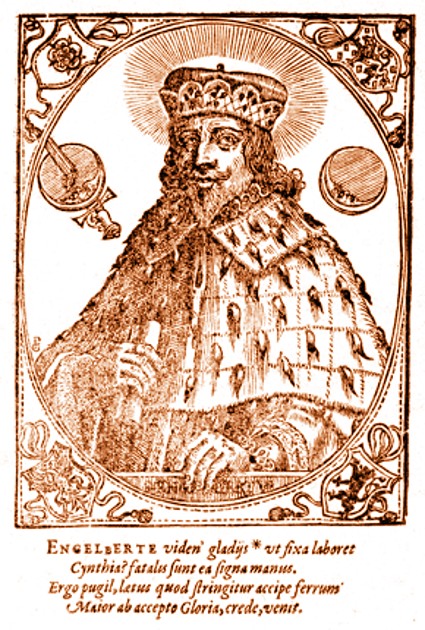
In art, Engelbert is
depicted in archiepiscopal vestments with a crozier in one hand and an upraised
sword, piercing a crescent moon, in the other (White).
SOURCE : http://www.saintpatrickdc.org/ss/1107.shtml

Patrokli-Dom in
Soest
St. Engelbert of Cologne
Archbishop of
that city (1216-1225); b. at Berg, about 1185; d. near Schwelm, 7
November, 1225. His father was Engelbert, Count of Berg, his
mother, Margaret, daughter of the Count of Gelderland. He studied at
the cathedral school of Cologne and
while still a boy was, according to an abuse of that time, made provost of
the churches of St. George and St. Severin at Cologne,
and of St. Mary's at Aachen.
In 1199 he was elected provost of
the cathedral at Cologne.
He led a worldly life and in the conflict between Archbishops Adolf
and Bruno sided with his cousin Adolf, and waged war for
him. He was in consequence excommunicated by
the pope together
with his cousin and deposed in 1206. After his submission he was
reinstated in 1208 and, to atone for his sin,
joined the crusade against
the Albigenses in
1212. On 29 Feb., 1216, the chapter of the cathedral elected him archbishop by
a unanimous vote. In appearance he was tall and handsome. He possessed a
penetrating mind and keen discernment, was kind and condescending
and loved justice and
peace, but he was also ambitious and self willed. His archiepiscopal
see had passed through severe struggles and suffered heavily, and he
worked strenuously to repair the damage and to restore order. He took care of
its possessions and revenues and was on that account
compelled to resort to arms. He defeated the Duke of Limburg and
the Count of Cleves and defended against them also the countship of Berg, which
he had inherited in 1218 on the death of his brother. He restrained the
impetuous citizens of Cologne, broke the stubbornness of the nobility, and
erected strongholds for the defence of his territories. He did not spare even
his own relations when guilty. In this way he gained
the universal veneration of his people and increased the number
of his vassals from year to year. Although in exterior bearing a sovereign
rather than a bishop,
for which he was blamed by pious persons,
he did not disregard his duties to
the Church,
but strove to uplift the religious
life of his people. The mendicant
orders which had been founded shortly before his accession,
settled in cologne during his administration, the Franciscans in
1219, the Dominicans in
1221. He was well disposed towards the monasteries and
insisted on strict religious observance in
them. Ecclesiastical affairs were regulated in provincial
synods. Blameless in his own life, he was a friend of
the clergy and
a helper of the poor.
In the affairs of the
empire Engelbert exerted a strong influence. Emperor
Frederick II, who had taken up his residence permanently in Sicily,
gave Germany to
his son, Henry VII, then still a minor, and in 1221
appointed Engelbert guardian of the king
and administrator of the empire. When the young king reached the age
of twelve he was crowned at Aachen,
8 May, 122, by Engelbert, who loved him
as his own son and honoured him
as his sovereign. He watched over the king's education and
governed the empire in his name, careful above all to secure peace both within
and without the realm. At the Diet of Nordhausen (24 Sept., 1223) he made an
important treaty with Denmark;
in the rupture between England and France he
sided with England and
broke off relations with France.
The poet Walther von der Vogelweide extols him as "Master of
sovereigns", and "True guardian of the king, thy exalted
traits do honour to
our emperor; chancellor whose like has never been".
Engelbert's devotion to duty,
and his obedience to the pope and
to the emperor were eventually the cause of his ruin. Many of the
nobility feared rather than loved him,
and he was obliged to
surround himself with a body-guard. The greatest danger threatened him from
among his relations. His cousin,
count Frederick of Isenberg,
the secular administrator for the nuns of
Essen, had grievously oppressed that abbey. Honorius
III and the emperor urged Engelbert to protect the nuns in
their rights. Frederick wished
to forestall the archbishop,
and his wife incited him to murder.
Even his two brothers,
the Bishops of Münster and Osnabrück, were suspected
as privy to the matter. Engelbert was warned, commended himself
to the protection of Divine
Providence, and amid tears made a confession of his whole life to
the Bishop of Minden.
On 7 Nov., 1225, as he was journeying from Soest to Schwelm to consecrate a church,
he was attacked on a dark evening by Frederick and his associates in
a narrow defile, was wounded in the thigh, torn from his horse and killed.
His body was covered with forty-seven wounds. It was placed on a dung-cart and
brought to cologne on the fourth day. King Henry wept bitterly over
the remains, put the murderer under the ban of the empire, and saw
him broken on the wheel a year later at Cologne. He died contrite,
having acknowledged and confessed his guilt. His associates also
perished miserably within a short time. The crime, moreover, was disastrous for
the German
Empire, for the young king had now lost his best adviser and soon met a
very sad fate, to the misfortune of his house and country.
Engelbert, by his martyrdom made
amends for his human weaknesses. His body was placed in the old cathedral of Cologne,
24 Feb., 1226, by Cardinal
Conrad von Urach. The latter also declared him a martyr;
a formal canonization did
not take place. In 1618 Archbishop Ferdinand ordered that
his feast be celebrated on 7 November and solemnly raised
his remains in 1622. In the martyrology Engelbert is
commemorated on 7 Nov., as a martyr.
A convent for nuns was
erected at the place of his death. By order of Engelbert's successor,
Henry I, Cæsarius
of Heisterbach, who possessed good information and a ready pen,
wrote in 1226 the life of the saint in
two books and added a third about his miracles (See Surius,
"Vitæ Sanctorum", 7 Nov.)
Sources
BÖHMER, Fontes rerum
Germanicarum (Stuttgart, 1854), II, in which the third book of the Vitæ is
omitted; FICKER, Engelbert d. hl. Erzbischof (Cologne, 1853);
WINKELMANN, Kaiser Friedr. II. In Jahrbücher d. deutsch. Gesch. (Leipzig,
1889), I.
Meier, Gabriel. "St.
Engelbert of Cologne." The Catholic Encyclopedia. Vol. 5. New York: Robert
Appleton Company, 1909. 7 Nov. 2016
<http://www.newadvent.org/cathen/05429c.htm>.
Transcription. This
article was transcribed for New Advent by Theodore Rego.
Ecclesiastical
approbation. Nihil Obstat. May 1, 1909. Remy Lafort, Censor. Imprimatur. +John
M. Farley, Archbishop of New York.
Copyright © 2026 by New Advent LLC.
Dedicated to the Immaculate Heart of Mary.
SOURCE : http://www.newadvent.org/cathen/05429c.htm

Gedenkstätte an der Stelle des 1812 aufgelösten Klosters in Gevelsberg
ENGELBERT I OF COLOGNE,
ST.
Archbishop; b. c. 1185;
d. Schwelm, near Gevelsberg, Germany, Nov. 7, 1225. He was a younger son of
Engelbert, count of Berg, and because of a medieval abuse whereby even children
could receive ecclesiastical benefices, he became provost of St. George and St.
Severinus in Cologne and of St. Mary's in Aachen in 1198, and of Cologne
Cathedral on April 9, 1203. He was excommunicated and deposed by innocent iii
in 1206 for supporting Philip of Swabia (d. 1208) against otto iv but was
restored in 1208, and by way of penance he participated in the crusade against
the albigenses in 1212. His efforts to settle the disputed episcopal succession
in Cologne resulted in his own consecration as bishop on Sept. 24, 1217, and he
received the pallium on April 24, 1218. In 1220 he was appointed administrator
of Germany and guardian of the young Henry, later henry vii, the son of
frederick ii, whom he had supported against Otto
IV. As an administrator he struggled indefatigably to establish peace in
Germany and in Berg, of which he had become count (1218) upon the death of his
brother. As bishop, he was pious and charitable but unpopular because of his
zeal for strict monastic discipline and administrative justice. He was murdered
by his cousin Frederick of Isenberg, whom he had tried to restrain from
injustice toward the nuns of Essen. Though he was never formally canonized, his
cult was established on Nov. 7, 1617, when his name was added to the Roman
martyrology. His relics are in the cathedrals of Cologne and Altenberg. His
vita, written in 1226 by caesarius of heisterbach, still has historical value.
Feast: Nov. 7.
Bibliography: Vita
by Caesarius of Heisterbach in Acta Sanctorum Nov. 3:644–681, tr.
as Leben, Leiden und Wunder des Heiligen Erzbischofs Engelbert von Köln, ed.
and tr. K. Langosch (Weimar 1955). R. Knipping, Die Regesten der Erzbischöfe
von Köln im Mittelalter, 4 v. (Bonn 1901–15) 3.1:26–88. H. Foerster, Engelbert
von Berg der Heilige (Elberfeld 1925). W. Kleist, Der Tod des
Erzbischofs Engelbert von Köln (Diss. Berlin 1918). J. Dubois, Catholicisme 4:199–200.
[M. F. McCarthy]
New Catholic Encyclopedia

Burg Thurant in Alken bei Koblenz
Ruine der Burg Fürstenberg in Oberdiebach

Engelbert Saint
Engelbert Saint,
archbishop of Cologne, was a son of count Engelbert I of Berg-Gelderi, and was
born in 1185. When he was twenty-two years old the diocese of Munster was
offered to him, but he declined it on the ground of youth and inexperience. In
1215 he was elected archbishop of Cologne. With great energy he reorganized the
electorate, which, under the administration of his predecessors, had become
quite disordered. He extinguished its debt, recovered those portions of its
territory which had been lost, and acquired new ones. When the emperor
Friedrich II was called to Italy, Engelbert was appointed head of the regency
to which was intrusted the administration of the empire. As archbishop,
Engelbert made the utmost endeavors to reform the corrupt habits of the clergy,
and to repel the interference of the nobility in ecclesiastical affairs. The
rigor with which he carried through his principles made him many enemies, and
on November 7, 1225, he was surprised and assassinated at Gevelsberg by his
nephew, count Friedrich von Isenburg. The murderer was captured and broken on
the wheel; the bishops of Munster and Osnabruck, who were charged with
complicity, were excommunicated; and Engelbert, on account of his zeal for
enlarging the power of the Church, was enrolled in the number of saints. A life
of Engelbert, by Caesar of Heisterbach (q.v.), was, in 1630, edited by
Gelenius, with many learned remarks and additions (Vindex libertatis
ecclesiae et martyr St. Engelbertus, Coloni; 1630); see also Ficker, Engelbert
der Heilige, Cologne, 1853; Wetzer u. Welte, Kirchen- Lex. 3:590. SEE COLOGNE. (A.J.S.)
SOURCE : https://www.biblicalcyclopedia.com/E/engelbert-saint.html

Westfassade
des Domes in
Aachen Schloss
Burg

Westfassade
des Domes in
Aachen Schloss
Burg
Saint of the Day – 7 November – Saint Engelbert of Cologne (c 1185-1225)
Saint of the Day – 7
November – Saint Engelbert of Cologne (c 1185-1225) Archbishop Martyr, Count,
Guardian and Chancellor of the Empire on behalf of the young King, protector of
the Monasteries and religious Orders, Apostle of the poor. Born in .1185 at
Berg in modern Germany and died by being stabbed to death on the evening of 7
November 1225 near Schwelm, Germany, by a member of his own family.. Also known
as – Engelbert of Berg.
Engelbert, was born in
Berg around the year 1185 to Engelbert, Count of Berg and Margaret, daughter of
the Count of Gelderland. He studied at the Cathedral school of Cologne and,
while still a boy, was made administrator of the Churches of St George and St
Severin at Cologne and of St Mary’s at Aachen, as it was a common in the Church
at the time, to appoint the children of nobles to such positions.
In 1199, he was elected
administrator of the Cathedral at Cologne. He led a worldly life and in the
conflict between two Archbishops, Adolf and Bruno, he sided with his cousin
Adolf and waged war for him. Consequently, he was excommunicated by the Pope
along with his cousin. After his submission, he was reinstated in 1208 and, to
atone for his sin, joined the Crusade against the Albigenses in 1212. On 29
February 1216, the chapter of the Cathedral elected him Archbishop by a
unanimous vote.
The mendicant orders of
the Franciscans and the Dominicans, settled in his realm while he was
Archbishop. He was well disposed towards the Monasteries and insisted on strict
religious observance in them. Ecclesiastical affairs were regulated in
provincial synods. He was considered a friend of the clergy and a helper of the
poor.
Engelbert exerted a
strong influence in the affairs of the Empire. Emperor Frederick II, who had
taken up his residence permanently in Sicily, gave Germany to his son, Henry
VII, then still a minor and in 1221 appointed Engelbert Guardian of the King
and administrator of the Empire. When the young King reached the age of twelve,
he was crowned at Aachen by Engelbert, who loved him as his own son and
honoured him as his sovereign. Engelbert watched over the young King’s
education and governed the Empire in his name, careful to secure peace, both
within and without of the realm.
Engelbert’s devotion to
duty, and his obedience to the Pope and to the Emperor, were eventually the
cause of his ruin. Many of the nobility feared, rather than loved him and he
was obliged to surround himself with bodyguards. The greatest danger came from his
relatives who were jealous of his position.
His cousin, Count
Frederick of Isenberg, the secular administrator for the Nuns of Essen, had
grievously oppressed that Abbey. Pope Honorius III and the Emperor, urged
Engelbert to protect the Nuns and their rights. Frederick wished to forestall
the Archbishop and his wife incited him to murder. On 7 November 1225, as he
was journeying from Soest to Schwelm to Consecrate a Church, Engelbert was
attacked on a dark evening by Frederick and his associates, was wounded in the
thigh, torn from his horse and killed. His body was covered with forty-seven
wounds. It was placed on a dung-cart and brought to Cologne four days later.
King Henry wept bitterly over the remains, put Frederick under the ban of the
Empire and saw him broken on the wheel a year later at Cologne. Frederick died
contrite, having acknowledged and confessed his guilt.
Engelbert’s body was
placed in the old Cathedral of Cologne on 24 February 1226, by Cardinal Conrad
von Urach, the Papal Legate. The latter also declared him a Martyr, although a
formal canonisation did not take place. In the Martyrology, Engelbert is
commemorated on 7 November as a Martyr. and Saint. A Convent for Nuns was
erected at the place of his death.
Walther von der Vogelweide, Poet, writing about Engelbert
Author: AnaStpaul
Passionate Catholic.
Being a Catholic is a way of life - a love affair "Religion must be like
the air we breathe..."- St John Bosco Prayer is what the world needs
combined with the example of our lives which testify to the Light of Christ.
This site, which is now using the Traditional Calendar, will mainly concentrate
on Daily Prayers, Novenas and the Memorials and Feast Days of our friends in
Heaven, the Saints who went before us and the great blessings the Church
provides in our Catholic Monthly Devotions. This Site is placed under the
Patronage of my many favourite Saints and especially, St Paul. "For the
Saints are sent to us by God as so many sermons. We do not use them, it is they
who move us and lead us, to where we had not expected to go.” Charles Cardinal
Journet (1891-1975) This site adheres to the pre-Vatican II Catholic Church and
all her teachings. . PLEASE ADVISE ME OF ANY GLARING TYPOS etc - In June 2021 I
lost 100% sight in my left eye and sometimes miss errors. Thank you and I pray
all those who visit here will be abundantly blessed. Pax et bonum! View All Posts
SOURCE : https://anastpaul.com/2021/11/07/saint-of-the-day-7-november-saint-engelbert-of-cologne-c-1185-1225/

Liegefigur
aus Marmor im Dom in
Köln
Saint Engelbert
Century: 12th &
13th Century
Patronage: -
Feast Day: November
7th
St. Engelbert was born in
1185 in Schloss Burg. He was educated at the Cathedral School in
Cologne. As early as the age of twelve, he acquired a various number of
provostships, in St. Severin in Cologne, Aachen, Deventer, and Zutphen. His
cousin was Archbishop of Cologne, and he supported him in the interests of
Philip of Swabia against Otto of Brunswick, and was excommunicated by Pope
Innocent III. On his submission in 1208, he was pardoned, and in 1212, as
an act of penance for his earlier rebellion, he took part in the Albigensian
Crusade. He gave his allegiance to the future Frederick II, Holy Roman Emperor.
St. Engelbert was elected
Archbishop of Cologne, in February 1216, and remained in that office until his
death. He trusted the Holy Roman Emperor Frederick II, becoming imperial
administrator and guardian of the Emperor’s son Henry VII of Germany, whom was
crowned at the age of twelve. He remained his tutor until his
death. Many political forces threatened the property of the Archdiocese, and
St. Engelbert did his best to protect it. He also defended his personal
inheritance that was under attack. He granted municipal rights to many
places, and during his career as archbishop of Cologne, he continued to fight
for the re-establishment and security of the archdiocese both as an
ecclesiastical authority and also as a secular territory. It was said of
him that despite his personal piety he was more of a monarch than a
churchman. He was also a zealous champion of the Religious throughout his
archdiocese.
He earned the respect and
affection of his subjects through his devotion to justice and his energy in
maintaining law, and took great pains to ensure the well being of the religious
within his authority. His effectiveness in achieving his goals by all
means necessary, including military action, his allegiance to the Pope and the
Emperor, and his uncompromising defense of the law and the rights of religious
persons and bodies, brought him into conflict with the nobility, including his
own family, and this lead to his death.
His cousin was Count
Frederick of Isenberg, and was abusing his position by defrauding the Nuns of
Essen Abbey. St. Engelbert was determined to protect their interests, and
sought to bring Frederick to justice. On November 7, 1225, as they
returned together from a judicial hearing, he was killed, believed, by
Frederick. It seems probable that behind the attack, he was to be taken
captive rather than being killed, and was a major threat to a whole group of
nobility. His body was taken to Cologne on a dung-cart, and when
examined, was found to have forty seven wounds.
Practical Take Away
St. Engelbert was the
Archbishop of Cologne. He worked his entire life in this position and
fought diligently to keep the archdiocese assets together. He worked hard
to protect the lives and rights of Religious in his care, and when defending
those very rights, was killed by his cousin Count Frederick who was abusing his
power in this area
SOURCE : http://www.newmanconnection.com/faith/saint/saint-engelbert

Sant' Engelberto di
Colonia Vescovo
Festa: 7 novembre
1185 - Gevelsberg,
Westfalia, 7 novembre 1225
Martirologio
Romano: A Colonia in Lotaringia, in Germania, sant’Engelberto, vescovo,
che, sorpreso per strada da alcuni sicari e crudelmente percosso, morì per aver
difeso la giustizia e la libertà della Chiesa.
Nato intorno al 1185 dal conte Engelberto di Berg e da Margherita di Gueldra, Engelberto fu avviato giovanissimo alla carriera ecclesiastica. Era infatti ancora un ragazzo quando venne nominato prevosto di san Giorgio e di san Severino di Colonia (1199) e canonico di santa Maria in Aquisgrana, ottenendo successivamente la prevostura della stessa cattedrale coloniese (1203). A causa delle violenze commesse durante la lotta per l’impero tra il partito ghibellino, rappresentato da Filippo di Svevia, ed il partito guelfo, capeggiato da Ottone di Brunswick, Engelberto fu deposto dalla sua carica e scomunicato nel 1206 da Innocenzo III, unitamente al cugino Adolfo I arcivescovo di Colonia, al cui fianco si era Schierato contro Ottone, favorito dal papa. Compiuto tuttavia atto di sottomissione nel 1208, rientrò in possesso di tutte le sue antiche prebende, ma per penitenza prese parte nel 1212, insieme con il fratello ed alcuni altri nobili tedeschi, alla crociata die già da qualche anno si stava combattendo contro gli Albigesi. Aderì quindi al partito di Federico II ed il 29 febbraio 1216 fu eletto dal capitolo cattedrale arcivescovo di Colonia, ma solo il 24 settembre 1217 ricevette la consacrazione episcopale, dovendo attendere ancora un altro anno prima di ottenere il pallio.
Per l’azione svolta in favore della sua diocesi, ch'egli trovò profondamente sconvolta a causa delle lunghe lotte politiche, e dove non tardò a ristabilire l’ordine e la sicurezza pubblica, provvedendo inoltre a riformare i costumi e la disciplina ecclesiastica, Engelberto si rivelò uno dei migliori arcivescovi che abbiano governato la sede di Colonia. Oltre che ottimo presule, seppe egli dimostrarsi anche un valente principe, riuscendo a mantenere tranquillo il suo vasto territorio, favorendo il bene pubblico, difendendo i diritti della Chiesa contro le pretese dei nobili, proteggendo il popolo e sovvenendo i poveri, nonché adoperandosi a fare di Colonia un forte stato mercè opere di difesa ed alleanze interne ed esterne. Assunta nel 1218 la contea paterna di Berg, in seguito alla morte del fratello Adolfo sotto Damietta, e dopo aver costretto il pretendente Enrico di Limburg a rinunziare alla successione, Engelberto divenne uno dei più potenti principi tedeschi, tanto da essere scelto nel 1220 da Federico II come reggente della Germania e tutore del figlio primogenito Enrico, da lui stesso poi incoronato re di Germania in Aquisgrana nel 1222.
La sua azione politica e la sua strenua difesa dei diritti della Chiesa non mancarono di creargli dei nemici, specie tra i nobili, i più accaniti dei quali si mostrarono i tonti di Limburg e di Clèves. Nel 1225, su pressione di Onorio III e di Federico II, dovette intervenire energicamente nella questione della protettoria ereditaria del nobile monastero di Essen, la cui badessa aveva accusato il protettore Federico di Isenburg, figlio di un lontano cugino dello stesso arcivescovo, di atti repressivi e di violenza nei confronti del monastero. Assalito mentre era in cammino per Schwelm, dove si recava a consacrare una chiesa, fu ucciso per vendetta da Federico di Isenburg nelle vicinanze di Gevelsberg (Westfalia), la sera del 7 novembre 1225.
Il cardinale legato Corrado di Porto, che ne celebrò solennemente le esequie
nella cattedrale di Colonia, non esitò a definire Engelberto «un martire ed un
secondo Thomas Becket», il santo arcivescovo di Canterbury assassinato nel 1170
mentre stava celebrando gli uffici divini. Come martire Engelberto venne sempre
considerato dall’opinione popolare, anche se non fu subito venerato come santo,
dovendo trascorrere ancora molto tempo prima della sua canonizzazione. Nel 1583
il nome di Engelberto fu inserito nel Martirologio Romano, ed egli cominciò ad
essere onorato con Ufficio proprio nel 1657, allorché l’arcivescovo di Colonia,
Ferdinando di Baviera fissò la celebrazione della sua festa al 7 novembre,
com’è ancor oggi.
Autore: Niccolò Del Re
SOURCE : https://www.santiebeati.it/dettaglio/76425

Glasfenster
in der Engelbert geweihten katholischen Pfarrkirche in
Gevelsberg Patrokli-Dom in
Soest
Engelbert I. von Köln
als Graf von Berg:
Engelbert II.
Gedenktag katholisch: 7. November
nicht gebotener Gedenktag im Erzbistum Köln und im Bistum Essen
Name bedeutet: wie
ein Engel glänzend (althochdt.)
Erzbischof von Köln, Märtyrer
* 1185/1186 in Burg an der Wupper, heute Stadtteil von Solingen in Nordrhein-Westfalen
† 7. November 1225 in Gevelsberg bei
Hagen in Nordrhein-Westfalen
Engelbert war der Sohn
des Grafen Engelbert I. von Berg und
der Margarete von Geldern,
Großneffe des Erzbischofs Bruno II. von Köln, Neffe der Erzbischöfe Friedrich
II. und Bruno III. von Köln sowie Vetter des Erzbischofs Adolf I. v. Köln. Er
wurde an der Domschule erzogen
und schon im Alter von dreizehn Jahren mit kirchlichen Pfründen bedacht als
Propst des Georgstiftes in
Köln. Ein Jahr später wurde er zum Propst am Dom gewählt
und 1203 in dieses Amt eingesetzt, 1210 wurde er Propst von St.
Severin in Köln. Er war weniger dem geistlichen Amt zugetan als der
praktischen Politik. In den Auseinandersetzungen um die Königsherrschaft
zwischen Philipp von Schwaben und
König Otto IV. wurde er wegen seiner Gefolgschaft zu seinem Vetter, Erzbischof
Adolf I., einem Anhänger der Staufer, der 1205 von Papst Innozenz III. gebannt
und abgesetzt wurde, 1206 ebenfalls seines Amtes enthoben und sogar
exkommuniziert.
Engelbert tat - wie Adolf
I. - Buße, unterwarf sich dem Papst, wurde 1208 wieder in die Gemeinschaft der
Kirche aufgenommen und beteiligte sich 1212 am Kreuzzug gegen
die Albigenser.
Um 1214 wurde er Propst am Marienmünster - dem heutigen Dom -
in Aachen und nach Adolf I.' Rücktritt 1216 einstimmig zum Erzbischof von Köln gewählt
und 1217 geweiht. Seine politischen und verwaltungstechnischen Erfahrungen
nutzte er zum Aufbau und zur Reorganistion des durch die Thronstreitigkeiten
zerrütteten und bei italienischen Banken hochverschuldeten Bistums. Fehden
mit Kleve und
den Grafen von Limburg - dem heutigen Limbourg -
führte er erfolgreich; gegen letztere schloss er 1217 ein Bündnis mit Brabant und
1223 mit Namur.
Im Süden dämmte Engelbert
die Expansionspläne der Limburger ein,
indem er die Burg
Thurant in Alken bei Koblenz eroberte, die Burg
Fürstenberg in Oberdiebach bei Bacharach erbauen ließ und Rechte an
weiteren Festungen erwarb. In Westfalen wehrte
er den Einfluss von Paderborn und
der Grafen von Arnsberg ab
durch gezielte Burgen- und Städtepolitik. In Köln nutzte er Streitigkeiten
zwischen Schöffen und Zünften aus, um die erzbischöfliche Herrschaft über die
Stadt wiederherzustellen. Nach dem Tod seines Bruders, der das Amt des Grafen
von Berg innehatte,
übernahm Engelbert auch dort die Herrschaft und ließ seinen Geburtsort ab 1218
zur weitläufigen und wehrhaften Hofburg ausbauen.
Besonders bemüht war
Engelbert um die Einführung der neuen Bettelorden in seiner Diözese, er
rief Dominikaner und Franziskaner nach Köln,
begünstigte die Zisterzienserorden und
trat gegen jede Bedrückung durch die Klostervögte auf. Durch Gesetzgebung,
Rechtsprechungs- und Verwaltungsreformen sowie Provinzialsynoden festigte
er die innere Verfassung seines Bistums, er förderte den Einfluss des
Domkapitels und regte den Neubau des Kölner Domes an.
Wichtiger als die
geistliche Orientierung war Engelbert aber die Territorialpolitik für sein
Erzbistum. Als Reichsverweser für König Friedrich II. übte er ab 1220 die
Herrschaft in verschiedenen Gebieten aus, erzog den jungen Heinrich VII. und
krönte ihn 1222 in Aachen zum
König. 1224 war er bemüht, eine Annäherung des Reiches an Frankreich zu
verhindern und stattdessen ein Bündnis mit England durchzusetzen. Streitigkeiten
gab es um Machtansprüche rheinischer Grafen und von deren Verwandten, die
Bischöfe der benachbarten Diözesen Münster und Osnabrück waren.
In der Auseinandersetzung
um das Stift - es stand an der Stelle des heutigen Domes -
in Essen, wollte Engelbert den Stiftsvogt, seinen Vetter, in Isenberg zur
Rechenschaft ziehen, aber dieser wollte Engelbert gefangen nehmen und ließ ihn
durch Beauftragte in einem Hohlweg nahe
Gevelsberg überfallen; als Engelbert sich zur Wehr setzte, wurde er erschlagen,
nachdem er, von Todesahnungen erfüllt, vorher im Patrokli-Dom in
Soest gebeichtet hatte.
1226 wurde Engelbert
feierlich im Dom in
Köln beigesetzt und vom Kardinallegaten Konrad von Porto zum Märtyrer erklärt.
Ein barocker Schrein,
eine sehr bedeutende Goldarbeit, bewahrt Engelberts Gebeine, er
wird in der Schatzkammer des Kölner
Domes gezeigt. Seine Herzreliquie wird
im Altenberger
Dom, der Kirche der 1803 säkularisierten Zisterzienser-Abtei
Altenberg, bewahrt. Cäsarius
von Heisterbach verfasste im Auftrag von Engelberts Nachfolger
Heinrich von Müllenark die Lebensgeschichte, die Grundlage für die
Heiligsprechung sein sollte, die aber nie stattgefunden hat; Cäsar verglich ihn
darin mit Thomas
Becket.
An Engelberts Todesort
wurde um 1233 das Kloster
Gevelsberg der Zisterzienser gegründet,
das ein Zentrum der Verehrung Engelberts wurde. Die Verehrung in Köln ist
erstmals 1618 nachgewiesen. In Gevelsberg ist Engelbert die katholische Pfarrkirche geweiht.
Kanonisation: Ein
Verfahren zur Heiligsprechung war eingeleitet, kam aber nie zum Abschluss.
Das Martyrologium
Romanum verzeichnet Engelbert gleichwohl als heilig.
Die Innenräume des Schlosses Burg sind täglich von 10 Uhr bis 18 Uhr - montags erst ab 13 Uhr, im Winter nur bis 16 Uhr - zur Besichtigung geöffnet, der Eintritt beträgt 5 €. (2017)
Der Dom in Aachen ist täglich von 11 Uhr bis 18 Uhr geöffnet. (2021)
Der Patrokli-Dom in
Soest ist täglich von 10 Uhr bis 17 Uhr geöffnet. (2024)
Seite
zum Ausdruck optimiertUnser Reise-Blog:
Reisen zu den Orten, an denen die
Heiligen lebten und verehrt werden.
Empfehlung an
Freunde senden
Artikel
kommentieren / Fehler melden
Fragen? -
unsere FAQs antworten!
Impressum - Datenschutzerklärung
Schauen Sie sich zufällige Biografien an:
Gerontius
Phokas
von Sinope
Zeno
Söhne
Autor: Joachim
Schäfer - zuletzt aktualisiert am 11.09.2025
Quellen:
• Hiltgard L. Keller: Reclams Lexikon der Heiligen und der biblischen Gestalten. Reclam, Ditzingen 1984
• Lexikon für Theologie und Kirche, begr. von Michael Buchberger. Hrsg. von Walter Kasper, 3., völlig neu bearb. Aufl., Bd. 3. Herder, Freiburg im Breisgau 1995
• Charlotte Bretscher-Gisinger, Thomas Meier (Hg.): Lexikon des Mittelalters. CD-ROM-Ausgabe J.B. Metzler, Stuttgart / Weimar 2000
• http://altenbergerdom.de/ad/gebaeuderundgang/popups/pop_028.html
• Joachim Donsbach, nach Justus Hashagen, Politische und Religionsgeschichte
des Bergischen Landes, in: Bergische Geschichte, hrsg. vom Bergischen Geschichtsverein,
Remscheid-Lennep 1958, S. 70f, E-Mail vom 7. November 2017
korrekt zitieren: Joachim Schäfer: Artikel Engelbert I. von Köln, aus dem Ökumenischen Heiligenlexikon - https://www.heiligenlexikon.de/BiographienE/Engelbert_von_Koeln.html, abgerufen am 21. 6. 2026
Die Deutsche Nationalbibliothek verzeichnet das Ökumenische
Heiligenlexikon in der Deutschen Nationalbibliografie; detaillierte
bibliografische Daten sind im Internet über https://d-nb.info/1175439177 und https://d-nb.info/969828497 abrufbar.
SOURCE : https://www.heiligenlexikon.de/BiographienE/Engelbert_von_Koeln.html


Claus
Meyer: Der Überfall auf Erzbischof Engelbert I., 1900, Gemälde im Rittersaal
von Schloss
Burg, 1900
Engelbert I. von Berg
Erzbischof von Köln
(1216-1225)
1185-7.11.1225 ermordet
bei Schwelm
Begraben: Dom zu Köln
Jüngerer Sohn des Grafen
Engelbert I. von Berg und der Margarete von Geldern, Tochter von
Graf Heinrich II.
Lexikon des Mittelalters:
Band III Seite
Engelbert I. von Berg, Erzbischof von Köln 1216-1225
* 1185/86, + 7. November 1225 ermordet
bei Schwelm
Begraben: Dom zu Köln
Sohn des Grafen
Engelbert von Berg und seiner Gemahlin Margarethe von Geldern,
Großneffe des Erzbischofs Bruno II. von Köln, Neffe der Erzbischöfe
Friedrich II. und Bruno III. von Köln sowie Vetter des Erzbischofs
Adolf I. von Köln.
Als nachgeborener Sohn
schon früh für die geistliche Laufbahn bestimmt und an der Kölner Domschule
erzogen, erscheint Engelbert bereits seit Anfang 1198 als Propst von
St. Georg in Köln, wurde 1199 ebenda in zwiespältiger Wahl zum Dompropst
erhoben und übte das Amt seit 1203 aus, begegnet seit 1210 als Propst von St.
Severin in Köln und wurde zwischen 1213-1215 auch zum Propst von St. Marien in
Aachen und zu unbekannter Zeit zum Propst von Deventer und Zutphen ernannt.
Seine Wahl zum Bischof von Münster im Jahre 1203 lehnte er angeblich auf Grund
seiner "adolescatia" ab. In den Wirren des deutschen Thronstreits
schloß er sich eng an Erzbischof
Adolf I. an, trat mit diesem auf die staufische Seite über,
wurde 1206 auf Geheiß von Papst Innozenz III. gebannt und abgesetzt. Als Adolf
I. sich 1208 dem Papst unterwarf, wurde auch Engelbert begnadigt,
der jetzt zu OTTO IV. neigte, sich 1212 am Albingenserkreuzzug
beteiligte und erst nach der Schlacht von Bouvines 1214 endgültig Partei für
die STAUFER ergriff. Nach dem Rücktritt Adolfs
I. und dessen Gegenspieler Theoderich I. von Hengebach fiel die Wahl
der Kölner Prioren am 29. Februar 1216 einstimmig auf Engelbert von Berg,
der am 24. September 1217 in Köln die Weihe empfing. Hauptaufgabe des neuen
Erzbischofs war die Konsolidierung der im Gefolge des Thronstreits
erschütterten kölnischen Herzogsgewalt, die vor allem durch die
territorialpolitischen Ziele des Herzogs Walram III. von Limburg bedroht war,
dessen Sohn Heinrich IV. mit Irmgard,
der Erbtochter Adolfs
III. von Berg (+ 1218), verheiratet war. In zwei Fehden konnte Engelbert Limburg
und das mit diesem verbündete Kleve besiegen, bevor er im Jahre 1220 mit beiden
Gegnern für ihn günstige Friedensverträge schloß, wobei die Ansprüche der
Limburger auf die Grafschaft Berg mit einer Jahresrente abgefunden
wurden. Durch den Erwerb von Vogteirechten, Befestigungsbauten (Burg Valentia =
Velandshus bei Herzogenrath) und Bündnisse mit Brabant (1217) und Namur (1223)
suchte er die Macht der Limburger einzudämmen, die wegen ihrer Verbindung zu
Luxemburg und einer möglichen Koalition mit dem Pfalzgrafen auch Maßnahmen im
Süden des Erzstifts erforderlich machte, wo Engelbert die Burg Thuron
an der Mosel eroberte, die Burg Fürstenberg bei Bacgarach erbaute, sich die
Schmidtburg bei Kirn auftragen ließ und Rechte an den Burgen Vianden, Hamm,
Neuerburg und Manderscheid erwarb. Daneben suchte Engelbert I. in
Westfalen durch gezielte Burgen- und Städtepolitik (Erwerb von Mitrechten an
zahlreichen Neugründungen) den Einfluß Paderborns und der Grafen von Arnsberg
abzuwehren. In Köln nutzte er Streitigkeiten zwischen Schöffen und Zünften dazu
aus, die erzbischöfliche Stadtherrschaft wiederherzustellen. Seine Ernennung
zum provisor des Reiches und Vormund HEINRICHS (VII.) im Jahre 1220,
durch die FRIEDRICH II. mittels Engelberts Autorität die westlichen
Reichsgebiete in seine Vertretung einbinden wollte, bot seiner Herzogs- und
Territorialpolitik zusätzliche Möglichkeiten, darf aber nicht überschätzt
werden. 1222 krönte er HEINRICH (VII.) in Aachen, scheiterte aber mit
seinem Plan einer englisch-staufischen Doppelhochzeit am Widerstand des
Kaisers. Seinen geistlichen Pflichten kam er hauptsächlich in Gesetzgebung,
Rechtsprechung (Provinzialsynoden) uns Verwaltung nach. Er begünstigte die
Zisterzienser, ließ Franziskaner und Dominikaner in Köln zu, förderte den
Einfluß des Domkapitels und regte den (späteren) Neubau des Kölner Doms an.
Trotz seiner Frömmigkeit überwog in Engelbert I. von Berg der
Territorialpolitiker die geistliche Persönlichkeit. Dies zeigt sein vorzeitiger
Tod: als er den Sohn seines Vetters, Friedrich
von Isenburg, wegen dessen Übergriffe als Vogt des Stiftes Essen zur
Rechenschaft ziehen wollte, geriet er bei Gevelsberg in einem Hinterhalt und
wurde im Zuge seiner beabsichtigten Gefangennahme getötet. Die Komplizen des ISENBURGERS,
die im Bund mit dem Herzog von Limburg standen, zählten alle zu den
territorialpolitischen Gegnern Engelberts, dessen Nachfolger Heinrich von
Müllenark, dem Zisterzienser Caesarius von Heisterbach den Auftrag gab, eine
Vita Engelberts zu verfassen, die seine Heiligsprechung vorbereiten sollte.
Warum es nicht dazu kam, ist unbekannt. Erst seit 1618 wird Engelberts Fest
im Erzbistum Köln gefeiert.
Quellen:
R. Knipping, Die Reg. der Ebf.e v. Köln im MA III, 1., 1909, 138-569; zur Vita
s. Engelberti vgl. Caesarius v. Heisterbach
Literatur:
ADB VI, 121ff. - Ndb IV, 508f. - E. Wisplinghoff, E. I. v. Berg (Rhein. Lebensbilder I, 1961), 30-48 - M. Groten, Priorenkolleg und Domkapitel v. Köln im Hohen MA, 1980, 160f, 244 - Th. R. Kraus, Die Entstehung der Landesherrschaft der Gf.en v. Berg bis zum Jahre 1225, 1980, 47f. u. ö. - O. Engels (Rhein. Gesch. I, 3, 1983) 247-254.
Seine Familie verschaffte ihm entgegen den kanonischen Regeln schon 1199 das
einflußreiche Amt des Kölner Dompropstes. Im ausbrechenden staufisch-welfischen Thronstreit
wechselte Engelbert wie die meisten deutschen Fürsten mehrfach die
Partei, schloß sich jedoch nach 1212 mehr und mehr FRIEDRICH II. an.
Am 29.2.1216 zum Erzbischof von Köln gewählt, bemühte sich Engelbert rigoros um
Wiedergewinnung der während der Thronwirren verlorenen Kölner Machtpositionen,
um Konsolidierung der zerrütteten Finanzen und um den Ausbau der
erzbischöflichen Territorialherrschaft. 1220 berief ihn FRIEDRICH II. zum
Vormund seines zum König gewählten Sohnes HEINRICH (VII.) und zum
Gubernator des Regnum Teutonicum. In dieser Funktion bekämpfte Engelbert erfolgreich
das Fehdewesen, vertrat aber gegenüber Ministerialen und Städten die Interessen
der nach Territorialherrschaft strebenden Fürsten. Seine außenpolitischen
Pläne, das traditionelle Bündnis der STAUFER mit den KAPETINGERN durch
eine Koalition mit den PLANTAGENETS zu ersetzen, die vor allem den
wirtschaftlichen Beziehungen Kölns und des Niederrheingebietes zu England
gedient hätte, scheiterte an der imperialen Politik des Kaisers. Konkurrenten
des Erzbischofs bei seiner Territorialpolitik am Niederrhein ermordeten ihn am
Gevelsberg bei Schwelm in Westfalen.
Literatur:
Masson Georgina: Friedrich II. von Hohenstaufen, Rowohlt Taschenbuch Verlag
Reinbeck bei Hamburg 1991, Seite 113,255,256 -
Stürner, Wolfgang: Friedrich II. Teil 1: Die Königsherrschaft in Sizilien und
Deutschland 1194-1220, Primus-Verlag Darmstadt 1997, Seite 188,218,223,239
- Thorau, Peter: Jahrbücher des Deutschen Reichs unter König Heinrich
(VII.) Teil I, Duncker & Humblot Berlin 1998, Seite 3
A,4,77,97A,98-101,103-105,108-113,115,118-121,126,130,133-148,160,181,183,186-
188, 199-201,205-207,210 A, 211-213,216,219,223-229,231-245, 248,250,252
A,253-255,258,263,265 A, 266-30 - Wies, Ernst W.: Friedrich II. von
Hohenstaufen. Messias oder Antichrist, Bechtle Esslingen 1998, Seite 100,181 -
07. November 1225
Der Reichsregent und Erzbischof Engelbert I. von Köln wird erschlagen : https://web.archive.org/web/20051110065524/http://nrw2000.de/mittelalter/engelbert.htm