

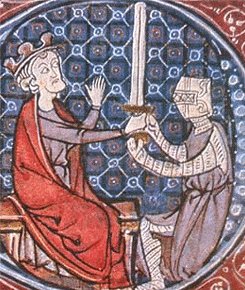
Detail
from the charter of Malcolm IV, King of Scotland to Kelso
Abbey showing an illustration of David I, King of Scotland, 1159, initial

Detail from the charter of Malcolm IV, King of Scotland to Kelso Abbey showing an illustration of David I, King of Scotland, 1159, initial
Also
known as
David I
11
January on some calendars
Profile
Youngest son of King Malcolm
III Canmore and Saint Margaret
of Scotland; brother of Saint Matilde
in whose court he
grew up and was educated. Prince of
Cumbria in 1107. Married.
Ascended to the throne of Scotland in 1124.
Fought in the border wars with England,
and in 1138 participated
in the armistice that halted the fighting. Devoting himself to the welfare of
his people, he re-organized the system of land ownership and implemented both
new laws and a new legal system. Worked to bring the faithful in Scotland closer
to the Vatican, founded convents and monasteries,
supported monastic work and the organization of five new dioceses.
Spiritual student of Saint Aelredo
of Rievaulx.
Born
24 May 1183 in
Carlisle, Scotland of
natural causes
buried in
Dunfermline Abbey
Additional
Information
Saints
of the Day, by Katherine Rabenstein
books
Our Sunday Visitor’s Encyclopedia of Saints
other
sites in english
fonti
in italiano
nettsteder
i norsk
MLA
Citation
‘Saint David of
Scotland‘. CatholicSaints.Info. 22 September 2022. Web. 18 April 2026.
<https://catholicsaints.info/saint-david-of-scotland/>
SOURCE : https://catholicsaints.info/saint-david-of-scotland/

Steel engraving and enhancement of the obverse side of the Great Seal of David I, portraying David in the "Continental" fashion as the other-worldly maintainer of peace and defender of justice. The Pictorial History of Scotland from the Roman Invasion to the close of the Jacobite Rebellion. A.D. 79-1646, 2 vols, vol. i, (London, 1859), facing page 64
Sigillo di Davide I di Scozia, qui intitolato Rex Scottorum.

St. David I of Scotland
Feastday: May 24
Birth: ~1080
Death: 1153
David, the youngest son
of Scotland’s virtuous queen, (Saint) Margaret, succeeded his brother to the
Scottish throne in
1124. David’s friend, (Saint) Aelred, abbot of
the English monastery of Rievaulx, was later to recount David’s religious
devotion and his generosity to the poor. From his riches he also endowed the
founding of several dioceses and many monasteries. David was to express
profound remorse for an ill-conceived and ill-fated invasion of England he had
ordered on behalf of his niece. He also suffered the sorrow of the premature
death of his only son. On Friday, May 22, 1153, as David was nearing death, he
received the anointing
of the sick and Viaticum, after which he devoted himself to reciting
the Psalms with
those at his bedside. The next day, the king told those urging him to take a
rest from his devotions, “Let me rather think about the things of God, so that
my spirit may
set out strengthened on its journey from exile to home. When I stand before
God’s tremendous judgment seat, you will not
be able to answer for me or defend me.” He thus continued with his prayers.
David died at dawn on Sunday, May 24.
SOURCE : https://www.catholic.org/saints/saint.php?saint_id=5790

Image
of the seal of the Masonic Lodge St David, No.36, (Edinburgh, Scotland).
Saints
of the Day – David I, King of Scotland
Article
Born 1084; died at
Carlisle, Scotland, on May 24, 1153.
Saint David was the son
of King Malcolm III and Queen Saint Margaret of Scotland. He was sent to the
Norman court in England in 1093. In 1113, he married Matilda, the widow of the
earl of Northampton, thereby becoming earl himself, and added the title earl of
Cumbria when his brother Alexander I became king. He waged a long war against
King Stephen for the throne of England on behalf of his niece Matilda, but was defeated
at Standard in 1138.
As King of Scotland from
1124, he was much more successful, ruling with firmness, justice, and charity.
David established Norman law in Scotland, set up the office of chancellor, and
began the feudal court. He also learned the spirit of Cistercian monks from
Ailred of Rievaulx, who for a time was David’s steward. Scottish monasticism
began to flower from the start of David’s reign and countless almshouses,
leper-hospitals, and infirmaries were established.
The monasteries founded
under David’s patronage were superb architecturally as well as spiritually. The
king refounded Melrose Abbey on the main road from Edinburgh to the south, and
it remained one of the richest houses in Scotland. David also founded Jedburgh
Abbey in 1138, filling it was monks from Beauvais in France. At Dundrennan in
Dumfries and Galloway he founded in 1142 a splendid abbey and staffed it with
Cistercians from Rievaulx. The monks were so well managed that they even
started their own shipping line and traded from the Solway Firth less than two
miles away.
David has never formally
been canonized, though he is listed on both Protestant and Catholic calendars
(Attwater, Bentley, Delaney).
MLA
Citation
Katherine I
Rabenstein. Saints of the Day, 1998. CatholicSaints.Info.
14 June 2020. Web. 18 April 2026.
<https://catholicsaints.info/saints-of-the-day-david-i-king-of-scotland/>
SOURCE : https://catholicsaints.info/saints-of-the-day-david-i-king-of-scotland/
St David of Scotland and
the Solemnity of the Translation of St Dominic
Celebrated on May
24th
St David of Scotland
Scotland's greatest king
was the sixth and youngest son of St Margaret of Scotland and Malcolm III, born
in 1085. He married Matilda, daughter of Waldef, the Anglo-Saxon Earl of
Northampton and Huntingdon which gave him a claim to the earldom
Northumberland.
For many years he waged a long and unsuccessful war against England, but after
being crowned king of Scotland in 1124, around the age of 40, he devoted his
life to peaceful activities and became known as a kind, just and liberal king.
Historians say he was
responsible for making Scotland into a modern nation, by reforming the legal
system and public administration and encouraging trade and the foundation of
towns. He also encouraged the Scottish church to establish a system of
dioceses. Under his rule many monasteries, hospitals and almshouses were
founded.
David prayed the Divine Office daily, received Communion each week and gave
generous alms to the poor - often in person as his mother had done. He died on
this day in 1153 and was buried at Dunfermline. His shrine was a popular place
of pilgrimage until the Reformation. One of the patron saints of Scotland, many
churches are named after him.
and the Solemnity of the
Translation of St Dominic
Today is also the Feast of the Translation of St Dominic, which is described
thus in the Dominican breviary: "In accordance with his wishes, St Dominic
was buried 'beneath the feet of his brethren' in the church of St Nicholas of
the Vineyards, Bologna. Many of the sick avowed that they had been healed of
their infirmities at his tomb; the brethren however were loath to recognize
these miracles and accept votive offerings. However, on 24 May 1233, at the
urging of Gregory IX and in the presence of Theodoric, archbishop of Ravenna
and papal legate, Dominic's body was moved to a marble sepulchre during the
celebration of a General Chapter at Bologna attended by Bl Jordan of Saxony and
many brethren. Immediately a certain marvellous odour came forth from his
sacred body, 'showing clearly to all how much the saint had truly been the
aroma of Christ."
SOURCE : https://www.indcatholicnews.com/saint/154

San
Davide di Scozia raffigurato su una delle vetrate della Cattedrale di
Nostra Signora dell'Assunzione, a Edimburgo.
San David I Re
di Scozia
Festa: 11 gennaio e 24 maggio
1084/5 - 24 maggio 1153
Re del regno di Scozia dal 1124 al 1153, fu un sovrano illuminato e pio, che si dedicò alla diffusione del cristianesimo, alla promozione della cultura e alla tutela dei poveri e degli oppressi. Nato nel 1084 da una famiglia nobile, David ricevette un'ottima educazione religiosa e culturale. Nel 1114 fu nominato arcivescovo di Saint Andrews, ma declinò l'incarico per dedicarsi alla vita monastica. Nel 1124, alla morte del fratello Alexander I, fu proclamato re di Scozia.
Durante il suo regno, David I promosse la diffusione del cristianesimo in
Scozia, fondando numerose chiese e monasteri. Incoraggiò anche la cultura,
promuovendo la costruzione di scuole e la traduzione di opere sacre in gaelico
scozzese. David I fu anche un sovrano pio e caritatevole. Si dedicò alla tutela
dei poveri e degli oppressi, promulgando leggi per la protezione dei loro
diritti. Fu inoltre un pacificatore, riuscendo a mantenere la pace nel suo
regno per gran parte del suo governo.
Morì nel 1153.
David nacque nel 1085, figlio minore dei sovrani Malcom III Canmore e Santa Margherita di Scozia. Restò orfano di entrambi all’età di soli otto anni, ma seppe poi comunque dimostrarsi all’altezza dei genitori. Fu allora ospitato presso la corte di sua sorella Santa Matilde, andata in sposa al re Enrico I d’Inghilterra, ove poté ricevere un’adeguata formazione. Quando nel 1107 ascese al trono di Scozia il fratello primogenito Alessandro, Davide assunse il titolo di principe di Cumbria e sposò un’omonima di sua sorella, figlia del patriota anglosassone Waldef, conte di Northampton e Huntingdon.
David I divenne re di Scozia nel 1124 e, nonostante non fosse ben fissato il confine tra i due stati, fu considerato un vicino abbastanza amichevole dagli inglesi. Durante il regno di Stefano d’Inghilterra imperversò però la guerra civile e David non poté esentarsi dall’entrare in campo. Conquistò dunque nel 1135 parecchi castelli di frontiera e negli anni successivi rivendicò la contea di Northumbria ed invase l’Inghilterra settentrionale. Nel 1138 fu sconfitto a Northallerton nella cosiddetta “battaglia dello stendardo”, riuscendo però a scambiare un definitivo armistizio in cambio della Northumbria e della Cumbria. Poté poi così tornare a dedicarsi al bene del suo popolo.
Per quanto riguarda dunque il governo del suo regno, numerose furono le sue iniziative degne di nota. Organizzò un sistema feudale di proprietà terriera, introducendo anche coloni anglo-normanni e nuovi sistemi giudiziari. Incentivò lo sviluppo delle città di Edimburgo, Berwick e Perth facendovi rifiorire il commercio. Riorganizzò la Chiesa scozzese stringendo maggiori contatti con Roma, istituendo cinque nuove diocesi, fondando numerosi monasteri e conventi di vari ordini. Incrementò inoltre le donazioni nei confronti dei benedettini di Dunfermline, il convento che sua madre aveva fondato e che divenne luogo di sepoltura e centro del culto di suo figlio David I.
Il celebre Sant’Aelredo di Rievaulx, che per un certo periodo fu precettore della sua famiglia, redasse un panegirico in cui evidenziò la riluttanza di David ad accettare il trono, la giustizia che lo contraddistingueva come amministratore e la sua apertura verso il prossimo.
La purezza del sovrano fu sempre esemplare, era solito recitare l’ufficio delle letture, ricevere con frequenza l’assoluzione dai peccati e l’Eucaristia e fare l’elemosina in prima persona: tutte caratteristiche ereditate da sua madre Santa Margherita. L’unico rimprovero rivolgibile al re David I è l’aver arruolato delle truppe barbare durante l’invasione inglese del 1138, che lasciarono un drammatico ricordo per la loro atrocità.
Ormai ammalato, ancora sul letto di morte era solito pregare con i salmi ed
ammonire così i presenti: “Permettetemi di pensare alle cose di Dio, cosicché
la mia anima venga rafforzata. Quando mi presenterò davanti al trono di Dio,
nessuno di voi risponderà per me, nessuno di voi potrà proteggermi, né
liberarmi dalla sua mano”. Morì cristianamente il 24 maggio 1153. Il suo corpo
fu sepolto nel monastero di Dunfermline e assai presto fu concessa la sua
traslazione, evento a quei tempi pressoché equivalente ad un’odierna
canonizzazione. Il suo culto perdurò costantemente sino alla Riforma
Protestante e l’arcivescovo Laud inserì la sua festa nel libro delle preghiere
scozzese. L’influenza che il re scozzese San David I esercitò nel suo paese in
campo sia politico che religioso fu profonda e perdurò a lungo, tanto da
renderlo uno dei più grandi santi sovrani del Medio Evo.
Autore: Fabio
Arduino
Molti re della storia sono crudeli, assetati di potere e di denaro, dediti alla guerra e allo sfruttamento del popolo; essi vivono nel lusso mentre la gente, dovendo pagare tantissime tasse, muore di fame, di freddo e di malattia. Altri re, invece, sono buoni, altruisti, generosi; vivono in maniera semplice e con le loro leggi fanno prosperare il popolo. Per loro governare ed essere alla guida del proprio Paese è come una missione, significa avere la responsabilità di far vivere bene tutti gli abitanti, soprattutto i più bisognosi e i più deboli: poveri, ammalati, anziani, orfani. Alcuni di questi re sono diventati santi come re David I di Scozia, nato nel 1084.
David è un principino poiché i suoi genitori sono il re Malcom III Canmore e Santa Margherita di Scozia. Ha solo otto anni quando rimane orfano e va a vivere con la sorella Matilde, moglie del re Enrico I d’Inghilterra. A corte David studia e riceve una buona educazione. Egli è buono d’animo, aiuta il prossimo, fa l’elemosina ed essendo religioso e credente prega molto. Dopo la perdita del fratello primogenito Alessandro I, re di Scozia, David nel 1124 diventa sovrano. Il nuovo re promulga leggi a favore del popolo per diffondere l’istruzione e una sana e sufficiente alimentazione. David I diventa famoso anche per aver istituito il “processo inquisitivo”, una vera novità per l’epoca: il giudice non sente solo la versione delle parti in contrasto ma indaga egli stesso per stabilire la verità e, quindi, per emettere una giusta sentenza. Prima il giudice rischiava di infliggere una punizione a degli innocenti perché i poveri, essendo meno istruiti, soccombevano di fronte a un avversario più ricco e colto, capace di esprimere fatti che, spesso, non coincidevano con la realtà.
Grazie al re David I le città prosperano e il commercio ha nuovo impulso. Per non far mancare il cibo David I fa costruire monasteri dove i monaci insegnano a leggere, scrivere e coltivare la terra rendendola fertile. Ad ogni abbondante raccolto i contadini sono sempre più riconoscenti a David I: il popolo lo ama e lo chiama “il buon re”. San David I si ammala e muore nel 1153.
Autore: Mariella Lentini
SOURCE : https://www.santiebeati.it/dettaglio/92378


.jpg)

.JPG)


A
miniature image of king David I of Scotland knighting a squire
Den hellige David I av
Skottland (~1083-1153)
Minnedag:
24. mai
David var bare åtte år
gammel da han i 1093 mistet begge foreldrene. Året etter ble han sendt for å få
sin utdannelse ved det normanniske hoffet i England sammen med sin søster
Matilda, som senere giftet seg med kong Henrik I og ble Good Queen Maud. I
1107 ble Davids eldre bror Alexander I konge av Skottland (1107-24), og da ble
David prins av Cumbria, som inkluderte regionen Lothian. Han giftet seg i 1113
med Matilda, enke etter jarl Simon av Huntingdon. Hun var datter av den
hellige Waldef (Waltheof),
den angelsaksiske patrioten og jarlen av Northampton og Huntingdon, som var
blitt halshogd av normannerne i 1076 og lokalt æret som martyr. Slik ble David
selv engelsk jarl av Huntingdon, med sterke krav på jarledømmet Northumberland
(en del av kongedømmet Northumbria). Sammen fikk de barna Malcolm (etter
1113-ca 1114), Henrik (d. 1152), jarl av Huntingdon, og døtrene Claricia og Hodierna.
I april eller mai 1124
døde kong Alexander, og lillebroren David ble konge av Skottland. Englands
nordgrense var ennå ikke fastlagt, men David ble i England betraktet som en
grunnleggende fredelig nabo. Med hans avstamming, oppdragelse og sosiale stilling
ble han uunngåelig innblandet i engelsk politikk og gjentok kravet på
Northumbria med alle tilgjengelige midler. I 1127 gikk han i likhet med andre
engelske adelsmenn med på å anerkjenne kong Henrik Is datter Matilda som
engelsk tronfølger. Hun var hans egen niese, datter av søsteren Matilda. Men i
1135, da Stefan (1135-54) ble konge i stedet, okkuperte David nesten alle
grensefestningene, og prisen for fred var at hans sønn Henrik fikk Carlisle og
Doncaster og ble jarl av Huntingdon.
I stedet viet han seg til
å forbedre Skottland. Han innførte et føydalt landeiersystem i stedet for det
keltiske stammesystemet. Han ønsket også normanniske kolonister velkommen og
innførte et anglo-normannisk rettssystem. Han oppmuntret utviklingen av byer
som Edinburgh, Berwick og Perth med handel drevet av kjøpmenn av mange raser.
Fremfor alt reorganiserte han Kirken i Skottland. Kontakten med Roma ble
nærmere og mer effektiv, både gjennom besøk av pavelige legater og utstedelsen
av flere dekreter, men han motsatte seg Canterburys primatkrav. Han opprettet
fem nye bispedømmer: Brechin, Dunblane, Caithness, Ross og Aberdeen.
Hans ærbarhet i
ekteskapet og som enkemann var eksemplarisk, han skriftet og gikk til kommunion
hver uke, og ga mange almisser, ofte personlig, som sin mor. Hans død var også
verdig henne: Etter å ha fått vandringsbrødet fremsa han en rekke salmer. Da
han ble bedt om å hvile, svarte han: «Tillat meg heller å tenke på Guds saker,
slik at min sjel kan bli styrket. (...) Når jeg står for Guds dommersete, skal
ingen av dere svare for meg, ingen av dere beskytte meg eller befri meg fra
hans hånd».
Senere ble kulten
gjenopplivet da erkebiskop Laud satte hans navn inn i kalenderen for Bønnebok
for Skottland. Hans navn opptrer også i middelalderlige skotske kalendere og
flere kirker er viet til ham. Hans minnedag er dødsdagen 24. mai, men 10. juni
nevnes også. Han døde før Matildas sønn Henrik II (1154-89) ble Englands konge,
men han fikk oppleve at han ble anerkjent som kong Stefans arving. David er
kjent som «en av de beste kongene som Skottland noensinne har hatt».
Kilder: Attwater
(dk), Attwater/John, Attwater/Cumming, Farmer, Jones, Bentley, Butler (V),
Delaney, Bunson, KIR, CSO, santiebeati.it, en.wikipedia.org, zeno.org,
heiligen-3s.nl, augustiniancanons.org - Kompilasjon og oversettelse: p. Per Einar Odden
Opprettet:1.
februar 2000
SOURCE : https://www.katolsk.no/biografier/historisk/dskottla