
Saint Félix sur un vitrail de l'église Saint-Guénolé de Batz-sur-Mer (Loire-Atlantique)
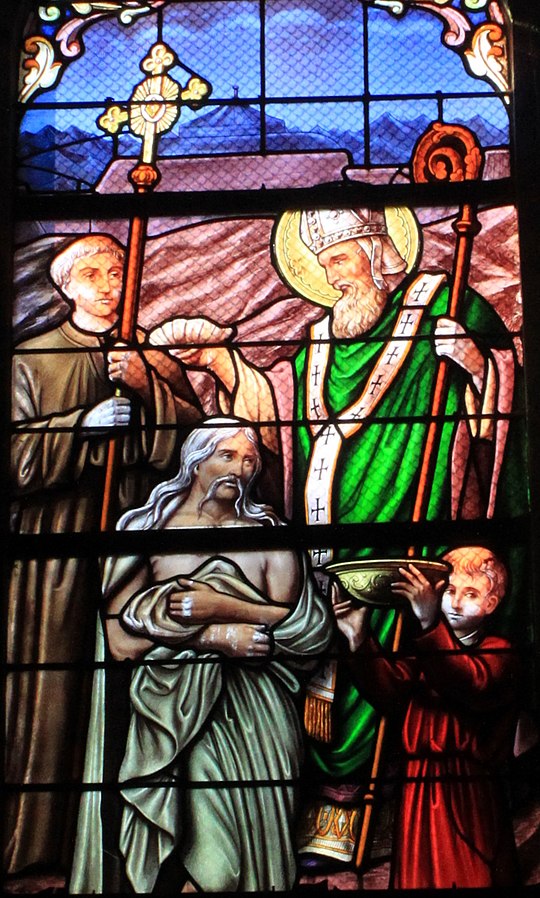
Saint Félix sur un vitrail de l'église Saint-Guénolé de Batz-sur-Mer (Loire-Atlantique)
Saint Félix
Évêque de Nantes (+ 582)
Évêque de Nantes dont saint Venance Fortunat vante les mérites dans ses poèmes.
À Nantes, en 582, saint Félix, évêque, qui manifesta son zèle en réalisant
d’importants travaux pour le bien de son peuple, en construisant l’église
cathédrale et en veillant avec constance à l’évangélisation des populations
rurales.
Martyrologe romain
SOURCE : http://nominis.cef.fr/contenus/saint/7495/Saint-Felix.html
Saint Félix de Nantes
Saint Félix est une des grandes figures de l'épiscopat mérovingien. Il
nous est connu par les vers de son ami Fortunat, qui lui décerne des éloges
dithyrambiques, et par saint Grégoire de Tours, qui n'eut apparemment pas de
bons rapports avec lui.
D'après Fortunat, Félix était issu d'une illustre famille d'Aquitaine. Il dut
recevoir une éducation soignée, car Fortunat, lui fait mérite de son éloquence.
Cette qualité était doublement nécessaire aux évêques de cette époque, qui
n'avaient pas seulement à haranguer leurs fidèles, mais devaient aussi, en bien
des cas, prendre la place des gouverneurs civils défaillants.
Ce fut, semble-t-il, le cas de Félix, qu'on voit intervenir à plusieurs
reprises auprès des Bretons, ses voisins, tantôt pour sauver Macliavus, frère
de Chanao, comte de Vannes, et poursuivi par ce dernier; tantôt pour leur
envoyer une délégation en vue d'arrêter leurs ravages aux abords de Nantes
(579). Fortunat célèbre aussi plusieurs travaux d'utilité publique accomplis
par saint Félix, mais son texte n'est pas clair et il est difficile de savoir
s'il fit draguer et rectifier le cours de la Loire ou creuser un canal.
Félix ne fait pas seulement figure d'administrateur et de defensor civitatis;
les intérêts spirituels de son diocèse ne sont pas oubliés. Tout d'abord il
achève la cathédrale, commencée par son prédécesseur Eumérius. D'après les vers
de Fortunat et aussi d'après les rares vestiges retrouvés, il semble que
l'édifice était fort beau. Il en fit la dédicace devant un nombreux groupe
d'évêques. On le voit assister vers cette même époque à plusieurs conciles,
notamment à Tours (567) et à Paris (573). Saint Félix mourut le 6 janvier 582,
tandis qu'il essayait d'obtenir pour successeur son neveu Burgondio.
SOURCE : http://www.histoire-russie.fr/icone/saints_fetes/textes/felix_nantes.html
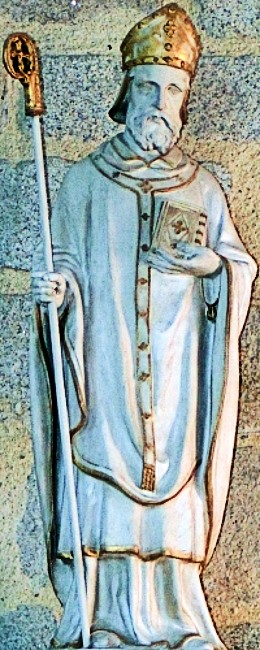
Saint
Félix, Chapelle du Crucifix, Fr-44-le
Croisic.
7 July (translation
of relics)
Profile
Born to the nobility,
received a good education, and was very fluent in Greek. Ordained in 540. Bishop of Nantes, France for
33 years; he was married at the time he was chosen, and his wife became a nun.
Attended the synods in Paris, France in 557 and 573,
and in Tours, France in 567.
Peacemaker between warring leaders in his region.
Born
c.515 in
the Aquitaine region of modern France
6 January 584 of
natural causes
Additional
Information
Book
of Saints, by the Monks of
Ramsgate
Lives
of the Saints, by Father Alban
Butler
Saints
of the Day, by Katherine Rabenstein
books
Our Sunday Visitor’s Encyclopedia of Saints
images
sitios
en español
Martirologio Romano, 2001 edición
sites
en français
fonti
in italiano
websites
in nederlandse
nettsteder
i norsk
MLA
Citation
“Saint Felix of
Nantes“. CatholicSaints.Info. 30 June 2020. Web. 24 January 2026.
<https://catholicsaints.info/saint-felix-of-nantes/>
SOURCE : https://catholicsaints.info/saint-felix-of-nantes/
Book of Saints –
Felix of Nantes
Article
FELIX of NANTES (Saint)
Bishop (July 7) (6th century) A learned and pious prelate who governed ably and
successfully in the Diocese of Nantes for about thirty-three years. He was
noted for his zeal for Church discipline, and still more for his charity to the
poor. He assisted at the French Councils of his time and built the Cathedral of
Nantes. He died January 8, A.D. 584. His festival is kept in July, the
anniversary of the Translation of his relics.
MLA
Citation
Monks of Ramsgate. “Felix
of Nantes”. Book of Saints, 1921. CatholicSaints.Info.
9 April 2013. Web. 24 January 2026.
<https://catholicsaints.info/book-of-saints-felix-of-nantes/>
SOURCE : https://catholicsaints.info/book-of-saints-felix-of-nantes/
Saint of the Day – 6
January – St Felix of Nantes (c 515-584)
Posted on January
6, 2022
Saint of the Day – 6
January – St Felix of Nantes (c 515-584) Bishop of Nantes, Confessor,
Evangeliser, Negotiator and peace-maker, Social reformer. Born in c 515 in the
Aquitaine region of modern France and died on 6 January 584 of natural
causes. Patronages – against famine, against the plague/epidemics.
Additional Memorial – 7 July (translation of relics).
The Roman Martyrology
states: “In Nantes in Brittany, the memorial of Saint Felix, Bishop, who, in
the service of his fellow citizens, gave testimony of his zeal, building the
Cathedral Church and evangelising the rural populations relentlessly.”
Born in c 513 to a
well-known family of Aquilani and was Ordained a Priest in 540. Felix was
married but when, at the age of 37, he was made Bishop of Nantes, on the death
of Evemer. his wife became a Nun. He then sold his patrimony donating the
proceeds to assist he poor.
He immediately began to
evangelise the region and trained young Priests as Missionaries to assist in his
programme.
He built and Consecrated
a Cathedral within the walls of the City, as planned by his predecessor,
Evemer. His social and secular improvements at Nantes were praised in the poems
of the Bishop of Poitiers, St Venantius Fortunatus.
He often mediated between
the people of Brittany and the Frankish kings. Guerech II, Count of Vannes,
plundered the Diocese of Rennes and Vannes and repulsed the troops which King
Chilperic sent against him but, at the entreaties of Bishop Felix, withdrew his
forces and made peace . By intervening in the political affairs of his time, he
saved Maclavius from death, who was being persecuted by his brother Conone,
Count of Vannes, who wanted to suppress him.
Felix was in attendance
at the Council of Paris in 557 and the Council of Tours in 567.
Towards the end of his
life Felix wanted to choose his nephew Burgundius as his successor but St
Gregory of Tours, his Archbishop, who was against him (Felix had supported his
rival Riculfo) refused to consecrate him, on the grounds that he was too young.
Felix died at the age of
seventy, on 6 January 584 after 33 years of zealous service as Bishop of Nantes
and was buried in the Cathedral which he had built and Consecrated.
Author: AnaStpaul
Passionate Catholic.
Being a Catholic is a way of life - a love affair "Religion must be like
the air we breathe..."- St John Bosco Prayer is what the world needs
combined with the example of our lives which testify to the Light of Christ.
This site, which is now using the Traditional Calendar, will mainly concentrate
on Daily Prayers, Novenas and the Memorials and Feast Days of our friends in
Heaven, the Saints who went before us and the great blessings the Church
provides in our Catholic Monthly Devotions. This Site is placed under the
Patronage of my many favourite Saints and especially, St Paul. "For the
Saints are sent to us by God as so many sermons. We do not use them, it is they
who move us and lead us, to where we had not expected to go.” Charles Cardinal
Journet (1891-1975) This site adheres to the pre-Vatican II Catholic Church and
all her teachings. . PLEASE ADVISE ME OF ANY GLARING TYPOS etc - In June 2021 I
lost 100% sight in my left eye and sometimes miss errors. Thank you and I pray
all those who visit here will be abundantly blessed. Pax et bonum! View All Posts
SOURCE : https://anastpaul.com/2022/01/06/saint-of-the-day-6-january-st-felix-of-nantes-c-515-584/
Felix of Nantes B (AC)
Died January 8, 584.
Felix was a 37-year-old married man when he was called to became the 16th
bishop of Nantes, France, about 549. He was born into an illustrious family of
Aquitaine, perhaps in Bourges or possibly in Brittany. He was renowned for his
virtue, eloquence, and erudition. His zeal for discipline was revealed in the
regulations he made for his own diocese, and the decrees of the third council
of Paris in 557, the second of Tours in 566, and the fourth of Paris in 573.
His charity to the poor was boundless; he sold his own patrimony to enlarge
monies available for their relief. Because he believed that no one should be
left in distress, he considered the revenues of the church as the patrimony of
the poor and administered them wisely for their use. He counted the poet
Venantius Fortunatus as a friend, who mentions that Felix wrote a poetic
panegyric on Queen Saint Radegund and completed the cathedral begun by his
predecessor. Fortunatus describes the cathedral as composed of three naves, of
which the middle was supported by great pillars. A great cupola was raised in
the middle. The church was covered with tin, and within was only azure, gold,
mosaic paintings, pilasters, foliage, various figures, and other ornaments.
Count Canao on Vannes had
killed three of his brothers and imprisoned a fourth named Maclian. After Felix
was consecrated, he interceded to save the prisoner's life and regain his
freedom. Even Saint Gregory of Tours testified to Felix's eminent sanctity,
although he had earlier complained that Bishop Felix had unjustly accused him
of nepotism toward Gregory's nephew Peter. Felix is also credited with being a
peace- maker. Count Guerech II of Vannes had plundered Rennes and Vannes and
repulsed the troops of King Chilperic; yet he withdrew and made peace at the
request of Felix. After governing the see of Nantes for 33 years, he died.
Today is the anniversary of the translation of his relics (Benedictines,
Encyclopedia, Husenbeth).
SOURCE : http://www.saintpatrickdc.org/ss/0707.shtml
July 7
St. Felix, Bishop of
Nantes, Confessor
THE MOST illustrious
among the bishops of Nantes was saint Felix, a person of the first rank in
Aquitain, some say of Bourges in the First Aquitain; others more probably think
of the Second Aquitain on the sea-coast and nearer Brittany. In the world he
was more illustrious by his virtue, his eloquence, and learning, than by his
dignities and high birth. The Greek language was as familiar to him as his own;
he was a poet and orator, and seems from Fortunatus’s expression to have
written a panegyric on the queen St. Radegundes in verse. He had been married
when he was called to succeed Evemer, the holy bishop of Nantes, toward the
close of the year 549, in the 37th year of his age. His zeal for discipline and
good order appeared in the regulations he made for his own diocess, and in the
decrees of the third council of Paris in 557, in the second of Tours in 566,
and the fourth of Paris in 573. His charity to the poor had no other bounds but
those of their necessities, and considering that the revenues of the Church
were the patrimony of the poor, he reserved to himself only the prudent and
troublesome administration of them for their use. He sold for them and the
Church his own patrimony, and made it his study and earnest endeavour that no
one in his diocess should pass unrelieved in distress. His predecessor had
formed a project of building a cathedral within the walls of the city of
Nantes, which Felix executed in the most magnificent manner. Fortunatus
describes it to have been composed of three naves, of which the middle was
supported by great pillars. A great cupola was raised in the middle. The church
was covered with tin, and within was only azure, gold, mosaic paintings,
pilasters, foliages, various figures and other ornaments. Euphronius,
archbishop of Tours, and the bishops of Angers, Mans, Rennes, Poitiers, and
Angouleme performed the dedication; no bishop of the Britons was invited to the
ceremony; from which it appears that their commerce with the French was not
entirely free. The Britons were then possessed of no lands in the diocess of
Nantes except the territory of Croisic, in which was the palace of Aula
Quiriaca or Guerrande, vulgarly Warand, probably so called from Guerech I. the
British count of Vannes, who resided there. Canao, one of his successors, when
Felix was made bishop, had put to death three of his brothers, and held a
fourth named Macliau in prison. St. Felix by his intercession saved his life,
and obtained his liberty. St. Gregory of Tours complains that bishop Felix had
been prepossessed by false informations against Peter, Gregory’s brother, and
accused him of favouring an unworthy nephew; but in other places bears
testimony to his eminent sanctity, which is much extolled by Fortunatus and
others. Guerech II. count of Vannes, plundered the diocesses of Rennes and
Vannes, and repulsed the troops which king Chilperic sent against him; but at
the entreaties of St. Felix, withdrew his forces, and made peace. The holy
prelate died on the 8th of January in 584, the seventieth year of his age, of
his episcopal dignity thirty three.
He is honoured at Nantes,
of which he was the sixteenth bishop from St. Clair, on the 7th of July, the
day of the translation of his relics. See Fortunatus, l. 3. c. 4, 5, 6, 7. St.
Gregory of Tours, l. 5. c. 5. Ceillier, t. 16. p. 562. M. Travers,
Histoire abrégée des Evéques de Nantes, tome 7. part 2. des Mémoires de
Littérature recueillis par P. Desmolets de l’Oratoire. Stilting the Bollandist,
t. 2. Jul. p. 470. Lobineau, Vies des SS. de Bretagne, p. 121.
Rev. Alban
Butler (1711–73). Volume VII: July. The Lives of the
Saints. 1866.
SOURCE : http://www.bartleby.com/210/7/075.html
San Felice di
Nantes Vescovo
Festa: 6 gennaio
† 6/8 gennaio 582
Nato nel 513 da una nota
famiglia di Aquilani, Felice fu ordinato sacerdote nel 540 ed eletto vescovo di
Nantes alla morte di Eumerio nel 549-50. Durante il suo episcopato, Felice si
dedicò all'evangelizzazione della regione, alla costruzione di opere pubbliche
e al sostegno dei poveri e degli oppressi.
Martirologio
Romano: A Nantes in Bretagna, memoria di san Felice, vescovo, che nel
servizio ai suoi concittadini diede testimonianza del suo zelo, costruendo la
chiesa cattedrale ed evangelizzando senza sosta le popolazioni rurali.
Nato nel 513 da una nota famiglia di Aquilani, Felice fu ordinato sacerdote nel 540 ed eletto vescovo di Nantes alla morte di Eumerio nel 549-50.
Formò giovani missionari per evangelizzare la regione, come Martino di Vertou, che inviò a predicare a Herbauges, ma che fu male accolto dagli abitanti e, secondo la leggenda, la punizione del cielo fece inabissare la città, oggi sommersa dal lago di Grand-Lieu. Completò e consacrò la cattedrale, iniziata dal suo predecessore Eumerio, della quale sono state ritrovate scarse vestigia: i poemi di Venanzio Fortunato, vescovo di Poitiers, ci dicono che si trattava di un bell’edificio. Intervenne presso il re Clotario I in favore del figlio Grammo, che si era ribellato contro l’autorità paterna rifugiandosi a Nantes. Il re mise in seguito Felice a capo del governo della città e del contado. In forza di questo potere egli fece scavare un nuovo letto alla Loira e circondare la città di baluardi; fece inoltre approfondire il letto dell'Erdre e costruire il porto della Fossa. Partecipò al concilio di Tours, nel 567, poi a quello di Parigi nel 573. Intervenendo negli affari politici del suo tempo, egli salvò dalla morte Maclavio, perseguitato dal fratello Conone, conte di Vannes, che lo voleva sopprimere. Maclavio fece entrare la moglie in un monastero e divenne vescovo di Vannes, ma alla morte di Conone, malgrado Felice, riprese moglie e governo.
Verso la fine della vita Felice volle scegliersi come successore il nipote Burgundio, ma Gregorio di Tours, suo metropolitano, che gli era avverso (Felice aveva sostenuto il suo rivale Riculfo) rifiutò di consacrarlo col pretesto che era troppo giovane. Felice morì a settantanni, il 6 o 8 gennaio 582 e fu sepolto nella cattedrale. La sua festa era celebrata l'8 gennaio, ma dopo il 1857 è stata trasferita al 7 luglio, giorno della traslazione delle reliquie. È invocato contro la peste, la guerra e le slogature.
Autore: Pierre Villette
SOURCE : https://www.santiebeati.it/dettaglio/36420
Den hellige Felix av
Nantes (~513-582)
Minnedag:
6. januar
Den hellige Felix (fr:
Félix) ble født rundt 513 (511 eller 512?) i Bourges i Aquitania i det
nåværende Frankrike. Han kom fra en adelsfamilie av senator rangsom var nært
knyttet til kong Kildebert I av Paris (511-58). Felix fikk en fullstendig
utdannelse og ble en lærd mann, og han skal ha behersket gresk som en innfødt.
Han eide også land og slaver. Tradisjonen hevder at han var gift da han i 549
eller 550 ble valgt til den sekstende biskop av Nantes (apud Nannetes) i
Bretagne etter biskop Eumerius (Eumalius, Eumélius, Evemarus, Evemer, Evhémère
II) (ca 515-41). Noen kilder skriver at Eumerius var hans far.
Den historiske provinsen
Bretagne er nå delt i fem franske departementer: Finistère i vest, Côtes-d’Armor
i nord, Ille-et-Vilaine i nordøst, Loire-Atlantique i sørøst og Morbihan i sør
ved Biscayabukta. Siden reorganiseringen i 1956 består den administrative
regionen Bretagne av bare fire av de fem bretonske departementene, eller 80 %
av det historiske Bretagne. Det resterende området av gamle Bretagne,
departementet Loire-Atlantique rundt Nantes, er nå en del av regionen Pays de
la Loire.
Da hans hustru gikk i
kloster, aksepterte han valget og ble bispeviet. Historien om hans ekteskap er
imidlertid ikke sikker, og han kan ha blitt bispeviet i 540. Han var biskop av
Nantes i 33 år og ble en av byens største biskoper. Hans misjon var først og
fremst pastoral ved å gjenoppta evangeliseringen av den omkringliggende
landsbygda, hvor hedenskapen fortsatt levde. Han dannet grupper av unge
misjonærer for å evangelisere området, og de reguleringene han bestemte for
bispedømmet, viser at han var fast bestemt på å innpode en sans for disiplin i
presteskapet og innføre orden i hele bispedømmet. I dette arbeidet fikk han hjelp
fra de hellige Friard
fra Besnés (ca 511-77) og Martin av Vertou i
Pays de Retz. Han var kjent for sin nestekjærlighet til de fattige, sin lærdom
og sin veltalenhet. Martin av Vertou utviklet kultsteder i Vertou og Montaigu.
Oratorier ble bygd i Couëron og Savenay. På slutten av 500-tallet var det nær
førti kirker på landsbygda i bispedømmet Nantes.
Men Felix hadde ikke bare
åndelige funksjoner. Siden slutten av barbarenes invasjoner hadde ordensprester
ofte tatt sekularprestenes plass i ledelsen av territoriet. Som mange biskoper
i den merovingiske perioden hadde han også offentlig ansvar ved siden av sin
bispegjerning. Han viste seg helt fra begynnelsen som forsvarer av byen. Ikke
bare sørget han for sitt folks velferd ved å utføre flere offentlige prosjekter
på Loire og gi egne penger til de fattige. Han ga ordre om å grave ut en ny
kanal som i dag bærer hans navnet mellom slettene «de la Madeleine» og «Mauves»
for å gi bedre tilgang til og utvikling av havnen i Nantes.
men han holdt også de
frankiske og bretonske væpnede bandene som stadig var i nærheten, på avstand
fra byen. Ved flere anledninger inngikk han som mellommann mellom de krigførende.
Han forhandlet med bretonske krigsherrer i Broërec som Waroc'h I og deretter
hans sønn Canao I, for å stoppe plyndringen og garantere sikkerheten til både
byen og omgivelsene.
Dessverre er lite kjent
med sikkerhet om hans personlige liv eller hans arbeid som biskop. Den hellige
biskopen og historikeren Gregor
av Tours (539-94) er en av våre hovedkilder til informasjon om ham,
men han var ikke alltid enig med sin suffraganbiskop Felix i politiske
spørsmål, og han klaget på hans oppførsel. Det synes som om Felix støttet
Gregors rival Riculf, og Gregor nektet å akseptere Felix’ nevø som hans
etterfølger som biskop av Nantes da Felix utnevnte ham mot slutten av sitt liv.
Imidlertid priste Gregor fortsatt Felix’ hellighet.
Han sto på vennskapelig
fot med den hellige forfatteren Venantius Fortunatus (ca
530-610), som priste Felix og spesielt hans offentlige arbeid, og både han og
Gregor understreker Felix’ arbeid med å konvertere de gjenværende hedningene
til kristendommen. Som biskop deltok han på en rekke konsiler i Tours og Paris.
Han underskrev på bestemmelsene fra det tredje konsil i Paris i 557, det andre
i Tours i 567 og det fjerde i Paris i 573. Kirken Saint-Félix bærer nå hans
navn i Nantes og gir også navn til nabolaget som omgir den.
Felix var både en
politisk og kirkelig skikkelse, som biskoper måtte være i de urolige tidene i
det merovingiske Frankerriket. Han synes å ha spilt en viktig rolle i å stoppe
en bretonsk invasjon i området rundt Nantes i 579, og han grep inn overfor kong
Klotar I (511-61) til fordel for kongens opprørske sønn, som hadde søkt
tilflukt i Nantes. Til gjengjeld ga kong Klotar Felix ansvaret for byen og de omliggende
områdene. Han befestet byen og endret Loires løp for å lage en naturlig
barriere. Han fullførte også byggingen av katedralen som ble påbegynt av hans
forgjenger, som det er funnet noen få spor etter. Den ble vigslet den 30.
september 567, og Venantius Fortunatus feiret i et dikt denne kirken som var en
av de vakreste bygningene i det merovingiske Gallia. Basilikaen,
beundringsverdig dekorert med mosaikker, skinnende lys, var Felix personlige
gave til kirken i Nantes, tilbudt som en gave til kirken han hadde giftet seg
med.
Felix døde den 6. eller
8. januar 582 og ble etterfulgt som biskop av Eufronius. Fordi 6. januar var De
hellige tre kongers dag, ble hans minnedag tradisjonelt feiret den 7. juli, som
er årsdagen for translasjonen av hans relikvier. Etter kalenderreformen i 1969
har han vært feiret den 6. januar, som også er hans minnedag i den nyeste
utgaven av Martyrologium Romanum (2004):
Nannétibus in Británnia
Minóre, sancti Felícis, epíscopi, qui próprii zeli testimónium concívibus
desérviens perhíbuit, ecclésiam cathedrálem ædificávit necnon ruráles gentes
continénter evangelizávit.
I Nantes i Bretagne, den
hellige Felix, biskop, som i tjenesten for sine landsmenn viste sin nidkjærhet
ved å bygge katedralkirken og evangelisere befolkningen på landet uten stans.
I Nantes minnes han den
7. januar. Han ble påkalt mot pest, krig og hungersnød.
Kilder: Attwater/Cumming,
Butler (VII), Benedictines, Bunson, MR2004, KIR, CSO, CatholicSaints.Info,
Infocatho, santiebeati.it, fr.wikipedia.org, nominis.cef.fr, Butler 1866,
zeno.org, heiligen-3s.nl, paroisse-saintseveques-nantes.fr - Kompilasjon og
oversettelse: p. Per
Einar Odden
Opprettet: 17. januar
1999 – Oppdatert: 24. desember 2017
SOURCE : https://www.katolsk.no/biografier/historisk/fnantes
Felix van Nantes,
Frankrijk; bisschop; † 582 (of 584).
Feest † 6
januari (& tot 1969: 7 juli: overbrenging relieken)
Hij was afkomstig uit de
Zuidfranse streek Aquitanië waar hij in 514 (of 516) uit adellijke ouders was
geboren. Zij gaven hem een gedegen opvoeding. In 540 ontving hij de
priesterwijding. Op zijn 37e werd hij gekozen om bisschop Eumerius van Nantes
te vervangen. Op dat moment was hij getrouwd. Zij vrouw trad daarop in een
klooster.
Hij nam deel aan de
bisschoppenconferenties achtereenvolgens van 557 te Parijs, 567 te Tours en 573
weer in Parijs. Daarbij legde hij een bijzondere zorg voor de kerkelijke
discipline aan de dag. Daarnaast trad hij herhaaldelijk bemiddelend op bij
conflicten die Bretonners onderling hadden of met de Frankische vorsten.
Hij stierf op 6 januari
582 (of 584). Omdat die dag samenvalt met Drie Koningen heeft men zijn feest
eeuwenlang gevierd op 7 juli, dag van de overbrenging van zijn relieken. Sinds
de kalenderhervormingen van Vaticanum II in 1969 staat hij op zijn sterfdag.
[Aut.1986; Bdt.1925; Cha.1995; DSB.1979; Gby.1991:p163.191; 216; 505;
GTV.1985p:105; Lo1.1837:p324; Mty.2002; Pra.1988p:46.; Dries van den Akker
s.j./2011.05.24]
© A. van den Akker
s.j. / A.W. Gerritsen
SOURCE : https://heiligen-3s.nl/heiligen/01/06/01-06-0582-felix-nantes.php
Saint Félix, évêque de Nantes, l'an 682, fête le 7 juillet : http://orthodoxievco.net/ecrits/vies/synaxair/juillet/felix.pdf