
Sainte Prisque
Vierge et martyre (Ier siècle)
Prisca ou Priscille.
Les uns placent son martyre sous l'empereur Claude Tibère (54), d'autres sous l'empereur Claude le Gothique (270). Dans tous les cas, les actes de son martyre sont 'très améliorés'. Son culte, lui, est historique et très ancien.
- 'les Acta Sanctorum racontent l'histoire d'une fillette de 13 ans qui fut emprisonnée du temps de l'empereur Claude pour avoir refusé d'adorer la statue d'Apollon. Comme elle avait persévéré dans sa foi chrétienne, elle fut flagellée et condamnée à être livrée aux fauves dans le Cirque Maxime. Cependant les lions, au lieu de la dévorer, se couchèrent à ses pieds. Alors, la jeune fille fut de nouveau emprisonnée, flagellée et condamnée au bûcher. Mais les flammes la laissèrent intacte. A la fin, elle fut conduite au dixième milliaire de la voie Ostiense où elle fut décapitée.' (Parrocchia di Santa Prisca all'Aventino - Roma)
- Un internaute nous indique que la date de 270 est plus vraisemblable car le 1er Claude n'a régné que jusqu'en 54 et il n'est pas particulièrement connu comme persécuteur, contrairement à son successeur Néron qui, en 64, en prenant comme excuse l'incendie de Rome, a sacrifié les disciples du Christ.
À Rome, commémoraison de sainte Prisque, au nom de qui une basilique fut dédiée
à Dieu sur l'Aventin avant la fin du Ve siècle.
Martyrologe romain
SOURCE : https://nominis.cef.fr/contenus/saint/456/Sainte-Prisque.html
Prière quotidienne, 18
janvier, sainte Prisque (Prisca la Romaine)
Vierge et
martyre (†270), Prisca la Romaine est une chrétienne des premiers
siècles de notre ère, martyrisée à Rome, ensevelie dans les
catacombes de Priscille, sur la Via Salaria, vénérée dès le IVe siècle dans
l'église qui lui est dédiée sur l'Aventin à Rome.
Prière à sainte
Prisca
Sainte Prisca vous avez
témoigné jusqu’au sang votre amour du Seigneur.
Nous confions à vos
prières tous les jeunes de notre temps :
Qu’ils soient touchés par
le même amour de Jésus qui vous animait.
Qu’ils soient animés par
la même faim de pureté et de sainteté que vous aviez.

St. Prisca
She was a martyr of
the Roman
Church, whose dates are unknown. The name Prisca or Priscilla is often
mentioned by early authorities of the history
of the Church of Rome.
The wife of Aquila,
the pupil of St.
Paul, bore this name. The grave of a martyrPrisca
was venerated in
the Roman
Catacomb of Priscilla on the Via Salaria. The place of interment is
explicitly mentioned in all the seventh-century itineraries to the graves of
the Roman martyrs (De
Rossi, "Roma sotterranea", I, 176, 177). The epitaph of a
Roman Christian named
Priscilla was found in the "larger Catacomb", the Coemeterium maius,
on the Via Nomentana, not far from the Catacomb of
St. Agnes [De
Rossi, Bull.
di arch. crist. (1888-1889), 130, note 5]. There still exists on the Aventine a
church of St. Prisca. It stands on the site of a very early title church,
the Titulus Priscoe, mentioned in the fifth century and built probably in
the fourth. In the eighteenth century there was found near this church a bronze
tablet with an inscription of the year 224, by which a senator named Caius
Marius Pudens Cornelianus was granted citizenship in a Spanish city. As such
tablets were generally put up in the house of the person so honoured,
it is possible that the senator's palace stood on the spot where the church was
built later. The assumption is probable that the Prisca who founded this title
church, or who, perhaps as early as the third century, gave the use of a part
of the house standing there for the Christian church
services, belonged to the family of
Pudens Cornelianus. Whether the martyr buried
in the Catacomb of
Priscilla belonged to the same family or
was identical with the founder of the title church cannot be proved.
Still some family relationship
is probable, because the name Priscilla appears also in the senatorial family of
the Acilii Glabriones, whose burial-place was in the Catacomb of
Priscilla on the Via Salaria. The "Martyrologium Hieronymianum"
mentions under 18 January a martyr Priscilla
on the Via Salaria (ed. De Rossi-Duchesne, 10). This Priscilla is evidently
identical with the Prisca whose grave was in the Catacomb of
Priscilla and who is mentioned in the itineraries of the seventh century. Later
legendary traditions identified the founder of the Titulus Priscoe with St.
Paul's friend, Priscilla, whose home would have occupied the spot on
which the church was later erected. It was from here that St. Paul sent a
greeting in his Epistle to the Romans. Another legend relates the martyrdom of
a Prisca who was beheaded at the tenth milestone on the Via Ostiensis, and
whose body Pope
Eutychianus is said to have translated to the church of Prisca on the
Aventine. The whole narrative is unhistorical and its details impossible. As 18
January is also assigned as the day of the execution of this Priscilla, she is
probably the same as the Romanmartyr buried
in the Catacomb of
Priscilla. Her feast is
observed on 18 January.
Sources
Acta SS., January, II,
184 sqq.; DUFOURCQ, Les Gesta martyrum romains, I (Paris, 1900), 169 sq.;
GORRES, D. Martyrium d. hl. Prisca in Jahrbuch fur protest. Theologie (1892),
108 sq.; CARINI, Sul titolo presbiterale di S. Prisca (Palermo,
1885); DE ROSSI, Della casa d'Aquila e Prisca sull' Aventino in Bull.
d'arch. crist. (1867), 44 sq.; IDEM, Aquila e Prisca e gli Acilii
Glabriones, ibid. (1888-9), 128 sq.; MARUCCHI, Les basiliques et églises
de Rome (2nd ed., Rome, 1909), 180 sq.; BUTLER, Lives of the Saints,
January, I, 83.
Kirsch, Johann
Peter. "St. Prisca." The Catholic Encyclopedia. Vol.
12. New York: Robert Appleton Company, 1911. 2 Jun.
2018 <http://www.newadvent.org/cathen/12428c.htm>.
Transcription. This
article was transcribed for New Advent by Robert B. Olson. Offered to
Almighty God for Mary Sue Wheeler.
Ecclesiastical
approbation. Nihil Obstat. June 1, 1911. Remy Lafort, S.T.D.,
Censor. Imprimatur. +John Cardinal Farley, Archbishop of New York.
Copyright © 2023 by Kevin Knight.
Dedicated to the Immaculate Heart of Mary.
SOURCE : http://www.newadvent.org/cathen/12428c.htm
St. Prisca (Feast: January 18)
There are actually three St. Priscilla’s who lived in the first few centuries of the Church – all of whom were martyrs – and two of them share the same feast day of January 18! It is the virgin martyr St. Prisca that the Church primarily celebrates today though.
Prisca was born of a noble family in Rome during the reign of Claudius II. Most likely a Christian from birth, she was arrested during the persecutions when she was a young teenager and brought before the Emperor for questioning. Despite her youth, Prisca courageously proclaimed and upheld her Catholic Faith, even though she knew that by doing so in those days was ultimately the pronouncement of her own death sentence.
She suffered terrible tortures, one of which was being taken to the arena to be devoured by wild beasts. Rather than devour her though, the lions are said to have licked her feet! Finally, she was taken outside the city walls and beheaded. Legend tells us that when she was martyred, a great eagle appeared above her and protected her body for several days until the Christians were able to retrieve it.
The young martyr was
buried in the Catacomb of St. Priscilla - the catacomb named after the St.
Priscilla, wife of a Roman senator, who shares the same feast day of January 18
with the child-martyr, Prisca. She is said to have opened her home near the
catacomb to Christians and to have befriended St. Peter who used her home as
his headquarters in Rome. She was martyred during the reign of Emperor
Domitian. As an interesting fact, there is probable speculation that this St.
Priscilla was a family relation of the child-martyr St. Prisca, who is buried
in her catacomb.
The third St. Priscilla
was a disciple of St. Paul and wife of the Jewish tentmaker, Aquila.
SOURCE : https://www.americaneedsfatima.org/Saints-Heroes/st-prisca.html
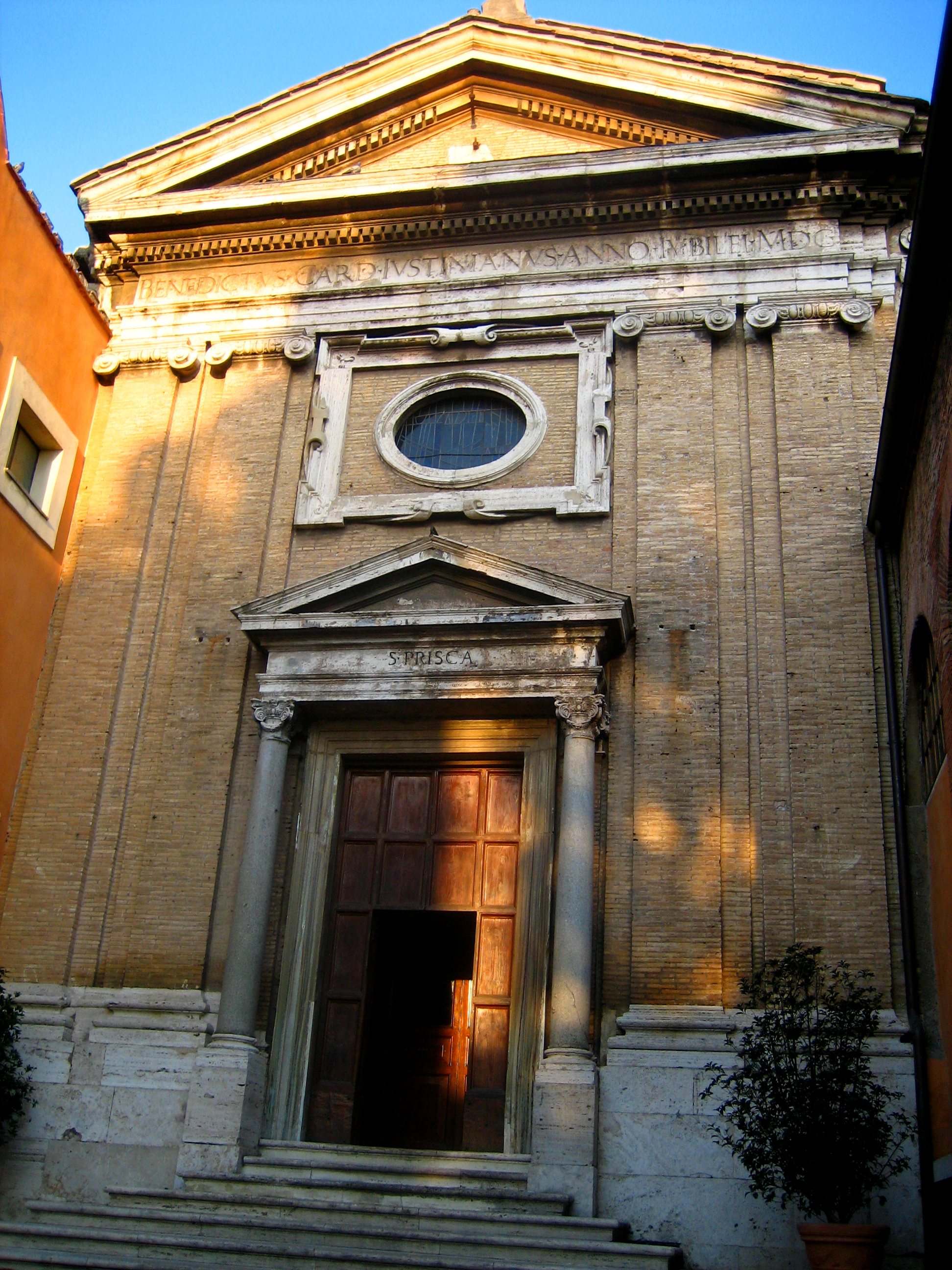
Église Santa Prisca (Chiesa di Santa Prisca) est
un lieu de culte chrétien situé sur l'Aventin à Rome en Italie. Elle est dédiée à Sainte Prisca, une martyre du ier siècle.L'église est le siège du titre
cardinalice de Santa Prisca érigé
par le pape Évariste en 112(Titulus
Priscae).

Église Santa Prisca (Chiesa di Santa Prisca), Aventin, Rome, Italie
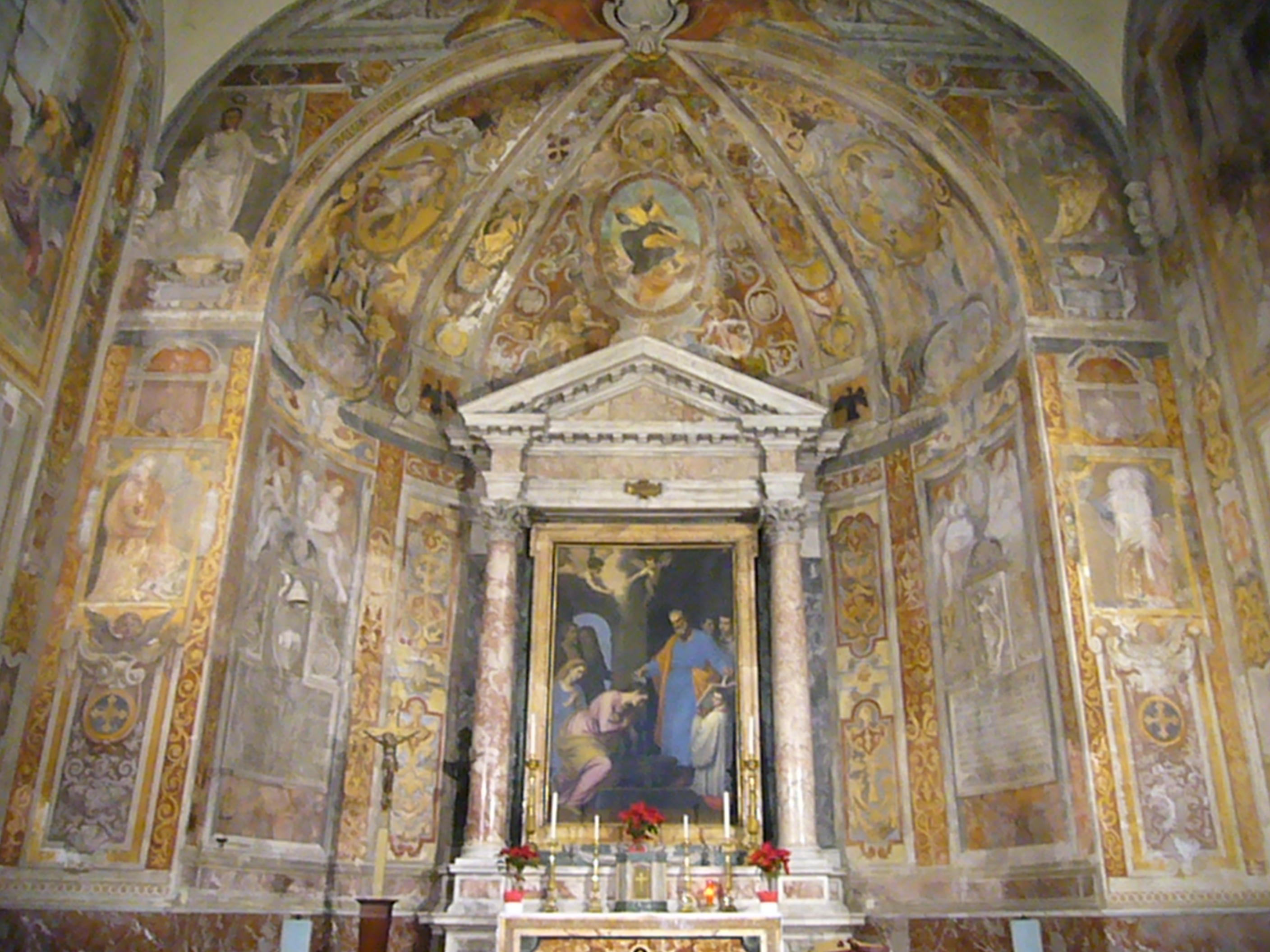
Église Santa Prisca (Chiesa di Santa Prisca), Aventin, Rome, Italie
January 18
St. Prisca, Virgin and
Martyr
SHE was a noble
Roman lady, and after many torments finished her triumph by the sword, about
the year 275. Her relics are preserved in the ancient church which bears her
name in Rome, and gives title to a cardinal. She is mentioned in the
sacramentary of St. Gregory, and in almost all western Martyrologies. The acts
of her martyrdom deserve no regard: St. Paul, in the last chapter of his
epistle to the Romans, salutes Aquila, a person of Pontus, of Jewish
extraction, and Priscilla, whom he and all churches thanked, because they had
exposed themselves for his sake. He mentions the church which assembled in
their house, which he attributes to no other among the twenty-five Christians
whom he saluted, and were then at Rome. This agrees with the immemorial
tradition at Rome, that St. Peter consecrated an altar, and baptized there in
an urn of stone, which is now kept in the church of St. Prisca. Aquila and
Priscilla are still honoured in this church, as titular patrons with our saint,
and a considerable part of their relics lies under the altar. Aquila and
Priscilla were tent makers, and lived at Corinth, when they were banished from
Rome under Claudius: she who is called Priscilla in the Acts of the Apostles,
the Epistles to the Romans, and first to the Corinthians, is named Prisca in
the second to Timothy. See the Roman Martyrology on the 18th of January and the
8th of July; also Chatelain, not. p. 333
Rev. Alban
Butler (1711–73). Volume I: January. The Lives of the
Saints. 1866
SOURCE : http://www.bartleby.com/210/1/183.html
Santa Prisca Martire
sec. III
Subì il martirio sotto
Claudio II, nel III secolo, venne sepolta sulla Via Ostiense e traslata
sull’Aventino. E’ probabile che sia stata la fondatrice di un’antica chiesa
sull’Aventino. Tutto ciò che si racconta su di lei, sono leggende, e le
informazioni che si hanno sono contraddittorio e ci rimandano a tre persone
diverse.
Etimologia: Prisca =
primitiva, di un'altra età, dal latino
Emblema: Palma
Martirologio Romano: A
Roma, commemorazione di santa Prisca, nel cui nome è dedicata a Dio una
basilica sull’Aventino.
E’ difficile stabilire la vera identità di questa martire romana, nonostante i numerosi documenti antichi, poiché le varie notizie che la riguardano si riferiscono probabilmente a tre persone diverse. La celebrazione odierna vuole comunque onorare la fondatrice della chiesa titolare sull'Aventino, alla quale si riferisce l'epigrafe funeraria del V secolo, conservata nel chiostro di S. Paolo fuori le mura. L'antica chiesa, cara a chi ama riscoprire gli angoli intatti dell'antica Roma, nell'ombra discreta e riposante delle sue navate, sorge sulle fondamenta di una grande casa romana del II secolo, come hanno provato recenti scavi archeologici.
Ma gli Acta S. Priscae, che ne fissano il martirio sotto Claudio II (268-270) e la sepoltura sulla via Ostiense, donde poi il suo corpo sarebbe stato portato sull'Aventino, non hanno maggiori titoli di credibilità della suggestiva leggenda, che colloca S. Prisca nell'epoca in cui S. Pietro svolse il suo lavoro missionario a Roma.
Secondo questa leggenda, la santa sarebbe stata battezzata all'età di tredici anni dallo stesso Principe degli apostoli e avrebbe coronato il suo amore a Cristo con la palma del martirio, stabilendo al tempo stesso un primato, suggerito anche dal nome romano, che significa "prima": ella sarebbe stata infatti la prima donna in Occidente a testimoniare col martirio la sua fede in Cristo. La protomartire romana sarebbe stata decapitata durante la persecuzione di Claudio, verso la metà del primo secolo. Il corpo della giovinetta venne sepolto, sempre secondo questa tradizione, nelle catacombe di Priscilla, le più antiche di Roma.
Nel secolo VIII si cominciò ad identificare la martire romana con Prisca,
moglie di Aquila, di cui parla S. Paolo: "Salutate Prisca e Aquila, miei
collaboratori in Gesù Cristo, i quali hanno esposto la loro testa per salvarmi
la vita. Ad essi devo rendere grazie non solo io, ma anche tutte le chiese dei
gentili" (Rm 16,3). Si cominciò così a parlare del "titulus Aquilae
et Priscae" modificando il primitivo titolo di cui si ha notizia già nel
sinodo romano del 499. Il titolo cardinalizio con cui si è voluto onorare la
chiesa di S. Prisca, una santa oggi quasi dimenticata dai calendari, sta a
testimoniare la devozione che fin dai primi secoli di vita cristiana riscuoteva
questa "primizia" dell'umile pescatore di Galilea. La chiesa di S.
Prisca, sorta sul luogo di una casa romana che secondo la leggenda avrebbe ospitato
S. Pietro, conserva nella cripta un capitello cavo, usato dallo stesso
apostolo, per battezzare i catecumeni.
Autore: Piero
Bargellini