
Saints Chrysante et Darie
Martyrs à Rome (IIIe siècle)
ou Chrysanthe et Daria.
Deux martyrs romains dont les 'Acta' ont disparu. Etaient-ils mari et femme? Etait-ce la première fois qu'ils se rencontraient lorsqu'ils furent martyrisés? En tout cas, ils furent enterrés côte à côte sur la 'via salaria' à Rome ce qui leur valut par la suite de recevoir quelques anecdotes légendaires.
"Chrysanthe, époux vierge de la vierge Daria, s'unit dans la confession du Seigneur à celle qu'il a conquise au christianisme et à l'amour de l'angélique vertu. Nos pères entouraient d'une vénération fervente les saints époux qui ne connurent d'autre lit nuptial que la carrière de sable où Rome païenne les ensevelit vivants pour venger ses faux dieux."
Source: L'Année liturgique, Dom Guéranger, numérisation: Abbaye Saint Benoît de Port-Valais.
Chrysanthe et son épouse Darie ou Daria.
Ils furent emmurés dans une grotte en même temps que bien d'autres chrétiens: Claude, un tribun, et son épouse Hilaria avec leurs enfants - Diodore, un prêtre et Marien un diacre. Une autre source nous dit qu'ils furent brûlés vifs sur la via Salaria à Rome. Leur culte est maintenu dans les calendriers locaux.
À Rome, au cimetière de Trason sur la nouvelle voie Salarienne, vers 253, les
saints Chrysanthe et Darie, martyrs, dont le pape saint Damase a fait l'éloge.
Martyrologe romain
SOURCE : https://nominis.cef.fr/contenus/saint/2075/Saints-Chrysante-et-Darie.html

Martyre
de saint Chrysanthe et de sainte Daria, Legenda
Aurea, Vies de saints, 185 , Fol. 77, Paris, XIVe
Das Martyrium von Chrysanthus und Daria (Handschrift aus dem 14. Jahrhundert)
SAINT CHRYSANTHE et
SAINTE DARIE
Martyrs à Rome
(+ 286)
Né en Égypte, Chrysanthe
était fils d'un sénateur romain. Jeune encore, il accompagna son père dans la
grande Rome où sa haute intelligence fut bientôt remarquée. Convaincu de la
vanité des idoles, Chrysanthe cherchait la vérité qui délivrerait son âme des
doutes qui la tenaillaient.
On lui indiqua un
vieillard réputé maître en sagesse, lequel n'eut pas de peine à dessiller les
yeux du jeune néophyte. La vérité aussitôt connue, Chrysanthe l'embrassa avec
ardeur et s'en fit l'apôtre enflammé. Son père jura de faire revenir son fils
de ce qu'il appelait "ses superstitions et ses erreurs." Caresses,
prières, menaces, tout fut mis en oeuvre, bien qu'inutilement. Cédant alors aux
conseils de ses proches, le sénateur enferme Chrysanthe dans son palais pour
tendre à sa vertu le piège le plus dangereux. Comme les personnes amenées pour
le séduire ne réussissaient pas à l'ébranler, on choisit la prêtresse Darie qui
servait une idole dont le culte était regardé comme la sauvegarde de l'empire.
Fameuse par ses attraits, par ses connaissances et par le charme de son
élocution, cette vestale déploya tous ses artifices pour corrompre le jeune
chrétien et l'amener à sacrifier aux faux dieux. Dans Sa miséricorde, Dieu
permit que cette femme devint elle-même la conquête de la grâce.
Se voyant unis par les
liens de la foi, de l'espérance et de la charité, Chrysanthe et Darie
décidèrent de s'unir par un mariage virginal, afin de parvenir par la
continence à une pureté de coeur plus parfaite, dans le but de le consacrer
totalement à Dieu et de fouler le monde à leurs pieds avec une plus grande
facilité. Cette union sainte permit à Chrysanthe de retrouver sa liberté, lui
donnant ainsi l'opportunité de continuer à prêcher Jésus-Christ. Sa chaste
épouse imita cette conduite héroïque et bientôt de nombreuses conversions
s'effectuèrent dans les hauts rangs de la société romaine.
Une des plus remarquables
conquêtes du courageux apostolat de saint Chrysanthe fut celle du tribun
Claudius, de sa femme, ses deux fils, ses domestiques et soixante-dix soldats.
Ces conversions éveillèrent des plaintes et des murmures qui parvinrent
promptement aux oreilles du préfet Célérin qui fit arrêter immédiatement les
jeunes époux. Après avoir subi divers supplices, saint Chrysanthe fut enfermé
dans la prison Mamertine, tandis que l'on exposait sainte Darie dans un lieu de
débauche. Cependant, le Seigneur veillait sur ses nobles serviteurs et tous
deux sortirent indemnes de leurs épreuves.
Outré de dépit en voyant
ses intentions perverses contrecarrées, l'empereur les condamna à être enterrés
vivants, supplice affreux que l'on réservait ordinairement aux vestales
infidèles. Les saints martyrs Chrysanthe et Darie expirèrent près de la porte
Salaria.
Résumé O.D.M.
SOURCE : http://www.magnificat.ca/cal/fran/10-25.htm
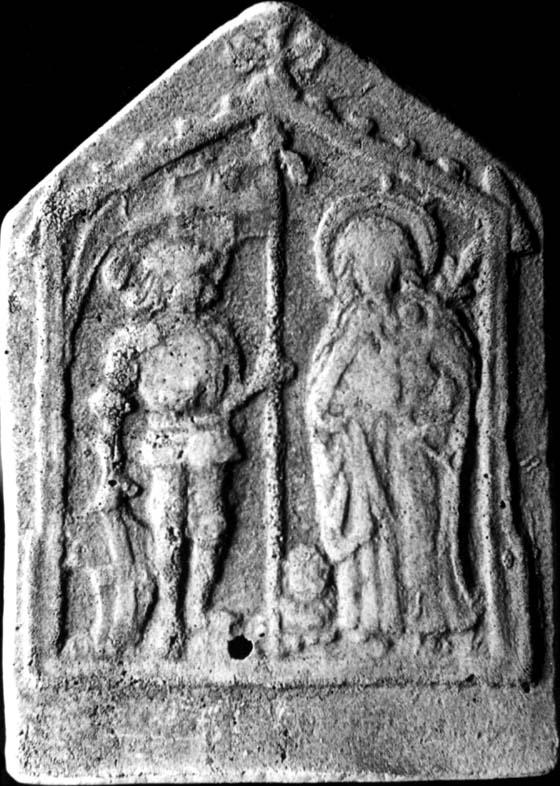
SAINT CRISANT ET SAINTE
DARIA *
Crisant, fils d'un homme
de la première noblesse, nommé Solimius, avait été instruit dans la foi de
J.-C. et ne voulait pas céder à son père qui prétendait le ramener au culte des
idoles. Alors Solimius le fit enfermer dans une chambre où on lui donna pour
compagnie cinq jeunes filles chargées de le séduire par leurs caresses. Il pria
Dieu de ne pas le laisser vaincre par cette bête féroce qui s'appelle
concupiscence, et aussitôt les jeunes filles accablées de sommeil ne purent ni
boire ni manger ; ce qu'elles faisaient dès qu'on les avait mises hors de
l’appartement. Alors Daria, vierge très prudente consacrée à Vesta, est priée
de s'introduire chez Crisant afin de le rendre aux dieux et à son père. Quand
elle fut entrée,
Crisant lui adressa des
reproches à cause du luxe de ses vêtements; mais elle répondit que si elle
était parée ainsi, ce n'était pas pour le luxe en lui-même, mais pour le gagner
aux dieux et à son père. Crisant lui adressa de nouveaux reproches de ce qu'elle
honorait comme des dieux ceux qu'on avouait avoir eu, le plus souvent, pour
auteurs de ses jours, des hommes débauchés et des femmes impudiques. Daria
répliqua que les philosophes avaient donné des noms d'hommes aux éléments.
Grisant lui dit : « Si celui-ci adore la terre comme une déesse, et que celui4à
qui est homme des champs la laboure, il est prouvé qu'elle donne plus à l’homme
des champs qu'à l’adorateur; il en sera de même de la mer et des autres
éléments. » Alors Crisant et Daria qu'il avait convertie, s'étant unis par le
lien du Saint-Esprit, et feignant d'être réellement mariés, convertissaient
beaucoup de monde à J.-C. entre autres, le tribun Claude, autrefois son tuteur,
avec sa femme, ses enfants et une infinité d'autres soldats. Crisant fut donc
renfermé par l’ordre de Numérien dans un cachot des plus infects; mais cette
infection se changea en une odeur des plus suaves. Quant à Daria, elle fut
livrée à une maison de débauche; mais un lion, qui s'échappa de l’amphithéâtre,
vint se constituer le portier de cette maison. On envoya quelqu'un pour faire
violence à la jeune vierge; mais le lion le saisit, et semble demander, par
signe à la sainte, ce qu'il doit faire de son captif. Celle-ci lui commande de
ne pas le blesser, mais de le laisser venir auprès d'elle. Alors cet homme est
changé et se met à courir par la ville en criant que Daria est une déesse. On
envoie aussitôt des chasseurs pour prendre le lion, mais celui-ci les saisit,
les porte aux pieds de la vierge qui les convertit. Le préfet fait placer un
grand brasier à la porte de la chambre afin que Daria soit brûlée avec le lion.
A la vue du feu, le lion eut peur, et se mit à rugir ; il reçut alors de la
vierge la permission de se retirer où il voudrait, sans faire de mal à
personne. Le préfet ayant fait infliger divers tourments à Crisant et à Daria,
ils n'en éprouvèrent aucune douleur. Ces chastes époux furent alors placés dans
une fosse, où, écrasés sous les pierres et la terre, ils reçurent la
consécration du martyre, en 290, du temps de Carus, évêque de Narbonne, ville
où leur fête est célébrée avec le plus de pompe.
• Bréviaire; — Leurs
actes
La Légende dorée de Jacques de Voragine nouvellement traduite en
français avec introduction, notices, notes et recherches sur les sources par
l'abbé J.-B. M. Roze, chanoine honoraire de la Cathédrale d'Amiens, Édouard
Rouveyre, éditeur, 76, rue de Seine, 76, Paris mdccccii
SOURCE : http://www.abbaye-saint-benoit.ch/voragine/tome03/158.htm
Saint Chrysanthe et sainte Darie
Saint Chrysanthe, fils
d’un sénateur romain, était né en Égypte. Jeune encore, il accompagna son père
dans la grande Rome, où sa haute intelligence fut bientôt appréciée. Convaincu
de la vanité des idoles, il cherchait, par tous les moyens, à connaître la
vérité, afin de délivrer son âme des doutes qui la désolaient.
Un vieillard lui est
indiqué comme un sage ; Chrysanthe s’adresse à lui. Le vieillard, qui était
Chrétien, n’a pas de peine à dessiller les yeux du jeune néophyte. La vérité
connue est à l’instant même embrassée avec ardeur : Chrysanthe devient apôtre.
Son père s’étonne,
s’irrite, et jure de faire revenir son fils de ce qu’il appelle ses
superstitions et ses erreurs. Caresses, prières, menaces, tout est mis en œuvre
; mais tout reste inutile. Cédant alors aux instigations de ses proches, le
père de saint Chrysanthe enferme son fils dans son palais, et tend à sa vertu
le piège le plus dangereux.
Les personnes amenées
pour le séduire n’ayant pu l’ébranler, on fait choix d’une Vestale, également
fameuse par ses attraits, par ses connaissances et par le charme de son
élocution. Prêtresse d’une idole, dont le culte était regardé comme la
sauvegarde de l’empire, Darie déploie tous ses artifices pour corrompre le
jeune Chrétien, et l’amener comme une conquête à l’autel des dieux ; mais elle
devient elle-même la conquête de la grâce.
Chrysanthe et Darie, se
voyant unis par les liens de la Foi, de l’Espérance et de la Charité,
s’unissent alors par les liens sacrés d’un mariage virginal. Cette résolution
met saint Chrysanthe en liberté, et lui donne, ainsi qu’à sa chaste épouse, le
moyen de continuer à prêcher Jésus-Christ. De nombreuses conversions dans les
hauts rangs de la société deviennent le fruit de leur apostolat ; une de ses
plus remarquables fut celle du tribun Claudius, avec sa femme, ses deux fils,
ses domestiques et soixante-dix soldats. Tous périrent par le martyre.
Des plaintes sont portées
au préfet Célérin qui fait arrêter les jeunes époux. Après d’autres supplices,
saint Chrysanthe est enfermé dans la prison Mamertine, et sainte Darie exposée
dans un lieu de débauches. Le Seigneur veille sur eux comme Il veilla sur tant
d’autres ; et ils sortent intacts et purs. Pour en finir, l’empereur irrité les
condamne à être enterrés tout vivants.
Il est vraisemblable que
cet affreux supplice fut choisi afin de faire subir à sainte Darie le genre de
mort réservé aux Vestales infidèles. Cette conjecture devient d’autant plus
probable qu’on fit expirer les saints Martyrs près de la porte Salaria, lieu
désigné pour le supplice des Vestales.
C’était l’an 284, saint
Caïus étant pape et Dioclétien empereur.
Les principales reliques
de saint Chrysanthe et de sainte Darie furent portées en 842 à l’abbaye de Prüm
(au diocèse de Trèves). Deux ans après, on les transféra à l’abbaye de
Saint-Avold, au diocèse de Metz.
Ils sont patrons d’Eissel, de Reggio-di-Modena, de Salzburg, d’Oria (Terre d’Otrante).
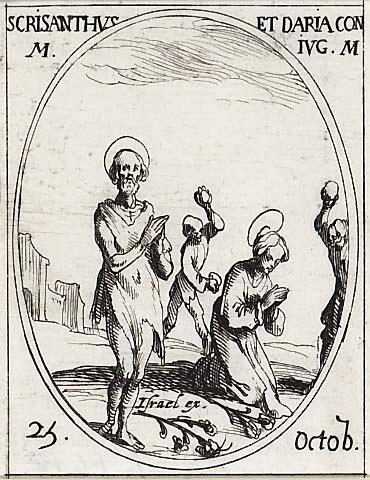
Saint Chrysanthe et
sainte Darie
Fête à cette date depuis
le XIème siècle, au 19 mars à IXème siècle, à des dates différentes selon les
livres antérieurs.
Leçons des Matines (avant
1960)
Troisième leçon. Chrysanthe et Darie son épouse, étaient de famille noble ; ils devinrent plus illustres par la foi, que Darie reçut, avec le baptême, par les soins de son mari. Zélés l’un et l’autre, celle-ci auprès des femmes, celui-là auprès des hommes, ils en convertirent à Jésus-Christ un nombre incalculable dans la ville de Rome. C’est pourquoi le préfet Célérinus, les ayant fait arrêter, les livra au tribun Claudius. Par son ordre, des soldats enchaînèrent Chry santhe et le torturèrent ensuite ; mais toutes ses chaînes se rompirent et les fers qu’il avait aux pieds se brisèrent. Après cela, on l’entoura d’une peau de bœuf et on l’exposa aux plus vives ardeurs du soleil, puis, lui ayant mis des fers aux pieds et aux mains, on le jeta dans une prison obscure. Les chaînes se brisèrent encore, et une lumière éclatante remplit toute la prison. Darie, de son côté, ayant été traînée de force dans un lieu de débauche, se mit en prière et fut miraculeusement protégée par un lion, qui la préserva de tout outrage. Enfin les deux époux, menés dans une sablonnière, sur la voie Salaria, où l’on creusa une fosse, y furent jetés et écrasés sous des pierres, et reçurent ainsi pareillement la couronne du martyre.
SOURCE : http://www.introibo.fr/25-10-Sts-Chrysanthe-et-Darie
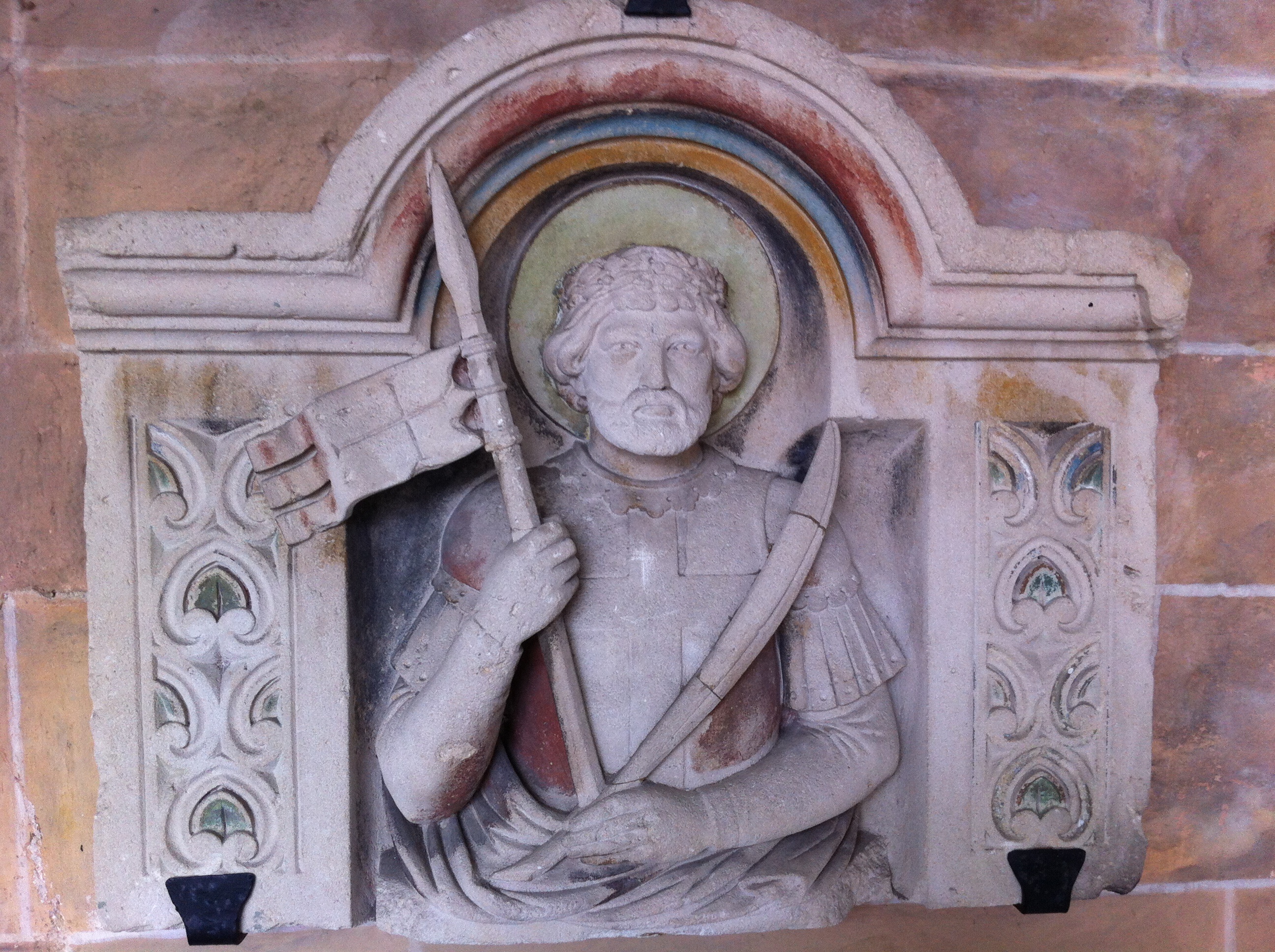
Demi-relief de Saint Crisant, 1100, abbaye de Bad Münstereifel, Allemagne
Also
known as
Crisaunt
Crescentius
Crisanto
Profile
Married to Saint Daria.
Zealous and public in his Christianity. Martyred in
the persecutions of Numerian and
Carinus.
Not surprisingly, many
legends developed around a couple of married martyrs,
and others were re-written to
use them as their lead characters. Modern scholarship has dismissed all these,
leaving only two of the thousands of faithful who lost their
lives in the early days of the Church.
Born
stoned to
death c.283 in
a sandpit off the Salarian Way, Rome, Italy
relics at
Bad Münstereifel, Germany
ox skin
sand pit
man and woman with an axe
and torches
man being buried alive
with Saint Philip the
Apostle and Saint James the Greater
Additional
Information
Book
of Saints, by the Monks of
Ramsgate
Catholic
Encyclopedia, by J P Kirsch
Lives
of the Saints, by Father Alban
Butler
Lives
of the Saints, by Father Francis
Xavier Weninger
Saints
of the Day, by Katherine Rabenstein
books
Our Sunday Visitor’s Encyclopedia of Saints
Saints
and Their Attributes, by Helen Roeder
other
sites in english
Holy Protection Russian Orthodox Church
The Two Lovers of
Heaven: Chrysanthus and Daria by Pedro Calderón de la Barca
images
video
sitios
en español
Martirologio Romano, 2001 edición
fonti
in italiano
Martirologio Romano, 2005 edition
MLA
Citation
“Saint
Chrysanthus“. CatholicSaints.Info. 7 March 2024. Web. 15 December 2025.
<https://catholicsaints.info/saint-chrysanthus/>
SOURCE : https://catholicsaints.info/saint-chrysanthus/
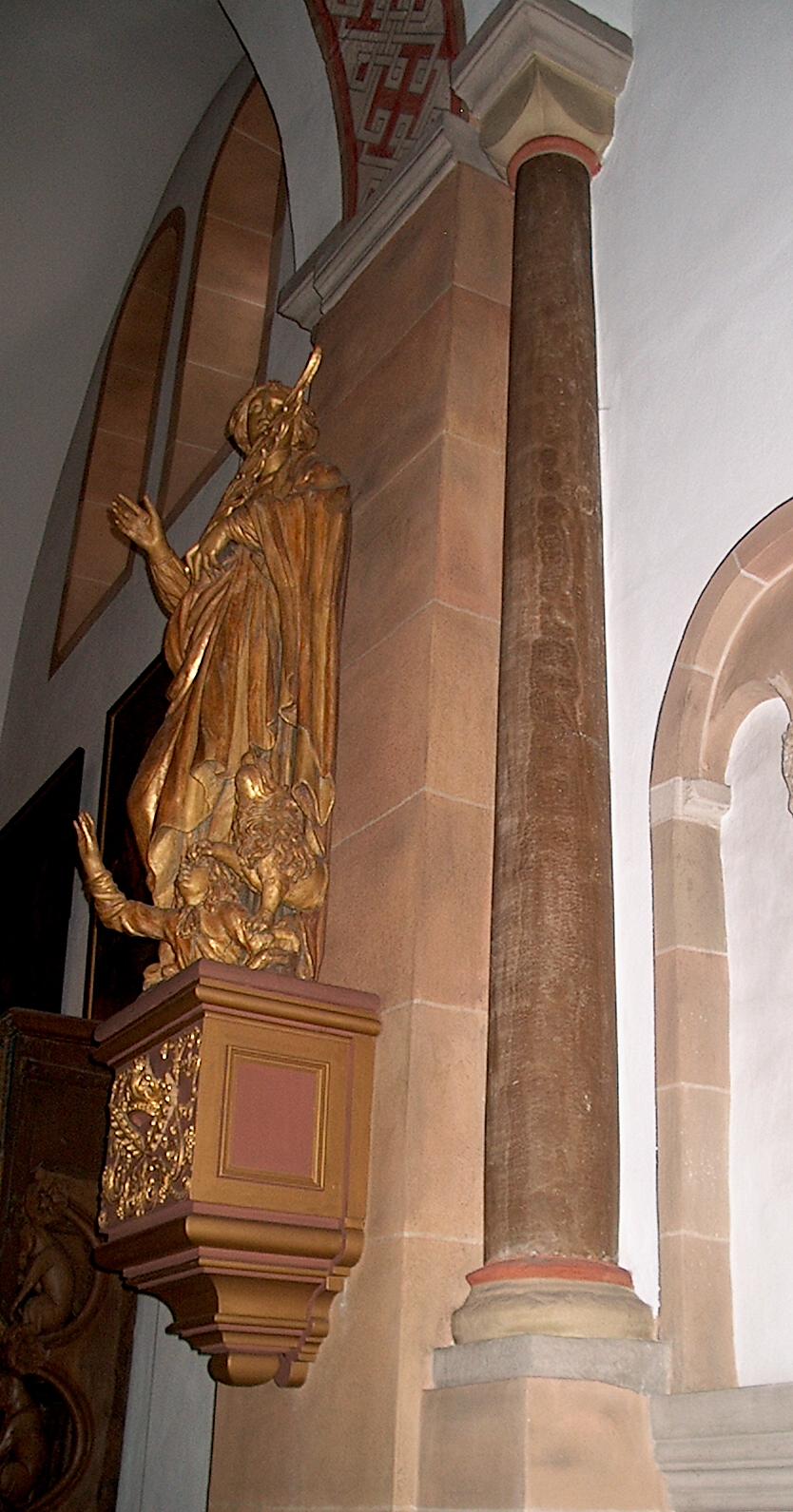
Statue
der hl. Daria in der Stiftskirche Bad
Münstereifel
Profile
Married to Saint Chrysanthus.
Zealous and public in her Christianity. Martyred under Numerian and
Carinus.
Not surprisingly, many
legends developed around couple of married martyrs,
and others were rewritten to
use them as their lead characters. Modern scholarship has dismissed all these
leaving nly two of the thousands of faithful lost in the early days of
the Church.
Born
stoned to death c.283 in a
sandpit off the Salarian Way
relics at
Münstereifel
Additional
Information
Book
of Saints, by the Monks of
Ramsgate
Catholic
Encyclopedia, by J P Kirsch
Lives
of the Saints, by Father Alban Butler
Lives
of the Saints, by Father Francis
Xavier Weninger
Saints
of the Day, by Katherine Rabenstein
books
Our Sunday Visitor’s Encyclopedia of Saints
Saints
and Their Attributes, by Helen Roeder
other
sites in english
Holy Protection Russian Orthodox Church
The Two Lovers of
Heaven: Chrysanthus and Daria by Pedro Calderón de la Barca
images
video
sitios
en español
Martirologio Romano, 2001 edición
fonti
in italiano
Martirologio Romano, 2005 edition
MLA
Citation
“Saint Daria“. CatholicSaints.Info.
7 March 2024. Web. 13 December 2025.
<https://catholicsaints.info/saint-daria/>
SOURCE : https://catholicsaints.info/saint-daria/
Book of
Saints – Chrysanthus and Darius
Article
(Saints) Martyrs (October
25) (3rd century) Chrysanthus, an Egyptian, with his wife, Darias, a Greek,
were distinguished in Rome for their zealous profession and practice of the
Christian Religion. This led to their being arrested and put to a cruel death,
under the Emperors Numerian and Carinus (A.D. 283).
MLA
Citation
Monks of Ramsgate.
“Chrysanthus and Darius”. Book of Saints, 1921. CatholicSaints.Info. 6
October 2012.
Web. 13 December 2025. <http://catholicsaints.info/book-of-saints-chrysanthus-and-darius/>
SOURCE : https://catholicsaints.info/book-of-saints-chrysanthus-and-darius/
New
Catholic Dictionary – Saints Chrysanthus and Daria
Article
Martyrs (283), died Rome.
The legend concerning them relates that Chrysanthus, the son of the noble
Polemius of Alexandria, was converted at Rome by the presbyter Carpophorus, and
lived in virginial matrimonial union with Daria, a beautiful Vestal. Together
they converted many Romans of high rank. Condemned to death they were led to a
sandpit on the Salarian Way, and stoned. Patrons of Eissel and Salzburg. Emblems of
Chrysanthus: skin of an ox, sandpit; of Daria: a lily.
Relics at Münstereifel. Feast,
Roman Calendar, 25
October.
MLA
Citation
“Saints Chrysanthus and
Daria”. New Catholic Dictionary. CatholicSaints.Info. 15
September 2012.
Web. 13 December 2025.
<http://catholicsaints.info/new-catholic-dictionary-saints-chrysanthus-and-daria/>
SOURCE : https://catholicsaints.info/new-catholic-dictionary-saints-chrysanthus-and-daria/
St. Daria
Feastday: October 25
There is very little
known about them. Chrysanthus was an Egyptian, son of a Patrician, Polemius. He
was brought to Rome from Alexandria during
the reign of Numerian, and despite the objections of his father, who had
brought him to Rome, was baptized by a priest named
Carpophorus. Chrysanthus refused is father's attempts to get him married,
finally married Daria, a Greek and a priestess of Minerva, converted her, and
convinced her to live with him in chastity. When they converted a number of
Romans, Chrysanthus was denounced as a Christian to
Claudius, the tribune. Chrysanthus' attitude under torture so impressed
Claudius that he and his wife, Hilaria, two sons, and seventy of his soldiers
became Christians, whereupon the Emperor had them all killed. Daria was sent to
a brothel, where she was defended by a lion, brought before Numerian, who
ordered her execution, and was stoned and then buried alive. When several
followers of Daria and Chrysanthus were found praying at their crypt, among
them Diodorus, a priest, and Marianus, a deacon, they were all entombed alive.
Their feast day is
October 25.
SOURCE : https://www.catholic.org/saints/saint.php?saint_id=541
Saint Chrysanthus and Saint Daria
Martyrs
(† 284)
Chrysanthus was the son
of a Roman senator, born in Egypt. While still young he went with his father to
Rome, where his superior intelligence was quickly appreciated. Convinced of the
vanity of idol-worship, he undertook every means at his disposition to learn
the truth and deliver his soul from the doubts afflicting him. An elderly
gentlemen was pointed out to him as a sage, and Chrysanthus went to him with
his questions. The old man, who was a Christian, had no difficulty in opening
the eyes of the young neophyte; Chrysanthus instantly embraced the truth with
ardor and became an apostle.
His father, at first
astonished, became irritated and decided to bring his son back from what he
called his superstitions and errors. No means were effectual for this purpose.
Thus, influenced by his associates, the father locked him in his palace and sent
a courtesan to seduce his purity.
When the first one did
not succeed, others were commissioned for the infamous task, and finally a
vestal virgin, priestess of an idol regarded as the empire's bulwark, attempted
every artifice to corrupt the young Christian. Instead, she herself became the
conquest of grace. The two Christians saw themselves united by the bonds of
faith, hope and charity, and determined to add to these holy chains those of a
virginal marriage. This decision brought about liberty for Chrysanthus and gave
him the means to continue his preaching of Christ. Many conversions among the
officers of the Roman society with which he was already familiar, were the
fruit of the apostolate of the young spouses, including that of the tribune
Claudius, with his household and seventy soldiers.
But complaints began to
be addressed to the prefect of Rome, who arrested the young couple. After
enduring torments, Chrysanthus was shut up in the Mamertine prison, and Daria
was sent to a house of ill fame. But the Lord watched over both of them as He
had done over many others, and they surmounted their trials, intact and pure.
To be done with them, the irritated emperor had them buried alive. It appears
this torment was chosen in order to inflict on Daria the death reserved for
unfaithful vestals. The principal relics of Chrysanthus and Daria are in the
Abbey of Saint Avold in the diocese of Metz.
Les Petits Bollandistes:
Vies des Saints, by Msgr. Paul Guérin (Bloud et Barral: Paris, 1882), Vol.
12
SOURCE : https://sanctoral.com/en/saints/saint_chrysanthus_and_saint_daria.html
Saints of
the Day – Chrysanthus and Daria
Article
Died c.283? Chrysanthus
and Daria were certainly early martyrs, buried on the New Salarian Way outside
Rome, but their popular and much-discussed legend is no more than a romance.
According to it,
Chrysanthus was a young Alexandrian in Rome, whose father tried to wean him
from Christianity by means of the blandishments of a Greek priestess of
Minerva, Daria. Instead he converted her and they entered into a virginal
marriage.
The couple was
distinguished in Rome for their zealous profession and practice of the
Christian faith. They in turn brought about many conversions, including a
company of soldiers who were all beheaded.
They were themselves
martyred under Numerian and Carinus by being buried alive in a sand-pit on the
Salarian Way. While Christians were praying at their tomb, the emperor ordered
its entrance to be blocked up and the worshippers were left there to perish
(Attwater, Benedictines, Encyclopedia).
In art they are depicted
as husband and wife with an axe and a torch. Sometimes they are pictured buried
alive; in Parma with SS Philip and James Major (Roeder). These patrons of
governors are venerated at Parma, Reggio, Salzburg, and Siena (Roeder).
MLA
Citation
Katherine I
Rabenstein. Saints of the Day, 1998. CatholicSaints.Info.
6 August 2020. Web. 15 December 2025.
<https://catholicsaints.info/saints-of-the-day-chrysanthus-and-daria/>
SOURCE : https://catholicsaints.info/saints-of-the-day-chrysanthus-and-daria/
Sts. Chrysanthus and
Daria
Roman martyrs, buried on the
Via Salaria Nova, and whose tombs, according to the
testimony of the itinerary guides to the tombs of the
Roman martyrs,
were publicly venerated (De Rossi, "Roma
Sotterranea", I, 176). A church erected over the tomb was situated
near that of St.
Saturninus, which was built over the catacomb of Thraso
(coemeterium Thrasonis ad S. Saturnium). Their tomb was in fact in
a disused sandpit (arenaria) near this catacomb. The two martyrs were
revered in Rome in
the fourth century, as the appearance of their names in the "Martyrologium
Hieronymianum" proves. The existing Acts of these Martyrs are without
historical value; they did not originate until the fifth century, and are
compiled in two texts--a longer one, written originally in Greek, but
afterwards translated into Latin, and a shorter one in Latin. The historical
notices of Chrysanthus and Daria in the so-called historical martyrologies of
the West, as in the Greek synaxaria, go back to the legend which makes
Chrysanthus the son of the noble Polemius of Alexandria. He came to Rome with his father and was
converted by the presbyter Carpophorus.
Everything was done to make him apostatize. Daria, a
beautiful and very intelligent Vestal, entered into relations with him, but she
herself was won over to the Christian Faith by
Chrysanthus, and both concluded a virginal matrimonial union. Many Romans and
Roman ladies were converted by these, among them the Tribune Claudius, his wife
Hilaria and two sons Maurus and Jason, all of whom, with the exception of the
mother, suffered martyrdom.
Chrysanthus and Daria were themselves condemned to death, led to a sandpit
in the Via Salaria, and there stoned to death.
This legend is evidently
connected with a number of Roman martyrs, whose tombs were venerated in
the catacombs of
the Via Salaria, near those of Chrysanthus and Daria. The story, apart from the
assured fact of their martyrdom and
the veneration of their tombs, has, perhaps,
some historical value, in assigning the date to the reign of the Emperor
Numerianus (283-84). As this ruler was never in Rome, some historians
believe (for instance, Allard; see below) that the name is Valerianus, and transfer
the martyrdom to
the persecution under
this emperor. But perhaps the name of Numerianus ought to be adhered to, and
the origin of this indication is to be found in the legend of an Oriental martyr having the
same name. There is another martyrdom closely
connected with the tomb of
the two saints,
which is related at the end of the Acts of these martyrs. After the death
of the Chrysantus and Daria, when many of the faithful of Rome were assembled
at their tomb to
celebrate the anniversary of their death, they were surprised by the persecutors, who filled
in with stones and earth the subterranean crypt where
the Christians were
assembled, so that all perished. Later, when the tomb of Sts.
Chrysanthus and Daria was looked for and found, the bones of these martyrs, and even
the liturgical silver
vessels, which they used for the celebration of the Eucharist, were also
discovered. Everything was left as it was found, and a wall was erected so that
no one could enter the place. Only through a window-opening in the wall could
be seen the tomb of
Sts. Chrysanthus and Daria, as well as the bones of the Christians killed
in the tomb.
This tomb, like
so many others, was embellished by Pope Damasus, who had
poems in praise of the martyrs engraved on
marble and placed there. Gregory of Tours describes
this sanctuary in an interesting chapter of his "De gloria martyrum",
I, xxxviii (P.L., LXXI, 739). During the invasions of the Goths the sanctuary
was desecrated,
but later it was restored, as a metrical inscription composed at that time and
falsely attributed to Pope Damasus asserts. In the ninth century the remains of
Sts. Chrysanthus and Daria were brought to Prüm and were thence transferred to
Munstereifel in Rhenish
Prussia, where they are still greatly venerated. The feast of
these saints stands
in the Roman Martyrology on the 25th of October, on which day, also, it appears
in some martyrologies dating from the
seventh century. In the "Martyrologium Hieronymianum" the martyrs were
mentioned on 12 August and 29 November; according to some manuscripts, on other
days also. The Greeks celebrate their feast on 19 March.
Kirsch, Johann Peter. "Sts. Chrysanthus and Daria." The Catholic Encyclopedia. Vol. 3. New York: Robert Appleton Company, 1908. <http://www.newadvent.org/cathen/03742a.htm>.
Transcription. This
article was transcribed for New Advent by Joseph P. Thomas.
Ecclesiastical
approbation. Nihil Obstat. November 1, 1908. Remy Lafort, S.T.D.,
Censor. Imprimatur. +John Cardinal Farley, Archbishop of New York.
Copyright © 2023 by Kevin Knight.
Dedicated to the Immaculate Heart of Mary.
SOURCE : https://www.newadvent.org/cathen/03742a.htm
SS. Chrysanthus and Daria, Martyrs
See Jos. Assemani, in Cal. Universa,
t. 6, p. 193, and Falconius comment. ad tab. Ruthenas Capponianus, p. 79, ad
19, Martij. Their acta in Metaphrastes, Lipomanus, and Surius are of no
authority.
In the Third Century.
CHRYSANTHUS and DARIA were strangers, who came from the East to Rome,
the first from Alexandria, the second from Athens, as the Greeks tell us in
their Menæa. They add, that Chrysanthus, after having been espoused to Daria,
persuaded her to prefer a state of perpetual virginity to that of marriage,
that they might more easily, with perfect purity of heart, trample the world
under their feet, and accomplish the solemn consecration they had made of
themselves to Christ in baptism. The zeal with which they professed the faith
of Christ distinguished them in the eyes of the idolaters; they were accused,
and, after suffering many torments, finished their course by a glorious
martyrdom, according to their acts in the reign of Numerian; Baillet thinks
rather in the persecution of Valerian, in 237. Several others who, by the
example of their constancy, had been moved to declare themselves Christians,
were put to death with them. St. Gregory of Tours says, 1 that
a numerous assembly of Christians, who were praying at their tomb soon after
their martyrdom, were, by the order of the prefect of Rome, walled up in the
cave, and buried alive. SS. Chrysanthus and Daria were interred on the Salarian
Way, with their companions, whose bodies were found with theirs in the reign of
Constantine the Great. This part of the catacombs was long known by the name of
the cemetery of SS. Chrysanthus and Daria. Their tomb was decorated by Pope
Damasus, who composed an epitaph in their honour. 2 Their
sacred remains were translated by Pope Stephen VI. in 866, part into the
Lateran basilic, and part into the church of the Twelve Apostles. 3 This
at least is true of the relics of their companions. Those of SS. Chrysanthus
and Daria had been translated to the abbey of Prom, in the diocess of Triers,
in 842, being a gift of Sergius II. In 844, they were removed to the abbey of
St. Avol, or St. Navor, in the diocess of Metz. 4 The
names of SS. Chrysanthus and Daria are famous in the sacramentaries of St.
Gelasius and St. Gregory, and in the Martyrologies both of the western and
eastern churches. The Greeks honour them on the 19th of March and 17th of
October: the Latins on the 25th of October.
Note 1. L. de Glor. Mart. c. 38 and
83. [back]
Note
2. Damas. Carm. 36. [back]
Note 3. Bosius and Aringhi Roma subterr. l.
3, c. 24, and Anastasius the Librarian in his authentic relation of this
translation. [back]
Note
4. See Mabill. Sæc. 4, Ben. p. 611. [back]
Rev. Alban Butler
(1711–73). Volume X: October. The Lives of the Saints. 1866.
Golden
Legend – Saints Crisaunt and Daria
Article
Here followeth the Life
of Saint Crisaunt, and first of his name, and of Saint Daria, and of her name.
Crisaunt is said as grown
and multiplied of God. For when his father natural would have made him to
sacrifice unto the idols, God gave to him force and power to contrary and
gainsay his father, and yield himself to God. Daria is said of dare, to give,
and of dia, which is as much to say as twain. For she gave her to two things,
first, will to do evil, when she had will to draw Crisaunt to sacrifice to the
idols, and after, she gave her to good will when Crisaunt had converted her to
God.
Of Saint Crisaunt and
Saint Daria.
Crisaunt was son of a
right noble man that was named Polimius. When the father saw that his son was
taught in the faith of Jesu Christ, and that he could not withdraw him
therefrom and make him do sacrifice unto the idols, he commanded that he should
be closed in a stronghold, and put to him five maidens for to withdraw him with
blandishing and fair words. And then he prayed God that he should not be
surmounted with no fleshly desire of these evil beasts, and anon these maidens
were so overcome with sleep that they might not take neither meat nor drink as
long as they were there, but as soon as they were out they took both meat and
drink. And one, Daria, a noble and wise virgin of the goddess Vesta, arrayed
her nobly with clothes as she had been a goddess, and prayed that she might be
let enter in to Crisaunt, and that she would restore him to the idols and to
his father. And when she was come in, Crisaunt reproved her of the pride of her
vesture, and she answered that she had not done it for pride, but for to draw
him to do sacrifice to the idols, and restore him to his father. And then
Crisaunt reproved her because she worshipped them as gods, for they had been in
their time evil and sinners, and haunted common women. And Daria answered: The
philosophers felt the elements by the names of men. And Crisaunt said to her:
If one worship the earth as a goddess, and another ear and labour the earth as
a churl or a ploughman, to whom giveth the earth most? It is proved that it
giveth more to the ploughman than to him that worshippeth it. And in like wise
he said of the sea, and of other elements. And then Crisaunt and Daria,
converted of him, coupled them together by the grace of the Holy Ghost, and
feigned to be joined by carnal marriage, and converted many others to our Lord.
For Claudius, which had been tormentor of them, they converted to the faith of
our Lord, with his wife and children, and many other knights. After this,
Crisaunt was enclosed in a stinking prison by the commandment of Numerianus,
but the stench was anon turned into a right sweet odour and savour. And Daria
was brought to the bordel, but a lion that was in the amphitheatre came and
kept the door of the bordel. And then there was sent thither a man to deflower
and corrupt the virgin, but anon he was taken of the lion, and the lion began
to look on the virgin like as he demanded what he should do with the caitiff.
And the virgin commanded that he should not misdo him, but let him go, and anon
he was converted, and ran through the city, and began to cry that Daria was a
goddess. And then hunters were sent thither for to take the lion, and they anon
fell down to the feet of the virgin and were converted by her. And then the
provost commanded to make a great fire within the entry of the bordel, so that
the lion should be burnt with Daria, and the lion considering well this thing,
dread, and roaring took licence of the virgin and went whither he would without
hurting of anybody. And when the provost had done to Crisaunt and Daria many
diverse torments, and might not grieve them, at the last, they being married
without corruption, were put in a deep pit, and thrown on them earth and
stones, and so were consecrated martyrs of Christ.
SOURCE : https://catholicsaints.info/golden-legend-saints-crisaunt-and-daria/

Église
abbatiale Saints-Crisant-et-Daria à Bad Münstereifel, Allemagne, où reposent les reliques
Weninger’s
Lives of the Saints – Saint Chrysanthus and Saint Daria, Martyrs
Article
Saint Chrysanthus is one
of the many who have experienced how useful and beneficial is the reading of
devout books, especially the Gospel. He was born of heathen parents. Polemius
his father, stood so high with the emperor, that he was raised to the dignity
of a Senator. Chrysanthus’ greatest pleasure was reading; and one day, by
special Providence, the Gospel fell into his hands. He read it through most
attentively; but not being able to comprehend it, he secretly requested a
Christian to explain it to him. This Christian procured him an op- portunity to
speak to Carpophorus, a holy and very learned priest, who explained to him all
he desired to know, and, with the divine assistance, succeeded so well, that
Chrysanthus recognized the falsity of the heathen gods, as well as the truth of
the Christian religion, and having been properly instructed, he received holy
baptism. After this, he appeared no more at the heathen theatres and
sacrifices, but associated with Christians, which awakened in his father the
suspicion that his son either desired to adopt the faith of Christ, or perhaps
was already enrolled among the number of the faithful. He called him to
account, and as Chrysanthus fearlessly confessed the truth, the angry father
cast him into a damp and dark prison, determined to let him die there of
hunger. As, however, after a few days, he found him as strong as ever, and as
firm in confessing Christ as he had been before, he resorted to other and more
horrible means to compel him to forsake Christ. He confined him in a room most
luxuriously fitted up, and sent several wicked young women to tempt him,
believing that this would be the easiest manner of bringing him back to
idolatry. When the first of these women entered, and the chaste Chrysanthus
became aware of her intention, he cried loudly to God for assistance, most
solemnly declaring that he would much rather die than offend Him. He endeavored
to flee, but the room was locked. Hence he did all that was possible under the
circumstances. He turned his face away, shut his eyes and closed his ears with
both hands, while he continued to pray to the mighty God for assistance. His
prayers went to heaven; for the woman was suddenly seized with so invincible a
drowsiness, that she sank to the floor, and was carried out of the room. The
same happened to the second and the third; and the Saint, recognizing the hand
of the Almighty in it, gave due thanks to heaven. Polemius, however, ascribed
it all to witchcraft, and sought in another manner to compass his design. He
persuaded Daria, a virgin consecrated to the service of Minerva, to marry his
son, in order to draw him gradually away from the Christian faith and bring him
back to the gods. Daria consented, and Polemius bringing her to Chrysanthus,
introduced her as his future spouse. Chrysanthus, conversing for some time
alone with her, told her that he was a Christian, and making her acquainted
with the reasons which had induced him to become converted, he succeeded, by
the grace of God, in making her promise to embrace the true faith. Not
satisfied with this, he explained to her how priceless a treasure chastity is,
adding that he was determined to preserve it unspotted. He also said to her
that he was willing to marry her, to give her the opportunity of becoming a
Christian, but only if she was willing that they should live in perpetual
continence. Daria consented cheerfully, after which Chrysanthus announced to
his father that he was ready to make Daria his wife. Polemius, greatly
rejoiced, ordered a splendid wedding, after which the newly-married couple
lived as they had agreed upon, in virginal chastity. Soon after, Daria was
secretly baptized, and endeavored to lead an edifying life with her spouse.
Both assisted, to the best of their ability, the oppressed Christians, and also
used every opportunity to bring the infidels to the knowledge of the true God.
For a time they were not molested; but when, at length, Celerinus, the
Governor, was informed of their conduct, he gave Claudius, the Praetor, orders
to investigate the matter. Hence, Chrysanthus was brought into the Temple of
Jupiter to sacrifice to the idols, after the manner of the pagans. As he
refused to do this, he was scourged so dreadfully, that he doubtless would have
died, had not God preserved him by a miracle. After this, he was dragged, laden
with heavy chains, into a dark hole, into which all the sewers of the prison
emptied. Being locked up in this foul place, the holy man called on the
Almighty, and suddenly the darkness around him gave away to a heavenly light a
delicious odor filled the air, and he was freed from his heavy chains.
Claudius, in consequence of this and other miracles, desired to be baptized,
with his wife, his two sons, and a great many soldiers who were under his
command. The emperor was greatly enraged when this news was reported to him,
and ordered them all to be thrown into the Tiber, with heavy stones tied to
their necks. Meanwhile, Daria also was imprisoned on account of her belief in
the Christian faith. She evinced, however, no less fortitude than her holy
spouse. She was taken into a house of ill-repute to be a prey to wicked men. Daria,
in this danger, called on the great protector of the innocent, and God caused a
lion to break from his place of confinement and come running to her, as if to
guard her from all harm. When the first man entered the room where the chaste
virgin was, the lion seized him, threw him to the ground, and then looked up to
Daria, as if to ask her whether he should kill him or not. The tender martyr
helped the trembling youth to rise, and reproaching him for his wickedness, she
exhorted him to do penance, and succeeded in persuading him to become a
Christian. The same happened to two others, who, like the first, left her
converted. The tyrant raged when he heard of it, and commanded fire to be set
to the room in which Daria was, that she might be burnt with the lion. When the
fire was kindled, Daria made the sign of the holy cross over her protector, the
lion, and sent him away through the flames uninjured. She herself also remained
unharmed, though the room was burnt to ashes. Many other miracles were wrought
by her and by Saint Chrysanthus, in consequence of which a great many heathens
were converted. At last, both were sentenced to be thrown into a deep pit
outside the city, where, covered with stones and sand, they were buried alive,
in the year 284.
Practical Considerations
• Saint Chrysanthus shut
his eyes and closed his ears with both hands, that he might not see nor hear
those who had been sent to tempt him. Oh, how wisely he acted! Numberless
persons have fallen into vice and have been precipitated into hell, because
they did not guard their eyes from gazing on dangerous persons and objects; or
because they listened to flatteries or to impure words and songs. Death came
upon them through eyes and ears, like a thief through the window. If they had
turned their eyes away and closed their ears, if they had left those who spoke
immodestly and sang lascivious songs, they would not have become guilty, of
sin, and would not have been cast into the depth of hell. The pious king David
would not have fallen, if he had not been careless in the use of his eyes. And
where would he be, if he had not done penance? The beginning of the misfortunes
which assailed the strong Samson, and which ended in his death, was his gazing
upon Delilah. Sichem, a noble prince, was tempted to sin, as we are told in
Holy Writ, by looking upon the imprudent Dina, and being soon after murdered,
was cast into hell. We omit innumerable others whose ruin began in the same
manner. Each of these shall cry out, during all eternity: “My eye,” (my ear)
“has wasted my soul” (Lamentations 3). Imprudent looking about and listening
robbed them of their innocence, their piety, the grace and friendship of God,
and at last, of salvation. If you do not wish to experience the same, keep your
eyes, your ears, and in fact all your senses under control. “Hedge in thy ears
with thorns,” admonishes the Wise Man, “hear not a wicked tongue.” (Eccl., 28)
“Those who listen voluntarily to sinful speeches, give death permission to
enter through the window,” writes Saint Theodore. “The eyes are the leaders of
sin,” says Saint Jerome. “To preserve purity of heart, it is necessary to keep
a guard over our exterior senses,” says Saint Gregory.
• Saint Chrysanthus and
Saint Daria were thrown into the greatest danger to sin. They were tempted, but
without their fault. They resisted, called on God, and did all in their power
not to yield, and God protected them from consenting to do wrong. As these
Saints were subjected to exterior temptations, so are many souls tempted
interiorly; some through their own fault, others without the reproach of the
slightest guilt. To the former belong those who spend their time in idleness;
who are intemperate in eating and drinking; who neglect prayer and other good
works; who, without reason, seek dangerous company, assist at indecent plays,
read unchaste or sensational books; who look at persons immodestly dressed or
at unclean pictures; who like to listen to, or indulge in improper jests, or
songs; who play indecent games; delight in wanton dances and amusements; make
friends and acquaintances of persons of little or no virtue; in short, those
who in their manners and actions, dispense with Christian modesty. All these
can blame only themselves when they suffer from unclean temptations; they
themselves give occasion to them. But there are many who, though they avoid all
this, are still violently tempted, as was the case with many Saints in this
world. These are not to be blamed for their temptations, as they have not, by
their conduct, occasioned them. The former have every reason to fear that they
will commit great sins in consequence of the temptations which they themselves
have caused; for it is written: “He that loveth the danger, shall perish in it”
(Eccl. 3). No one will believe such people when they say that they are sorry to
be troubled by such temptations. If this is the truth, why then do they give
occasion to them? To imagine that these temptations can easily be overcome,
without the divine assistance, is presumption; for, God has nowhere promised
His aid to those who throw themselves into danger. They are not worthy of it.
What else then, can they expect but that they will frequently fall into sin,
and .finally into hell? Quite differently must those be judged who are tempted
without their own fault. If they do all they can, and pray to God tor help,
they will not be overcome, but may be assured that the Almighty will assist
them, as they manifest their love and fidelity to Him by avoiding everything
that may lead them into temptation. And who can believe that God will forsake
His faithful servants in their fight? For the two Saints, whose festival we
celebrate today, and for many others, He worked miracles to protect them in
their danger. Hence, never give occasion to temptations; and if they
nevertheless assail you, trust in God; call on Him, and resist bravely. The
whole of hell will be unable to conquer you; for, the Almighty will be your
protector. “He is a protector of all who trust in him.” (Psalm 17) “He is a
protector in the time of trouble, and the Lord will help and deliver them.”
(Psalm 26)
MLA
Citation
Father Francis Xavier
Weninger, DD, SJ. “Saint Chrysanthus and Saint Daria, Martyrs”. Lives of the Saints, 1876. CatholicSaints.Info.
20 May 2018. Web. 13 December 2025. <https://catholicsaints.info/weningers-lives-of-the-saints-saint-chrysanthus-and-saint-daria-martyrs/>
SOURCE : https://catholicsaints.info/weningers-lives-of-the-saints-saint-chrysanthus-and-saint-daria-martyrs/
Holy Martyrs
Chrysanthus and Daria
April 2 nd (March
19th Old Calendar)
The term "marriage
made in Heaven" could be applied to a third century couple whose marriage
could be said to have been made "for Heaven" because of a rare,
singular purpose to serve Jesus Christ. Sts. Chrysanthus and Daria are among the
lesser known martyrs of the early Christian Church. They joined the early
martyrs in shedding their blood for Christ as He did for all of mankind.
St. Chrysanthus was the
only son of a great nobleman, Poleon, who moved from Alexandria to Rome. As the
son of rich parents, Chrysanthus studied all the secular disciplines, having
very learned men as his teachers. But worldly wisdom confused him, and he was
left ignorant of the truth. He grieved over this. But God, who provides for
each and all, assuaged the grief of the young Chrysanthus by putting copies of
the Gospels and the Acts of the Apostles into his hands. The truth was revealed
to him in the reading of these. He also desired a teacher and found one in the
person of Carpophorus, a priest, who instructed and baptized him. But this did
not please his father, who did all in his power to turn him back from the
Christian faith. Then, in no way succeeding, the wicked father tried to corrupt
him by shutting him up alone with shameless girls, but Chrysanthus gained the
victory over himself in this, and preserved his virginity. Then his father
compelled him to marry the pagan Daria, but Chrysanthus persuaded Daria to
receive the Christian faith and to live with him as his sister while appearing
to be married. When his father died, Chrysanthus began openly to confess Christ
and to live as a Christian, both he and his whole house. In the time of the
Emperor Numerian, he and Daria were both terribly tortured for their faith. The
torturer, Claudius, however, seeing the endurance of these martyrs and the
wonders that were revealed at their martyrdom, embraced the Christian faith, as
did the rest of his house. For this, Claudius was drowned, both his sons were
beheaded, and his wife died on the gallows with prayer on her lips.
Daria showed such
endurance under martyrdom that the pagans cried out, "Daria is a
goddess!" Finally it was decreed that Chrysanthus and Daria be buried in a
deep pit and covered with stones. A church was later built on the site. Near
this pit was a cave in which some Christians met together for prayer and
communion in memory of the holy martyrs Chrysanthus and Daria. Discovering
this, the pagans rolled a stone across the entrance to the cave, and thus by
death drove those Christians from this world into that better world where
Christ the Lord reigns in eternity. These glorious martyrs, Chrysanthus and
Daria and the others with them, among whom are St. Diodorus the priest and St.
Marianus the deacon, suffered for Christ in Rome in 283 and 284.
Troparion
Let us honor the like-minded
pair of Martyrs,/ Chrysanthus scion of purity, and supremely modest Daria./
United in holiness of faith, they shone forth as communicants of God the Word./
They fought lawfully for Him and now save those who sing:/ Glory to Him Who has
strengthened you; glory to Him Who has crowned you;/ glory to Him Who through
you works healings for all.
Kontakion
O Chrysanthus, in the
sweet fragrance of holiness/ thou didst draw Daria to saving knowledge./
Together in contest you routed the serpent, the author of all evil,/ and were
worthily taken up to the heavenly realms.
SOURCE : https://www.fatheralexander.org/booklets/english/saints/chrisanthus_daria.htm
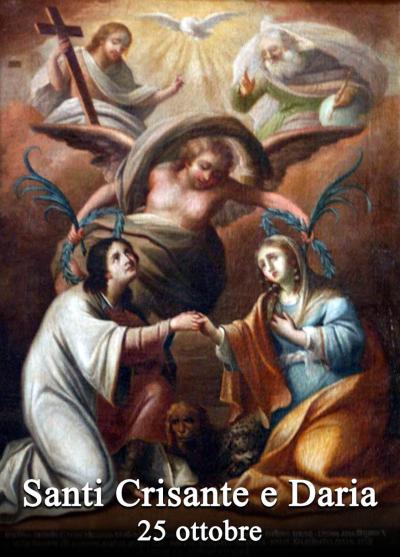
San Crisanto Martire
di Roma e Santa Daria Martire
Roma, † 283 ca.
I due santi patroni della
città di Reggio Emilia vissero e morirono martiri nel III secolo, probabilmente
nel 283. Crisanto figlio di un certo Polemio, di origine alessandrina, venne a
Roma per studiare filosofia al tempo dell'imperatore Numeriano (283-284), qui
ebbe l'occasione di conoscere il presbitero Carpoforo e si fece battezzare. Il
padre Polemio cercò in tutti i modi di farlo tornare al culto degli dei, si
servì anche di alcune donne e specialmente della bella vestale Daria. Ma
Crisanto riuscì a convertire Daria e di comune accordo, simulando il
matrimonio, poterono essere lasciati liberi di predicare, convertendo molti
altri romani al Cristianesimo. La cosa non passò inosservata, scoperti furono
infine accusati al prefetto Celerino, il quale li affidò al tribuno Claudio,
che però si convertì insieme alla moglie Ilaria, i due figli Giasone e Mauro,
alcuni parenti ed amici e i settanta soldati della guarnigione, che aveva in
custodia gli arrestati. Scoperti, vennero tutti condannati a morte dallo stesso
imperatore Numeriano. Crisanto e Daria furono condotti sulla Via Salaria,
gettati in una fossa e sepolti vivi. (Avvenire)
Martirologio
Romano: A Roma nel cimitero di Trasóne sulla via Salaria nuova, santi
Crisanto e Daria, martiri, lodati dal papa san Damaso.
SANTI CRISANTO E
DARIA
I due santi patroni della
città di Reggio Emilia vissero e morirono nel III secolo, l’anno del martirio
si suppone fosse il 283; sono ricordati singolarmente o in coppia in svariati
giorni dell’anno secondo i vari Martirologi e Sinassari, mentre il famoso
Calendario Marmoreo di Napoli e per ultimo il Martirologio Romano, li ricordano
il 25 ottobre.
I due martiri sono
raffigurati in varie opere d’arte, reliquiari, pannelli, affreschi, mosaici,
per lo più di origine italiana, situati in alcune città d’Italia, di Germania,
Austria e Francia; questo testimonia la diffusione del loro antichissimo culto
in tutta la Chiesa.
La loro vicenda, narrata
in modo epico e fantasioso dalla ‘passio’, risente senz’altro della lontananza
del tempo e della necessità di ricostruire la ‘Vita’ con pochissime notizie
certe.
Questa ‘passio’ di cui si
hanno versioni in latino e in greco, era già esistente nel secolo VI poiché era
nota a s. Gregorio di Tours (538-594), vescovo francese e grande storico
dell’epoca.
Crisanto figlio di un
certo Polemio, di origine alessandrina, venne a Roma per studiare filosofia al
tempo dell’imperatore Numeriano (283-284), qui ebbe l’occasione di conoscere il
presbitero Carpoforo, quindi si istruì nella religione cristiana e poi
battezzare.
Il padre Polemio cercò in
tutti i modi di farlo tornare al culto degli dei, si servì anche di alcune
donne e specialmente della vestale Daria, dotta e bella donna.
Ma Crisanto riuscì a
convertire Daria e di comune accordo, simulando il matrimonio, poterono essere
lasciati liberi di predicare, convertendo molti altri romani al Cristianesimo.
Ma la cosa non passò
inosservata, scoperti furono infine accusati al prefetto Celerino, il quale li
affidò al tribuno Claudio, che in seguito ad alcuni prodigi operati da
Crisanto, si convertì insieme alla moglie Ilaria, i due figli Giasone e Mauro,
alcuni parenti ed amici e gli stessi settanta soldati della guarnigione, che
aveva in custodia gli arrestati.
A questo punto intervenne
direttamente l’imperatore Numeriano che condannò Claudio ad essere gettato in
mare con una grossa pietra al collo, mentre i due figli e i settanta soldati
vennero decapitati e poi sepolti sulla Via Salaria; dopo qualche giorno anche
Ilaria mentre pregava sulla loro tomba morì.
Anche Crisanto e Daria
dopo essere stati sottoposti ad estenuanti interrogatori, furono condotti sulla
Via Salaria, gettati in una fossa e sepolti vivi sotto una gran quantità di
terra e sassi
Dagli ‘Itinerari’ del
secolo VII, si sa che i due martiri erano sepolti in una chiesetta del cimitero
di Trasone sulla medesima Via Salaria nuova. Una notizia certa riferisce che
per la festa dei santi martiri, affluivano molti fedeli ai loro sepolcri e che
il papa Pelagio II nel 590, dette alcune reliquie ad un diacono della Gallia.
Ma la storia delle
reliquie è intessuta di notizie contraddittorie e leggendarie, la tradizione
vuole infatti che furono operate tre traslazioni, una da papa Paolo I (757-767)
che dalla Via Salaria le avrebbe portate nella chiesa di S. Silvestro a Roma;
la seconda da papa Pasquale I (817-824) che invece le avrebbe trasferite dalla
Via Salaria alla Chiesa di Santa Prassede e l’ultima da papa Stefano V
(885-891), che le avrebbe portate al Laterano.
Da questa ultima chiesa
poi nell’884 sarebbero state portate nel monastero di Münstereiffel in
Germania, ancora nel 947 le reliquie sarebbero state trasferite a Reggio
Emilia, di cui s. Crisanto e s. Daria sono i patroni, ad opera del vescovo
Adelardo, il quale le avrebbe avute da Berengario che a sua volta le aveva
ricevute nel 915 da papa Giovanni X, come si vede un bel ginepraio.
Altre città rivendicano
il possesso di reliquie come Oria (Brindisi), Salisburgo, Vienna, Napoli.
Il duomo di Reggio Emilia
possiede i due busti reliquiari in argento dei martiri, opera di Bartolomeo
Spani.
Autore: Antonio
Borrelli
SOURCES : http://www.santiebeati.it/dettaglio/92161 et http://www.santiebeati.it/dettaglio/92162
Santi Crisante e Daria
Martiri
Ricorrenza: 25
ottobre
Commemorazione
Crisante e Daria erano
due nobili sposi romani ricchi di doti naturali e di ricchezze. Conosciuta la
religione cristiana, il marito ebbe cura di istruire anche la sua sposa Daria e
questa, abbracciata la fede cattolica, fu tutto zelo col marito per conquistare
alla verità le matrone romane che aveva modo di avvicinare.
Il loro zelo e la loro opera furono efficacissimi tra la moltitudine dei
pagani, e le conversioni furono innumerevoli sia tra gli uomini per opera di
Crisante, che fra le donne per opera della sua santa sposa Daria.
Ma la loro opera non poteva restare nascosta in tempo di persecuzione, per cui
essendone venuto a conoscenza il prefetto Cirino, furono fatti arrestare e dati
in mano al tribuno Lisia perchè facesse loro rinnegare la fede ed in caso
contrario li giustiziasse.
Arrestati dai soldati del prefetto, furono entrambi sottoposti ai tormenti. Ma
la loro invitta costanza trionfò di ogni ostacolo. Incatenati mani e piedi e
gettati in una tetra prigione, ebbero per miracolo spezzate le catene. Allora
furono esposti ai cocenti raggi del sole immobilizzati in una pelle di bue: ma
anche questo supplizio non li fiaccò, per cui trasportati di nuovo in carcere
furono nuovamente stretti da catene. Però anche questa volta il Signore spezzò
i loro ceppi, ed una luce vivissima illuminò il loro tetro carcere. Daria poi,
tratta dalla prigione, fu condotta in un luogo di malavita : ma un leone
mandato da Dio le si pose al fianco e la liberò da ogni offesa dei
cattivi.
Vedendo che nulla poteva rimuoverli dalla loro fede e dalla loro invitta
costanza, il giudice li fece condurre in una arenaria di via Salaria, e quivi
scavata una fossa vi furono immersi fino al capo e poi lapidati dalla turba dei
fanatici pagani. In tal modo essi dettero a Gesù la loro suprema testimonianza
di fedeltà e amore.
I loro corpi, raccolti religiosamente dai fedeli, vennero custoditi come
preziose reliquie e sepolti nelle catacombe in mezzo ai loro fratelli di
fede.
PRATICA. Siamo costanti nella nostra fede e pratichiamo fedelmente i
nostri doveri religiosi.
PREGHIERA. Ci assista, o Signore, la preghiera dei beati martiri Crisante
e Daria affinché sperimentiamo continuamente il pio soccorso di coloro che
veneriamo con devoto ossequio.
MARTIROLOGIO ROMANO. Roma nel cimitero di Trasóne sulla via Salaria nuova,
santi Crisanto e Daria, martiri, lodati dal papa san Damaso.
SOURCE : https://www.santodelgiorno.it/santi-crisanto-e-daria/